Tag Archives: Will Patton

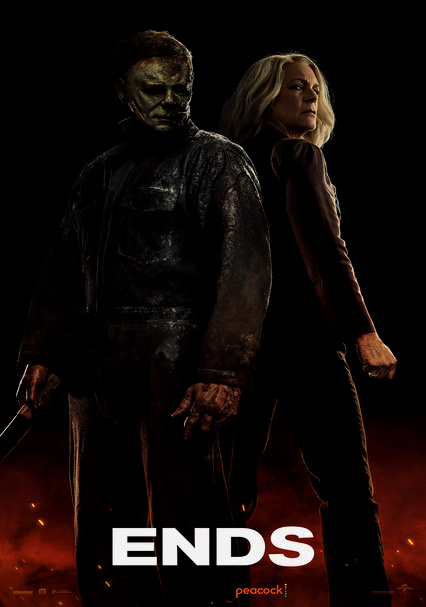
Halloween Ends-2022

Halloween Ends-2022

Director David Gordon Green

Starring Jamie Lee Curtis, Andi Matichak, Rohan Campbell

Scott’s Review #1,309

Reviewed October 19, 2022

Grade: B+

As a bit of a rewind for newer fans of the series or altogether non-fans, Halloween Ends (2022) is a slasher film that is the sequel to Halloween Kills (2021), and the thirteenth installment in the legendary Halloween franchise.

It is reported to be the final film in the trilogy of sequels that commenced with the 2018 film, Halloween, which directly follows the 1978 film and disregards all other entries.

It’s as if nothing more happened after knife-wielding Michael Meyers toppled from a suburban terrace and escaped one Halloween night long ago.

Time will tell if this is indeed the final farewell, but the film wraps things up nicely, and it feels like a satisfying ending.

Halloween Ends is unconventional and murky in parts that intrigued me more than confused me. But rest assured, there is enough mayhem and creative kills to satisfy bloodthirsty audiences- it just takes some patience to get there.

I’m not sure all diehard fans will be satisfied with the film.

There are some twists and turns to maneuver through and some perplexities with a couple of leading characters, but I’m careful not to give too much away.

Over forty years since being terrorized while babysitting one Halloween night, Laurie Strode is writing her memoir as she tries to put the trauma of her past behind her. Since she still resides in the small town of Haddonfield, Illinois, this will not be easy when the sudden death of a young boy sets off terrifying events.

The opening sequence is compelling despite not even involving Laurie, Michael, or Laurie’s granddaughter, Allyson (Andi Matichak)!

The introduction of male babysitter Corey (Rohan Campbell) breathes fresh life into the complex family tree within the small town, and an event causes the young man to become Haddonfield’s new pariah.

Corey is a nice addition as he dates Allyson and becomes involved in the family drama with Michael Meyers, becoming a significant connection.

I’m keeping this vague so I don’t spoil the fun. Still, the romance between Corey and Allyson is particularly evident during a scene where they spend the night together outside a local radio station.

Reminiscences of Laura Dern and Kyle MacLachlan’s characters in David Lynch’s masterpiece Blue Velvet (1986) are set amid a hauntingly cerebral musical score that lends the film an arthouse look and feel. The young romance is shrouded by oncoming chaos, but they cannot stay away from each other.

A fun fact and a nod to the strong film history of the franchise is that John Carpenter, director of the original Halloween, and his son, Corey, provide the music in Halloween Ends.

Some of Corey’s and Allyson’s sequences feel poetic and dreamy, which is the opposite of what a ‘normal’ Halloween film feels like.

Not to be outdone by poetic filmmaking, the director David Gordon Green makes sure any bullies, sluts, or sexual creatures get their due by being fittingly hacked to bits or suffering crushed skulls to pay for their sins.

One even gets ensnared in barbed wire and then unceremoniously run over.

My favorite kills include a comical tongue removal that ends up making an album skip, and a stabbing and impaling onto a door, an apparent reference to Bob’s death in the original.

Inevitably, the film belongs to Laurie and Michael, and their showdown is no surprise. I was salivating for this final blood feast from the get-go, and it doesn’t disappoint.

Laurie’s kitchen is conveniently stocked with a set of sharp, shiny knives, which allows for a healthy dose of crimson-red blood soaking.

I could have used more nods to history. Besides the carbon copy killing of Bob, an old photo, and quick clips of scenes from the original, there isn’t a whole lot.

Bringing the original actors and characters to the fold in Halloween Kills worked well, but all little Lindsey Wallace (Kyle Richards) gets to do is serve drinks at the local bar and listen to other characters’ problems.

My money is that we haven’t seen the last of Michael Meyers, but Halloween Ends (2022) will satisfy those looking for the expected Halloween trimmings with a dash of creative filmmaking.

Other than a couple of missed opportunities, it remains true to its audience.

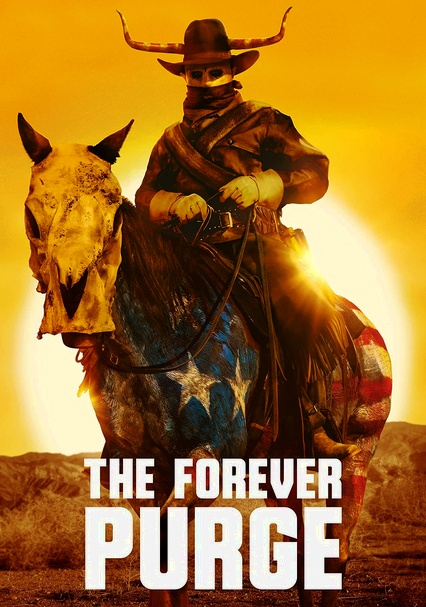
The Forever Purge-2021

The Forever Purge-2021

Director Everardo Valerio Gout

Starring Tenoch Huerta, Josh Lucas, Ana de la Reguera

Scott’s Review #1,209

Reviewed December 18, 2021

Grade: B+

To date, I’ve seen two of the four installments of The Purge film franchise.

The first one, The Purge (2013), was an edgy, creative concept that brought fresh energy to the horror genre. The sequel, The Purge: Anarchy (2014), was a decent follow-up but nothing to write home about either.

I skipped the next two: The Purge: Election Year (2016) and The First Purge (2018).

My expectations were low for the latest effort, The Forever Purge (2021). I’ve seen way too many ‘part five’ of various horror films to be tricked into thinking anything different will be offered to me.

I was pleasantly surprised.

While the film doesn’t rewrite the rulebooks and sticks to a familiar formula for this type of film, a timely political plot surrounding immigration emerges, mirroring the deadly ‘Trump era’ that the United States is still in the midst of, ever since the 2016 presidential election.

After the film ended, I first chuckled, but then felt sad at the message that perhaps at some point, citizens of the United States will flee to Mexico instead of the other way around.

It’s a somber message worth taking seriously.

In the first scene, we see Adela (Ana de la Reguera) and her husband, Juan (Tenoch Huerta), crossing the border from Mexico to live in Texas, where Juan is working as a ranch hand for the wealthy Tucker family. We presume they are illegal immigrants.

Juan impresses the Tucker patriarch, Caleb (Will Patton), but that fuels the jealous anger of Caleb’s son, Dylan (Josh Lucas). The residents of the small town prepare for the annual Purge, where all crime, including murder, is legal for one night only.

On the morning after The Purge, a masked gang of killers attacks the Tucker family including Dylan’s pregnant wife (Cassidy Freeman), and his sister (Leven Rambin), forcing both families to band together and fight back as the country spirals into chaos and the United States begins to crumble around them.

The insurrectionist movement continues committing crimes and murders nationwide after the Purge’s ending. The gang and their supporters spread throughout the United States as a Civil War eventually erupts, causing many residents of Texas to flee to neighboring Mexico.

Unusual for a horror film, the premise and screenplay are well-written. The social message is a unique one, solidifying the importance of the action being taken. Rather than feeling superfluous, I instead imagined that the events could occur in the real-life current United States.

It was an unsettling feeling that made me focus on the film even more than I would have otherwise.

I love that James DeMonaco (director of the first three and writer of all five) is so heavily involved with the franchise. This consistency brings continuity and a good flow to the series. A sixth film is already in the works.

Too often in horror films, a new regime emerges and changes everything we knew from the preceding films.

The progressive slant of DeMonaco and director Everardo Gout won me over, and I champion that the Mexican characters are the heroes of the film. Not to be forgotten, the caucasian Tucker family is written as sympathizing with and supporting their Mexican friends, becoming strong allies.

Where The Forever Purge lags a bit is with the traditionally standard action sequences. Numerous occurrences of shootouts between the Tuckers and Mexican family (they are never given a last name) and the radical movement become tired and standard after a while.

I sometimes felt like I was watching an episode of The Walking Dead.

The insurrectionists are portrayed as your basic dumb rednecks with primitive ideals and racist viewpoints, but you never hear the current government’s side of the story. It is explained that the New Founding Fathers of America (NFFA) have regained control of the U.S. government; however, the explanations provided are limited.

It is supposed to be 2048, but this point feels silly since it is present times as far as hairstyles, clothing, and automobiles go.

I credit the thoughtful and forward-thinking approach that DeMonaco provides to The Forever Purge (2021). The political commentary is a huge win in an otherwise entertaining yet standard dystopian action horror film.

The film may be dated in ten or twenty years, but in 2021, the message is pretty damned frightening.

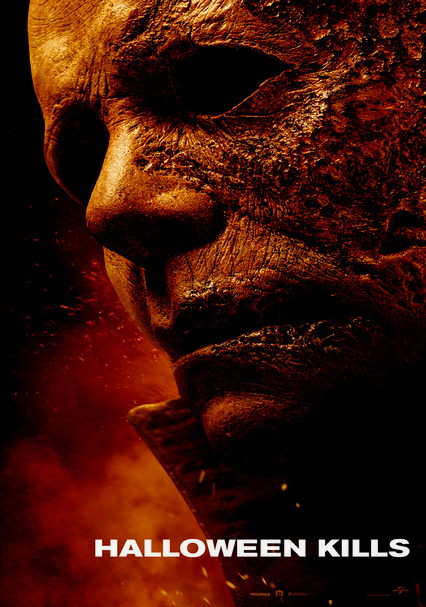
Halloween Kills-2021

Halloween Kills-2021

Director David Gordon Green

Starring Jamie Lee Curtis, Judy Greer, Anthony Michael Hall

Scott’s Review #1,190

Reviewed October 31, 2021

Grade: B+

The second installment in a planned trilogy of the iconic Halloween franchise, which began in 1978, Halloween Kills (2021) is a frightfully effective “middle sibling”.

Bridging the gap between Halloween (2018) and the highly anticipated Halloween Ends (2022), the film has enough gory kills and bloodletting to satisfy any horror fan.

The plot is furthered, and the groundwork is laid for the next installment.

The nods to history, with several actors reprise their characters from the original film, are an enormous treat for fans and a true pleasure to see. The writing regarding history is excellent, and it effectively weaves these characters into the story with newer ones. Jamie Lee Curtis, of course, stars as the terrorized Laurie Strode.

Picking up where Halloween-2018 left off on Halloween night (naturally), a wounded Laurie (Curtis) is whisked away to Haddonfield Hospital to recover while confident that she has finally killed her nemesis, Michael Meyers, by burning him to death.

She is joined by her daughter Karen (Judy Greer) and granddaughter Allyson (Andi Matichak) since the trio left the masked maniac caged and burning in Laurie’s basement. Or so they thought.

Spoiler alert- Michael is far from dead.

Continuing his ritual bloodbath held on Halloween night, Michael roams the quiet streets of Haddonfield. At the same time, the fed-up townspeople rise against their unstoppable monster and form a vigilante mob led by Tommy Doyle (Hall).

They continue to chant “Evil dies tonight” in anticipation of Michael’s demise.

Kyle Richards (Lindsey Wallace), Nancy Stephens (Nurse Marion Chambers), and Charles Cyphers (Sheriff Brackett) return to the action with prominent supporting roles.

Their additions are a significant win for me, and presumably, for any fan of the franchise. It’s on par with welcoming old friends back into one’s life with open arms after a long absence.

The fact that they provide a historical background is the icing on the cake. Brackett’s daughter, Annie, one of the first of Michael’s victims, is celebrated and shown via flashbacks.

Marion’s close friendship with Michael’s doctor, Sam Loomis (Donald Pleasence), is also mentioned. He is seen via computer-animated imagery when the events go back to 1978.

The decision by director/writer David Gordon Green, along with co-writers Scott Teems and Danny McBride, to frequently revisit the events of 1978 is uncompromising and relevant, reminding old fans of the story’s history and teaching novice fans how the dots connect.

It’s a brilliant decision.

The diversity offered in Halloween Kills is a breath of fresh air and progressive. An interracial couple, a same-sex couple, and a black couple are added with respect, dignity, and without stereotypes. They are everyone’s neighbors and an accurate representation of the community.

As residents of the cursed Meyers house, Big John and Little John are portrayed as tough and intelligent, avoiding the comic relief that often shadows gay characters.

A few death scenes are extended to show the victim’s pain and suffering instead of the usual quick and easy slice ’em and dice ’em style. This will make the squeamish a bit nervous, but that’s half the fun of horror films, right?

The typical throat-slashings and eye gouging are included, but many of the minor characters are likable, witty, and clever, and not written as complete morons.

In contrast to the original Halloween, the residents of Haddonfield now seem more blue-collar and red necks than upper-middle-class.  I chuckled when Laurie yelled “sheep” to the venomous residents who were chasing a man assumed to be Meyers (he wasn’t).

I surmised that maybe the filmmakers were sticking it to the dolts who blindly follow political leaders in a cultish way, devoid of thought.

Before anyone thinks that Halloween Kills (2021) is a work of art, it isn’t. There exists enough silly dialogue to make anyone snicker, but that’s what slasher films are all about. They are meant to be fun, and this Halloween installment doesn’t disappoint.

The film is sheer entertainment done well and makes me anticipate the next and “final” Halloween chapter. But, as long as the movie remains a hit at the box office, the killings will go on and on and on and on.

Minari-2020

Minari-2020

Director Lee Isaac Chung

Starring Steven Yeun, Han Ye-ri, Youn-Yuh Jung

Scott’s Review #1,181

Reviewed September 24, 2021

Grade: A-

I proudly champion films like Minari (2020) for further bringing Asian actors and directors into the Hollywood mainstream with truthful stories.

They have slowly (and it’s about time!) begun to reap the riches from the Academy Awards and other such honors. Parasite (2019) and, to a lesser degree, Crazy Rich Asians (2018) helped propel respectability to the Asian film community.

With that said, I expected Minari to be a masterpiece, and instead, it is simply a terrific film. That’s a tough statement for me to make. Undoubtedly, it was heavily helped by the progress I mentioned above.

This is to take nothing away from its cast and wonderful director, Lee Isaac Chung.

I found the film sentimental and heartwarming, but it only felt dangerous or edgy in one scene.

Of strong interest to me is the fact that the film is a semi-autobiographical take on Chung’s upbringing, but is it a fantasized version?

The plot follows a family of South Korean immigrants as they attempt to make a life for themselves in rural America during the 1980s. Specifically, the year is 1983 in the southern state of Arkansas, where the family sticks out like a sore thumb amid the suffocating summer heat.

Chung, who writes and directs the piece, offers a tender look at the ties that bind —family. The Yis are a Korean-American family that moves from California to invest in a crummy plot of land and their own American Dream. Jacob and Monica (Yeun and Han) are reduced to taking even crummier jobs sexing chicks at a local factory.

The family home changes completely with the arrival of their scheming, foul-mouthed, but incredibly loving grandmother Soon-Ja, played by Yuh-Jung.

Amidst the instability and challenges of this new life in the rugged Ozarks, Minari shows the undeniable resilience of family and what makes a home. The Yis are resilient through the constant bickering of Jacob and Monica, Soon-JA’s stroke, bad water, and the burning of their shed, which stores their goods.

The story is all well and good, and it is good, but I desired more. I blame this on the heaps of praise heaped on Minari and the numerous Top 10 lists it appeared on.

For example, hearing the premise I couldn’t help but wonder what discrimination the Yi’s would inevitably face down in the deep south. But they faced none.

In one soft scene, the young Yi boy, David, played exceptionally by Alan Kim is asked by a local kid why his face is flat. They quickly become best friends.

Will Patton plays another ally and Jacob’s farming partner. He is a Korean War veteran and a bit nutty, yet he adores Jacob and the rest of the Yis and harbors no ill will towards them.

I expected him to despise them because of the war. This would have been more realistic.

The southern characters are portrayed as kind and always ready to lend a helping hand. This is all fine and good, but is it realistic?

The casting is outstanding and brings the dialogue to reality. Yeun and Han bring their A-games in more than one vicious fight scene where their words crackle with intensity leaving them teetering on the verge of divorce. Yeun was recognized during awards season, but Han was sadly overlooked.

Soon-Ja mixes humor with drama and will leave many viewers bawling with her facial expressions and terrific acting during the final sequence. Her performance deservedly led her to a Supporting Actress Oscar win.

The finale felt so incredibly raw and honest to me, whereas the rest felt sentimental, which, based on this alone, caused me to raise its grade from a B+ to an A-.

Beautiful landscape and brilliant acting make Minari (2020) a fine experience. It teeters too close to formula at times, but offers freshness and representation for a group only starting to receive its recognition.

Oscar Nominations: 1 win-Best Picture, Best Director-Lee Isaac Chung, Best Actor-Steven Yeung, Best Supporting Actress-Youn Yuh-Jung (won), Best Original Screenplay, Best Original Score

Independent Spirit Award Nominations: 1 win-Best Feature, Best Director-Lee Isaac Chung, Best Male Lead-Steven Yeung, Best Supporting Female-Youn Yuh-Jung (won), Han Ye-ri, Best Screenplay

After Hours-1985

After Hours-1985

Director Martin Scorsese

Starring Griffin Dunne, Rosanna Arquette

Scott’s Review #1,069

Reviewed October 9, 2020

Grade: A-

After Hours (1985) is a gem of a film.

When thoughts of director Martin Scorsese are conjured, Taxi Driver (1976), Raging Bull (1980), or Goodfellas (1993) are films that immediately spring to mind.

Scorsese’s decision to create a pared-down independent film was met with enormous success and accolades for the very first Best Feature indie film victory and Best Director honors.

The experience is a black comedy set within the gritty and unpredictable underbelly of Soho-New York City in the 1980s.

Mixing comedy with satire, Scorsese leapfrogs from similar content in The King of Comedy (1983) to this film made only two years later.

Any fan of New York City will cheer with joy at the authenticity achieved since the film was shot on location there. The Big Apple in the 1980s was a notoriously violent cesspool so the genuine setting and the use of dark streets and alleys is an immeasurable treat and adds much zest to this unusual film.

A nice guy, Paul Hackett (Griffin Dunne), works hard as a computer data entry worker by day and shares an encounter with a quirky young woman named Marcy Franklin (Rosanna Arquette) in a Manhattan coffee shop.

After she gives him her number and leaves, he is unable to stop thinking about her and embarks on a late-night adventure to go and see her at her apartment.

The night does not end how he thinks it will. Not by a long shot, as he spends the rest of the long night meeting various women and other strange characters as he traverses around the city attempting to get back home. He has lost his money and is broke.

The great aspects of After Hours are its bizarre characters and the cinematography that offers a tantalizing view of downtown Manhattan. The film is atmospheric and zany in its gloomy and steamy side streets and odd locales sprinkled with color.

A dingy bar, a sophisticated artist’s apartment, and a man sculpture that follows Paul everywhere are usurped by the film’s strangest and most interesting set, Club Berlin, an “after-hours” club inhabited by punks who want to shave Paul’s head into a mohawk.

I enjoyed this film as a sort of “A Day in the Life of Paul” adventure story, albeit a gothic one. The film concludes wonderfully as the sun begins to rise just as the film ends and thus Paul’s wild night finally ends.

I was chomping at the bit with the thought of what a new morning would bring and the possibilities of reuniting with any of the women he encountered the night before, either dead or alive.

Particularly charming to me while watching After Hours, the decade of decadence well into the past, are the relics once commonplace in everyday life. A phone booth, the traditional yellow cabs, and desktop personal computers are heavily featured.

These items, relevant when the film was made, now seem like throwback niceties that make the film endearing and like a glimpse into someone’s time capsule.

I did not pick up on much authentic romance between Paul or any of the female characters- Marcy, June, Gail (Catherine O’Hara), or Julie (Teri Garr), but maybe that’s the point. While one winds up dead, not one, but two of them pursue him, and not in a good way.

The film is mystical, weird, and energetic. The inclusion of Cheech & Chong only adds to the revelry.

Sadly, underappreciated and too often forgotten, After Hours (1985) is a Scorsese treat worth dusting off now and then. The birth of the Independent Spirit Awards has a lot to owe to this film for grabbing top honors and the admiration works both ways.

For a glimpse at the creative genius that is Martin Scorsese, this film gets an enormous recommendation.

Independent Spirit Award Nominations: 2 wins-Best Feature (won), Best Director-Martin Scorsese (won), Best Female Lead-Rosanna Arquette, Best Screenplay, Best Cinematography

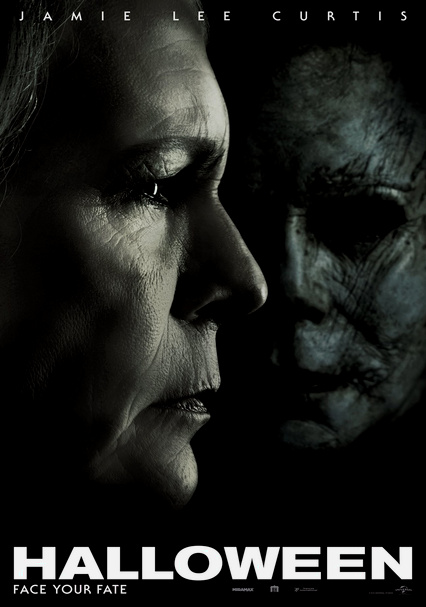
Halloween-2018

Halloween-2018

Director David Gordon Green

Starring Jamie Lee Curtis, Judy Greer

Scott’s Review #823

Reviewed October 23, 2018

Grade: B+

Let’s be honest—nobody will ever be able to top or recreate the iconic 1978 masterpiece Halloween, so any real attempt is a moot point.

Throughout the subsequent decades, many sequels or remakes have emerged, largely disappointing or turning the franchise into a joke.

With the latest incarnation of Halloween (2018), director David Gordon Green gets it right by creating a follow-up to the original, skipping all the other films. Scoring Jamie Lee Curtis as Laurie is a significant win and seemingly dozens of neat references to the original gem.

Set forty years to the day (Halloween Eve and Halloween, naturally!), the audience is first given a summary of killer Michael Meyer’s (Nick Castle) time spent in Smith Grove Sanitarium once captured following the 1978 Haddonfield killing spree.

Two journalists visit Myers in captivity and attempt to make him speak after forty years of silence by mentioning Laurie Strode and showing him his notorious Halloween mask.

Conveniently, he will be transferred to a maximum-security prison the following day. We know that Meyers will escape.

Meanwhile, Laurie has been living with post-traumatic stress disorder since her attack and lives in a constant state of paranoia.

With two failed marriages and a daughter, Karen (Judy Greer), who is traumatized by her mother’s anxiety, Laurie’s life has not been easy. As an aside, I love how Laurie dons the same hairstyle she had at age seventeen.

While she awaits Michael’s inevitable return, Laurie’s secluded house is peppered with traps and guns, allowing her to be at the ready at any moment. Despite her problems, Laurie is close to her granddaughter, Allyson (Andi Matichak).

When the inevitable happens and Michael escapes by presumably causing a bus accident off-screen, the action truly begins. The coincidence of this happening on Halloween night is to be expected and embraced.

Audiences who see the film are certainly not new to the genre. The target audience is the crowd who either grew up with the original or generations who followed and were introduced to it.

Therefore, the film is wise not to try to reinvent the wheel, giving fans what they expect. The opening graphics (the eerie orange writing and the glowing jack-o-lantern) are intact, as is the “introducing” credit for its heroin—in this case, Matichak.

There are several certainties about a horror film like Halloween. We know there will be “kills,” and we know there will be an inevitable showdown between Laurie and Michael Myers to conclude the film.

The fun is in the trip we take to get there. Who will be slashed and how? A butcher knife? Other Halloween delights?

Since there are arguably three female leads and three generations of Strodes, will the film make one of them feel Michael’s deadly wrath?

Halloween works; a significant reason is the countless nods to its past. Many scenes pay homage to attention-paying fans, creating riches and nostalgic memories.

Allyson’s boyfriend’s father’s name is Lonnie—undoubtedly the kid Dr. Loomis scared away from the Meyers’ house forty years ago. Then there is a neighbor woman wearing curlers and slicing a sandwich with a butcher knife, whom Michael steals the knife from an ode to Halloween II (1981).

Finally, as Allyson sits in the back of her class and glances out the window, she sees not Michael, but Laurie standing across the street, staring at her.

These gems are in large part thanks to clever writing and study.

There are a couple of negatives to mention. I am not crazy about Judy Greer’s casting as Jamie Lee Curtis’s daughter. The actresses look nothing alike, and Curtis does not seem old enough to be Greer’s mother.

Furthermore, attempts to add some comic relief moments—two bumbling police officers talking about brownies, Allyson’s goofy father, and the salty tongue of the kid one of the babysitters sits for—do not work.

How great would it have been to include P.J. Soles, Nancy Loomis, or Kyle Richards in cameos? Since Curtis and Castle returned, I wanted more familiar faces.

In wise form, Gordon Green leaves the window open for a potential sequel, so stay for the end credits. My wish would be for this to parlay to the aftereffects of the killings on the same night, which Halloween II (1981) did so successfully.

The possibilities are endless if the box office returns are strong enough and Curtis is on board for another installment.

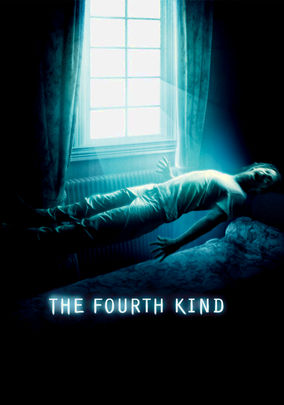
The Fourth Kind-2009

The Fourth Kind-2009

Director Olatunde Osunsanmi

Starring Milla Jovovich, Will Patton

Scott’s Review #583

Reviewed January 4, 2017

Grade: B-

I went into the theater to see The Fourth Kind (2009) not expecting a classic, but rather, a few frights, chills, and something compelling. I ended up completely entertained and believing it was a good movie.

However, after the credits rolled, I was left with an unsatisfying and misrepresented feeling.

The premise of the film is admittedly a bit trite. An Alaskan female psychiatrist, Dr. Abigail Tyler (Milla Jovovich) videotapes her therapy sessions with patients and discovers some sort of alien has possibly abducted them.

Yes, this sounds crazy, but the film is well-made and rather believable.

The look of the film is similar to the Paranormal Activity films, a craze that was happening when the film was released in 2009.

The documentary look and the interviews with the actors will be looked back on as “of its time”, to be sure.

The style and interspersing of “real” events with fictitious events were interesting. However, I was disappointed when I read that the supposed “real” events were entirely made up, a fact the movie never admits, and, in fact, time and time again reminds the audience are real events.

I enjoyed the movie but felt duped afterward, rendering The Fourth Kind (2009) trivial and forgettable.

No Way Out-1987

No Way Out-1987

Director Roger Donaldson

Starring Kevin Costner, Sean Young, Gene Hackman

Scott’s Review #96

810117

Reviewed July 5, 2014

Grade: B+

No Way Out is a slick political thriller from 1987 starring Kevin Costner as a U.S. Naval Officer investigating a Washington D.C. murder.

Gene Hackman and Sean Young are co-stars. Costner is at the top of his game in the film and is quite charismatic and charming.

The plot has several twists and turns that keep the viewer guessing and engaged and is a classic edge-of-your-seat stylistic film.

The film is paced very well as it gradually picks up steam with each plot turn until it builds to a frenetic finish. Specifically, the final forty-five minutes that take place in the CIA are quite a cat-and-mouse game.

It’s a film about sex, murder, love affairs, politics, and backstabbing.

Hugely successful in the 1980s, and as much as I still enjoy it, the film unfortunately now appears quite dated as the soundtrack, hair, and clothes, all scream late 1980’s and that is not to its credit.

It now seems all too similar, though a cut above, to other countless themed films of the same period. Truly great films are timeless.

Kevin Costner was in his prime with No Way Out (1987) and Sean Young has a wonderful turn as the mysterious Susan Atwell.