Tag Archives: Carol Kane

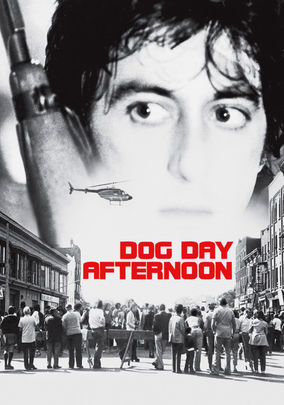
Dog Day Afternoon-1975

Dog Day Afternoon-1975

Director Sidney Lumet

Starring Al Pacino, John Cazale, Chris Sarandon

Top 250 Films #203

Scott’s Review #185
450423

Reviewed October 13, 2014

Grade: A-

Director Sidney Lumet successfully sets the smoldering hot summer afternoon in New York City for his 1975 film Dog Day Afternoon.

Al Pacino plays Sonny, an unemployed, desperate man who, while married with two kids, has a gay lover, Leon (brilliantly played by Chris Sarandon), whom he is attempting to help finance a sex change operation.

Based on a true story, Sonny, along with his dimwitted friend Sal- played by John Cazale- decides to rob First Brooklyn Savings Bank.

Predictably, their plans go awry when Sonny burns a ledger during the robbery attempt, and a pedestrian sees the smoke and alerts the police.

As the police become aware of the attempted heist, a standoff ensues between Sonny and the cops, led by Detective Moretti (Charles Durning), and the robbery receives media coverage.

Most of the action is set inside the stifling hot bank and directly outside on the street, and gradually the supporting characters come into play- the hostages, Sonny’s mother, wife, and lover all make contact with Sonny in some way or another, and his motivations become clearer to the audience.

Dog Day Afternoon is an anti-establishment movie, in this case anti-police, questioning the government and the financial establishment (Lumet also directed Network, challenging the establishment).

This is evident when, after a standoff with police, the crowd sides with Sonny as he chants “Attica!” Attica!, which is a direct reference to a recent prison riot.

Sonny speaks for the working class- the poor, struggling, underpaid workers who cannot afford to feed or adequately take care of their families.

The heat and humidity compare perfectly to the pressure felt by most middle-class people that still resonates today and leaves the viewer contemplating their life.

Sonny relates to the bank tellers who do not earn much. Besides, Sonny is sympathetic to the audience in another way. Leon, recently hospitalized at Bellevue Hospital, is emotionally dependent on Sonny. He would be lost without him.

They share a lengthy and heartfelt phone conversation that is the heart of the film- gay romance had not been explored this way by 1975 in cinema, and the romance was neither shoved down the audience’s throat nor was it looked past entirely.

Their relationship is tender and deep, yet still somewhat ambiguous.

Would they stay together? What would become of Sonny’s wife and two children? Would he leave them for Leon in a world that was not ready to accept two homosexual men together? Is that the reason for Leon’s desire for a sex change operation?

Chris Sarandon, in too small a part, is wonderful as the gay lover, struggling with a sexual identity crisis. Al Pacino gives, per usual, a brilliant portrayal as he takes on a complex character who is far from one-dimensional.

Perhaps not a masterpiece, Dog Day Afternoon is a very good film, but neither is it strictly a gay-themed movie nor an action/thriller- it’s more complex than that.

Ironically, Sonny is portrayed as the hero of the film, as it is not a standard good police versus bad bank robber type of film- quite the contrary. It is much, much more than that.

Oscar Nominations: 1 win-Best Picture, Best Director-Sidney Lumet, Best Actor-Al Pacino, Best Supporting Actor-Chris Sarandon, Best Original Screenplay (won), Best Film Editing

The Pacifier-2005

The Pacifier-2005

Director Adam Shankman

Starring Vin Diesel, Lauren Graham

Scott’s Review #1,251

Reviewed May 1, 2022

Grade: C

The Pacifier (2005) is the kind of film that has been made for decades in one form or another. The setup is familiar and puts its macho movie star in situations that go against type or are deemed a bit feminine, and lightweight, all for the sake of a laugh.

As far back as the 1950s when Jack Lemmon and Tony Curtis donned lady’s clothing in Some Like it Hot (1959), to Michael Keaton in Mr. Mom (1983), to the 1990s when Arnold Schwarzenegger entertained audiences in Kindergarten Cop (1995), there is a pattern to follow.

And those are just decent films.

In 2005, the sexy Vin Diesel was one of the highest-grossing leading men in Hollywood churning out hits like Boiler Room (2000) and The Fast and the Furious (2001) to rabid audiences.

Known primarily for his action films, someone had the bright idea to domesticate the muscular star and put him in a situation where he would comically change baby diapers or vacuum a living room.

Unfortunately, The Pacifier is juvenile in nearly every way with canned gags and predictability for miles. Diesel is terrific to look at but isn’t the best actor in the world which causes the film to lose credibility.

Despite cliche after cliche and ridiculous situations, the film occasionally will elicit a chuckle or two from anyone brave enough to watch it.

That’s mostly because Diesel is willing to emerge in one scene covered in shit.

But don’t expect much more from The Pacifier.

Shane Wolfe (Diesel) is an elite Navy SEAL with muscles and charisma for miles. He is the type of man who would run into a fire and save a baby or swim out to sea to save a drowning child.

One day he makes a grave error in judgment when he fails to keep scientist Howard Plummer (Tate Donovan) safe from assassination and the man is killed.

Riddled with guilt, he is assigned to protect Plummer’s five children when the mother played by Faith Ford needs to leave the country temporarily. The kids include rebellious Zoe (Brittany Snow), Seth (Max Thieriot), and clingy Lulu (Morgan York).

The kid’s pet duck is along for the ride pushing the seasoned veteran to his breaking point.

Predictably, when Shane is not busy tending to the kids there is a secret project contained somewhere in the household that he must uncover.

Of course, a film like The Pacifier requires some romance so the inclusion of Principal Claire Fletcher (Lauren Graham) is for the sole purpose of having someone for Shane to fall in love with.

There is not great chemistry between Diesel and Graham so I wasn’t invested in them. The casting of the children is so one-dimensional with standard characteristics that it would be easy to laugh at.

I chose not to do this but rather strove to find something enjoyable in The Pacifier.

It’s a cute film but it’s so mainstream, dull, fluffy, and whatever generic adjective one would choose to describe it that it deserves the bland grade of C I am awarding it.

Diesel is the only appealing factor to The Pacifier.

Why make the bad guys as stereotypical as possible? They are North Korean and the ‘twist’ that Shane’s boss is in cahoots with them is as surprising as realizing the two-week-old Chinese leftovers in the fridge have gone bad.

The film has a small comparison to the superior The Sound of Music (1965) which the filmmakers must have realized since they incorporate it into the story. The kids that Shane is in charge of are behaving badly and attempting to play a practical joke on him.

In the end, there is a chase sequence, a reveal, peril, and a happy ending in more or less that order.

The Pacifier (2005) is a Disney film so there is a safe, family-friendly vibe throughout. It marginally entertains largely on the strength of Diesel.

He is sexy, and macho, and provides enough charisma to forget the bevy of standard gags and silly situations that he, and the audience, must endure.

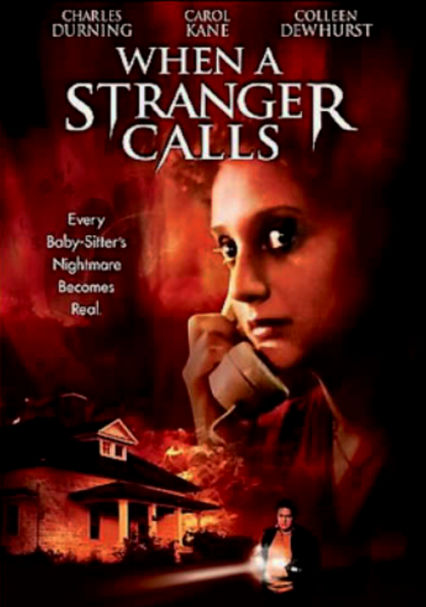
When a Stranger Calls-1979

When a Stranger Calls-1979

Director Fred Walton

Starring Carol Kane, Charles Durning

Scott’s Review #1,046

Reviewed July 29, 2020

Grade: B+

When a Stranger Calls (1979) has the great honor of possessing one of the most frightening twenty minutes in horror film history, kicking the daylights out of the stunned and transfixed viewer from the first frame.

While still a very good film, the pacing slows and shifts into a different kind of film before kicking back into high gear for the final twenty minutes of action.

This results in some imbalance and imperfections throughout.

Carol Kane, Tony Beckley, and Colleen Dewhurst make the film as good as it is, and they are the standouts for me.

Teenage babysitter Jill Johnson (Carol Kane) calmly walks through an affluent California neighborhood for a quiet evening of watching two children.

The doctor and his wife are embarking on a night of dinner and a movie, and the children will be no trouble, Jill is told, since they are recovering from colds and are already fast asleep in their beds.

Shortly after they leave, Jill begins receiving odd phone calls from a man who asks, “Have you checked the children?” At first, assumed to be a practical joke, the calls become more menacing, prompting Jill to get the police involved.

Now terrified, Jill is told by the alarmed police to calmly get out of the house because the calls she is receiving are coming from inside the house!

She flees and is met head-on by Detective John Clifford (Charles Durning), who apprehends an English merchant seaman named Curt Duncan (Tony Beckley), who has ripped the children to shreds with his bare hands.

He is subsequently sent to an asylum, only to escape seven years later, prompting Clifford to hunt him down like an animal.

The film is sectioned into two segments and multiple genres. The beginning and conclusion are standard horror sequences, while the guts of the film delve into a psychological thriller or crime-drama territory, with similarities to Dirty Harry (1971).

Clifford spends much of his time trying to track down Duncan in a cat-and-mouse game throughout Los Angeles. Colleen Dewhurst plays a middle-aged woman who catches the eye of Duncan one night in a seedy downtown nightclub.

Director Fred Walton makes Clifford a hard-edged, grizzled detective who has seen it all and has no mercy for Duncan, intent on killing him rather than capturing him.

Durning is not the best part of the film, and the role might have been cast with a more charismatic actor.

Perplexing is what Duncan’s motivation is for killing others, other than simply being crazy, which is not a good enough explanation. Was he abused as a child? During some scenes, he is sympathetic, more like a wounded child than a crazed killer.

He wants a friend, whereas Clifford, the good guy, is sometimes unsympathetic and tough to root for.

With “deer caught in headlight’s eyes” expressions and emotions, Kane’s Jill is brilliant at using her eyes to great benefit. The audience feels her peril, fear, and panic during her scenes. When Duncan resurfaces looking for her again (though it’s not clear why he obsesses over her), her nice life, two children, and husband’s lives are all placed in jeopardy.

Dewhurst, who could have easily been cast as the lead in Gloria (1980), is tough as nails and no-nonsense, though she does feel sympathy and some attraction for Duncan.

In 1996, when Scream was released and provided the oomph that the horror genre desperately needed, thanks were justifiably given to When a Stranger Calls for its mighty influence.

The first twelve minutes of Scream (1996) are a direct homage to this film when a stranger calls (pun intended!), and the leading lady’s life spirals out of control due to a phone call and a menacing voice.

Parts of the opening sequence are influenced by Black Christmas (1974), a brilliant horror film instrumental in the making of so many others. The revelation that the killer is inside the house is a plot device that remains scary and satisfying.

Offering a cross-genre approach that works best with its terrifying horror elements, When a Stranger Calls (1979) is a sometimes terrific, sometimes uneven picture.

Thanks to compelling acting, the slowed-down middle portion does not ruin the entire experience, but what an erupting and memorable beginning and end.

Followed by an unsuccessful sequel and an even more disappointing remake in 2006.

Annie Hall-1977

Annie Hall-1977

Director Woody Allen

Starring Woody Allen, Diane Keaton

Scott’s Review #48

261909

Reviewed June 19, 2014

Grade: A

Annie Hall (1978) is one of Woody Allen’s finest works, and that says something as his list of wonderful films goes on and on (Manhattan, Blue Jasmine, and Interiors) are gems.

Annie Hall is a witty, intelligent, great comedy. It is sharply written, quirky, and neurotic all rolled into one.

Comedy is a tough genre. Romantic comedies are even tougher to get right.

My favorite part of the film is Woody Allen himself. Some might say he plays himself, but he is engagingly hysterical as the neurotic, skeptical, Jewish, cynical New York man named Alvy.

He meets and falls in love with equally neurotic Annie Hall, played by Diane Keaton.

They quarrel, love, and traverse from New York to California and back.

There are some very funny scenes (lobster, movie theater line, and the drive-through Manhattan), and the intelligent, crisp dialogue makes this a top-notch comedy.

Oscar Nominations: 4 wins-Best Picture (won), Best Director-Woody Allen (won), Best Actor-Woody Allen, Best Actress-Diane Keaton (won), Best Screenplay Written Directly for the Screen Based on Factual Material or Story Material Not Previously Published or Produced (won)