Tag Archives: Mary Davenport

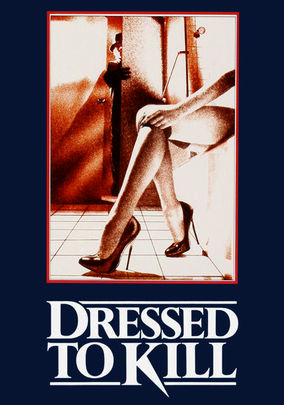
Dressed to Kill-1980

Dressed to Kill-1980

Director Brian De Palma

Starring Angie Dickinson, Nancy Allen, Michael Caine

Top 250 Films #16

Top 40 Horror Films #5

Scott’s Review #164
60020714

Reviewed September 2, 2014

Grade: A

Dressed to Kill (1980) is Brian De Palma’s most significant work throughout his storied career.

Set in New York City, the film is essentially divided into two halves.

The first half centers around Angie Dickinson, who plays a bored housewife named Kate. She is unhappy in her marriage and seeks therapy from a psychiatrist played by Michael Caine, to whom she makes sexual advances.

She is unfaithful to her husband, yet is a kind, intelligent, cultured woman. She adores her son and loves her husband but is utterly unfulfilled with life.

Do we, the audience sympathize with her? Does she get what she deserves? Is she a victim? One powerful scene involves a wide-eyed little girl who cannot stop staring at Kate. Can she sense Kate’s shenanigans? Does she sense her conflict? Does Kate feel guilt?

Kate is a complex character and brilliantly played by Dickinson, who gives the character sexiness, softness, and appeal.

After a shocking event in a high-rise elevator rivaled only by the shower scene in Psycho (1960) in its surprise and terror, the remainder of the film belongs to Nancy Allen, who plays a prostitute named Liz, determined to solve a mystery to clear her name.

De Palma sets the dreamlike tone with a sizzling opening shower scene sure to make the prudish blush in its explicitness, which I found deliciously sexy.

A ten-minute museum sequence speaks volumes without dialogue as Kate has a cat-and-mouse flirtation with a stranger.

The brilliance of Dressed to Kill is its versatility and complexity and contains one surprise after another, from the elevator scene to the final reveal to the final stage itself.

It is part horror film part thriller and always stylish.

The film was not well regarded upon its release, but over the years has been respected due to its creativity and excellent mood. Many scenes are shot in slow motion adding an effect to them.

Dressed to Kill (1980) is simply brilliant on every level.
Sisters-1973

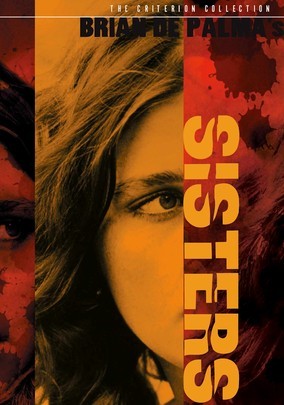
Sisters-1973

Director Brian De Palma

Starring Margot Kidder, Jennifer Salt

Top 250 Films #119

Top 40 Horror Films #22

Scott’s Review #178

60002455

Reviewed September 29, 2014

Grade: A-

Directed by stylistic film genius Brian De Palma, Sisters (1973) is an early entry in the famed director’s repertoire and a direct homage to the classic films of Alfred Hitchcock.

The film stars Margot Kidder as a French-Canadian model named Danielle Breton, who shares an apartment a Staten Island, NY, with her demented twin sister, Dominique. For many years, Danielle and Dominique were conjoined twins and only recently surgically separated.

After a romantic date with a new acquaintance, Danielle begins to feel ill and Dominique murders the new boyfriend after he surprises, who he thinks is Danielle, with a birthday cake.

But is it Dominique or is it Danielle?

Meanwhile, a neighbor, Grace Collier, played by Jennifer Salt, witnesses the murder from across the alley. In a theatrical scene where the victim attempts to scrawl “help” on the window, Grace gets the police involved.

The authorities are skeptical and unsympathetic to Grace’s claims, as she works as a newspaper reporter and frequently challenges the police department in her articles.

Finally, when the police search Danielle’s apartment, no dead body is found. This sets off the plot for the remainder of the film as Grace looks for the missing body on her own (in Nancy Drew’s style) with the help of a detective she hires, Joseph Larch, comically played by Charles Durning.

One point to mention about Sisters is that the film serves as a blueprint for De Palma’s future movies, but that does not mean it is not engaging on its own merits; it pales in comparison to other De Palma gems that followed, such as Carrie (1976) and Dressed to Kill (1980), my two faves.

It feels raw and slightly underdeveloped compared to those films mentioned above.

Danielle’s ex-husband and doctor, Eli, while creepy and sinister, is not fully explored, and his relation to the events taking place is a bit vague throughout much of the film.

Techniques such as the split-screen, which often show simultaneous action relating to each other, are introduced in this film and are a marvel to watch, as much of the plot is revealed in these sequences.

The activity in Grace’s apartment contrasts with and interchanges perfectly with the action in Danielle’s apartment, making for highly effective and suspenseful scenes.

DePalma uses many Hitchcock influences, but in no way steals them- the idea of a set of conjoined twins with mental illness was taken from a real-life story of Soviet twins.

Viewers familiar with Psycho will smile during the murder scene as influences are apparent- Rear Window is certainly referenced as countless scenes of the camera looking into Danielle’s or Grace’s apartment, or the camera looking out onto a street scene, or someone with binoculars spying out of their apartment and into someone else’s apartment across the street- very visually oriented.

The Hitchcock similarities continue with the musical score, which is composed by Bernard Hermann, a frequent collaborator of Hitchcock’s films —think Vertigo.

After all of the psychological build-up throughout the first hour of the film, the final thirty minutes or so, taking place within the confines of a mental asylum, is confusing and unrealistic, as various flashbacks and dream sequences are used, even using one character taking the place of another in a dream- edgy and unique, but tough to follow and organize properly.

Grace is assumed to be a newly admitted mental patient, which seems far-fetched. What exactly transpired between Danielle and Dominique present and/or in the past?

Even though events are explained, I found myself scratching my head a bit after the film.

For fans of Brian De Palma films, Sisters (1973) is a perfect movie experience that showcases the influence to come, and it’s not a bad film on its own, either.