Tag Archives: Jim Broadbent

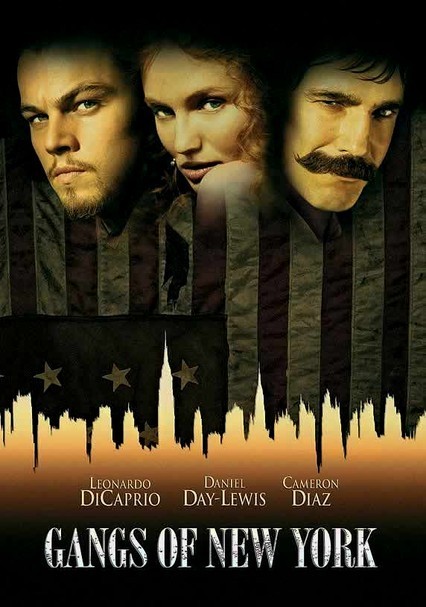
Gangs of New York-2002

Gangs of New York-2002

Director Martin Scorsese

Starring Leonardo Dicaprio, Daniel Day-Lewis, Cameron Diaz

Scott’s Review #1,327
Reviewed December 26, 2022

Grade: A-

Gangs of New York (2002) is an extremely violent and bloody epic by director Martin Scorsese that is an exquisite piece of filmmaking nearly flawless in every way except maybe its length and story.

On the one hand, it’s a beautifully choreographed and filmed crime drama with perfect costumes, art direction, and cinematography. Still, on the other, it’s tedious and lengthy, especially during the final hour, with choppy storytelling and seemingly one long continuous battle.

Scorsese being Scorsese and knowing his way around crafting an excellent film or two left me ruminating over the cinema and pondering whether I’d ever need to see it again.

Usually, I’m all in when it comes to repeated viewings of his films,  especially Raging Bull (1980) or Goodfellas (1990) but with Gangs of New York, the sobering almost three hours running time and the non-stop bloodshed gives me pause.

It’s not a mafia film but it is an Irish-centered crime drama harkening back to the mid-1800s so there are historical lessons to be exposed to. Familiar with most of his films there are good guys, bad guys, and a criminal, feuding overtone, and lots of grit and grime to plow through.

I can’t say it’s one of Scorsese’s top 10 but it’s a grandiose, epic-length behemoth that features a host of top-name talent but there are nonetheless aspects that leave it slightly beneath his most famous works.

But that’s nearly akin to comparing the works of Beethoven, Rembrandt, or other geniuses of one art form or another. Anyone respecting Scorsese or appreciating good cinema should see Gangs of New York.

Amsterdam Vallon (Leonardo DiCaprio) is a young Irish immigrant released from prison. He returns to the Five Points seeking revenge against his father’s killer, William Cutting (Daniel Day-Lewis) also known as ‘The Butcher’, a brutal and powerful anti-immigrant gang leader.

He knows that revenge can only be attained by infiltrating Cutting’s inner circle. Amsterdam’s journey became a fight for personal survival and to find a place for the Irish people in 1860’s New York.

The most delicious part of the film is the rivalry between Amsterdam and ‘The Butcher’. DiCaprio and Day-Lewis make powerful sparring partners and as much as Amsterdam’s motivations are admirable it’s Day-Lewis who has the more interesting character.

To no one’s surprise, the actor channels his inner dictator as he method acts throughout the film. To no one’s additional surprise, he steals the show away from other tremendous actors like DiCaprio, Jim Broadbent, and John C. Reilly in supporting roles.

However, I need to ask why Day-Lewis was selected for the Lead Actor Oscar category when he is a supporting one.

Worthy of mention is Cameron Diaz who, for once, plays the dramatic role of a pickpocket. Typically cast in comedic roles she shows she has acting chops.

The story gets a bit wayward about halfway through and I stopped giving the story much credence about three-quarters of the way through. It’s as if Scorsese had frenetic schizophrenia moments with tons of good ideas but none of them formulating a cohesive plot.

The New York City setting is a favorite of mine especially pre-civil war and well before the NYC of modern times even existed. The prevalence of Canal Street and various others make this northeasterner heavily invested in geography.

Finally, to bring it all full circle, Gangs of New York powerfully reminds the audience of the age-old topic of immigration and how those who have citizenship too often oppose those who desire to enter a country they once also did.

‘The Butcher’s’ brutal opposition is a sad reminder of how the United States of America was never united and the senseless violence towards immigrants is never-ending.

Gangs of New York (2002) may not be Scorsese’s best work but even on his worst day, he creates a film worth watching. Mixing toxic masculinity, and revenge with a crazy story he succeeds where other directors might fail by providing compelling filmmaking with all the fixings.

Just don’t get too hung up on the story points.

Oscar Nominations: Best Picture, Best Director-Martin Scorsese, Best Actor-Daniel Day-Lewis, Best Original Screenplay, Best Art Direction, Best Cinematography, Best Costume Design, Best Film Editing, Best Original Song-“The Hands That Built America”, Best Sound
Vanity Fair-2004

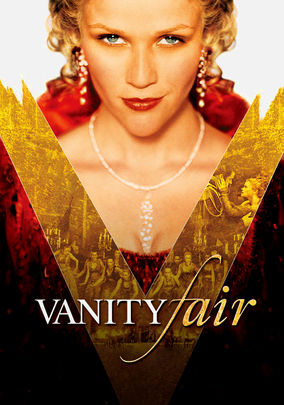
Vanity Fair-2004

Director Mira Nair

Starring Reese Witherspoon, James Purefoy

Scott’s Review #772

Reviewed June 12, 2018

Grade: B

An adaptation of the classic 1848 novel written by William Makepeace Thackeray, Vanity Fair (2004) softens the traditionally unlikable and roguish character of Becky Thatcher quite a bit.

This proves not to be the smartest move as the character, now more of a heroine is watered down and forever changed, as is this film adaptation.

Reese Witherspoon (Becky) drew harsh criticism for her starring turn, but I do not think she is so bad, and the costumes and set designs are wonderful and quite the highlight of the resulting period piece.

In 1802 England, we meet Becky Sharp, a young woman who has just graduated from a School for Girls and been sent to work as a governess. Because her father, a talented painter, is impoverished, Becky is cast aside as lower class and deemed undesirable to anybody upper class- the men she is most interested in.

Despite her reputation as a tart, Becky aspires to marry rich and frequently gets into trouble with her shenanigans and smart tongue while romance blooms with the handsome Rawdon Crawley (Purefoy).

The story is supposed to encompass Becky’s life from approximately age eighteen through her mid-thirties (though Witherspoon never appears to age) and displays her trials and tribulations, her loves and losses through the years.

We follow her from rural England to London and Belgium, eventually residing in Germany, reduced to working in a casino, where the film concludes.

The film is a treat as the various countries as they appeared in the nineteenth century, and the wars and battles occurring during this period are featured making for an interesting history lesson.

The main appeal should be Becky Thatcher since the film revolves around her, and numerous criticisms were thrown around accusing the film of casting Reese Witherspoon in the important and demanding role based on her star power at the time.

In 2004 Witherspoon was experiencing enormous film success after 2001’s Legally Blonde and 2002’s Sweet Home Alabama- admittedly fluff films- but securing her box office power nonetheless. These films undoubtedly led to her being cast in the pivotal role, but I thought the star was perfectly adequate and gave Becky appropriate humor and zest.

Based on Witherspoon’s “girl next door” persona and the fact that she just looks like a good character- perplexing the decision to cast her if filmmakers wanted to be true to the character.

Witherspoon was delicious in 1999’s Election as villainous Tracy Flick, a role of a lifetime. But that is the exception and not the standard.

But I digress- the bottom line is that while she is a capable actress, she does not give the gritty performance that many were expecting to be true to the character in the novel.

The rest of Vanity Fair is just mediocre as far as the story goes.

While the antics of Becky are both humorous and dramatic, her rooting value in the romance department does not come across in the 2004 film offers- not enough chemistry exists between the leads to warrant much support.

Opinions abound that other incarnations of Vanity Fair are far more superior and compelling than this film is, but I have yet to see any.

Compliments must be reaped on the costume department and the art direction- both are superior. Such threats are the lavish and colorful costumes and gowns that mark the time. From the classic style hats and highfalutin dresses featured in ball after ball, this aspect is nearly enough to recommend a watch over the dull story and immeasurably the highlight of the entire film.

Vanity Fair (2004) is considered a messy travesty to those well-read enough to have turned the pages of the classic novel. Since I have not yet read the book, perhaps I enjoyed the film slightly more than I should have, but alas, I did not find the casting of Witherspoon as Becky nor the overall product to be drivel as many did.

I recommend the film for the gorgeous visual treats if nothing else.

The Lady in the Van-2015

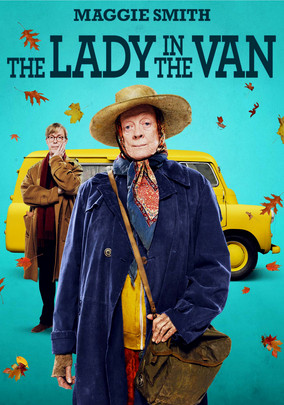
The Lady In The Van-2015

Director Nicholas Hytner

Starring Maggie Smith

Scott’s Review #610

Reviewed January 19, 2017

Grade: B

Maggie Smith can do no wrong and I will happily enjoy watching her in anything- anytime. Around in film since the 1950s this lady deserves a starring film role.

Utterly distinctive she is, as legendary actress Bette Davis was,  Smith has a style purely her own. Her facial expressions and exasperated gasps make her one of the great film stars.

The Lady in the Van (2015) is specifically made for her, but besides her talents, the movie is a decent offering, but very safe.

It lacks the depth that it could have had.

Written by Alan Bennett, the film tells the true story of Mary Sheperd, an elderly woman living in a broken-down van, who befriends Bennett and eventually lives in his driveway for fifteen years before her inevitable death.

Set in northern London, a quaint and gorgeous part of the world, Mary harbors a deep secret involving her van and is revealed to have been a star piano pupil in her day.

Smith has no qualms about playing unflattering characters.

Shepherd is grizzled, abrupt, and rude, but Smith puts a lot of heart into her too, so the audience senses her vulnerability and falls in love with her. With her sad protruding blue eyes, wrinkles for miles, and chirpy voice, Smith is fantastic at giving her all to the role.

The rest of the cast adequately play their roles but are limited and out-shadowed at every turn. Most notable is the wasted talents of Jim Broadbent, appearing in a small and quite meaningless role.

Besides Smith’s brilliant performance, The Lady in the Van lacks layers. The story is good, but we never see many of Mary’s struggles. How does she afford food? How is she not sick? The film skims over the darker elements of homelessness in favor of a lighthearted tale.

Fine, but what about her inevitable issues?

Other less important stories are mentioned but not fully explored. Alex speaks to what looks like his twin brother, but is it his alter ego?

Young men come and go at night, so the presumption is that Alex is gay, and in the end, we do see Alex living with a man, but why is this so vaguely written? Why mention it at all?

This story would have been interesting to delve deeper into given that the real Alex Bennett wrote the film.

Other side stories are introduced but remain on the surface. Alex’s mother suffers from Alzheimer’s, but this is not explored much, and Mary’s brother, who institutionalized her at a young age, offers no explanation as to why this was done she had a mental illness- but the brother’s motivations are not clear.

I wanted more from the supporting characters than was offered.

Still, the bottom line is that The Lady in the Van (2015) is a Maggie Smith film, and any in which she has the lead role, is pretty damned good for that reason alone.

Brooklyn-2015

Brooklyn-2015

Director John Crowley

Starring Saoirse Ronan

Scott’s Review #298

80037688

Reviewed December 12, 2015

Grade: A

Brooklyn (2015) is a classic-style Hollywood film that I adored watching. It has a genuine innocence to it with wonderful, powerful acting and perfect cinematography/art direction.

The film is conventional and mainstream, but never sappy.

Based on Colm Toubin’s popular novel, Brooklyn takes place in the early 1950s and is set in Ireland and New York City.

Eilis Lacey, played by Saoirse Ronan, is a young Irish girl with good morals and traditional values. She is faithful and Catholic, with a good upbringing. Not rich by any means, she is intelligent and uses good sense, working hard on weekends in a grocery run by an unkind woman, to save money.

Thankfully, her older sister Rose, whom Eilis adores, has scrimped and saved enough for her to study in the United States, via a church program. Rose does not want Eilis to be trapped in the small Irish town.

While in New York City, an event occurs that necessitates Eilis’s return to Ireland. While home she develops a romantic dilemma that causes her to ponder whether to return to her new life in New York City or stay in Ireland.

Eilis is conflicted, which is the main focus of the story.

On paper, one might assume that Brooklyn is sappy, “chick flick” or a trite romance with predictability for miles- it isn’t. Everything about the film is perfect and is very detail-oriented.  The pieces somehow fit together- good direction, good camerawork, good acting, and good story-telling.

Throughout the film, I found myself in an emotional state.

When Eilis meets the young and charming Tony, a working-class Italian American, who becomes infatuated with her, I worried how their different backgrounds will be handled. Their courtship is sweet and tender and I cheered for them as their slow romance builds.

She is taught to eat pasta correctly to impress his traditional parents. He walks her home every night. Tony and Eilis have a sweetness and purity that is tough not to fall in love with as an onlooker.

On the other hand, when dramatic events unfold, the excellent acting makes Brooklyn a delight and quite emotionally powerful. One might find themselves in a flood of tears by the end.

Thanks to Ronan, an impressive talent since my discovery of her work in 2007’s Atonement, she elicits in Eilis a strength and stoicism that is tested when she breaks down at one point in the film.

Important to mention is the awe-inspiring performances by Fiona Glascott as Eilis’s sister Rose, and Jane Brennan as Eilis’s mother.

Unknown actresses (to me), both give dramatic and dynamic performances in their respective roles.

Wonderful to see are veteran character actors Jim Broadbent and Julie Walters as Father Flood and Madge, respectively.

What a visual treat Brooklyn is! As the title reveals, most of the action does take place in this New York City borough, and the influx of Irish and Italian immigrants during this period of history is apparent in the clothing and the cinematography.

The lush green and vast landscape of Ireland makes this divine to view.

A story of bravery, romance, and kindness, Brooklyn (2015) is a wholesome and feel-good film, but, I was immersed in the story and the look of the film from the very first shot.

Oscar Nominations: Best Picture, Best Actress-Saoirse Ronan, Best Adapted Screenplay