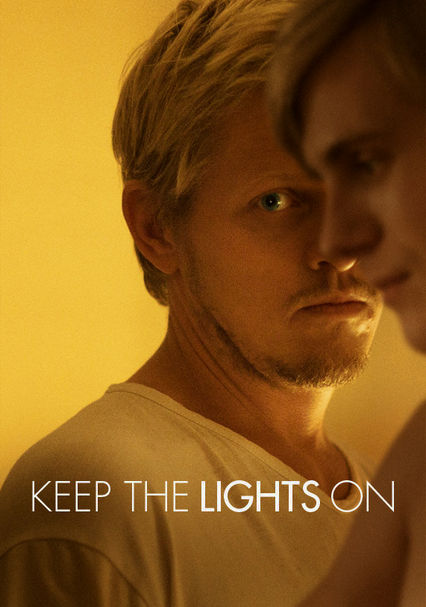
Keep The Lights On-2012
Director Ira Sachs
Starring Thure Lindhardt, Zachary Booth
Scott’s Review #1,100
Reviewed January 16, 2021
Grade: A
With such a healthy dose of LGBTQ+ films released during the 2010s, enough independent productions exist to please nearly everyone striving for good diversity in film.
Over the years, it was tough to find specific genre films without having to hunt for subtle clues filmmakers incorporated.
LGBTQ+ films are now a dime a dozen, which is good but makes some films fall under the radar.
Keep the Lights On (2012) is a romantic drama, rather mysterious, about two men and the nine-year-long love affair they share. It’s not a happy watch because drug addiction is a large part of the story.
It portrays the men as human beings with passion and feelings, experiencing joys and pains, rather than as caricatures or comic relief.
This is progress, and worthy of much praise.
The only issue with the film is that by 2012, and the decade as a whole, so many similar films were being made that it’s hard to distinguish it from other high-profile works.
The LGBTQ bar was set very high with Brokeback Mountain in 2006, and recent offerings like Carol (2015) and Moonlight (2016) thrust the LGBTQ+ community into the spotlight.
Keep the Lights On has many positives, especially cinematically, but it risks getting lost in the shuffle against other genre films.
It’s worth checking out this gem.
It’s best compared to the exceptional same-sex love story Call Me by Your Name (2017). Both are character-driven and are both happy and tragic.
Keep the Lights On is technically an American film. It feels like an international film, though, because it centers around a Danish filmmaker who lives in New York City.
Erik (Thure Lindhardt) is a troubled, creative soul who struggles to complete a documentary about an artist named Avery Willard.
He meets and enters into a loving but complicated long-term relationship with Paul (Zachary Booth), a lawyer in the publishing industry who struggles with drug addiction.
That’s what makes their relationship so complicated. They are bonded but plagued with outside challenges. It began in 1998 and ended in 2006.
They meet via a phone sex chatline, which adds to the sexual mystique. Erik is gay and happily out, but Paul indulges in both men and women and is sexually conflicted.
He gets Erik high. Will he lead Erik down a dark path? Will Paul clean up his act or die? Erik and Paul bed numerous other men throughout the story. This is an intriguing addition to the complicated events.
Since the film is about a filmmaker, it should include cool, inventive camera angles and editing, and it does. Ira Sachs, an American director, delivers lush shots of New York City and looks through the lens of a true creative spirit, which justifies Erik’s character.
The story builds slowly, and plenty of times I waited for something exciting to happen. But real life is made up of many small moments, and I loved how the film is, instead of adding big, momentous scenes for effect.
The audience is meant to root for Erik and Paul to trot into happily-ever-after territory. This may or may not happen.
Keep the Lights On has a vague ending open to interpretation.
Erik and Paul look similar, which I found very interesting. They say that many same-sex couples are attracted to individuals who look like themselves. I’m not sure how true this is, but I wondered if Sachs had a point to make.
Can a person have multiple sides that they see in other people? Keep the Lights On is told more from Erik’s perspective, and he sees in Paul the dark side of himself.
The honesty that exudes from Keep the Lights On comes from Sach’s relationship with a publisher he met and fell in love with. The truthfulness comes across on screen, which is the main appeal of the overall experience.
I love the title, which can be interpreted in a few different ways, especially once the conclusion arrives.
I admire that Keep the Lights On (2012) was made, and the characters convey a longing and yearning that feels quite humanistic. It feels like it was created based on fact rather than a studio idea conjured up around a boardroom table.
Ira Sachs creates an excellent, quiet film about two men and the love story they share. Their troubles come and go, but their passion and bond never waver.
Independent Spirit Award Nominations: Best Feature, Best Director-Ira Sachs, Best Male Lead-Thure Lindhardt, Best Screenplay