Tag Archives: John Sessions

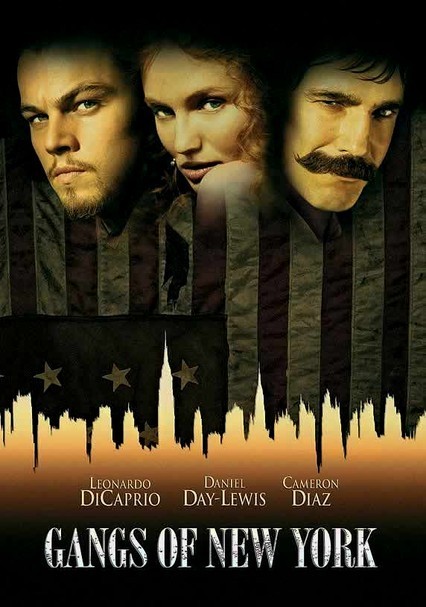
Gangs of New York-2002

Gangs of New York-2002

Director Martin Scorsese

Starring Leonardo DiCaprio, Daniel Day-Lewis, Cameron Diaz

Scott’s Review #1,327
Reviewed December 26, 2022

Grade: A-

Gangs of New York (2002) is an extremely violent and bloody epic by director Martin Scorsese,s an exquisite piece of filmmaking, nearly flawless in every way except maybe its length and story.

On the one hand, it’s a beautifully choreographed and filmed crime drama with perfect costumes, art direction, and cinematography.

Still, it’s tedious and lengthy, especially during the final hour, with choppy storytelling and a seemingly one-long continuous battle.

Scorsese, being Scorsese and knowing his way around crafting an excellent film or two, left me ruminating on cinema and pondering whether I’d ever need to see it again.

Usually, I’m all in when it comes to repeated viewings of his films, especially Raging Bull (1980) or Goodfellas (1990), but with Gangs of New York, the sobering almost-three-hour running time and the nonstop bloodshed give me pause.

It’s not a mafia film, but it is an Irish-centered crime drama set in the mid-1800s, so there are historical lessons to be learned.

Familiar with most of his films, there are good guys, bad guys, and a criminal, feuding overtone, and lots of grit and grime to plow through.

I can’t say it’s one of Scorsese’s top 10, but it’s a grandiose, epic-length behemoth that features a host of top-name talent; there are, nonetheless, aspects that leave it slightly beneath his most famous works.

But that’s nearly akin to comparing the works of Beethoven, Rembrandt, or other geniuses of one art form or another. Anyone who respects Scorsese or appreciates good cinema should see Gangs of New York.

Amsterdam Vallon (Leonardo DiCaprio) is a young Irish immigrant released from prison. He returns to the Five Points seeking revenge against his father’s killer, William Cutting (Daniel Day-Lewis), also known as ‘The Butcher’, a brutal and powerful anti-immigrant gang leader.

He knows that revenge can only be attained by infiltrating Cutting’s inner circle. Amsterdam’s journey became a fight for personal survival and to find a place for the Irish people in 1860s New York.

The most delicious part of the film is the rivalry between Amsterdam and ‘The Butcher’. DiCaprio and Day-Lewis make powerful sparring partners, and as much as Amsterdam’s motivations are admirable, it’s Day-Lewis who has the more interesting character.

To no one’s surprise, the actor channels his inner dictator as he method-acts throughout the film. To no one’s additional surprise, he steals the show away from other tremendous actors like DiCaprio, Jim Broadbent, and John C. Reilly in supporting roles.

However, could you explain why Day-Lewis was selected for the Lead Actor Oscar category when he is a supporting actor?

Worthy of mention is Cameron Diaz, who, for once, plays the dramatic role of a pickpocket. Typically cast in comedic roles, she shows she has acting chops.

The story gets a bit wayward about halfway through, and I stopped giving the story much credence about three-quarters of the way through. It’s as if Scorsese had frenetic, schizophrenic moments with tons of good ideas, but none of them formed a cohesive plot.

The New York City setting is a favorite of mine, especially pre-Civil War and well before modern-day NYC even existed. The prevalence of Canal Street and various others makes this northeasterner heavily invested in geography.

Finally, to bring it all full circle, Gangs of New York powerfully reminds the audience of the age-old topic of immigration and how those who have citizenship too often oppose those who seek to enter a country they once entered themselves.

‘The Butcher’s’ brutal opposition is a sad reminder of how the United States of America was never united, and the senseless violence towards immigrants is never-ending.

Gangs of New York (2002) may not be Scorsese’s best work, but even on his worst day, he creates a film worth watching.

By mixing toxic masculinity and revenge with a crazy story, he succeeds where other directors might fail, delivering compelling filmmaking with all the fixings.

Just don’t get too hung up on the story points.

Oscar Nominations: Best Picture, Best Director-Martin Scorsese, Best Actor-Daniel Day-Lewis, Best Original Screenplay, Best Art Direction, Best Cinematography, Best Costume Design, Best Film Editing, Best Original Song-“The Hands That Built America”, Best Sound

Belfast-2021

Belfast-2021

Director Kenneth Branagh

Starring Jamie Dornan, Caitríona Balfe, Jude Hill

Scott’s Review #1,202

Reviewed November 28, 2021

Grade: A-

Belfast (2021) is a film I wanted to see based solely on the year-end awards buzz it is receiving as of this writing.

The trailer would lead you to believe that the film is a sentimental and heartwarming journey through the lives of a group of people living in Belfast, Ireland.

This is nothing but strategic marketing.

The film is significantly better than the trailer suggests, offering a dark and raw exploration of a family torn between their current lives in Belfast and the opportunity to leave the troubled city for new prospects in England.

However, it’s not all doom and gloom, and in fact, Belfast offers enough humor, entertainment, and drama to please a broad audience. There also exists a lesson in kindness, decency, and respect that is so needed in the world today.

Belfast is a movie rich in real-life experiences from director Kenneth Branagh’s own life, which successfully lends realism and honesty to the picture.

The film is told through the eyes of a nine-year-old boy named Buddy, wonderfully played by Jude Hill. He struggles to forge a path from childhood to manhood in a world that has been turned upside down.

It is 1969, and battles over religion have overtaken his neighborhood with radical Protestants wanting the Catholics out.

Buddy experiences the joys and sorrows of young love, loss, joy, laughter, music, and the magic of the cinema.

His family surrounds him- Ma (Caitríona Balfe), Pa (Jamie Dornan), Granny (Judi Dench), Pop (Ciarán Hinds), and a brother. They each fill Buddy’s life with kindness and fun.

The film starts slowly for me, despite an immediate, wonderfully compelling slow-motion sequence in which Buddy is surrounded by violence and terror as he walks home from school on a pleasant afternoon.

As I ponder Belfast, I realize that much of the film is slow, yet rich in texture and goodness. Every so often, an emotional scene erupts, but then a great deal of it is Buddy’s everyday experiences.

The black-and-white cinematography is crucial in portraying the bleakness of Belfast and how its residents strive to add some life. Most are born and die where they live.

Branagh adds an occasional glimpse of color, which is effective in showing a burst of delight in the characters’ lives. This is most powerful when the family goes to the cinema and enjoys an afternoon watching Chitty Chitty Bang Bang.

The lighting and extreme close-ups of some characters’ faces reveal their emotions, while the landscape shots are appropriately smoky and bright. This fits the mood perfectly.

The film features music by Belfast native Van Morrison, including eight classic songs and a new song Morrison wrote for the film.

The acting is superb by all the principal cast, and Dornan and Balfe provide the emotional core. Both actors are beautiful, and their performance of ‘Everlasting Love’ is simply delightful.

Providing proper role models for their children, Dornan’s Pa nearly had me in tears when he told Buddy that a person’s religious beliefs are unimportant, but their kindness is what truly matters.

He is a progressive man trapped in a traditional world.

In the end, the family chooses to reach for the stars, and the moment is fulfilling for both the characters and the viewers.

Belfast (2021) did not completely win me over until it ended, when I realized that I had witnessed a superior film. Branagh fuses heart and decency into a tale of a family’s struggles and trials.

It’s a message film that doesn’t scream or preach that message, but instead gives a quiet lesson in humanity.

Oscar Nominations: 1 win-Best Picture, Best Director-Kenneth Branagh, Best Supporting Actor-Ciarán Hinds, Best Supporting Actress-Judi Dench, Best Original Screenplay (won), Best Original Score-“Down to Joy”, Best Sound

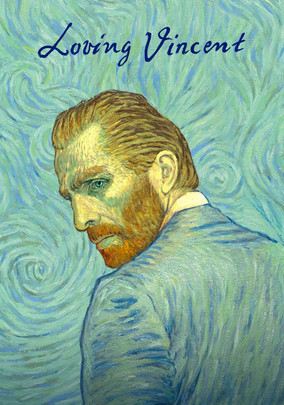
Loving Vincent-2017

Loving Vincent-2017

Director Dorota Kobiela, Hugh Welchman

Voices Douglas Booth, Saoirse Ronan

Scott’s Review #738

Reviewed April 5, 2018

Grade: B+

Loving Vincent (2017) is a unique animated feature that is quite the artistic experience and vastly different from any typical film of this genre.

Being the first of its kind to be a wholly painted animated feature, hopefully, other films will follow suit, resulting in an exuberance in creativity.

While Vincent van Gogh’s biography is fascinating, the dramatic plot often left me wondering about the accuracy of all the details.

Still, the film is to be celebrated for its progressive and edgy nature.

Cleverly, the actors starring in the vehicle act while they are subsequently drawn so that the viewer can imagine the action as if it were a standard film since the drawings mirror the actors involved.

For example, Saoirse Ronan can clearly be distinguished as the daughter of a local boatman, who was rumored to be keeping close company with van Gogh before his death. We know it is the actress, but in painting form, eliciting a surreal experience.

The action begins one year following tortured artist, Vincent van Gogh’s, tragic suicide. Postman Joseph Roulin asks his son Armand to deliver Van Gogh’s last letter to his brother, Theo.

Suspicion surrounds the artist’s death as mere weeks earlier his mood was calm and level-headed, making his death cause for alarm. From this point, Armand traverses throughout France to spend time with those who had dealings with Van Gogh during the last days of his life.

Those characters include his doctor, an innkeeper, and others who may hold clues to his death’s mystery.

From a story perspective, Loving Vincent is a compelling piece as mystery and suspicion are cast around the actual death of the artist. This is not so much a whodunit as we know of the resulting suicide, however, the film casts some doubt about the why of that fateful night.

Did someone drive Van Gogh to take his own life suddenly? What was the romantic situation between either Marguerite or perhaps even Adeline? The supposed copying of Van Gogh’s art by his doctor, Dr. Paul Gachet, is fascinating.

Through these dramatic and intriguing facets, I began to wonder what was factual and what was not.

The brilliant part of Loving Vincent is the unusual and artistic method by which the film is created.

The fact that the film is about one of the most respected and appreciated artists of all time is no accident, and this perfectly encapsulates the overall tone of the film.

Throughout the one hour and thirty-four-minute duration of the film, I was continually enamored by its ” look.” Exquisite and quite beautiful, the filmmakers chose classically trained painters over traditional animators, and I feel this makes all the difference.

The use of actual Van Gogh paintings was an instrumental part of the film, which was modified to fit into the allotted screen room. The cast performed the film, as if it were a play, in front of a green screen, and then the painters created their magic—pretty incredible!

Also, mind-blowing uses colors to change the time of day (brightness and darkness), which results in a highly effective tone.

By creating a visual masterpiece of cinematic beauty, Loving Vincent (2017) is a feast for the eyes.

Although it is unclear whether the story is true to form or whether facts are embellished, the film succeeds as a work of art and provides a good glimpse into the life of one of the world’s most beloved and tortured artists.

Oscar Nominations: Best Animated Feature Film

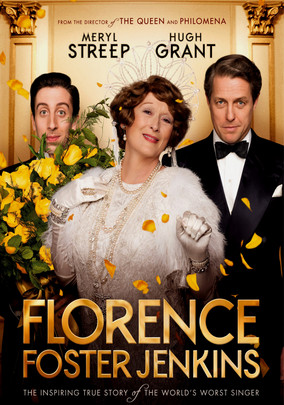
Florence Foster Jenkins-2016

Florence Foster Jenkins-2016

Director Stephen Frears

Starring Meryl Streep, Hugh Grant

Scott’s Review #613

Reviewed January 30, 2017

Grade: B

Director Stephen Frears loves to direct films starring vehicles for mature actresses. Judi Dench, Helen Mirren, and Meryl Streep have benefited vastly from his direction (all received Oscar nominations).

In Florence Foster Jenkins (2016), Frears crafts a warm-hearted tale about a famous real-life opera singer, the title character of whom is played by Meryl Streep.

The film is likable but not up to par with other Frears’ gems, specifically Philomena (2013) or The Queen (2006).

Given the subject matter, the film is too safe for my tastes and should have been darker.

Florence Foster Jenkins was a New York City socialite and heiress who flourished in 1944. She founded the Verdi Club and did a great deal of good for music, specifically opera, which she adored.

Her husband, Bayfield, played by Hugh Grant, nicknames her “Bunny.” He reveres her, but not physically—he resides elsewhere with a girlfriend.

This is due to Bunny being afflicted with long-term syphilis, causing her to be medicated and rendering her bald and unable to engage in sexual relations.

Bunny is a wretched, flat singer; despite her passion for singing, everyone convinces her how wonderful she is because she is so well-regarded in her social circle. Many people are paid off in exchange for their support.

Due to Bunny’s medication, it is assumed that she cannot hear properly, leaving her unaware of how badly she sings. Bunny is now determined to sing at Carnegie Hall, and Bayfield must scramble to make sure no critics are anywhere in sight for the big show, saving his wife from humiliation.

Any film starring Meryl Streep is assured to be fantastic from an acting standpoint, and, per usual, she does not disappoint. Streep envelopes the role of Bunny, giving her charm and a vulnerability that only Streep can do.

Although the character knows what she wants and is stubborn, she is also kind, and we see passion oozing from her pores.

Streep is the highlight and the draw of the film.

Hugh Grant deserves kudos, and I liked the chemistry between the two actors. Although seeking physical relations with another woman may make him appear a cad, Grant also gives Bayfield sensitivity and genuine care for his wife.

They have “an arrangement,” but he hides his girlfriend when Bunny shows up unexpectedly, not wanting Bunny to be embarrassed.

Grant’s and Streep’s scenes together are tender and believable.

Like Bunny’s pianist, McMoon, Simon Helberg also positively influences the film. Hired to accompany Bunny’s singing, he is initially appalled and bemused but finally understands Bunny, coming to love and respect her for who she is.

The character is clearly gay (the film never comes out and says this), but gay themes are common in Frears films, and it is a non-issue among the principal characters, excellent, but perhaps unrealistic for that time.

A flaw of the film is the lack of any purely great moments. I suppose the climax at Carnegie Hall should have been it, but I did not wholly buy the entire film.

Even the crowd’s laughter and mocking of Bunny seem to be done in a soft, light way.

Nonetheless, Florence Foster Jenkins (2016) is a decent offering, and Streep is the ultimate selling point.

The costumes are also great.

Oscar Nominations: Best Actress-Meryl Streep, Best Costume Design

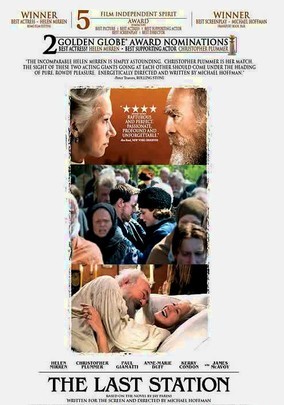
The Last Station-2009

The Last Station-2009

Director Michael Hoffman

Starring Christopher Plummer, Helen Mirren

Scott’s Review #569

Reviewed December 28, 2016

Grade: A-

The Last Station (2009) is a wonderful film.

It contains many worthwhile elements- history, culture, good drama, and great acting.

Starring seasoned veterans such as Christopher Plummer and Helen Mirren, the fantastic acting is as good as it gets.

The film tells the story of the final year in the life of famous Russian author Tolstoy and the relationship he has with his family- specifically his wife, Sofya, and his disciples.

The year is 1910, and Tolstoy is ailing. He has had a stormy yet passionate relationship with his wife for decades, which is explored in the film.

The film’s main point is greed and in-fighting for control of a great literary figure’s legacy and money.

The main strong point of The Last Station is the relationship between Tolstoy and Sofya- both characters are headstrong and opinionated, but also madly in love, which leads to many sessions of battle.

This is a film of substance.

Director Michael Hoffman also mixes some humor with the heavy drama.

In conclusion, you might need to use some hankies.

Oscar Nominations: Best Actress-Helen Mirren, Best Supporting Actor-Christopher Plummer

Independent Spirit Award Nominations: Best Feature, Best Director-Michael Hoffman, Best Female Lead-Helen Mirren, Best Supporting Male-Christopher Plummer, Best Screenplay