Tag Archives: Alan J. Pakula

All the President’s Men-1976

All the President’s Men-1976

Director Alan J. Pakula

Starring Robert Redford, Dustin Hoffman

Scott’s Review #1,544

Reviewed August 19, 2026

Grade: A

With the United States political landscape rife with corruption consistently since 2016, All the President’s Men (1976) takes viewers back to a simpler time when dishonesty was considered abhorrent.

It actually meant something in the political spectrum.

This is a sad reality when the truth doesn’t mean what it used to mean, and a sitting president can be a convicted felon, among other heinous actions.

But All the President’s Men does what it does best: remind audiences of journalism’s intended integrity and dedication to the truth.

Sadly, today, the media has become meek and complacent, in stark contrast to the characters in the film.

All the President’s Men is based on a 1974 non-fiction book written by the reporters featured in the film.

Two inexperienced reporters and rivals working for the Washington Post, Bob Woodward (Robert Redford) and Carl Bernstein (Dustin Hoffman), research the botched 1972 burglary of the Democratic Party Headquarters at the Watergate apartment complex.

With the help of a mysterious source, code-named Deep Throat (Hal Holbrook), the two reporters make a connection between the burglars and a White House staffer.

Despite dire warnings about their safety, the duo follows the money all the way to the top and then to President Richard Nixon.

The film is directed exceptionally well on all levels, from the acting and writing to the mood. Special credit goes to the editing team led by Robert J. Wolfe.

He also edited The Getaway (1972), which probably best exemplifies his exceptional style for viewers familiar with that film. The quick shots of the newsroom, typewriters, Washington, D.C., etc. all mesh together with the sound.

Screenwriter William Goldman crafts a crisp, intelligently nuanced script which takes the stereotypically mundane subject of investigative journalism and turns it into a crackling, enthralling experience.

Director Alan J. Pakula creates a somewhat frenetic pace, driven mainly by the quick clicking of a typewriter keyboard against the characters’ rapid movements.

The chemistry between lead actors Robert Redford and Dustin Hoffman is terrific. Actors who appear to be opposites: Redford, suave and charismatic; Hoffman, awkward and mousy, the pair work well together to create a bond based on finding the truth.

Supporting characters flourish as well. Jason Robards as the reporter’s boss, Ben Bradlee, is gruff yet understanding of his journalists’ efforts.

Hal Holbrook, Jack Warden, and Jane Alexander are also key characters in unraveling the political scandal.

Holbrook, in particular, presents a mysterious vibe central to the entire story. As he lurks in the shadows for much of the film, this heightens the dark, secretive domino effect as the scandal comes to light.

In fact, the cinematography’s overwhelming dark atmosphere enhances the entire film.

The film is so well structured that numerous films released after 1976 patterned themselves around All the President’s Men.

Arguably, pairing well with Network, made the same year, the film influenced efforts like The Paper (1994), Zodiac (2007), and Spotlight (2015).

Fifty years after its initial release, which brought heaps of praise and accolades, All the President’s Men (1976) holds up exceptionally well as Americans still yearn for justice and the subject matter remains incredibly relevant.

Oscar Nominations: 4 wins-Best Picture, Best Director-Alan J. Pakula, Best Supporting Actor-Jason Robards (won), Best Supporting Actress-Jane Alexander, Best Screenplay-Based on Material from Another Medium (won), Best Art Direction (won), Best Film Editing, Best Sound (won)

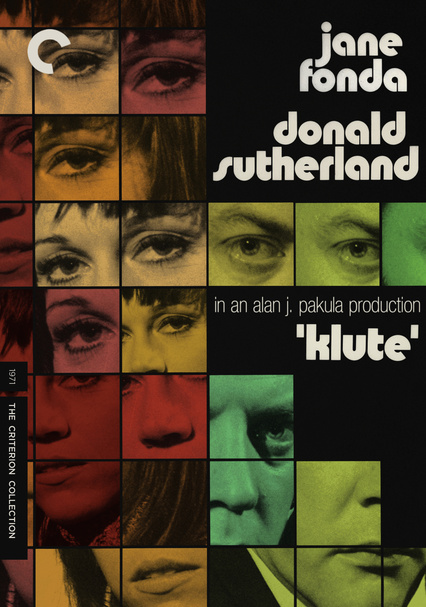
Klute-1971

Klute-1971

Director Alan J. Pakula

Starring Jane Fonda, Donald Sutherland

Top 250 Films #234

Scott’s Review #1,351

Reviewed March 12, 2023

Grade: A-

I’ll gladly watch any film Jane Fonda appears in, especially early treats like They Shoot Horses, Don’t They (1969), Coming Home (1978), and On Golden Pond (1981), but Klute (1971) trumps them all.

Fonda plays a prostitute, one with intelligence, manipulation skills, and deep introspective thought.

Teamed with Donald Sutherland, who is quite extraordinary, the duo sink their teeth into a taut psychological thriller chasing a serial killer.

The inventive part is that the film is hardly a whodunit, yet it uses long sequences of calm dialogue and few editing breaks, making it stand out with great style and substance.

Bree Daniel (Fonda) is a New York City call girl who becomes absorbed in an investigation into the disappearance of a business executive.

Detective John Klute (Sutherland) is hired to follow Bree and eventually begins a romance with her.

Klute is not the only one on Bree’s trail. A killer is on the loose, having killed two prostitutes with whom Bree is friendly. They must figure out the deadly puzzle before it’s too late.

Fonda plays Bree wonderfully. Gorgeous and well-dressed, Bree is aching to leave the business and launch an acting or modeling career, but she keeps striking out on both fronts.

Fonda assures the audience that Bree is brilliant and uses her smarts to get the best of the men she beds.

Across several scenes where she chats with her shrink, we learn a great deal about Bree and how her mind works. While she cringes at a dull life of being married and darning socks, she also craves stability and self-worth.

She aptly embraces her lifestyle, but on her terms. When briefly jaded by a pimp played by Roy Scheider, I cringed because Bree is better than that.

I only wanted to learn a bit more about Bree’s childhood and how she wound up as a call girl, but at the same time, the mystique works well. The ambiguity only makes Bree more complex.

Preconceived notions or subpar writing might have had the character dubbed the overdone ‘hooker with the heart of gold’ title, but there are no clichés to be found.

Written by Andy and Dave Lewis and directed by Alan J. Pakula, they craft a complex film that gives equal focus to the intriguing serial-killer pursuit and the workings of its lead female character.

Surprisingly, the men achieve both goals. In later years, a woman might have written the screenplay, but it’s impressive how boldly they write Bree.

Klute is also well written. Similarly shrouded in mystery, we know that the investigator is the strong, silent type and falls for Bree hook, line, and sinker. Has he been married? Does he have kids? Why the fascination with Bree?

He only mirrors the audience as we become equally smitten with her. The fact that he knows the killer is icing on the cake, adding rich texture to the storytelling.

The other facets of Klute are strong from a technical and location perspective.

The interior sequences, mostly in Bree’s apartment building, are superior, with dull lighting and an eerie musical score that sets the proper mood. After downsizing from Park Avenue, Bree has a decent Manhattan apartment, but it has dated appliances and unflattering lighting.

The exterior New York City location shots are fun to look at and help a native tri-state area resident identify various neighborhoods.

Early 1970s New York City was not a pretty sight, and the Wall Street area and garment district, where the riveting action culminates, are terrific.

The scene with Jean Stapleton as a no-nonsense secretary is delightful. Forever remembered as Edith Bunker on the television series All in the Family, it’s great fun to see her in Klute and remember that she appeared in films before her television success.

Klute (1971) is a taut, superior thriller that sometimes is a bit too complex, but it scores a winning run with its marriage of a character study and intelligent writing.

Thanks to Fonda and Sutherland, and a screenplay that bravely goes left of center when it easily could have gone straightforward, Klute is a memorable piece of cinema.

Oscar Nominations: 1 win-Best Actress-Jane Fonda (won), Best Original Screenplay

Golden Globe Nominations: 1 win-Best Actress-Drama-Jane Fonda (won), Best Screenplay