Tag Archives: Alfred Hitchcock

Vertigo-1958

Vertigo-1958

Director Alfred Hitchcock

Starring James Stewart, Kim Novak

Top 250 Films #1

Scott’s Review #151

1089727

Reviewed August 7, 2014

Grade: A

Over the years, Vertigo (1958) has quickly become one of my favorite Alfred Hitchcock films. With each repeated viewing, I learn, appreciate, or see something new.

It is an absolute masterpiece.

The primary appeal of Vertigo lies in its mystique and dream-like quality, which offer a beautiful cinematic experience. It is sometimes ominous, psychological, gloriously complex, and even confusing.

That is what makes it extraordinary.

Considering the time, the colorful opening visuals are dynamic, groundbreaking, and stunning.

The story involves a retired detective, Scottie, played by Hitchcock stalwart Jimmy Stewart. Scottie suffers from vertigo, which hinders his daily life.

After an incident in which a police officer is killed, and Scottie blames himself and his vertigo for causing the death, he whiles away the days brooding and keeping companionship with Midge, a college friend to whom he was once engaged.

One day, he is hired by another college friend to follow his wife, played tremendously by Kim Novak, who is acting strangely and periodically disappearing, obsessed with a painting of a woman from years past.

From this point, the plot twists and turns in a mysterious fashion, and a romantic, bizarre, and obsessive love story is intertwined.

Is Scottie in his right mind? Will his vertigo continue to haunt him? What is the secret to Madeleine and Judy? Is Midge as sweet as she appears?

The score to Vertigo is haunting and unforgettable, adding significantly to the film’s mood and ambiance.

Several location shots are featured in San Francisco, including the Golden Gate Bridge, steep streets, the Mission District, and the Redwood Forest.

As with all Hitchcock films, every set and detail is perfect, from paintbrushes, coffee mugs, curtains, and furniture to the gorgeous, bright red décor of the restaurant, which is heavily featured in the film.

How exquisite does Kim Novak look in the film??

Initially critically panned upon its release, it is now considered one of the greatest films. Its unique camera angles and slow, methodical pacing have influenced other films.

The film is not always an easy watch, as it is complex, to be fair, but like a fine wine, it improves with age.

Vertigo (1958) is a layered psychological thriller that gains more appreciation with each viewing.

Oscar Nominations: Best Sound, Best Art Direction

Psycho-1960

Psycho-1960

Director Alfred Hitchcock

Starring Janet Leigh, Anthony Perkins

Top 250 Films #5

Top 40 Horror Films #1

Scott’s Review #165

879522

Reviewed September 6, 2015

Grade: A

Psycho (1960) is the film to end all films, and not just within the horror genre. At the time of its release, it transcended the art of cinema to a new level and has influenced generations of films since, still holding up incredibly well today.

It is undoubtedly one of the greatest Alfred Hitchcock films and one of the greatest films ever made.

Hitchcock took considerable risks and dove from the thriller to the horror genre with Psycho.

The story revolves around a young woman named Marion Crane, superbly portrayed by Janet Leigh. Marion lives in Phoenix, Arizona, and sees her boyfriend (the dashing John Gavin) for frequent afternoon rendezvous at cheap motels when he is in town because they are both struggling financially.

She is presented with an opportunity, via her job, to steal $40,000 and flee the state to start a new life with her beau. She seizes the opportunity.

On the run, she stops at a run-down Bates motel where she meets owner Norman Bates, hauntingly played by Anthony Perkins.

Perkins and Leigh have fantastic chemistry together, and the audience picks up on it—is it romantic? Is there a mysteriousness to it? Something is odd about Norman. They bond over a quiet meal of sandwiches at the motel while discussing life and his ailing mother.

The famous shower scene and the shocking twist that follows are now almost taken for granted, as most people are already familiar with them. However, I can only imagine the shock viewers felt when they first saw these two delights.

To this day, both are still suspenseful.

Fortunately, when I saw this film for the first time, I didn’t know the ending, and I am glad I didn’t, because it took my breath away.

Killing off the leading actor at the start of the film, halfway through, was a novel idea and mind-blowing at the time of its release (1960).

This act left the audience’s mouths agape in disbelief, prompting them to ask, “What now?” “How can this be followed?” This act later influenced the original Scream (1996) film and surprised audiences again.

According to Hitchcock, no one could enter the film after it had started, and viewers were persuaded not to reveal the ending – oh, how I wish that occurred these days.

An aspect of the success and longevity of Psycho is the chemistry between Perkins and Leigh, who got along famously while shooting Psycho, and more importantly, the likability of Norman Bates. There is a rooting value for him, even though he is the villain.

When Marion’s car is only half-submerged in a lake containing her dead body, we root for it to sink entirely because of Norman. The concerned look on Norman’s face has a sense that affects the audio at this point in the story. Norman is troubled and wo, undead, and the audience does not have history.

Let’s not forget Janet Leigh. The audience sympathizes with her predicament. She is hopelessly in love with her man, steals money, is conflicted, and, at her core, is a friendly, decent, kind woman.

Halfway through the film, Marion’s sister, Lila, played by Vera Miles, is introduced as a detective, and the suspense and mystery intensify as they search for Marion and investigate the Bates Hotel and Norman Bates himself.

Miles then takes center stage as the lead in the film, which is intriguing.

The film then returns to horror at the terrific and terrifying conclusion, which will shock first-time viewers.

The musical score (especially the shrill strings) is incredibly effective and influenced other horror films to come (Friday the 13th immediately comes to mind).

Psycho is a film that can be enjoyed and studied over again.

Oscar Nominations: Best Director, Alfred Hitchcock, Best Supporting Actress-Janet Leigh, Best Art Direction, Black-and-White, Best Cinematography, Black-and-White

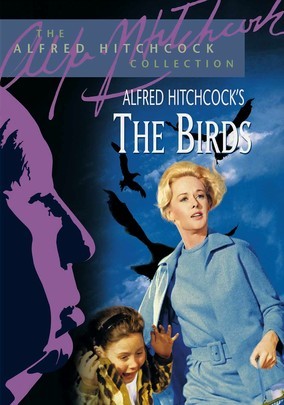
The Birds-1963

The Birds-1963

Director Alfred Hitchcock

Starring Tippi Hedren, Rod Taylor

Top 250 Films #6

Top 40 Horror Films #2    

Scott’s Review #173

308926

Reviewed September 22, 2014

Grade: A

The Birds is one of director Alfred Hitchcock’s finest works.

Made in 1963, following Psycho, it continues Hitchcock’s run of successes, both commercially and critically.

It is set in northern California (in San Francisco and Bodega Bay) and tells the story of unexplained bird attacks in a peaceful small bay town.

Tippi Hedren plays Melanie Daniels, a wealthy socialite from San Francisco who drives to Bodega Bay to pursue a love interest, Mitch Brenner.

Mitch, played by Rod Taylor, is a successful attorney who meets and shares a flirtation with Melanie the day before at a pet store in San Francisco. He regularly visits his mother (Jessica Tandy) and sister (Veronica Cartwright) in Bodega Bay.

Once Melanie arrives in town, birds begin to attack the locals living in the sleepy community periodically.

The Birds is a film that has held up incredibly well and is as exciting and horrifying today as it was in the past.

One intriguing aspect of the film is that it offers no rhyme or reason for the bird attacks, which keeps the viewer guessing when a gull swoops down and attacks innocent Melanie.

It is entirely mysterious and open to interpretation- are birds fed up with being caged?

Are the love birds that Melanie purchased the cause of the attacks? Do the birds hate humans? Why do they attack the children? Why do they peck the eyes of their victims out?

One could spend hours debating these questions.

A major creative success of the film is its decision to eliminate a musical score. The eerie silence and the loud sounds of the birds attacking create a haunting dynamic.

My favorite scene of The Birds features Melanie sitting on a wooden bench in the schoolyard, enjoying a cigarette. Behind her is a deserted jungle gym. She barely notices a tiny bird innocently flying past her and landing on the jungle gym.

She continues smoking her cigarette. The viewer sees what Melanie cannot- as slowly, hundreds of birds land on the jungle gym behind her.

Without music, the scene is deadly silent and dramatic, shifting from close-ups of Melanie to long shots of the birds gathering behind her.

Another interesting aspect of The Birds is the character relationships. Mitch’s mother, Lydia, is afraid of losing her son, so she initially despises Melanie. Mitch’s ex-girlfriend, schoolteacher Annie Hayworth, strikes up a close friendship with Melanie; one might expect them to be rivals.

A hysterical mother lashes out at Melanie, calling her evil and blaming her for the attacks.

During the long periods of calm, one wonders when the next attack will occur—and we know it will. We searched for clues to identify what triggers the attacks, but we found none.

This makes for brilliant and suspenseful filmmaking. They hardly come better than the masterpiece The Birds (1963).

Oscar Nominations: Best Special Effects

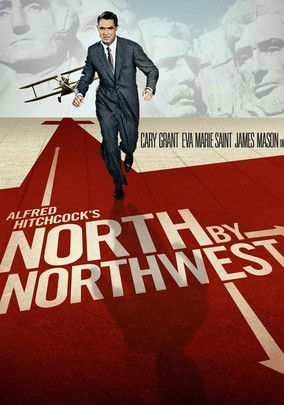
North by Northwest-1959

North by Northwest-1959

Director Alfred Hitchcock

Starring Cary Grant, Eva Marie Saint

Top 250 Films #15

Scott’s Review #90

60000544

Reviewed July 3, 2014

Grade: A

North by Northwest is a 1959 Alfred Hitchcock film, released during the director’s heyday (1950s and 1960s).

It is considered one of his most commercially successful films. It is mainstream fare that contains all the elements of a great Hitchcock film: adventure, intrigue, romance, and suspense.

Unlike in some of his other films, his characters are straightforward and not psychologically wounded, as in some of his others. This is not a slight but merely makes the film “for the masses.”

Charismatic Cary Grant plays the role of successful advertising executive Roger Thornhill. He works in bustling New York City, has a secretary, and is well respected in his circle.

While enjoying drinks at the club the evening before a planned trip to the theater, he becomes a victim of mistaken identity—thought to be George Kaplan- and is accosted by henchmen at a lavish Glen Cove, Long Island mansion.

After a botched attempt on his life, he is arrested and ultimately must race across the United States on the lam to find the real George Kaplan.

The incredible locales range from New York City to Long Island, Indiana, Chicago, and Mount Rushmore.

The film is exciting from start to finish, never letting up, and features a common theme of Hitchcock’s- an “everyman” falsely accused of a crime attempts to prove his innocence.

It differs from some Hitchcock films in that there is not as much psychological analysis of the characters, but rather a good, old-fashioned adventure story with many twists and turns.

In many ways, North by Northwest is a precursor to the enormously popular James Bond films, as Grant brought style, sexiness, and charisma to this sleek feature.

The set style and design look perfect. The lush Long Island estate set is flawless, with a grand staircase and a well-constructed library—not to mention the exterior shot of the enormous house.

The house in Mount Rushmore is sleek, quite trendy, and reeks of high sophistication. It is pretty grand and situated on an incline, featuring an airplane runway.

The chemistry between Grant and Eva Marie Saint is apparent and oozes from the screen from the moment they bump into each other on a train traveling from New York to Chicago. As they dine in the dining car, a flirtatious scene unfolds-the landscape whizzes by in the background, with the comforting train whistle and ambient noise working well.

Their relationship is established, and the characters are intrigued and slightly mistrustful of each other, which lends the scene an edge and complexity that works.

The film features a cutting-edge graphic design in the opening credits, similar to the design used in Vertigo during the same period. The green colors and the sophisticated advertising style of the graphics kick the film off in a creative, ultra-cool, modern way.

Interestingly, Martin Landau’s implied homosexuality in Leonard, henchman to the main villain, Phillip Vandamm, is precisely how Landau played the role. During Hitchcock’s time, homosexuality was strictly prohibited in film, but it was subtly portrayed.

Leonard’s fascination and jealousy towards Vandamm are intertwined with levels of flirtation and vengefulness.

Scene after scene of North by Northwest is filled with suspense—the crop duster scene is my favorite. Shot without music and on location in a dreary, clear, middle-of-nowhere field somewhere in Indiana, the scene is layered with suspense throughout.

Thornhill is scheduled to meet Kaplan at a designated spot. A lonely bus stop, random passing cars thought to be the intended, a deadly airplane, and an explosion all occur, creating a fraught scene.

New fans of Hitchcock should begin with this one—it is mainstream and one of his finest. It contains all the traditional Hitchcock elements, and all the pieces come together perfectly.

North by Northwest (1959) is a masterpiece.

Oscar Nominations: Best Story and Screenplay Written Directly for the Screen, Best Art Direction, Color, Best Film Editing

Rear Window-1954

Rear Window-1954

Director Alfred Hitchcock

Starring James Stewart, Grace Kelly

Top 250 Films #19

Scott’s Review #317

60000397

Reviewed January 2, 2016

Grade: A

I dearly love several Alfred Hitchcock films, and Rear Window (1954) is at the top of that list.

The film is a unique experience in that much of it is shot from the point of view of the main character, L.B. Jeffries, played with conviction by James Stewart, a fixture in several of Hitchcock’s great films.

Wheelchair-bound and confined to his Manhattan apartment, he has nothing more to do than spy on an entire apartment of neighbors across the street.

He witnesses a crime, and a cat-and-mouse game ensues.

What is great about this film is that the viewer gets to know the series of neighbors L.B. watches and glimpses into their lives, some of which are happy and some sad.

Rear Window is shot like a play. The chemistry between Stewart and Grace Kelly is nice, but secondary to the main story’s tremendous impact.

Rear Window (1954) can be watched repeatedly and enjoyed with each subsequent viewing.

Oscar Nominations: Best Director, Alfred Hitchcock, Best Screenplay, Best Sound Recording, Best Cinematography, Color

The Man Who Knew Too Much-1956

The Man Who Knew Too Much-1956

Director Alfred Hitchcock

Starring James Stewart, Doris Day

Top 250 Films #20

Scott’s Review #176

60020329

Reviewed September 26, 2014

Grade: A

The Man Who Knew Too Much is a classic 1956 Alfred Hitchcock film starring James Stewart and Doris Day. The two share tremendous chemistry.

They play a successful married couple: Ben and Jo McKenna, a Doctor and a well-known singer, who travel on a lovely trip to Morocco with their young son Hank.

They are a traditional American family that the viewer trusts and believes in on vacation abroad.

Suddenly, they are approached by a Frenchman named Louis Bernard, who appears somewhat too curious about Ben and his work.

Jo is immediately suspicious of the mysterious man.

This begins a series of events involving mistaken identity, an assassination attempt on England’s Prime Minister, and a trip to London to locate Hank, who criminals have kidnapped.

As with other Hitchcock films—think North by Northwest (1959)—the motivational plot is unclear and, one might argue, unnecessary. Why are the characters attempting to assassinate a political figure? Is there money to be gained? Is there power to be obtained?

These questions are never answered- the film is not about that, but rather about Ben and Jo’s predicaments. The villains —primarily an innocent-seeming English couple and a sneering, rat-like assassin —are one-dimensional characters. The motivations are not revealed.

A remake of the 1934 film with the same title, but far superior, the film is a suspenseful political thriller.

Some interesting comparisons to other Hitchcock films released around the same time that I continue to notice with each passing viewing-

North by Northwest– the ordinary man falling into international intrigue, and Vertigo– Jo is dressed in almost identical fashion to Madeleine/Judy- a classic, sophisticated grey suit with a pulled-up bun hairstyle; the musical scores are incredibly similar- identical in instances; Vertigo’s bell tower is reminiscent of Ambrose Chappel in The Man Who Knew Too Much. Stewart’s Ben climbs up the bell tower in The Man Who Knew Too Much, whereas in Vertigo is terrified of heights, let alone climbing.

These are fascinating tidbits to note for any fan of Hitchcock.

Doris Day’s performance, which is her most fabulous, impressed me. Known for her roles in lightweight romantic comedies and fluff, she proves to be a wonderfully emotional and dramatic character, quite effective in her own right.

The six-minute climactic final sequence, set at a musical concert at the Royal Albert Hall, is among the best in film history and uses no dialogue. This technique is jaw-dropping, as one realizes how much transpires within the six minutes, solely based on physical activity and facial expressions. The entire plot of the film reaches a searing crescendo—quite literally.

Day is strong in this sequence.

In his fourth turn in a Hitchcock film, James Stewart is charismatic, playing the everyman tangled in a web of deceit and espionage.  He takes charge but identifies with the audience; he can be your friend or neighbor, and we trust his character because he is a successful doctor.

The now-legendary song from the film, “Que Sera, Sera (Whatever Will Be, Will Be),” is an integral part of the finale and remains with the audience in a bittersweet yet enduring way long after the curtain closes on the film.

The Man Who Knew Too Much (1956) is exciting, suspenseful, engaging, and fun- just what a Hitchcock film should be.

Oscar Nominations: 1 win-Best Song-” Que Sera, Sera (Whatever Will Be, Will Be)” (won)

Rope-1948

Rope-1948

Director Alfred Hitchcock

Starring Farley Granger, John Dall, James Stewart

Top 250 Films #26

Scott’s Review #323

60020558

Reviewed January 5, 2016

Grade: A

Rope (1948) is one of my favorite Alfred Hitchcock films and a film that flies under the radar amongst his catalog of gems. Made in 1948, the movie, set as a play (and based on a 1929 play), uses one set only and appears to be one long take, making it an understated film.

The action takes place inside a luxurious Manhattan apartment with a stunning panoramic skyline. Intelligent with subtle nuances that in current viewings are not as subtle, the tiny (nine) cast is fantastic at eliciting a fine story that never seems dated.

Starring Hitchcock stalwart Jimmy Stewart, the film features Farley Granger (Strangers On A Train, 1951) and John Dall.

Granger and Dall portray Phillip and Brandon, two college students who strangle a fellow student as an experiment to create the perfect murder. Immediately after the murder, they host a dinner party for friends, including the father, aunt, and fiancée of the victim, all in attendance.

Stewart plays Brandon and Phillip’s prep school housemaster,  Rupert Cadell, who is suspicious of the duo.

To further the thrill, the dead body is hidden inside a large antique wooden chest in the center of their living room, as their housekeeper unwittingly serves dinner atop the dead body.

The film is macabre, clever, and quite experimental.

The very first scene is of Phillip strangling the victim, David, with a piece of kitchen rope, which is an unusual way to start a film. Typically, there would be more buildup and then the climax of the murder, but Hitchcock is far too intelligent to follow the rulebook.

Ironically, Phillip is the weak and submissive one, despite having committed the crime. Brandon is dominant and keeps Phillip in check by coaxing him to be calm and in control.

The fact that many of the guests have a relationship with the deceased, munching on their dinner while wondering why David is not attending the party, is gleeful irony. Plenty of drinks are served, and as Phillip gets drunker and drunker, he becomes more unhinged.

The film reminds me of some aspects of Who’s Afraid of Virginia Woolf, also based on a play and primarily featuring one set – both dinner parties with alcoholic consumption, secrets, and accusations becoming more prevalent as the evening progresses.

The plot unfolds chillingly throughout one evening as Rupert slowly figures out that what he had previously taught Brandon and Phillip in an intellectual, hypothetical classroom discussion has been taken morbidly seriously by the two.

The homosexual context is hard to miss in this day and age, but remarkably, it was over the heads of the 1948 Production Code censors, who had no idea of what they were witnessing.

Phillip and Brandon are a gay couple who live together, and Hitchcock has admitted to this in later years. If watched closely, one will notice that in any shot where Brandon and Phillip are speaking to one another, their faces are dangerously close, so we can easily imagine them kissing.

This is purely intentional by Hitchcock.

Rope (1948) is a daring achievement in innovative filmmaking. It should be viewed by any aspiring filmmaker or anyone who enjoys robust and clever camera angles and stories, seeking an extraordinary adventure in a calm, subtle, and engaging narrative.

Frenzy-1972

Frenzy-1972

Director Alfred Hitchcock

Starring Jon Finch, Barry Foster

Top 250 Films #28

Top 40 Horror Films #7  

Scott’s Review #244

Frenzy_movieposter

Reviewed May 17, 2015

Grade: A

Frenzy (1972) is a latter-day Alfred Hitchcock film that returns the masterful director to his roots in London, England, Hitchcock’s country of origin, and where his early films were made.

As with numerous other Hitchcock stories, the protagonist is falsely accused of murder and struggles mightily to prove his innocence before time runs out and he meets his doom.

The film is distinctly British, featuring an entirely British cast, and includes a humorous side story about the primary investigator’s wife. This terrible cook prepares exotic yet unappetizing meals for her husband.

This comic relief perfectly balances the heavy drama encompassing the main murder story, as Frenzy is one of Hitchcock’s most violent and graphic.

Made in 1972, he was able to include much more explicit content. A neck-tie murderer, who also rapes his female victims, is on the loose in London.

In the opening sequence, we see a dead woman floating in the Thames River during broad daylight, nude, except for a necktie that she has been strangled with. A crowd of spectators races to see what all the fuss is.

We then meet the central character of the film, down-on-his-luck bartender Richard Blaney, who is fired from his job as a bartender by his hateful boss.

Blaney has a loyal girlfriend in Babs, a barmaid at the same local watering hole. Babs is sexy, yet plain. He also has a successful ex-wife, Brenda, who runs a dating company. Blaney regularly sponges money and dinners from Brenda. Also in the picture is successful fruit-market trader, Bob Rusk, who is a friend of Blaney’s.

All four of these central characters have much to do with the main plot.

As events begin to unfold, the film is not a whodunit as traditionally it could have been. Instead, the audience knows very quickly who the murderer is and their motivations, which is an interesting twist in itself.

Regardless of this knowledge, the film is quite compelling as a classic Hitchcock horror thriller.

It is interesting for Hitchcock fans to compare this film with many of his earlier works. Released in 1972, at a point in film history where aforementioned sensors were more lax, it is the first Hitchcock film to feature nudity.

It is also the film of Hitchcock’s that features the most brutal rape/murder scene of all, surpassing the shower scene from Psycho, in my opinion.

The victim’s ordeal is prolonged, as she begins praying, thinking she will only be raped, at first unaware that her attacker is also the neck-tie murderer and her life is running short. This leads to a sad, gruesome outcome for her.

One of the most interesting murder scenes takes place off-camera and is an ingenious idea by Hitchcock. The neck-tie murderer lures a victim to his apartment complex under the guise of being a friend of hers.

They walk upstairs to his unit and go inside, all the while the camera remains poised outside of the apartment so the viewer only imagines the horrors occurring inside.

The camera then slowly goes back down the stairs and out onto the street and looks up at the murderer’s window. The fact that the victim is one of the principal characters makes one’s imagination run wild as to what is transpiring inside the apartment and the viewer is filled with grief.

This is a brilliant choice by Hitchcock and so effective to the story.

Another great scene is the potato truck sequence.

As the neck-tie murderer has dumped his victim, like garbage, into a potato sack, he is panicked to realize that she has taken his pin from his jacket and presumably clenched it in her fist as a clue, despite her demise.

What will he do now?

The long scene features the murderer inside the potato truck attempting to unclench his pin from her hand and escape the moving truck without being caught.

It is my favorite scene in Frenzy.

Frenzy (1972) is a return to triumph for Hitchcock, after the complex Topaz (1969) and Torn Curtain (1966), underappreciated political thrillers made a few years before this film.

He returns to the horror genre like gangbusters throwing some good, sophisticated British humor into his recipe for good measure.

What a treat this film is.

Shadow of a Doubt-1943

Shadow of a Doubt-1943

Director Alfred Hitchcock

Starring Joseph Cotten, Teresa Wright

Top 250 Films #37

Scott’s Review #117

60010878

Reviewed July 17, 2014

Grade: A

Shadow of a Doubt (1943) is a black-and-white Alfred Hitchcock film set in a quaint California town, where a killer lurks. The town is idyllic and wonderful: People attend church on Sundays and meet at the drug store for ice cream sodas.

The film was shot on location in a small town in California, rather than on a soundstage, adding considerable authenticity.

The Newton family is at the center of the thriller, led by Charlie (Teresa Wright), a young woman who idolizes her recently visiting Uncle, also named Charlie (Joseph Cotton). They are very close- almost like father and daughter.

When Uncle Charlie is suspected of being the notorious Merry Widow Murderer, Charlie is conflicted. Could her Uncle be the murderer?

Shadow of a Doubt is one of Hitchcock’s more straightforward films, and the town itself is a huge plus. It’s quiet and family-oriented- what could go wrong? But evil pervades the city, and events slowly begin to turn dark.

A scene in which the family sits down for a quiet meal that turns into a conversation about death is famous and influential. The train sequence is nicely shot. There is also a fantastic side plot involving two friends playing an innocent game of “How would I murder you?”, unaware of the irony of the game itself.

The film is not as flashy or complex as other Hitchcock films, specifically Vertigo (1958), but that aspect works to its credit.

Hitchcock adored the idea of a small town with foreboding secrets, and this film is quite a gem.

Shadow of a Doubt (1943) is a good, old-fashioned thriller and a must-see for Hitchcock fans.

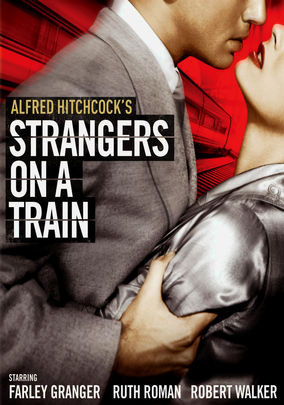
Strangers on a Train-1951

Strangers on a Train-1951

Director Alfred Hitchcock

Starring Farley Granger, Robert Walker

Top 250 Films #43

Scott’s Review #318

70002912

Reviewed January 2, 2016

Grade: A

A thrill-ride-per-minute film, Strangers on a Train is a classic suspense story filled with tension galore, a great Alfred Hitchcock film from 1951 that marked the onset of the “golden age of Hitchcock,” which lasted throughout the 1950s and 1960s.

A British version of the film exists somewhere, but I have yet to see it.

The American version is a brilliant, fast-paced experience featuring complex and interesting characters, including one of the greatest villains in screen history, and a riveting, heart-pounding plot.

Who can forget the essential ominous phrase “criss-cross”?

The film begins with a clever shot of two pairs of expensive shoes emerging from individual taxi cabs. Both are men, well-to-do and stylish.  They board a train and sit across from each other, accidentally bumping their feet.

We are then introduced to the two main characters: tennis star Guy Haines (Farley Granger) and wealthy Bruno Anthony (Robert Walker). They engage in conversation, and immediately, we become aware that Bruno is assertive and Guy is more passive.

Ultimately, Bruno manipulates Guy into thinking they will exchange murders- Bruno will kill Guy’s unfaithful wife, Miriam, while Guy will murder Bruno’s hated father.  While Bruno takes this dire “deal” seriously, Guy thinks Bruno is joking.

A psychological complexity of the film is the implied relationship between Guy and Bruno. Indeed, there are sexual overtones as flirtation and bonding immediately develop while they converse on the train.

They are complete opposites, which makes their relationship compelling—the devil and the angel, if you will. The mysterious, profound connection between these two men fascinates throughout the film.

Robert Walker makes Bruno a deliciously villainous character. He is devious, clever, manipulative, and even comical at times. His wickedness is mesmerizing, to the point that the audience roots for him.

Hitchcock wisely makes the victim, Miriam (wonderfully played by Laura Elliot), devious, adding to Bruno’s rooting value during her death scene. His character is troubled and almost rivals Norman Bates and Hannibal Lecter as a lovable, evil villain.

Later in the film, when Guy is playing tennis, he gazes into the stands to see the spectators turning left and right in tandem with the moving tennis ball, and the audience sees a staring straight ahead, immersed in the sea of swaying heads.

It is a highly effective, creepy scene.

The pairing of Guy and his girlfriend, Anne (a seemingly much older Ruth Roman, and interestingly, despised by Hitchcock), does not work. Could this be a result of the implied attraction between Bruno and Guy? Or is it a coincidence?

Roman’s casting was forced upon Hitchcock by the Warner Bros. studio.

Hitchcock reveals his “mommy complex,” a common theme in his films, as we learn that there is something off with Bruno’s mother, played by Marion Lorde, but the exact oddity is tricky to pin down.

She and Bruno comically joke about bombing the White House, which gives the scene a jarring, confusing edge. Is she he reason that Bruno is diabolical?

The theme of women’s glasses is used heavily in Strangers On A Train. Miriam, an eyeglass wearer, is strangled while we, the audience, witness the murder through her dropped glasses. The scene is gorgeous and cinematic in black and white and continues to be studied in film schools everywhere.

Later, Anne’s younger sister, Barbara (comically played by Hitchcock’s daughter, Pat Hitchcock), who also wears glasses, becomes an essential character as Bruno is mesmerized by her likeness to the deceased Miriam, and a mock strangulation game at a dinner party goes awry.

The concluding carnival scene is high-intensity and contains impressive special effects for 1951.

The spinning-out-of-control carousel, panicked riders, and cat-and-mouse chase scene leading to a deadly climax make for a fantastic end to the film.

Strangers On A Train (1951) is one of Hitchcock’s best classic thrill films.

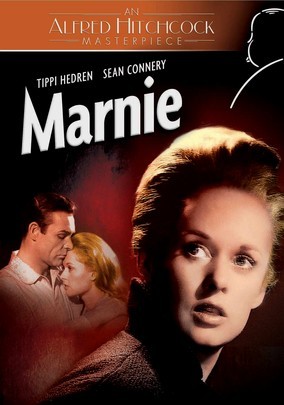
Marnie-1964

Marnie-1964

Director Alfred Hitchcock

Starring Sean Connery, Tippi Hedren

Top 250 Films #45

Scott’s Review #180

60000769

Reviewed October 4, 2014

Grade: A

When evaluating Alfred Hitchcock’s many films, Marnie (1964) is one of the more complicated. In recent years, it has earned higher praise than it did at its release, similar to Vertigo (1958).

It features one of Hitchcock’s most complex psychological characters and is as much a character study as a psychological thriller.

Tippi Hedren stars as Marnie Edgar, a troubled young woman who travels from one financial company to another, using a false identity and her good looks to insinuate herself into a clerical job without references. Over time, she steals thousands from the companies by gaining their trust.

Eventually, she is caught by Mark Rutland, a handsome, wealthy widower and client of one of the firms, played by Sean Connery. Infatuated with Marnie, he strikes a deal with her: She will marry him, but he will not turn her over to the police.

Marnie gives most of her stolen money to her disabled mother, Bernice, in Baltimore, played by Louise Latham.

Why Bernice is crippled, avoids affection with Marnie, and why Marnie despises most men and is terrified of the color red make up the film’s mysterious nature. Diane Baker is compelling as Lil, the sister-in-law to Mark and somewhat nemesis of Marnie.

The film features three scenes I am enamored with each time I watch it. In one scene, Marnie hides and waits in the bathroom until all the employees have gone home for the night. She carefully steals money from her employer’s safe and prepares to make her escape. Suddenly, she notices an unaware cleaning woman with her back to Marnie, yet blocking the exit.

How will Marnie escape unnoticed? The surprise in this scene is excellent. Hitchcock plays the scene without music, which adds to the tension—brilliant.

In an emotional scene later in the film, Marnie’s horse, Forio, is injured, and a sobbing Marnie must choose between killing her beloved friend or letting him suffer until a veterinarian can be summoned.

It is a heart-wrenching scene.

The third scene takes place at a racetrack as Marnie and Mark are enjoying one of their first dates together. However, the date is ruined when a former employer of Marnie’s, who has been victimized, recognizes her and makes accusations.

Marnie turns from a sweet girl to an ice queen seamlessly.

A huge controversial aspect of the film is that, while not shown, it is heavily implied that Mark rapes Marnie on their honeymoon. The following day, Marnie attempts suicide but is rescued by Mark.

This scene was filmed carefully so viewers didn’t hate Mark. Perhaps saving Marnie the next morning lessens what he did the night before in the eyes of the audience? This is open to debate.

Hedren excels at portraying the complexities of Marnie’s character throughout the entire film and does an excellent job in a demanding role.

As excellent as Hedren is (and she is fantastic), I have difficulty accepting her as a poor, icy criminal, and this issue arises each time I watch the film.

Could this be a result of having identified Hedren as the sophisticated, glamorous socialite in The Birds made a year earlier so many times? This is quite possibly so.

The set of Marnie was reportedly fraught with tension during filming. This tension was mainly between Hedren and Hitchcock, who refused to speak with each other throughout the filming. This may have added to the tension, and Hedren appears anxious.

Could this be art imitating life? As the ending nears, Marnie and Mark align and form a team as they try to avoid the police altogether; Mark, more or less, becomes an accomplice.

The final reveal seems rushed. It takes place mostly in flashbacks and wraps up quickly. Marnie has blocked much of her childhood from her memory, which seems far-fetched.

Still, Marnie (1964) is a complex, psychological classic from Hitchcock’s heyday.

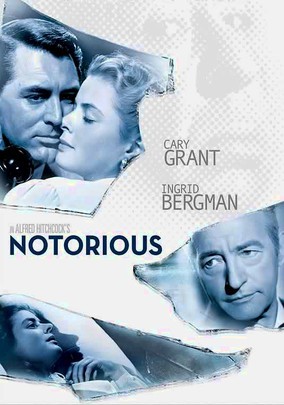
Notorious-1946

Notorious-1946

Director Alfred Hitchcock

Starring Cary Grant, Ingrid Bergman

Top 250 Films #48

Scott’s Review #265

813874

Reviewed August 11, 2015

Grade: A

Notorious is a classic Alfred Hitchcock film from 1946, a period that preceded his golden age of brilliant works in the 1950s and 1960s, but it is a marvel all the same.

Perhaps not as wonderful as future works, but that is like comparing prime rib to filet mignon. Shot in black and white, the subject matter is familiar to Hitchcock fans- political espionage.

The film contains elements familiar with Hitchcock’s films- romance with suspenseful plot.

Starring two greats of the time (and Hitchcock stalwarts), Carey Grant and Ingrid Bergman, one is immediately enthralled by the chemistry between the characters they play- T.R. Devlin and Alicia Huberman. Devlin, a government agent, recruits Alicia, per his bosses, to spy on a Nazi sympathizer, Alex Sebastian (Claude Raines), who is affiliated with her father.

Her father, having been convicted and sentenced to prison, has committed suicide. Alicia’s allegiance is questioned as she takes drastic measures to prove her loyalty and complete the hated assignment.

The film is set between Miami and the gorgeous Rio De Janeiro, where much of the action is set at Alex’s mansion.

A blueprint for his later works, Hitchcock experiments with creative camera shots and angles- specifically the wide and high shot overlooking an enormous ballroom.

I also love the airplane scene- subtly, Hitchcock treats the audience to background views of Rio from the view of the airplane as Devlin and Alicia converse.

The plane is slowly descending for landing, which allows for a slow, gorgeous glimpse of the countryside and landscape in the background.

Subtleties like these that may go unnoticed make Hitchcock such a brilliant director.

The character of Alicia is worth a study. Well known for his lady issues, did Hitchcock hint at her being an oversexed, boozy, nymphomaniac?

I did not think the character was written sympathetically, though, to be fair, she is headstrong and loyal in the face of adversity.

She parties hard, drives at 65 miles per hour while intoxicated, and falls into bed with more than one man. It is also implied that she has a history of being promiscuous.

Made in 1946, this must have been controversial during that period. The sexual revolution was still decades away.

Notorious also features one of Hitchcock’s most sinister female characters: Madame Sebastian (Leopoldine Konstantin). The woman is evil personified, and her actions are reprehensible. She is arguably the mastermind behind all of the dirty deeds and a fan of slow, painful death by poisoning.

My favorite scene is, without a doubt, the wine cellar scene. To me, it epitomizes good, old-fashioned suspense and edge-of-your-seat entertainment.

A cat-and-mouse game involving a secret rendezvous, a smashed bottle, a key, champagne, and the grand reveal enraptures this scene, which goes on for quite some time and is the climax.

Perhaps Notorious is not quite as great a film as Vertigo (1958), Psycho (1960), or The Birds (1963), but it is a top-notch adventure/thriller that ought to be watched and respected.

Oscar Nominations: Best Supporting Actor- Claude Rains, Best Original Screenplay

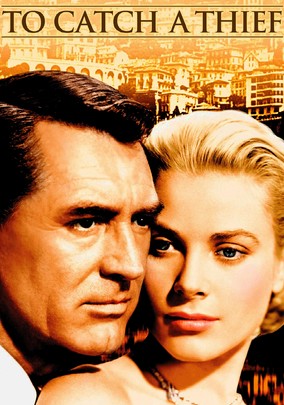
To Catch A Thief-1955

To Catch A Thief-1955

Director Alfred Hitchcock

Starring Cary Grant, Grace Kelly

Top 250 Films #73

Scott’s Review #455

60000732

Reviewed July 24, 2016

Grade: A-

Cary Grant starred in five Alfred Hitchcock films in his day, and 1955’s To Catch A Thief is right smack in the middle of Hitchcock’s prime period of masterful pictures.

Grace Kelly (her third and final Hitchcock film) co-stars, making this film a marquee treat as both actors were top-notch in their heyday and had much chemistry in this film.

While not my all-time favorite of Hitchcock films, To Catch a Thief has mystery, a whodunit, and some of the most gorgeous cinematography of the French Riviera. The breathtaking surroundings are my favorite part of this film.

Grant plays John Robie, aka. “The Cat,” an infamous jewel thief who has now gone clean. He spends his days quietly atop the French Riviera growing grapes and flowers and keeping out of trouble.

When a new jewel thief begins to strike wealthy tourists, Robie is immediately under suspicion by the police. He is forced to prove his innocence by catching the real thief in the act, as the thief uses the same style of stealing as Robie once did.

Amid this drama, Robie meets the beautiful heiress Frances (Kelly) and her interfering mother, Jessie Stevens (Jessie Royce Landis), which leads to romance.

Although Grant could be old enough to be Kelly’s father, we immediately accept Robie and Frances as the perfect couple- she is sophisticated, stylish, and rich, and he equally has a bad-boy edge.

To Catch A Thief has a strong romantic element and a glamorous and wealthy tone. After all, the subject matter at hand- jewels- equates to lavish set decorations, women dripping in expensive jewelry, and a posh resort among the gorgeous French waters.

The supporting characters are interesting, too. A triangle emerges as Frances plays catty with a young girl, Danielle, eager for Robie’s affection. Danielle, much plainer looking than Frances, though no shrinking violet, holds her own in a match of wits with Frances as they bathe in the water one afternoon.

Frances’s mother, Jessie, provides tremendous comic relief as she attempts to bring Robie and Frances together. She is always searching for a handsome suitor for her daughter.

Finally, insurance man H.H. Hughson also contributes to the comic relief by begrudgingly providing Robie with a list of wealthy visitors with jewels.

In their playfully awkward lunch- delicious quiche is the meal of the day- at Robie’s place, Robie proves how Hughson himself is a thief of sorts to accomplish what he needs to get from Hughson.

Despite all of the positive notes, something about To Catch A Thief prevents it from being among my all-time favorite Hitchcock films. Perhaps it is because I never doubted Robie’s innocence, and if dissected, the caper is a bit silly.

I get the sense that the audience is supposed to question whether Robie is truly reformed or playing a game and is back to his dirty deeds, but I wasn’t fooled.

This is a minor gripe, but To Catch A Thief is a fantastic film.

The way the film is shot is almost like being on the French Riviera. Countless coastal shots of the skyline will amaze the viewer with breathtaking awe of how gorgeous the French country is and how romantic and wonderful it is.

This is my favorite part of To Catch A Thief.

The visuals of the film rival the story as the costumes created by costume designer and Hitchcock mainstay, Edith Head, are simply lovely. And who can forget the costume ball near the conclusion?

Though the story might be the weakest and lightest element of the story,  who cares? The visuals more than make up for any of that, as To Catch A Thief (1955) will please loyal fans of Hitchcock’s vast catalog.

Oscar Nominations: 1 win-Best Art Direction, Color, Best Cinematography, Color (won), Best Costume Design, Color

Rebecca-1940

Rebecca-1940

Director Alfred Hitchcock

Starring Laurence Olivier, Joan Fontaine

Top 250 Films #96

Scott’s Review #345

895272

Reviewed January 9, 2016

Grade: A

The only Alfred Hitchcock film to win the coveted Best Picture Oscar trophy, Rebecca is a very early offering in the famous director’s repertoire.

His heyday being well ahead of this film (the 1950s and 1960s saw his best works), Rebecca is a blueprint of fine things to come and, on its own merits, is a great film.

Shot in black and white, the film is a descent into mystery, intrigue, and madness with a gothic look.

Laurence Olivier stars as wealthy widower Maxim de Winter, whose first wife, the title character Rebecca, died sometime before the story begins. In a clever twist, the character of Rebecca is never seen but takes on a life of her own through the tellings of the rest of the cast.

Joan Fontaine plays a nameless, naïve young woman who meets the sophisticated Maxim and marries him, becoming the new Mrs. de Winter.

This development is met with disdain by the servants who work in the Grand de Winter mansion, Manderley, a character in its own right.

The housekeeper, Mrs. Danvers (Judith Anderson), is cold and distant from Maxim’s new wife. She begins to reveal an obsession with the deceased Rebecca, which creates jealousy and intimidation for Fontaine’s character, to the point where she starts to doubt her sanity and decision-making capabilities.

Thanks to Hitchcock’s direction, Rebecca is a fantastic, old-style film with layers of mystery and wonderment. The mansion, Manderley, is central to the story, as is Mrs. Danvers’s creepy obsession with Rebecca.

She keeps the dead woman’s bedroom neat, a sort of shrine to her memory, so much so that, despite the time the film was made, 1940, a lesbian element is crystal clear to attention-paying audiences.

This aspect may not have been noticed at the time, but it is apparent now.

The film is also a ghost story since the central character, Rebecca, is never seen.

Could she be haunting the mansion? Is she dead, or is this a red herring created to throw the audience off the track? Is the new Mrs. de Winter spiraling out of control? Is she imagining the servant’s menacing actions? Is Maxim in on the tormentor, simply seeking a replacement wife for his steadfast love?

The pertinent questions are asked not only of the character but also of the audience as they watch with bated breath.

The climax and finale of Rebecca (1940) are fantastic.

As the arguably haunted mansion is engulfed in flames and the sinister Mrs. Danvers can be seen lurking near the raging drapes, the truth comes to the surface, leaving a memorable haunting feeling to audiences watching.

Rebecca is a true classic.

Oscar Nominations: 2 wins-Outstanding Production (won), Best Director-Alfred Hitchcock, Best Actor-Laurence Olivier, Best Actress-Joan Fontaine, Best Supporting Actress-Judith Anderson, Best Screenplay, Best Original Score, Best Art Direction, Black and White, Best Cinematography, Black-and-White (won), Best Film Editing, Best Special Effects

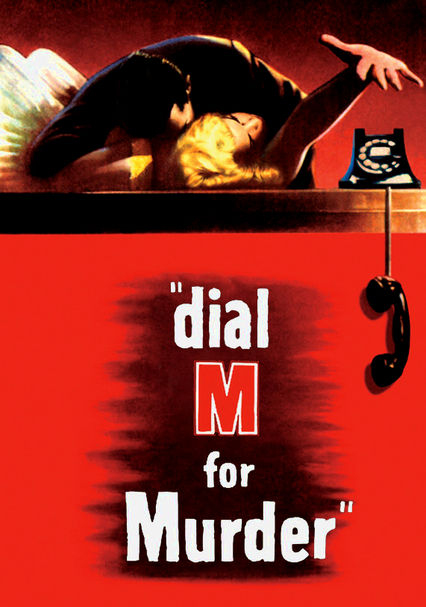
Dial M for Murder-1954

Dial M for Murder-1954

Director Alfred Hitchcock

Starring Ray Milland, Grace Kelly

Top 250 Films #120

Scott’s Review #995

Reviewed February 28, 2020

Grade: A

A fabulous offering by stylistic director Alfred Hitchcock, Dial M for Murder (1954) arrived on the scene when the cinematic genius was at the height of his success in the United States, following his success in England.

The late 1950s and early 1960s revealed his best offerings, but this is no slouch. The film mixes thrills, double-crosses, and murder in a way only Hitchcock can —perfectly.

It is fast-paced and shot almost like a play, using primarily one set. It is based on the Broadway hit, which came first.

An English former tennis champion, Tony Wendice (Ray Milland), hatches a scheme to kill his wealthy but unfaithful wife, Margot (Grace Kelly), who’s embroiled in a liaison with handsome writer Mark Halliday (Robert Cummings).

When Tony’s plans go awry, he attempts the second act of deceit, but events spin out of control when Margot, Mark, and a sly Scotland Yard inspector (John Williams) begin putting the pieces together.

The film is popular because of its conventional, pure Hitchcock story. The viewer immediately knows who the killer is and his motivations—his hunger for wealth and jealousy of another man.

The most fun is when hiccups begin to form, and Tony must fly by the seat of his pants to cover his tracks and think of another way to seal Margot’s fate. If he cannot murder her, why can’t he send her to prison?

Milland is perfect in the role with eye shifts and head turns.

Set pieces, such as a key and a handbag, add zest to the film. The plot gets juicier and juicier when it is revealed that there are multiple keys. The flat where Tony and Margot reside is beautifully designed with state-of-the-art furniture and decorations, making the set a character.

Lavish curtains and French doors are utilized during the late-night attempted murder scene, which is thrilling to witness, leaving the viewer with heart palpitations.

The brilliance is that the viewer does not intend to hate Tony, at least not this viewer. While he is not likable, his motivations can be somewhat understood. Conversely, Margot and Mark are not heroes; their shenanigans come back to haunt them.

I dare say that Grace Kelly has had better roles in Hitchcock films. To Catch a Thief (1955) immediately comes to mind. Margot is not a particularly strong character and is relatively weak.

Dial M for Murder has commonalities with two other Hitchcock gems. As with Strangers on a Train (1951), a tennis star is utilized as a significant character, and twisted strangulation is the game. Also, a tit-for-tat technique is used.

Like the underappreciated Rope (1948), the one-take sequence style and the film’s potential as a stage play are noticeable traits. Those films are good ones to be in the same company with.

The final thirty minutes pass at breakneck speed as we wonder what will happen next. The cat-and-mouse activities are delightful and remind us that the film is essential and stripped down compared to his later films.

One set, good actors, and a full-throttle story do wonders to satisfy a fan. The camera movements and techniques are key to the entire film, as a shot here or there is timed with flawless precision. Hitchcock used 3-D filming, which was inventive for the time.

Although perhaps not as famous as Hitchcock’s delights like Psycho (1960), Vertigo (1958), or North by Northwest (1959), Dial M for Murder (1954) serves as much more than a warm-up act for those classics.

This film is one to remember with a fast pace, twists and turns, and good British sensibilities. Its setting is a stylish London flat, and the sophistication is suitable.

Torn Curtain-1966

Torn Curtain-1966

Director Alfred Hitchcock

Starring Paul Newman, Julie Andrews

Top 250 Films #149

Scott’s Review #109

70038983

Reviewed July 15, 2014

Grade: A-

Torn Curtain is an under-appreciated and largely forgotten Cold War political thriller directed by Alfred Hitchcock circa 1966.

The film is very good but was troubled from the start, which presumably led to its poor reception and a trip to film oblivion.

The trouble with the film lies with the casting; otherwise, it is a compelling, suspenseful adventure.

Starring Paul Newman and Julie Andrews- two enormous stars when the film was made, the studio chose both, and neither did Hitchcock desire on the set.

This led to conflict, especially with Newman, who disliked the script.

His continued script “rewrites” and method of acting annoyed the famous director.

Newman plays Michael Armstrong, an American physicist who is attending a conference in Copenhagen. Andrews plays his assistant and fiancee, Sarah Sherman.

Michael mysteriously flies to East Germany, behind the Iron Curtain, unknowingly with a concerned Sarah in tow. This event sets off political intrigue and espionage as Michael attempts to secure a formula and return it to the United States.

But is he a patriot or a defector, colluding with the Germans?

Presumably, the main reason for the poor reviews for Torn Curtain is the lack of chemistry between Newman and Julie Andrews and behind-the-scenes problems with this film (both stars were unhappy throughout the shoot, and Hitchcock did not want either actor in the film).

In truth, there is little chemistry between the pair, and I cannot help but think how delicious it would have been if Sean Connery and Tippi Hedren had been cast instead! After all, this duo had great chemistry in Marnie, released just two years prior.

Despite the backstage drama, the film is complex, exciting, and taut. The bus escape scene is fantastic and edge-of-your-seat.

The best scene, though, occurs in the middle of the film, when Michael is in East Germany. He is revealed to be part of a syndicate that enables him to sneak out of the country. He then goes to a remote farm, where he is involved in a tortuous fight with a security officer and a farmer’s wife.

The scene is spectacular in its long length and edge-of-your-seat drama.

The scenic locales are excellent, and the film is bright, colorful, and sharp, especially on Blu-Ray. The gorgeous opening scene is aboard a cruise ship in the breathtaking Fjords of Scandinavia.

Frankly, I am surprised this film has not been rediscovered on a larger scale. Along with Topaz (1969), Torn Curtain (1966) is another forgotten gem of Hitchcock’s, worthy of praise.

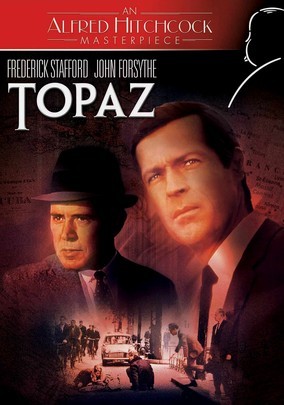
Topaz-1969

Topaz-1969

Director Alfred Hitchcock

Starring Frederick Stafford, Karin Dor

Top 250 Films #163

Scott’s Review #108

60020562

Reviewed July 12, 2014

Grade: A-

Topaz is an intriguing, suspenseful 1969 latter-day Alfred Hitchcock film.

In the political thriller vein, the film typically suffers from being both overlooked and under-appreciated, yet receives admiration from film buffs. It is certainly not one of his better-known films, and that is quite a shame.

As with many great films, it is complex and layered, requiring close attention and even multiple viewings.

The issue with Topaz is that the film suffers from a lack of recognizable stars- a trademark of Hitchcock films in his heyday. Frederick Stafford (Andre) and Karin Dor (Juanita) are the featured romantic couple.

Despite his being married to another woman, Andre and Juanita are the couple the audience is intended to root for.

The story involves competing spies from France, the United States, and Cuba, all vying for government secrets concerning the Cuban Missile Crisis in the 1960s.

Each spy does their best to obtain the secrets, some in a sinister fashion.

The French accents, especially, can be tough to understand, but it is a thrilling film that traverses New York City, Cuba, and France. The main protagonist is Andre, and Stafford has a high level of charisma and a suave manner.

The character is quite similar to James Bond. The film itself plays out like a Bond film, with exotic locales, beautiful women, and political intrigue.

As with most Hitchcock films, the set pieces and art direction are beautiful and perfect. One highlight is a particular character’s death scene in Cuba. Throughout the film, the love story is involved, and the death is tragic yet heartfelt and shocking.

Topaz, sadly, was unsuccessful at the box office due to the lack of Hollywood names attached and limited promotion, although it made several top-ten critics’ lists in 1969.

Topaz is undoubtedly one of the more obscure of Hitchcock’s films, but an excellent one to discover and revere.

Spellbound-1945

Spellbound-1945

Director Alfred Hitchcock

Starring Ingrid Bergman, Gregory Peck

Top 250 Films #206

Scott’s Review #1,015
Reviewed April 24, 2020

Grade: A-

One of Alfred Hitchcock’s early American films, after his voyage from his home base in London to the United States soil, proved profitable and critically acclaimed.

Spellbound (1945) followed Rebecca’s box office and awards success (1940).

Probably the most spoofed of all the Hitchcock works in the 1977 Mel Brooks parody High Anxiety, Spellbound provides a psychological storyboard that uses enough vehicles like amnesia, hypnosis, and danger to impress any daytime soap opera writer.

Not in the director’s top arsenal or remembered well, but a stellar effort.

Youthful Doctor Anthony Edwardes (Gregory Peck) arrives one day at the sprawling Green Manors Mental Asylum as the new director.

After falling for each other immediately, the beautiful Doctor Constance Petersen (Ingrid Bergman) discovers that Edwardes is not who he claims he is. Instead, he is a paranoid amnesiac impostor, more reminiscent of a patient. This gives new meaning to the phrase “the inmates are running the asylum.”

Constance becomes obsessed with answering the following questions: What happened to the real Dr. Edwardes? If Edwardes has been kidnapped or murdered, who is responsible? Who is the gorgeous man she has just fallen head over heels for?

The intelligent psychoanalyst must practice what she preaches by becoming a sleuth and figuring out what is happening. The action occurs in bustling New York City and snowy Rochester, New York.

I love the progressive nature of the story.

To have a leading female character with a lofty professional status is admirable, given the year 1945, when female roles were beginning to evolve.

While most of the roles that Hollywood heavyweight Bette Davis portrayed in the 1930s and 1940s were vital and substantial, this was the exception and not the norm.

Bergman, quite beautiful, does not need to play sex kitten to make her character sexy. She does well with that by wearing glasses and a lab coat, using her character’s intelligence to her advantage.

In 1945, Alfred Hitchcock was still considered a “new” director by most and was only beginning to make his mark on audiences unfamiliar with his work. His cunning and masterful use of lighting and shadows to produce suspense is evident in Spellbound.

The faces of Constance and Anthony glow with a combination of warmth and suspicion, and both are wonderful at eliciting emotion through subdued facial expressions. While Peck is slightly wooden, it does add a dimension to his uncertain character.

With Hitchcock, the atmosphere is everything. The treats are magnificent, like shots of the old Penn Station and Grand Central Station, monumental parts of everyday New York City life. They provide a glimpse of bustling commuter life in the 1940s before most of us were born.

Undoubtedly, many extras and non-actors were used to enrich the scenes and offer what regular people looked like in those days.

As Constance and Anthony team up to determine what secrets lie beneath his subconscious, they board a train for the seclusion of upstate New York, where more secrets are revealed. A heavy dose of psychoanalysis and hypnotism allay the film’s best scene.

Anthony sinks into a dreamlike world where he sees strange objects fraught with symbolism: a man with no face, scissors, playing cards, eyes, and curtains. What do they all mean? Fans will have fun piecing together the clues to solve the mystery.

The works of Salvador Dali, a famous surrealist artist known for bizarre and striking images, are displayed during the dream sequence. Though limited, they envelop the scene with fright and mystique and are a perfect addition to the odd sequence.

Shot in black and white, the final scene adds a blood-red image as a character turns a revolver on themselves and commits suicide. When Anthony drinks a glass of milk, the camera is inside the bottom of the glass, creating a hallucinogenic effect.

While Peck does his best with a peculiar character, Anthony is not as interesting as Constance, Doctor Alex Brulov (Michael Chekhov), or Doctor Murchison (Leo G. Carroll). I would have loved more scenes or a backstory for Brulov, as it would have allowed me to get to know him better.

Anthony has some light annoyances, such as when he inexplicably passes out whenever events become too much for him.

Spellbound (1945) is the perfect accompaniment for a snowy winter night, with its warm and cozy look, soothing atmosphere, and musical score.

Perfect to watch in tandem with High Anxiety (1977) for a double punch of suspense and appreciation for the film, with the humor and satire it furnishes. While not the best of Hitchcock films, it stands proudly on its merits.

Oscar Nominations: 1 win-Best Motion Picture, Best Director-Alfred Hitchcock, Best Supporting Actor-Michael Chekhov, Best Scoring of a Dramatic or Comedy Picture (won), Best Cinematography, Black-and-White, Best Special Effects
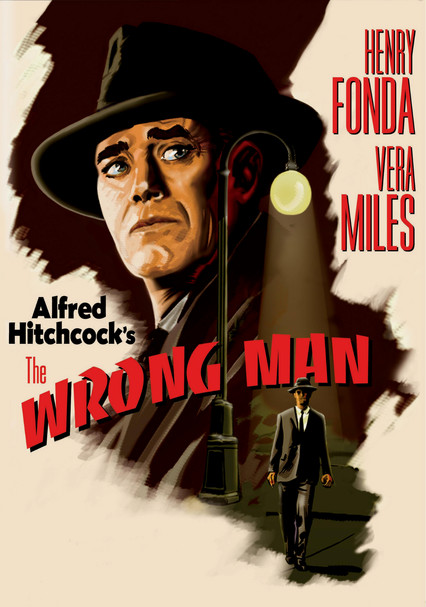
The Wrong Man-1956

The Wrong Man-1956

Director Alfred Hitchcock

Starring Henry Fonda, Vera Miles

Top 250 Films #233

Scott’s Review #902

Reviewed May 24, 2019

Grade: A-

The Wrong Man (1956) is not an Alfred Hitchcock film typically mentioned when lists of the greatest of all the director’s works are in conversation.

Although it flies completely under the radar and is absent from most “Best of” collections, the film is a lovely gem ready to be dusted off and appreciated for its worth.

It features the legendary Henry Fonda, perfectly cast in a story point frequently used in Hitchcock films: that of the wrongly accused man.

Set in New York City, Manny Balestrero (Fonda) is a struggling musician who requires three hundred dollars for dental work that his wife Rose (Vera Miles) needs. Determined not to let his wife suffer, he decides to obtain the money by borrowing against her insurance policy.

The life insurance employees mistake Manny for another man who recently held them up. He is arrested and forced to perform a test for the police, which he fails, leading them to assume he is their man.

Attorney Frank O’Connor (Anthony Quayle) sets out to prove that Manny is not guilty since he has perfect alibis for the nights of both holdups. However, complications erupt during his trial as proper witnesses either cannot be found or have died, leaving Manny in dire straits.

Meanwhile, Rose teeters towards the brink of insanity as she suffers from severe depression.

The Wrong Man differs from many Hitchcock films in that its story is based on a real-life quandary one man faced. As such, viewers can relate to the story immensely and imagine themselves in Manny’s shoes.

I often wonder, “What would I do if this were me?” as one could find the story implausible, one could just as easily find it plausible. Mistaken identity can happen, and proving one’s innocence may not be as easy as it may seem.

Mainly set on location is another tidbit unique to many Hitchcock productions as the man cringed at the thought of any scene that studio luxuries could not manipulate. The New York City locales are splendid and provide an artistic and genuine element.

Many scenes were filmed in Jackson Heights, where Manny lived when he was accused. Most of the prison scenes were filmed among the convicts in a New York City prison in Queens. The courthouse was at the corner of Catalpa Avenue and 64th Street in Ridgewood.

Careful not to be too dissimilar to standard Hitchcock fare, the use of every man being falsely accused is every day in some of his films.

Other films like North by Northwest (1958) and The 39 Steps (1935) delivered the same elements with a man being mistakenly accused of murder. While the others were more of “chase stories” involving flight, The Wrong Man stays firmly planted in one city.

The film has some jazz elements, representing Fonda’s appearance as a musician in the nightclub scenes. These elements add sophistication to the film’s overall tone, especially as we see Manny as worldly yet kind.

He is a performer but comes home to his wife and adores her, doing anything he needs to for her comfort. The music and the black-and-white cinematography exude harshness and coldness but also good style.

Fans of either the police force or the justice system may be in for a challenging ride watching The Wrong Man, as neither group is written very sympathetically. The police are the worst offenders as they go to unethical methods to accuse a man of a crime and seem not to care who is convicted, only that someone is.

The one detraction to The Wrong Man is the chemistry between Fonda and Miles. The passion is underwhelming but not terrible, either. Instead, the main point is the false accusations instead of the romance. A bit more of the latter might have made the film more unique.

With suspenseful and dramatic elements and a charismatic leading man, The Wrong Man (1956) perhaps lacks the flair of other well-known Hitchcock films. Still, it is a solid achievement that deserves more acclaim than traditionally given.

Yes, it’s sullen, but it’s also poignant, frightening, and a terrific effort. Henry Fonda carries the film and provides compassion and realism.

Saboteur-1942

Saboteur-1942

Director Alfred Hitchcock

Starring Robert Cummings, Priscilla Lake

Top 250 Films #236

Scott’s Review #98

60020559

Reviewed July 9, 2014

Grade: B+

Saboteur (1942) is a very early Alfred Hitchcock film that served as a blueprint for his masterpieces in the years to come.

The story follows a common theme among Hitchcock thrillers- the falsely accused man. An aircraft factory worker, Barry Kane, is falsely accused of an act of sabotage that kills his best friend.

Only Kane and the audience know the true culprit and set out on a quest for his innocence and to find and capture the real culprit.

The film then begins a tale of adventure, cross-country hijinks, romance, and political espionage, similar to the Hitchcock classic North by Northwest (1959), which followed years later.

This film contains some excellent scenes- the traveling Carnie train adventure, the blind man, and the climactic chase scene atop the Statue of Liberty are fantastic.

Saboteur (1942) is a bit raw, and the chemistry between the leads, Robert Cummings and Priscilla Lane, is poor, but an early Hitchcock film to be appreciated.

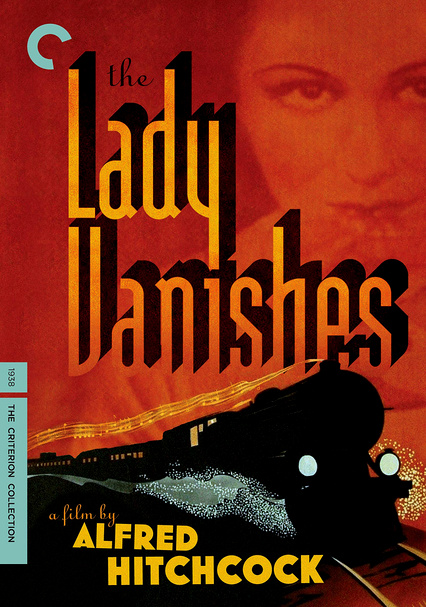
The Lady Vanishes-1938

The Lady Vanishes-1938

Director Alfred Hitchcock

Starring Margaret Lockwood, Michael Redgrave, Dame May Whitty

Scott’s Review #1,303

Reviewed September 30, 2022

Grade: A-

The Lady Vanishes (1938) is a film directed by Alfred Hitchcock that I’m embarrassed to admit I’ve only seen once. Nonetheless, it resonated well with me after that sole viewing, and its influence is palpable.

It’s a film made when Hitchcock was still making films in his native Britain before he took over Hollywood during the 1950s and 1960s. You may wonder why a dusty old film made in the 1930s and not a household name is essential, but The Lady Vanishes is.

If the film had not been made and, more importantly, not been a box-office success, films like Vertigo (1958), Psycho (1960), and The Birds (1963) might never have been made.

The Lady Vanishes followed three relatively unsuccessful efforts by Hitchcock, whose success assured his new film career in America was a go.

The film is not as brilliant as the others, but pretty close. It serves as a blueprint for future Hitchcock films.

The train sequences alone conjure thoughts of Strangers on a Train (1951) and North by Northwest (1959), while the romance between the lead actors would become a staple of Hitchcock films.

Finally, the subdued but noticeable inclusion of gay characters is forever a good debate among cinema lovers, especially Hitchcock fans, as to whether it is or isn’t showcased.

So, The Lady Vanishes is to be celebrated for its influence, but it also stands up well on its own.

A dangerous avalanche delays a group of travelers on a train to England. Forced into a hotel in the lush European country, beautiful young Iris Henderson (Margaret Lockwood) befriends an older woman named Miss Froy (Dame May Whitty).

When the train resumes travel, Iris is unconscious after being hit by a potted plant and wakes to find the older woman has mysteriously disappeared. The other passengers vehemently deny that Miss Froy ever existed, causing Iris to wonder if she has lost her marbles.

Iris determinedly begins investigating the matter with the help of another traveler, Gilbert (Michael Redgrave). The pair searches the train for clues and naturally falls in love.

They uncover a mystery, political intrigue, and peculiar characters with secrets to keep hidden.

Lockwood and Redgrave have fantastic chemistry. It’s no secret that Hitchcock intends to bring them together even though Iris is to marry when she returns home. Lockwood and Redgrave are easy on the eyes, which helps make them believable.

The pacing of The Lady Vanishes is perfect, but nowhere as astounding as the sequence of events in North by Northwest, which is the film it most resembles. That’s why the rough-cut analogy springs to mind—the film is a perfect warm-up act for the 1959 masterpiece.

From an LGBTQ+ perspective, my money is on the characters of Charters and Caldicott. Ferocious cricket enthusiasts whose only initial concern is returning to England to see the last days of a Test match. The ‘friends’ proved so popular with audiences that they returned to the film Night Train to Munich 1940, also starring Lockwood.

The revelations at the end of The Lady Vanishes surprise and satisfy, with political and espionage overtones. Frequently, in Hitchcock films, there is a McGuffin or someone who cares about the plot element.

The plot shouldn’t be overthought in the film, as the real fun is the trimmings that make the suspense so strong. The wit and snappy dialogue make the characters a pleasure to watch.

The Lady Vanishes (1938) is a terrific effort that provides strong character and stiff-upper-lip British humor. It is also the most fun to watch, highlighting the many elements that makeup Hitchcock’s masterpieces.

The 39 Steps-1935

The 39 Steps-1935

Director Alfred Hitchcock

Starring Robert Donat, Madeleine Carroll

Scott’s Review #1,212

Reviewed December 26, 2021

Grade: A-

Before Alfred Hitchcock conquered American audiences in the 1950s and 1960s, he made many British films, many of which are overlooked gems.

The 39 Steps (1935) is a film nestled among that category, providing thrilling escapism and a spy-tinged subject matter that has an everyman on the run.

The plot pattern is very familiar because Hitchcock used it later in his American films, such as The Man Who Knew Too Much (1956) and The Wrong Man (1956).

Rather than a carbon copy, The 39 Steps is a pure delight for any Hitchcock fan because the viewer can see facets and ideas the director would later bestow on his other films. There is enough originality to please anyone looking for a good thrill.

It is very loosely based on the 1915 adventure novel The Thirty-Nine Steps by John Buchan.

The story centers on Richard Hannay (Robert Donat), a Canadian civilian on holiday in London. He unintentionally becomes involved in preventing an organization of spies nicknamed “The 39 Steps” from stealing British military secrets.

After being mistakenly accused of the murder of a counter-espionage agent, Richard flees to Scotland. He becomes tangled up with an attractive woman named Pamela (Madeleine Carroll) while hoping to stop the spy ring and clear his name.

It’s a simple story that immediately compels viewers to root for Richard since we know he is innocent. Perhaps he can find romance along the way with Pamela and stop the bad guys. So, there is little ambiguity with how the story is supposed to wind up.

The fun is getting there.

Assuming this isn’t one’s first time watching a Hitchcock film, and it has been nearly a hundred years since The 39 Steps was made, I sincerely doubt it. There are oodles of sequences to enjoy. If one asks, “Does this scene seem familiar?” it is because many of them are.

The London Music Hall Theatre and the London Palladium brim with recognition, especially after a catchy tune that Richard cannot forget comes into play. It’s too easy not to think of Doris Day’s hit “Que Sera, Sera (Whatever Will Be, Will Be),” featured as a key element of The Man Who Knew Too Much or even the London setting itself.

To switch for a moment to another Hitchcock masterpiece, North by Northwest (1959), the frequent dashing across the lands by foot or locomotion comes into play in a big way in The 39 Steps.

I loathe making comparisons because The 39 Steps delivers some goods on its own merits. The action in the Scottish Highlands is fantastic and a treat for anyone who has visited the lovely and picturesque area.

Richard’s daring trip aboard the Flying Scotsman expresses that the train to Scotland is a compelling adventure.

The chemistry between Richard and Pamela is decent but not great. It’s not the focal point of the film, so I didn’t necessarily mind that. The clear intent was for her to first fear him but then have the characters fall in love. We never really get there, but it seems to be the purpose.

The main villain is Professor Jordan (Godfrey Tearle), who Richard tries to prevent from sending secrets out of the country.

Sure, there are better-quality Alfred Hitchcock films to bask in once he got his groove decades later, and one can assuredly boast that Vertigo (1958) and Psycho (1960) are superior films.

But The 39 Steps (1935) is a blueprint of the brilliance the director had in his head at this time, and it is a pure treat to witness.

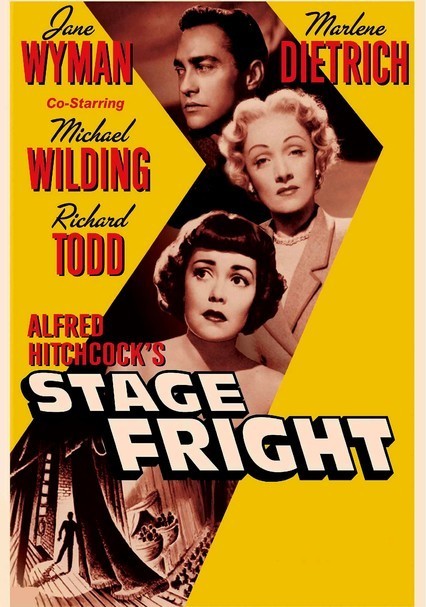
Stage Fright-1950

Stage Fright-1950

Director Alfred Hitchcock

Starring Jane Wyman, Marlene Dietrich, Michael Wilding

Scott’s Review #1,160

Reviewed July 9, 2021

Grade: A-

Stage Fright (1950) is a British film directed by Alfred Hitchcock before his American invasion.

The film feels like a hybrid British/American project with the leading lady, Jane Wyman, being American, but otherwise, it is set in London with many British actors.

Hitchcock mixes plenty of film noir influences with the typical thrills and suspense, creating an excellent film that flies under the radar compared to his other films.

Wyman is cast as an attractive aspiring actress who works on her craft by going undercover to solve a mystery. The film has elements of Nancy Drew, and it’s fun to watch Wyman, who would become Mrs. Ronald Reagan before he entered politics and later became President of the United States.

She reportedly divorced him because she had little interest in entering the political spectrum by association.

The action gets off to a compelling start with two characters driving in a car in apparent peril. Hitchcock loved driving scenes like these. It is learned that the police think actor Jonathan Cooper (Richard Todd) is a murderer, and now they’re on his tail.

He seeks shelter with his ex-girlfriend Eve (Wyman), who drives him to hide with her father, Commodore Gill (Alastair Sim).

He explains that it was his lover, the famous and snobbish actress Charlotte Inwood (Marlene Dietrich), who killed the victim (not coincidentally, her husband). Convinced that Jonathan is innocent, Eve plays detective and assumes multiple disguises, slowly developing feelings for Detective Inspector Wilfred O. Smith (Michael Wilding).

Once embroiled in a web of deception, she realizes that Shakespeare was right and that all the world is a stage.

Wyman is the Hitchcock brunette as opposed to his later fascination with the blonde bombshell. Therefore, her role is more sedate and astute than the sex appeal that would come with Hitchcock’s later characters.

Eve closely resembles Charlie, the character Teresa Wright played in 1943’s Shadow of a Doubt. They are both astute and investigative, with a mystery to unravel. Interestingly, they both fall for detectives.

All the glasses! Hitchcock’s fetish for women wearing glasses is on full display, especially with the character of Nellie, a cockney opportunist played by Kay Walsh. Look closely, and one can spot several minor or background ladies sporting spectacles, and even Eve dons a pair as a disguise.

The director’s daughter, Pat Hitchcock, plays a small role as she would in Strangers on a Train (1951) and Psycho (1960).

Speaking of Strangers on a Train, there are similarities to mention.

Both involve a tit-for-tat exchange in which one character requests another kill someone for a payoff or other motivation.

Marlene Dietrich is as sexy as ever in Charlotte’s pivotal role. She is also self-centered, self-absorbed, and thoughtless. She constantly mispronounces Eve’s fictitious name and barely notices that she is covering for her regular maid/dresser.

But is she evil and capable of killing her husband?

Stage Fright has a thrilling finale. In the climax, the audience finally finds out who has been telling the truth, who has been lying, and what explanations are revealed. There is a pursuit, an attempted killing, and a shocking death by way of a falling safety curtain in the theater, naturally.

What one would expect from a Hitchcock final act.

The focus on theatrical stage actors is a nice topic and adds to the existing drama, as the implications of playing various roles are prominent. So is the prominence early on of the Big Ben landmark in London and other location trimmings.

Stage Fright (1950) doesn’t get the love saved for other Hitchcock masterpieces, and that’s a shame because the film is excellent.

Foreign Correspondent-1940

Foreign Correspondent-1940

Director Alfred Hitchcock

Starring Joel McCrea, Laraine Day

Scott’s Review #1,158

Reviewed July 2, 2021

Grade: B+

As a superfan of all films Alfred Hitchcock, I had been chomping to see some of his older selections before he took American audiences by storm throughout his 1950s and 1960s heyday.

Many people do not realize just how many films the “Master of Suspense” made that are not household names.

Foreign Correspondent, made in 1940, is a black-and-white production and a prominent precursor for his later works. Much of the fun is zeroing in on particulars that would be featured in later films.

Hitchcock favorites, such as a tower, a circling airplane, an unwitting and innocent man involved in a political plot, and a false identity, are served up. The director’s obsession with female characters wearing glasses is undoubtedly part of the fun.

What Hitchcock fan doesn’t giggle with glee after discovering the director’s trademark cameo appearance in each of his films?

As an aside, I love the cover artwork for this film.

Foreign Correspondent isn’t one of the best-remembered Hitchcock films because it’s only perfect rather than exceptional.

In 1940, the director was getting his groove following a surprising Best Picture Oscar win for Rebecca (1940), a film that was a very early American effort. He was still finding his footing in production values.

The legendary Costume Designer Edith Head and Music Composer Bernard Hermann had not joined the fold yet as they would in masterpieces like The Man Who Knew Too Much (1956) and Vertigo (1958), and it shows. The musical score is ordinary, more or less what a picture made in 1940 sounded like.

The costumes are decent but lack the grandeur and style that Head brought to the productions.

New York City-based crime reporter John Jones, later renamed Huntley Haverstock, played by Joel McCrea, is reduced to producing dull copy despite the world being on the cusp of war. His editor hopes a change of scenery will be what Jones needs to get back on track and provide a juicy story.

He is re-assigned to Europe as a foreign correspondent. When he stumbles on a spy ring, he attempts to unravel the truth with the help of a politician, Stephen Fisher (Herbert Marshall), his daughter Carol (Laraine Day), and an English journalist (George Sanders). But can any or all of them be trusted, or are they in cahoots with the bad guys for their gain?

The plot alone immediately reminded me of Saboteur (1942). Both involve a complicated (maybe overly?) story of government, investigations, and sabotage.

They also each focus on a couple attempting to outwit or outrun authorities. They are both filmed with black and white cinematography.

Foreign Correspondent contains its share of thrills and compelling moments. The best sequence is when John is nearly shoved off the tower of Westminster Cathedral by a hitman, who ultimately plummets to his death. The obvious parallel is to Vertigo, especially when the nuns give the sign of the cross after the body falls.

Other mentions include a terrific airplane finale with astounding, long-lasting special effects. Also unforgettable is a windmill sequence that will remind any Hitchcock fan of the famous cropduster scene from North By Northwest. I half expected a character to exclaim, “The windmill is turning where there isn’t any wind.”

At two hours, even in run time, Foreign Correspondent is a good fifteen minutes too long. The plot takes some time to pick up speed, and John and Carol’s chemistry is relatively weak. They are certainly no Mitch and Melanie like from The Birds (1963).

Foreign Correspondent (1940) is a second-tier Alfred Hitchcock film with enough components to serve as a solid opening act for North By Northwest. This is not such a bad thing, and the film holds its own against similarly patterned films of its day.

Oscar Nominations: Best Motion Picture, Best Supporting Actor-Alan Basserman, Best Original Screenplay, Best Cinematography, Best Art Direction, Best Visual Effects

Suspicion-1941

Suspicion-1941

Director Alfred Hitchcock

Starring Cary Grant, Joan Fontaine

Scott’s Review #1,029

Reviewed June 3, 2020

Grade: B+

An early American effort by the master of suspense Alfred Hitchcock (1941) follows the Oscar-winning Rebecca (1940) with a similarly themed film.

A dazzling beauty (Joan Fontaine) is manipulated by her charming husband (Cary Grant), but is he gaslighting her and plotting her death, or is it all in her mind? The puzzle unfolds with a sizzling final thirty minutes that eclipses the remainder of the film, which drags and plods along slowly.

Wealthy but insecure Lina McLaidlaw (Fontaine) meets handsome and irresponsible playboy Johnnie Aysgarth (Grant) on a train in England. He charms her into eloping despite the strong disapproval of her father, General McLaidlaw (Sir Cedric Hardwicke), who thinks Johnnie is after the family’s money.

After a lavish honeymoon and return to an extravagant new home, Lina discovers that Johnnie has no job and no income, habitually lives on borrowed money, and intends to try to sponge off her father.

She talks him into getting a job, which he embezzles from.

Lina begins to think that not only is Johnnie after her money, but he intends to kill her. She becomes aware of his financial schemes and motivations, feeling conflicted over her love for him and her survival.

Events kick into high gear after a friend’s death, an insurance policy, and discussions with an author’s friend, Isobel Sedbusk (Auriol Lee), a writer of mystery novels about untraceable poisons. A bizarre dinner conversation surrounding ways to get away with murder causes Lina to start unraveling.

Many suspensions of disbelief must be contained in frustrating measures throughout most of the film, and a bothersome level of female mistreatment is to be endured.

From the very first scene, Lina’s insecurity gnaws at me. She is gorgeous, rich, and intelligent, so why does she feel, and is perceived even by her parents, as a lonely spinster sure to become an old maid?

Despite Hitchcock’s love of glasses on female characters, brandishing Lina with gawky bifocals hardly makes her an ugly duckling. Johnnie’s nickname, “Monkeyface,” is jarring and insulting.

The determination not to make Hollywood royalty Carey Grant too bad of a guy does not work. It feels like a weak effort to suddenly change the story to thwart the perception of a character as not a villain but someone to feel sympathetic toward.

Unclear is if this was Hitchcock’s decision or the mighty studio’s (my best guess would be the latter since Hitchcock was not afraid to take risks). The audience hardly has a chance to let their emotions marinate as the big reveal quickly culminates in the end credits rolling, and the film concludes.

A significant positive to Spellbound is the hidden tidbits brewing beneath the main saga of the Hollywood glamour boy and girl (Grant and Fontaine).

A clever LGBTQ+ revelation among two supporting characters can be unearthed decades before the terminology was invented. Hitchcock loved his gay characters, who could not be openly gay, though the director did his best to offer the now-obvious idiosyncrasies.

Sophisticated Isobel seems to live alone in her quaint and lovely cottage, but during a dinner party, a blonde woman wearing a suit and tie, clearly butch, joins the conversation. As Isobel asks her to pour more wine, we realize she is hardly a servant but Isobel’s lesbian lover!

The stunning yet highly subtle revelation is prominent to eagle-eyed viewers and cagey enough to catch on. In addition to these lovely ladies, an odd-looking male dinner guest wearing glasses and discussing murder novels is an interesting character, though we see little of him.

The same can be said for Lina’s sophisticated mother, Mrs. Martha McLaidlaw (Dame May Whitty), and Lina and Johnnie’s maid, Ethel (Heather Angel). Both, playing minor roles, add subtle delights to the film.

Suspicion (1941) is an early Hitchcock film that is rarely mentioned among his best works. The film is a tough sell because of its tedious pace, the lead character’s inexplicable insecurity, and the unfulfilling story conclusion.

The suspense and activity in the final act (mostly the stunning edge of the cliff car drive) promote the film to an above-average rating, but grander works were soon to follow in the decades ahead.

The most fun is noticing the delicious peculiarities of interesting supporting characters.

Oscar Nominations: 1 win-Outstanding Motion Picture, Best Actress-Joan Fontaine (won), Best Scoring of a Dramatic Picture