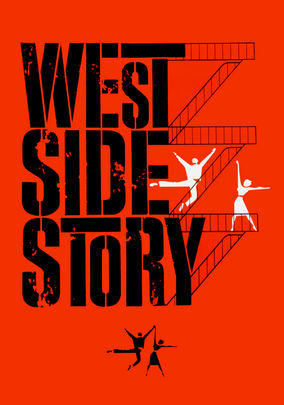
West Side Story-1961
Director Robert Wise, Jerome Robbins
Starring Richard Beymer, Natalie Wood
Top 250 Films #12
Scott’s Review #188
Reviewed November 3, 2014
Grade: A
West Side Story is a 1961 musical (based on the Broadway stage production from the 1950s), during a period in Hollywood when every other film released seemed to be a version of an enchanting musical.
This particular film version is much darker than most of its contemporaries within this genre.
The dreary ending, fantastic and compelling in its dramatic elements, does not detract from the rest of the musical and its hum-along tunes.
West Side Story was crowned the 1961 Academy Award winner for Best Picture.
West Side Story is undoubtedly based on the Shakespearean tragedy of Romeo and Juliet- the Capulets and Montagues becoming rival teen street gangs of the Puerto Rican “Sharks” and the Polish”Jets,” with the lovesick teens Tony and Maria serving as Romeo and Juliet.
And yes, spoiler alert, the story does not end happily ever after.
Loads of suspension of disbelief must be taken- how many gangs sing and dance to each other, snapping their fingers in unison to perfectly choreographed beats?
Additionally, some gang characters do not look authentic, with clearly dyed hair, bronzed skin, or some other phony-looking get-up.
The film is a cherished friend, and these can be overlooked for my enjoyment of the film.
The story, set in 1950s New York City, pits the Sharks (a gang led by Bernardo) against the Jets (led by Riff), who have been bitter rivals for the turf of the rough streets of Manhattan’s west side for many years.
The gang’s girlfriends and one female, “Anybodys,” are in tow. She longs for the day when she can join the Jets and fight alongside the boys.
The other supporting characters primarily include various policemen (Lieutenant Schrank and Officer Krupke) who attempt to keep the gangs apart.
They also include a local shopkeeper, Doc, who is the story’s moral compass. Doc encourages the gangs to get along and questions the logic of gang fights.
After a scuffle, the gangs decide to fight after an upcoming dance, and the Jets elect Tony to face Bernardo.
The story is surprisingly dark, especially in the inevitable final act. Amid all this darkness, however, lies a musical with cheery, catchy numbers (I Feel Pretty, Jet Song) and love-struck tunes (Maria and Somewhere).
A musical about diversity and rivalry, the story centers on lovesick Maria and Tony, a la Romeo and Juliet, and their struggle to be together despite adversity from their friends and family due to their significantly different backgrounds.
Throughout the film, we get to know other characters well- Anita, the girlfriend of Bernardo, for example, played by Rita Moreno, is the stubborn yet likable best friend of Maria, who thinks that Maria and Tony are wrong for each other and that things just are not supposed to be that way when you mix cultural diversity.
The film moves along quickly, featuring standoffs, fights, and plots to eliminate the other gang, a failed attempt at a dance to bring the two groups together, and Tony and Maria sneaking off to meet.
The lack of chemistry between Natalie Wood (Maria) and Richard Beymer (Tony) is noticeable, primarily upon multiple viewings. Still, decades later, it is also challenging to imagine anyone else in either role—so ingrained is the duo in film culture.
The cultural diversity of much of the cast (Rita Moreno was the only Puerto Rican) is fascinating, as is the fact that most of the singing was dubbed by other singers.
Yet, the film still manages to work very well.
Oscar Nominations: 10 wins-Best Motion Picture (won), Best Director-Robert Wise and Jerome Robbins (won), Best Supporting Actor-George Chakiris (won), Best Supporting Actress-Rita Moreno (won), Best Screenplay Based on Material from Another Medium, Best Scoring of a Musical Picture (won), Best Sound (won), Best Art Direction, Color (won), Best Cinematography, Color (won), Best Costume Design, Color (won), Best Film Editing (won)
Golden Globe Nominations: 3 wins-Best Picture-Musical (won), Best Director-Motion Picture-Robert Wise, Best Performance by an Actor in a Motion Picture-Musical or Comedy-Richard Beymer, Best Performance by an Actor in a Supporting Role in any Motion Picture-George Chakiris (won), Best Performance by an Actress in a Supporting Role in any Motion Picture-Rita Moreno (won), New Star of the Year-Actor-George Chakiris, Richard Beymer