Tag Archives: Frank Pierson

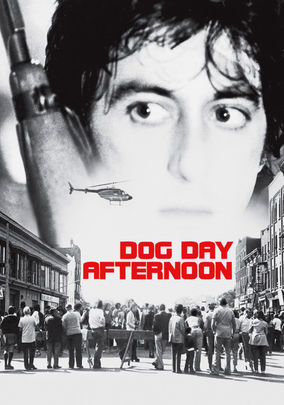
Dog Day Afternoon-1975

Dog Day Afternoon-1975

Director Sidney Lumet

Starring Al Pacino

Top 250 Films #203

Scott’s Review #185
450423

Reviewed October 13, 2014

Grade: A-

Director Sidney Lumet successfully sets the smoldering hot summer afternoon in New York City for his 1975 film Dog Day Afternoon.

Al Pacino plays Sonny, an unemployed, desperate man who, while married with two kids, has a gay lover, Leon (brilliantly played by Chris Sarandon), whom he is attempting to help finance a sex change operation.

Based on a true story, Sonny, along with his dimwitted friend Sal- played by John Cazale- decides to rob First Brooklyn Savings Bank.

Predictably, their plans go awry when Sonny burns a ledger during the robbery attempt, and a pedestrian sees the smoke and alerts the police.

As the police learn of the attempted heist, a standoff ensues between Sonny and the cops, led by Detective Moretti (Charles Durning), and the robbery draws media coverage.

Most of the action is set inside the stifling-hot bank and directly outside on the street, and the supporting characters gradually come into play.

The hostages, Sonny’s mother, wife, and lover all make contact with Sonny in some way or another, and his motivations become clearer to the audience.

Dog Day Afternoon is an anti-establishment movie, in this case anti-police, questioning the government and the financial establishment (Lumet also directed Network, challenging the establishment).

This is evident when, after a standoff with police, the crowd sides with Sonny as he chants “Attica!” Attica!, which is a direct reference to a recent prison riot.

Sonny speaks for the working class- the poor, struggling, underpaid workers who cannot afford to feed or adequately take care of their families.

The heat and humidity mirror the pressure most middle-class people still feel today, leaving the viewer contemplating their life.

Sonny relates to the bank tellers who do not earn much. Sonny also connects with the audience in another way.

Leon, recently hospitalized at Bellevue Hospital, is emotionally dependent on Sonny. He would be lost without him.

They share a lengthy and heartfelt phone conversation that is the heart of the film- gay romance had not been explored this way by 1975 in cinema, and the romance was neither shoved down the audience’s throat nor was it looked past entirely.

Their relationship is tender and deep, yet still somewhat ambiguous.

Would they stay together? What would become of Sonny’s wife and two children? Would he leave them for Leon in a world that was not ready to accept two homosexual men together? Is that the reason for Leon’s desire for a sex change operation?

Chris Sarandon, in too small a part, is wonderful as the gay lover, struggling with a sexual identity crisis. Al Pacino gives, per usual, a brilliant portrayal as he takes on a complex character who is far from one-dimensional.

Perhaps not a masterpiece, Dog Day Afternoon is a very good film, but neither is it strictly a gay-themed movie nor an action/thriller- it’s more complex than that.

Ironically, Sonny is portrayed as the hero of the film, as it is not a standard good police versus bad bank robber type of film- quite the contrary. It is much, much more than that.

Oscar Nominations: 1 win-Best Picture, Best Director-Sidney Lumet, Best Actor-Al Pacino, Best Supporting Actor-Chris Sarandon, Best Original Screenplay (won), Best Film Editing

Golden Globe Nominations: Best Picture- Drama, Best Director-Sidney Lumet, Best Actor-Drama, Best Supporting Actor-John Cazale, Charles Durning, Best Screenplay, New Star of the Year-Male-Chris Sarandon
A Star Is Born-1976

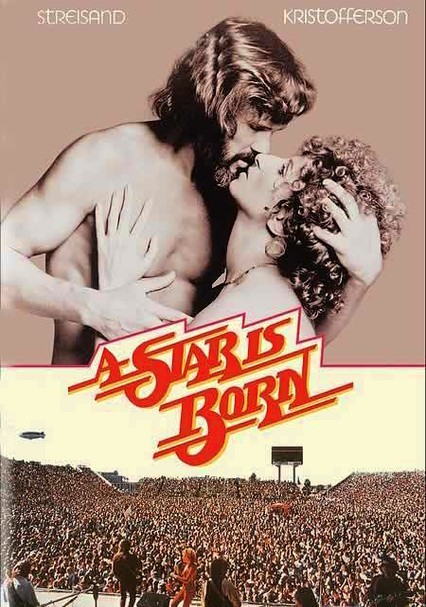
A Star Is Born-1976

Director Frank Pierson

Starring Barbra Streisand, Kris Kristofferson

Scott’s Review #1,276

Reviewed July 13, 2022

Grade: B

Four incarnations of A Star Is Born: 1937, 1954, 1976, and 2018.

Strangely enough, the most recent film starring Bradley Cooper and Lady Gaga is worlds above the others, though I haven’t seen the 1937 version yet.

The fourth time is rarely the charm in film remakes.

This review, however, focuses largely on the 1976 film starring Barbra Streisand and Kris Kristofferson.

A hit movie at the time, yet despised by some, the film is perfectly fine, though it bears multiple rewatchings and is inferior to the 2018 film.

There is no question about that.

Amazingly, it was nominated for four Academy Awards and deservedly won for Best Song. The other nominations are generous.

Watching A Star Is Born circa 2022, the 1976 version suffers from a dated tone, mostly because of the jaw-droppingly hideous perm hairdo Streisand wears.

Did somebody think it was flattering in 1976?

The chemistry between Streisand and Kristofferson starts tepid but intensifies as the film plods along.

The ending is underwhelming, and I expected more emotional pizzazz than I got, leaving me with a almost ‘so what’ reaction to a devastating turn of events.

Until that is, Barbra sings her heart out in one unbroken, gut-wrenching shot of seven or eight minutes.

For those unfamiliar, the story surrounds John Norman Howard (Kristofferson), a troubled rock star on the decline, frequently indulging in excessive drug use and drinking and trying to write hit records.

He drunkenly wanders into a club one night and watches aspiring singer Esther Hoffman (Streisand) perform, and is instantly smitten. The two begin dating, and soon John lets Esther take the spotlight during his concerts.

However, even as Esther finds fame and success with her singing, John continues his downward spiral.

Let’s face it. The main draw is who is playing the lead roles in a film like A Star Is Born. To make a love story work, it needs sizzling chemistry so the audience is invested in the romance.

Streisand commands the center stage, and her singing is the selling point.

Otherwise, Ms. Streisand suffers another bout of miscasting as she did in 1969’s Hello, Dolly. She’s too talented and established to be believable as an aspiring singer.

Her singing saves the film.

The gorgeous song “Evergreen” is quite a powerful moment and a great strength. Without it, the film would have felt lacking and mediocre.

The tune raises the overall experience a notch.

The chemistry is merely the warm-up act. It’s ho-hum until a smoldering bathtub scene occurs where John and Esther soap each other down and fall madly between the sheets for a night of passion.

It’s Streisand’s sexiest scene, and the romance takes off.

Back to Streisand’s vocals, the scene is preceded by a gorgeous songwriting sequence at the piano, as John and Esther craft a new song. As they collaborate, a connection and bond form between the characters.

Those are the romantic highlights.

Otherwise, the scene in which John becomes infatuated with Esther lacks appeal, since he is drinking and arguing with another patron and barely has time to notice her.

This thankfully changed in the 2018 version, when John is mesmerized by the rising talent.

Additionally, when John invites Esther to his concert and she watches from backstage, nothing happens. In the 2018 version, he drags her out to perform with him, and it’s a moment. 

Some films are best reviewed on their own merits, but what great fun to compare renditions of the same film, because why not?

The supporting characters have little to do except for an impressive turn by Gary Busey as John’s drug-pushing manager.

There is little reason to watch A Star Is Born (1976) more than once, or at most twice, to confirm that the film falls a bit flat.

It’s not terrible, but hardly memorable unless the desire is to giggle over an incredibly bad 1970s hairstyle by one of the greatest divas.

Then, move on to the outstanding Cooper/Gaga 2018 version.

Oscar Nominations: 1 win-Best Cinematography, Best Original Score, Best Original Song-“Evergreen” (won), Best Sound

Golden Globe Nominations: 5 wins-Best Picture-Comedy or Musical (won), Best Actor-Comedy or Musical-Kris Kristofferson (won), Best Actress-Comedy or Musical-Barbra Streisand (won), Best Original Score (won), Best Original Song-“Evergreen” (won)