Tag Archives: Frank Vincent

Goodfellas-1990

Goodfellas-1990

Director Martin Scorsese

Starring Ray Liotta, Robert De Niro, Joe Pesci

Top 250 Films #46

Scott’s Review #349

70002022

Reviewed January 9, 2016

Grade: A

Director Martin Scorsese adapts Goodfellas, a crime-mob film, from Nicholas Pileggi’s 1986 nonfiction book. Pileggi helped Scorsese write the screenplay.

The film is more matter-of-fact in its telling than the purely dramatic The Godfather, with added wit and humor, and excellent editing.

Featuring powerful acting by Ray Liotta, Robert De Niro, and Joe Pesci, it is a memorable classic mob film that can be enjoyed via repeated viewings.

Largely ad-libbed, the film is rich in good dialogue and contains one of the highest totals of curse words in film history.

The film is told from the first-person narrative of the lead character, Henry Hill.

Henry, now in the Witness Protection Program, recounts his years affiliated with the mob from 1955 to 1980.

We meet Henry as a youngster in Brooklyn, New York. He is half-Italian, half-Sicilian. He idolizes the “wise guys” on the streets and intends to one day join their ranks.

From there, the film describes the trials and tribulations of Henry’s group of miscreants. Henry meets and falls in love with Karen (Lorraine Bracco), and their tumultuous love story is explored through tender moments and affairs.

What I love most about Goodfellas is the love of the characters and the sense that you are part of the action. The film is a highly stylized family drama- gritty nonetheless, but the viewer feels like they are part of things and a family member- milestones are celebrated, and meals are shared.

We see Henry grow from a teenage gullible boy who idolizes the neighborhood men to being part of the group.

The other characters, such as vicious and volatile Tommy DeVito (Pesci) and Jimmy “The Gent” Conway (De Niro), are aged and mature.

Bracco’s character is interesting. Unlike most of the female characters in The Godfather films, she is not content to merely sit on the sidelines and look past her husband’s shenanigans and torrid affairs with floozies.

She is a more modern, determined woman, and Bracco plays her with intelligence and a calm demeanor. She wants to be Henry’s equal instead of just some trophy wife.

Pesci deservedly won the Best Supporting Actor Oscar for his role; he is brutal and filthy but a mesmerizing character.

During a memorable scene, his character Tommy jokingly teases Henry, but when Henry responds in a way that displeases Tommy, the scene grows tense, and Tommy becomes increasingly disturbing.

His famous line “What am I a clown- do I amuse you?” is both clever and haunting in its repercussions.

I adore the soundtrack that Scorsese chose for the film—spanning decades, he chooses songs true to the times, such as “Layla” (1970) or “Remember (Walking in the Sand)” (1964), which are just perfect.

Worth noting is that when a scene plays, sometimes the song is mixed in with the narrative so that it enhances the scene altogether—becoming a part of it rather than simply background music.

If one is looking for the perfect mob film, one that contains music, wit, charm, and fantastic writing, Goodfellas is among the best.

I prefer The Godfather and The Godfather II, but while Goodfellas has similarities to these films, it is also completely different and stands on its own merits.

Oscar Nominations: 1 win-Best Picture, Best Director-Martin Scorsese, Best Supporting Actor-Joe Pesci (won), Best Supporting Actress-Lorraine Bracco, Best Screenplay Based on Material from Another Medium, Best Film Editing
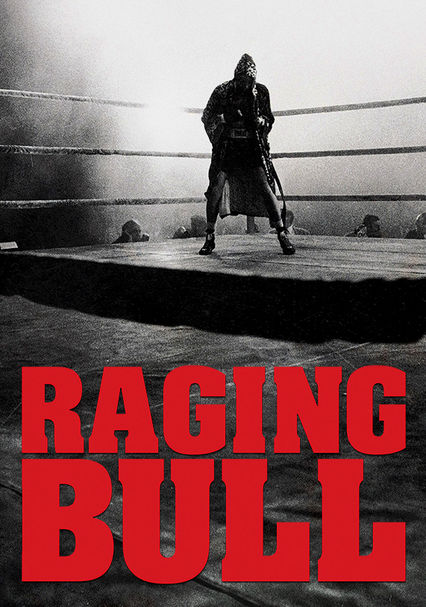
Raging Bull-1980

Raging Bull-1980

Director Martin Scorsese

Starring Robert De Niro, Joe Pesci, Cathy Moriarty

Top 250 Films #132

Scott’s Review #1,256

Reviewed May 14, 2022

Grade: A

Raging Bull (1980) might be director Martin Scorsese’s most personal film and his most character-driven.

His other films contain great characters, rich with life, but with the focus firmly planted on controversial real-life boxer Jake LaMotta (Robert De Niro), there is much to explore.

His descent into madness is hard to watch but also impossible to look away from.

It’s tough to top the De Niro/Scorsese pairing in Taxi Driver (1976), when the actor simply kicked the audience’s ass with his ferocious portrayal of the maniacal Travis Bickle.

LaMotta arguably surpasses that portrayal because the boxer experiences the highest of the highs with the lowest of the lows.

And the audience is whisked away with him on the journey from heaven to hell. Arguably, director and actor’s finest film, Raging Bull, is often painful to watch, but it’s a searing, powerful work about an unsympathetic hero who we can’t help but explore.

A double-pairing film extravaganza of Taxi Driver and Raging Bull is a fabulous idea, though the viewer may need a Valium to combat the resulting anxiety after watching them.

I love the title, Raging Bull, because it is so apt and central to the film. Fueled with machismo, testosterone, and anger, Jake LaMotta certainly is a raging bull.

Screenwriters Paul Schrader and Mardik Martin, frequent collaborators of Scorsese’s, adapt the story from Raging Bull: My Story, a 1970 memoir written by LaMotta.

Raging Bull tells the story of an Italian-American middleweight boxer as he struggles through the ranks to earn his first shot at the middleweight crown.

He possesses a self-destructive and obsessive rage, jealousy, and animalistic appetite that destroy his relationship with his wife and family.

Wonderfully cast as his wife, Vickie is played by Cathy Moriarty, a gorgeous girl from the Bronx who falls head over heels in love with Jake. Joe Pesci plays his well-intentioned brother and manager, who unsuccessfully tries to help Jake battle his inner demons.

Jake’s inability to express his feelings enters the ring and eventually takes over his life. He is sent into a downward spiral that costs him everything.

Comparisons to the exceptional Rocky (1976) are cute and perhaps contain some merit on paper, but. In contrast, the former is heroic and compelling; the main characters are nothing alike except that they are both struggling boxers who achieve success.

Both are sports films, but Raging Bull is much, much darker and purely a character study.

The cinematography by Michael Chapman and the Film Editing by Thelma Schoonmaker are deserving of accolades and make the picture as flawless as it is.

Scorsese includes enough boxing scenes to showcase the fantastic editing required for these difficult sequences.

The editing is lightning-quick, and the thunderous bombast makes the viewer feel each blow of the glove against the skin. The blood and sweat are legendary components of these scenes.

The black-and-white cinematography is jaw-dropping, especially powerful in the kitchen fight scene between Jake and Joey. The brutal buildup is hard to stomach as Jake’s dementia becomes evident.

Despite the other qualities of the film that bring it all together, my favorite aspect is the performance De Niro delivers, which wins him a much-deserved Best Actor Oscar.

He is powerful and animalistic, playing both subtle rage and explosive anger. His tragic final act as a much older and fat man is shrouded in heartbreak and pain for both the character and the viewer to experience.

All the pieces of Raging Bull (1980) add up perfectly into a masterpiece.

The violence and pain are enshrouded in poetic dialogue and beautiful, illuminating camerawork that explore one man’s battles and struggles, both inside the squared circle and internally.

Oscar Nominations: 2 wins-Best Picture, Best Director, Best Actor-Robert De Niro (won), Best Supporting Actor-Joe Pesci, Best Supporting Actress-Cathy Moriarty, Best Cinematography, Best Film Editing (won), Best Sound

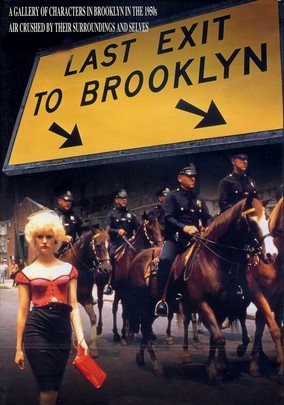
Last Exit to Brooklyn-1989

Last Exit to Brooklyn-1989

Director Uli Edel

Starring Stephen Lang, Jennifer Jason Leigh

Top 250 Films #176

Scott’s Review #152

70141619

Reviewed August 13, 2014

Grade: A-

Last Exit to Brooklyn is a slice-of-life type film that takes place in the early 1950s and is set in lower-class Brooklyn, NY.

It tells the story of a group of struggling neighborhood people- sex workers, union members, drag queens, etc. whose lives intersect. Also in the neighborhood is a military base where soldiers come and go on their way to war-torn Korea.

The central characters, though there are several with small yet interesting stories, are Harry, played by Stephen Lang, a sexually conflicted union worker with a wife and newborn child.

He is in love with a selfish drag queen, and Marilyn Monroe lookalike, Tralala, played superbly by Jennifer Jason Leigh, a prostitute whose best days are behind her, and who will do anything for attention.

The sets and cinematography in the film are very well done- the feeling of despair and hopelessness are accomplished by the dowdy streets, homes, and bars that the cast frequents.

Some of the characters are sympathetic- the aforementioned plus Tralala’s love interest, the Diner boy madly in love with Tralala, and the virginal seeming (but not really), Donna, portrayed by a young Rikki Lake. Other characters are abhorrent in their violence and hatred.

Last Exit to Brooklyn is quite a dark film and sometimes tough to watch but captures a dreary time and atmosphere. The Brooklyn set is excellent in its dreariness.

Jennifer Jason Leigh is the standout as the tough-talking, boozy prostitute who is losing her luster and the final scene of the film is truly a heartbreaker.

The topics of union, strike, bisexuality, gangs, and drag queens are covered and unique characters and conflict/loneliness are presented.

This film is an overlooked gem from 1989.

Do the Right Thing-1989

Do the Right Thing-1989

Director Spike Lee

Starring Danny Aiello, Spike Lee

Scott’s Review #746

Reviewed April 21, 2018

Grade: A

Do the Right Thing is one of the few great films to come out of 1989, not remembered as a fantastic year in cinema when most mainstream films were as glossy as tin foil- and barren of quality substance.

Here we have a small, independent gem that made people have discussions about current race relations in the United States and also became a monumental, influential film.

Filmmaker (and star) Spike Lee carves a controversial story of racial tensions in a Brooklyn neighborhood one hot summer day.

Beginning rather light and comedic, then turning violent and dark, the action is set in a largely black neighborhood, Bedford-Stuyvesant, Brooklyn, where twenty-five year old, Mookie (Spike Lee) works delivering pizzas at an Italian pizzeria owned by Sal (Danny Aiello).

With a toddler at home and a nagging girlfriend Tina (Rosie Perez) always in his face, Mookie is unmotivated yet still a decent guy and loyal friend.

Sal has two sons who work at the pizza place- Pino (John Turturro), who is angry and racist, and nice guy Vito, who is a friend of Mookie’s.

When conflicts erupt over whether Sal’s restaurant should celebrate black celebrities and white on a wall in the dining room, tensions reach their breaking point as the intense heatwave makes matters much worse.

What makes Do the Right Thing a marvel is both the overall tone of the film and the atmosphere relayed by Spike Lee, who does an incredible job of writing, producing, and starring in the film.

The elements having little to do with the actual story immediately impress as big, bright colors, in comic book style scream at the big screen in bold fashion, eliciting both a warm, inviting feeling and an angry, contemptuous vibe.

The loud rap and hip-hop beats are exceptionally instrumental in portraying a certain feeling and emotion in the film. Made independently, with little budget, the film feels raw and intense from the get-go.

Brooklyn, and New York City, in particular, are the perfect settings as Sal and his family are white folks living in a predominantly black neighborhood, so, in turn, are the minorities in the story.

Additionally, the viewer sees the friendly neighborhood and feels a sense of belonging regardless of race- the humorous drunk, the kindly, grandmotherly type people-watching from her stoop, and the boombox music kid all form a sense of community and togetherness.

This point is tremendously important to the overall plot of the film.

The relationship between Mookie and Sal and his sons is very important and the centerpiece of the entire film, which I found quite interesting as a character study.

Open-minded, Sal is a decent man and fine with the diversity in his neighborhood- yet still true to his Italian roots. Aiello does a fantastic job of portraying this complex, conflicted character.

His two sons could not be more different from each other- Vito, who is a close friend of Mookie’s, is sympathetic and sweet- with nary a racist bone in his body.

Pino, on the other hand, is angry and resentful of the black community taking over what he feels is his territory. Finally, while lazy, Mookie is also a sympathetic character as he is conflicted once tension reaches its boiling point.

These diverse characters make the film so dynamic.

Revered director Spike Lee carves out a story and brings it to the big screen telling an important topic that is as vital in modern times as it was when Do the Right Thing was released in 1989.

The film is intelligent and timely without being condescending to either black or white races, nor preachy- instead of telling a poignant story that is angry and sometimes painful to watch, but more importantly, is empathetic and real.

Oscar Nominations: Best Supporting Actor-Danny Aiello, Best Screenplay Written Directly for the Screen