Don’t Look in the Basement-1973

Don’t Look in the Basement-1973

Director S.F. Brownrigg

Starring William McGhee, Anne MacAdams, Rosie Holotik

Scott’s Review #954

Reviewed November 5, 2019

Grade: B

A film that is so low-budget that it strongly resembles the quality of independent master John Waters’ films, Don’t Look in the Basement (1973), has very low production values. It makes Waters’s films look like grandiose budget fests.

It has a campy, cheap quality that adds to the fun of watching. With a videotaped look and marginal acting, the film is perfect for a late-night indulgence, but little more.

Director S.F. Brownrigg, with screenwriter Tim Pope, brought this project to life. Also known as The Forgotten and Death Ward #13, Don’t Look in the Basement is the title that works best and conjures the most intrigue.

The story revolves around a collection of odd hospital inmates running the asylum while a series of mishaps occur.

Stephens Sanitarium is a secluded mental health facility in a remote area run by the quirky Dr. Stephens. The good doctor believes that the secret to curing his crazy group of loons is to allow them to express themselves, acting out their realities in hopes of solving their problems.

Stephens and an elderly nurse are both killed separately; he is accidentally hacked to bits by an ax, and she has her head crushed by a female patient who thinks her baby (a doll) is being taken from her.

Dr. Geraldine Masters (Anne MacAdams) is left to run the facility and greets a new nurse, the sexy Charlotte (Rosie Holotik), when she arrives from out of town, expecting a job.

Charlotte encounters all the inmates before strange events begin to occur, like an older patient having her tongue cut out, and a visiting telephone repairman being murdered.

One could speculate that Don’t Look in the Basement influenced independent treats such as Supervixens (1975), High Anxiety (1977), or the plethora of slasher films soon to be on the horizon, but this may be wishful thinking.

A few choice scenes seem like quick blueprints for these films to follow, but in an amateurish way.

Despite the film being in the horror genre, several scenes, mostly of Charlotte and Geraldine talking in an office, seem to be carved from a daytime soap opera popular at the time.

The long dialogue and almost throwaway scenes do not further the plot much, and it’s the occasional macabre death scene that achieves the most reaction.

Don’t Look in the Basement adds a big twist that is not difficult to figure out once all the pieces are presented to the viewer. The foreboding title ultimately underwhelms as this anticipated big secret barely comes to fruition.

As the players are offered one by one, the implausible conclusion reaches a climax, and the viewer will ruminate that the early stages of the film are superior to the ending.

The poor pacing and meandering story made me tune out at times. Still, the film is fun and a good, old-fashioned, campy, goofy good time.

The characters are completely over-the-top in the best possible way. A female nymphomaniac who, it is relayed, has been left by any man she has ever met and craves love and affection, is convinced that the repairman will marry her (they have only just met!) and has sex with his corpse.

A lobotomized black man only eats purple lollipops and has a heart of gold, while the ugly older woman, sans tongue, attempts to convey a secret message.

Don’t Look in the Basement (1973) is a marginal success because it does not take itself too seriously. This is both good and bad because the project takes on a juvenile quality that sometimes seems to be going for laughs more than for fright.

The acting is below par, but somehow the characters retain enough interest to warrant a recommendation, but only for those with an interest in the genre.
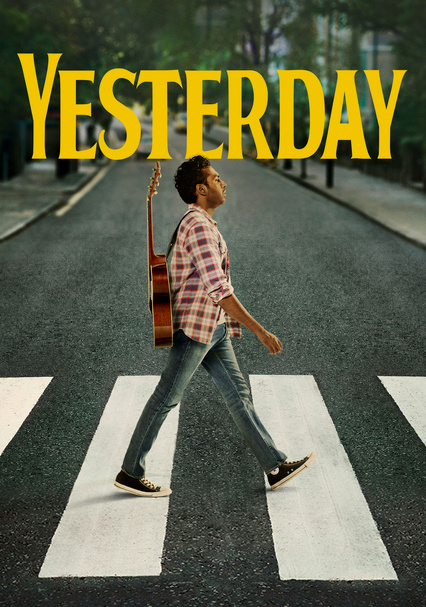
Yesterday-2019

Yesterday-2019

Director Danny Boyle

Starring Himesh Patel, Lily James

Scott’s Review #952

Reviewed October 29, 2019

Grade: B-

Yesterday (2019) is a film that is silly but sentimental, oozing with a nice quality that becomes tiresome towards the conclusion.

For those seeking a safe experience, the film will be deemed as wonderful, but for those with an appetite for a left-of-center grit, the film will only marginally entertain. It’s safe.

Director Danny Boyle (2008’s Slumdog Millionaire) chooses a charismatic British-Indian actor, Himesh Patel, for the starring role in a film that any fan of the rock band The Beatles should see.

Jack Malick (Patel) is a struggling musician who resides in Lowestoft, England, a suburb of London. Unsuccessful, he is nonetheless encouraged by his manager and childhood friend, Ellie (Lily James), to reach for the stars and never give up his dreams of achieving success.

One day, he is hit by a bus during a global blackout and is hospitalized with a head injury and missing teeth. When he performs the Beatles song “Yesterday” for his friends, they are blown away by its genius.

Jack realizes that the entire world has never heard of the legendary band and capitalizes on the stroke of luck, becoming a rock n roll superstar.

The massive song catalog of the Beatles featured in Yesterday is the best part of the film. The pleasure is in wondering which songs will appear next and in what context. Jack awkwardly “debuts” the song “Let it Be” to his parents, who continuously botch the name of the song, only showing mild interest.

Next, Jack furiously attempts to remember the lyrics to “Eleanor Rigby”, a difficult song lyrically. Other gorgeous classics featured are “The Long and Winding Road”, “Here Comes the Sun”, and “Something”.

A sentimental nod and appearance of a John Lennon figure is a nice touch and a worthy dedication to the deceased legend. The key here is wondering what would have become of the assassinated star had he not been famous.

The film approaches this when revealing that Lennon would be an older man today. Lennon tells Jack in a sentimental scene that he has lived happily with his wife by his side. If only this had been the case.

Patel is charming and a character to root for. As the butt of jokes made by his friends, who truly adore him, he is neither the handsome lead nor the wimpy co-star, more of a hybrid of the two.

We want him to achieve musical success because he is a nice guy, but we are glad when he finally confesses to the phony plot, as predictable as that revelation is to the film. Patel’s best scenes occur on stage when he either rocks out to the guitar or adorns us with a piano ballad.

Other than the above notes, Yesterday was only mildly entertaining, as it mixed a musical with a romantic story that does not work. If the audience is expected to root for Jack and Ellie to get together, then the idea falls flat.

The pair has no chemistry, nor is Ellie even remotely written as being the type who would live the rock ‘n’ roll lifestyle or want to. She is an elementary school teacher and asks Jack to give up his dream and lead a simple life in the suburbs. Who would do that?

Yesterday is riddled with stock characters, some of whom may or may not exist in real life. As much as I love actress/comedian Kate McKinnon, her overbearing character of Debra Hammer doesn’t showcase her best work.

Driven and cold, the character is played for laughs with her over-the-top behavior, but it feels too much like a part written to showcase McKinnon. Jack’s parents are cliche-filled characters, doting around with confused expressions and seeming to be overwhelmed by all events.

A musical film that cringes with a safe and saccharine feel, saved only slightly by the bevy of mostly 1960s hits by the Beatles, some of which lyrically are dissected and showcased.

Yesterday (2019) features pop star Ed Sheeran, who does not act or contribute to the film. Way too polished and superfluous for its good, Boyle, a worthy director, should have added some edginess rather than going for safe pop.

Thank goodness the film is about the Beatles rather than the Backstreet Boys.

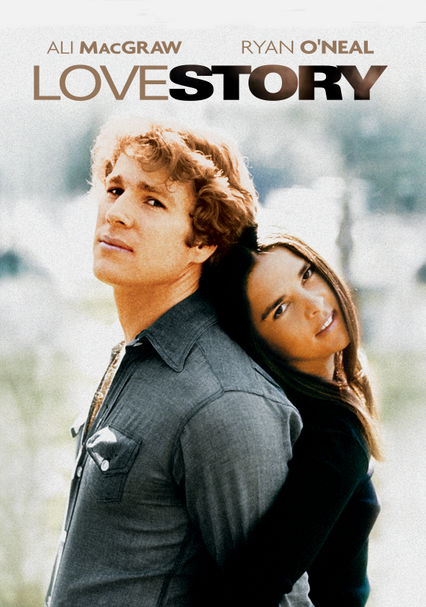
Love Story-1970

Love Story-1970

Director Arthur Hiller

Starring Ryan O’Neal, Ali MacGraw

Scott’s Review #950

Reviewed October 23, 2019

Grade: B+

Love Story (1970) was an enormous blockbuster hit at the time of release, with two good-looking stars of the day immersed in a tragic romance.

Almost fifty years later, the story feels contrived and watered down with a “been there, seen that” result.

While reviewing the film, one must keep in mind the period in which it was made (before similar films hit the circuit), and the chemistry between the leads holds up quite well.

Perhaps the film works best when seen as it was made, as it now feels dated.

Handsome Oliver Barrett IV (Ryan O’Neal) is a star ice hockey player attending Harvard University in Cambridge, Massachusetts. He is heir to the wealthy Barrett family, led by his father, Oliver Barrett III (Ray Milland).

While at school, he meets the blue-collar Jenny Cavilleri (Ali MacGraw), who attends Radcliffe College, a neighboring college, and studies classical music. The couple falls madly in love and becomes inseparable.

Oliver faces anger after he proposes to Jenny. She accepts, and they travel to the Barrett mansion so that she can meet Oliver’s parents. They are judgmental and unimpressed with her, thinking she is nice, but hardly a companion for their son.

Later, Oliver’s father tells him that he will cut off his financial support if he marries Jenny. After graduation, Oliver and Jenny marry nonetheless and begin a life of economic struggle, but filled with happiness.

When they attempt to conceive, they learn that Jenny is terminally ill and has weeks to live.

The film’s primary appeal is the romance between Oliver and Jenny, which feels primal and honest. They are the cliched rich boy and poor girl equation, but in this film, the dynamic works.

O’Neal and MacGraw are good-looking and were on the cusp of Hollywood A-list status, so the casting aligned.

They ebb and flow at the beginning of the film with Jenny’s sarcasm and Oliver’s quiet arrogance, but there is never a doubt that the pair will fall madly in love, and we, the audience, are hooked from the start.

On an atmospheric level, the icy northeastern climate and the myriad of exterior scenes throughout Massachusetts give the film a proper ambiance.

For anyone who has studied at a university in this area or has an interest in it, the film succeeds, adding a robust flavor to the surrounding events.

The youthful wonder and promise of a bright future are central to the story, and the foreshadowing works well.

The film lacks guts in its pacing, though. Most of Love Story focuses on the newness of Oliver and Jenny’s romance, their hurdles with family members, and a brief nod to class and societal roles.

At a brief one hour and thirty-five minutes, there is very little time left for the shocking turn of events surrounding Jenny’s illness.

Coming out of nowhere, the character is alive and well, has a brief fainting spell, and is then seen lying on a gurney before dying off-screen.

There is no bedside death scene, no suffering or deteriorating health, and the entire tragedy is glossed over. Hence the title: the focus is on the “love story,” but this seems like a scam.

So much is invested in the couple that the loss seems skimmed over. How can one die from leukemia (blood cancer) within a few days anyway?

The filmmaker’s clear attempts to play it safe come at the expense of the overall film experience.

Love Story (1970) deserves praise for being one of the first of its kind- the romantic tearjerker. The genre would soon be overrun with imitators so cliched that they bring the original down a notch, making it feel trite.

The ‘chick flick’ contains good acting and lovely scenery, but lacks the emotional depth I was hoping for.

Melodramatic to a fault, the leads’ appeal drives the overall effort far more than it should.

Oscar Nominations: 1 win-Best Picture, Best Director-Arthur Hiller, Best Actor-Ryan O’Neal, Best Actress-Ali MacGraw, Best Supporting Actor-John Marley, Best Story or Screenplay Based on Factual Material or Material Not Previously Published or Produced, Best Original Score (won)

Golden Globe Nominations: 5 wins-Best Picture- Drama (won), Best Director-Arthur Hiller (won), Best Actor-Drama, Ryan O’Neal, Best Actress-Drama-Ali MacGraw (won), Best Supporting Actor-John Marley, Best Screenplay (won), Best Original Score (won)

Ma-2019

Ma-2019

Director Tate Taylor

Starring Octavia Spencer, Diana Silvers

Scott’s Review #949

Reviewed October 22, 2019

Grade: B+

Marketed as a slasher film based on the trailers, Ma (2019) impressed me immensely as my expectations of a standard horror film were superseded by a more complex, perfectly paced psychological thriller.

A fantastic performance by Octavia Spencer, and dare I mention an Oscar-worthy one if this were a different type of film, the actress effortlessly brings a vulnerability to a not-so-easy role to play.

The finale is disappointing, and the film includes a few too many stereotypes, but it is a terrific effort nonetheless.

Set somewhere in remote Ohio, but looking more like the southern United States, teenager Maggie Thomson (Diana Silvers) and her mom Erica (Juliette Lewis) return to Erica’s hometown after her marriage fails.

Reduced to a job as a cocktail waitress at a local casino, she encourages Maggie to make friends. Maggie falls into the popular crowd as Erica reconnects with high-school friends who are mostly the parents of Maggie’s new friends.

Sue Ann (Spencer) bonds with the cool kids by purchasing them alcohol and hosting parties in her basement, much to the displeasure of her parents.

The audience soon realizes that something is amiss with Sue Ann. She forbids the kids from ever venturing upstairs and slowly develops a needy attachment to the teens.

Flashbacks begin to emerge as clues to her connection to the other parents and her plot for revenge.

The incorporation of a place in the house to avoid is a typical horror gimmick that always works well. Inevitably, someone will venture into that area of the house, and a secret will be revealed. Ma is no different in this regard.

It’s terrific to see more diversity, particularly among the African-American population, represented in the horror genre. Typically, the horror genre has been an all-white affair, with actors of color often cast as best friends or in minor supporting roles at best.

Thanks to Get Out (2017) and Us (2019), horror films have recently included all-black casts and have been tremendous hits.

Let’s hold out hope that the Asian, Latino, and LGBTQ communities will receive more inclusion and bring freshness to a key cinematic genre.

The film belongs to Spencer.

The Oscar-winning actress must have had a fun time with this role and gets to let loose during many scenes. She goes from coquettish to maniacal, sometimes within the same scene, with flawless precision and gutsy acting decisions.

My favorite, Sue Ann, is the unhinged one as she slyly threatens to cut one male character’s genitalia off. She smirks and uses her large, expression-filled eyes to her advantage. Psycho has never looked so good!

The climax, so crucial in horror or thrillers, to follow through and capitalize on the build-up, ultimately fails in Ma. Once the big reveal surfaces and a childhood prank is exposed, the trick hardly seems worthy of a killing bonanza.

A mousy Sue Ann performed fellatio on a nerd instead of her crush. Even those involved on the outskirts are blamed, and waiting twenty years to exact revenge on her tormentors (most of whom have repented) doesn’t seem plausible.

Ma (2019) contains a hefty cast of stalwarts, but it’s Spencer who brings the sometimes-generic material and trivial conclusion to crackling life with her brilliant portrayal of a damaged woman.

Allison Janney, Lewis, and others add respectability when the film teeters too close to mediocrity with its teen character cliches. Still, the film excels when it focuses on a character-rich story and unexpected plot points.

Child’s Play-2019

Child’s Play-2019

Director Lars Klevberg

Starring Aubrey Plaza, Mark Hamill

Scott’s Review #948

Reviewed October 17, 2019

Grade: B

In the horror cinematic genre, when a successful franchise has been dormant for a period, a reboot will inevitably be among the offerings.

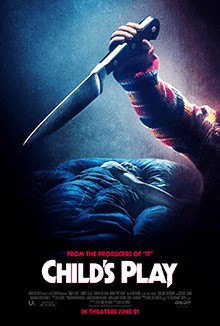
Child’s Play (2019) resurrects the series of films popular in the late 1980s and early 1990s with a modern stamp.

The film is formulaic, but it adds a bit of macabre dark humor that lifts it above mediocrity. However, the freshness turns too silly in the final act, and neither the film nor the killer is terrifying.

Kaslan Corporation has launched a successful new global product called Buddi, a revolutionary line of high-tech dolls designed to be human-like companions to their owners, learning from their surroundings and acting accordingly.

Buddi dolls can also connect to and operate other Kaslan products, quickly becoming a phenomenon for kids worldwide. A disgruntled employee tweaks one of the dolls to turn sinister and then commits suicide.

Single mom Karen Barclay (Aubrey Plaza) works as a retail clerk in Chicago, raising a thirteen-year-old son named Andy (Gabriel Bateman), who wears a hearing aid.

New to the area, he struggles to make friends, so Karen takes the defective doll from her store as a substitute friend and picks me up for her son.

As Andy makes acquaintances within the building and takes a dislike to Karen’s new beau, Shane (David Lewis), Buddi names himself Chucky and seeks vengeance against those surrounding Andy, eventually turning on the boy.

Child’s Play takes a modernized approach by making the new Chucky a more high-tech doll, significantly advanced from the original Chucky introduced in 1988.

2019’s Chucky is creepier and more lifelike than the original Chucky, which lends the film a fresh look rather than merely a retread of the 1980s.

Set in present times, the film feels relevant and glossy. New Chucky is more human than old Chucky, with more capabilities and room for thought and deduction, making him more devious.

A treat for Star Wars (1977) fans and any fan of cinema history is the inclusion of Mark Hamill as the voice of Chucky. While Hamill’s voice is not sinister nor particularly distinguishable to the naked ear, the star power adds fun and familiarity, a throwback and ode to film lore.

Hamill’s voice is pleasant and kind, which adds a foreboding and sinister quality.

The film has some clever moments and bits of chilling dark humor that make it a fun experience. When Shane becomes the first victim of Chucky’s wrath and meets a dire fate at the hands of a tiller while hanging Christmas lights, he is beheaded, and Chucky leaves the head in a disgusted Andy’s room.

In hilarious and laugh-out-loud form, the head ends up as a wrapped Christmas present for Andy’s elderly neighbor Doreen, who props it on her mantle until she can open it.

Bryan Tyree Henry, known for his prominent roles in Widows (2018) and the wonderful If Beale Street Could Talk (2018), brings comedy and a likable edge as Andy’s neighbor, Detective Mike Norris.

Plaza, like Karen, is given limited material and unable to shine in her role, not seeming old enough nor motherly enough to add much realism. A big fan of the actress, she is more talented than this part allows her to be.

The film misfires with the cliched misunderstandings and incorrect assumptions that Andy is responsible for the deaths Chucky caused.  Andy’s two apartment buddies are caricatures, and the big finale set inside the retail store is disappointing.

Chucky brilliantly hacks the Buddi toys on the shelves, and chaos ensues as parents and children are massacred as a stampede tries to escape the store. The scene does not work as well as it should at a climax.

Sticking closely to the script and offering a predictable formula film, the 1988 film Child’s Play is remade in 2019 with added star power. Familiar faces (and voices), Plaza, Henry, and Hamill, raise the film slightly above B-movie status, though the dumb finale made me tune out a bit after the main kills were over.

I doubt the film performed well enough at the box office to secure the known actor’s returns, and hopefully, this will be a one-and-done project.

Downton Abbey-2019

Downton Abbey-2019

Director Michael Engler

Starring Hugh Bonneville, Michelle Dockery, Maggie Smith

Scott’s Review #947

Reviewed October 16, 2019

Grade: B+

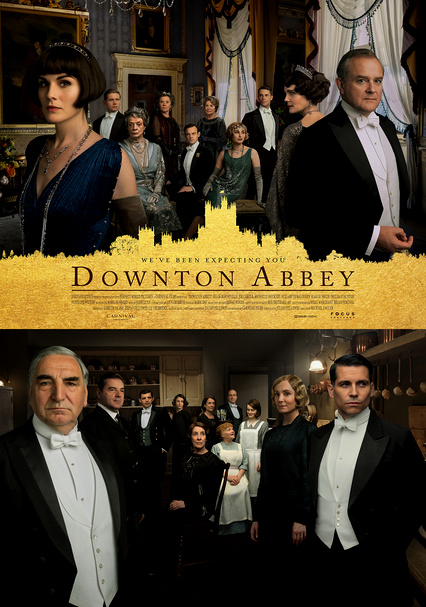
Capitalizing on the tremendous success of the television series, which ended in 2015, Downton Abbey (2019) is a British historical period drama film written by Julian Fellowes, creator and writer of the series.

Beloved fans will devour the film, as the familiar formula and characters are brought to the big screen, giving it an even grander feel.

The film plays more like a two-hour episode arc over reinventing the wheel, but the result is a resounding crowd-pleasing affair with drama, scandals, and a good dose of nostalgia.

The Crawleys and their servants reside in the lavish fictional estate of Downton Abbey during the year 1927, a year and a half after the series ended.

Little has changed, and most of the characters are in similar situations, enjoying their daily lives.

Robert (Hugh Bonneville) and Cora Crawley (Elizabeth McGovern), the Earl and Countess of Grantham, are notified that King George V and Queen Mary will visit their home as part of a royal tour throughout the country.

The family and staff are excited yet skittish as they prepare to ensure the lavish event goes off without a hitch.

Situations arise such as the Downton Abbey servants feuding with the Buckingham Palace staff, Violet Crawley’s (Maggie Smith) dismay at Robert’s cousin Maud (Imelda Staunton) being in attendance, and attempted plot to kill the King which is thwarted by Tom (Allen Leach).

A new job offer for Edith’s (Laura Carmichael) husband, Mary’s (Michelle Dockery) frustration with maintaining the vast estate, and potential romances for several characters, including a scandalous same-sex relationship.

A few contemporary issues are created – among them, women’s rights and the plight of gay men. And though welcome, neither changes the overall blueprint of what the series is about, which is just what the series fans ordered.

Smith is the main attraction as she chews up the scenery with her insults, sarcasm, and blunt honesty. But the best scene, coming late in the film, gives Smith a chance to burst with sentimentality and limit the hamminess for at least one treasured scene.

The costumes and art direction are lovely, with luscious gowns, tuxedos, suits, jackets, hats, and shoes found in every scene.

The sprawling grounds of Downton Abbey and the ravishing interiors are front and center.

The film ventures to the neighboring city of York to offer a more progressive and metropolitan vibe, but each scene looks perfect, which is what fans have come to expect.

Not every character is front and center, but with an unwieldy cast of close to thirty principals, some are destined to accept back-burner status.

Surprisingly, yet agreeably, is the toned-down story for “super-couple” Bates (Brendan Coyle) and Anna (Joanne Froggatt), having enjoyed their share of trials and tribulations during the original run.

Wonderful moments feature supporting characters like Carson (Jim Carter), Thomas (Robert James-Collier), and Molesley (Kevin Doyle), who nearly steals the show with his hysterical fascination with royalty.

The balance and pace of the film are nearly perfect, and every character has at least something to do.

This characteristic has always helped huge ensemble casts succeed, and Fellowes wisely balances humor with drama but avoids tragedy or dark situations, hoping for mainstream success with his move to the big screen, opting to play it safe.

The attempt succeeds as the film adopts the “if it ain’t broke, don’t fix it” approach.

Downton Abbey (2019) is a splendid winner, primarily due to its impressive production values and costumes.

For fans of the television series, the film is a must-see and offers no more or no less than expected, providing more than enough to please those who want what the popular stories initially offered.

Despite the drama, the film does not feel “soapy” or contrived, and the tender moments may evoke a need for a hankie.

If the writing can remain fresh, I see no reason for another offering not to be green-lit, primarily due to the significant box-office returns.

Judy-2019

Judy-2019

Director Rupert Goold

Starring Renee Zellweger

Scott’s Review #946

Reviewed October 14, 2019

Grade: A

Creating a film about an iconic figure like Judy Garland is undoubtedly a challenging task. Casting the role is even tougher.

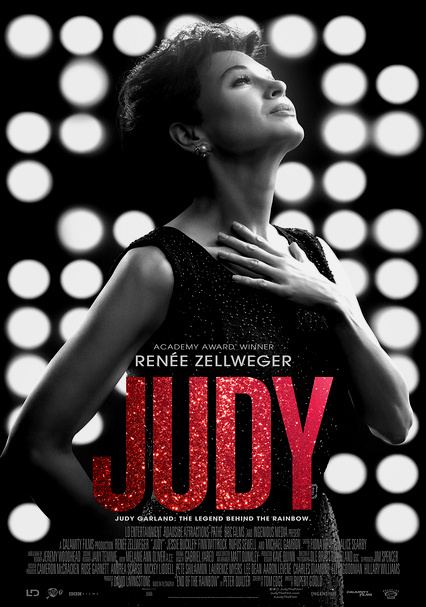
Both points come together with perfect symmetry as director Rupert Goold provides Judy (2019) with heart, hope, and a sense of sadness. Rene Zellweger is astounding in the title role as she embodies the character.

The film is excellent and an accurate telling of the real-life person.

The period is 1967, and we meet the adult Judy Garland (Zellwegger) well after midnight, having performed with her two young children in tow. Haggard, they are informed by the Los Angeles hotel staff that their room has been given up due to non-payment.

The American singer and actress is broke due to bad marriages, drugs, and alcohol. The star is forced to return to her ex-husband for shelter—the two quarrel about the children.

The film does not focus solely on the late 1960s and the final years of Garland’s life, but also delves back to her debut as Dorothy in The Wizard of Oz (1939).

The pressures put upon the aspiring actress to perform, lose weight, and maintain her energy are shown in savage fury, so that the audience realizes how the young girl has turned into a boozy, unreliable middle-aged woman.

Hollywood ruined her innocence.

Zellweger is beyond brilliant. Having disappeared from the spotlight for several years, the actress is back with a vengeance, having something to prove. Prove she does as she becomes Judy Garland.

From her small but expressive eyes to her nervous movements and pursed lips, she delivers a flawless performance and has been rewarded with praise across the board.

It is a remarkable portrayal that should be remembered in history.

Much of the film takes place in London as Garland is forced, for financial reasons, to agree to a series of concerts to bring in cash. This necessitates leaving her children behind.

A poignant scene unfolds in a phone booth as Judy reaches the heartbreaking conclusion that her children would prefer the stability of living with their father. Though she understands, the star crumbles in sadness and loneliness.

A treat is the showcasing of Garland’s compassion for others deemed outcasts, as she also was. Gravitating towards gay men, she spots one gay couple in the audience night after night and befriends them as they eagerly await her exit from the theater one night.

She suggests dinner, and the dumbfounded couple clumsily searches for a restaurant open that late, finally offering to make her scrambled eggs at their flat.

Things go awry, but it hardly matters in a heartfelt scene that exposes the prejudices same-sex couples faced as recently as the 1960s and the champion Garland was to the LGBTQ community.

The iconic “Over the Rainbow” is featured late in the film and perfectly placed. Judy ends her touring engagement due to hecklers but returns for a final night on stage, where she asks to perform one last song.

She breaks down while singing “Over the Rainbow,” but recovers with the encouragement of supportive fans and can complete the performance.

Judy asks, “You won’t forget me, will you?” She does not live long thereafter and dies in the summer of 1969. The scene is painful, and not a dry eye is left in the house.

Judy (2019) is a wonderful tribute to the life and times of a Hollywood legend. The film is neither a complete downer nor cheerful.

What the filmmakers do is make it clear that Garland always had hope for a better life and for the happiness that eluded her. She was kind to most and loved her children beyond measure.

Zellweger will likely eat up a plethora of awards throughout the season, as she should.

Oscar Nominations: 1 win-Best Actress-Renee Zellweger (won), Best Makeup and Hairstyling

Independent Spirit Award Nominations: 1 win-Best Female Lead-Renee Zellweger (won)

The Old Man & the Gun-2018

The Old Man & the Gun-2018

Director David Lowery

Starring Robert Redford, Sissy Spacek

Scott’s Review #945

Reviewed October 11, 2019

Grade: B

Quiet films centered on older characters are not the norm in youth-obsessed Hollywood, where profits are always in fashion.

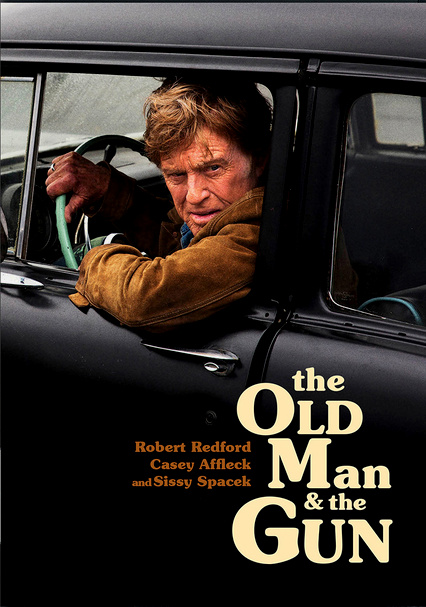
The Old Man & the Gun (2018) spins a tale offering adventure and a good old-fashioned love story, with appealing stars. The film is slow-moving and not groundbreaking, but it possesses a fine veneer and a snug plot that gives viewers a fuzzy feeling of watching something wholesome.

The script is loosely based on David Grann’s 2003 article “The Old Man and the Gun”, which was later collected in Grann’s 2010 book The Devil and Sherlock Holmes.

Career criminal Forrest Tucker (Robert Redford) is wanted for his daring escape from San Quentin State Prison in 1979. The current period is 1981.

Addicted to petty bank robberies for relatively small dollar amounts because he is addicted to the rush. A charmer, he is unassuming and unsuspecting. As he flees the scene of a recent heist, he meets a kind widowed woman named Jewel (Sissy Spacek), whose truck has broken down.

The pair have lunch at a diner and quickly bond.

Forrest is in cahoots with two other bank robbers as the trio makes their way across the southwest United States, garnering a reputation. Detective John Hunt (Casey Affleck), a Dallas detective, is tasked with finding and arresting Tucker until the FBI takes the case away.

Hunt cannot give up the search, and the duo embarks on a cat-and-mouse chase across the area, sometimes crossing paths in the local diner.

Where The Old Man & the Gun succeeds is any scene featuring Forrest and Jewel together. Their chemistry is radiant during calm scenes of the couple eating pie and sipping coffee at the diner, simply getting to know each other organically.

During their first encounter, Forrest slips her a note, adding mystery to their bond. It is unclear whether he reveals his shady career to her, but it is alluded that he has confessed something that she is not sure she believes.

Redford carries the film as if he were still a leading man from his 1970s and 1980s blockbuster days, which is a testament to his Hollywood staying power.

With his charismatic smile and still dashing good looks, it is little wonder that the bank tellers he holds up describe him as friendly and polite, easily wooing the folks into his good graces.

A crowning achievement for the actor, he narrowly missed an Academy Award nomination but did score a Golden Globe nod.

The film suffers from predictability during the final act, when one of his accomplices turns him in to the police, and a chase ensues between Forrest and Hunt.

This is not the film’s best part, and it feels like dozens of other crime dramas. Affleck looks to be in a role he didn’t particularly enjoy; at least, that is how it seems to me watching the film.

The actor is an Oscar winner playing cops and robbers and second fiddle to Redford. Can you blame him for looking glum?

Speaking of misses, Hunt is in an interracial relationship with Maureen, a beautiful black woman who has a mixed-race daughter. Rural Texas in 1981 must have posed racial issues for the family, but this is never mentioned. Maureen and her daughter also look straight out of 2019 with fashionable hairstyles and clothes.

The relationship is progressive, a plus, but it is written unrealistically.

Although rumored to be retiring from the film industry (we’ll see if that happens), Robert Redford gives a terrific turn as a man who reflects upon his life and treats the audience to the same effect.

Spacek is a delicious role and a crowning achievement for a great career and is a perfect cast and a treasure to have along for the ride, celebrating two fantastic careers.

The Old Man & the Gun (2018) is a touching, romantic bank heist film with more positives than negatives.

At Eternity’s Gate-2018

At Eternity’s Gate-2018

Director Julian Schnabel

Starring Willem Dafoe

Scott’s Review #944

Reviewed October 9, 2019

Grade: B+

At Eternity’s Gate (2018) is a journey into the mind of one of the most tortured painters- Vincent van Gogh.

The film focuses only on the final years of the artist’s life and the events leading up to his death. Inventive direction by visionary Julian Schnabel creates an isolated and majestic world amid a feeling of being inside Van Gogh’s mind.

Though slow-moving, Willem Dafoe performs brilliantly, eliciting pathos from its viewers.

It is 1888, and Van Gogh is traveling to Paris to meet his good friend and fellow painter, Paul Gauguin (Oscar Isaac), an equally tortured individual. They share ideas and qualms about Paris life, and Gauguin convinces Van Gogh to travel to the south of France, while his brother Theo (Rupert Friend) resides in Paris.

Fluctuating scenes occur of Van Gogh’s relationship with a prostitute, a woman he meets on a country road and obsesses over, and his complex relationships with both Theo and Gauguin.

Dafoe, a legendary actor recognized for this role with an Oscar nomination for Best Actor, is one of the best components of At Eternity’s Gate.

He engulfs Van Gogh with a constant state of emotional exhaustion and dissatisfaction. As he becomes attached to Gauguin, who leaves him, Dafoe so eloquently emits his quiet depression, seeming to have nobody left. As he violently chops off his ear as a show of loyalty to Gauguin, the mental hospital awaits him.

Dafoe carries all these complex emotions with calm grace and dignity.

Schnabel, known chiefly for his groundbreaking Oscar-nominated work on The Diving Bell and the Butterfly (2007), has a beautiful technique. He provides even the darkest scenes with a lovely and sometimes dizzying camera effect and frequently adds scenes of blurred focus with close-ups of his characters.

As a painter himself, the result is a magical interpretation of colors and framed scenes. Many of his films focus on real-life studies, and the director made a great choice in Van Gogh.

The French landscape is lovely and culturally significant to the experience. The busy and robust Parisian lifestyle juxtaposes nicely against scenes of the lavish countryside, presumably north and south of the City of Light.

When Van Gogh quietly sits and paints numerous canvases of still objects—a bush or a tree—the flavorful colors stand out against the landscape and are bursting with natural beauty.

The cinematography is excellent.

The main detraction to At Eternity’s Gate is its slow or snail-paced pace. Although the film is only one hour and fifty-three minutes, it feels much longer.

Viewing the film on an international flight may or may not have influenced this note, but the story seems to drag on endlessly, though the beautiful aspects outweigh the boring scenes.

The mental health aspect and the encouragement Van Gogh receives to get better and heal seem a bit too modern a method for the late nineteenth century.

This may have been incorporated as an add-on to current and relevant issues to be exposed, but while inspiring, it does not seem to fit the film. This is a slight criticism I noticed.

Bordering on the art film genre, At Eternity’s Gate (2018) is a sad depiction of a disturbed man’s lonely existence creating art that would not be recognized as a genius until after his death.

It is a slow film that uses gorgeous camera shots and lovely snippets of Vincent van Gogh’s works to seem poetic.

The film is not for everyone and is not a mainstream Hollywood experience, but it is a quiet biography of one of the greats.

Oscar Nominations: Best Actor- Willem Dafoe

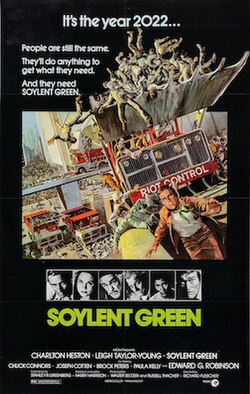
Soylent Green-1973

Soylent Green-1973

Director Richard Fleischer

Starring Charlton Heston

Scott’s Review #943

Reviewed October 8, 2019

Grade: B

Soylent Green (1973) is a rather obscure offering starring the big-name star Charlton Heston in a dystopian science-fiction film.

The story is futuristic and eerily reminiscent of Planet of the Apes (1968), though not nearly as compelling or as layered.

The result is admirable for its progressive message, cool colors, and sets, but it feels dated and of its time and treats female characters more like props than characters, leaving an uneven result.

It’s a one-and-done sort of film.

The year is 2022, and because of the Industrial Revolution, 40 million people live in New York City, suffering year-round from extreme humidity due to the greenhouse effect and from shortages of water, food, and housing.

Only the wealthy are afforded necessities, and residents of the rich (mostly female) are referred to as “furniture” and enslaved.

Detective Frank Thorn (Heston) is tasked with investigating the murder of an affluent and prominent man, which leads him to dire details surrounding Soylent Industries and the food they produce.

The film feels like a visionary idea that became a Hollywood movie.

Loosely based on a 1966 novel entitled “Make Room! Make Room!” by Harry Harrison, Heston is cast as the lead while his career was slowly declining, but he is still the star and quite hunky for an older gentleman.

He plays a role similar to George Taylor in Planet of the Apes, especially during the final climactic reveal, which will make viewers question what is in their dinner.

Heston carries the film well and mixes wonderfully with character actor Edward G. Robinson, who plays Sol Roth in his final role. The old character decides to “return to the home of God” and seeks assisted suicide at a government clinic.

The final scene between the actors is poignant and heartfelt as they say goodbye. Eagle-eyed viewers will spot a young Dick Van Patten in a tiny role during this scene.

Any romantic chemistry is lacking in Soylent Green as a potential love match between Frank and Shirl (Leigh Taylor-Young) strikes out. Mismatched and with little thunder together, the couple does not look good.

Worse, Shirl is mere “furniture,” limiting the character’s potential. She is reduced to assisting with Frank’s investigation.

The main detraction is that the film does not feel very futuristic or authentic. The characters look like 1970s actors dressed up to look futuristic, with a clear Hollywood tint.

The story loses its way halfway through and teeters between pure science fiction and a standard detective story you saw nightly on network television at the time.

Still, the film has a lot of potential but doesn’t reach it. The progressive slant and social commentary are admirable, and the bright green, nutritious, synthetic canned food is almost a character in its own right.

The final scene shocks the viewer with horror, and I wish more jaw-dropping moments existed throughout the experience, not just at the end.

A film that attempts to do something different or provide a provocative message is worthy of a certain amount of praise.

Soylent Green (1973) offers a bit of thought-provoking provocation but seems more relevant to the 1970s than to many decades later.

Heston is dazzling as the main character, and the trimmings are impressive, but Invasion of the Body Snatchers (1956) or The Day the Earth Stood Still (1951) resonate more as similar genre films.

Hustlers-2019

Hustlers-2019

Director Lorene Scafaria

Starring Constance Wu, Jennifer Lopez

Scott’s Review #942

Reviewed October 3, 2019

Grade: B+

Hustlers (2019) is a film that I had no intention of seeing. It was not on my radar, and I did not know much about the movie except that it was promoted as a story about a group of strippers who bamboozle Wall Street men.

Yawn!

The experience was better than expected, thanks to the critically lauded performance by Jennifer Lopez. She astounds in a role perfectly written for her as the true story champions female empowerment, and why shouldn’t it?

The result is a feminist film with humor.

Constance Wu, famous for putting Asian actors on the map with Crazy Rich Asians (2018), does a complete one-eighty as the lead character in Hustlers.

Unrecognizable, she plays a New York City stripper named Destiny, who works at a trendy Wall Street club named Moves, in 2007. She supports her grandmother and barely gets by on meager tips, possessing the looks but not quite the style.

When she witnesses fellow dancer Ramona Vega (Lopez) perform a simmering routine, the women bond and become fast friends.

Destiny enjoys newfound wealth and a close friendship with Ramona. A year later, the financial crisis strikes, and both women find themselves struggling for cash, having squandered their fortunes.

Destiny becomes pregnant.

Her boyfriend leaves her shortly after their daughter’s birth, and she is unable to find a new job. Destiny and Ramona, along with other girls, hatch a plot to manipulate the business people they have grown to know out of desperation.

The story is based on actual events.

Had the elements not wholly come together in this film, the result would have been dreary or at best mediocre.

A current trend in modern cinema is to have a group of female characters team up in some form of heist or crime-fighting adventure- think Ocean’s Eight (2018), the Ghostbusters (2016) remake, or Widows (2018).

Some results are better than others, but hardly memorable, as the girl-buddy genre hardly has any depth.

Two critical factors stand out to me as rising Hustlers way above a mediocre or standard fare film experience. Jennifer Lopez deserves all the praise she has been showered with for her role as Ramona.

From the moment Lopez, who is listed as Executive Producer, appears on screen, she is electrifying and impossible not to be mesmerized by.

As she shakes her booty (and many other parts of her anatomy) and writhes on stage to Fiona Apple’s “Criminal,” the men in the club throw money at her.

The scene oozes sexuality, and from this moment on, Lopez owns the film.

Lopez, besides Selena (1997), has primarily chosen mainstream and fluff material like The Wedding Planner (2001) and Maid in Manhattan (2002) over the years.

She may not be the Meryl Streep of her time, but it is always nice when an actor charts challenging and dangerous waters. May she continue to choose wisely. She powers through Hustlers with gusto and is the central draw.

Not to limit Hustlers to a conventional woman using sex appeal to lure men, the film is sure to get its message across to viewers in a more sobering way.

By 2008, the United States was in a financial landslide, with Wall Street being hit particularly hard. The point is made that not a single person went to jail for causing the collapse or for causing tens of thousands of people to lose their homes, jobs, or life savings.

This makes the audience realize that what the women did pales in comparison to Wall Street types (their victims), and many of their lures got what they deserved.

The subject matter at hand, being one of the worlds of strippers, may turn off some of the prudish, but delving into the emotions and aspirations of those who exist in the industry is eye-opening and quite enjoyable.

Hustlers (2019) successfully garnered empathy from its audience and champions a female empowerment movement, resulting in the surprise hit of the season.

Independent Spirit Award Nominations: Best Director-Lorene Scafaria, Best Supporting Female-Jennifer Lopez, Best Cinematography

Nancy-2018

Nancy-2018

Director Christina Coe

Starring Andrea Riseborough

Scott’s Review #941

Reviewed October 1, 2019

Grade: B+

Part of why I love independent cinema so much is the freedom it gives the director to tell a good story of his or her choosing, usually with little studio interference or opinions.

Nancy (2018) is a good example of this, as Christina Choe writes and directs a film that is hers to share. A quiet film about loneliness, the need to belong, and connect with others is the main element in a compelling and unpredictable story.

Living in a barren small town in upstate New York, Nancy (Andrea Riseborough) endures cold, damp, and bleak weather. Working a temporary office job where the staff barely remembers her from her previous stint, Nancy spends her downtime caring for her ill mother (Ann Dowd) and playing with her cat, Pete.

When an occurrence leaves her vulnerable, she sees a news report featuring a couple whose daughter disappeared thirty years ago. She looks exactly like Nancy, which gives the sometimes dishonest woman an idea.

Riseborough carries the film with a strong performance but is not a character the audience easily roots for. Nancy is not unkind, dutifully tending to her mother’s needs when she is not pleasant. She pretends to be pregnant to meet an internet support group man who lost a child and seeks comfort in Nancy.

Hoping for a romance or at least a human connection, the two run into each other, and when the man realizes her scheme, he calls her psycho. We witness a range of subtle facial expressions revealing the complicated character, which Riseborough provides brilliantly.

Choe tells a very human story peppered with deep feelings and emotions that are easy for the audience to relate to.

Conflicted views will resound between the principal characters: Nancy, Leo Lynch (Steve Buscemi), and his wife, Ellen (J. Smith-Cameron). The Lynches, especially Ellen, are vulnerable, yearning for a glimmer of hope that their long-lost daughter, surely dead, is alive.

So, the director’s complexities work exceptionally well to keep the emotional level high.

All three principal actors do a fine job, with Smith-Cameron being rewarded with a Film Independent award nomination. She is the most conflicted of the three and the character audiences will ultimately fall in love with and feel much empathy for.

Has Buscemi ever played a nicer man? I think not, as the actor so often plays villainous or grizzled so well. With Leo, he is rational, thoughtful, and skeptical of the story Nancy spins. He adores Ellen and does not want to see her again disappointed, the pain apparent on both faces.

The cast possesses many quiet and palpable subtleties.

The locale in the film is also a high point. Presumably, the cold and angry air fills the screen in January or February, adding a measure of hopelessness that each character suffers from differently.

Numerous scenes of the outdoors are featured, and compelling moments are provided. When a pretty snowfall coats the land, this is a tease, as one character’s hopes are ultimately dashed. A cheery landscape such as California or Florida would not have worked as well in this film.

Nancy (2018) risks turning some viewers off with its unhappy nature and slow pace, but isn’t this much better than a fast-paced Hollywood popcorn film?

To me, the answer is obvious, and Nancy is a prime example of why the film industry and its enthusiasts should celebrate and revere small films.

Lies and truths cross a fine line, and the potent psychological thriller will leave viewers mesmerized as events progress.

Independent Spirit Award Nominations: Best Supporting Female- J. Smith-Cameron, Best First Screenplay

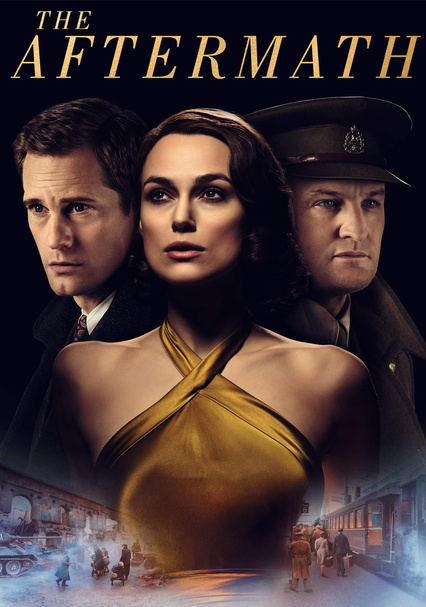
The Aftermath-2019

The Aftermath-2019

Director James Kent

Starring Keira Knightley, Alexander Skarsgard, Jason Clarke

Scott’s Review #940

Reviewed September 13, 2019

Grade: B-

The Aftermath (2019) is a heavily melodramatic post-World War II period film riddled with cliches and poor plot setups, but is nonetheless a moderately enjoyable experience.

With a marginal romantic triangle in play and good-looking stars, this can only go so far, as predictability soon sets in.

Exquisite to look at, with a bright and lush European ambiance, the picture is easy on the eyes but lacks a good story or surprises. The film will be forgotten before long.

The period is 1945, and the murderous war is still fresh on the minds of all affected, and animosity remains between the English and the Germans.

Rachael Morgan (Knightley) arrives in Hamburg during the bitter winter season to reunite with her British husband, Lewis (Clarke), who is tasked with helping to rebuild the decimated city.

The Morgans reside with a handsome German architect, Stefan (Skarsgard), and his teenage daughter, Freda. Resentment exists between the four since a German-caused explosion killed Morgan’s son.

Both positives and negatives are contained within the film.

The casting of Knightley, Skarsgard, and Clarke brings professionalism and A-list sensibility so that the viewer is keen to be watching a glossy Hollywood affair.

The offering of a robust romantic triangle is not fair to say, since from the moment Rachael and Stefan meet, they can barely take their eyes from one another.

As if this is not enough, the largely absent Lewis leaves plenty of alone time for Stefan and Rachael to watch each other lustfully. Nonetheless, Knightley and Skarsgard share great chemistry.

The time and setting are also well done. The gorgeous German house in which Stefan and his daughter reside feels both grand and cozy, complete with a piano and enough open space to go along perfectly with the snowy and crisp exterior shots.

The coldness mixes with the fresh effects of those ravaged by war. Music is played frequently, and a female servant dutifully waits on all the principals during dinners and desserts, adding classic sophistication to the film.

So, the look of it all is quite lovely.

Despite the elements outlined above, the story is a real weak point of The Aftermath. It is riddled with cliché after cliché and seems to want to take a page out of every war romance imaginable. Rachael at first loathes Stefan simply for being German, despite clearly being in lust with him.

Her constant gazes into the distance (thoughtfully pondering what, we wonder?) grow stale, and the product is just not very interesting.

A silly side story involving Freda’s boyfriend being involved in Werwolf, a Nazi resistance movement, seems unnecessary and merely a way to momentarily cast suspicion on Stefan.

The film is plot-driven rather than character-driven, and this makes the characters less than compelling.

The final sequence, set on a train platform as Rachael, Stefan, and Freda eagerly decide to steal away into the sunset and begin a new life together, is standard fare. Lewis, the odd man out, is a bit too okay with the circumstances of Rachael and Stefan’s passion to be believed.

The farewell scene is stolen from the superb 2002 classic Far from Heaven and is nearly identical in every way.

Marvelous to look at and nurturing a slight historical lesson within its bright veneer, The Aftermath (2019) is a soap opera story-telling of a romance between two individuals who are not supposed to fall in love.

The film has pros and cons and is an okay watch, mainly because the talented cast raises it slightly above mediocrity, adding some measure of realism and avoiding it from being a disaster.

Recommended for anyone who adores melodrama mixed with a classic period piece.

IT: Chapter Two-2019

IT: Chapter Two- 2019

Director Andy Muschietti

Starring James McAvoy, Jessica Chastain, Bill Hader

Scott’s Review #939

Reviewed September 11, 2019

Grade: B+

A companion piece to the first chapter, named It (2017), and an adaptation of the famous and chilling 1986 novel by horror novelist Stephen King, It: Chapter Two (2019) is a successful culmination of the vast story and will please many fans.

A box-office hit mixing straight-ahead horror with the supernatural, and a tad of adventure mixed in, the film is to be appreciated in many ways, though I slightly prefer the first chapter by measure.

Set in the present (2016), twenty-seven years after the first film, the Losers’ Club kids are now nearing middle age, in their forties.

The most prominent characters in the group, Beverly Marsh (Jessica Chastain), Bill Denbrough (James McAvoy), and Richie Tozier (Bill Hader), are summoned by childhood chum Mike Hanlon to return to the sleepy town of Derry, Maine, after a series of murders begins at the summer carnival.

Each of them, except for Mike, has fled the small town and found success in bustling cities, living prosperous lives.

Because of a promise made as kids, the entire group reunites except for Stanley Uris, who chooses to fatally slit his wrists in a bathtub rather than return and face evil Pennywise the Clown (Bill Skarsgard).

The six members wrestle with their demons and past mistakes while Pennywise takes the form of humans and objects to terrorize the group, delivering imagined, frenzied scares. At the same time, they scramble to perform a Native American ritual to destroy the beast.

It isn’t easy to write a successful review of It: Chapter Two as merely a stand-alone film since the two chapters are meant to be one cohesive, long film.

Filmed at the same time, the pacing and continuity make the experience enjoyable. The key is the interspersing of many scenes, a hybrid of childhood and adult sequences, which gives the film a cohesive package.

This style is a treat for viewers who have seen the first chapter two years ago. After the hoopla dies down, patient fans would do well to watch both chapters in sequence in back-to-back sittings for an undoubtedly pleasant experience.

Director Andres Muschietti wisely places focus on the characters so that the film is character-driven rather than plot-driven, a risk with anything in the horror genre.

Each of the six adults resembles the six kids in physical appearance, which makes the story believable. A major strength is the focus on each character individually, both in the present and in the past. Each faces insecurity, guilt, or mistakes, making them complex.

At a running time of two hours and forty-nine minutes, the film has time to explore character and depth.

A nice add-on, and a slight deviation from the King novel, is a modern LGBTQ presence. It is implied (though I admittedly missed this when I saw the film) that Richie (Hader) is either gay or wrestling with his sexuality.

The pivotal final scenes depict Richie’s undying love for his lifelong friend Eddie, as one saves the other’s life only to sacrifice his own. The fact that the love is unrequited or unrealized is both sad and heartbreaking.

The gay-bashing opening sequence of Adrian Mellon and his boyfriend is quite a difficult watch, as is the lack of any comeuppance for their perpetrators, but the scene is faithful to King’s novel.

It is also a jarring reminder that in 2019, small towns are not always the safest place for the LGBTQ community, as far too often, small towns breed small minds.

The film could use more jumps and scares, and it drags a bit in the overall runtime. While the focus on the character is excellent, the final climax and the battle with Pennywise are a slight letdown and feel predictable.

The film isn’t scary in a horror sense, but it has nice special effects and visual razzle-dazzle, especially with Pennywise. The creepy clown is less frightening than in the first chapter, but perhaps that’s because we’ve become more familiar with him.

A treat for eagle-eyed fans is the cameo appearance by legendary author Stephen King. As a cantankerous pawn shop owner, he sells Bill the relic bicycle he had enjoyed in his youth.

For bonus points, Muschietti also includes a scene with filmmaker Peter Bogdanovich, who cameos as the director of the film based on Bill’s novel.

It: Chapter Two (2019) offers good entertainment and will please fans of the horror genre and the famous author, as the film is very faithful to the novel.

As a modern horror experience, the film is a solid win, though not without slight missteps. Superior in depth and character development to most films in the same vein, it is a film to be enjoyed and appreciated.

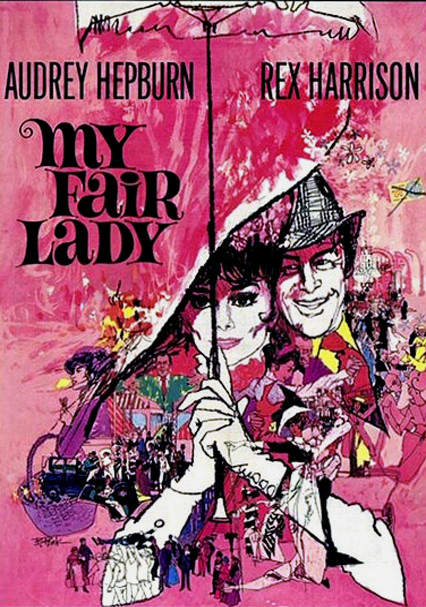
My Fair Lady-1964

My Fair Lady-1964

Director George Cukor

Starring Audrey Hepburn, Rex Harrison

Scott’s Review #938

Reviewed September 6, 2019

Grade: A-

Winner of the Best Picture Academy Award (it would not have been my choice), My Fair Lady (1964) is a good adaptation of the stage version, which is, in turn, based on the famous 1913 stage play Pygmalion by George Bernard Shaw.

The musical’s central negative aspect is its casting choices. Hepburn and Harrison have only mediocre chemistry, and Hepburn does not sing.

However, the film is enchanting and filled with lavish sets, colorful costumes, and earnest songs, making it entertaining for the whole family.

The iconic Eliza Doolittle (Hepburn) and Henry Higgins (Harrison) are household names to every fan of the musical genre.

Set in London, the sophisticated and arrogant Professor Higgins, a scholar of phonetics, is intent on proving that the tone and accent of one’s voice determine one’s lot in society.

As an experiment, he chooses flower saleswoman Eliza, with her horrid Cockney accent, and is determined to crown her duchess at a ball.

Unaware of his scheme but soon to find out she has been had, romance eventually blooms as the song “I’ve Grown Accustomed to Her Face” becomes essential.

My Fair Lady is quite the epic, with a runtime of two hours and fifty-two minutes, which is lofty for a film.

The misty London setting adds layers of mystique and atmosphere, and the cinematography drizzles with color and pizzazz, making the overall content look fantastic.

Because of the film’s length and magnificent trimmings, the production looks like a spectacle, reminiscent of the elegant extravagance of the 1950s and 1960s, when musicals made into films were grand and robust.

It’s no wonder it won Best Picture, Best Director, and many other awards. Hollywood loves this film.

When dissected and analyzed, social and class systems are a large part of the film amid the cheery singing, dancing, and big-screen bombast.

Social status and hints of socialism pepper the production, rising way above the fluff it could have been if just a “boy from the good side of the tracks meets girls from the wrong side.”

Eliza’s father, Alfred (Stanley Holloway), a waste collector, is also an opportunist. He sings his story during “With a Little Bit of Luck.” The differences between the “haves” and the “have-nots” are evident.

Since the chemistry is limited, I never bought Harrison and Hepburn as a romantic duo.

The teacher/student angle somewhat works, though it’s always bothersome, but Henry’s self-assured behavior and superior attitude make him tough to root for.

The controversy surrounding the film includes the decision to dub nearly all of Hepburn’s singing with another singer’s voice. This devastated the actress and cost her an Academy Award nomination. Her snub is especially jarring, given the dozen other nominations it received.

The story is heartwarming and follows the like-minded theme of a hero rescuing a damsel in distress.

Hints of Cinderella (1950) and even Pretty Woman (1990) glisten, with only a hint of male chauvinism that does not ruin the experience or reduce the film to a dated guy film, as with Pretty Woman.

“I’m an Ordinary Man” describes how women ruin men’s lives and is not the most progressive or female-friendly of all the numbers.

My Fair Lady (1964) is a film from the past that begs to be viewed on the big screen so that all its qualities can be enjoyed.

Like Lawrence of Arabia (1963), it is best viewed in a wide-angle, enormous theater setting to ensure that all its aspects are noticed and enjoyed.

It’s a Hollywood film done tremendously well. Young viewers would be wise to be exposed to this film to delight in the cinematic treats.

Oscar Nominations: 8 wins-Best Picture (won), Best Director-George Cukor (won), Best Actor-Rex Harrison (won), Best Supporting Actor-Stanley Holloway, Best Supporting Actress-Gladys Cooper, Best Screenplay Based on Material from Another Medium, Best Scoring of Music-Adaptation or Treatment (won), Best Sound (won), Best Art Direction, Color (won), Best Cinematography, Color (won), Best Costume Design, Color (won), Best Film Editing

Golden Globe Nominations: 3 wins-Best Motion Picture-Musical or Comedy (won), Best Director-Motion Picture-George Cukor (won), Best Performance by an Actor in a Motion Picture-Musical or Comedy-Rex Harrison (won), Best Performance by an Actress in a Leading Role-Musical or Comedy-Audrey Hepburn, Best Performance by an Actor in a Supporting Role in any Motion Picture-Stanley Holloway

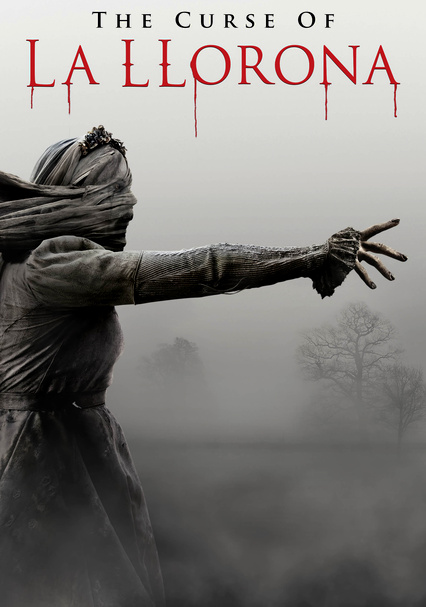
The Curse of La Llorona-2019

The Curse of La Llorona-2019

Director Michael Chaves

Starring Linda Cardellini

Scott’s Review #937

Reviewed August 29, 2019

Grade: C+

The Curse of La Llorona (2019) is a modern-day horror flick that possesses all the standard and expected trimmings that a genre film of this ilk usually has.

The story is left undeveloped, with many possibilities unexplored in favor of a by-the-numbers experience.

Linda Cardellini, an outstanding actress, consistently exceeds the material she is given, yet she often comes up empty-handed.

It is the sixth installment in The Conjuring Universe franchise.

The film does have jumps and frights galore, and a creepy ghost/spirit character that is scary, but more was expected from this film, which left me ultimately disappointed.

First-time director Michael Chaves is a novice, so a bit of leniency should be given as he develops a limited product, but he could have a strong future ahead of him if he works on story elements rather than focuses on merely scare tactics.

In 1673, in Mexico, a family happily plays in a field when one of the boys suddenly witnesses his mother drowning his brother, and soon suffers the same fate.

This incident becomes part of Mexican folklore and is subsequently feared by many. In present times (1973), caseworker Anna (Cardellini) is sent to investigate a woman who has locked her two sons in a room. Despite the woman’s claims that she is trying to save their lives, Anna brings them into police custody.

When the boys are later found drowned, the woman curses Anna, whose two young children are now in danger.

The positives are that Chaves makes a competent film. It is not bad and provides a level of familiarity, with creaking doors, cracking mirrors, and an evil spirit named “The Weeping Woman” that are effective and provide a scare or two at just the right moments.

Characters frequently see the spirit through a reflection, and since the film is set almost entirely at night, this tactic is successful.

Cardellini, garnering recent fame for her role in the Oscar-winning film Green Book (2018), undoubtedly signed on for The Curse of La Llorona before all the Oscar wins.

The actress gives it her all but can hardly save the film, though she does provide the professionalism that raises the film above a terrible experience. Not nearly enough praise will be given to the young child actors playing Anna’s kids.

Largely one-note and lacking any evident experience, ironically, they mirror Chavez’s inexperience. They react to the scenes as they are directed, but never add any depth or authenticity to their performances.

Besides Cardellini and the horror elements, The Curse of La Llorona lacks much shine or substance. The plot and characters are forgettable, and the viewer is left shrugging their shoulders once the film concludes, essentially forgetting the production thirty minutes later.

The story, based on folklore, is weak.

The audience is expected to believe the spirit killed her children and now roams the earth looking for other sacrificial pairs of children so that she may bring hers back from the dead?

In one perplexing sequence, the Weeping Woman softens when looking at Anna’s kids, her demonic face reveals how she once was a beautiful woman. She suddenly changes course and reverts to the evil spirit she had been.

Granted, the special effects are impressive, but this is one example of a missed opportunity. Why couldn’t we be given a meatier backstory of the motivations of the woman?

Other misses include the 1970s Los Angeles period, featuring a feathered hairstyle and a tight sweater worn by Anna, a clip of an old television show, and a car or two overlooking the City of Angels, which hardly appreciates the decade or the metropolis.

Especially laughable are the modern hairstyles and looks of the children, including the kid from the seventeenth century.

Any connection to The Conjuring (2013) or Annabelle (2014) is limited, as one character (Father Perez), appearing briefly holding the Annabelle doll, barely warrants mention.

The Curse of La Llorona (2019) may only be a blueprint of what director Chaves can build on in his career, and a bright future for him is not out of the question.

Building on the Conjuring franchise is a good place to start with a specific audience, who are sure to see this film. He should focus on developing his basics and creating films with more depth, character development, twists, and turns.

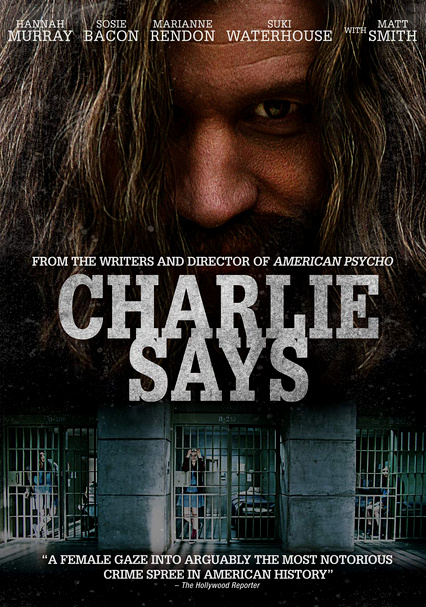
Charlie Says-2019

Charlie Says-2019

Director Mary Harron

Starring Hannah Murray, Sosie Bacon

Scott’s Review #936

Reviewed August 28, 2019

Grade: B

With the very high-profile release of Quentin Tarantino’s Once Upon a Time in Hollywood (2019) centering around the sadistic Manson murders of 1969, Charlie Says (2019) is another film that delves into the same story, though in a very different way.

The latter takes the perspective of the followers, victimizing them and examining the choices they made that affected the rest of their lives.

The angle is of interest, but the production never completely takes off, resulting in an uneven experience that requires more grit and substance.

Karlene (Merritt Wever), a female graduate student focused on women’s studies, takes an interest in three followers who were viciously killed in the name of their “god”, Charles Manson.

A few years after their arrests, they co-exist together in relative solitary confinement in a California penitentiary. They remain under the delusion that Manson is their leader and their deeds were all part of a grand cosmic plan until Karlene slowly brings them out of their haze of unreality with heartbreaking results.

The casting of the real-life figures is as follows: Charles Manson (Matt Smith), Leslie Van Houten (Hannah Murray), Patricia Krenwinkel (Sosie Bacon), and Susan Atkins (Marianne Rendon).

Each is a prominent character, with the central figure being Leslie “Lulu” and her complex relationship with Manson.

The newest to be recruited, the audience witnesses her hypnotic possession and her occasional uncertainty about the cult. For a fleeting moment, she is even tempted to leave, which the film hammers home to the audience.

Murray plays the character well, but does not resemble her enough for praise, though we read the conflict on her face very well. She is meant to be the thoughtful member of the Manson Family, whereas Patricia and Susan are more reactionary and temperamental, especially Susan.

Whether this is how things were is not known. Still, I always had a gnawing feeling throughout the running time that historical accuracy may have been secondary to the story points and dramatic effect.

Charlie Says is bothersome because of the realization that the girls were recruited and fed lies, falling for the deceit, hook, line, and sinker.

The followers were indeed brainwashed into Manson’s disturbing version of reality, and that fact is alarming, as the girls were not dumb people, only vulnerable young women.

Decades later, it is easy to think of other victims polarized by a central or controversial figure, whether it be in politics or another arena. The lesson learned is that people can be easily influenced.

The actual “murder night” and the death of Sharon Tate are featured, but up-close and personal gore is thankfully avoided. The actress, well known to have suffered a terrible fate, to say nothing of her unborn baby, is a small but crucial aspect of the film.

When one of the girls watches one of Tate’s films in her cell, another girl clamors for her to turn off the film, beginning to feel pangs of guilt and remorse.

The film questions the girl’s responsibilities for their actions, a fact that in real life many wrestled with, including the courts and parole boards. Were they merely duped in the cleverest of ways, or do they deserve their fates?

Spared of the electric chair due to a California law, a positive aspect of the film is a current update of the happenings of each girl, now over forty years later, as mature women. Lulu and Patricia remain incarcerated while Susan has died in prison.

After the film closed and a good measure of time was left to ponder the movie, I was left feeling slightly less than fulfilled and desiring a bit more.

Charlie Says (2019) feels safe and lacks enough grit or bombast, although it is well-intended. The film is clearly from a feminist point of view and is an interesting watch, though, given the subject matter, I had hoped for more substance.

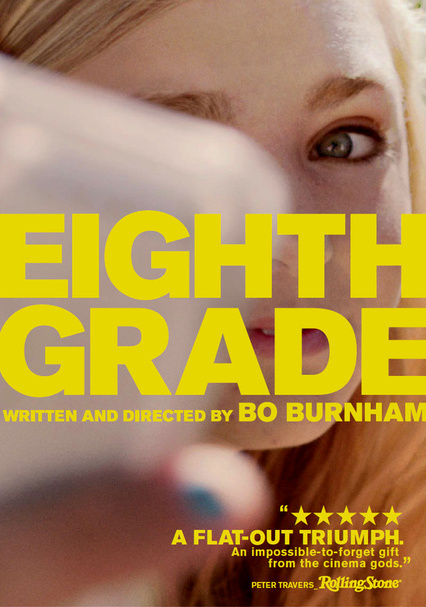
Eighth Grade-2018

Eighth Grade-2018

Director Bo Burnham

Starring Elsie Fisher, Josh Hamilton

Scott’s Review #935

Reviewed August 27, 2018

Grade: A-

Occasionally, a film rich with authenticity and pure honesty comes along, and Eighth Grade (2018) is one of those films.

Bursting with a lead character who brings a genuine sincerity to a complex role, director Bo Burnham gets the best out of emerging talent, Elsie Fisher, in an autobiographical story about teenage angst and awkwardness that nearly everyone can recollect from those hated middle school years.

The coming-of-age story follows the life and struggles of an eighth-grader, Kayla Day (Fisher), during her last week of classes before graduating from junior high school.

She struggles with severe social anxiety but produces secret YouTube videos in which she provides life advice to both herself and her audience. She has a clingy relationship with her sometimes overbearing father, Mark (Josh Hamilton), who adores her but is careful to provide Kayla with freedom and balance, her mother apparently out of the picture.

Eighth Grade feels fresh and rich with good, old-fashioned, non-cliched scenes as audiences fall in love with Kayla and her trials and tribulations.

The stereotypes would abound in a lesser film attempting to appeal to the masses, but this film is going for intelligent writing.

The scenes range from touching to comical to frightening. A tender father and daughter talking over a campfire provides layers of character development for both Kayla and Mark as an understanding is realized.

As Kayla ogles over her classmate Aiden, voted student with the nicest eyes, to Kayla’s demoralizing win for quietest student, she bravely attempts to get to know the boy.

Realizing that to win his heart, she must provide dirty pictures of herself or perform lewd acts, she hilariously watches oral sex tutorials and nearly practices on a banana in a scene rivaling any from the crude American Pie (1998).

To expand on this, the audience will experience concern for Kayla as she winds up in the backseat of a strange boy’s car, encouraged to take off her top, going rapidly from comedy to alarm.

Enough cannot be said for Fisher’s casting as Kayla. Reportedly seen on a real-life YouTube channel, Burnham plucked the fledgling young actress from the ranks of the unknown.

The bright young star will surely be the next big thing with her innocent yet brazen teenage looks- she is only sixteen! With pimples and a pretty face, she admires yet despises popular kids and resorts to telling one-off stories.

Fisher gives Kayla sass and poise mixed with her anti-socialism.

Befriended by a pretty and popular high school student assigned to be her buddy, Kayla awakens with gusto, finally seeing there may be life after middle school and maybe, just maybe, high school will not be as torturous as earlier years.

A cute add-on is an adorable relationship that develops between Kayla and just as awkward Gabe in the film’s final act. They dine over chicken nuggets and bond over a nerdy television show they love.

Hamilton deserves accolades in the more difficult role of the father of a thirteen-year-old. Smart is how the film shares his perspective on current events. He can be daring, as when he enters Kayla’s room to nearly catch her practicing her kissing technique, or creepy, as when he follows Kayla to the mall to see her new friends.

However, his deep affection and admiration for her provide a deep warmth seldom seen in teenage films.

Burnham is careful not to stifle the film with fluff or redundancy but rather makes it timely and relevant. The incorporation of the internet, text messaging, and the never-ending use of smartphones makes any older viewer realize that over ninety percent of thirteen-year-olds use these devices, and social media is the new normal.

The sobering realization is that painful teenage experiences do not end when the three o’clock school bell signals the end of the day.

When the students endure a drill to practice measures to survive a school shooting attack, the reality hits home that this is now also a part of a teenager’s everyday life. American life for the young has changed immensely since most of us were of this age, and Burnham does a bang-up job of reinforcing this importance.

Whether the viewer is elderly or middle-aged, has fond memories of middle school, or cringes at the thought, yearbooks safely packed up in boxes to bury the memories, every viewer can take something away from Eighth Grade (2018).

Excellent casting and an infusion of several cross-genres make this film a fresh and memorable independent comedy/drama deserving of a watch.

Independent Spirit Award Nominations: 1 win- Best Feature, Best Female Lead- Elsie Fisher, Best Supporting Male- Josh Hamilton, Best First Screenplay (won)

Angels of Sex-2012

Angels of Sex-2012

Director Xavier Villaverde

Starring Astrid Berges-Frisbey, Alvaro Cervantes, Llorenc Gonzalez

Scott’s Review #934

Reviewed August 23, 2019

Grade: C

Angels of Sex (2012) is a Spanish LGBT drama that tries to build an intriguing romantic relationship between its characters but slowly teeters into a plot-driven soap-opera mess, leaving the viewer unsatisfied.

Casting good-looking actors and showing plenty of skin only goes so far before one’s attention span begins to wane and one starts yearning for more depth, which never comes in this film.

The filmmakers do get some props for crafting a diverse film, but the story ultimately sucks.

Set in Barcelona, Spain, the film follows Bruno (Llorenc Gonzalez), a student saved by karate instructor Rai (Alvaro Cervantes), as he begins to question his sexuality while the two men grow attracted to one another.

Throwing a wrench into their blissful affair is Bruno’s girlfriend, Carla (Astrid Berges-Frisbey), who is drawn to both men while shunning their romantic attraction to one another.

The three characters interact and have affairs with each other, leading to a series of emotions that shape their decisions.

The premise is intriguing at the beginning of the story, anyway, as a “straight man meets gay man” moment immediately occurs, and sparks fly between the men.

When Bruno accepts his attraction to Rai while also continuing his attraction to Carla, a unique bisexual premise is offered. Why can’t Bruno spend equal time with Rai and Carla? Which one will he decide to choose, or will he choose him? Will all three be okay with the arrangement?

These are the kinds of interesting questions the film offers until it slips about halfway through.

Each character begins to crumble, becoming banal and wishy-washy, especially Carla. She accepts the “time-sharing” relationship but then gets mad when she sees Rai and Bruno kiss, finally falling for Rai and having an affair with him. Huh?

This is character assassination 101. Bruno’s motivations become unclear as he hedges on nearly every decision, while Rai becomes more brooding and indecisive.

It’s as if the writers didn’t know which direction to take the characters, or thought their good looks would carry the film.

Other gripes include the title, which has nothing meaningful to do with the story and seems like a weak effort to gain attention (and viewers) by using a.

Another irritant was the constant inclusion of unknown characters break-dancing to the song. Was this necessary? Rai has an interest in the genre, we get that, but the needless scenes seem like attempts to fill time.

Better use of time might have been additional scenes of Carla and her mother. A passing scene or two and a situation involving Carla’s father cheating on the mother is limiting and could have been an interesting sub-plot, perhaps even figuring into the main story.

Carla’s group of friends add little to the film especially her slutty friend bedding two others in the group. The situation seems more like an add-on or a time filler than rich writing.

Props go to any film with the desire to showcase an LGBT-themed story as, despite the film being made in 2012, most LGBT films are still indie projects.

I hoped for and expected more from the film especially the culturally interesting location of a European hotbed of sexuality and parties.

Angels of Sex (2012) starts well until disintegrating into a bad LGBT episode of “As the World Turns” or “Days of our Lives” with poor character writing, unnecessary supporting characters and a feeble attempt at a twist ending that merely turns into a red herring and thereby a disappointment.

Hitchcock/Truffaut-2015

Hitchcock/Truffaut -2015

Director Kent Jones

Starring Wes Anderson, Martin Scorsese, David Fincher

Scott’s Review #933

Reviewed August 21, 2019

Grade: B+

A documentary about film and film-making is a worthy watch for any rabid lover of cinema, and when the subject at hand is Alfred Hitchcock, any fan must certainly chomp.

I remember Hitchcock/Truffaut (2015) appearing at my local independent theater at the time of release but missed my chance to see it.

The misstep having been undone, the work is fine, and the result is an abundance of riches, serving as a fly on the wall for those wishing to listen to two geniuses speak, or merely observe the clips of great films and revel in the creativity.

Already possessing a hefty knowledge of Hitchcock does not dull my perspective, nor do I take for granted the appreciation served.

For an entry-level fan of the director or French film director, Francois Truffaut, the title must be added to one’s “to see” list.

The documentary serves as inspiration and fulfillment for cinema lovers. Billed as side-by-side directors in the title, the documentary treats Hitchcock as the teacher and Truffaut as the student, especially given the age difference between the two men.

Truffaut interviewed Hitchcock in 1962 during a lengthy week-long discussion in a windowless Hollywood office, where the former soaked up the latter’s knowledge and points of view like a sponge.

Truffaut was already a well-regarded filmmaker at age thirty-two, with gems such as The 400 Blows (1959) already under his belt.

Truffaut then wrote a book about the conversations with Hitchcock, and director Kent Jones brings it to life in documentary form, telling his audience why the book had a tremendous impact on cinema while teaching the audience a thing or two about the movies.

The production analyzes film-making from technique to style to clothing, actors, and in between. The main crux is the technique Hitchcock used to create tension and suspense, manipulating the audience every step of the way.

A plethora of his films are featured which is a personal joy to see, most importantly the documentary is clever enough to build to Hitchcock’s most memorable sequence of all, the shower sequence in Psycho (1960), the director’s most recent film, and now, easily his most notorious.

Hollywood titans such as Martin Scorsese, David Fincher, Wes Anderson, and Richard Linklater, arguably geniuses, explain the influence that Hitchcock provided them.

Listening to these formidable directors whimsically praise and dissect Hitchcock’s analysis and explain how he led to their blossoming is a wonderful aspect.

Hitchcock/Truffaut (2015) is a treat for die-hard fans of Hitchcock or Truffaut- or both.

Conversations and interviews with other famous directors show the heavy influence, love, and appreciation for an ingenious suspense director and an equally unique French New Wave director.

A thirty-two-year age difference separated the two men, but they appear as natural as close colleagues.

Great minds do think alike.

You Were Never Really Here-2018

You Were Never Really Here-2018

Director Lynne Ramsay

Starring Joaquin Phoenix

Scott’s Review #932

Reviewed August 19, 2019

Grade: A-

You Were Never Really Here (2018) is an independent psychological thriller that is most reminiscent in tone and texture of the legendary Scorsese film Taxi Driver (1976).

The main characters are worlds apart, but the classic influences the plot and trimmings amid a different period (the present).

A terrific and brooding performance by star Joaquin Phoenix leads the charge, as does the fantastic direction by Lynne Ramsay and the editing team. The dark film is an unusual and impressive choice for a female director.

Snippets of cinematic genius exist during a film that, with a more complete package, might have been a masterpiece.

We first meet Joe (Phoenix) somewhere in Ohio, as we learn he is a hired gun sent to rescue underage girls from sex trafficking rings. He is brutal in his methods of rescue, resorting to gruesome murders to complete his assignments, and is paid handsomely.

In New York City, he cares for his elderly mother, whom he adores, and is contacted to rescue Nina, the daughter of a New York State Senator, Albert Votto, for an enormous sum.

When Joe rescues Nina and waits for Votto, events quickly spin out of control, revealing a sinister web of deception.

When you look at the story that You Were Never Really There tells, it has been told many times before, typically in slick Hollywood conventional standards.

An angry ex-military man unleashes brutality on devious criminals, rescues the girl, and returns her safely to the open arms of her awaiting parents.

Fortunately, the film is more thoughtful than that, adding complexity to the Joe and Nina relationship and a stylistic, poetic quality featuring Joe’s relationship with his mother.

The plot is paced very well so that the events occur over only a day or two, and the film is highly unconventional and dark.

Frequent flashbacks give the film mystique as we see both Joe and his mother abused by Joe’s father, as a young Joe hides in a closet and hyperventilates. Now an adult, Joe is suicidal, frequently fantasizing or practicing his death until he is interrupted.

As grisly as the film can be, beautiful and tender moments are laden throughout as Ramsay provides gorgeous style and humanity. a homoerotic moment occurs when Joe lies next to the man who has killed his mother.

As the man is close to death at the hands of Joe, they hold hands as Joe provides comfort to the man in death. Joe then buries his mother in a pond in upstate New York, providing her with a peaceful final resting place. These are unique scenes that feel almost like an art film.

The conclusion is open-ended, leaving lots of questions. Joe and Nina appear to ride off into the sunset together, but what will they do? What is to become of them? Surely, no romantic element can be found, but where will they go from here?

Both characters appear to have nothing left to hang on to other than each other, but is this sustainable?

The film is not the type that is poised for a sequel, but I would be very curious about what Ramsay has planned for her characters.

Joe is not portrayed as wicked; he is too complex for that. Phoenix, a tremendous actor, perfectly infuses the character with brutality, anger, tenderness, and warmth.

The similarities between You Were Never Really Here and Taxi Driver—the grizzled New York portrayals, the political backdrop, and the main characters saving a woeful young girl from the depths of despair—make the two films comparable.

However, Joe and Travis Bickle are opposites, the latter having frenetic humor that the former lacks.

Ramsay has been around for a while, with We Need to Talk About Kevin (2011) being her most prominent film. She is successful at telling stories about deeply troubled individuals who are good people given awful circumstances.

With a tremendous actor like Phoenix on board, she crafts a solid work that has garnered accolades, at least among the indie critics, for You Were Never Really Here (2018). Ramsay seems poised to break out in a big way and shake up the film industry with future works.

Independent Spirit Award Nominations: 1 win- Best Feature, Best Director- Lynne Ramsay, Best Male Lead- Joaquin Phoenix, Best Editing (won)

With Six You Get Eggroll-1968

With Six You Get Eggroll-1968

Director Howard Morris

Starring Doris Day, Brian Keith

Scott’s Review #931

Reviewed August 15, 2019

Grade: B

A film that influenced the creation of the iconic television series, The Brady Bunch (1969-1974), or the reverse, depending on the timeline or who you ask, With Six You Get Eggroll (1968) is a cute family romantic comedy, hardly exceptional fare.

It becomes too silly during the final act.

The film follows the merging of two families into one big blended family, and its heart is the romance between two middle-aged singles looking for new love despite their baggage.

Abby McClure (Doris Day) is a widow raising three boys somewhere in northern California. She dutifully runs her deceased husband’s lumberyard while feeling unfulfilled in the romance department.

When her overzealous sister, Maxine (Pat Carroll), tricks her into inviting widower Jake Iverson (Brian Keith) to her dinner party, the pair do not connect. Still, they are drawn to one another as they become better acquainted.

Predictable obstacles come their way, including misunderstandings and backlash from their kids.

With Six You Get Eggroll is Day’s last film and certainly not one of her best offerings, but it is nonetheless moderately enjoyable.

The filmmaker intends to showcase a romance between Abby and Jake so that the elements are set up in a way that makes the characters likable, leaving a very predictable experience.

When Jake arrives at the party early and sees Abby at her disheveled worst, or after Jake makes up an excuse to leave the evening early but runs into Abby later at the supermarket, it’s the sort of film that has a happy ending.

As such, the chemistry between Day and Keith is palpable, making the film charming. If they had no chemistry, the film would be a bust, but their slow-burning fondness for each other works well for this genre.

They share a spontaneous evening of champagne and small talk at Abby’s house, and excitedly plan a date for the next day, only for Jake to make an excuse, leaving Abby perplexed.

When Abby sees him with a much younger woman, we feel her disappointment. After all, Abby is well past forty in a world where middle-aged women are not the pick of the litter anymore, as sister Maxine annoyingly reminds her.

When the young woman turns out to be Jake’s daughter, we smile with relief, along with Abby, because we like the characters and want them to be together.

The children: Flip, Jason, Mitch, and Stacey (a young Barbara Hershey) add little to the film and are merely supporting characters. They dutifully add obstacles to their parents’ happiness by squabbling over bathroom space or resenting one parent for taking the other away.

Conversely, Maxine and Abby’s housekeeper, Molly (Alice Ghostley), adds excellent comic relief, keeping the film from turning too melodramatic and providing natural humor.

The Brady Bunch comparisons are pretty apparent to any viewer who has seen the television series, and who hasn’t. The blended families and the G-rated dramatic crises are the most certain, and the period and clothes are almost identical.

Molly the maid could be Alice the housekeeper, and the actor (Allan Melvin) who plays Sam “the Butcher” from the television series appears as a Police Sergeant.

I half-expected the musical scores to mirror each other.

The film has some mild flaws aside from its predictability. The introduction of a band of hippies (though cool to see M*A*S*H alums Jamie Farr and William Christopher in early acting roles) and a speeding chicken truck resulting in arrests is way too juvenile and plot-driven.

A much better title could have been thought up for the film; With Six You Get Eggroll doesn’t exactly roll off the tongue, and it has nothing to do with the story.

Finally, Abby’s masculine profession is only shown in the opening scene and has nothing to do with the story.

For a wholesome late 1960s-themed evening, With Six You Get Eggroll (1968) is a moderate affair with cliches and a cheery tone, but also some genuine chemistry between its leads.

The sets and colors fit the times well, and Day is always top-notch. Perhaps one could skip this film and watch a sampling of The Brady Bunch reruns; the experience would be almost the same.

Madame Bovary-1949

Madame Bovary-1949

Director Vincente Minnelli

Starring Jennifer Jones, James Mason

Scott’s Review #930

Reviewed August 13, 2019

Grade: A-

Madame Bovary (1949) is a film adaptation of Gustave Flaubert’s famous novel. Remade a handful of times since this version, Jennifer Jones is cast in the lead role and does a fantastic job with a complicated part.

The title character is central to the controversial film, which will undoubtedly result in mixed opinions of her actions and motivations- whether she will be loved or loathed.

Director Minnelli mixes melodrama and glamour with pain and defeat in her story of one woman’s attempt at happiness.

Cleverly, the story is told within a story as the viewer is immediately amid a compelling and dramatic trial. Flaubert (James Mason) defends his novel depicting an adulterous woman (Jones) ruining the lives of men, deemed disgraceful to France and all womanhood.

He tells the story from his perspective and, through this, Madame Bovary’s perspective. She (Emma) marries a small-town country doctor, Charles Bovary (Van Heflin), and quickly grows disappointed with his lack of status.

Feeling trapped and unfulfilled, she embarks on failed romances with other men as she attempts to ascend the social ladder.

As with the novel, the theme is either understanding or abhorring Emma’s feelings and actions, or perhaps a mixture of both emotions.

Who would not forsake her for being true to her feelings and desiring her piece of the pie? Most women of her day were reduced to matronly statuses or asexual feelings, but Emma wanted satisfaction and life at the risk of her own family.

To counter these lustful feelings, she does not treat her husband very well, resenting his passivity and being disappointed at her daughter being a girl instead of her desired son.

She feels this would have allowed her better status, so her daughter is nearly shunned, preferring the affections of the housekeeper to her mother’s feeble attempts at love.

Is she Hellion or a sympathetic soul? Emma is one of the most complex of all female film characters.

Madame Bovary was written in 1949, and the novel was published earlier, so the progressive slant is rich and worthy of much admiration. The female perspective and the courage to reach for the stars and grasp life are spirited and wonderful to see, especially given the period.

A mixture of romantic drama and torrid affairs is at hand during this experience and always is the character’s center stage.

The film mixes Gone with the Wind (1939) remnants, especially the lavish dance hall sequence. The ball is the highlight, with gorgeous costumes, great cinematography, and bombastic dances.

As Emma cavorts with a dashing aristocrat, Rodolphe (Louis Jourdan), Charles gets drunk and makes a fool of himself, as her genuine disdain for her marriage becomes clear. The smashing windows with chairs moment is ahead of its time because of the effects used, and the constant dance twirls are dizzying.

So much importance occurs in this pivotal sequence.

While more than adequate, Jones would not have been my first choice for the role. Married to influential producer David O. Selznick, it was rumored that many of the actresses’ roles were given to her.

Delicious is to fantasize at what legends such as Bette Davis or Vivian Leigh might have brought to the character. Especially Leigh, given her dazzling performance as Scarlett O’Hara in Gone with the Wind, a follow-up as a similar and arguably more complex character is fun to imagine.

A film that allows for post-credits discussion is always positive, with Madame Bovary (1949) a lengthy analysis of a character begs deliberation.

Minnelli pours love and energy into a work dripping with nuances long before his famous musicals came to fruition. A strong and vital female character suffers a lonely and despairing fate, which is tragic and sad, but she lives her life with a zest that should empower us all.

Oscar Nominations: Best Art Direction-Set Decoration, Black-and-White

Murder on the Orient Express-1974

Murder on the Orient Express-1974

Director Sidney Lumet

Starring Albert Finney, Lauren Bacall, and Ingrid Bergman

Scott’s Review #928

Reviewed August 7, 2019

Grade: A-

Based on the 1934 novel of the same name by Agatha Christie, Murder on the Orient Express (1974) brings the story to the big screen with a robust and eccentric cast of characters, all steeped in suspicion.

The classic whodunit of all whodunits, the film adds a Hollywood flair with rich costumes and an authentic feel to a budget-blasting extravaganza that keeps the audience guessing as to who the killer or killers may be.

The film was recognized with a slew of Oscar nominations that year.

The hero of the film is Hercules Poirot (Albert Finney), a well-respected yet bumbling Belgian detective, who is solicited to solve the mysterious death of a business tycoon aboard the famous and luxurious Orient Express train.

On his way to the train’s destination, he encounters such delicious characters as the glamorous Mrs. Hubbard (Lauren Bacall), the nervous Greta Ohlsson (Ingrid Bergman), and his friend Bianchi (Martin Balsam), the director of the company who owns the enormous vessel.

Many other characters are introduced to the layered story.

As the complicated plot unravels, most of the characters have something to hide or a connection to other characters.

The fun for the viewer is to live vicariously through Poirot and await the big final reveal after the film that, unless one has already viewed the film or read the novel, one will not see coming.

With a film of this type, a detective thriller, the audience can be assured of a resolution, as a big murder mystery dinner theater production brought to the big screen.

Formulaic, the film never drags nor feels dull.

Amid the first few minutes of Murder on the Orient Express, the intrigue is unleashed at full-throttle speed, leaving one bedazzled and hooked.

The sequence is brilliantly done and thrusts the audience into a compelling backstory, prompting wonder about how these events connect to a train pulling out of the Orient.

Quickly edited film clippings of a news story explain the mysterious Long Island, New York, abduction and murder of the infant daughter of a famed pilot.

It is suggested that the Orient Express trip embarks from Istanbul, Turkey, and is destined for London. This means that several countries will be included in the trek, creating opportunities for both geographical accompaniments and new cultural experiences, which director Sidney Lumet offers in generous amounts.

Moments following the murder, the train has the unfortunate fate of colliding with an avalanche, leaving the passengers in double peril, with a killer on the loose and cabin fever to contend with.

To the compelled viewer, this is snug comfort, as the atmospheric locales are gorgeous and the thought of a dozen strangers trapped together with so much to hide brings the story into a frenzy.

Who did what to the murder victim is slowly revealed as several red herrings (or are they?) are revealed. Who is the mysterious woman strutting down the corridor shortly before the murder, spotted by Poirot? Is she a staged pawn or merely an innocent victim? Could she be the murderer?

The wonderful part of Murder on the Orient Express is the number of entangled possibilities.

The film’s conclusion turns the thriller into a moralistic story, to its credit. The fact that the murder victim was hateful and diabolical is a key part of the story and makes the viewer wonder if the killer or killers are justified in their actions.

Does the fact that Ratchett was stabbed a dozen times with varying degrees of severity play into the motivation?

A very compelling and unrecognizable Finney does a fantastic job of carrying the film among such a troupe of good actors.

Murder on the Orient Express (1974) sets out to entertain and succeeds on every level, bringing the book to the silver screen with a fresh interpretation that still honors Christie’s intent.

Stylistic and thought-provoking, the film has gorgeous costumes, a good story, and fine acting. Knowing who the killer is does little to detract from the enjoyment a repeated viewing provides.

Oscar Nominations: 1 win-Best Actor-Albert Finney, Best Supporting Actress-Ingrid Bergman (won), Best Screenplay Adapted from Other Material, Best Original Dramatic Score, Best Costume Design, Best Cinematography

The Farewell-2019

The Farewell-2019

Director Lulu Wang

Starring  Awkwafina, Tzi Ma

Scott’s Review #927

Reviewed August 6, 2019

Grade: A-

Any film with a dark premise, such as The Farewell (2019), runs the risk of resulting in a bleak and depressing outcome, but the film is anything but a downer.

Surprisingly, to many, the film is classified as both a drama and a comedy, with snippets of humor and sadness prevalent throughout.

Met with widespread critical acclaim, the film successfully furthers the much-needed presence of quality Asian representation in modern cinema well into the twenty-first century.

Young upstart/comedienne Awkwafina, memorable for her humorous turn in Crazy Rich Asians (2018), returns to the big screen in a more subdued role, crafting a passionate and dramatic character that strongly leads the charge in an ensemble project exploring the family dynamic.

The film succeeds remarkably as a multi-generational glimpse into humanity, although it occasionally suffers from a slow pace.

A thirty-something struggling writer, Billi (Awkwafina), lives in New York City near her parents, all of whom are ex-pats from China. Billi is particularly close with her grandmother, Nai Nai (Zhao Shuzhen), who still resides in her birth land as they speak regularly via telephone.

When Billi is informed that her grandmother has terminal lung cancer and has weeks to live, the entire family reunites and decides to hold a mock wedding as an excuse to be all together.

The family makes the decision not to tell Nai Nai she is dying, preferring to let her live out her days in happiness rather than fear.

Awkwafina is the main draw of the film, and much of the action is told from her point of view.

One wonders if perhaps director Lulu Wang drew from personal experience when she wrote the screenplay. The audience is not aware of Billi’s sexuality, nor is it relevant to the film, but the vagueness was noticeable.

She does not date, nor does she look particularly interested in men. She does her laundry at her parents’ apartment and attempts, but fails, to secure a prestigious writing scholarship.

The supporting characters add tremendous depth, making the film more than just Billi’s story, and provide unique perspectives from her mother, father, and aunt, each of whom holds a distinct viewpoint about Nai Nai’s illness.

I adore this technique in rich storytelling, as it not only fleshed out secondary characters but also provides interesting ideas.  Nai Nai is not written as a doting old lady nor a victim; she is strong, witty, and full of life.

Shuzhen, unknown to me before viewing this film, brings tremendous poise to a crucial role, portraying it perfectly.

The Farewell is a quiet film that combines both comic and dramatic elements, often within the same scene, thereby providing relief from the dour subject matter.

Wang strikes the balance just right, ensuring the film does not become too heavy.

A hysterical bowing marathon ensues as the entourage decides to visit the grandfather’s grave, preparing the essentials to comfort him during the afterlife.

In stark contrast to the physical comedy, not a dry eye can be found when Billi and her parents depart China by taxi for the airport. Nai Nai tearfully waves goodbye to them, not knowing that it will undoubtedly be her final goodbye.

Any audience member with an elderly relative whom they seldom see will be deeply moved by this poignant scene. Questions such as “Would you keep a loved one unaware of a terminal disease?” will gnaw at the viewer, the central theme of the story.

Influenced by the buzz and word of mouth surrounding the film, I yearned for a single, powerful, emotional scene, but one clearly defined, bombastic moment never materialized.

Instead, the film offers small tidbits, careful not to overpower the audience or risk making the movie too sentimental or overwrought. I still think a pivotal teary scene might have been added for good measure.

A scene where Billi breaks down in front of her parents was adequate, but never catapulted the film over the top.

The Farewell (2019) is a fantastic film rich with emotion and importance.

Like Black Panther (2017), which brought Black characters to the forefront of the mainstream film genre, this film provides exposure to the Asian population, typically relegated to stereotypical roles such as doctors or Chinese takeout owners.

Wang delights with an independent film steamrolling itself across Middle America.

Independent Spirit Award Nominations: 2 wins-Best Feature (won), Best Supporting Female- Zhao Shu-zhen (won)

Welcome to my blog!1,552 reviews posted so far! I'm Scott Segrell and I reside in Stamford, CT. My site features hundreds of film reviews I have written since I launched the site in 2014. I hope you enjoy reading my latest reviews or searching for your own favorites to see if we agree. Please see my Recent Posts section, and don't forget to utilize the tags and category links.