Tag Archives: Phyllis Logan

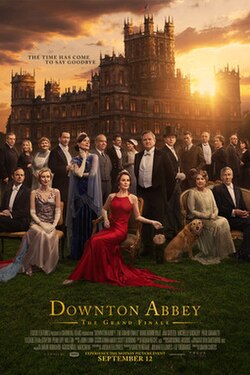
Downton Abbey: The Grand Finale

Downton Abbey: The Grand Finale

Director Simon Curtis

Starring Michelle Dockery, Hugh Bonneville, Elizabeth McGovern

Scott’s Review #1,535
Reviewed June 11, 2026

Grade: B

Downton Abbey: The Grand Finale (2025) is like comfort television set on a big screen.

The third in a planned film trilogy based on the popular television series that ran from 2010 to 2015, the film is satisfying while remaining safe and warm.

It concludes in the early 1930s, nearly a generation after the series debuted in 1912.

From a historical perspective, it’s compelling to see how world events progressed from the sinking of the Titanic when the series began to the begrudging acceptance of a divorced woman as the head of a household in the 1930s.

Separating an evaluation of the television series itself, and honing in on the three films, The Grande Finale ends at just the right time, feeling ever so stale at this point.

The absence of Maggie Smith as the Dowager Countess of Grantham is noticed, as her trademark wit and bitchiness cannot be replaced by any other character.

Let’s hope that creator Julian Fellows doesn’t go down the path that the slasher franchise Friday the 13th did in the 1980s and birth Downton Abbey: A New Beginning.

In this installment, the Crawley family and their staff enter the 1930s with the typical trials, tribulations, scandals, and drama they have overcome.

When Mary (Michelle Dockery) finds herself at the center of a public scandal over her divorce, the family also faces financial trouble, the threat of losing everything, and social disgrace.

The Crawleys must embrace change as the staff prepares for a new chapter with the next generation leading Downton Abbey into the future, which is at the heart of the finale.

The storylines, though modernized for the times, follow a familiar pattern, which is comforting for audiences. The soothing, methodical pace, lovely musical score, and familiar characters we have come to know and love over the years all return.

Even though there are problems for the Crawleys to tackle, nothing too heavy or startling emerges, maintaining a safe bubble for viewers to nestle in, keeping their security blanket intact.

Of course, lead actors like Dockery, Hugh Bonneville, and Elizabeth McGovern, joined by Paul Giamatti, are given the meaty storylines since they best represent the Crawley family.

Dockery as Mary, frequently known as being uptight, loosens up a bit amid her scandalous divorce, even giving in to desire and having a steamy one-night stand with a handsome stranger.

Meanwhile, Robert and Cora (Bonneville and McGovern) must grapple with the 1929 Wall Street stock market crash and the subsequent Great Depression.

The real-life world events the fictional stories are based on make the events more interesting than if writers had invented them.

A major positive is that nearly every character in the ensemble is given something to do, even if it’s only a crumb or two to chomp on.

For example, Carson (Jim Parsons) copes with retirement, while the cook, Mrs. Patmore (Lesley Nicol), embraces it and hands the reins to the young assistant, Daisy (Sophie McShera).

Popular couple John (Brendan Coyle) and Anna (Joanne Froggatt) Bates, eternally loyal to Robert and Mary, have a touching send-off.

Finally, the same-sex romance between Guy Dexter (Dominic West) and Thomas, a former butler at Downton Abbey (Robert James Collier), is explored as the men slowly become more comfortable admitting their relationship to friends.

Still taboo, the notion shows the progress that has occurred in the world over the decades.

The film ends perfectly, a wonderful tribute seen through Mary’s eyes as she takes over the Crawley estate. She sees those deceased family members she was once close to as she ponders the vast estate and the years gone by.

Violet, Matthew Crawley, and Lady Sybil Crawley all appear in archival cameos, making for a sweet and teary wrap-up.

Amid the comfort factor, the film doesn’t offer much that is new or different from the other installments. The new storylines aren’t particularly dangerous, and it’s clear things will be wrapped up in short order.

As nice as Downton Abbey: The Grand Finale (2026) is, let’s hope it truly is the finale. There’s something to be said about going out on top before the gas runs out of the tank.
Downton Abbey: A New Era-2022

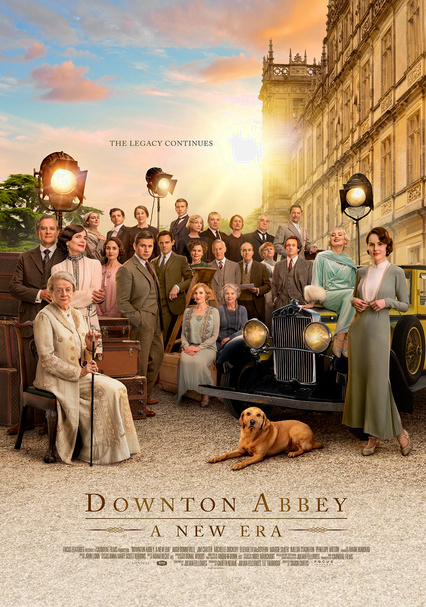
Downton Abbey: A New Era-2022

Director Simon Curtis

Starring Hugh Bonneville, Michelle Dockery, Maggie Smith

Scott’s Review #1,261

Reviewed May 30, 2022

Grade: B+

Following the success of the 2019 film adaptation of the television series Downton Abbey, which aired on PBS from 2010 to 2015, a sequel was produced. This was unsurprising, given that the fan-favorite was both critically and commercially well-received.

Downton Abbey: A New Era (2022) will undoubtedly please fans of the series and may even attract new audiences who have not yet been exposed to it.

The trials and tribulations of the Crawleys, their friends, and staff are a treat as new situations and drama arise for the group to navigate, discussed over tea and crumpets.

The film is like visiting a cherished friend after a long absence.

Award-winning creator Julian Fellowes is thankfully still involved and was given screenwriting credit. This means that the formula is still the same, and nobody has tried to reinvent the wheel or veer the characters off course.

The year is 1928.

The main action centers around the sudden news that grand dame Violet Crawley, Dowager Countess of Grantham (Maggie Smith), has inherited a villa in the south of France from a former suitor who has just died. Some of the family must travel to France and figure out the mystery.

Secondly, A film production company requests to use Downton for a silent film. Robert (Hugh Bonneville) and retired butler Mr. Carson (Jim Carter) disapprove. Still, Robert’s eldest daughter and estate manager, Lady Mary Talbot (Michelle Dockery), says the income would cover the cost of replacing Downton’s leaking roof.

The household staff is eager to see the film stars and scrambles to make things as lovely as possible for the incoming actors.

The terrific thing about Downton Abbey: A New Era is that nearly all of the almost thirty principal characters are given some storyline.

Plus, there are a handful of new characters to give screen time to.

Surprisingly, as in Downton Abbey (2019), the main ‘super couple’, servants Anna (Joanne Froggatt) and Bates (Brendan Coyle) are given almost nothing to do. They are seen, but their child is not, and some drama would have been nice. Perhaps a mysterious illness or a malady for the couple to endure?

Maybe next time.

Still, everyone else is represented, and the feeling for viewers is warm and fuzzy.

Below are some highlights.

Robert frets at the possibility that he may be half French and his birth a result of a tryst between Violet and the villa owner. Mary’s absent husband allows for a flirtation to develop between her and a member of the film.

Gay butler Thomas (Robert James-Collier) finds himself pursued by the film’s big star.

Cora (Elizabeth McGovern) keeps a health secret, while a bedridden Violet’s health declines in bed. Newlywed servants Daisy (Sophie McShera) and Andy (Michael Fox) scheme to unite his lonely father with the cook, Mrs. Patmore (Lesley Nicol).

Finally, Miss Baxter (Raquel Cassidy) eagerly awaits a marriage proposal from nervous Mr. Molesley (Kevin Doyle).

In addition, new characters, such as actors Guy Dexter (Dominic West), Myrna Dalgleish (Laura Haddock), and director Jack Barber (Hugh Dancy), are instant fan favorites, immediately connecting with the mainstay characters.

This is ingenious writing that can serve as a valuable lesson for any soap opera writer. Always write new characters by sharing stories with existing ones rather than writing in silos. It works wonders.

The historical relevance of approaching the 1930s is not missed, as ‘talkies’ taking over the film industry meant the kiss of death for most silent film stars.

The popular LGBTQ+ storyline is wonderfully written. A gay man in 1928 was doomed to either a life of hiding or one of loneliness, and one character wisely references a ‘cruel world’ regarding the viewpoint of the lifestyle.

Times were not changing just yet.

I am crossing my fingers that a third Downton Abbey film will be made. The characters and storylines remain vibrant, especially as the timeline progresses into the 1930s and the dire 1940s, when World War II breaks out.

Downton Abbey: A New Era (2022) proves that in the COVID-19 era, a trusted old friend is needed tremendously, even on the silver screen.

Downton Abbey-2019

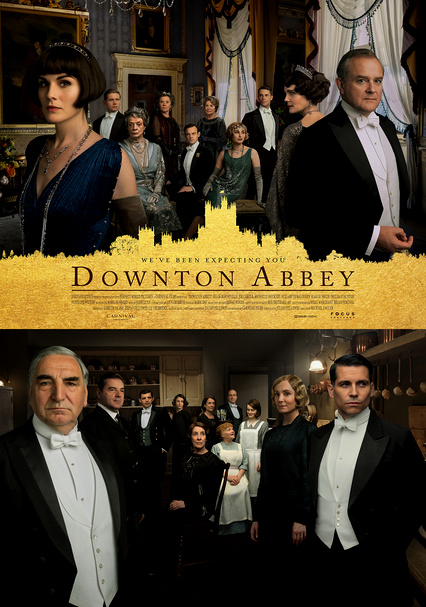
Downton Abbey-2019

Director Michael Engler

Starring Hugh Bonneville, Michelle Dockery, Maggie Smith

Scott’s Review #947

Reviewed October 16, 2019

Grade: B+

Capitalizing on the tremendous success of the television series, which ended in 2015, Downton Abbey (2019) is a British historical period drama film written by Julian Fellowes, creator and writer of the series.

Beloved fans will devour the film, as the familiar formula and characters are brought to the big screen, giving it an even grander feel.

The film plays more like a two-hour episode arc over reinventing the wheel, but the result is a resounding crowd-pleasing affair with drama, scandals, and a good dose of nostalgia.

The Crawleys and their servants reside in the lavish fictional estate of Downton Abbey during the year 1927, a year and a half after the series ended.

Little has changed, and most of the characters are in similar situations, enjoying their daily lives.

Robert (Hugh Bonneville) and Cora Crawley (Elizabeth McGovern), the Earl and Countess of Grantham, are notified that King George V and Queen Mary will visit their home as part of a royal tour throughout the country.

The family and staff are excited yet skittish as they prepare to ensure the lavish event goes off without a hitch.

Situations arise such as the Downton Abbey servants feuding with the Buckingham Palace staff, Violet Crawley’s (Maggie Smith) dismay at Robert’s cousin Maud (Imelda Staunton) being in attendance, and attempted plot to kill the King which is thwarted by Tom (Allen Leach).

A new job offer for Edith’s (Laura Carmichael) husband, Mary’s (Michelle Dockery) frustration with maintaining the vast estate, and potential romances for several characters, including a scandalous same-sex relationship.

A few contemporary issues are created – among them, women’s rights and the plight of gay men. And though welcome, neither changes the overall blueprint of what the series is about, which is just what the series fans ordered.

Smith is the main attraction as she chews up the scenery with her insults, sarcasm, and blunt honesty. But the best scene, coming late in the film, gives Smith a chance to burst with sentimentality and limit the hamminess for at least one treasured scene.

The costumes and art direction are lovely, with luscious gowns, tuxedos, suits, jackets, hats, and shoes found in every scene.

The sprawling grounds of Downton Abbey and the ravishing interiors are front and center.

The film ventures to the neighboring city of York to offer a more progressive and metropolitan vibe, but each scene looks perfect, which is what fans have come to expect.

Not every character is front and center, but with an unwieldy cast of close to thirty principals, some are destined to accept back-burner status.

Surprisingly, yet agreeably, is the toned-down story for “super-couple” Bates (Brendan Coyle) and Anna (Joanne Froggatt), having enjoyed their share of trials and tribulations during the original run.

Wonderful moments feature supporting characters like Carson (Jim Carter), Thomas (Robert James-Collier), and Molesley (Kevin Doyle), who nearly steals the show with his hysterical fascination with royalty.

The balance and pace of the film are nearly perfect, and every character has at least something to do.

This characteristic has always helped huge ensemble casts succeed, and Fellowes wisely balances humor with drama but avoids tragedy or dark situations, hoping for mainstream success with his move to the big screen, opting to play it safe.

The attempt succeeds as the film adopts the “if it ain’t broke, don’t fix it” approach.

Downton Abbey (2019) is a splendid winner, primarily due to its impressive production values and costumes.

For fans of the television series, the film is a must-see and offers no more or no less than expected, providing more than enough to please those who want what the popular stories initially offered.

Despite the drama, the film does not feel “soapy” or contrived, and the tender moments may evoke a need for a hankie.

If the writing can remain fresh, I see no reason for another offering not to be green-lit, primarily due to the significant box-office returns.