Tag Archives: Bill Skarsgård

Barbarian-2022

Barbarian-2022

Director Zach Cregger

Starring Georgina Campbell, Bill Skarsgard, Justin Long

Scott’s Review #1,335

Reviewed January 19, 2023

Grade: B+

Although there are some exceptions, it can be challenging to distinguish many modern horror films from one another. Maybe it’s age catching up to me, but many of them run together or lack a novel subject that makes them memorable past a couple of days.

Supernatural beings seem to be a standard flavor, so it’s pretty refreshing to watch a movie like Barbarian (2022), which offers an original storyline with a straight-ahead premise.

You might say the events could happen in ‘real life’ with some suspension of disbelief to endure.

The twists and turns make Barbarian an edge-of-your-seat experience with some genuinely scary moments. It’s a nice feeling when I can’t predict the ending or am surprised in some way by a horror film’s outcome.

There are major plot points and numerous questions to ponder, but this is forgivable because the film takes the viewer on a fun and unexpected journey.

Horror genre fans alike should enjoy this spooky entry, and I know I’ll never go to Detroit, Michigan, without thinking of this film.

Tess Marshall (Georgina Campbell) travels to Detroit for a job interview, having booked an Airbnb in a residential area.  But when she arrives late at night in a driving rainstorm, she discovers that the house is inhabited by a strange man named Keith (Bill Skarsgard), who insists he is also renting the home.

Suspicious, but unable to reach her contacts or find another place to stay, she decides to spend the evening sharing a bottle of wine with the stranger.

They retire to bed (separately), but when she wakes to find her bedroom door ajar, she discovers that there’s more to fear than Keith.

A lot more.

I wondered what I would do if faced with the same circumstance. Would I sit in my car all night, sleep-deprived, and attend an important job interview? Or, enjoy an inviting glass of wine, the company of a handsome stranger, and the comfort of a warm bed?

The first section of the film deals with this before spinning into another direction, which is what makes the film so pleasurable.

As an unearthed portion of the house is uncovered, Tess is continually faced with more questions, typically involving whether to flee from the home or stay and save others.

The introduction of AJ (Justin Long), a Los Angeles actor who owns the house, almost makes the audience forget about Keith or the initial storyline, especially when other dubious characters like a rapist and a deformed woman named ‘Mother’ make their appearance midway through.

The dark, foreboding passageways to nowhere, familiar territory in horror, are given fresh life by the use of flashlights and tape measures, making the viewer unsure of who or what could be around the corner.

I love how the current rundown neighborhood, now avoided by the police and forgotten by everyone else, is seen back in the 1980s with well-manicured lawns and freshly painted houses.

This backstory connects to current events, which made me feel invested.

There’s even a shred of sympathy given to the main villain.

Where things falter is when I try to add up the logic of the situation. Nobody eats in this film, as the plausibility of finding food before starvation is nil.

Also, when history is revealed, the many living things residing below the house are nowhere to be found. Where are they, or what happened to them?

Finally, Tess, while an intelligent woman, makes more than one bungled decision that lands her in continuous trouble.

Surprisingly, director Zach Cregger is new to filmmaking and had an idea that spiraled into Barbarian (2022). If he gets his story points straightened out, he could have a bright future in the world of cinema.
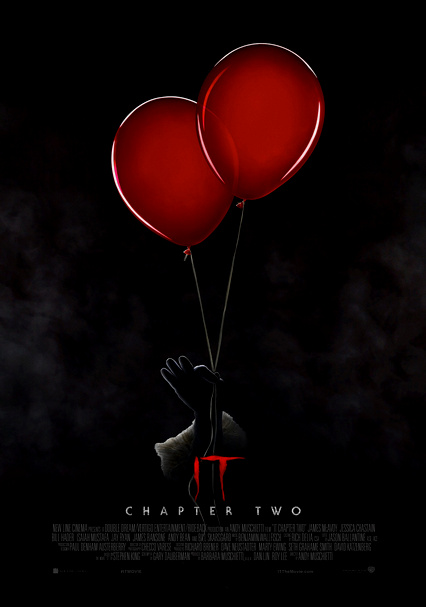
IT: Chapter Two-2019

IT: Chapter Two- 2019

Director Andy Muschietti

Starring James McAvoy, Jessica Chastain, Bill Hader

Scott’s Review #939

Reviewed September 11, 2019

Grade: B+

A companion piece to the first chapter, named It (2017), and an adaptation of the famous and chilling 1986 novel by horror novelist Stephen King, It: Chapter Two (2019) is a successful culmination of the vast story and will please many fans.

A box-office hit mixing straight-ahead horror with the supernatural, and a tad of adventure mixed in, the film is to be appreciated in many ways, though I slightly prefer the first chapter by measure.

Set in present times (2016), twenty-seven years after the first film took place, the Losers’ Club kids are now nearing middle age, in their forties.

The most prominent characters in the group, Beverly Marsh (Jessica Chastain), Bill Denbrough (James McAvoy), and Richie Tozier (Bill Hader) are summoned by childhood chum Mike Hanlon to return to the sleepy town of Derry, Maine, after a series of murders begin at the summer carnival.

Each of them, except for Mike, has fled the small town and found success in bustling cities, living prosperous lives.

Because of a promise made as kids, the entire group reunites except for Stanley Uris, who chooses to fatally slit his wrists in a bathtub rather than return and face evil Pennywise the Clown (Bill Skarsgard).

The six members wrestle with their demons and past mistakes while Pennywise takes the form of human beings and objects to terrorize the group, providing imagined and frenzied scares. At the same time, they scramble to perform a Native American ritual to destroy the beast.

It isn’t easy to write a successful review of It: Chapter Two as merely a stand-alone film since the two chapters are meant to be one cohesive, long film.

Filmed at the same time, the pacing and continuity are what make the experience an enjoyable one. The key is the interspersing of many scenes, a hybrid of childhood and adult sequences, which gives the film a cohesive package.

This style is a treat for viewers who have seen the first chapter two years ago. After the hoopla dies down, patient fans would do well to watch both chapters in sequence in back-to-back sittings for an undoubtedly pleasant experience.

Director Andres Muschietti wisely places focus on the characters so that the film is character-driven rather than plot-driven, a risk with anything in the horror genre.

Each of the six adults resembles the six kids in physical appearance, which makes the story believable. A major strength is the focus on each character individually, both in the present and in the past. Each faces insecurity, guilt, or mistakes, making them complex.

At a running time of two hours and forty-nine minutes, the film can take its time with character exploration and depth.

A nice add-on and deviating slightly from the King novel is a modern LGBTQ presence. It is implied (though I admittedly missed this when I saw the film) that Richie (Hader) is either gay or wrestling with his sexuality.

The pivotal final scenes depict Richie’s undying love for his lifelong friend Eddie, as one saves the other’s life only to sacrifice his own. The fact that the love is unrequited or unrealized is both sad and heartbreaking.

The gay-bashing opening sequence of Adrian Mellon and his boyfriend is quite a difficult watch, as is the lack of any comeuppance for their perpetrators, but the scene is faithful to King’s novel.

It is also a jarring reminder that in 2019, small towns are not always the safest place for the LGBTQ community, as far too often, small towns breed small minds.

The film could contain more jumps and scares than it does, and teeters a bit too long in the overall running time. While the focus on the character is excellent, the final climax and the battle with Pennywise are a slight letdown and feel predictable.

The film is not scary in terms of horror but does have nice special effects and visual razzle-dazzle, especially concerning Pennywise. The creepy clown is less frightening than in the first chapter, but perhaps this is due to becoming more familiar with him.

A treat for eagle-eyed fans is the cameo appearance by legendary author Stephen King. As a cantankerous pawn shop owner, he sells Bill the relic bicycle he had enjoyed in his youth.

For bonus points, Muschietti treats fans to a scene including filmmaker Peter Bogdanovich, who cameos as the director of the film based on Bill’s novel.

It: Chapter Two (2019) offers good entertainment and will please fans of the horror genre and the famous author, as the film is very faithful to the novel.

As a modern horror experience, the film is a solid win, though not without slight missteps. Superior in depth and character development to most films in the same vein, it is a film to be enjoyed and appreciated.

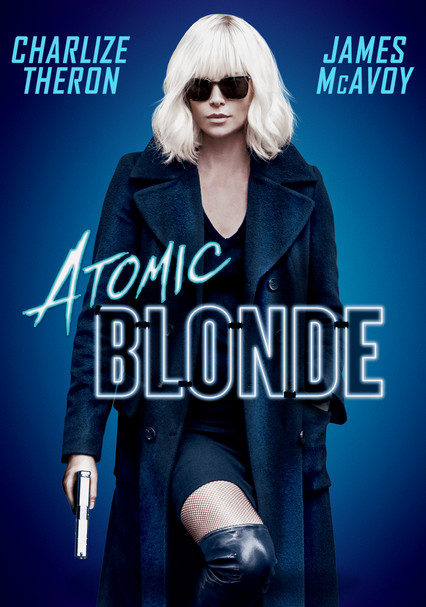
Atomic Blonde-2017

Atomic Blonde-2017

Director David Leitch

Starring Charlize Theron, James McAvoy

Scott’s Review #857

Reviewed January 19, 2019

Grade: B+

Atomic Blonde (2017) is a female-empowering action/spy film directed by David Leitch, a former stuntman. The film plays similarly to James Bond, but with the genders reversed.

The film is visually stylish, featuring dynamic music and cold, crisp location sequences of Europe.

The story is not the main appeal and cannot always be followed, but thanks to a great performance by Charlize Theron in the title role, the film is pleasant and recommended for fans of either the spy or action genres.

Based on the 2012 graphic novel The Coldest City, the film is set in Berlin in 1989, and its central theme is the collapse of the Berlin Wall amid a spy story and the Cold War backdrop.

A grizzled female MI6 agent, Lorraine Broughton (Charlize Theron), is quizzed about events that occurred during her recent time spent in the German city investigating the death of a fellow spy.

She recounts her mission via flashbacks and the whereabouts of a mysterious list that reveals the names of MI6 and KGB Russian agents. Lorraine deals frequently with David Percival (James McAvoy), an odd colleague who may or may not be trusted.

The plot and subsequent story are hardly the finer points of Atomic Blonde, and the title—a play on the words “atomic bomb”—is too cute to be taken seriously.

The novice director is a former stuntman, so one should not expect high art or exceptional writing material. The largest issue besides the plot holes and implausibility of the story is that it is not engaging. After thirty minutes of trying to ascertain who had “the list,” I gave up and tried not to follow too closely, instead enjoying the film’s other qualities.

Theron is well cast as bleached blonde vixen Lorraine—harsh as nails and badass. With icy eyes and a sneer that makes the most formidable opponents cringe, the actress has the charisma to make the role her own.

The tall and fit woman endures too many fight scenes to count, but her pizzazz and wherewithal make the character believable. Her toned physique is not dissimilar to that of her character in Mad Max: Fury Road (2015).

Bisexual, Lorraine has a brief romantic escapade with Delphine Lasalle (Sofia Boutella), a young French agent, until the woman is murdered.

Any advEuropean adventurer can be enamored for, logistically speaking, the exciting locales featured heartily in Atomic Blonde.

Sleek and modern, the photography and cinematography departments do a fantastic job of giving the film authenticity and audacity to reveal the terrific nooks and crannies the best cities offer.

Given the number of high-speed car chase scenes and a fantastic underwater sequence, London, Paris, and Berlin are all given their just due.

The feminist overview that Atomic Blonde possesses is worthy of praise. Able to tangle with the best of them, Lorraine takes no prisoners and is determined to battle until the end or until she is too bloody to fight back. She is tough yet sensitive and puts up with no nonsense.

Still, she has a heart, as evidenced by not only the violent death of her girlfriend and her subsequent reaction but also her calm despair at being unable to save a drowning man’s life. Lorraine’s calm and resilience, instead of over-dramatic emotional outrage, make her a character that has developed very well and is a role model for young women everywhere.

McAvoy is cute as a button as David adds comic relief and sly witticisms to many scenes. He often appears shirtless, exposing his lean and muscular physique. As a fan of sexual dalliances, he is both combative and flirtatious with Lorraine, though he never beds her.

A yin to her yang and sparring partners throughout, David is a nice addition to a cast containing mostly serious characters.

The 1980s-themed musical score features nostalgic songs peppered throughout the film, seemingly every few moments.

Atomic Blonde plays like a bold music video with intelligently penned songs, not disposable crap. The inclusion adds a genuine celebration of the decade of decadence crafted thoughtfully.

Treats such as the masterful “Voices Carry” by ‘Til Tuesday, “London Calling” by The Clash, and “Der Kommissar” by After the Fire is placed perfectly during relevant scenes.

With a ballsy lead character and enough action to envelope a nearly two-hour action thriller Atomic Blonde (2017) is a gift in the atmosphere and great ambiance. Forget bothering to deep-dive into the complex story too much- it isn’t worth it.

Admittedly, the coveting style over substance can be forgiven because the nice elements overshadow the negatives.

Atomic Blonde (2017) best serves as a kickback and enjoy the ride experience.

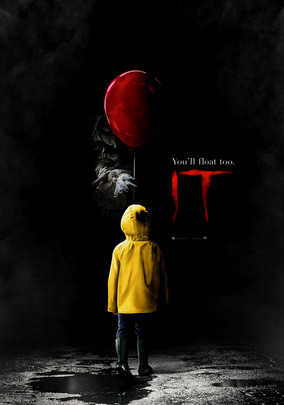
It-2017

It-2017

Director Andres Muschietti

Starring Bill Skarsgard, Jaeden Lieberher

Scott’s Review #684

Reviewed September 20, 2017

Grade: A-

An enormous hype has gone into the first big-screen adaptation of the epic-length 1986 Stephen King novel, It.

An above-average mini-series based on the book was released in 1990, but the film version is much more effective.

Officially entitled It: Chapter One (2017), it divides the story in half, only focusing on the characters as children, not as adults decades later.

The film is highly effective, with a fantastic story, visuals, cinematography, and a rocking musical score. Simply put, it is one of the better Stephen King film adaptations.

As rabid Stephen King readers will understand, at over eleven hundred pages in length and spanning thirty years, a two-hour and fifteen-minute film simply wouldn’t encompass the author’s artistic vision.

To be determined is how chapter two will measure up to the glory of the first chapter.

Derry, Maine, is the sleepy little town where the action takes place. The period is 1988, but it is worth pointing out that the novel takes place in the late 1950s.

On a stormy afternoon, seven-year-old Georgie takes a paper boat, constructed by his older brother Bill Denbrough, outside to see if it sails. He meets a clown in the storm drain, who introduces himself as “Pennywise the Dancing Clown.”

Pennywise toys with Georgie turns vicious, and tears the boy’s arm off.

Months later, life goes on as Bill and his group of friends known as “The Losers Club” all separately begin to see variations of Pennywise.

The film is part of a teenage summer adventure balanced with a terrifying horror film, and director Andres Muschietti achieves this mixture seamlessly.

Lighting is one example of how the film goes about in this fashion.

Most of the outdoor sequences are bright, sunny, and airy. Conversely, the terrifying scenes, usually involving the entity of Pennywise, are shot using dark lighting, eliciting fear and a perfect mood.

The casting is terrific—I specifically found actor Jaeden Lieberher as Stuttering Bill, Jeremy Ray Taylor as Ben Hanscom, and actress Sophia Lillis as Beverly Marsh to be wonderful performers and clear standouts among the teenage characters.

Lillis, bright-eyed and with a strong-willed composure, resembles a young Scarlett Johansson and could have a bright future ahead of her. Lieberher’s earnestness and stuttering ability are believable, and his innocence is reminiscent of every kid’s.

Lastly, Taylor fills a pudgy new kid in town, Ben, with comedy and romanticism in his unrequited love for Bev.

Thriving is the portrayal and appearance of the demonic entity Pennywise. Since the fictional clown has over thirty years of interpretation and imagination, bringing him to cinematic life was challenging.

The risk would have been making him either too horrific or cartoon-like- the result is a perfect hybrid. Bill Skarsgard exudes crazy in his brilliant performance, teetering between goofy and playful with Georgie and evil personified as he taunts and terrorizes the kids in his dusty hideaway.

Interestingly, none of the adult characters are written sympathetically. From the creepy Alvin Marsh to the nerdy pharmacist, even the stern librarian and the overbearing Mrs. Kaspbrak are each laden with an unlikable quality.

The closest adult to being “nice,” Bill’s father, finally screams at his son to accept the fact that Georgie is dead.

Two small complaints include the two secondary bullies—the King Bully Henry Bowers cohorts are not given their comeuppance and simply vanish from the screen, never to be mentioned again.

Secondly, the sound exterior shots of Derry, Maine, exude a New England freshness and a small-town mystique. It’s too bad the scenes were not filmed in Maine at all but somewhere outside of Toronto, Canada—more realism would have been nice.

Due to the massive success of the adapted film, legions of fans will undoubtedly hold their breaths waiting for the resurrection of Pennywise and “It” to be unleashed on film fans everywhere- probably in 2019.

I will be one of those fans.

Anna Karenina-2012

Anna Karenina-2012

Director Joe Wright

Starring Keira Knightley, Jude Law

Scott’s Review #126

70243443

Reviewed July 22, 2014

Grade: B+

Anna Karenina (2012) is the film adaptation of the classic Leo Tolstoy novel. Shamefully, having not read the novel, but being familiar with the story I was not sure how successful the transition from novel to film would be.

The transition proved to be quite successful, as it would turn out.

Being a fan of director Joe Wright, who did wonderful work on his direction of Atonement in 2007, he is a master of costumed period pieces and Anna Karenina is no different in that regard.

It is vastly different, however, in the way it is shot. The film is non-traditional and is shot with jarring, quick camera movements interspersed with musical numbers.

It resembles Moulin Rouge (2001) in this style and is not for everyone’s tastes. I enjoy this technique and, combined with the wonderful art direction/costumes, makes for modern, unique storytelling.

Keira Knightley is as adequate as Anna, but nothing special. I have to wonder if she was cast simply because she is typically the lead in Joe Wright films.

It is a tragedy, of course, and a tale of a lonely love-torn young woman conflicted between two high-class men. On a broader scale, it’s a story of the romantic entanglements of the high-class world and their trials and tribulations, centering on Anna.

The look of the film is what impressed me most, more than the story did.

Oscar Nominations: 1 win-Best Original Score, Best Production Design, Best Cinematography, Best Costume Design (won)