Tag Archives: Hannah Murray

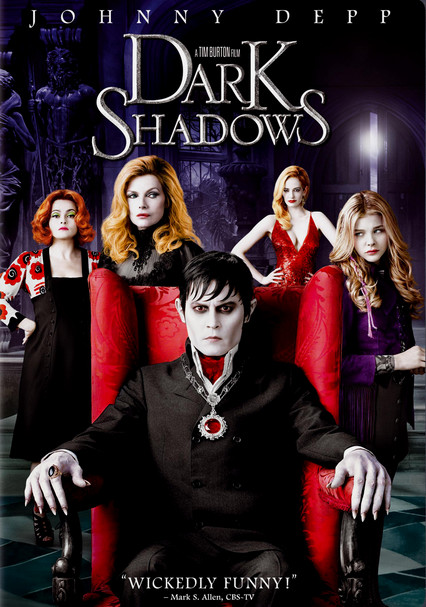
Dark Shadows-2012

Dark Shadows-2012

Director Tim Burton

Starring Johnny Depp, Michelle Pfeiffer, Helena Bonham Carter

Scott’s Review #1,203

Reviewed December 3, 2021

Grade: C+

Sometimes a great idea doesn’t pan out. On paper, relaunching the unique and gothic 1960s daytime television series Dark Shadows with a tribute on the big screen with even bigger stars sounds wonderful.

The endless possibilities and the inevitable nods to history are head-spinning.

Sadly, the film version of Dark Shadows (2012) directed by Tim Burton is miscategorized and misunderstood by all involved. It’s billed as a dark comedy rather than horror or even fantasy and comes across as more of a mockery than a real nod to the series.

It’s completely over-the-top and misses any of the wonder and the spookiness that made the long-ago black and white show a daily adventure.

I do not profess to have seen the entire series but I have watched much of the first season and understand the appeal. Fans will be disheartened by Burton’s botched attempts to recreate a great idea.

Depp, a frequent guest star in Burton’s film works, strikes out as the iconic character Barnabas Collins, the eighteenth-century vampire who awakens in the twentieth century though he’s not as bad as he was when he feebly stepped into the Willy Wonka character in 2005.

Yikes.

The only saving grace is the creative and magical visual effects and set design which provides enough imagination and macabre fascination to at least partly save this otherwise messy experience.

The plot gives a brief explanation of the history.

In eighteenth-century Maine, Barnabas Collins (Depp) presides over the town of Collinsport. A rich and powerful playboy, Barnabas breaks the heart of a witch named Angelique (Eva Green) who deviously makes him pay.

Angelique turns Barnabas into a vampire and buries him alive.

Two centuries later, Barnabas escapes from his tomb when builders are erecting a Mcdonald’s and finds the current 1970s Collinsport a very different place. His once-grand estate has fallen into ruin, and the dysfunctional remnants of his family have fared no better.

His resurrection creates complications and drama for the entire family.

Burton knocks it out of the park with the visuals.

The gothic mansion, in particular, is right up his alley and he embraces the possibilities with gusto. Every creak or wind sound heard within the mansion co-aligns with the dark and dreary purples and brown colors.

Frequent candles mark the proper mood and investigating the vast number of rooms was something to look forward to.

Since the rest of the film sucked I had nothing better to do than fully embrace and focus on the art and set designs.

Heavyweights like Michelle Pfeiffer, Helena Bonham Carter, and Depp do their best but oddly overact in nearly every scene. Their direction must have been skewed toward comedy instead of adding any meat or emotional relevance to the characters.

The original series created something strangely dramatic and compelling on a shoestring budget. There was a delicious haunting and grabbing nature that made you anticipate the next episode and who might fall victim to the vampire.

The film veers into a vastly different territory.

Burton and Depp’s Barnabas struts around emitting one-liners for intended giggles. The other characters appear to be dressed for Halloween and are dumb and morose.

The feeling I got was that of a retread to a situation comedy like The Addams Family rather than a horror soap to be taken seriously.

The sexual references and the occasional bloody vampire effects are okay but seem peppered in to justify the dark comedy.

Even an uninspired cameo by shock rocker Alice Cooper is perceived as a weak attempt to add something frightening or dangerous.

Unsurprisingly, Dark Shadows (2012) performed poorly at the box office and was derided by true fans of the series and almost every other film critic.

This caused Barnabas and his family to slink back into their coffins possibly for good.

What a shame.

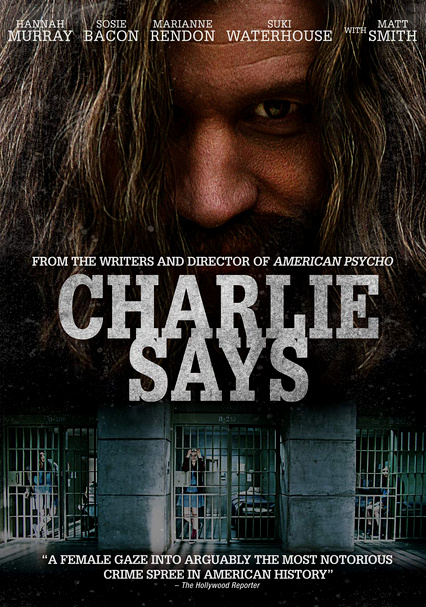
Charlie Says-2019

Charlie Says-2019

Director Mary Harron

Starring Hannah Murray, Sosie Bacon

Scott’s Review #936

Reviewed August 28, 2019

Grade: B

With the very high-profile release of Quentin Tarantino’s Once Upon a Time in Hollywood (2019) centering around the sadistic Manson murders of 1969, Charlie Says (2019) is another film that delves into the same story, though in a very different way.

The latter takes the perspective of the followers, victimizing them and examining the choices they made that affected the rest of their lives.

The angle is of interest, but the production never completely takes off, resulting in an uneven experience that requires more grit and substance.

Karlene (Merritt Wever), a female graduate student focused on women’s studies, takes an interest in three followers who were viciously killed in the name of their “god”, Charles Manson.

A few years after their arrests, they co-exist together in relative solitary confinement in a California penitentiary. They remain under the delusion that Manson is their leader and their deeds were all part of a grand cosmic plan until Karlene slowly brings them out of their haze of unreality with heartbreaking results.

The casting of the real-life figures is as follows: Charles Manson (Matt Smith), Leslie Van Houten (Hannah Murray), Patricia Krenwinkel (Sosie Bacon), and Susan Atkins (Marianne Rendon).

Each is a prominent character, with the central figure being Leslie “Lulu” and her complex relationship with Manson.

The newest to be recruited, the audience witnesses her hypnotic possession and her occasional uncertainty about the cult. For a fleeting moment, she is even tempted to leave, which the film hammers home to the audience.

Murray plays the character well, but does not resemble her enough for praise, though we read the conflict on her face very well. She is meant to be the thoughtful member of the Manson Family, whereas Patricia and Susan are more reactionary and temperamental, especially Susan.

Whether this is how things were is not known. Still, I always had a gnawing feeling throughout the running time that historical accuracy may have been secondary to the story points and dramatic effect.

Charlie Says is bothersome because of the realization that the girls were recruited and fed lies, falling for the deceit, hook, line, and sinker.

The followers were indeed brainwashed into Manson’s disturbing version of reality, and that fact is alarming, as the girls were not dumb people, only vulnerable young women.

Decades later, it is easy to think of other victims polarized by a central or controversial figure, whether it be in politics or another arena. The lesson learned is that people can be easily influenced.

The actual “murder night” and the death of Sharon Tate are featured, but up-close and personal gore is thankfully avoided. The actress, well known to have suffered a terrible fate, to say nothing of her unborn baby, is a small but crucial aspect of the film.

When one of the girls watches one of Tate’s films in her cell, another girl clamors for her to turn off the film, beginning to feel pangs of guilt and remorse.

The film questions the girl’s responsibilities for their actions, a fact that in real life many wrestled with, including the courts and parole boards. Were they merely duped in the cleverest of ways, or do they deserve their fates?

Spared of the electric chair due to a California law, a positive aspect of the film is a current update of the happenings of each girl, now over forty years later, as mature women. Lulu and Patricia remain incarcerated while Susan has died in prison.

After the film closed and a good measure of time was left to ponder the movie, I was left feeling slightly less than fulfilled and desiring a bit more.

Charlie Says (2019) feels safe and lacks enough grit or bombast, although it is well-intended. The film is clearly from a feminist point of view and is an interesting watch, though, given the subject matter, I had hoped for more substance.