Tag Archives: Novella Nelson

Birth-2004

Birth-2004

Director Jonathan Glazer

Starring Nicole Kidman

Scott’s Review #1,124

Reviewed March 18, 2021

Grade: B+

Because of the film’s complex storyline, Birth (2004) is a tough sell for most cinema lovers.

A grown woman embarking on any romance with a ten-year-old boy will turn off viewers, though, can you even imagine if the genders were reversed?

I was fascinated by the premise and the endless possibilities of a conclusion.

I’m not quite sure what I expected to happen ultimately, but I felt slightly underwhelmed by the ending.

All in all, it is a daring effort that I wish had more payoff.

The first hour or so is extremely provocative.

Nicole Kidman excels at making the unbelievable material as believable as possible, and Jonathan Glazer directs the film very well, giving it a haunting, mysterious Stanley Kubrick vibe.

The director would come into name recognition following his 2013 masterpiece Under the Skin.

The film opens with a voiceover of an unknown man, a professor, lecturing about his disbelief in reincarnation. The audience then sees the man jogging through New York City’s Central Park, where he collapses and dies.

It takes Anna (Kidman) ten years to recover from the death of her husband, Sean (the professor), but now she’s on the verge of marrying her boyfriend, Joseph (Danny Huston), and finally moving on.

We suspect she may not be completely keen on marrying Joseph, but most of their relationship is unclear. We know that she aches for Sean.

On the night of their lavish engagement party, a young boy named Sean (Cameron Bright) turns up, claiming to be her dead husband reincarnated.

At first, she ignores the child, thinking it’s a joke, but his knowledge of her former husband’s life is uncanny, leading her to realize that he could be telling the truth slowly.

Anna is conflicted to say the very least, and Kidman effortlessly makes the audience believe that what is considered ridiculous might be true.

Is there a supernatural element here?

Her family members, led by her mother, Eleanor (Lauren Bacall), are disbelieving and antagonistic towards the boy for disrupting Anna’s life.

An issue is that, other than one supporting character, Clara (Anne Heche), who has a great opening sequence burying mysterious letters, the others have next to nothing to contribute to the story except to brood and get angry.

Bacall, in particular, is completely wasted in a role that any other older actress could have played.

Parallels to Rosemary’s Baby (1968) are hard not to make. Anna dons a similar pixie haircut to Rosemary. They both reside in swanky, old-style New York City high-rises with a ghostly, haunting feel.

The ambiance is a positive.

My favorite camera shot that Glazer includes is a lengthy one of Kidman’s Anna. In a close-up, the character’s reactions are on full display for what feels like several minutes. Kidman gets to show her tremendous range- tears, shock, realization.

I’ve noticed a similar shot in a handful of modern films, and it’s an actor’s delight- a viewer’s too!

The finale, without giving much away, is interesting to a point. The big reveal involving Clara is intriguing until the viewer backtracks and tries to add up all the events.

The fact is, they don’t add up, and I longed for something more concrete or believable.

There is no good payoff.

Birth (2004) doesn’t always add up to satisfaction, but it’s edgy, gloomy, and unpredictable, and I enjoyed those facets enough to recommend it.

This is not a mainstream film like Ghost (1990) with a similar theme- it’s much more cerebral and thought-provoking.

Kidman’s performance is the main draw here, but it’s tough to find a film in which she isn’t great.
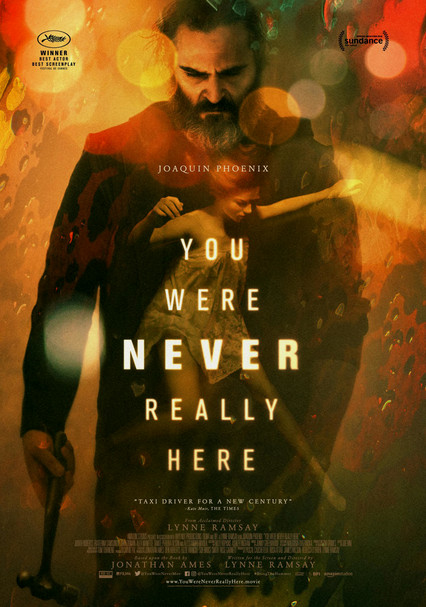
You Were Never Really Here-2018

You Were Never Really Here-2018

Director Lynne Ramsay

Starring Joaquin Phoenix

Scott’s Review #932

Reviewed August 19, 2019

Grade: A-

You Were Never Really Here (2018) is an independent psychological thriller that is most reminiscent in tone and texture of the legendary Scorsese film Taxi Driver (1976).

The main characters are worlds apart, but the classic influences the plot and trimmings amid a different period (the present).

A terrific and brooding performance by star Joaquin Phoenix leads the charge, as does the fantastic direction by Lynne Ramsay and the editing team. The dark film is an unusual and impressive choice for a female director.

Snippets of cinematic genius exist during a film that, with a more complete package, might have been a masterpiece.

We first meet Joe (Phoenix) somewhere in Ohio, as we learn he is a hired gun sent to rescue underage girls from sex trafficking rings. He is brutal in his methods of rescue, resorting to gruesome murders to complete his assignments, and is paid handsomely.

In New York City, he cares for his elderly mother, whom he adores, and is contacted to rescue Nina, the daughter of a New York State Senator, Albert Votto, for an enormous sum.

When Joe rescues Nina and waits for Votto, events quickly spin out of control, revealing a sinister web of deception.

When you look at the story that You Were Never Really There tells, it has been told many times before, typically in slick Hollywood conventional standards.

An angry ex-military man unleashes brutality on devious criminals, rescues the girl, and returns her safely to the open arms of her awaiting parents.

Fortunately, the film is more thoughtful than that, adding complexity to the Joe and Nina relationship and a stylistic, poetic quality featuring Joe’s relationship with his mother.

The plot is paced very well so that the events occur over only a day or two, and the film is highly unconventional and dark.

Frequent flashbacks give the film mystique as we see both Joe and his mother abused by Joe’s father, as a young Joe hides in a closet and hyperventilates. Now an adult, Joe is suicidal, frequently fantasizing or practicing his death until he is interrupted.

As grisly as the film can be, beautiful and tender moments are laden throughout as Ramsay provides gorgeous style and humanity. a homoerotic moment occurs when Joe lies next to the man who has killed his mother.

As the man is close to death at the hands of Joe, they hold hands as Joe provides comfort to the man in death. Joe then buries his mother in a pond in upstate New York, providing her with a peaceful final resting place. These are unique scenes that feel almost like an art film.

The conclusion is open-ended, leaving lots of questions. Joe and Nina appear to ride off into the sunset together, but what will they do? What is to become of them? Surely, no romantic element can be found, but where will they go from here?

Both characters appear to have nothing left to hang on to other than each other, but is this sustainable?

The film is not the type that is poised for a sequel, but I would be very curious about what Ramsay has planned for her characters.

Joe is not portrayed as wicked; he is too complex for that. Phoenix, a tremendous actor, perfectly infuses the character with brutality, anger, tenderness, and warmth.

The similarities between You Were Never Really Here and Taxi Driver—the grizzled New York portrayals, the political backdrop, and the main characters saving a woeful young girl from the depths of despair—make the two films comparable.

However, Joe and Travis Bickle are opposites, the latter having frenetic humor that the former lacks.

Ramsay has been around for a while, with We Need to Talk About Kevin (2011) being her most prominent film. She is successful at telling stories about deeply troubled individuals who are good people given awful circumstances.

With a tremendous actor like Phoenix on board, she crafts a solid work that has garnered accolades, at least among the indie critics, for You Were Never Really Here (2018). Ramsay seems poised to break out in a big way and shake up the film industry with future works.

Independent Spirit Award Nominations: 1 win- Best Feature, Best Director- Lynne Ramsay, Best Male Lead- Joaquin Phoenix, Best Editing (won)

Night Catches Us-2010

Night Catches Us-2010

Director Tanya Hamilton

Starring Kerry Washington, Anthony Mackie

Scott’s Review #503

70129370

Reviewed October 29, 2016

Grade: B+

Night Catches Us (2010), as a film, has some strong qualities and is captivating and interesting to watch.

It is largely set in 1970s Philadelphia and explores the racial tensions of the time.

Kerry Washington and Anthony Mackie star and do a great job with the material.

The film tells the story of a former 1960s Black Panther (Mackie) who returns home after a decade to start his life over, or so he hopes.

Night Catches Us is a combination of love stories and political/social commentary and is an important film to watch.

The leads, along with Wendell Pierce, are great, and the real-life 1960s Black Panther rally footage is interesting to see from a historical perspective.

My only criticism is that I wanted a bit more.

Certain events seem plot-driven and forced- slightly clichéd in the romance department- but overall I enjoyed the film very much, especially for Mackie and Washington’s performances.

Great acting and a socially relevant story.

Independent Spirit Award Nominations: Best First Feature