
Aenean feugiat purus vitae sollicitudin laoreet. Duis fringilla ligula vel velit lacinia, in mattis felis consectetur. Sed at pretium orci. Ut tempus libero odio, sit amet consequat neque pretium ut. Integer hendrerit mauris nec odio auctor suscipit. Proin porttitor turpis vitae ligula dictum, a sollicitudin purus congue. Nulla viverra nisi ex, ut ornare tellus cursus quis. Nulla posuere tincidunt leo at condimentum. Sed egestas tortor a nisi fringilla, id cursus odio rhoncus.

we are able to create beautifull and amazing things
Aenean feugiat purus vitae sollicitudin laoreet. Duis fringilla ligula vel velit lacinia, in mattis felis consectetur. Sed at pretium orci. Ut tempus libero odio, sit amet consequat neque pretium ut. Integer hendrerit mauris nec odio auctor suscipit. Proin porttitor turpis vitae ligula dictum, a sollicitudin purus congue. Nulla viverra nisi ex, ut ornare tellus cursus quis. Nulla posuere tincidunt leo at condimentum. Sed egestas tortor a nisi fringilla, id cursus odio rhoncus.

Wherein life sea years lights fill kind midst Spirit
Aenean feugiat purus vitae sollicitudin laoreet. Duis fringilla ligula vel velit lacinia, in mattis felis consectetur. Sed at pretium orci. Ut tempus libero odio, sit amet consequat neque pretium ut. Integer hendrerit mauris nec odio auctor suscipit. Proin porttitor turpis vitae ligula dictum, a sollicitudin purus congue. Nulla viverra nisi ex, ut ornare tellus cursus quis. Nulla posuere tincidunt leo at condimentum. Sed egestas tortor a nisi fringilla, id cursus odio rhoncus.

Events Held In Paris Beautifull And Amazing Things
Aenean feugiat purus vitae sollicitudin laoreet. Duis fringilla ligula vel velit lacinia, in mattis felis consectetur. Sed at pretium orci. Ut tempus libero odio, sit amet consequat neque pretium ut. Integer hendrerit mauris nec odio auctor suscipit. Proin porttitor turpis vitae ligula dictum, a sollicitudin purus congue. Nulla viverra nisi ex, ut ornare tellus cursus quis. Nulla posuere tincidunt leo at condimentum. Sed egestas tortor a nisi fringilla, id cursus odio rhoncus.

Make Realtionship Years Lights Fill Kind In USA
Aenean feugiat purus vitae sollicitudin laoreet. Duis fringilla ligula vel velit lacinia, in mattis felis consectetur. Sed at pretium orci. Ut tempus libero odio, sit amet consequat neque pretium ut. Integer hendrerit mauris nec odio auctor suscipit. Proin porttitor turpis vitae ligula dictum, a sollicitudin purus congue. Nulla viverra nisi ex, ut ornare tellus cursus quis. Nulla posuere tincidunt leo at condimentum. Sed egestas tortor a nisi fringilla, id cursus odio rhoncus.
The Reptile-1966
The Reptile-1966
Director John Gilling
Starring Ray Barrett, Jennifer Daniel
Scott’s Review #978

Reviewed January 10, 2020
Grade: B
Hammer horror film productions offer treats to be enjoyed. The budgets are always small, adding to the mystique, fun, and wonderment of what can be done.
Impressive is how creative they get with a shoestring budget.
The Reptile (1966) is an excellent film with enough murder and intrigue to satisfy, though it has many plot holes and illogical sequences.
The British class and murky locales are fantastic.
Set in Cornwall, England, events begin in a macabre way when a middle-aged bachelor hears noises coming from a nearby estate. When he investigates, he is bitten by a demonic figure and rapidly develops the “Black Death,” which kills him.
Many locals succumb to a similar fate. The bachelor’s brother, Harry Spalding (Ray Barrett), inherits his brother’s cottage and moves in despite the warnings of the resident tavern owner, Tom (Michael Ripper). Tom is the only one of the townspeople to befriend Harry and his wife, Valerie (Jennifer Daniel).
Meanwhile, the sinister Dr. Franklyn (Noel Willman), the owner of the nearby estate, is the only resident near the cottage. He lives with his daughter Anna (Jacqueline Pearce). The Doctor treats his daughter with contempt as she is attended to by a silent servant (Marne Maitland).
When Anna asks Valerie for help, Valerie and Harry are led to the estate, where dire events occur. But could this be a trap?
The setting of the coastal town is well created, and scenes in cemeteries, par for the course with Hammer productions, add a good vibe. The cottage and the estate are well-manicured, and the film feels like a British gem.
Since the sets are low-budget, the exterior sequences add to The Reptile. Assumed is that the film was shot with a “day for night” technique, a trick used to simulate a night scene while filming in daylight. This makes for positive cinematography.
The film’s final thirty minutes are best when Harry and Valerie are invited to dinner at the Doctor’s estate. Banished to her bedroom for most of the evening, Anna emerges looking ravishing in an evening dress but is soon revealed to have been met with a curse, sheds her skin, and becomes a frightening reptile.
The servant has a hold over Anna and her father while a sweet black kitten comes into play.
The characters are interesting. Benevolent Harry and Valerie mix well with the dark and cynical Dr. Franklyn and the servant. Franklyn is irritable, and the servant, though he does not speak, is devious and riddled with mystery.
Ignoring warnings to flee the town and never return, the newlyweds refuse. Blissful in their new cottage and filled with the promise of fresh life, their spirit counterbalances their neighbors’, and when the characters intersect, the real fun begins.
The creature is a bit corny and hardly scary. The makeup, reportedly complex for actress Jacqueline Pearce, looks amateurish. The cover art makes the creature look much better than in the film, but budgetary limitations tightened things.
Kudos for introducing the female creature. It was tough to root for or against her, though, since we know little about why she went from gorgeous to evil.
From a plot perspective, the viewer is encouraged not to try too hard to figure out how circumstances relate. Why and how did Anna become cursed? Did the servant curse her, and why was he there? Is the group of caged animal creatures that Anna eats?
It is mentioned that Anna needs a hot environment—is the hot molten metal in the basement enough to keep her human? Many other inquiries could be made, but they don’t matter much.
The Reptile (1966) is worth a watch, especially for fans of classic Gothic horror. Although the cast is unfamiliar, the project would have been enhanced by adding Peter Cushing or Christopher Lee, mainstays of Hammer films, in either of the central male roles.
Still, the film succeeds, and the low budget creates a fabulous texture. The main appeal is that it is a good, fun horror film with little expectations.
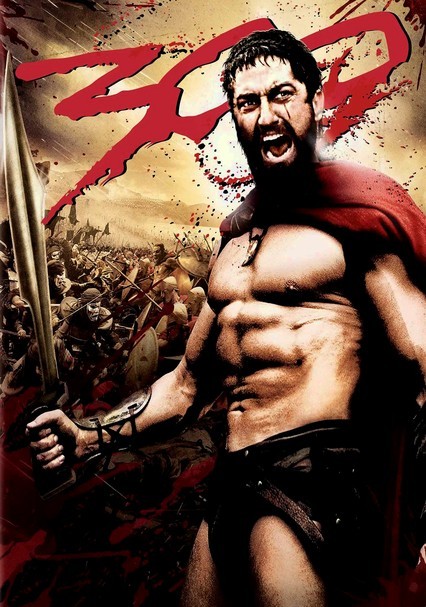
300-2007
300-2007
Director Zack Snyder
Starring Gerard Butler
Scott’s Review #977
Reviewed January 7, 2020
Grade: D
On paper, 300 (2007) could have been a good or even a great film under different circumstances, if a historical realism or a message of some kind had existed.
Unfortunately, what sounds like an interesting premise is met with a cartoon quality, overacting, and cheesy testosterone-laden bombast.
Little more than drivel, the film is saved slightly by a charismatic lead, male flesh, and potent homo-eroticism, but this is no Magic Mike (2012), and the content fails because it is intended to be taken seriously.
The result is a silly affair, with predictability and stereotypes for miles.
The story is based on a 1998 comic series of the same name, a fictionalized retelling of a battle in the Persian War.
The flimsy plot revolves around King Leonidas (Gerard Butler), who leads 300 Spartans into battle against the Persian “God-King” Xerxes (Rodrigo Santoro) and his invading army of more than 300,000 soldiers (hence the title).
As the battle rages on, Queen Gorgo (Lena Headey) attempts to rally support in Sparta for her husband (Leonidas) and conquer the army.
Butler is the only slight positive worth mentioning as he preens and prances in little more than a loincloth with chiseled abs during the battle scenes, ferociously bellowing at his enemy.
A fine-looking man, he is unarguably charismatic and poised, so the audience is strongly encouraged to root for him, and naturally for the Spartans.
Leonidas makes for a powerful leader and is great to look at, but that is where any positives to this film end.
The scantily clad gimmick is not intended to draw female viewers to the film, or at least the intent doesn’t seem to be there unless the marketing is botched.
There is enough male nudity to go around, and the beefcake and machismo are clear in most of the characters.
Laughable that the Spartans all have washboard abs and appear freshly waxed. Did they have access to state-of-the-art fitness centers in 479 BC?
The Persians are mostly face-pierced and sneering, the clear enemy, which does nothing to diminish racist overtones. Spartan-good, Persian-bad.
Zack Snyder’s (Dawn of the Dead, 2004) motivation seems to be to market this film to pubescent teenage males or the low-IQ crowd, so the stereotypes are not the best thing to witness, nor will they leave anyone feeling very liberated or united.
The characters are either cookie-cutter or grizzled and violent, which is in tune with most of the film- bloody, but without reason, substance, or merit.
One-note character after one-note character appears through each scene.
Most bothersome is the intent to stir a pro-war stance, not helpful given the target audience.
300 was filmed mostly using a superimposition chroma key technique to replicate the imagery of the original comic book, which only makes the film look like a high-energy video game.
The product is quite stylized, with gloomy battleground scenes and a dire, bleak tone, and adopts a graphic novel or comic book approach, but lacks any subtle qualities or pretty much anything else interesting from a cinematography perspective.
The battle scene finale is by the numbers and should come as no surprise who the inevitable victor is.
The film requires little thought or attention span, and one can immerse oneself on a cushion and absorb the nonsense, couch-potato-style.
Battle after battle erupts with cliched earnestness and a bevy of blood-spurting wounds and kills. This would be okay if there existed any point or good plot twist.
Any character development is missing.
300 (2007) is a weak offering and decidedly boring, a surprise since much of the action takes place on the battleground, where the pace is a mile a minute.
The experience is forgettable, and a legion of other action-fueled films exist with more meat and potatoes on their plate.
The sinister and stereotypical aspects make the resulting film less than fun, and the big, loud, dumb product is only marginally cinematic.
We can do better.
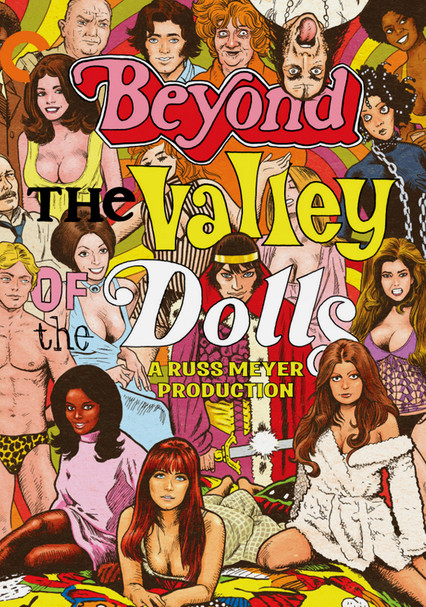
Beyond the Valley of the Dolls-1970
Beyond the Valley of the Dolls-1970
Director Russ Meyer
Starring Dolly Martin, Cynthia Myers
Scott’s Review #976
Reviewed January 2, 2020
Grade: B+
Beyond the Valley of the Dolls (1970) was initially intended as a sequel to the 1967 film Valley of the Dolls but was revised as a parody of the commercially successful but critically panned original.
This was not altogether a smart move, since it would have been interesting to see a coherent follow-up exploring the lives of the original characters, rather than a similarly named film with little to do with the first.
Instead, the film plays like frenetic mayhem, with jarring editing, a peculiar character switch and storyline, and completely over-the-top vulgarity. Still, the film is fun and extravagant, but hardly on par with Valley of the Dolls.
I would not even recommend watching them in sequence- the confusion would only be doubled.
To call Valley of the Dolls a “serious” film is laughable, but compared to Beyond the Valley of the Dolls, it is.
Director Russ Meyer is known for successful sexploitation films that feature campy humor, satire, and large-breasted women, such as Faster, Pussycat! Kill! Kill! (1965) and Supervixens (1975) are at the helm to create the bombastic and eye-dropping shenanigans.
Famous film critic Roger Ebert co-wrote the screenplay along with Meyer.
Three young women, MacNamara (Dolly Martin), Casey Anderson (Cynthia Myers), and “Pet” Danforth (Marcia McBroom), front a struggling rock band, The Kelly Affair, managed by Harris Allsworth (David Gurian), Kelly’s boyfriend.
The four travel to Los Angeles to seek Kelly’s estranged aunt, Susan Lake, an heiress to a family fortune. Fans of Valley of the Dolls will need to know that Susan is supposed to be Anne Welles, the film’s central character.
A battle ensues as Susan graciously offers to give some of her fortunes to Kelly, but Susan’s unsavory financial adviser, Porter Hall (Duncan McLeod) will have none of it. Amid the drama, Kelly meets a gigolo who feuds with Harris, while Harris is pursued by a sexually aggressive porn star named Ashley St. Ives (Edy Williams).
Events all take place against the backdrop of the nightly Los Angeles party.
While the plot is not the central aspect of Beyond the Valley of the Dolls, the renaming of Susan from Anne, the same character, and the recasting of Barbara Parkins as Phyllis Davis make things confusing.
Adding to this point, Parkins was initially cast as Anne/Susan but was abruptly fired from the production. This makes any comparisons to Valley of the Dolls other than the title alone, unwise and a waste of time.
The lively revelry is the fun and the beauty of Beyond the Valley of the Dolls.
The film has a calm, groovy vibe and epitomizes the late 1960s psychedelic, colorful aura. The free love and expressionism make the experience a wild yet liberal-minded one, which is suitable for a film like this.
The intention is to entertain and to express women’s confidence. While the female characters are exploited, they are also driven and comfortable in their own skin.
A fun fact, and cause for musing, is that as wild and exploitative to women (and men) as Beyond the Valley of the Dolls is, Ebert was primarily responsible for penning the script.
In the 1980s, the critic, whom I am a cherished fan of, panned many of the 1980s horror/slasher flicks, especially Friday the 13th (1980), for exploiting women, but he had no issue exploiting them years earlier.
Makes one ponder the hypocrisy of his comments.
Beyond the Valley of the Dolls (1970) is daring and never plays it safe. With a hip edge and plenty ahead of its time in same-sex character representation, the film is unique and brimming with hilarious, bizarre antics.
The plot is rather silly and goofy, and unsurprisingly panned by critics, but it has become a cult classic, and with repeated viewings, it has grown on me more and more.
The production is meant to be watched late at night for better appreciation.
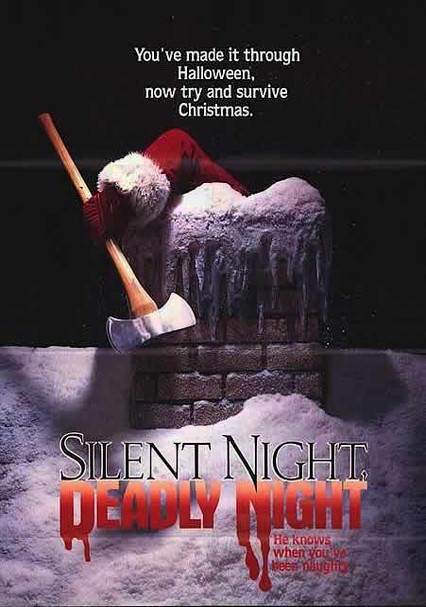
Silent Night, Deadly Night-1984
Silent Night, Deadly Night-1984
Director Charles E. Sellier Jr.
Starring Robert Brian Wilson
Scott’s Review #974
Reviewed December 30, 2019
Grade: B
Silent Night, Deadly Night (1984) is a fun, holiday-themed horror/slasher flick that is cheery mayhem in the spirit of the season, and a worthy addition to any horror fan’s collection.
The film is best watched late at night for the intended effect, and it is obvious to see around the holiday it celebrates.
It would make a great companion piece to Black Christmas (1974), a superior film, but both contain eerily similar musical scores, the former updated with electronic beats for the 1980s.
The horror film was met with ridicule and protest upon release for promoting a killer Santa Claus, despite the story being slightly overreacted to and misinterpreted.
The ‘real’ Santa Claus does not perform the slayings, but rather a mentally unstable young man dressed in the red suit does the dirty deeds.
Nonetheless, the film was unceremoniously yanked from theaters after parents expressed fear that their kids might be traumatized by the film. Silent Night, Deadly Night has graduated to cult-classic status and is entertaining, perhaps embracing its derision instead of running from it.
The action begins in rural Utah in 1971, as the Chapman family drives to a retirement home to see their catatonic grandfather. When left alone, the elder warns five-year-old Billy to fear Santa Claus, but his parents disbelieve him.
On their way home, they stop along the roadside to help a man dressed as Santa Claus, whose car appears to have broken down. The man robs and kills the parents, sparing Billy and his brother from death.
Three years later, Billy and Ricky reside in an orphanage led by the sadistic Mother Superior and a kindly nun, Sister Margaret (Gilmer McCormick).
Ten years later (present times), the now-grown Billy (Robert Brian Wilson) is benevolent and friendly, obtaining a job as a stock boy at a toy store with the help of Sister Margaret.
As Christmas Eve approaches, Billy has flashbacks of his parents’ murders and later is forced to play Santa Claus for the Christmas party when a co-worker falls ill.
As the staff becomes inebriated, a female co-worker is nearly raped, causing Billy to go berserk and kill both the assailant and the victim, who blames Billy. He then spends the night prowling the area for victims he can stab or behead.
Fun is the name of the game with Silent Night, Deadly Night.
The film is a macabre treat for slasher fans. The kills are respectable with the traditional methods used- an ax to the head and a bow and arrow death, along with more elaborate deaths like strangling with a chain of Christmas lights, and a bare-chested female victim being impaled on a moose head.
The highlight is the beheading of a mean teenage bully as he gleefully sleighs down a hill on a stolen sled.
Plenty of gratuitous bare chests (female) common in these types of films are in store for the lusty male viewer, but a nude male is glimpsed as well to make for some R-rated diversity.
Par for the course with slasher films made decades ago is the omission of cultural diversity. Not one Black, Latin, or Asian character is ever seen. The pure-as-snow Utah setting might be one justification.
If one were to attempt to analyze Silent Night, Deadly Night (not recommended), one could deduce a specific religious message, or at least a questioning of Catholicism, specifically the harshness of Mother Superior and her interpretation of punishment as good, implemented in the name of god.
Or maybe she is just a sadistic character? In perfect contrast, Sister Margaret is loving, protective, and nurturing to the orphans.
Whatever the filmmakers’ intention, humor is the recipe, as their strictness and rigidity are played for laughs.
Proper for any horror film, the final scene leaves room for a sequel. Indeed, four follow-up films were made, with the younger Ricky taking over as the serial killer.
In satisfying form, Ricky glares at Mother Superior and exclaims “Naughty!” before the credits roll. The unrated version of Silent Night, Deadly Night is the preferred version to watch.
Pull up the covers, light the fire, and kick back with a six-pack of Bud Light, roast some marshmallows, and enjoy Silent Night, Deadly Night (1984) for what it is.
Bad acting, sins of the flesh, and a delightful holiday slaughter, with unintentional (or intentional) humor and clichéd characters, make for robust enjoyment on a lightweight scale.
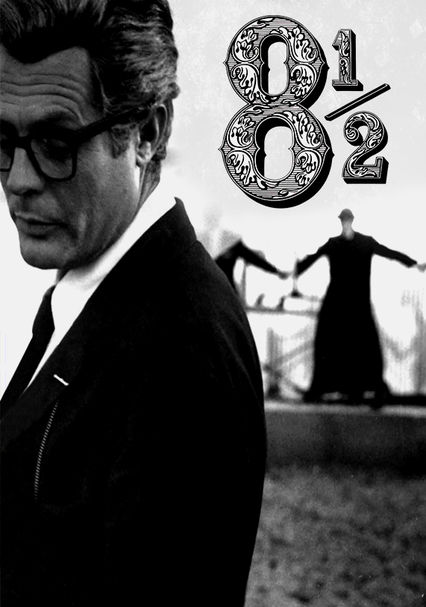
8 1/2-1963
8 1/2-1963
Director Federico Fellini
Starring Marcelo Mastroianni, Claudia Cardinale
Scott’s Review #973
Reviewed December 27, 2019
Grade: A-
For fans of acclaimed and experimental Italian film director Federico Fellini, a straightforward plot is rarely the recipe of the day with his projects.
With 8 1/2 (1963), he creates a personal and autobiographical story about a movie director who is pressured into another project but lacks the creative ideas and inspiration to fulfill the task.
We can all relate to this in one way or another.
The film is confusing, beautiful, elegant, and dreamlike, precisely what one would expect of a Fellini production. His film also hints at a more profound message and complexities.
The recommendation is to experience the film rather than analyze or over-analyze it. Let it marinate over time and relish in its offerings.
Guido Anselmi (Marcello Mastroianni) is a famous Italian film director who suffers from director’s block after he is tasked with directing an epic science fiction film and attempts to do so.
Experiencing marital difficulties, he decides to spend time at a luxurious spa where he has strange reoccurring visions of a beautiful woman (Claudia Cardinale), is visited by his mistress Carla (Sandra Milo), and is criticized by a temperamental film critic.
When Guido’s film crew arrives at his hotel to start production, he becomes overwhelmed by the mounting pressures and escapes into a world of memories. He visits his grandmother, dances with a prostitute, and relives his time at a strict Catholic school.
The film critic dismisses Guido’s attempts to incorporate these memories into his new film. The rest of the film is a mishmash of odd occurrences as Guido attempts to make his film.
Fans of Fellini’s other works will undoubtedly fall in love with 8 1/2, and since the film is about film, this scores points in my book.
His other famous works, Roma (1972) and Amarcord (1973) are similarly semi-autobiographical but differ in that they are more straightforward stories- as much as can be said about a Fellini film.
Usually lacking much plot, 8 1/2 resembles Juliet and the Spirits (1965) more than the others for comparison’s sake. Fantasy and reality are interspersed, making the film challenging to follow.
It appears to be about a man on the brink of a nervous breakdown and is a complex and personal study. As Guido spirals out of control and teetering towards insanity, he also muses about his situation. These highs and lows, told comically, make 8 1/2 even more challenging to figure out and react to.
My previous suggestion to experience 8 1/2 becomes credible as the film rolls along. Viewers may be unsure of what is happening, if not downright perplexed, but energy pulls one into its clutches with masterful sequences and potent embraces of life, love, and culture.
This must be attributed to the look and style of the film.
8 1/2 won the Academy Awards for Best Foreign Language Film and Best Costume Design (black-and-white) and is considered a highly respected and influential work of art by most film critics.
Appreciated mostly for its beautiful cinematography, it also delves into the meaning of life with a live-and-let-live approach.
Lovers of avant-garde works of interpretation and expressionism will be giddy while experiencing ruminating thoughts following 8 1/2 (1963).
Having only seen the film once and embraced it wholly as a work of art but frustrated by the lack of tangible meaning, I advise seeing it a second, a third, or even a fourth time for a deeper appreciation and understanding.
I plan to heed my suggestion.
Oscar Nominations: 2 wins-Best Director-Federico Fellini, Best Story and Screenplay Written Directly for the Screen, Best Foreign Language Film (won), Best Art Direction, Black-and-White, Best Costume Design, Black-and-White (won)
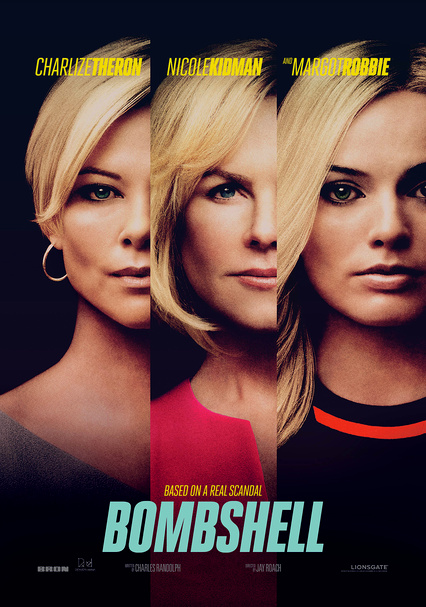
Bombshell-2019
Bombshell-2019
Director Jay Roach
Starring Charlize Theron, Margot Robbie, Nicole Kidman
Scott’s Review #972
Reviewed December 26, 2019
Grade: B+
Bombshell (2019) is the type of film that, depending on your political affiliation, you will either refuse to see or see and have a love/hate reaction to.
As a non-lover of the “news” network Fox News, I am firmly ensconced in the latter camp, so my opinion of the film is mixed.
The importance of releasing the film during a time of political turmoil in 2019 is crucial and intentional, which is why I commend the film.
Still, the subject matter of sexual harassment against women is complex to watch and a sobering reminder that this behavior continues to occur.
The performances of the principal players — Charlize Theron, Nicole Kidman, Margot Robbie, Kate McKinnon, and John Lithgow — are outstanding and key to the film’s success. Theron and Lithgow receive the lion’s share of makeup and prosthetic work, making them look identical to their real-life counterparts.
Beneficial is a myriad of Fox News political figure portrayals (Sean Hannity, Jeanine Pirro, and Bill O’Reilly) with frighteningly good accuracy, creating a surreal effect.
The film centers on female Fox News personnel in Manhattan and their sexual harassment allegations against founder Roger Ailes (Lithgow).
The central figure- Megyn Kelly (Theron) is conflicted over the risks to both her career and her financial stability if she comes forward and admits her harassment by Ailes years ago, after Gretchen Carlson sues the network.
Margot Robbie plays Kayla, a young Fox employee whom Ailes also harasses.
McKinnon plays a closeted lesbian and confidante to Kayla, who works for the network despite being liberal and a massive admirer of Hillary Clinton.
The plot is fast-paced and unfolds like a quick page-turner, with some sections narrated by Kelly. Bombshell feels timely and has a distinct “ripped from the headlines” makeup.
The fact that the real-life events occurred as recently as 2016 is a striking aspect that will captivate the viewer, especially those who follow United States politics or current events.
The story is fresh and vibrant, with a sense of familiarity, rather than a tale from an event decades ago that many viewers have forgotten or were too young to remember.
I had difficulty feeling much sympathy for most of the characters, which detracts from the film’s overall impact.
The standard definition that the term “Fox News” usually conjures is one of male chauvinism and the good old boys club, with old-fashioned machismo ruling the roost.
Why would any woman choose to work for them or align themselves with the Conservative party, which is not a fan of women or women’s rights?
With this fact in mind, it was difficult for me to watch the film.
To build on this, CEO Roger Ailes is written as the clear villain with no redeeming value. During one scene, he salivates over Kayla when she visits him in his office and instructs her to lift her skirt higher and twirl for him. The scene is sickening, and we feel Kayla’s embarrassment and humiliation.
In a cheer-out-loud moment at the end of the film, she quits, unable to remain in such a corrupt corporation.
One of the only likable characters is Jess Carr (McKinnon), probably fictitious. Hardly fitting the mold of the female staff, not perky or showing leg, she goes out for drinks with Kayla and admits to being gay; the two end up having a one-night stand.
The character is unique, and McKinnon makes wise acting choices.
Worth mentioning is Ailes’s long-time secretary Faye (Holland Taylor). Surely, she knows the antics that go on in her boss’s office, but she almost serves as an accomplice. Why?
Sad to realize that, as recently as 2016, women were still having to face discrimination in the workplace. Industries with powerful men still can be toxic and poisonous to women attempting to climb the ranks.
If the women harassed at Fox News were not top anchors, there is no way the accusations would have even been heard. What about the receptionists, cleaning staff, or administrators who are harassed?
Would anyone listen to them? This message crossed my mind while watching Bombshell.
With fantastic acting and incredible makeup, time will tell if Bombshell (2019) remains a relevant film. Leaving the viewer with an unsatisfying ending rather than a hopeful one, it isn’t easy to sympathize with most of the characters, even when they are supposed to be sympathetic.
Bombshell would make a perfect companion piece to Vice (2018), a similar political, yet superior film.
Oscar Nominations: 1 win-Best Actress-Charlize Theron, Best Supporting Actress-Margot Robbie, Best Makeup and Hairstyling (won)
A Passage to India-1984
A Passage to India-1984
Director David Lean
Starring Judy Davis, Peggy Ashcroft
Scott’s Review #971

Reviewed December 24, 2019
Grade: A-
David Lean, famous for his sweeping, masterpiece epics including Lawrence of Arabia (1962) and Doctor Zhivago (1965), returns with his swan song, a grandiose and lavish film, A Passage to India (1984).
Though not quite on the same level as the two other mentions, the brilliant cinematography alone makes this one a winner.
The story is compelling with a mystery, and he said/she said rape story that deepens, exploring racism and religion, assuredly switching viewer allegiances between characters.
A Passage to India is based on the famous E.M. Forster novel from 1924. Along with A Room with a View (1908) and Howards End (1910), the three make up a series that examines class differences and hypocrisy among the British.
All three are set at least partially in England and were all adapted to film with immeasurable success. While the film is potent and meaningful, it is the least brilliant of the three, but only by a hair.
Set in the 1920s, the story depicts the British controlling India, creating tension in the air.
Adela Quested (Judy Davis) sails from England to India with Mrs. Moore (Peggy Ashcroft), the mother of her intended bridegroom, whom they plan to see when they arrive at their destination.
The women have a wonderful relationship and excitedly anticipate their adventure.
After Mrs. Moore meets the kindly Dr. Aziz Ahmed (Victor Banerjee) and becomes enamored and enraptured, the women accompany him on an exploration of ancient caves with a guide.
When Adela and Ahmed are left alone, she suddenly appears frantic, accusing the Indian Doctor of attempted rape, setting off a blistering scandal that causes public debate and divides the townspeople, culminating in a trial.
The story is naturally the focal point of the film, but not the strongest part.
At first, left aghast at the accusations hurled at Aziz, by all appearances a wonderful man, the intention is for the viewer to be unclear of what transpires when Aziz and Adela are alone. The events, if any exist, take place off-screen, so we only see a disheveled Adela flee the caves in panic.
The rest is left to the viewer’s imagination and to wonder what happened. As the truth is eventually revealed, we wonder about the intended motivations and the ramifications the accusations will have on the central characters.
The film successfully and interestingly explores racism and assumptions, leading major characters to disagree. Adela and Mrs. Moore end up at odds after the events, with Mrs. Moore refusing to believe that Aziz did anything wrong.
This is a bold stance to take, as the women are good friends, and we would assume one would support the other. While Moore is liberal and open-minded, Adela is conservative and buttoned-up, making the ideological differences clearer.
Did Adela imagine the attack? Did somebody else attack her?
The cinematography is brilliant, and so is the film’s pure excellence. The plentiful exterior scenes are delectable and simmer with beauty within each frame. Since many of them take place in the grandiose mountains or caves, the results are exquisite.
One can easily sit back and revel in the majestic sequences, and many scenes are still and quiet, which enhances the effects. As with other Lean epics, it is advisable to see this film on the largest screen available.
At 164 minutes, the film is hardly non-stop action, but rather slightly laborious and lumbering. Some parts are a tad too slow, but the payoff is mighty, and there is a measure of intrigue throughout, especially once the cave incident occurs.
I hate to say the film drags, but perhaps fifteen to twenty minutes could have been shaved off. When Lean is at the helm, a hefty running time is a guarantee.
A Passage to India (1984) is a film by a respected director that boldly concludes a lengthy and inspired career. While not his best film, it should not detract from the excellent experience it provides.
Grandiose sequences and a sophisticated style make the film worth viewing more than once, a marvel for a film released in the lackluster 1980s.
Oscar Nominations: 2 wins-Best Picture, Best Director-David Lean, Best Actress-Judy Davis, Best Supporting Actress-Peggy Ashcroft (won), Best Screenplay Based on Material from Another Medium, Best Original Score (won), Best Sound, Best Art Direction, Best Costume Design, Best Cinematography, Best Film Editing
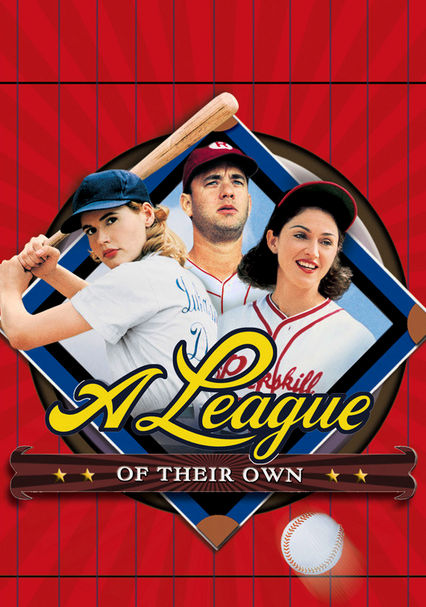
A League of Their Own-1992
A League of Their Own-1992
Director Penny Marshall
Starring Geena Davis, Tom Hanks
Scott’s Review #970
Reviewed December 18, 2019
Grade: B
Sports films are too often predictable affairs with fairy tale endings. They are also typically male-driven.
A League of Their Own (1992) is warm and sentimental, and while director Penny Marshall plays it way too sweet and safe for my tastes, there is a measure of feminism that is admirable and a bit different.
The cast is well-known and provides professionalism and energy, but the film is little more than mediocre and strikes out towards the end with a far too pretty ending, doing exactly what these genre films normally do.
It’s as if Marshall has a great idea, but then decides not to teeter too far left of center.
Beginning in 1988 (present times), elderly Dottie Hinson attends an opening of the new All-American Girls Professional Baseball League exhibit at the Baseball Hall of Fame.
She reunites with several of her former teammates and friends, prompting a flashback to 1943, when the main story takes place.
With many young men off fighting World War II, the Major League Baseball franchise is at risk. A women’s league is bankrolled, prompting the recruitment of several players and the formation of the Peaches and the Belles. They face off in the World Series to dramatic effect.
The film is nice and welcoming, providing a haven for filmgoers seeking a solid story and a heartwarming sensibility. The lead actors, Tom Hanks and Geena Davis, respectively the team manager and star player, provide strength and do the best they can with the roles given.
During the early 1990s, both were big stars, and while their characters are not romantically linked, their chemistry is zesty.
Hanks as Jimmy is a bit predictable and gruff, at first being little more than a male chauvinist, but eventually coming around to respect the women.
For fans of baseball, the film will be delightful. With enough action scenes on the outdoor diamond to please those fans, one might forget that the teams are made up of women.
The demographic sought after is female, but the sunny settings and standard hot dogs, peanuts, and popcorn result in the film projecting a wholesomeness that should also appeal to men.
The supporting characters are too one-dimensional and cliched. The biggest offenders are the characters of “All the Way” Mae Morabito (Madonna) and Doris Murphy (Rosie O’Donnell).
The pop star, a horrid actress, in my opinion, is written way too cornily, cracking gum and talking tough, while O’Donnell is intended to be her sidekick.
The duo is street-smart and grizzled New Yorkers, but the casting never really works, and the action feels very formulaic, losing its luster very early on.
While Marshall incorporates brief moments of tragedy, one minor character’s husband is killed in action during the war, and all the action is safely in the United States, the war serves as more of a backdrop than a major player.
More common are syrupy scenes between characters who, at first, miscommunicate a misunderstand each other, but then forge a close bond. And do we ever really believe Jimmy will not become the women’s biggest fan?
A League of Their Own (1992) is a decent watch and marginally enjoyable in a fluff way. It provides little edginess and could have provided darker story points than it does.
Instead, it shows a slice of Americana and Apple Pie approach that, while not all bad, is not all good either, feeling limited by its sentimentality.
The film could be much worse and features characters the viewer can root for and cheer on, whether it’s a home run or a safe slide into third base.
This is mainly a result of the stellar cast that Marshall presents.
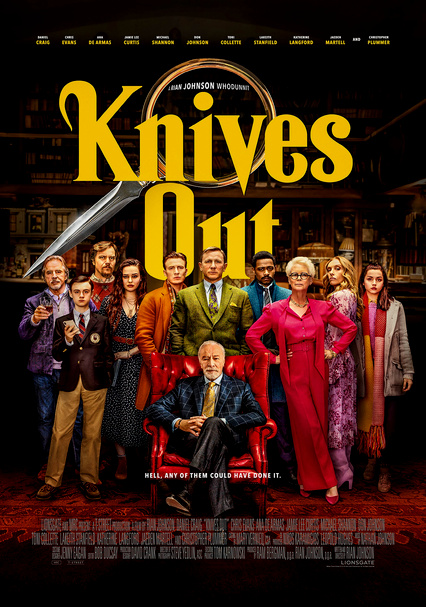
Knives Out-2019
Knives Out-2019
Director Rian Johnson
Starring Ana de Armas, Daniel Craig
Scott’s Review #969
Reviewed December 17, 2019
Grade: B+
Knives Out (2019) is a cleverly constructed whodunit, crafted in a style not dissimilar from the famous board game Clue. This facet is mentioned by one character during a scene in the film.
With a sizable cast of film stars, both young and old (mostly old), the result is a good time, featuring intelligent writing, surprises, and a crowd-pleasing tone. The project is presented by a cast who undoubtedly had a ball during filming.
The point of the film is to try and figure out whodunit and why, in perfect murder mystery form.
It is explained through narration that wealthy crime novelist Harlan Thrombey (Christopher Plummer) has invited his family to flock to his mansion for his eighty-fifth birthday party. The next morning, Harlan’s housekeeper Fran finds him dead, apparently having slit his own throat.
An anonymous figure hires private detective Benoit Blanc (Daniel Craig) to investigate the situation. When Blanc arrives at the grand estate to interrogate family and friends, tidbits of scandal and intrigue slowly emerge as layers are revealed.
The sizable cast features Hollywood stalwarts like Jamie Lee Curtis (Linda, Harlan’s daughter), Don Johnson (Richard, Harlan’s son-in-law, and Linda’s husband), Chris Evans (Ransom, Harlan’s grandson), Michael Shannon (Walt, Harlan’s youngest son), and Toni Collette (Joni, widow of Harlan’s deceased son Neil).
Helpful is how the film takes the time to introduce and explain each prominent character, so that the viewer has a good sense of who’s who and how one character relates to the others before the tangled web unravels.
The delicious aspect of Knives Out is the numerous twists and turns it offers throughout its runtime.
Surprisingly, it was a key revelation exposed quite early on, so that the pacing is more left of center than classic whodunits of days past. Once the new story arc is revealed, the plot thickens further, and we know that more events will ultimately unfold, as the story cannot be this simple.
This successfully kept me engaged as a viewer throughout the entire experience.
Having witnessed the previews at length and the way the trailer presents a Hercule Poirot/Agatha Christie/Jessica Fletcher-type sleuth to solve, it was delightful to see one character snuggling on the couch, absorbed in an episode of the 1980s television series “Murder, She Wrote.”
Director Rian Johnson offers several sly homages to influential tidbits of pop culture that helped shape his film and retain its amusement.
Another momentous positive is the incorporation of a political discussion among the family as they brood and fret over how much money they stand to inherit from their dead patriarch.
Donald J. Trump, a man who catapulted the United States into controversy post-2016, is never mentioned by name. Still, immigration, children in cages, and expletives are carefully hurled about in his honor, so there is no question about the connotations.
Harlan’s caregiver is Marta (Ana de Armas), the heroine of the film and the standout, whose mother is an undocumented immigrant.
So political overtones abound.
Knives Out seamlessly blends dark humor with traditional mystery, ensuring it never loses its edge. The big reveal at the end is neither brilliant nor disappointing. It simply bubbles to the surface after numerous red herrings and lies.
The final sequence is palpable, and savvy viewers will wonder what one character will possibly do next to either please or anger the rest of the characters.
Might a sequel be at hand?
A film not meant to be high art or anything more than an entertaining good time, Knives Out (2019) achieves its intent by offering an experience reminiscent of an Agatha Christie tale that is fun for the audience.
The benefits are reaped, as the film received an enormous box office return. Thanks in large part to a talented cast, a gloomy mansion, and wealthy individuals faced with peril and comeuppance, these elements make for a wonderful recipe for a good, solid mystery.
Oscar Nominations: Best Original Screenplay
127 Hours-2010
127 Hours-2010
Director Danny Boyle
Starring James Franco
Scott’s Review #967

Reviewed December 13, 2019
Grade: A
A biography of epic proportions, 127 Hours (2010) provides a stunning account of one man’s journey and near-tragic fate.
If not for his resolve and determination, this would surely have been the result.
Director Danny Boyle casts the charismatic James Franco in the role of the hiker who was forced to amputate his arm after being pinned by a rock.
The effective title gives a non-stop active feel, a five-day in-life production if you will, and a pulsating ninety minutes of crafty filmmaking.
The film opens with the eerie story of an excited mountaineer, Aron Ralston (Franco), who prepares to embark on a long-awaited adventure.
The time is April 2003.
His goal is to enjoy a few days of hiking, reveling in the freedom the fresh Utah air offers him. Somewhat of a daredevil, he happily anticipates adventure as he begins his journey.
He meets two attractive young women, Kristi (Kate Mara) and Megan (Amber Tamblyn), and the trio swims in an underground pool before going their separate ways.
Had 127 Hours been a horror film, there would be a sense of suspicion or dread surrounding the female hikers, but the scene is enchanting and pure innocence.
Once again on his own, Aron suddenly slips and falls, knocking over a boulder that crushes his right hand and wrist against the wall. He calls for help but realizes that he is alone.
Aron begins recording a video diary and reflects on his past, for example, forgetting to leave a note about his whereabouts as he becomes more and more desperate to escape.
Most of 127 Hours is set within a state of claustrophobic peril in the tiny walls of the rocks that Ralston is trapped between. The film quickly becomes an emotional and personal experience as the camera is focused on Franco, mostly in close-up.
At times the shots are too close for comfort, but this is a necessary way for the viewer to experience events the way that Aron did; the style is tremendously effective.
At the risk of diminishing the amazing direction, editing, and cinematography offered, the film belongs to Franco.
As Aron faces peril, growing frantic with each passing hour, but trying to remain calm and focused, Franco does a tremendous job of balancing and revealing the proper emotions.
He whimsically recounts memories while forbidding himself to lose sight of escape, rationing what little food and water he has.
The gruesome amputation scene is gory and powerful and may necessitate closing one’s eyes.
The remaining elements come together perfectly. The editing, cinematography, and pacing of the story are all spot-on. The musical soundtrack is key to the film’s pacing.
At first energetic and excitable, the music slowly becomes darker and more subdued, while at the end it is low-key.
Aron is thankful to be alive as he walks a lonely walk to help as the film concludes.
Since the real-life figure is still very much alive, the historical accuracy of the experience is preserved, as confirmed by the hero. He only showed Kristi and Megan basic climbing moves, and they never swam together, but the remainder is a brilliant documentary-style film experience.
The real Ralston himself, along with his wife and son, make cameo appearances at the end of the film, providing good authenticity.
127 Hours (2010) scores big, creating an experience that is breathtaking, disturbing, and real. Inspiration will be given to each viewer, and a lesson in endurance and perseverance will resonate in their own life.
The film deservedly received Oscar nominations for Best Picture, Best Actor, Best Adapted Screenplay, Best Original Score, Best Original Song, and Best Film Editing, but sadly came up empty-handed.
Oscar Nominations: Best Picture, Best Actor-James Franco, Best Adapted Screenplay, Best Original Score, Best Original Song-“If I Rise”, Best Film Editing
Independent Spirit Award Nominations: 1 win-Best Feature, Best Director-Danny Boyle, Best Male Lead-James Franco (won)
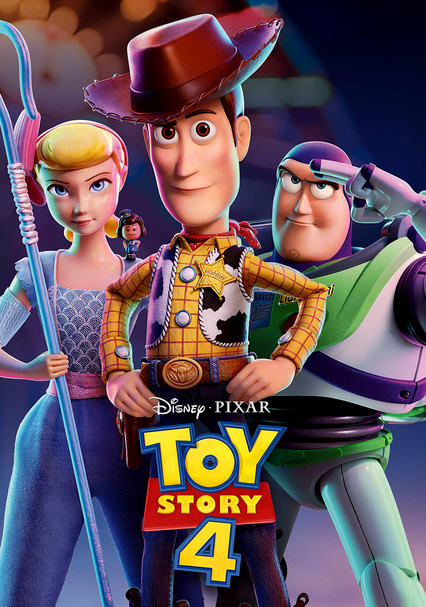
Toy Story 4-2019
Toy Story 4-2019
Director Josh Cooley
Voices: Tom Hanks, Tim Allen, Annie Potts
Scott’s Review #966
Reviewed December 10, 2019
Grade: B
Toy Story 4 (2019) is the fourth installment in the Pixar/Disney-produced Toy Story series, now nearly twenty-five years old!
The glitter is beginning to fade on a once-endearing franchise, and hopefully, this is the last one- additional segments are not needed unless desperation develops.
After a slow start and too many retread moments, the film shows bombast and familiar heart and tenderness in the finale, presumably wrapping up the long story with a neat bow.
The animation is vivid and colorful, almost astounding, and makes up for an otherwise unnecessary story.
In a flashback sequence, nine years after Toy Story 2, Bo Peep (Annie Potts) is donated to a new owner, and Woody (Tom Hanks) begrudgingly decides to maintain his loyalty to the owner, Andy.
Years later, and now a teenager, Andy donates a forgotten Woody to a young child named Bonnie, who lacks the affection for the toy that Andy had. When Bonnie makes and bonds with Forky, a toy made of plastic, Woody struggles to convince Forky that each is more than garbage.
When Bonnie and her parents embark on a summer road trip to an amusement park, Woody and other familiar faces are along for the ride.
The group meets other forgotten toys, some benevolent and some sinister, at the park and a nearby antique store. Woody’s dear friend and comic relief, Buzz (voiced by Tim Allen), is in the mix and helps all the toys realize that they are not forgotten and that they can still bring joy to children.
The film provides an unwieldy list of celebrities in major and minor roles. The incorporation of characters like Chairol Burnett, Bitey White, and Carl Reineroceros (voiced naturally by Carol Burnett, Betty White, and Carl Reiner) may not be necessary.
Still, it’s fun to watch the credits roll and see who’s who from the cast.
The minor characters are little more than window dressing, but the creativity is admirable.
The main story of abandonment, loyalty, and discarding of one’s toys is ample and pleasant, but has occurred in every segment thus far in the series.
Do we need to see this again? Yes, it is an essential message for both children and adults, but why not simply watch the first three installments of Toy Story, each brilliant in their own right?
Toy Story 4 plays by the numbers with little surprises.
One glaring notice is how almost every single adult is either incompetent or played for laughs.
I understand that the main draw is the toys and outsmarting the adults is half the fun, but when Bonnie’s father assumes his navigation system is on the fritz, rather than catching on to the fact that one of the toys is voicing the system, one must shake one’s head.
Suspension of disbelief is increasingly required in these types of films.
Toy Story 4 picks up steam in the final twenty minutes with a thrilling adventure through the amusement park and a cute romance between Woody and Bo Peep.
When the long-forgotten toy Gabby Gabby (Christina Hendricks) emotionally rescues a lost child, she is rejuvenated and breathes new life into both the child’s life and her own.
In a darling moment, Forky meets another creation named Knifey. Knifey suffers from the same existential crisis as Forky once did, and Forky immediately becomes smitten with her, both realizing that even though they are odd-looking, they still matter.
The nice lesson learned is that even toys from the 1960s and 1970s can provide warmth and comfort to a young child and are more than “of their time”.
This is a clear and bold message that resonates with human beings and acknowledges that advanced age does not come with an expiration date.
Everyone matters and brings importance. The underlying theme is heartwarming and central to the film, bringing it above mediocrity.
What should certainly be the final chapter in a tired franchise that continues to trudge along, the bright message and strong animations remain, but the film feels like a retread.
Given that Toy Story 3 was released in 2010, Toy Story 4 (2019) needs to bring the series to a conclusion before installments 5, 6, 7, or 8 result in a dead-on-arrival sequel.
Oscar Nominations: 1 win-Best Animated Feature Film (won), Best Original Song-“I Can’t Let You Throw Yourself Away”
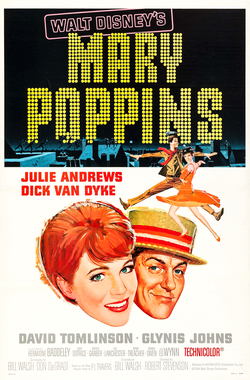
Mary Poppins-1964
Mary Poppins-1964
Director Robert Stevenson
Starring Julie Andrews, Dick Van Dyke
Scott’s Review #965
Reviewed December 9, 2019
Grade: A-
Mary Poppins (1964) is a lovely Walt Disney production that shines with zest and an ample supply of good, cheery tunes. A family affair, it will hardly disappoint, with sing-alongs and enchanting stories for miles.
It’s tough to knock a film that has it all, but it sometimes borders on sickeningly sweet wholesomeness with too much schmaltz mixed in.
This can easily be forgiven because of the robust music, dazzling visual effects, and perfect casting, which make the film enjoyable entertainment for all.
The Banks family resides in London, England. The foursome consists of George and Winifred Banks, along with children Jane and Michael. They live a comfortable and happy upper-middle-class existence.
When their nanny quits after the children run away to chase a kite, the panicked George requests a stern, no-nonsense nanny, while the children (now returned home) desire a kind, sweet one.
Through magic, a young nanny (Julie Andrews) descends from the sky using her umbrella.
Mary Poppins teaches the children to enjoy chores through tunes with the help of a kindly chimney sweep, Bert (Dick Van Dyke).
Mary Poppins cheerily takes the children on several adventures, teaching them valuable lessons. The drama involves light situations such as the irritable George threatening to fire the nanny because she is too cheerful or a mini-scandal at the bank where George works.
These side stories are trivial and non-threatening since the film is really about the antics of the magically odd nanny and her relationship with the children.
The film is unique because it combines live-action with animation and is magical and inventive.
This is most evident during sequences that feature animals, especially the superb scene where Mary Poppins transports Bert, Jane, and Michael into a picture where they ride a carousel and stroll the day away.
The appearance of horses and a fox makes the scene beautifully crafted and filled with joy.
The casting could be no different and is flawless across the board. Standouts are Andrews and Van Dyke, the former appearing in her very first film role.
Not to be usurped by her most iconic role as Maria in the following year’s brilliant The Sound of Music (1965), Andrews possesses a benevolent and delightful spirit that works perfectly in the role, to say nothing of her powerful voice.
Van Dyke, as the romantic interest, is equally well-cast, and together the chemistry is easy and apparent.
Mary Poppins was met with critical acclaim when it was released, when Disney ruled the roost and musicals were a dime a dozen.
It received thirteen Academy Award nominations, including Best Picture—a record for any film released by Walt Disney Studios—and won five: Best Actress for Andrews, Best Film Editing, Best Original Music Score, Best Visual Effects, and Best Original Song for “Chim Chim Cher-ee.”
This was quite a feat as the film was up against My Fair Lady (1964), which won the biggest prize.
Rated G and a box-office success, Mary Poppins (1964) is a legendary Walt Disney film that uses creative techniques and musical numbers to develop a finely finished product.
The song standouts are “A Spoonful of Sugar”, “Chim Chim Cher-ee”, and “Supercalifragilisticexpialidocious”, as each offers candy for the ears and immeasurable fun.
The classic songs and the cohesive sentimentality make this one easy to enjoy with repeated viewings.
Oscar Nominations: 5 wins-Best Picture, Best Director-Robert Stevenson, Best Actress-Julie Andrews (won), Best Screenplay Based on Material from Another Medium, Best Song-“Chim Chim Cher-ee” (won), Best Music Score-Substantially Original (won), Best Scoring of Music-Adaptation or Treatment, Best Sound, Best Art Direction, Color, Best Cinematography, Color, Best Costume Design, Color, Best Film Editing (won), Best Special Visual Effects (won)
Golden Globe Nominations: 1 win-Best Motion Picture-Musical or Comedy, Best Performance by an Actor in a Leading Role-Musical or Comedy-Dick Van Dyke, Best Performance by an Actress in a Leading Role-Musical or Comedy-Julie Andrews (won), Best Original Score-Motion Picture
A Beautiful Day in the Neighborhood-2019
A Beautiful Day in the Neighborhood-2019
Director Marielle Heller
Starring Matthew Rhys, Tom Hanks
Scott’s Review #964

Reviewed December 6, 2019
Grade: A
Any viewer seeking a weepy affair should look no further than A Beautiful Day in the Neighborhood (2019). The film is sentimental, without ever feeling sappy or overwrought; instead, it abounds with freshness and authenticity.
Tom Hanks is brilliant as the iconic children’s television personality, and Matthew Rhys holds his own, delivering a fantastic performance as an angry journalist tasked with writing a magazine article about the legend.
The film is heartwarming and teary with a poignant and inspirational message, and in 2019, we could all use a little Mister Rogers in our lives.
The film is set in 1998, and on the outs with his father, Jerry (Chris Cooper), Lloyd Vogel (Rhys) works as a writer for Esquire magazine.
Both attend Lloyd’s sister’s wedding, where the two men come to blows over past disputes, ruining the wedding reception and reigniting their feud.
Lloyd’s wife, Andrea, serves as a mediator when their newborn son becomes an interesting link between father and son. When Lloyd meets with Mister Rogers (Hanks), he is at first skeptical of the man’s benevolence, but the two men slowly develop a strong bond, forging a deep friendship.
Director Marielle Heller drew acclaim for her recent film, Can You Ever Forgive Me? (2018), a project about a grizzled New York writer.
Once again, her lead character is a dark and troubled writer, but with enough humanity bubbling under the surface to make the character likable. The contrast between the two main characters (Lloyd and Mister Rogers) is palpable and central to the story, making it intriguing and successful.
Her message is a strong lesson in humanity.
The setup is tremendous for anyone who has a clue to the unconditional kindness that Mister Rogers embodies. He not only adores children but also all of humanity, and, as referenced, he is particularly drawn to those who are wounded or broken.
The legend sees the goodness in all human beings and focuses on everyone he speaks with rather than on himself. What a wonderful message of patience, goodness, and empathy Heller carves from start to finish.
No surprise, Rogers teaches Lloyd to accept and forgive Jerry. During a thrilling scene, Lloyd lashes out at his father, reminding him that when he was bedding other women, his wife (Lloyd’s mother) lay riddled with cancer, not dying in peace, but screaming with agony.
The irony is that Jerry is now at death’s door, attempting to make amends with Lloyd before he dies. Both men are wounded and damaged, but because of Mister Rogers’ kindness, they come to an understanding. The message is lovely and kind.
I was surprised at how emotionally fulfilling the film turned out to be. Mister Rogers cares, and one can easily slip into a fantasy that, as he sits and holds a conversation with Lloyd, gazing whimsically and thoughtfully into his eyes, he is staring into our very own eyes.
I sure did, and what a powerful emotion that conjures. When Mister Rogers asks to take a moment of silence to think about the people who have shaped our lives, there is no doubt that each member of the movie theater audience did just that.
Hanks is a godsend and ideally suited for the role. Known to be a kindly humanitarian himself, he easily slips into the role of Mister Rogers and imitates the mannerisms perfectly. Especially impressive is when Danny, a puppet bear, appears on screen.
Savvy viewers will realize that Rogers channels his childhood through this character and the pain he felt as an overweight child.
Hanks is a tremendous actor, winning Oscars for Philadelphia (1993) and Forrest Gump (1994), so we have every confidence in his ability to craft a new character so well.
A Beautiful Day in the Neighborhood (2019) wins the year’s award for evoking the most emotion from viewers. The familiar “Mister Rogers’ Neighborhood” tune evokes memories and adds a level of sentiment to a heartwarming film.
Instead of crafting a sterile or preachy film, Heller delivers a simple message of kindness and understanding, along with a valuable lesson in accepting people as they are.
Oscar Nominations: Best Supporting Actor-Tom Hanks
Shoplifters-2018
Shoplifters-2018
Director Hirokazu Kore-eda
Starring Lily Franky, Sakura Ando
Scott’s Review #962

Reviewed November 26, 2019
Grade: A-
Shoplifters (2018) is a fabulous Japanese offering directed, written, and edited by Hirokazu Kore-Eda. The film is slow-moving and understated, but it provides a moving and poignant message about family, by blood or not, and the robust ties that bind individuals compassionately and emotionally.
The film is character-driven and humanistic, offering sentiment and emotion without ever feeling overwrought or manipulative. It is not to be missed.
A dysfunctional group of outsiders lives together in a dingy basement establishment in Tokyo, Japan. They escape their poverty by shoplifting and embarking on mild adventures to pass the time. They share a deep bond and look out for each other.
The audience assumes they are family, which they are, but not in the biological sense. The family rescues an abused young girl and takes her into their home, showering her with love and affection.
Eventually, trouble comes when one of them is caught shoplifting, which leads to a domino effect of terrible events.
The group consists of Osamu (Lily Franky), a day laborer forced to leave his job after twisting his ankle; his “wife” Nobuyo (Sakura Ando), who works for industrial laundry service; Aki (Mayu Matsuoka), who works at a hostess club; Shota (Kairi Jo), a young boy; and Hatsue (Kirin Kiki), an elderly woman who owns the home and supports the group with her deceased husband’s pension.
The film showcases most of the characters equally as they work, drink, and hang out together. The abused girl, named Yuri, is given a haircut and renamed Lin and is central to the plot. Nobuyo and Shota take a shine to her. She teaches Lin that parents who love their children hug them and do not hit them, while Shota teaches her the ins and outs of stealing groceries.
Though the watch is slow, the audience inevitably falls in love with the characters, and the connection becomes powerful before the viewer knows it. We know Osamu and Nobuyo should leave Yuri where she is when they see her unattended and shivering on a cold balcony, but they cannot help themselves.
Their actions immediately make the audience realize that they are good, kind people who have been handed bad life circumstances to deal with.
The film is a strict watch and will never be defined as edge-of-your-seat. Many scenes involve characters walking around the streets, almost aimlessly, commenting that the weather is cold or other trivial conversational bits.
The scenes could be described as dull or bleak, but eventually, something magical happens, the characters become favorites, and the viewer is immersed in their world unflinchingly.
The character of Yuri is a tough one to observe. With bruises on her arms and a burn from a hot iron, tearful is the imagining of the terror the little girl has already been through at the hands of blood relatives, especially since her parents assume she has run off and are thrilled she is out of their lives.
The conclusion of the film is cold and harsh, hitting home that the justice system is flawed and cruel, as Yuri ultimately is returned to her parents, sure to face more abuse and eventual death. Doesn’t child abuse usually turn out like this?
Director Kore-eda could have spun a feel-good story with the family parading onto the beach in the sunshine, but he chooses not to. We wonder how Yuri’s life might have turned out under better circumstances and had the courts not gotten involved.
Kore-eda instead paints a stark picture of reality, not the fictional happily-ever-after films too often rush to craft.
Shoplifters (2018) offers a look at humanity at its best and its worst with a story about joy and pain. The film is quiet and careful and ultimately keeps one in its grips. It sticks with the viewer and makes one question what a family is and what it is defined as in the court of law.
Who decides who is family and who is not? The film will make one ponder many things, which is a treasured quality of good cinema.
Oscar Nominations: Best Foreign Language Film
Independent Spirit Award Nominations: Best International Film
The Magnificent Seven-1960
The Magnificent Seven-1960
Director John Sturges
Starring Yul Brynner, Eli Wallach, Steve McQueen
Scott’s Review #961

Reviewed November 22, 2019
Grade: B-
The Magnificent Seven (1960) is a Western in the classic sense that will satisfy fans of the genre. It features Hollywood stars of the day in heroic roles that give an aura of nationalism and conservative Americana.
Other than an outstanding musical score, a pleasant romance, and some male bonding, the film feels quite dated, with racial overtones that probably were not as irritating in the 1960s as they are now.
The film is a remake of the 1954 Japanese film Seven Samurai.
The bullied residents of a small Mexican village decide to hire seven American gunslingers to defeat a gang of bandits led by Calvera (Eli Wallach), who terrorizes the villagers regularly.
The Gunslingers are led by Chris Adams (Yul Brynner) and feature Vin (Steve McQueen), Bernardo (Charles Bronson), Lee (Robert Vaughn), Harry (Brad Dexter), Britt (James Coburn), and Chico (Horst Buchholz).
Each is distinctive in some way- Lee is a veteran while Vin is a drifter, and so on.
The musical score is to be praised for its high energy and adventurous timing, especially during key scenes.
The introduction of the seven gunslingers is fun and popular for the Western genre, especially in television series of the time. This was a treat for audiences because most cast members were handsome, leading men.
The music also infuses the film with charisma and is perfect for the genre.
A romance between the hot-blooded Chico and the gorgeous Mexican girl Petra also works. An unlikely pairing, the couple has resounding chemistry and a West Side Story-style connection.
Not supposed to be attracted to one another or hardly soul mates, the two blessedly share a happily-ever-after roll-up as the entire film does.
Westerns in the 1960s were meant to be crowd-pleasing and not especially daring. Chico and Petra are a nice addition and provide a bit of diversity.
Brynner and McQueen’s swagger is filled with machismo that might be annoying in a different film, but it works in The Magnificent Seven.
They both look great, are clearly in their prime, and are well suited for a feature meant to satisfy the tastes of men and make the women swoon.
They prance around on their horses, looking serious, calm, and confident. However, the film’s target demographic is men and not teenage girls.
The overarching story is irritating. The viewer is supposed to believe that the Mexican men are so incompetent that they do not even know how to shoot a gun or how to defend themselves.
This seems to be a gimmick and a pro-American stance more than a reality. The gunslingers swoop in and take complete control, showing the Mexicans how real men fight. It’s silly and trite and a prominent plot device.
It isn’t very kind, but standard for the genre.
The film meanders, and the viewer becomes restless in the middle because of the thirst for the inevitable climactic finale. Finally, we are treated to the battle between good and evil, where much blood is spilled, and even a few gunslingers are slain.
Laughable is how the characters die on cue but still look great while dying. The finale is marginally satisfying but predictable in its outcome.
Made when the Western was a popular genre and a box office success, the film feels dated and unnecessary decades later.
Featuring big stars of the day, this is not surprising, and better genre films with more grit were soon to be on the way; think The Wild Bunch (1967), and they are superior to The Magnificent Seven (1960).
Oscar Nominations: Best Music Score of a Dramatic or Comedy Picture
Golden Globe Nominations: New Star of the Year-Actor-Robert Vaughn
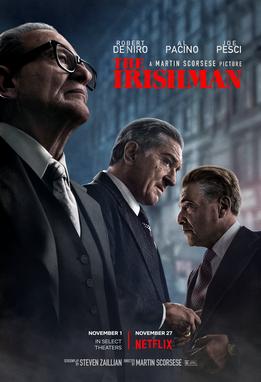
The Irishman-2019
The Irishman-2019
Director Martin Scorsese
Starring Robert De Niro, Al Pacino, Joe Pesci
Scott’s Review #960
Reviewed November 20, 2019
Grade: A
Any film created by legendary director Martin Scorsese is sure to impress legions of adoring followers and most critics.
Every project he touches results in something fantastic, and it’s easy to revel in, with good analysis and discussion about the movie moments after the closing credits have rolled.
The Irishman (2019) is a film that demands repeated viewings and thoughtful consideration to appreciate the rich and diverse cast of characters fully.
The picture may not be on the same level as Goodfellas (1990) or The Godfather (1972), which it seems patterned after, but the work is awe-inspiring and should stand the test of time, resulting in a fine wine analogy.
The years will likely be kind to the film and enrich the experience- it’s that kind of film.
With stars like Robert De Niro, Al Pacino, Joe Pesci, and Harvey Keitel on board, the viewer expects a plethora of riches, and that is precisely what is delivered.
The film spans the period from the 1950s to the 1970s.
It follows the life of Frank Sheeran (De Niro), a truck driver who becomes a hitman and becomes involved with mobster Russell Bufalino (Pesci) and his crime family, including his time working for the powerful Teamster Jimmy Hoffa (Pacino). Sheeran is dubbed “the Irishman”.
He narrates much of the story, now quite elderly and residing in a nursing home, of his time in the mafia and the mystery surrounding the death of Hoffa.
The only negatives to the film are the suspension of disbelief that De Niro is Irish – was there ever a more quintessential Italian New Yorker? However, this film is directed by Scorsese and produced by De Niro, so they could tell me the sky is green, and I would readily nod in agreement.
At three hours and twenty-nine minutes, the film is a long haul, and towards the middle, the film meanders a bit. Perhaps twenty or thirty minutes could have been sliced to the cutting room floor.
The rest of the experience The Irishman serves up is brilliance, with rich characters and a fantastic atmosphere. Have I mentioned that Scorsese directed this film? The cast of characters is endless and drips with zest, speaking volumes for what The Godfather did with casting.
Many recognizable actors appear in minor roles, like Ray Romano as attorney Bill Bufalino, Bobby Cannavale as “Skinny Razor”, and Anna Paquin as Frank’s estranged daughter, Peggy.
An endless supply of character actors fleshes out the remaining cast.
Excellent is the plethora of food references that would impress notable food director Alfred Hitchcock, known for incorporating meals into many of his scenes. The delectable early scenes, when Frank delivers meat to grocers and gets into a discussion with a gangster over a good steak, will leave viewers mouth-watering for a tender sirloin.
The conversations between characters are interesting, slowly building and adding robust grit to a packed film. They engage in good, thoughtful dialogue exchanges and discuss life and experiences matter-of-factly.
Characters are given a chance to develop and grow, and even minor characters, such as a nurse or a wife, add a comforting aura. It is evident what treasured films look like when a director can create and develop without outside interference.
The standouts in the acting department are Pacino and De Niro, the former of whom I’m crossing my fingers will receive an Oscar nomination.
The pairing is flawless, and eagle-eyed fans will recall that both actors appeared together in The Godfather Part II (1974) yet never shared a scene.
In The Irishman, they appear together in pivotal scenes. Pacino infuses Hoffa with humor and poise, as only Pacino can, in a character. He is my favorite character and is tough to look away from.
Both actors, along with Pesci, are treated to a recent marvel in cinema —the de-aging process. Each actor, well into his seventies, is transformed to appear in his mid-forties in many scenes and then aged to appear elderly later in life.
While each has a strange, unnatural look as a younger man, the process is impressive and an innovative technique that will surely become more common in film, subsequently offering limitless possibilities.
The Irishman (2019) is a cinematic gem by a storied director advancing in years, but still offering grandiose films. With stalwarts like De Niro, Pesci, and Pacino, the players are well cast, and nuanced touches add dimensions to the finished product.
Offering a gangster film with grace and style, the story is poignant and crisp, and a thoughtful approach to one of the legendary mysteries- what happened to Jimmy Hoffa?
Oscar Nominations: Best Picture, Best Director-Martin Scorsese, Best Supporting Actor-Al Pacino, Joe Pesci, Best Adapted Screenplay, Best Production Design, Best Cinematography, Best Costume Design, Best Film Editing, Best Visual Effects
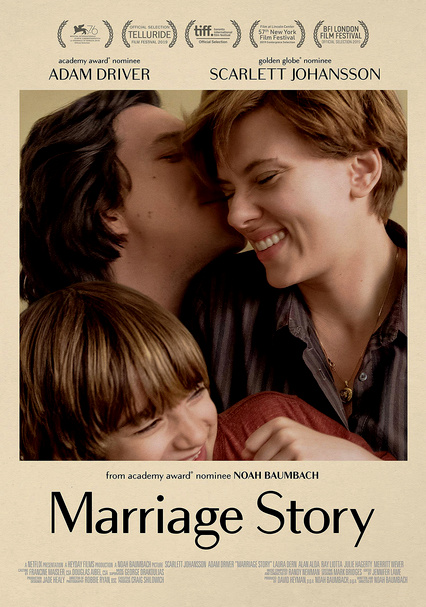
Marriage Story-2019
Marriage Story-2019
Director Noah Baumbach
Starring Adam Driver, Scarlett Johansson
Scott’s Review #959
Reviewed November 14, 2019
Grade: A
Marriage Story (2019) is a film that could have been generic, melodramatic, or contrived. Before its release, it was described as an excellent” version of Kramer vs. Kramer (1979) or Terms of Endearment (1983).
Those are excellent films, but marginally sappy and overwrought. Marriage Story excels at being a brilliant, powerful, and realistic portrayal of a marriage disintegrating, painting a picture of how good people can turn ugly under certain circumstances.
Believe the hype of how good this film is.
Taking place in both New York City and Los Angeles, we meet Charlie and Nicole Barber (Adam Driver and Scarlett Johansson), a theater director and his wife, an actress who stars in his plays.
They fill notebook paper with what they love most about each other, and the list is lengthy.
Appearing to be madly in love, the audience soon realizes that the couple is amid an amicable separation, the writings a result of an assignment by a “separations counselor”, hired to make things easier.
Charlie and Nicole share an eight-year-old son named Henry. Nicole returns to Los Angeles to resume her acting career and spend time with her mother (Julie Hagerty) and sister (Merritt Wever). Adam, successful in New York City, plans to stay and reside with his son.
Nicole hires a tough lawyer, Nora (Laura Dern), while Charlie begrudgingly hires semi-retired attorney Bert Spitz (Alan Alda), and later Jay (Ray Liotta). Nicole and Charlie are sensible, planning to work things out on their own, only needing representation for formalities, or so they think.
The situation escalates, spinning out of control as their divorce becomes increasingly hostile, as custody of their young son ups the ante. Qualities they once loved about each other become hate-filled arguments as the couple fights and feuds, as their attorneys scramble for a leg up.
Can the couple save themselves as secrets bubble to the surface, and situations be used against each other?
The film is a lengthy two hours and sixteen minutes, so the plot takes time to capture its viewer. When it eventually takes hold, it never lets go, forcefully enrapturing the watcher.
We care for both Charlie and Nicole, and while sympathizing with each other at different times, both characters are written as benevolent.
There is no villain except the divorce itself.
The key to success is in the writing. Director, Noah Baumbach, known for The Squid and the Whale (2005), and Frances Ha (2012) knows how to craft witty and clever dialogue, weaving comedy and drama intricately together.
He can make the viewer laugh and cry within the same scene.
The screenplay is the best part of the film because it is laden with crackling words and interesting situations.
Marriage Story reminds me of a Woody Allen film. Feeling improvised, unsure if any of the dialogue is, the characters speak lengthy soliloquies and engage in endless chatter with each other or themselves.
This results in a powerful medium of self-expression and a “talkie” movie.
The banter between characters is not drivel nor gibberish but contains significant, emotionally rich meaning and flavor.
The film belongs to Driver and Johansson, each delivering a home run. Driver is the stronger of the two, but not by much, and this is only because his emotional scenes feel rawer than hers do.
When the actors engage in a knock-down, drag-out fight, the scene is lengthy and exceptionally well-acted, with each taking turns verbally attacking the other. Vicious rage and emotional fury come to the forefront.
This is the best scene in the film.
Dern, Alda, and Liotta are terrific, bringing respect to the film. Each has been on the Hollywood scene for a long time, and each plays an attorney. While Dern’s and Liotta’s characters are sharks, Alda is a reasonable and realistic older man who has seen it all.
Burt lays down the facts for Charlie, making him realize how much is at stake. Dern shines as the sexy blonde attorney who wears revealing clothes and legs for miles. Grizzled Liotta plans to win at all costs. What a delight to see these veterans bring electricity to each scene.
Lastly, I adore the bi-coastal locales of New York City and Los Angeles. The big cities burst with meaning and are as different as day and night, as the film explains.
Charlie is a New Yorker, and Nicole is a California girl at heart. The numerous scenes shot on location in both cities lend the film richness and texture.
With Marriage Story (2019), Baumbach creates his best and most personal film. Rumored to be partly autobiographical, he takes a subject matter that most assume has already been exhausted and spins the story in a different direction, making it feel fresh.
The aspects all come together in an experience that is emotional, powerful, and intelligent. The film is a treasure and a shining example to young filmmakers that good writing always prevails.
Oscar Nominations: 1 win-Best Picture, Best Actor-Adam Driver, Best Actress-Scarlett Johansson, Best Supporting Actress-Laura Dern (won), Best Original Screenplay, Best Original Score
Independent Spirit Award Nominations: 2 wins-Best Feature, Best Screenplay (won), Robert Altman Award (won)
Midsommar-2019
Midsommar-2019
Director Ari Aster
Starring Florence Pugh, Jack Reynor
Scott’s Review #957

Reviewed November 11, 2019
Grade: B+
Director Ari Aster made a splash with his feature-length directorial debut, the horror-drama film Hereditary, in 2018. The film received enormous accolades, even considered for an Oscar nomination, and was quite bizarre and horrific.
Aster follows up with Midsommar (2019), a film that is arguably even freakier and more ambitious.
The film is slow-moving and foreboding, but it ultimately reaches a macabre and perplexing climax. My initial reaction is that the film is a fine wine with additional richness upon subsequent viewings.
The film quickly gets off to a creepy start in the United States as college student Dani Ardor (Florence Pugh) receives a cryptic email from her troubled sister. Her sister soon kills herself and her parents by filling the house with carbon monoxide fumes.
Dani is devastated and needs support from her distant boyfriend, Christian (Jack Reynor), an anthropology student. The couple continues to feel increasingly disconnected from each other as the months pass.
Dani and Christian decide to join some friends at a midsummer festival in a remote Swedish village. One friend has relatives in the town, and another chooses to work on his thesis.
What begins as a carefree holiday takes a devious turn when the villagers invite the group to partake in festivities that grow increasingly unnerving and viscerally disturbing.
Strange events begin to occur as the subsequent series of celebrations gets underway.
Any horror film that mixes pagan cults, folklore, and religion easily provides the creeps, and Midsommar successfully hybridizes American culture with Swedish culture in frightening form.
Much of the film takes place in a remote area, with sprawling sunny lands and a deathly silent atmosphere.
The cheery locale has a peculiar California vibe, and Swedish women often adorn their hair with hairstyles reminiscent of the Charles Manson era.
Uncertain is whether this was Aster’s intent or not.
I love how the students are intelligent and worldly, using their time in the village to learn and study. The traditional horror stereotype involving high school or college students is their desire to guzzle beer, party, have sex, and do little else.
Aster wisely makes his group intellectual and more studious than the norm. The students do partake in drugs, but this has more to do with the villagers having healing remedies and other sorts of herbal delicacies.
Midsommar contains many lengthy nude scenes, both male and female, the actors readily baring both their fronts and their rears. This is almost unheard of in American film, but Midsommar is a co-production between the United States and Sweden, providing more leeway in the nudity department.
When Christian is given a strong psychedelic and beds a virginal villager eager to mate, the poor chap winds up chased around the village in the buff. This occurs after he inseminates the girl as they are surrounded by nude female villagers cheering them on.
Confusing and left unclear are the motivations of the villagers. The point is made that nine human sacrifices must be made to rid the village of evil, but why is the evil there to begin with?
During a ritual, it is revealed, in gruesome form, that those elderly folks commit suicide at age seventy-two, and their names are given to newborns.
The handsome Christian is a prime candidate to provide life, but why are the others killed? Were they lured intentionally, and does their being American have anything to do with it? Was the intent all along to crown Dani May Queen, or did she win the dancing competition?
The climax of the film ties back to the beginning portion only in terms of Dani’s and Christian’s relationship, and her family’s deaths seem to have little to do with the overall narrative. Does Dani intend revenge on Christian, or is she so drugged that she is unaware of her actions? Will she remain in the village?
A film heavily influenced by The Wicker Man (1973), Midsommar (2019) has divided audiences, with common reviews offering mixed opinions. Some despise the film, calling it one of the worst ever seen.
Others herald it as a work of art, an unsettling offering that provokes thought and provides a sinister feel.
I found an enormous number of questions left unanswered, and this may be a good thing. It only makes me want to see the film again or peel back the onion post-film to dissect the many layers Aster creates.
Independent Spirit Award Nominations: Best Cinematography
Dawn of the Dead-2004
Dawn of the Dead-2004
Director Zack Snyder
Starring Sarah Polley
Scott’s Review #956
Reviewed November 8, 2019
Grade: C+
Dawn of the Dead (2004) is a remake of the original horror-comedy-satire film by legendary George Romero.
What the original provided in intrigue and concept is lacking in the much bloodier remake- the freshness is not there.
The film was made pre-television phenomenon The Walking Dead, but watching it now, with the zombie obsession in a steady decline, it feels tired and dated.
The film feels patterned after the successful and fresh 28 Days Later (2002).
Now set in Wisconsin (the original was in Pittsburgh, Pennsylvania), Ana (Sarah Polley) returns from a shift at the local hospital, where she works as a nurse.
She soon learns that massive bulletins alert to a sudden zombie plague, where former human beings have turned into cannibalistic corpses.
Her husband a victim, Ana joins a small group of survivors at the local shopping mall and attempts to stay alive while being encircled by the creatures and other not-so-nice people.
The main group includes a grizzled police sergeant, Kenneth (Ving Rhames); electronics salesman Michael; petty criminal Andre and his pregnant wife, Luda; and three guards, C.J., Bart, and Terry.
They are later joined by others who arrive via delivery truck.
The large group befriends another survivor, Andy, who is stranded in his gun store across the zombie-infested parking lot.
The rest of the film off the characters one by one in traditional horror style, while the remaining few try to figure out an escape route.
The main problem with Dawn of the Dead is that the characters are poorly written, making them one-note, not particularly interesting, and quite stereotypical.
Examples of this are the angry and defiant guards, who make trouble for the rest of the group for no other reason than to serve as a weak plot device to create drama beyond the zombies.
Kenneth is an angry cop, a lone-wolf type of character who frequently postures and preaches. Again, there is no interesting reason behind his personality.
Finally, Steve is an oversexed playboy who keeps recordings of his sexual shenanigans for repeated viewings.
The character meant to root for is Ana. We sympathize with her for her husband’s gruesome death and her struggle to stay alive, so she is the film’s hero. Her character is likable, and Polley is a worthy actress, but I wonder if a name star would have been better in this circumstance.
Polley did not last long in Hollywood, acting anyway, which only makes the film feel more dated than it already does. Many viewers will not know who the actress is.
Another irritant is the decision to make the zombies move faster. Part of the beauty of the zombies is that they are slow and brooding, unable to think, just existing in a mummy-like haze.
Suddenly, they are fast, making them harder to escape. This attempt at a modern approach, by changing too much, does not work.
Dawn of the Dead is not all dour.
Props must be given to the mall setting, updated for 2004 shopping inclusiveness. Trendy and timely stores are added, and it feels like a mall of its time. This is one aspect of the film that works and feels interesting.
Eagle-eyed viewers may spot some of their favorite stores from this decade.
The strongest part of an otherwise mediocre film is the brilliant incorporation of the heavy-metal band Disturbed’s aggressive song “Down with the Sickness” from 1999.
The song is incorporated over the stylistic end credits, and a summary of what happens to the survivors is provided over the lyrically brutal song.
Unfortunately, it is at the very end of the film where it finally hits a home run.
Since this is a remake, it is impossible not to compare it to the 1978 version in many ways.
The characters in the original had more salt, and a romance added a bit of complexity. The original also felt fun, whereas the 2004 version seems hardened and angry.
The originality that made the original fresh is lacking in this retread, limiting the unique social context and thought-provoking nature it contained.
With little reason to watch Dawn of the Dead (2004), unless it was still 2004, the original 1978 Romero version is far superior. A fun tip might be to watch them in sequence to notice differences in style and pacing, and for general comparison’s sake.
The final musical score is a win, but much of the rest is dull and dated.
Jojo Rabbit-2019
Jojo Rabbit-2019
Director Taika Waititi
Starring Roman Griffin Davis, Scarlett Johansson
Scott’s Review #955
Reviewed November 6, 2019
Grade: A
Jojo Rabbit (2019) is, quite simply, a satire.
This type of film, and this style of filmmaking, is not intended for all palates. The subject of Nazis and Adolf Hitler will hit too close to home for some viewers, especially considering this film is being classified as a comedy, albeit a dark one.
With this risk in mind, the film has a fabulous message, is quirky, well-acted, and a marvelous piece of work. But it is a gradual, acquired taste, and not everyone will leave theaters feeling satisfied. I sure did.
Director Taika Waititi, a Jewish man, is careful to toe the line with his story, teetering close to the edge, but never going too far overboard.
He is careful not to offend those who may have close ties to World War II, the horrific events that took place, or disrespect the scars that remain.
Instead, he teaches a lesson of acceptance, humanity, and pathos. A laugh one moment leads to tragedy and tears the next, making Jojo Rabbit quite the robust emotional experience.
The time is the 1940s, setting Germany, as Roman Griffin Davis portrays the title character, a Hitler Youth who finds out his mother (Scarlett Johansson) is hiding a Jewish girl, Elsa (Thomasin McKenzie), in their attic.
Energetic and excitable, he joins a training camp where he is unable to kill a defenseless rabbit, earning him his new nickname. Jojo slowly comes to question his beliefs while dealing with the intervention of his imaginary friend, an idiotic version of Adolf Hitler (Waititi).
He eventually forges a close bond with Elsa.
As the film begins, it immediately reminds me of Wes Anderson’s distinctive storytelling style. Think The Royal Tenenbaums (2001) or Moonrise Kingdom (2012).
With quick editing and fast-paced monotone dialogue, the characters initially appear silly and trite, yet offer witty responses to unusual situations. As the relationships deepen, the audience comes to fall in love with them.
Davis is an outstanding child actor and the heart of the film.
Johansson’s Rosie, the mother, is secretly anti-Nazi. She’s got flair, pizzazz, and a good pair of shoes. She states that to dance is to be alive, offering Jojo words of wisdom. They come upon a few dangling bodies perched in the center of town for all to see.
They have been caught aiding Jewish people and are a deadly symbol to present. Rosie tells Jojo not to look away, for these people did what little they could.
This scene is a poignant one.
Captain Klenzendorf (Sam Rockwell), a Nazi captain who oversees the youth camp, initially appears to be a buffoon and a one-dimensional character. He deepens as not just his patriotism, but his sexuality is called into question.
The LGBTQ angle is implied, but only lightly touched upon, so that the point remains vague and mysterious.
The Captain stands very close by his second-in-command, Finkel, and a scene at the pool will make many wonder about the proper relationship between the men.
Finally, Yorki, Jojo’s best friend, is just adorable, providing sweetness and genuine quality that is undeniably benevolent. McKenzie, as the frightened yet strong Elsa, is courageous to a fault. Stubborn and inflexible, she softens to Jojo as they get to know each other.
Her mysterious boyfriend, Nathan, never seen on-screen, plays a prominent role and is a key to the relationship between her and Jojo. The characters are an integral part of the film.
Made in 2019, a volatile time on planet earth, and especially in the United States, the film breathes fresh air into the world of inclusion and acceptance. Much of this is slowly revealed as events transpire to a crescendo.
As the war ends, several lives are forever changed, some for the better, others tragically, but each is connected to the others, enriching their respective lives.
Waititi celebrates the gifts, joys, and heartbreaks of life.
Jojo Rabbit (2019) is a film that prompts the viewer to think critically and challenges them to reconcile innocence and evil. Despite the subject matter, the film is neither cold nor harsh, and it does not disrespect history.
Incorporated are death and tragedy, mixed with learning and strong relationships.
The film is a great experience and an essential find among many routines and mainstream projects. Jojo Rabbit perks up the cinema, and hopefully the viewer, with a beautiful message.
Oscar Nominations: 1 win-Best Picture, Best Supporting Actress-Scarlett Johansson, Best Adapted Screenplay (won), Best Production Design, Best Costume Design, Best Film Editing