Tag Archives: Louis Garrel

Ma Mère-2005

Ma Mère-2005

Director Christophe Honoré

Starring Isabelle Huppert, Louis Garrel

Scott’s Review #1,103

Reviewed January 21, 2021

Grade: A

Brilliant French film actress Isabelle Huppert turns in another outstanding performance in Ma Mère (2005).

The film is a daring and sometimes shocking experience, met with mostly derision by fans and critics alike. The subject matter is hard for the weak of heart to take, understand, or even endure.

The taboo nature of incest is what the film is about, but also the dark and far reaches of the human psyche and emotion—a heavy and ingenious film, in which the filmmakers dare to go.

I found it brilliant.

Fun fact Ma Mère was rated NC-17 when it was released in the United States. The reason was “strong and aberrant sexual content”.

Despite the sexual fetishism, there is NO drug use.

Huppert plays a recently widowed and sexually adventurous woman named Hélène. She is visited by her young and restless son, Pierre (Garrel), just before his father’s death, when he plans to reside with his parents on their lavish island villa.

Instead of mourning the loss of her husband, Hélène boasts about her infidelities to Pierre as he copes by masturbating to and then urinating on his father’s pornographic magazines.

Ma Mère is not a happy film, but quite intriguing. Of course, the film is French, which automatically gives it a sense of style and sophistication that writer/director Christophe Honoré uses to dazzle the audience.

If the film were American, it would not work at all. The characters need to be European.

An intense attraction develops between mother and son when Pierre struts around the villa naked and broods.

Instead of acting on her impulses, Hélène encourages her uninhibited sex partner Réa (Joana Preiss) to have sex with Pierre.

They do so at a popular shopping and nightlife complex. Hélène looks on longingly as the partially clothed couple makes love in public, with passersby raising no objections.

Hélène appears to be turned on.

Things get stranger when Hélène afterward includes her son in an orgy with her friends. After the orgy, Hélène decides that she must leave her son to travel.

While saying goodbye to Pierre, she implies that something taboo has happened between them and that she must leave to prevent it from happening again.

We are left unsure of what she means.

Hélène’s motivations are unclear, or is she simply a good poker player? Does she feel bad about her attraction to her son, or does she secretly revel in it?

There is a ton of masturbation and jealousy in this film. There is also a hefty dose of sadomasochism and such talk. It’s for the extremely adult viewer.

Ma Mère leaves the viewer pondering many questions throughout its runtime. Is Hélène a lesbian or just sexually promiscuous? What is the back story with her husband? Do they happily cheat on each other, or what is their arrangement?

I completely get why people wouldn’t be enamored with Ma Mère. It’s a tough watch, though I find myself laughing and wondering if those skeptics are mostly prudes.

I found myself absorbed by the machinations of the characters, especially Pierre and Hélène, and chomping at the bit to figure out what would eventually happen to them.

Spoiler alert- the film does not end happily.

A criticism hurled at Ma Mère is why we should care about the characters. There is nobody to root for. While mother and child partake in orgies and other sexual dalliances, it’s not as if Hélène exactly takes advantage of the boy, nor is he especially likable.

I deem the film fascinating.

For a weird trip inside the minds of sexual deviants and those who love the joy of sex and sexuality, Ma Mère (2005) is a delightful experience.

It’s also creepy shit.

The ending is dire and dreary, making the viewer think long after the film ends. And that is what provocative films do. And so do great films.

Anyone who thinks they have a mommy complex will soon be cured.

Isabelle Huppert does it again.
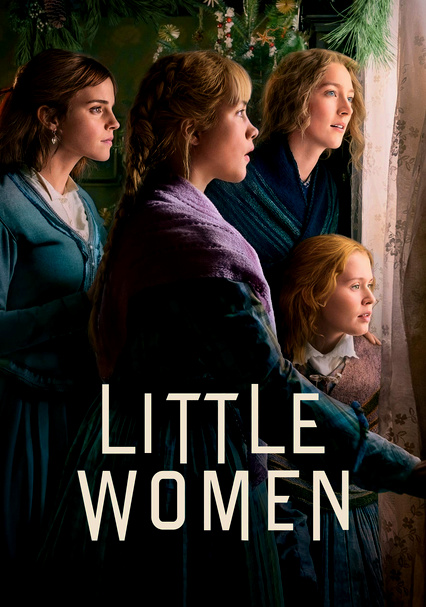
Little Women-2019

Little Women-2019

Director Greta Gerwig

Starring Saoirse Ronan, Florence Pugh

Scott’s Review #982

Reviewed January 21, 2020

Grade: A-

Numerous adaptations of the 1860s classic novel by Louisa May Alcott have been forged upon the silver screen, some good and some not as good.

The consensus is that Little Women (2019) is one of the better offerings, if not the best.

Director Greta Gerwig crafts a clear feminist, progressive version of the trials and tribulations of the March family, led by the spirited, spitfire Jo (Saoirse Ronan). Gerwig’s telling is fantastic, breathing fresh life into a classic story.

The story fluctuates heavily between 1868 and 1861, spanning both the United States Civil War and its aftermath.

Liberal, the Marches reside in Massachusetts, led by matriarch Marmee (Laura Dern), who mainly lives life while their patriarch, Father March (Bob Odenkirk), is off at war. The rest of the household includes sisters Jo, Meg (Emily Watson), Amy (Florence Pugh), and the youngest daughter, Beth (Eliza Scanlen).

The family endures joy, hardship, romance, love, and death as they navigate the decade.

The focal point is Jo, a determined young lady, who moves to New York City, frequently reflecting on her life through back-and-forth sequences.

She begins, as an aspiring writer, and as she grows up, eventually becomes a success, having her novel published boldly. She resists the tried and true and questions why a woman must rely on a man for success rather than her efforts and talents.

During the story, she is pursued by two young men, Laurie (Timothee Chalamet) and Friedrich (Louis Garrel).

Little Women is a fantastic and emotional story and a film that has no need for CGI, car chases, explosions, or any ingredients meant to enliven a film. It does not need them.

The excitement is in the plot, as we thirst for more of the ups and downs that the March family faces. With any successful drama, there are nuanced characters, each taking a turn at a story.

While Jo is the headliner, Amy, Meg, and Beth are much more than opening acts. They each have their own lives, dreams, triumphs, and hardships, and the audience cares about each of them.

To capitalize on this point, the casting is dynamite. In a small, but brilliant role, Meryl Streep gives a bombast to her character of Aunt March, the wealthy widow who owns a gorgeous house and vacations in Paris.

She is cranky, but wise, only wanting the very best for her nieces, which is, of course, to marry rich!

Ronan is well-cast and charismatic as Jo, the actress who loses her Irish accent for an American one. She utilizes her acting skills to imbue Jo with determination and just enough empathy to win over the audience.

Gerwig assures that the audience is reminded of the times and what it meant to be female during the 1860s, with a minimal chance at self-achievement, having to rely on a man for nearly everything.

She is in no way demeaning or ridiculing the male gender, though. She paints no villains in her film, instead showing men as supportive at times, enamored at other times, but never exerting their power over women.

Little Women receives a minor demerit in the pacing department. The film sharply shifts back and forth, in a too rapid manner, from period to period, at times leaving the viewer unclear as to which section of the film they are in.

Blessedly, this ceases about midway through, but the technique is jarring and unnecessary. One wonders what the action was intended to achieve and why a more straightforward approach to storytelling was not used.

A key facet of any outstanding film is the emotional reaction, and Little Women had this viewer with tears streaming down his face. Sometimes for joy, sometimes for sadness, all in an organic way given oomph by a powerful musical score that resonates but never overwhelms.

The film is one in which all its elements come together in perfect harmony.

The film received six nominations, including Best Picture, Best Actress (Ronan), Best Supporting Actress (Pugh), and Best Adapted Screenplay. Sadly, and in a never-ending slight for female directors, Gerwig was overlooked.

Before the 2019 film adaptation of Little Women, the novel had been adapted for film six times, with the most successful versions being in 1933 and 1949.

Seventy years later, the most modern version is arguably the best, with a left-leaning stance that is oh so necessary in modern times.

Oscar Nominations: 1 win- Best Picture, Best Actress- Saoirse Ronan, Best Supporting Actress- Florence Pugh, Best Adapted Screenplay, Best Original Score, Best Costume Design (won)

At Eternity’s Gate-2018

At Eternity’s Gate-2018

Director Julian Schnabel

Starring Willem Dafoe

Scott’s Review #944

Reviewed October 9, 2019

Grade: B+

At Eternity’s Gate (2018) is a journey into the mind of one of the most tortured painters- Vincent van Gogh.

The film focuses only on the final years of the artist’s life and the events leading up to his death. Inventive direction by visionary Julian Schnabel creates an isolated and majestic world amid a feeling of being inside Van Gogh’s mind.

Though slow-moving, Willem Dafoe performs brilliantly, eliciting pathos from its viewers.

It is 1888, and Van Gogh is traveling to Paris to meet his good friend and fellow painter, Paul Gauguin (Oscar Isaac), an equally tortured individual. They share ideas and qualms about Paris life, and Gauguin convinces Van Gogh to travel to the south of France, while his brother Theo (Rupert Friend) resides in Paris.

Fluctuating scenes occur of Van Gogh’s relationship with a prostitute, a woman he meets on a country road and obsesses over, and his complex relationships with both Theo and Gauguin.

Dafoe, a legendary actor recognized for this role with an Oscar nomination for Best Actor, is one of the best components of At Eternity’s Gate.

He engulfs Van Gogh with a constant state of emotional exhaustion and dissatisfaction. As he becomes attached to Gauguin, who leaves him, Dafoe so eloquently emits his quiet depression, seeming to have nobody left. As he violently chops off his ear as a show of loyalty to Gauguin, the mental hospital awaits him.

Dafoe carries all these complex emotions with calm grace and dignity.

Schnabel, known chiefly for his groundbreaking Oscar-nominated work on The Diving Bell and the Butterfly (2007), has a beautiful technique. He provides even the darkest scenes with a lovely and sometimes dizzying camera effect and frequently adds scenes of blurred focus with close-ups of his characters.

As a painter himself, the result is a magical interpretation of colors and framed scenes. Many of his films focus on real-life studies, and the director made a great choice in Van Gogh.

The French landscape is lovely and culturally significant to the experience. The busy and robust Parisian lifestyle juxtaposes nicely against scenes of the lavish countryside, presumably north and south of the City of Light.

When Van Gogh quietly sits and paints numerous canvases of still objects—a bush or a tree—the flavorful colors stand out against the landscape and are bursting with natural beauty.

The cinematography is excellent.

The main detraction to At Eternity’s Gate is its slow or snail-paced pace. Although the film is only one hour and fifty-three minutes, it feels much longer.

Viewing the film on an international flight may or may not have influenced this note, but the story seems to drag on endlessly, though the beautiful aspects outweigh the boring scenes.

The mental health aspect and the encouragement Van Gogh receives to get better and heal seem a bit too modern a method for the late nineteenth century.

This may have been incorporated as an add-on to current and relevant issues to be exposed, but while inspiring, it does not seem to fit the film. This is a slight criticism I noticed.

Bordering on the art film genre, At Eternity’s Gate (2018) is a sad depiction of a disturbed man’s lonely existence creating art that would not be recognized as a genius until after his death.

It is a slow film that uses gorgeous camera shots and lovely snippets of Vincent van Gogh’s works to seem poetic.

The film is not for everyone and is not a mainstream Hollywood experience, but it is a quiet biography of one of the greats.

Oscar Nominations: Best Actor- Willem Dafoe