Tag Archives: Judy Garland

The Wizard of Oz-1939

The Wizard of Oz-1939

Director Victor Fleming

Starring Judy Garland, Ray Bolger, Frank Morgan

Top 250 Films #33

Scott’s Review #34

70039535

Reviewed June 17, 2014

Grade: A

The Wizard of Oz is a magical film and one of my all-time favorites. Made in 1939, it still holds up amazingly well, and the nuances continue to be admired, especially given the period in which it was made. 1939 and Gone With the Wind belong to this film, as both were and are true classics.

This film is so deeply embedded in people’s minds that it can be challenging to examine it objectively. I fondly recall watching this gem annually as it aired on television each holiday season—traditionally around Thanksgiving if memory serves.

It’s a marvel from start to finish and masterfully artistic. How creative to show the first portion in black and white with dusty muted colors, not to mention the astounding twister sequence- done using a stocking.

Then, we are introduced to a magical world filled with luscious colors and the mind-blowing depth of art direction. Munchkin-land, Glinda the Good Witch, and Emerald City are beautiful, lavish, and treat.

Who does not become teary-eyed during Judy Garland’s rendition of “Somewhere Over the Rainbow”? The poignancy is given by the tragic (yet successful) life the star would lead.

Margaret Hamilton’s performance as the Wicked Witch/Elmira Gulch is deliciously nasty. She almost sneers at the camera as she mocks Dorothy, who whimpers in tears while missing Auntie Em. One can tell she thoroughly enjoyed this role.

And The Wizard of Oz is not simply a pop culture hit- it has merit and creativity. The special effects hold up tremendously well and were simplistic back then. There was no CGI in those days, but it was, in many ways, better than today’s CGI.

Audiences of all ages must see this film at least once, preferably on Blu-Ray. Judy Garland, later a tragic, troubled, and lost figure, captures an innocence that has been sadly lost through the years.

The characters (The Cowardly Lion, Scarecrow, and Tin Man) are perfectly cast and uniquely created without being too over-the-top.

Very few films are timeless, and this is one of them.

Oscar Nominations: 1 win-Outstanding Production, Best Song-“Over the Rainbow” (won), Best Art Direction, Best Special Effects
Meet Me in St. Louis-1944

Meet Me in St. Louis-1944

Director Vincente Minnelli 

Starring Judy Garland, Margaret O’Brien

Top 250 Films #83

Scott’s Review #845

Reviewed December 19, 2018

Grade: A

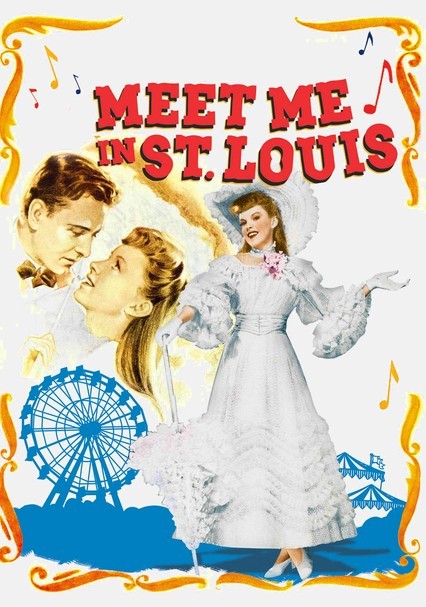
With talents such as Vincente Minnelli and Judy Garland involved in a project, it is tough for the results not to be resounding, and this is the case with Meet Me in St. Louis (1944), a treasured musical with enough songs and melodrama to last a lifetime.

The film is a lively and earnest achievement from both stars when each was at their prime. It is rich in flavor and contains a myriad of good touches.

Meet Me in St. Louis is an ensemble piece featuring many actors, but the film belongs to Garland for the musical numbers alone. The film is groundbreaking and sets the tone for the slew of MGM musicals to follow during the 1950s and 1960s.

The film is considered one of the greatest and most memorable musicals of all time, and I share this sentiment.

The story revolves around the upper-middle-class Smith family, set in 1903, St. Louis. In its lovely form, the film has been composed of seasonal vignettes for over a year.

Trials and tribulations erupt, especially involving the romantic entanglements of eldest sisters Rose (Lucille Bremer) and Esther (Garland), as well as the possibility of the family relocating to New York City.

Rose and Esther are two of the siblings, along with the Smith parents, Grandpa, and Katie, the maid.

The household is filled with glee, music, and heartbreak.

The film’s setup is a considerable success, eliciting a warm sensation. As the title card reads, “Summer 1903,” we are welcomed into a sunny and picturesque street, set against the backdrop of St. Louis, which is perfectly midwestern.

The Smith home is showcased, and the viewer is welcomed into the idyllic world of a bonded family.

Meet Me in St. Louis feels homespun and like a good best friend. It can be watched and re-watched often, regardless of the season, as it features a summer fair, a spooky Halloween sequence, and a dazzling Christmastime segment.

Other than Esther, the most memorable and fascinating character is Tootie (Margaret O’Brien). O’Brien gives a startlingly good performance and packs an emotional wallop, enriching a character arguably interpreted as obsessed with death with some needed humor.

She buries her dolls on a dare and throws flour in a man’s face on Halloween, thereby “killing” him.

Her most significant scene, though, occurs during a meltdown when Tootie destroys her beloved snowmen on the family lawn. The actress portrays such rage and despair during this scene that it is easy to forget, at the time, how young she was.

She was honored with an honorary Oscar for her efforts.

The musical numbers by Garland are absolute treasures. Highlights include “The Trolley Song,” performed as Esther rides the afternoon trolley across town, hoping that the boy next door with whom she is madly in love, John (Tom Drake), will be on the same trolley.

The gorgeously performed number “Have Yourself A Merry Little Christmas” is my favorite. Following a lavish Christmas Eve ball, Esther sings the song to Tootie, and nestled within its lyrics are emotions such as hope and sadness.

Meet Me in St. Louis (1944) is a film that has it all and can be enjoyed by audiences of all ages. With memorable musical numbers, romance, drama, and a wholesome, timeless sensibility, it is a favorite that deserves to be revisited.

Like the finest wines, this film improves with age.

Oscar Nominations: Best Screenplay, Best Scoring of a Musical Picture, Best Song-“The Trolley Song”, Best Cinematography, Color

Judy-2019

Judy-2019

Director Rupert Goold

Starring Renee Zellweger

Scott’s Review #946

Reviewed October 14, 2019

Grade: A

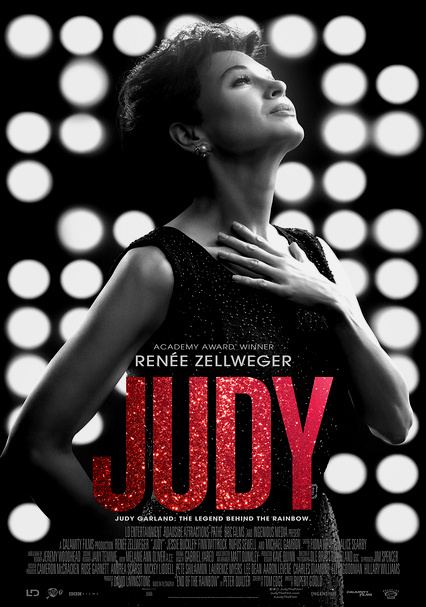
Creating a film about an iconic figure like Judy Garland is undoubtedly a challenging task. Casting the role is even tougher.

Both points come together with perfect symmetry as director Rupert Goold provides Judy (2019) with heart, hope, and a sense of sadness. Rene Zellweger is astounding in the title role as she embodies the character.

The film is excellent and an accurate telling of the real-life person.

The period is 1967, and we meet the adult Judy Garland (Zellwegger) well after midnight, having performed with her two young children in tow. Haggard, they are informed by the Los Angeles hotel staff that their room has been given up due to non-payment.

The American singer and actress is broke due to bad marriages, drugs, and alcohol. The star is forced to return to her ex-husband for shelter—the two quarrel about the children.

The film does not focus solely on the late 1960s and the final years of Garland’s life, but also delves back to her debut as Dorothy in The Wizard of Oz (1939).

The pressures put upon the aspiring actress to perform, lose weight, and maintain her energy are shown in savage fury, so that the audience realizes how the young girl has turned into a boozy, unreliable middle-aged woman.

Hollywood ruined her innocence.

Zellweger is beyond brilliant. Having disappeared from the spotlight for several years, the actress is back with a vengeance, having something to prove. Prove she does as she becomes Judy Garland.

From her small but expressive eyes to her nervous movements and pursed lips, she delivers a flawless performance and has been rewarded with praise across the board.

It is a remarkable portrayal that should be remembered in history.

Much of the film takes place in London as Garland is forced, for financial reasons, to agree to a series of concerts to bring in cash. This necessitates leaving her children behind.

A poignant scene unfolds in a phone booth as Judy reaches the heartbreaking conclusion that her children would prefer the stability of living with their father. Though she understands, the star crumbles in sadness and loneliness.

A treat is the showcasing of Garland’s compassion for others deemed outcasts, as she also was. Gravitating towards gay men, she spots one gay couple in the audience night after night and befriends them as they eagerly await her exit from the theater one night.

She suggests dinner, and the dumbfounded couple clumsily searches for a restaurant open that late, finally offering to make her scrambled eggs at their flat.

Things go awry, but it hardly matters in a heartfelt scene that exposes the prejudices same-sex couples faced as recently as the 1960s and the champion Garland was to the LGBTQ community.

The iconic “Over the Rainbow” is featured late in the film and perfectly placed. Judy ends her touring engagement due to hecklers but returns for a final night on stage, where she asks to perform one last song.

She breaks down while singing “Over the Rainbow,” but recovers with the encouragement of supportive fans and can complete the performance.

Judy asks, “You won’t forget me, will you?” She does not live long thereafter and dies in the summer of 1969. The scene is painful, and not a dry eye is left in the house.

Judy (2019) is a wonderful tribute to the life and times of a Hollywood legend. The film is neither a complete downer nor cheerful.

What the filmmakers do is make it clear that Garland always had hope for a better life and for the happiness that eluded her. She was kind to most and loved her children beyond measure.

Zellweger will likely eat up a plethora of awards throughout the season, as she should.

Oscar Nominations: 1 win-Best Actress-Renee Zellweger (won), Best Makeup and Hairstyling

Independent Spirit Award Nominations: 1 win-Best Female Lead-Renee Zellweger (won)

A Star is Born-1954

A Star is Born-1954

Director George Cukor

Starring Judy Garland, James Mason

Scott’s Review #175

995474

Reviewed September 25, 2014

Grade: B+

A Star Is Born (1954) was considered Judy Garland’s much-touted comeback film and was very expensive for Warner Bros. to produce.

Garland delivers her finest career performance, even better than her portrayal of Dorothy in The Wizard of Oz (1939). The performance is multi-faceted, complex, comical, silly, poised, emotional, dramatic, and heartfelt.

Playing Esther Blodgett- later changed to Vicki Lester for more Hollywood potential, she is a struggling lounge singer who meets a successful actor named Norman Maine, played wonderfully by James Mason.

Esther saves Norman from public humiliation at a function where he attempts to take the stage while inebriated.  They strike up a friendship, and he convinces her to pursue films. However, through a series of misunderstandings, she assumes he has ditched her.

Determined to become a star anyway, Esther forges her path to success. They reconnect, and Norman recognizes her talent and pursues her professionally and romantically. They marry, and she becomes a star while his career hits the skids, mainly due to his alcoholism.

The talented Mason and Garland are at the forefront of the film and are the reasons for its success.

A few key scenes stand out to me as powerful or essential- The scene involving a musical number over a dinner of sandwiches in their posh living room is wonderfully merry and light; a delivery boy who does not know who Norman is ruins the mood and causes jealousy to come to a head in his marriage to Esther.

Garland’s emotional scenes are excellent, especially in her dressing room, where she crumbles when she realizes Mason has hit rock bottom.

The best scene is the Academy Awards scene, where a drunken Norman causes a public spectacle as Esther receives her top honor, spoiling her night and accidentally hitting her in the face in front of millions.

What a forgiving woman Esther is for staying with him and ultimately choosing him at the risk of ruining her career.

An interesting aspect of the story is that Garland’s character is not some ugly duckling transformed into Hollywood royalty—she already has the talent. She needs a break but is not down on her luck or starving. She makes a decent living with a touring band and is torn about leaving them.

The musical numbers are inspiring and one is reminded why Garland is such a star as she belts them out of the park like nobody’s business, however, they do little to further the plot.

The film sometimes drags a bit, as is often the case in the first half, but the second half (post-intermission) is brilliant, and the ending is tragic yet heartwarming.

Will Esther’s career continue to flourish?

A major flaw with the film is the usage of still frames with dialogue overlapping due to lost footage. This makes following the story very tough, and the continuity is affected. It also looks ridiculous, and for the viewer to be captured by the story and only view a discolored still shot with audio is disappointing.

Indeed, this can be corrected.

A Star Is Born (1954) is the perfect vehicle for Garland to return to her grand position among the Hollywood treasures.

Oscar Nominations: Best Actor-James Mason, Best Actress-Judy Garland, Best Scoring of a Musical Picture, Best Song-“The Man That Got Away,” Best Art Direction, Color, Best Costume Design, Color