Tag Archives: James McAvoy

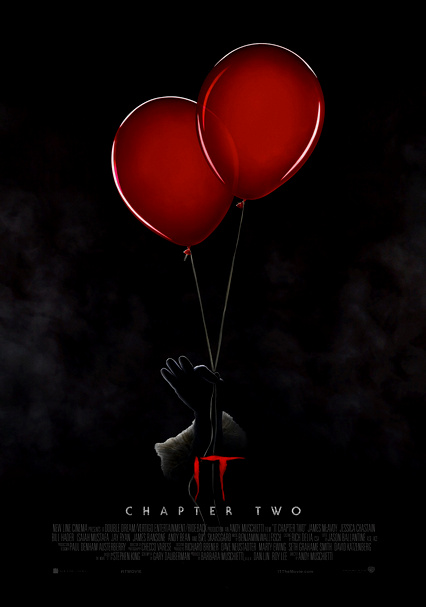
IT: Chapter Two-2019

IT: Chapter Two- 2019

Director Andy Muschietti

Starring James McAvoy, Jessica Chastain, Bill Hader

Scott’s Review #939
Reviewed September 11, 2019

Grade: B+

A companion piece to the first chapter, named It (2017), and an adaptation of the famous and chilling 1986 novel by horror novelist Stephen King, It: Chapter Two (2019) is a successful culmination of the vast story and will please many fans.

A box-office hit mixing straight-ahead horror with the supernatural, and a tad of adventure mixed in, the film is to be appreciated in many ways, though I slightly prefer the first chapter by measure.

Set in the present (2016), twenty-seven years after the first film, the Losers’ Club kids are now nearing middle age, in their forties.

The most prominent characters in the group, Beverly Marsh (Jessica Chastain), Bill Denbrough (James McAvoy), and Richie Tozier (Bill Hader), are summoned by childhood chum Mike Hanlon to return to the sleepy town of Derry, Maine, after a series of murders begins at the summer carnival.

Each of them, except for Mike, has fled the small town and found success in bustling cities, living prosperous lives.

Because of a promise made as kids, the entire group reunites except for Stanley Uris, who chooses to fatally slit his wrists in a bathtub rather than return and face evil Pennywise the Clown (Bill Skarsgard).

The six members wrestle with their demons and past mistakes while Pennywise takes the form of humans and objects to terrorize the group, delivering imagined, frenzied scares. At the same time, they scramble to perform a Native American ritual to destroy the beast.

It isn’t easy to write a successful review of It: Chapter Two as merely a stand-alone film since the two chapters are meant to be one cohesive, long film.

Filmed at the same time, the pacing and continuity make the experience enjoyable. The key is the interspersing of many scenes, a hybrid of childhood and adult sequences, which gives the film a cohesive package.

This style is a treat for viewers who have seen the first chapter two years ago. After the hoopla dies down, patient fans would do well to watch both chapters in sequence in back-to-back sittings for an undoubtedly pleasant experience.

Director Andres Muschietti wisely places focus on the characters so that the film is character-driven rather than plot-driven, a risk with anything in the horror genre.

Each of the six adults resembles the six kids in physical appearance, which makes the story believable. A major strength is the focus on each character individually, both in the present and in the past. Each faces insecurity, guilt, or mistakes, making them complex.

At a running time of two hours and forty-nine minutes, the film has time to explore character and depth.

A nice add-on, and a slight deviation from the King novel, is a modern LGBTQ presence. It is implied (though I admittedly missed this when I saw the film) that Richie (Hader) is either gay or wrestling with his sexuality.

The pivotal final scenes depict Richie’s undying love for his lifelong friend Eddie, as one saves the other’s life only to sacrifice his own. The fact that the love is unrequited or unrealized is both sad and heartbreaking.

The gay-bashing opening sequence of Adrian Mellon and his boyfriend is quite a difficult watch, as is the lack of any comeuppance for their perpetrators, but the scene is faithful to King’s novel.

It is also a jarring reminder that in 2019, small towns are not always the safest place for the LGBTQ community, as far too often, small towns breed small minds.

The film could use more jumps and scares, and it drags a bit in the overall runtime. While the focus on the character is excellent, the final climax and the battle with Pennywise are a slight letdown and feel predictable.

The film isn’t scary in a horror sense, but it has nice special effects and visual razzle-dazzle, especially with Pennywise. The creepy clown is less frightening than in the first chapter, but perhaps that’s because we’ve become more familiar with him.

A treat for eagle-eyed fans is the cameo appearance by legendary author Stephen King. As a cantankerous pawn shop owner, he sells Bill the relic bicycle he had enjoyed in his youth.

For bonus points, Muschietti also includes a scene with filmmaker Peter Bogdanovich, who cameos as the director of the film based on Bill’s novel.

It: Chapter Two (2019) offers good entertainment and will please fans of the horror genre and the famous author, as the film is very faithful to the novel.

As a modern horror experience, the film is a solid win, though not without slight missteps. Superior in depth and character development to most films in the same vein, it is a film to be enjoyed and appreciated.
Atomic Blonde-2017

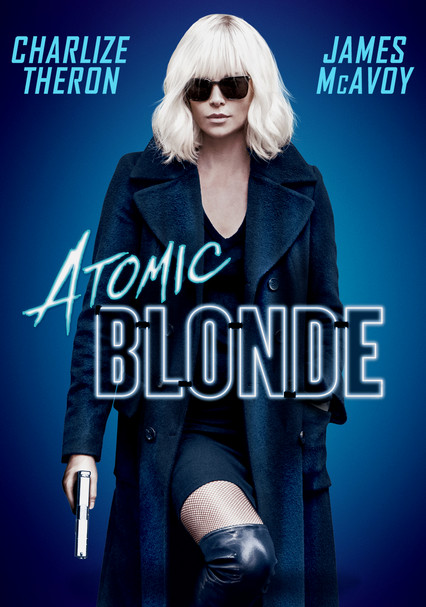
Atomic Blonde-2017

Director David Leitch

Starring Charlize Theron, James McAvoy

Scott’s Review #857

Reviewed January 19, 2019

Grade: B+

Atomic Blonde (2017) is a female-empowering action/spy film directed by David Leitch, a former stuntman. The film plays similarly to James Bond, but with the genders reversed.

The film is visually stylish, featuring dynamic music and cold, crisp location sequences in Europe.

The story isn’t the main appeal and can be hard to follow, but thanks to a great performance by Charlize Theron in the title role, the film is pleasant and recommended for fans of either the spy or action genres.

Based on the 2012 graphic novel The Coldest City, the film is set in Berlin in 1989, and its central theme is the collapse of the Berlin Wall amid a spy story and the Cold War backdrop.

A grizzled female MI6 agent, Lorraine Broughton (Charlize Theron), is quizzed about events that occurred during her recent time spent in the German city investigating the death of a fellow spy.

She recounts her mission via flashbacks and the whereabouts of a mysterious list that reveals the names of MI6 and KGB Russian agents.

Lorraine frequently deals with David Percival (James McAvoy), an odd colleague who may or may not be trustworthy.

The plot and subsequent story are hardly the finer points of Atomic Blonde, and the title—a play on the words “atomic bomb”—is too cute to be taken seriously.

The novice director is a former stuntman, so don’t expect high art or exceptional writing. The biggest issue, besides the plot holes and implausibility, is that it isn’t engaging.

After thirty minutes of trying to ascertain who had “the list,” I gave up and tried not to follow too closely, instead enjoying the film’s other qualities.

Theron is well cast as bleached blonde vixen Lorraine—harsh as nails and badass. With icy eyes and a sneer that makes the most formidable opponents cringe, the actress has the charisma to make the role her own.

The tall and fit woman endures too many fight scenes to count, but her pizzazz and wherewithal make the character believable. Her toned physique is not dissimilar to that of her character in Mad Max: Fury Road (2015).

Bisexual, Lorraine has a brief romantic escapade with Delphine Lasalle (Sofia Boutella), a young French agent, until the woman is murdered.

Any European adventurer can be enamored, logistically speaking, by the exciting locales featured heartily in Atomic Blonde.

Sleek and modern, the photography and cinematography departments do a fantastic job giving the film authenticity and audacity as they reveal the terrific nooks and crannies the best cities offer.

With so many high-speed car chases and a fantastic underwater sequence, London, Paris, and Berlin all get their due.

Atomic Blonde’s feminist overview is worthy of praise. Able to tangle with the best of them, Lorraine takes no prisoners and is determined to battle until the end or until she is too bloody to fight back. She is tough yet sensitive and puts up with no nonsense.

Still, she has a heart, as evidenced by not only the violent death of her girlfriend and her subsequent reaction but also her calm despair at being unable to save a drowning man’s life.

Lorraine’s calm resilience, instead of over-dramatic emotional outrage, makes her a character who has developed well and is a role model for young women everywhere.

McAvoy is cute as a button as David adds comic relief and sly witticisms to many scenes. He often appears shirtless, showing off his lean, muscular physique. As a fan of sexual dalliances, he is both combative and flirtatious with Lorraine, though he never beds her.

A yin to her yang and sparring partners throughout, David is a nice addition to a cast containing mostly serious characters.

The 1980s-themed musical score features nostalgic songs peppered throughout the film, seemingly every few moments.

Atomic Blonde plays like a bold music video with intelligently penned songs, not disposable crap. The inclusion adds a genuine celebration of the decade of decadence crafted thoughtfully.

Tracks such as the masterful “Voices Carry” by ‘Til Tuesday, “London Calling” by The Clash, and “Der Kommissar” by After the Fire are placed perfectly during relevant scenes.

With a ballsy lead character and enough action to fill a nearly two-hour action thriller, Atomic Blonde (2017) is a gift for atmosphere and ambiance. Forget bothering to deep-dive into the complex story too much- it isn’t worth it.

Admittedly, the style-over-substance approach is forgivable because the strengths outweigh the weaknesses.

Atomic Blonde (2017) best serves as a kickback and enjoy-the-ride experience.

Split-2016

Split-2016

Director M. Night Shyamalan

Starring James McAvoy, Anya Taylor-Joy

Scott’s Review #821

Reviewed October 18, 2018

Grade: B-

Split (2016) is the second part of a planned trilogy; the first is Unbreakable (2000), and the third is to debut in 2019.

This point confused me because I did not notice any correlation between the films until the final scene, which was unclear.

Split has its ups and downs, mainly because of James McAvoy’s spectacular performance, the highlight, but the film is sadly riddled with plot holes and nonsense.

I don’t think the film will be remembered for long.

Casey (Joy) is a withdrawn teenage girl with an abusive past at the hands of her uncle, who raised her after her father died. She, along with two other girls, is accosted by a man (McAvoy) who chloroforms them and takes them to a hidden basement.

The girls quickly learn that their abductor is Kevin Wendell Crumb, a man suffering from Dissociative Identity Disorder (DID).

His personalities range from a nine-year-old child to an effeminate artist, a well-dressed woman, and Kevin.

The audience (but not the girls) learns that Kevin is in therapy with Dr. Karen Fletcher (Betty Buckley), an established Philadelphia psychiatrist. Fletcher knows about Kevin’s other personalities, including one called “The Beast.”

She assumes this is a fantasy superhero figure.

Karen slowly pieces together the frightening depth of Kevin’s disorder and must race against time to save the girls.

McAvoy, best known for his outstanding performances in The Last King of Scotland (2006) and Atonement (2007), is also a central figure in the X-Men film franchise (2011-2019). He knocks it out of the park.

What a challenging role (or roles!) for the handsome Scottish actor.  He is as convincing as the stoic, confident Kevin and brings the perfect swagger to “Patricia” and “Dennis.” Finally, he plays nine-year-old “Hedwig” with childhood innocence and insecurities.

McAvoy’s casting is a treat and a success.

How lovely to see film and television stalwart Betty Buckley back in the game with a central film role. The actress is a legend in other genres, not to mention her stage achievements, play after play.

Eagle-eyed horror fans will undoubtedly remember Buckley’s role as the sympathetic gym teacher in Carrie (1976).

In Split, she portrays another benevolent character, concerned for her patient’s well-being, unaware of the sinister sides he keeps hidden. The role is perfect for the warm Buckley.

Written, co-produced, and directed by the acclaimed M. Night Shyamalan, Split is no masterpiece like The Sixth Sense (1999) or even on par with The Village (2004).

Instead, the result is a peculiar, uneven effort; the fascination lies in McAvoy’s twenty-three different personalities, even though we see only four or five of them.

The film misses the numerous backstory scenes of Casey and her uncle hunting in the woods. These scenes slow the action and feel overly long. She was abused and can now handle herself- we get it.

The story could have conveyed this point in one scene.

The relationship between the three girls is okay, but the point about Casey being an outcast and different from the other two girls feels unnecessary and tacked on.

The final scene with Bruce Willis (as Dennis Dunn from Unbreakable) is a nice nod to the previous film, but it’s lost on anyone who hasn’t seen it since it premiered well over a decade ago.

The film should have featured more of a connection between the two stories.

In addition to McAvoy’s impressive performance, a positive is that no male characters are designed to “save the day,” which is still typical of mainstream films.

The film’s heroes are Casey (a teenage girl) and Karen (a woman in her sixties). Despite the story pieces not aligning, Split deserves credit for trying to be a more progressive-minded film.

The film’s result is fair to middling. Split (2016) is not a great effort but a decent watch.

The highlights are McAvoy, a worthy role for veteran Buckley, and some good tension and moments of good peril.

The story is not the highlight, and Shyamalan has made better films.

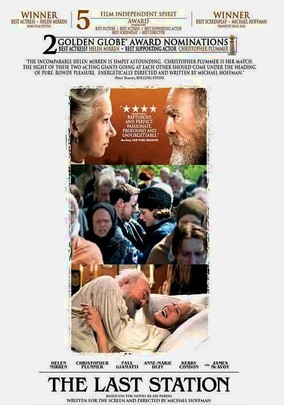
The Last Station-2009

The Last Station-2009

Director Michael Hoffman

Starring Christopher Plummer, Helen Mirren

Scott’s Review #569

Reviewed December 28, 2016

Grade: A-

The Last Station (2009) is a wonderful film.

It contains many worthwhile elements- history, culture, good drama, and great acting.

Starring seasoned veterans such as Christopher Plummer and Helen Mirren, the fantastic acting is as good as it gets.

The film tells the story of the final year in the life of famous Russian author Tolstoy and the relationship he has with his family- specifically his wife, Sofya, and his disciples.

The year is 1910, and Tolstoy is ailing. He has had a stormy yet passionate relationship with his wife for decades, which is explored in the film.

The film’s main point is greed and in-fighting for control of a great literary figure’s legacy and money.

The main strong point of The Last Station is the relationship between Tolstoy and Sofya- both characters are headstrong and opinionated, but also madly in love, which leads to many sessions of battle.

This is a film of substance.

Director Michael Hoffman also mixes some humor with the heavy drama.

In conclusion, you might need to use some hankies.

Oscar Nominations: Best Actress-Helen Mirren, Best Supporting Actor-Christopher Plummer

Independent Spirit Award Nominations: Best Feature, Best Director-Michael Hoffman, Best Female Lead-Helen Mirren, Best Supporting Male-Christopher Plummer, Best Screenplay