Tag Archives: Alexander Skarsgård

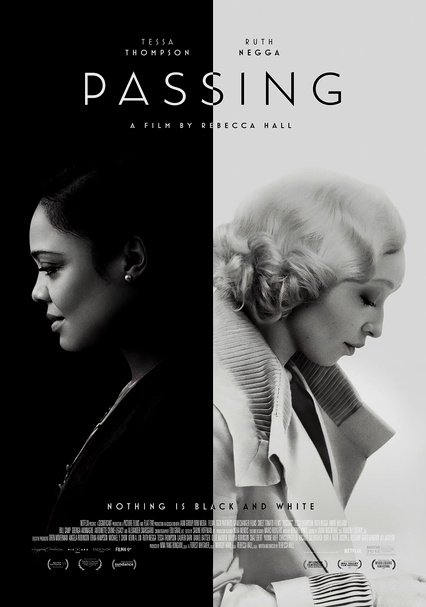
Passing-2021

Passing-2021

Director Rebecca Hall

Starring Tessa Thompson, Ruth Negga

Scott’s Review #1,222

Reviewed January 22, 2022

Grade: A

Passing (2021) is a quiet film brimming with importance. It’s the feature directorial debut of Rebecca Hall, and she hits a home run with a movie pleasing both visually and from a storytelling perspective.

The title of the film equates to the word ‘passing’, referring to three different meanings, as the viewer will need to wait until the end to figure it out.  I was not able to deduce the third meaning until I read the synopsis and was left in a state of shock.

The setting is 1920s New York City, a polished time when status and sophistication meant everything. Unfortunately, despite the liberal-leaning metropolis, racism is still alive and kicking.

The first scene shows a pair of well-dressed ladies entering a store, commenting how thankful they feel that their children have only met ‘colored’ people who are members of their staff. The message is clear that they think anyone of dark skin is a leper.

Passing is a film about race, but so much more.

Tessa Thompson plays Irene Redfield, a well-to-do light-skinned black woman who is married to a successful doctor, Brian (André Holland). They reside in Harlem in a predominantly black neighborhood.

Irene is respected and is also able to walk amongst cultured white people and ‘pass’ for white. She is treated differently when she does.

One day, Irene stops for a sandwich at a posh hotel. She runs into her childhood friend Clare (Ruth Negga), who is also of mixed race. Clare completely passes for white and is married to a successful and handsome banker, John Bellew (Alexander Skarsgård).

He makes no secret of despising black people.

As Irene and Clare reconnect, Clare begins to immerse herself in the black culture and specifically in Irene’s life. She flirts with many black men and grows close to Brian, much to Irene’s chagrin. Irene becomes both jealous and enamored with Clare.

They both risk their established lives as they soul-search for their truths.

Passing is not conventional, and that’s what I admire and love about it. While watching, I never knew what direction the film was going in, and I missed one subtle, yet essential, detail- Irene’s fascination with Clare.

The complex relationship is shaken to the core in a jarring final sequence during a winter party in a luxury apartment.

Hall makes the monumental good decision to film in black and white cinematography, thus making the racial subject and tones all the more powerful.

Visually, this is never more evident than when Clare stands beside a darker-skinned black character. The contrast is astounding and made me believe how everyone would be fooled into thinking she is a white woman.

The story of two cultured black women navigating life in the early twentieth century is compelling enough, but the underlying themes that emerge add depth to the meaning of Passing, layering it with a wealth of emotional complexity.

The film reminds me of the 2002 masterpiece Far from Heaven. Visually brilliant and both offering stories about race, they are also tragic. Nobody ends up happy or fulfilled, and a terminal sense of loss is palpable in each. A tortured, well-manicured central character exists in both films.

Negga has received the lion’s share of praise for playing Clare, but Thompson is also flawless.

Both actresses are brilliant in their portrayals of characters who are very much alike. They strive for perfection but are nonetheless living in fantasy worlds, whether they realize it or not. It’s tough to convey this to audiences, but they do in measured calmness.

The film shows that we all pretend just a little bit and pass it off sometimes, don’t we?

It’s a scary realization.

My standard modus operandi when I review a film is to think whether it stays with me after the credits roll or if it is quickly dismissed from my train of thought.

Passing (2021) has powerfully remained in my mind and caused me to ruminate and peel back the onion more and more in this tremendous and stylistic effort.

Independent Spirit Award Nominations: 2 wins-Best Supporting Female-Ruth Negga (won), Best Cinematography (won)

The Aftermath-2019

The Aftermath-2019

Director James Kent

Starring Keira Knightley, Alexander Skarsgard, Jason Clarke

Scott’s Review #940

Reviewed September 13, 2019

Grade: B-

The Aftermath (2019) is a heavily melodramatic post-World War II period film riddled with cliches and poor plot setups, but is nonetheless a moderately enjoyable experience.

With a marginal romantic triangle in play and good-looking stars, this can only go so far, as predictability soon sets in.

Exquisite to look at, with a bright and lush European ambiance, the picture is easy on the eyes but lacks a good story or surprises. The film will be forgotten before long.

The period is 1945, and the murderous war is still fresh on the minds of all affected, and animosity remains between the English and the Germans.

Rachael Morgan (Knightley) arrives in Hamburg during the bitter winter season to reunite with her British husband, Lewis (Clarke), who is tasked with helping to rebuild the decimated city.

The Morgans reside with a handsome German architect, Stefan (Skarsgard), and his teenage daughter, Freda. Resentment exists between the four since a German-caused explosion killed Morgan’s son.

Both positives and negatives are contained within the film.

The casting of Knightley, Skarsgard, and Clarke brings professionalism and A-list sensibility so that the viewer is keen to be watching a glossy Hollywood affair.

The offering of a robust romantic triangle is not fair to say, since from the moment Rachael and Stefan meet, they can barely take their eyes from one another.

As if this is not enough, the largely absent Lewis leaves plenty of alone time for Stefan and Rachael to watch each other lustfully. Nonetheless, Knightley and Skarsgard share great chemistry.

The time and setting are also well done. The gorgeous German house in which Stefan and his daughter reside feels both grand and cozy, complete with a piano and enough open space to go along perfectly with the snowy and crisp exterior shots.

The coldness mixes with the fresh effects of those ravaged by war. Music is played frequently, and a female servant dutifully waits on all the principals during dinners and desserts, adding classic sophistication to the film.

So, the look of it all is quite lovely.

Despite the elements outlined above, the story is a real weak point of The Aftermath. It is riddled with cliché after cliché and seems to want to take a page out of every war romance imaginable. Rachael at first loathes Stefan simply for being German, despite clearly being in lust with him.

Her constant gazes into the distance (thoughtfully pondering what, we wonder?) grow stale, and the product is just not very interesting.

A silly side story involving Freda’s boyfriend being involved in Werwolf, a Nazi resistance movement, seems unnecessary and merely a way to momentarily cast suspicion on Stefan.

The film is plot-driven rather than character-driven, and this makes the characters less than compelling.

The final sequence, set on a train platform as Rachael, Stefan, and Freda eagerly decide to steal away into the sunset and begin a new life together, is standard fare. Lewis, the odd man out, is a bit too okay with the circumstances of Rachael and Stefan’s passion to be believed.

The farewell scene is stolen from the superb 2002 classic Far from Heaven and is nearly identical in every way.

Marvelous to look at and nurturing a slight historical lesson within its bright veneer, The Aftermath (2019) is a soap opera story-telling of a romance between two individuals who are not supposed to fall in love.

The film has pros and cons and is an okay watch, mainly because the talented cast raises it slightly above mediocrity, adding some measure of realism and avoiding it from being a disaster.

Recommended for anyone who adores melodrama mixed with a classic period piece.

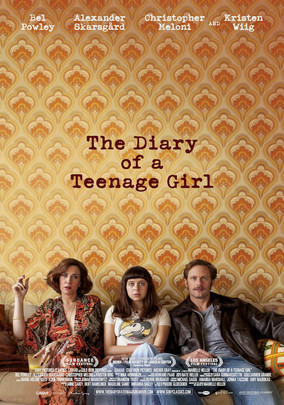
The Diary of a Teenage Girl-2015

The Diary of a Teenage Girl-2015

Director Marielle Heller

Starring Bel Powley, Alexander Skarsgard, Kristen Wiig

Scott’s Review #614

Reviewed February 2, 2017

Grade: A-

I was not sure what I expected from the Independent Spirit award-winning film, Diary of a Teenage Girl (2015).

I surmised that I would be treated to a light-hearted, yet well-written coming-of-age story, but the film is much darker than I would have thought, and this is a plus.

The film is edgy.

There is so much depth to the central characters and an incredibly complex performance by newcomer, Bel Powley in the title role.

Stars Kristen Wiig and Alexander Skarsgard also give tremendous performances.

The film is based on the graphic novel The Diary of a Teenage Girl: An Account in Words and Pictures by Phoebe Gloeckner.

Set in 1976 in San Francisco, a time filled with hippies, drugs, music, and life, fifteen-year-old Minnie, an aspiring comic book writer, is as insecure as any typical fifteen-year-old is.

With wide eyes and stringy hair, she is cute, but rather quirky looking, not the prettiest girl in her class, and records her deepest thoughts into a cassette recorder. Minnie is intelligent and worldly, accepting of alternative lifestyles and drugs.

She is wise well beyond her years.

Minnie’s mother Charlotte (Wiig), lives a bohemian lifestyle, constantly partying and losing jobs, and is divorced from Minnie’s and sister Gretel’s affluent, but mostly absent father, Pascal (Christopher Meloni).

The girls refer to him as “Pascal” instead of “Dad”, which he hates. Determined to lose her virginity, Minnie is man crazy and develops a sweet relationship with her mother’s boyfriend, Monroe (Skarsgard).

Things begin slowly but develop into a full-blown sexual relationship. A controversial piece to the story is that Monroe is thirty-five years old- Minnie is only fifteen. Both Monroe’s and Minnie’s feelings are challenged due to circumstances and Minnie’s emotions spiral out of control.

The subject matter of The Diary of a Teenage Girl will undoubtedly be off-putting for many folks as the actions are technically statutory rape.

The film never goes in that direction.

Rather, director Marielle Heller crafts a tender story of young love, and when there is too much drama comic relief is added.

Monroe is never the aggressor and Minnie is. She is a young girl who knows what she wants.

Since the director is female there is no hint of Minnie being taken advantage of or regretting her affair- the film is not about this.

Rather, it is about a young girl with blooming sexuality and emotions finding herself in the world. I admire this left-of-center approach to the story immensely.

Other aspects of the film may be too much for some. Minnie and her best friend pretend to be prostitutes and orally service two young men in the men’s room on a lark.

Later, Charlotte uses filthy language to describe Monroe’s and Minnie’s relationship.

The film is not safe, but daring and honest. I admire its courage.

Enough cannot be said for the three principal actors in Diary of a Teenage Girl. Bel Powley is a find!

Nominated for an Independent Spirit award, this amazing young actress should have been recognized by the Academy Awards, but she no doubt has many years and films ahead of her.

She is a “regular girl” type and reminds me of actress Lena Dunham in her looks and her rich delivery.

Kristen Wiig is fantastic and is evolving into a great dramatic actress. As Charlotte, Wiig is wonderfully insecure and an offbeat mother. She does not discipline, but rather befriends her daughters, showering them with hugs and kisses and giving vulnerable neediness to the character.

Wiig, dynamite in the comedy/drama The Skeleton Twins (2014), has embraced small, but important indie films, and kudos to her for this.

Lastly, Skarsgard, mainly known as HBO’s villainous Eric on True Blood, is as inspiring as Monroe.

Providing his character with sympathy and humanity (tough when having an affair with a teenage girl who also happens to be your girlfriend’s daughter), Skarsgard evokes so much emotion into the role that you almost root for Monroe and Minnie before remembering that she is too emotionally fragile.

Skarsgard is brilliant in Monroe’s breakdown scene. I hope audiences see him in more of these complex roles as he is far more than a hunky actor.

Diary of a Teenage Girl (2015) intersperses graphic novel/animated elements into the story told from the perspective of Minnie and the character narrates parts of the film.

This authentic story is not only for teenagers but for smart thinkers and anyone who has ever been over their heads in the emotions of love.

Independent Spirit Award Nominations: 1 win-Best Female Lead-Bel Powley, Best First Screenplay, Best First Feature (won)