Tag Archives: Jason Clarke

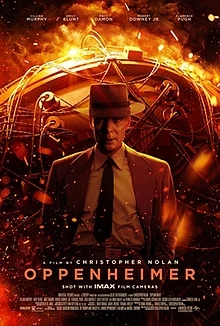
Oppenheimer-2023

Oppenheimer-2023

Director Christopher Nolan

Starring Cillian Murphy, Robert Downey Jr., Emily Blunt

Scott’s Review #1,384
Reviewed August 1, 2023

Grade: A

Knowing the films of Christopher Nolan who directed works like The Dark Knight Trilogy (2005-2012), Inception (2010), and Dunkirk (2017) I expected what I would be served with by his new film Oppenheimer (2023).

This would include a big booming soundtrack and an arguably more ‘guys’ genre film, but with intelligence, than other contemporary hits like Barbie (2023).

Dark and looming with complexities are usual for Nolan so I settled in for a three-hour epic journey centered on the atomic bomb and physics that has unexpectedly become a blockbuster.

Speaking of the pink phenomenon its simultaneous release with Oppenheimer led to the “Barbenheimer” phenomenon on social media, which encouraged audiences to see both films as a double feature.

This forever links the two vastly different films that were responsible for filling movie theaters once again.

I expected to enjoy Oppenheimer but was jarred (in a good way) by the sheer brilliance of its construction. Prepared for more mainstream fare that typically follows a biography or historical piece I was instead overly fascinated by the experimental elements enshrouding a more conventional film.

During World War II, Lieutenant Colonel Leslie Groves Jr. (Matt Damon) appoints physicist J. Robert Oppenheimer (Cillian Murphy) to work on the top-secret Manhattan Project.

Oppenheimer and a team of scientists spend years developing and designing the atomic bomb. Their work came to fruition on July 16, 1945, as they witnessed the world’s first nuclear explosion, forever changing the course of history.

The film is constructed marvelously in every way and is authentic to the eye. The first notice is that it feels like it’s the 1940s 1920s or 1960s or anywhere in between depending on where the film goes.

The art design, costumes, and makeup feel natural rather than stagey which helps its audience escape into the scientific world.

Speaking of, Nolan constructs the film in a series of pockets and goes back and forth between periods. We see Oppenheimer many times as an aspiring upstart with visions, a confident, established physicist, and in 1963 when President Lyndon B. Johnson presented him with the Enrico Fermi Award as a gesture of political rehabilitation.

His personal life is also explored.

Many, many scenes shift back and forth involving different characters at different ages. Most of the scenes in the 1940s take place in the desert at Los Alamos, New Mexico while the later years are set in a stuffy conference room where Oppenheimer is grilled for his left-leaning and suspected Communist politics.

The cinematography led by Hoyte van Hoytema provides some edgy moments especially when Oppenheimer descends into frightening and psychedelic hallucinations of those suffering the aftereffects of the atomic bomb. Images of peeling and melting faces are terrifying.

Cillian Murphy successfully makes Oppenheimer sympathetic especially after he creates the bomb and is left forgotten by his government.

Various moments in the film showcase Murphy at his best. After relinquishing his deadly bomb after a test the government callously tells Oppenheimer that ‘they’ll take it from here’. The look of dread, regret, and sadness in Murphy’s crystal blue eyes speaks volumes.

Another great scene occurs when President Harry S. Truman (Gary Oldman) a left-leaning democrat calls Oppenheimer ‘a crybaby’ when he expresses interest in returning land to the American Indians.

The supporting cast is a bevy of riches with several top-caliber actors appearing in cameos. My standouts in larger roles are Robert Downey Jr. shredding his Iron Man superhero persona as a slighted and venomous Lewis Strauss, intent on revoking Oppenheimer’s security clearance, and Emily Blunt as the boozy biologist and former communist wife of Oppenheimer.

My biggest takeaway from Oppenheimer (2023) though is a powerful one. The difference between the United States of America during and post World War II and in present times, 2023.

Then, a patriotic infrequently questioned nation brimming with pride and glory, where nationalism was rampant and expected and those with foreign respect were cast aside as traitorous.

Now, a divided country half of whom support an ideology based on hate, racism, and cultlike dedication to a corrupt ex-president, and the other focused on diversity inclusion, and equality for all.

This film resonated so powerfully well and in so many different ways.

Oscar Nominations: 7 wins-Best Picture (won), Best Director-Christopher Nolan (won), Best Actor-Cillian Murphy (won), Best Supporting Actor-Robert Downey Jr. (won), Best Supporting Actress-Emily Blunt, Best Adapted Screenplay, Best Film Editing (won), Best Cinematography (won), Best Costume Design, Best Production Design, Best Original Score (won), Best Sound, Best Makeup and Hairstyling
Zero Dark Thirty-2012

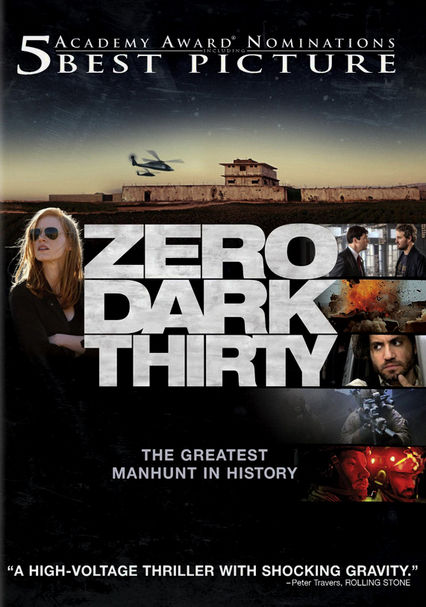
Zero Dark Thirty-2012

Director Kathryn Bigelow

Starring Jessica Chastain

Scott’s Review #1,133

Reviewed April 14, 2021

Grade: A-

Director Kathryn Bigelow, not far removed from her Oscar win for The Hurt Locker (2008), returns with a similar style of film centering around war and more specifically about the emotional tolls and psychological effects from not just the battlefields but from dangerous missions.

The main character suffers from many conflicts and inevitably the viewer will as well.

Zero Dark Thirty (2012) is unique for the genre by having a female in the lead role and star Jessica Chastain is front and center and terrific.

She is calm, restrained, and in control. She is tough to rattle and a powerful and inspirational character to be admired.

Chastain exudes cool in the face of danger.

Chastain does have a brilliant emotional scene at the end of the film. Her character, Maya, boards a military transport back to the U.S., as the sole passenger. She is asked where she wants to go and begins to cry. The emotion finally gets the better of her as it would to anyone.

The film is not all Chastain’s to brag about and there is little wrong with the film.

Beautifully directed, Bigelow layers her film with enough tension and magnificence to enshroud the moral questions viewers will ask, specifically about torture.

It’s somewhat fictionalized, and in fact, Chastain’s character is made up, but Zero Dark Thirty is a gem nonetheless.

But we also know the events happened.

The film starts incredibly well and immediately grabs the viewer’s attention with a brilliant first scene. Amidst a dark screen and soundtrack of actual calls made to the 911 operator from inside the World Trade Center Towers on 9/11, the scene is about as powerful an opening as a film can have and bravely sets the stage for what follows.

These include many scenes of Arab detainees being interrogated (that is, tortured) for information about Al Qaeda. Is this justified or unnecessary abuse?

The viewer is immediately saddened and in tears and conflicted about whether the torture is justified having just heard the 911 calls.

I know I was.

From there, the viewer also is told a summary story putting the pieces of the first scene together.

After the terrorist attacks of Sept. 11, 2001, Osama bin Laden becomes one of the most wanted men on the planet. The worldwide manhunt for the terrorist leader occupies the resources and attention of two U.S. presidential administrations.

This is the crux of the film and the story told.

Ultimately, it is the work of a dedicated female operative  (Chastain) that proves instrumental in finally locating bin Laden. In May 2011, Navy SEALs launched a nighttime strike, killing bin Laden in his compound in Abbottabad, Pakistan.

We all know this but troubling is the use of torture. I keep coming back to this point.

I think what I like most about the film besides the riveting pacing, action sequences, and psychological appeal is the controversy that surrounds it.

The fact that it ruffled feathers at the CIA and in Congress about whether the info was leaked to the filmmakers makes me think that at least some of it is based on facts, despite what other reviewers (likely with a strong political bias) might claim to the contrary.

But as a political junkie that’s just my belief.

The film’s reproduction of enhanced interrogation techniques is brutal. Some critics, in light of the interrogations being depicted as gaining reliable, useful, and accurate information, considered the scenes pro-torture propaganda.

Acting CIA director Michael Morell felt the film created the false impression that torture was key to finding bin, Laden. Others described it as an anti-torture exposure of interrogation practices.

I guess we may never know the truth. But the film compels and provokes feeling.

Bigelow is at the top of her game with Zero Dark Thirty (2012) crafting a genre film (the war one) way too often told from only a masculine “us versus them” mentality and leaving behind the fascinating nuances that can make the genre a more interesting and less one-note one.

The masterful director does just that and makes us think, ponder, and squirm uneasily.

Oscar Nominations: 1 win-Best Picture, Best Actress-Jessica Chastain, Best Original Screenplay, Best Sound Editing (won), Best Film Editing

The Aftermath-2019

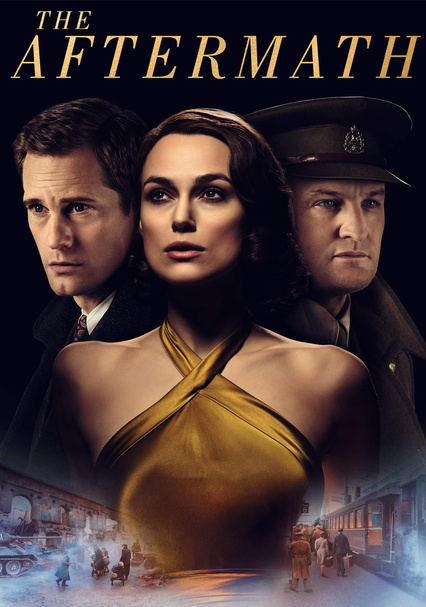
The Aftermath-2019

Director James Kent

Starring Keira Knightley, Alexander Skarsgard, Jason Clarke

Scott’s Review #940

Reviewed September 13, 2019

Grade: B-

The Aftermath (2019) is a heavily melodramatic post-World War II period film riddled with cliches and poor plot setups, but is nonetheless a moderately enjoyable experience.

With a marginal romantic triangle in play and good-looking stars, this can only go so far, as predictability soon sets in.

Exquisite to look at, with a bright and lush European ambiance, the picture is easy on the eyes but lacks a good story or surprises. The film will be forgotten before long.

The period is 1945, and the murderous war is still fresh on the minds of all affected, and animosity remains between the English and the Germans.

Rachael Morgan (Knightley) arrives in Hamburg during the bitter winter season to reunite with her British husband, Lewis (Clarke), who is tasked with helping to rebuild the decimated city.

The Morgans reside with a handsome German architect, Stefan (Skarsgard), and his teenage daughter, Freda. Resentment exists between the four since a German-caused explosion killed Morgan’s son.

Both positives and negatives are contained within the film.

The casting of Knightley, Skarsgard, and Clarke brings professionalism and A-list sensibility so that the viewer is keen to be watching a glossy Hollywood affair.

The offering of a robust romantic triangle is not fair to say, since from the moment Rachael and Stefan meet, they can barely take their eyes from one another.

As if this is not enough, the largely absent Lewis leaves plenty of alone time for Stefan and Rachael to watch each other lustfully. Nonetheless, Knightley and Skarsgard share great chemistry.

The time and setting are also well done. The gorgeous German house in which Stefan and his daughter reside feels both grand and cozy, complete with a piano and enough open space to go along perfectly with the snowy and crisp exterior shots.

The coldness mixes with the fresh effects of those ravaged by war. Music is played frequently, and a female servant dutifully waits on all the principals during dinners and desserts, adding classic sophistication to the film.

So, the look of it all is quite lovely.

Despite the elements outlined above, the story is a real weak point of The Aftermath. It is riddled with cliché after cliché and seems to want to take a page out of every war romance imaginable. Rachael at first loathes Stefan simply for being German, despite clearly being in lust with him.

Her constant gazes into the distance (thoughtfully pondering what, we wonder?) grow stale, and the product is just not very interesting.

A silly side story involving Freda’s boyfriend being involved in Werwolf, a Nazi resistance movement, seems unnecessary and merely a way to momentarily cast suspicion on Stefan.

The film is plot-driven rather than character-driven, and this makes the characters less than compelling.

The final sequence, set on a train platform as Rachael, Stefan, and Freda eagerly decide to steal away into the sunset and begin a new life together, is standard fare. Lewis, the odd man out, is a bit too okay with the circumstances of Rachael and Stefan’s passion to be believed.

The farewell scene is stolen from the superb 2002 classic Far from Heaven and is nearly identical in every way.

Marvelous to look at and nurturing a slight historical lesson within its bright veneer, The Aftermath (2019) is a soap opera story-telling of a romance between two individuals who are not supposed to fall in love.

The film has pros and cons and is an okay watch, mainly because the talented cast raises it slightly above mediocrity, adding some measure of realism and avoiding it from being a disaster.

Recommended for anyone who adores melodrama mixed with a classic period piece.

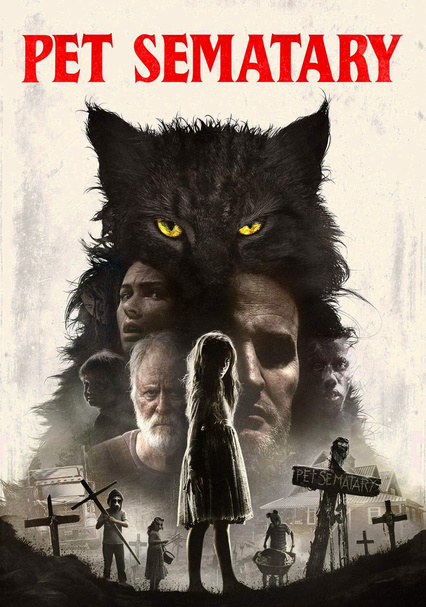
Pet Sematary-2019

Pet Sematary-2019

Director Kevin Kolsch, Dennis Widmyer

Starring Jason Clarke, John Lithgow

Scott’s Review #923

Reviewed July 26, 2019

Grade: B

In the age of movie remakes, especially within the horror genre, it was only a matter of time before Pet Sematary, first released in 1989, would resurface with its fangs bared.

Paramount Pictures presents Pet Sematary (2019), a by-the-numbers affair that’s perfect for viewing on a late Saturday night.

It is an improvement over the disappointing ’89 version, but hardly recreates the genre, feeling more like a remake than offering much in the way of new storytelling or frightening effects.

The conclusion is somewhat disappointing, offering a hybrid of slasher and zombie genres.

To compare either film to the chilling and suspenseful page-turner written by esteemed novelist Stephen King would be ridiculous. The book is a quick read that will leave its reader breathless and scared, perhaps even fearing their pets, so the bar is set way too high for a cinematic offering to match up with.

The book delves much more into the feelings and emotions of all the principal characters, something that is severely limited in the film.

The Creed family, consisting of Louis (Jason Clarke), Rachel (Amy Seimetz), and their children, Ellie and Gage, relocates from bustling Boston, Massachusetts, to rural Maine, allowing Louis the opportunity to practice medicine at a university hospital.

Their friendly neighbor Jud Crandall (John Lithgow) befriends Ellie after she stumbles across a funeral procession of children taking a deceased dog to a cemetery called Pet Sematary.

He warns her and Rachel that the woods are dangerous. When tragedy strikes the family, the cemetery unleashes a supernatural force contained in an ancient burial ground that sits beside it.

The first half of the film is superior to the second as the buildup offers more perilous moments than when all hell breaks loose. Mysterious is when an accident victim in Louis’s care dies and begins to show up in his visions, warning him of something sinister.

The victim is mangled and bloody, and quite frightening are these foreboding scenes. When a curious Ellie traipses throughout the woods with curious wondermen, the audience is nervous about what (or who) she might stumble upon.

The film also earns praise for the suspenseful birthday party scene, which culminates in a grisly death. The scene begins cheerfully with lively party music and festive balloons amid a warm summer afternoon in Maine.

In a clear example of foreshadowing, earlier in the film, Louis curses the truck drivers who drive recklessly past his house at high speed. Excitedly running after their cat named Church, Ellie and Gage pay no attention to the looming truck with the texting driver until it is too late.

The scene drips with good terror.

After the speeding tractor-trailer, the predictability of the surface strikes down one family member. Jud has already warned Louis that “sometimes dead is better”, but we know Louis will surrender to temptation out of desperation and tempt the evil spirits.

When the once-dead character returns with a droopy eye and calm, devious demeanor, the film becomes a standard slasher film and is no longer as compelling.

The final thirty minutes feel very rushed, as if the careful pacing of the buildup is all for naught.

As in most horror films, now deemed a cliché, the last sequence often allows for a sequel if box-office profits are substantial enough. I do not recall a similar ending in the chilling novel or any reference to the family living out their days as a family of the undead.

The apparent attempt at a zombie reference was unsatisfying and much different from what I expected.

From a casting point of view, Jason Clarke (usually cast in supporting roles) gives a strong performance as the main character. He is a good father figure and provides charisma to the film. Well-mannered but also somewhat outdoorsy and a “regular joe,” he is intelligent and humorous with the kids.

The child actors are fine, but hardly the main attraction, and Seimetz as the mother, Rachel, is not the best casting choice.

She plays the challenging role much too brooding and angry for my taste, especially given that she is written as the most sympathetic of all the characters.

Pet Sematary (2019) is a satisfactory horror offering with a solid first half that teeters into difficult-to-believe territory rather quickly.

A stalwart veteran like Lithgow helps immensely, lending the film some respectability, and a child actor cast in a pivotal role is enough to avoid ruining the experience.

There is little reason to see the film a second time, but it is recommended to snuggle with the King novel for some good scares.

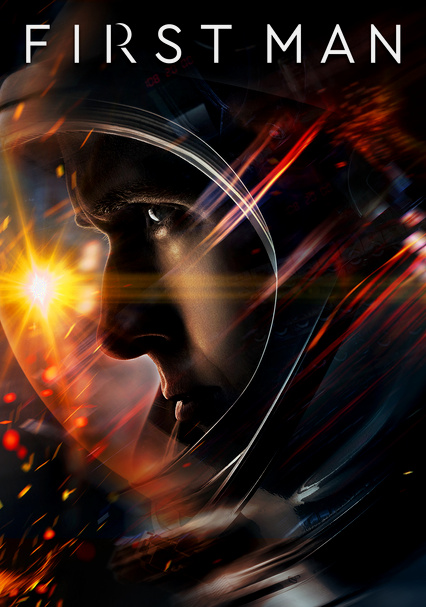
First Man-2018

First Man-2018

Director Damien Chazelle

Starring Ryan Gosling, Claire Foy

Scott’s Review #915

Reviewed July 4, 2019

Grade: B+

First Man (2018) is a reteaming of efforts by director Damien Chazelle and actor Ryan Gosling, following the 2016 critical and commercial smash hit La La Land.

The former could not be more different from the latter, and the direction is unrecognizable for those expecting a comparison. First Man is a mainstream Hollywood production with good camerawork and edgy quality.

The necessary full-throttle action approach is interspersed nicely with a personal family story and humanistic spin that is never too sappy nor forced.

The focus of the story is on Neil Armstrong (Gosling) and the events leading up to the historic Apollo 11 mission, which made him the first United States astronaut to walk on the moon.

Buzzy Aldrin (Corey Stoll), the second man to walk on the moon, is featured to a lesser degree, and his character is portrayed as self-centered and complex, though screen time is limited.

The overall message is of the triumphs and the costs to families, the astronauts, and the country during an already tumultuous decade in history.

The events of the film begin in 1961, as we see Armstrong as a young NASA test pilot struggling with mishaps due to his problems, and culminate in 1969 after the successful mission concludes.

Chazelle wisely balances human and personal scenes with the inevitable rocket take-offs and outer space problems that the astronauts face.

Both segments turn out well and keep the action moving, allowing for tender moments between the characters, mainly showcasing the relationship between Neil and his wife, Janet (Claire Foy).

Lacking (thankfully) are the scenes of machismo or “guy talk” that sometimes accompany films in this genre.

During one of the first scenes, the audience quickly witnesses the couple’s two-and-a-half-year-old daughter Karen retching and suffering from learning disabilities, only to promptly die from a brain tumor, forever destroying the couple.

This critical aspect reoccurs as Neil imagines his daughter playing with neighborhood kids and enjoying life.

In a wonderful moment, he tearfully drops Karen’s tiny bracelet into a giant crater, hoping to keep her memory alive forever.

These additions give the film a character-driven quality.

Worthy of analysis before and after viewing the film is the young director’s decision to tackle such a project, heartily appealing to the mainstream audience undoubtedly in mind.

Legendary director Clint Eastwood was initially slated to direct, and the historically rich story seems right up his alley.

It’s interesting to wonder if, during the 1990s, Tom Hanks might have been cast as Armstrong in his younger days, playing a similar part in Ron Howard’s 1995 film Apollo 13.

Well-known character actors appear in supporting roles, fleshing out the production and further adding name and face recognition. Kyle Chandler, Jason Clarke, and Ciaran Hinds appear as astronauts or various NASA Chiefs. Viewers who may not be able to name the actors will certainly recognize them as actors seen in other films.

This only brings First Man to the big leagues with a hearty and talented central cast.

Gosling and Foy are the main draws, and both actors were mentioned as possibilities for Oscar nominations throughout awards season, but a slot in the big race did not come to fruition.

While the film drew a couple of nominations for Best Editing and Best Score, a Best Picture nomination was not to be, probably due to the film not being as big a blockbuster success as expected.

The film is also more brooding and less patriotic than a Howard or Eastwood production would have been.

To expand on this, First Man came under attack by Senator Marco Rubio from Florida and President Donald Trump for Chazelle’s decision to omit any mention of the famous planting of the American Flag on the moon by Armstrong and Aldrin.

Chazelle refused to admit that this was a political statement, instead insisting that he chose to focus more on the lesser-known aspects of the moon landing rather than facts that everybody already knew.

Young director Damien Chazelle proves to be a multi-faceted filmmaker by changing course and creating a historic biopic that is quite different from a story of singing and dancing in Los Angeles.

He proves to be no one-trick pony and gets the job done, creating a brave and robust effort that does not limit action at the hands of humanity, successfully weaving a good dose of both.

First Man (2018) may not be a classic in the making, but it deserves to be seen.

Oscar Nominations: 1 win- Best Sound Editing, Best Sound Mixing, Best Production Design, Best Visual Effects (won)

Mudbound-2017

Mudbound-2017

Director Dee Rees

Starring Carey Mulligan, Garrett Hedlund

Scott’s Review #724

Reviewed February 12, 2018

Grade: B+

Mudbound is a 2017 Netflix period drama that transports viewers to a time of racism and struggles as World War II ravaged Europe.

The piece is set mainly in rural Mississippi; however, during the 1940s, most people, especially black people, had a vastly different way of life.

The film depicts the hardships and struggles of two families living on the same land, one white and one black, and how their lives intersect dramatically.

The film received several Oscar nominations, including for Adapted Screenplay, Supporting Actress, Song, and Cinematography. I will suffice it to say I support the latter two mentions in the group but not the former.

While the final act kicks the film into much-needed high gear, and the filming detail of the rural southern terrain is quite apt, I kept waiting for a stunning scene involving the usually excellent Mary J. Blige to erupt, but sadly nothing ever came.

While inspired, the writing would not get my vote in the screenplay category either, especially when other, more worthy films (think Mother!) were bypassed.

The mood of Mudbound is immediately impressive as we are introduced to the grizzled and muddy town of Marietta, Mississippi, a sort of farm wasteland. Brothers Henry and Jamie McAllan struggle to bury their recently deceased “Pappy” as the lands are ravaged by a driving storm.

When Henry briefly leaves Jamie in the watery grave the pair has dug, Jamie is panic-stricken that Henry will not return. In this way, director Dee Rees reveals a significant clue to tension between the brothers as the film rewinds to sometime earlier when times were happier for the brothers.

Mixed in with the trials and tribulations of brothers McAllan, is Henry’s wife Laura (Carey Mulligan), who shares a loveless marriage with him, while secretly lusting after Jamie.

A poor black family resides and works on the McAllan farm, and must endure hardship and racism from the white residents of Marietta, especially when their son Ronsel returns from World War II, a celebrated hero.

Old habits die hard as the Ku Klux Klan rears its ugly head, targeting the young soldier for daring to bed with a German woman abroad.

As most of the film meanders during the first hour or so with odd edits and pacing, I did not easily connect with many of the characters, though I wanted desperately to.

There seemed to be not enough buildup to the ultimate drama. The film is shot in a way that you know you are watching something of substance, but it takes a long, long time to reach a crescendo.

The aforementioned criticism of Mary J. Blige, who portrays long-suffering matriarch Florence Jackson, is not of the part itself or her acting; rather, I expected a gritty, meat-and-potatoes-style performance from the talented lady.

I disagree with her Oscar nomination, and instead would have chosen the brilliant Michelle Pfeiffer from Mother!

Praise must be written for Mulligan’s performance, shamefully overlooked, like the haggard, intellectually unfulfilled housewife, Laura. As she wistfully buries her nose in a novel to escape her dull life, or longingly looks at Jamie, disappointed with her loneliness, we feel every emotion that Mulligan plays.

A consistent problem with Mudbound was that it lacked a grand emotional scene from either Blige or Mulligan.

The film’s racist subject matter can be utterly challenging to watch as a significant character sees their tongue removed and another character forced to make a difficult choice. This action leads to a deadly turn of events and the murder of another character, resulting in a lifetime of secrets.

The final thirty minutes are the best part of Mudbound.

A must-notice historical feat is Rachel Morrison’s nomination in the cinematography category. She is the first female to receive this honor, and it is certainly about time. Morrison successfully fills Mudbound with the perfect mood—both picturesque greenery and a depressing, downtrodden aura.

This is not as easy as one might imagine, but creative talent achieves this effortlessly.

Mudbound has received much attention but is not the masterpiece some are touting it as. It takes way too long to hit its stride, the film has good aspects and some missed opportunities.

Perhaps a better-put-together film would have resulted in a brilliant experience instead of “only” a good watch. I recommend Mudbound, but I expected and hoped for much more than I was given.

Oscar Nominations: Best Supporting Actress-Mary J. Blige, Best Adapted Screenplay, Best Original Song-“Mighty River”, Best Cinematography

Independent Spirit Award Nominations: 1 win-Robert Altman Award (won)

Dawn of the Planet of the Apes-2014

Dawn of the Planet of the Apes-2014

Director Matt Reeves

Starring Andy Serkis, Jason Clarke, Gary Oldman

Scott’s Review #232

70300076

Reviewed March 29, 2015

Grade: C+

Dawn of the Planet of the Apes (2014) is a summer blockbuster hit that knocks it out of the park from a visual perspective- it is magnificent to look at with creative sets and realistic images, but the story is mediocre and predictable.

I think the filmmaker’s true intent was to focus on the look of this film, which is a splendid feature. The film is a slightly better-than-average big-screen adventure with more style than substance.

Set in San Francisco, or what was once San Francisco, the film is set in futuristic times. Apes have forged a new civilization after a deadly virus has eliminated 90% of the human population.

The apes are highly intelligent and manage a happy, unified existence. Then, one day, a human is encountered and, scared, shoots one of the apes. This leads to a peaceful resolution between Caesar, leader of the apes, and the humans, to each stay in their respective territories.

However, humans need access to a dam in the Apes area to provide electricity for themselves. Mutual distrust leads to tension, but the civilized apes and humans reach a truce.

Naturally, there is further conflict as sinister humans and apes vow revenge on each other. This leads to a waging war while the peaceful apes and humans strive to work things out.

A further angle of the story is the hunger for power within the ranks of the Apes, reminiscent of Lord of the Flies. The human protagonists, Malcolm and Ellie, played by Jason Clarke and Keri Russell- are a wholesome, decent couple.

Dawn of the Planet of the Apes pales to the original 1968 masterpiece, Planet of the Apes, starring Charlton Heston. To compare the two is unfair since, sadly, this one has nothing to do with the original.

It is simply the same franchise tag.

However, Dawn of the Planet of the Apes is weaker than its predecessor, 2010’s Rise of the Planet of the Apes. We had a charismatic star, James Franco, and an interesting story. The apes are experimented on and their intelligence is a strong angle.

With the sequel, the story is rather one-note and has a machismo, us against them angle, that is not unique.

The main drawback to this film is its limitations. The characters are portrayed as a) the good and sympathetic humans, b) the evil and destructive humans, c) the good and heroic apes, or, d) the evil, bad apes.

Everyone is defined for the audience and there is no ambiguity or complexities within the characters. This is a bit limiting. The evil ape Koba is purely bad and the drunken, gun-happy, humans are bad.

This is not to say that Dawn of the Planet of the Apes is not enjoyable, it is. It’s a fun, entertaining flick. For what it is, there is a somewhat message in the film, that there is a way to find peace and love between different species and types of people.

Hopefully, the audience gets that message.

Dawn of the Planet of the Apes (2014) is a summer blockbuster action/sci-fi flick that many will enjoy, however, it is a plot-driven extravaganza that could have been superior had it contained more layers to the story and more shape to some of the characters.

It is worth seeing as a visual cinema treat, but scarcely more than that.

Oscar Nominations: Best Visual Effects

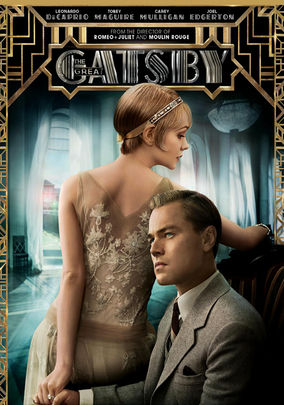
The Great Gatsby-2013

The Great Gatsby-2013

Director Baz Luhrmann

Starring Leonardo DiCaprio, Tobey Maguire

Scott’s Review #142

70244437

Reviewed July 29, 2014

Grade: A

Despite some mixed reviews of this movie, I loved it.

Having read the classic novel, The Great Gatsby, by F. Scott Fitzgerald, I was familiar with the story of excess and scandal during one sweltering summer in the well-to-do Long Island, NY community during the 1920s.

Directed by Baz Luhrmann (Moulin Rouge) I found the look of the film lavish, realistic, and gorgeous- perfect ambiance and a dream-like quality.

I loved the casting of Leonardo Dicaprio as Gatsby, Carey Mulligan as Daisy, and Tobey Maguire as Nick Caraway.

The chemistry among the three leads is apparent and visually the film is spectacularly dressed, from costumes to gorgeous sets, and the speech patterns of the era- “old sport”, and “row”, is used frequently and seem authentic.

Many complained about the mixing of modern rap music with a film set in the 1920s, which does sound strange on paper, but I enjoyed that aspect of it and feel it gave a contemporary edge to the film.

There are slight adjustments from the novel, but I thought it was a very successful transition to the big screen.

Oscar Nominations: 2 wins-Best Production Design (won), Best Costume Design (won)