Tag Archives: Michael Gambon

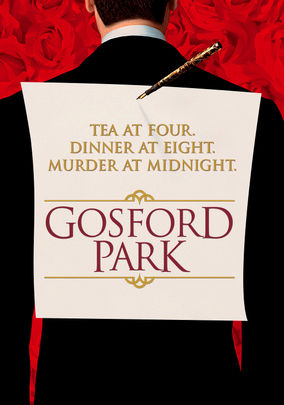
Gosford Park-2001

Gosford Park-2001

Director Robert Altman

Starring Maggie Smith, Helen Mirren, Ryan Phillippe

Top 250 Films #105

Scott’s Review #350
60021796

Reviewed January 9, 2016

Grade: A

Somewhere between the brilliant PBS series of the 1970s and the ultra-modern cool of Downton Abbey (also PBS) lies the masterpiece that is Robert Altman’s 2001 gem, Gosford Park.

It’s ironic that the creator, writer, and executive producer of Downton Abbey, Julian Fellowes, wrote the screenplay of Gosford Park.

No wonder, combined with Altman’s direction, they created genius.

The period is 1932, and the wealthy, along with their servants, flock to the magnificent estate of Gosford Park, a grand English country home.

The guests include both Americans and Brits, and everyone is gathered for a shooting weekend- foreshadowing if ever there was.

Following a dinner party, a murder occurs. The remainder of the film follows the subsequent police investigation, and the perspectives of the guests and the servants as a whodunit ensues.

Many of the characters’ lives unravel as secrets are exposed.

Sir William, the murder victim, is a powerful industrialist. After he announces he will withdraw an investment, the ramifications affect many of the guests, so that the setup is spelled out for the audience.

At the risk of seeming nothing more than a plot device, it is so much more than that.

During a pheasant shoot, Sir William receives a minor wound thanks to a stray birdshot- is this intentional or merely an accident? When Sir William meets his fate that evening, the potential suspects pile up.

If there are two compelling aspects to a great film, they are a good old-fashioned whodunit and an enormous cast, all potential suspects.

What makes Gosford Park exceptional is that every character is interesting in some way, and all are well written.

Secrets abound for miles in this film and are revealed with delicious detail. Torrid affairs, sexuality secrets, and blackmail abound as revelations make their way to the surface, and Altman knows exactly how to cast doubt or suspicion on many of his characters.

The compelling relationship between American film producer Morris Weissman and his valet, Henry Denton (Ryan Phillippe), along with the domineering head housekeeper, Mrs. Wilson (Helen Mirren), is my favorite character and dynamic.

How clever that Maggie Smith would play similar roles as stuffy aristocrats in both Gosford Park and Downton Abbey.

Rich in texture is the balancing between the haves and the have-nots, and how those characters mix (sometimes in secret rendezvous!)

Typical of Altman films, the character dialogue commonly overlaps, and the actors largely improvise the script. In addition to being an actor’s dream, this quality gives a dash of realism to his films, and Gosford Park is no exception.

Since there are so many characters and so many plots and subplots going on at once, my recommendation is to watch the film at least twice to fully comprehend the layers of what’s going on.

Gosford Park (2001) will be increasingly appreciated.

Oscar Nominations: 1 win-Best Picture, Best Director-Robert Altman, Best Supporting Actress-Helen Mirren, Maggie Smith, Best Screenplay Written Directly for the Screen/Original Screenplay (won), Best Art Direction, Best Costume Design

Fantastic Mr. Fox-2009

Fantastic Mr. Fox-2009

Director Wes Anderson

Voices George Clooney, Meryl Streep, Bill Murray

Scott’s Review #1,329

Reviewed December 30, 2022

Grade: B+

I have fond memories of, either reading or being read, Roald Dahl’s famous 1970 children’s novel entitled Fantastic Mr. Fox. The story involves the clever and hungry Mr. Fox and how he outwits his farmer neighbors to steal food from under their noses.

In 2009, it was adapted into a stop-motion animated film by Wes Anderson and includes the voice of George Clooney and Meryl Streep as Mr. and Mrs. Fox.  Anyone familiar with Anderson’s work knows well that an added dose of eccentricity will inevitably be included as well as a unique narrative.

I confess to either being in the mood for an Anderson film or not but at least I know to know what I’m in store for.

Anderson co-wrote the screenplay with Noah Baumbach known for making witty and intellectual comedies like The Squid and the Whale (2005) and Greenberg (2010).

Fantastic Mr. Fox pairs well with 2018’s Isles of Dogs if we are talking about Anderson films. Both include the thoughts and peculiarities of animals, similar stop motion, and a story about trickery and revenge pitting man against animals.

There is an eerie and prominent comparison to Animal Farm, a 1950s George Orwell novel and film adaptation, that I noticed.

The farm, animals, class system, and desire for power and authority.

When Mr. Fox’s nightly raids on three nearby farms raise the tempers of three selfish farmers who are losing their chickens, he must outwit the outrageous plans to catch him.

After all, in his mind, he is merely trying to feed his hungry family and neighbors, and Mr. Fox must find a new way to get his paws on the bounty.

Billed as a children’s film probably because it’s based on a children’s novel, Fantastic Mr. Fox contains aspects that will go way over kids’ heads. This suits me well however because I have a fascination for animation that pushes the envelope or moves beyond the overdone ‘safe genre’.

Think of it as a kid’s film for adults.

It would appear difficult to side solely with Mr. Fox since he is a thief. We are all taught at a young age not to steal but it’s difficult not to root for Mr. Fox. He steals not to gorge himself but to feed his family and community.

Of course, he is addicted to being a cad and quickly returns to his thieving ways finding his calling and strong satisfaction.

A good lesson for kids and adults is the neighborly aspect of Fantastic Mr. Fox. There is a camaraderie amongst the animals that I find lovely and inspiring. They band together and cohabitate in an underground community and later the sewer always having each other’s backs.

The farmers are portrayed as the villains though we can certainly understand their hardships at having their animals stolen and eaten. But Anderson hits home that the farmers are greedy and obsessed with their wealth, happy to kill any animals they see fit.

It’s satisfying to see them get defeated.

The story is outshined by the visuals though. It’s difficult not to focus on the technique and stunning attention to detail, especially in the tunnel sequences. The character performances and shadowy framework make one realize just how far stop motion has come.

The autumnal colors of red, orange, and yellow, perfectly enhance the visual style and season that Anderson and team create. Even the cue card titles between scenes are meticulous art that harkens back to sophisticated cartoons of yesteryear.

Fantastic Mr. Fox (2009) is a creative, edgy, and intelligently written and scored production. Multi generations are featured with means young kids, parents, and grandparents with a hunger for a left-of-center and thought-provoking approach will be well satisfied.

Oscar Nominations: Best Animated Feature, Best Original Score

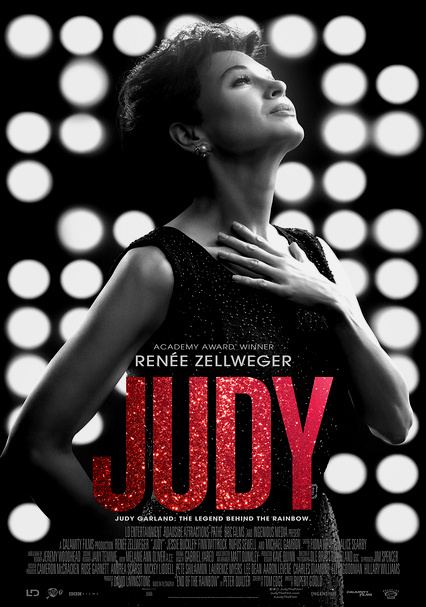
Judy-2019

Judy-2019

Director Rupert Goold

Starring Renee Zellweger

Scott’s Review #946

Reviewed October 14, 2019

Grade: A

Creating a film about an iconic figure like Judy Garland is undoubtedly a challenging task. Casting the role is even tougher.

Both points come together with perfect symmetry as director Rupert Goold provides Judy (2019) with heart, hope, and a sense of sadness. Rene Zellweger is astounding in the title role as she embodies the character.

The film is excellent and an accurate telling of the real-life person.

The period is 1967, and we meet the adult Judy Garland (Zellwegger) well after midnight, having performed with her two young children in tow. Haggard, they are informed by the Los Angeles hotel staff that their room has been given up due to non-payment.

The American singer and actress is broke due to bad marriages, drugs, and alcohol. The star is forced to return to her ex-husband for shelter—the two quarrel about the children.

The film does not focus solely on the late 1960s and the final years of Garland’s life, but also delves back to her debut as Dorothy in The Wizard of Oz (1939).

The pressures put upon the aspiring actress to perform, lose weight, and maintain her energy are shown in savage fury, so that the audience realizes how the young girl has turned into a boozy, unreliable middle-aged woman.

Hollywood ruined her innocence.

Zellweger is beyond brilliant. Having disappeared from the spotlight for several years, the actress is back with a vengeance, having something to prove. Prove she does as she becomes Judy Garland.

From her small but expressive eyes to her nervous movements and pursed lips, she delivers a flawless performance and has been rewarded with praise across the board.

It is a remarkable portrayal that should be remembered in history.

Much of the film takes place in London as Garland is forced, for financial reasons, to agree to a series of concerts to bring in cash. This necessitates leaving her children behind.

A poignant scene unfolds in a phone booth as Judy reaches the heartbreaking conclusion that her children would prefer the stability of living with their father. Though she understands, the star crumbles in sadness and loneliness.

A treat is the showcasing of Garland’s compassion for others deemed outcasts, as she also was. Gravitating towards gay men, she spots one gay couple in the audience night after night and befriends them as they eagerly await her exit from the theater one night.

She suggests dinner, and the dumbfounded couple clumsily searches for a restaurant open that late, finally offering to make her scrambled eggs at their flat.

Things go awry, but it hardly matters in a heartfelt scene that exposes the prejudices same-sex couples faced as recently as the 1960s and the champion Garland was to the LGBTQ community.

The iconic “Over the Rainbow” is featured late in the film and perfectly placed. Judy ends her touring engagement due to hecklers but returns for a final night on stage, where she asks to perform one last song.

She breaks down while singing “Over the Rainbow,” but recovers with the encouragement of supportive fans and can complete the performance.

Judy asks, “You won’t forget me, will you?” She does not live long thereafter and dies in the summer of 1969. The scene is painful, and not a dry eye is left in the house.

Judy (2019) is a wonderful tribute to the life and times of a Hollywood legend. The film is neither a complete downer nor cheerful.

What the filmmakers do is make it clear that Garland always had hope for a better life and for the happiness that eluded her. She was kind to most and loved her children beyond measure.

Zellweger will likely eat up a plethora of awards throughout the season, as she should.

Oscar Nominations: 1 win-Best Actress-Renee Zellweger (won), Best Makeup and Hairstyling

Independent Spirit Award Nominations: 1 win-Best Female Lead-Renee Zellweger (won)

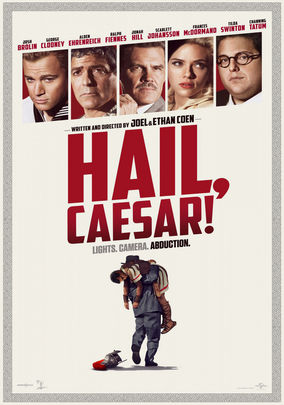
Hail, Caesar!-2016

Hail, Caesar! -2016

Director Ethan Coen, Joel Coen

Starring George Clooney, Channing Tatum

Scott’s Review #377

80074084

Reviewed February 16, 2016

Grade: B+

Hail, Caesar! (2016) is a quirky film created and directed by the Coen Brothers, who are known for offbeat films such as Fargo (1996), No Country for Old Men (2007), and Raising Arizona (1987).

Hail, Caesar is a satirical comedy about the Hollywood film industry during the post-World War II period of the 1950s.

The film features a bevy of current Hollywood talent, including George Clooney, Channing Tatum, Josh Brolin, and Scarlett Johannsen, including singing, dancing, and scandalous matters.

All give fine performances and add humor and wit to the film.

The plot centers on the character of Eddie Mannix (Brolin), a celebrity “fixer” and real-life person who works as an executive for Capitol Pictures and whose primary responsibility is to ensure that famous Hollywood stars remain out of trouble.

The period is 1951, a particularly scandalous time in pictures. One of the biggest stars of the time, Baird Whitlock (Clooney), is suddenly kidnapped and held for ransom while completing a big epic film for the studio.

Mannix must race to keep the crisis out of the news and safely get Whitlock back.

Indeed, there are interesting subplots, including handsome yet talent-less Western actor Hobie Doyle, hired by the studio to appear in a sweeping period piece directed by suave Laurence Laurentz (Ralph Fiennes), and DeeAnna Moran (Johannsen), unmarried and with a “bun in the oven,” determined to keep herself out of the tabloids.

I loved the look of the film, as numerous films occur within it. The 1950s set pieces and designs are exquisite, particularly the period piece set, lavishly designed with classic doors, a staircase, flowers, and a cast dressed to the nines.

It brings back an extravagant time.

The film is a satire, to be sure. Still, it also addresses the serious subject of communism (especially for that period), Russia, and Russian defectors, all involved in a plot to prove a valuable point.

Despite the film being a comedy, this is worth serious consideration. Many Hollywood writers make money for the studios and are rewarded with underwhelming salaries.

The same holds true in Hollywood today.

This point can spill over into other walks of life as well, and the point of the “little man gets screwed” is explored. Communism is also explored throughout the film as the central message- an important message that resonates.

Another interesting tidbit that Hail, Caesar!Mentionss, though only on the surface, is the burgeoning onslaught of television programming.

Suddenly, an increasing number of people were purchasing TVs and avoiding the glamour of films, opting instead for the comfort of their couches.

What a different time it was!

An intriguing, favorite character of mine belongs to Channing Tatum’s portrayal of Burt Gurney, a Gene Kelly-like character famous for singing and dancing numbers. A sizzling sailor dance gives edge and sexuality to the film.

A revealing scandal involving Burt and Laurence is fantastic and delicious.

My favorite scene belongs to Frances McDormand, who shamefully only appears in one scene- quite memorable. As film editor C.C. Calhoun, she diligently shows Mannix film dailies in the hopes of discovering a clue in the disappearance of Whitlock. When her scarf gets caught in the projector, hilarity and grotesqueness ensue.

It is a classic Coen Brothers comedy.

Hail Caesar! (2016) succeeds as a witty, comical throwback to a wonderful time in film history, with a political edge that historians will appreciate and Coen Brothers fans will relish.

Perhaps not their most creative or memorable, but enjoyable all the same.

Oscar Nominations: Best Production Design

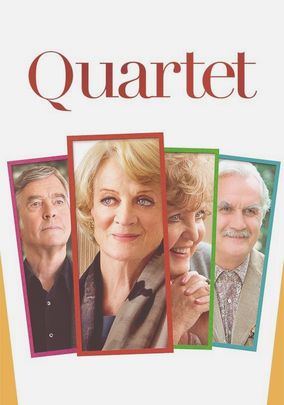
Quartet- 2012

Quartet-2012

Director Dustin Hoffman

Starring Maggie Smith, Tom Courtenay

Scott’s Review #122

70243583

Reviewed July 20, 2014

Grade: B+

Quartet (2012) is a fantastic little British film, directed by Dustin Hoffman, and starring the always wonderful Maggie Smith, whom one might argue could be watched in anything.

I certainly could.

Smith stars as a stubborn retired opera singer who begrudgingly settles in at Beecham House, a luxurious senior retirement home for former musicians in their final years.

There she reunites with colleagues from years past who attempt to reunite for a concert for the public to save the home from foreclosure.

The cast of senior citizens in Quartet is quite likable in one of the few smart films handling aging gracefully.

There is comedy and drama mixed in as the intelligent characters are treated as such in their final years with a hint of soap opera to the film as some of them were intimate with others in years past and the current hijinks are hysterical.

The subject of aging is treated with respect and dignity and not played for laughs, which is one aspect of the film that I adore.

A talent-filled cast of British theater actors, along with some real-life musicians make this film a treat.

It is terrific to see Pauline Collins (Upstairs/Downstairs) in a large role.