Tag Archives: Gary Dauberman

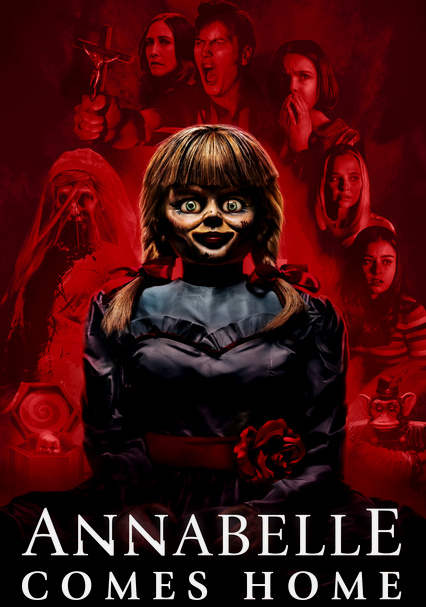
Annabelle Comes Home-2019

Annabelle Comes Home-2019

Director Gary Dauberman

Starring Mckenna Grace, Patrick Wilson, Vera Farmiga

Scott’s Review #1,008

Reviewed April 7, 2020

Grade: B

Annabelle Comes Home (2019) was made as a sequel to 2014’s Annabelle and 2017’s Annabelle: Creation, and as the seventh installment in The Conjuring Universe franchise overall.

Lest we forget the uninspiring The Nun (2018) it is not necessary to view the films in sequence and with this version, it can serve as a stand-alone film just fine.

At this point in the series, it’s becoming increasingly challenging to connect all the dots from previous offerings. The film is a fun, scary-light experience, which works well.

Borrowing the babysitting theme from the 1978 horror masterpiece Halloween, the film is neither dull nor formulaic, providing some visual creativity to an otherwise B-movie experience.

Franchise fan favorites Patrick Wilson and Vera Farmiga return to their popular roles, but only in the beginning and end of the film, letting the younger set take center stage as they bear the brunt of angry demons.

Presumed to take place sometime after Annabelle but before Annabelle: Creation, demonologists Ed (Wilson) and Lorraine Warren (Farmiga) are determined to stop the frightening Annabelle from wreaking further havoc and drag the possessed doll to the safety of their locked artifacts room, placing her behind sacred glass and enlisting a priest’s holy blessing.

After a curious teenage girl snoops, Annabelle is reawakened angrier than usual and unleashes a torrent of evil spirits into the Warren house. Ten-year-old daughter, Judy (Mckenna Grace), must be savvy and outsmart the dangerous demons before it’s too late.

Annabelle herself, the doll statuesque and holding a grotesque smirk on its made-up face, with bright blue/green eyes, has quietly become a fixture within the horror community, now easily recognizable to mainstream audiences everywhere.

That Annabelle does not speak or walk, but only stares, unless possessed by a spirit, is a big part of the fun and the scares. She tends to appear rather than move around, which is part of her appeal.

And the pretty red ribbons in her hair are a bonus.

The 1970s time period is fabulous, as the set and art design teams deserve major props for authenticity. Warren’s house, for example, is a fantastic showcase for the yellow and brown trimmings prevalent in any middle to upper-middle-class residence during this decade.

The flowered wallpaper enshrouding the downstairs hallway and the pink frosted birthday cake are delightful additions. The standard feathered hairstyles and plaid-patterned clothes are timeless trademarks and always a hoot.

From a fright perspective, the film provides a perfect balance of buildup and edge-of-your-seat thrills.

The best example of this is when nosy Daniela (Katie Sarife), already curious about the Warrens, breaks into the artifacts room, determined to talk to the dead.

Her motivations are believable, given that her father recently died in a car accident, and she is a fan favorite. Chaos ensues as she unleashes such evil forces as the Black Shuck, the Ferryman, and the Bride.

The film tries a bit too hard to appeal to a tween or teenage audience with a silly romance between the main character, Mary Ellen (Madison Iseman), a perfect, virginal babysitter, and her high school crush, Bob (Michael Cimino).

He even serenades her after an idea by the pizza deliveryman, and conveniently lives across the street.

This portion of the story is unnecessary and feels like filler, as Mary Ellen is responsible enough not to let a boy into the house she is looking after.

Annabelle Comes Home (2019) is a commendable horror effort, intelligently blending both supernatural and classic horror subgenres with ease and perfect balance.

Staying true to its franchise roots and incorporating groovy production and musical score elements representing the decade it celebrates, the film holds up well in a myriad of similar films that rely on gimmicks and cheap thrills more than this one does.

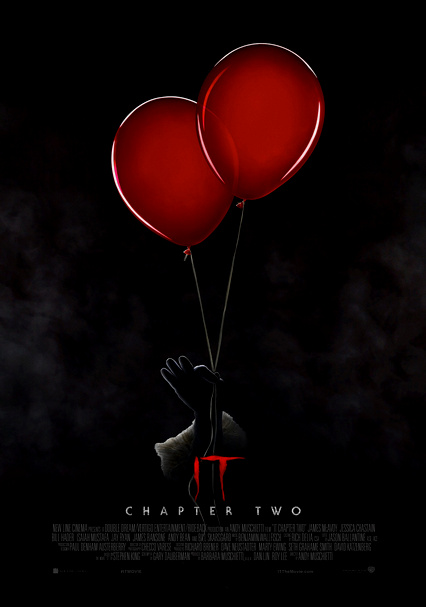
IT: Chapter Two-2019

IT: Chapter Two- 2019

Director Andy Muschietti

Starring James McAvoy, Jessica Chastain, Bill Hader

Scott’s Review #939

Reviewed September 11, 2019

Grade: B+

A companion piece to the first chapter, named It (2017), and an adaptation of the famous and chilling 1986 novel by horror novelist Stephen King, It: Chapter Two (2019) is a successful culmination of the vast story and will please many fans.

A box-office hit mixing straight-ahead horror with the supernatural, and a tad of adventure mixed in, the film is to be appreciated in many ways, though I slightly prefer the first chapter by measure.

Set in present times (2016), twenty-seven years after the first film took place, the Losers’ Club kids are now nearing middle age, in their forties.

The most prominent characters in the group, Beverly Marsh (Jessica Chastain), Bill Denbrough (James McAvoy), and Richie Tozier (Bill Hader) are summoned by childhood chum Mike Hanlon to return to the sleepy town of Derry, Maine, after a series of murders begin at the summer carnival.

Each of them, except for Mike, has fled the small town and found success in bustling cities, living prosperous lives.

Because of a promise made as kids, the entire group reunites except for Stanley Uris, who chooses to fatally slit his wrists in a bathtub rather than return and face evil Pennywise the Clown (Bill Skarsgard).

The six members wrestle with their demons and past mistakes while Pennywise takes the form of human beings and objects to terrorize the group, providing imagined and frenzied scares. At the same time, they scramble to perform a Native American ritual to destroy the beast.

It isn’t easy to write a successful review of It: Chapter Two as merely a stand-alone film since the two chapters are meant to be one cohesive, long film.

Filmed at the same time, the pacing and continuity are what make the experience an enjoyable one. The key is the interspersing of many scenes, a hybrid of childhood and adult sequences, which gives the film a cohesive package.

This style is a treat for viewers who have seen the first chapter two years ago. After the hoopla dies down, patient fans would do well to watch both chapters in sequence in back-to-back sittings for an undoubtedly pleasant experience.

Director Andres Muschietti wisely places focus on the characters so that the film is character-driven rather than plot-driven, a risk with anything in the horror genre.

Each of the six adults resembles the six kids in physical appearance, which makes the story believable. A major strength is the focus on each character individually, both in the present and in the past. Each faces insecurity, guilt, or mistakes, making them complex.

At a running time of two hours and forty-nine minutes, the film can take its time with character exploration and depth.

A nice add-on and deviating slightly from the King novel is a modern LGBTQ presence. It is implied (though I admittedly missed this when I saw the film) that Richie (Hader) is either gay or wrestling with his sexuality.

The pivotal final scenes depict Richie’s undying love for his lifelong friend Eddie, as one saves the other’s life only to sacrifice his own. The fact that the love is unrequited or unrealized is both sad and heartbreaking.

The gay-bashing opening sequence of Adrian Mellon and his boyfriend is quite a difficult watch, as is the lack of any comeuppance for their perpetrators, but the scene is faithful to King’s novel.

It is also a jarring reminder that in 2019, small towns are not always the safest place for the LGBTQ community, as far too often, small towns breed small minds.

The film could contain more jumps and scares than it does, and teeters a bit too long in the overall running time. While the focus on the character is excellent, the final climax and the battle with Pennywise are a slight letdown and feel predictable.

The film is not scary in terms of horror but does have nice special effects and visual razzle-dazzle, especially concerning Pennywise. The creepy clown is less frightening than in the first chapter, but perhaps this is due to becoming more familiar with him.

A treat for eagle-eyed fans is the cameo appearance by legendary author Stephen King. As a cantankerous pawn shop owner, he sells Bill the relic bicycle he had enjoyed in his youth.

For bonus points, Muschietti treats fans to a scene including filmmaker Peter Bogdanovich, who cameos as the director of the film based on Bill’s novel.

It: Chapter Two (2019) offers good entertainment and will please fans of the horror genre and the famous author, as the film is very faithful to the novel.

As a modern horror experience, the film is a solid win, though not without slight missteps. Superior in depth and character development to most films in the same vein, it is a film to be enjoyed and appreciated.

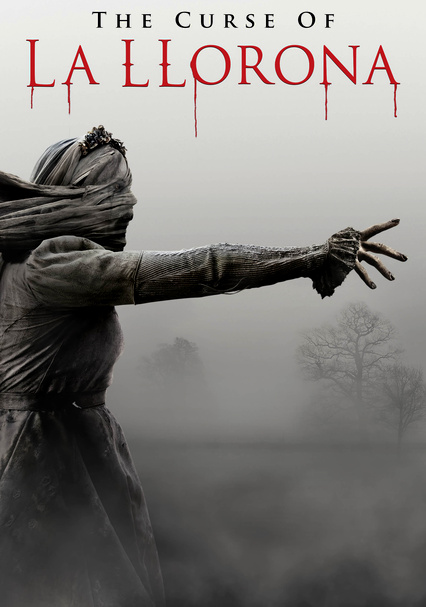
The Curse of La Llorona-2019

The Curse of La Llorona-2019

Director Michael Chaves

Starring Linda Cardellini

Scott’s Review #937

Reviewed August 29, 2019

Grade: C+

The Curse of La Llorona (2019) is a modern-day horror flick that possesses all the standard and expected trimmings that a genre film of this ilk usually has.

The story is left undeveloped, with many possibilities unexplored in favor of a by-the-numbers experience.

Linda Cardellini, an outstanding actress, consistently exceeds the material she is given, yet she often comes up empty-handed.

It is the sixth installment in The Conjuring Universe franchise.

The film does have jumps and frights galore, and a creepy ghost/spirit character that is scary, but more was expected from this film, which left me ultimately disappointed.

First-time director Michael Chaves is a novice, so a bit of leniency should be given as he develops a limited product, but he could have a strong future ahead of him if he works on story elements rather than focuses on merely scare tactics.

In 1673, in Mexico, a family happily plays in a field when one of the boys suddenly witnesses his mother drowning his brother, and soon suffers the same fate.

This incident becomes part of Mexican folklore and is subsequently feared by many. In present times (1973), caseworker Anna (Cardellini) is sent to investigate a woman who has locked her two sons in a room. Despite the woman’s claims that she is trying to save their lives, Anna brings them into police custody.

When the boys are later found drowned, the woman curses Anna, whose two young children are now in danger.

The positives are that Chaves makes a competent film. It is not bad and provides a level of familiarity, with creaking doors, cracking mirrors, and an evil spirit named “The Weeping Woman” that are effective and provide a scare or two at just the right moments.

Characters frequently see the spirit through a reflection, and since the film is set almost entirely at night, this tactic is successful.

Cardellini, garnering recent fame for her role in the Oscar-winning film Green Book (2018), undoubtedly signed on for The Curse of La Llorona before all the Oscar wins.

The actress gives it her all but can hardly save the film, though she does provide the professionalism that raises the film above a terrible experience. Not nearly enough praise will be given to the young child actors playing Anna’s kids.

Largely one-note and lacking any evident experience, ironically, they mirror Chavez’s inexperience. They react to the scenes as they are directed, but never add any depth or authenticity to their performances.

Besides Cardellini and the horror elements, The Curse of La Llorona lacks much shine or substance. The plot and characters are forgettable, and the viewer is left shrugging their shoulders once the film concludes, essentially forgetting the production thirty minutes later.

The story, based on folklore, is weak.

The audience is expected to believe the spirit killed her children and now roams the earth looking for other sacrificial pairs of children so that she may bring hers back from the dead?

In one perplexing sequence, the Weeping Woman softens when looking at Anna’s kids, her demonic face reveals how she once was a beautiful woman. She suddenly changes course and reverts to the evil spirit she had been.

Granted, the special effects are impressive, but this is one example of a missed opportunity. Why couldn’t we be given a meatier backstory of the motivations of the woman?

Other misses include the 1970s Los Angeles period, featuring a feathered hairstyle and a tight sweater worn by Anna, a clip of an old television show, and a car or two overlooking the City of Angels, which hardly appreciates the decade or the metropolis.

Especially laughable are the modern hairstyles and looks of the children, including the kid from the seventeenth century.

Any connection to The Conjuring (2013) or Annabelle (2014) is limited, as one character (Father Perez), appearing briefly holding the Annabelle doll, barely warrants mention.

The Curse of La Llorona (2019) may only be a blueprint of what director Chaves can build on in his career, and a bright future for him is not out of the question.

Building on the Conjuring franchise is a good place to start with a specific audience, who are sure to see this film. He should focus on developing his basics and creating films with more depth, character development, twists, and turns.

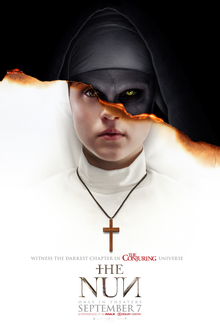
The Nun-2018

The Nun-2018

Director Corin Hardy

Starring Taissa Farmiga, Demian Bichir 

Scott’s Review #812

Reviewed September 19, 2018

Grade: B-

A film such as The Nun (2018) is best described as a genre horror film strong on atmosphere, scares, and effects but weak on story, dialogue, or satisfyingly integrating much of the other films.

To stress, the set pieces and foreboding convent where most events occur are tremendously thought out, adding to the stylistic filming; however, the story stinks, making the overall result barely above mediocre.

This story point, which is said to be connected to The Conjuring (2013) and Annabelle (2014), is all but laughable.

Theoretically, The Nun is a prequel, but since the film is set in 1952, the only connection is a super-quick scene in later years. Ed and Lorraine Warren use a character in The Nun as a case study for their audiences.

Admittedly, I have not seen The Conjuring 2 (2016), but from what I can surmise, what remains of The Nun is a stand-alone film. Was the demonic nun in The Conjuring 2? This may make more sense.

The creepy setting in Romania is a superb choice, given its association with Transylvania and Dracula. The film begins with the suicide of a Roman Catholic nun in a gloomy and largely abandoned Monastery.

Having been visited by an unseen force who kills another nun, a vicious demon appearing in the form of a nun looks on menacingly. Father Burke (Demian Bichir) from the Vatican arrives with Sister Irene (Taissa Farmiga) to investigate, where they meet flirtatious local, Frenchie (Jonas Bloquet).

The atmosphere used throughout almost the entirety of the film is spot on and highly effective.

Most of the scenes are set at nighttime (naturally!) and in or around the vicinity of the spooky, gothic monastery. To double, a gorgeous castle in Romania was used. From the dark and narrow hallways to the crucifixes and obvious religious decor, the props and set design shine through.

The best scenes occur within the grounds of the statuesque building, where dozens of graves can be seen. When bells from the graves begin to ring on their own and spirits can be seen lurking, the audience is in for a good scare.

Even the scenes in daylight hours are fraught with creepy tension. When Frenchy comes upon the nun, dead for days, she dangles from the monastery, eyes gouged and covered with feasting crows, as her blood drips onto the front porch.

The camera close-up of the shot is highly effective, as are others involving the typical jolts and creaky floors that have become a cliche in horror films, but somehow feel fresh and invigorating in The Nun.

And the demonic nun, a grimacing Marilyn Manson-type ghoulish figure, is downright scary.

Unfortunately, along with praise must come some criticisms. The story and the logic do not make much sense, and I stopped trying to figure out the plot points halfway through.

Why the Father and Sister are chosen to go alone to investigate is implausible. A silly, brief mention of a Duke in the old days, evoking a curse in the monastery that was “conjured” up during World War II and must be contained again, is hardly a compelling story.

The plot-driven device (and frankly done to death at this point) attempt to forge a romantic connection between Irene and Frenchy never works. How many times in film have we seen a handsome, young man trying to woo a pretty nun away from her calling?

Filmmakers may have added this for humor, and (hopefully) the characters’ intentional or unintentional religious exclamations of “Oh My God!” or “Mother of God!” are laugh-out-loud silly. With a film like The Nun (2018), riveting writing is not on the wish list- great atmosphere and effects are.

The film delivers excellent content and makes for an enjoyable experience with good thrills and scares. Thankfully, for the horror genre, the film is rated a solid “R” and not watered down for PG-13 audiences.

Just be prepared for some hokey writing.

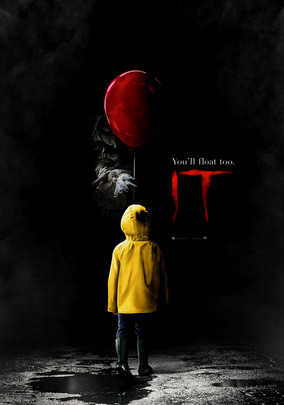
It-2017

It-2017

Director Andres Muschietti

Starring Bill Skarsgard, Jaeden Lieberher

Scott’s Review #684

Reviewed September 20, 2017

Grade: A-

An enormous hype has gone into the first big-screen adaptation of the epic-length 1986 Stephen King novel, It.

An above-average mini-series based on the book was released in 1990, but the film version is much more effective.

Officially entitled It: Chapter One (2017), it divides the story in half, only focusing on the characters as children, not as adults decades later.

The film is highly effective, with a fantastic story, visuals, cinematography, and a rocking musical score. Simply put, it is one of the better Stephen King film adaptations.

As rabid Stephen King readers will understand, at over eleven hundred pages in length and spanning thirty years, a two-hour and fifteen-minute film simply wouldn’t encompass the author’s artistic vision.

To be determined is how chapter two will measure up to the glory of the first chapter.

Derry, Maine, is the sleepy little town where the action takes place. The period is 1988, but it is worth pointing out that the novel takes place in the late 1950s.

On a stormy afternoon, seven-year-old Georgie takes a paper boat, constructed by his older brother Bill Denbrough, outside to see if it sails. He meets a clown in the storm drain, who introduces himself as “Pennywise the Dancing Clown.”

Pennywise toys with Georgie turns vicious, and tears the boy’s arm off.

Months later, life goes on as Bill and his group of friends known as “The Losers Club” all separately begin to see variations of Pennywise.

The film is part of a teenage summer adventure balanced with a terrifying horror film, and director Andres Muschietti achieves this mixture seamlessly.

Lighting is one example of how the film goes about in this fashion.

Most of the outdoor sequences are bright, sunny, and airy. Conversely, the terrifying scenes, usually involving the entity of Pennywise, are shot using dark lighting, eliciting fear and a perfect mood.

The casting is terrific—I specifically found actor Jaeden Lieberher as Stuttering Bill, Jeremy Ray Taylor as Ben Hanscom, and actress Sophia Lillis as Beverly Marsh to be wonderful performers and clear standouts among the teenage characters.

Lillis, bright-eyed and with a strong-willed composure, resembles a young Scarlett Johansson and could have a bright future ahead of her. Lieberher’s earnestness and stuttering ability are believable, and his innocence is reminiscent of every kid’s.

Lastly, Taylor fills a pudgy new kid in town, Ben, with comedy and romanticism in his unrequited love for Bev.

Thriving is the portrayal and appearance of the demonic entity Pennywise. Since the fictional clown has over thirty years of interpretation and imagination, bringing him to cinematic life was challenging.

The risk would have been making him either too horrific or cartoon-like- the result is a perfect hybrid. Bill Skarsgard exudes crazy in his brilliant performance, teetering between goofy and playful with Georgie and evil personified as he taunts and terrorizes the kids in his dusty hideaway.

Interestingly, none of the adult characters are written sympathetically. From the creepy Alvin Marsh to the nerdy pharmacist, even the stern librarian and the overbearing Mrs. Kaspbrak are each laden with an unlikable quality.

The closest adult to being “nice,” Bill’s father, finally screams at his son to accept the fact that Georgie is dead.

Two small complaints include the two secondary bullies—the King Bully Henry Bowers cohorts are not given their comeuppance and simply vanish from the screen, never to be mentioned again.

Secondly, the sound exterior shots of Derry, Maine, exude a New England freshness and a small-town mystique. It’s too bad the scenes were not filmed in Maine at all but somewhere outside of Toronto, Canada—more realism would have been nice.

Due to the massive success of the adapted film, legions of fans will undoubtedly hold their breaths waiting for the resurrection of Pennywise and “It” to be unleashed on film fans everywhere- probably in 2019.

I will be one of those fans.

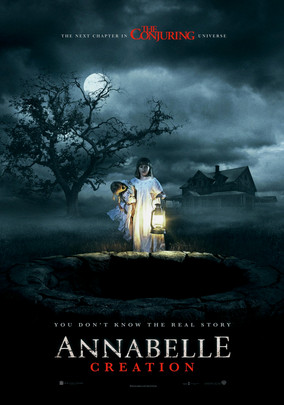
Annabelle: Creation-2017

Annabelle: Creation-2017

Director David F. Sandberg

Starring Anthony LaPaglia, Stephanie Sigman, Talitha Bateman

Scott’s Review #672

Reviewed August 17, 2017

Grade: B+

Annabelle: Creation (2017) is a prequel to the successful 2014 horror film entitled Annabelle and the fourth installment in a total of the popular The Conjuring series (2013-present).

Over just a few years, these films have become well-crafted, intertwined stories in the modern supernatural horror genre.

Compared to another latter-day horror franchise, Saw, Annabelle/The Conjuring elicits more of the classic spook factor rather than the gore associated with the Saw franchise (2004-present).

The time is 1943, set somewhere in the desert and mountainous region of California. Dollmaker Samuel Mullins (Anthony LaPaglia) and his wife Esther (Miranda Otto) live a cheerful existence with their young daughter, Annabelle, whom they nickname Bee.

The family attends church services regularly and plays cute games of hiding and seeking in their vast farmhouse and land. When one sunny day, Bee is struck and killed by a passing car, the couple is devastated beyond repair.

Twelve years later, a group of orphans led by Sister Charlotte (Stephanie Sigman) are invited by Mr. Mullins (Mrs. Mullins is now bedridden due to a mysterious accident) to spend some time at the farmhouse when their orphanage shuts down.

The six orphans, led by best friends Janice (Talitha Bateman), and Linda (Lulu Wilson) embark on the quiet farmhouse and immediately are met by strange goings-on, most notably a life-sized doll living inside a forbidden room, which Janice inevitably stumbles upon out of curiosity.

Stricken with polio, Janice has been left a disabled person, unable to move around very well.

As Janice discovers the creepy doll, or shall we say, Janice awakens the doll from a strange closet covered with bible verses, the doll terrorizes the girls. It wreaks havoc on Janice and Linda in particular.

An evil entity inhabits the doll, and the peculiar circumstances following Annabelle’s death years earlier rise to the surface as secrets are revealed and demons seek refuge in the farmhouse.

Annabelle: Creation is exceptionally well made and inundated with scary elements of surprise. The farmhouse, in particular, is a fantastic setting for a horror film—the remote locale, the eerie quiet, and the dark, unfamiliar layout of the house all come to fruition throughout the film.

Specifically, a scarecrow, a stairwell chair-lift, and the years between 1943 and 1955 are of special importance.

Besides the common horror elements that the film uses to its advantage, it is just downright scary and tense. On plenty of occasions, the cameras are positioned so that a figure or object could easily be lurking behind a particular character but out of sight from the audience.

Sometimes, nothing appears, and the scene goes on, but other times, a scare occurs that makes us jump out of our seats—this is good, classic horror at its finest. One knows not what is, or could be, coming next.

I did not find Annabelle: Creation predictable in the slightest, which makes the film succeed.

As if I was not entertained enough throughout the film, the final set of scenes, now some twelve years after 1955, brings us to the very beginning of 2014’s Annabelle. We witness the very first scenes of that picture, now making perfect sense and weaving the two films together in a compelling fashion.

Apt viewers will remember that Annabelle begins with a horrific, brilliantly crafted, and shot home invasion scene. Now, the storyline will make more sense, and viewers will experience an “oh wow” moment.

I was left with a couple of slight gripes about Annabelle: Creation.

The character’s appearances are quite modern-day—not the clothes per se, but the hairstyles, mannerisms, and figures of speech—and I never, for a second, believed the time was the mid-1950s.

To build on this point, and at the risk of an honest historical inaccuracy critique, a black orphan would never have resided with white orphans, let alone be one of the “popular girls,” nor would the orphans ever have been led by a sexy, Indian nun wearing heavy mascara.

I get that the filmmakers deemed inclusiveness a higher priority over historical accuracy. Still, these details are noticed and readily apparent as not having existed if the film were “real life.”

Furthermore, the point was repeatedly hammered home that the film was a massive supporter of Christianity and went out of its way to promote the goodness of religion over evil.

Annabelle: Creation (2017) reaffirms my belief that good, old-fashioned horror films can still be successfully made in the modern era, using elements firmly etched in the genre but used in a contemporary, scary, and sinister way.

Here’s hoping the creators come up with another good idea and create another segment in this thrilling dual franchise.

Annabelle-2014

Annabelle-2014

Director John R. Leonetti

Starring Annabelle Wallis

Scott’s Review #186

80013775

Reviewed October 17, 2014 

Grade: B+

Annabelle (2014) is a classic, edge-of-your-seat, ghost story that is effective in its creepiness and element of surprise.

Set in California circa 1969, John (Ward Horton) and Mia Gordon (Annabelle Wallis) are an all-American happy young couple.

He is a Doctor and she is beautiful and pregnant with their first child. They attend church each Sunday, are friendly with the neighbors, and have a strong sense of community.

As a surprise, John bestows a life-sized doll on Mia as a present and addition to her existing collection of interesting dolls. Soon strange events begin to occur: a home invasion, a fire, a bizarre experience in an elevator, and creepy drawings by the neighbor’s children.

The film eventually dives into murkier territory when a strange, religious woman, played by Alfre Woodard, is introduced, and the film then shifts focus to spirits, taking one’s soul, and the occult.

What sets Annabelle apart from similar horror contemporaries is the power of suspense. We as the audience know something bad will happen, but we don’t know when.

Unlike many horror films that slice and dice for shock value, Annabelle does not. Rather, foreshadowing and anticipation are common within the film, making the eventual jumps scarier!

Mia’s constant use of an electric sewing machine and Mia’s attentive watching news coverage of the Manson murders are clues as to what will come next.

A scene set in the middle of the night as a home invasion takes place next door is shot exceptionally well, like Alfred Hitchcock’s Rear Window (1955), with no dialogue. What the audience sees inside the house from across the yard as violence occurs- is frightening.

Within the same scene we know the home invasion will gravitate to Gordon’s house, but when will it strike?

Another effective scene shows a seemingly innocent little girl running towards another character in a separate bedroom but turns into a maniacal fiend and the foot thudding makes this terrifying.

I found myself genuinely scared during a few scenes!

Wisely choosing to avoid the all too frequent CGI effects, Annabelle instead goes the traditional route with genuine scares harvested from the unknown and the feeling of anticipation and dread of events to come.

The fantastic musical score composed by Joseph Bishara adds to the anticipation. Annabelle is a prequel to the equally scary The Conjuring (2013). The very first scene is, in fact, the same scene from that film where two nurses explain how they obtained the doll, named Annabelle, and cannot get away from her.

The final act delves into the spiritual world of evil- a soul (presumably Mia’s or her babies) must be sacrificed to relinquish the curse put upon her by Annabelle’s original owner.

A surprising figure aids in the conclusion of this film. Annabelle (2014) is an old-school horror film done very well.