Tag Archives: Imelda Staunton

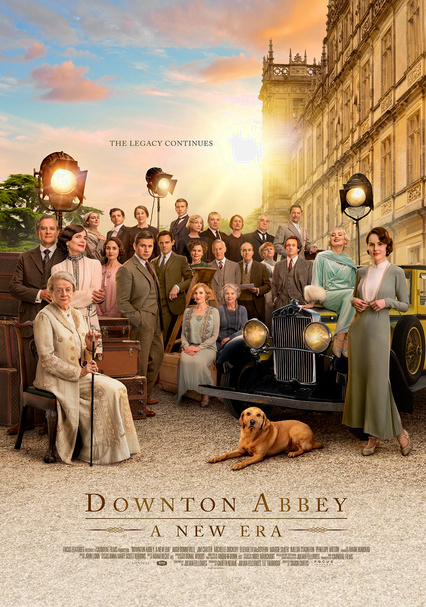
Downton Abbey: A New Era-2022

Downton Abbey: A New Era-2022

Director Simon Curtis

Starring Hugh Bonneville, Michelle Dockery, Maggie Smith

Scott’s Review #1,261
Reviewed May 30, 2022

Grade: B+

Following the success of the 2019 film adaptation of the television series Downton Abbey, which aired on PBS from 2010 to 2015, a sequel was produced. This was unsurprising, given that the fan-favorite was both critically and commercially well-received.

Downton Abbey: A New Era (2022) will undoubtedly please fans of the series and may even attract new audiences who have not yet been exposed to it.

The trials and tribulations of the Crawleys, their friends, and staff are a treat as new situations and drama arise for the group to navigate, discussed over tea and crumpets.

The film is like visiting a cherished friend after a long absence.

Award-winning creator Julian Fellowes is thankfully still involved and was given screenwriting credit. This means that the formula is still the same, and nobody has tried to reinvent the wheel or veer the characters off course.

The year is 1928.

The main action centers around the sudden news that grand dame Violet Crawley, Dowager Countess of Grantham (Maggie Smith), has inherited a villa in the south of France from a former suitor who has just died. Some of the family must travel to France and figure out the mystery.

Secondly, A film production company requests to use Downton for a silent film. Robert (Hugh Bonneville) and retired butler Mr. Carson (Jim Carter) disapprove. Still, Robert’s eldest daughter and estate manager, Lady Mary Talbot (Michelle Dockery), says the income would cover the cost of replacing Downton’s leaking roof.

The household staff is eager to see the film stars and scrambles to make things as lovely as possible for the incoming actors.

The terrific thing about Downton Abbey: A New Era is that nearly all of the almost thirty principal characters are given some storyline.

Plus, there are a handful of new characters to give screen time to.

Surprisingly, as in Downton Abbey (2019), the main ‘super couple’, servants Anna (Joanne Froggatt) and Bates (Brendan Coyle) are given almost nothing to do. They are seen, but their child is not, and some drama would have been nice. Perhaps a mysterious illness or a malady for the couple to endure?

Maybe next time.

Still, everyone else is represented, and the feeling for viewers is warm and fuzzy.

Below are some highlights.

Robert frets at the possibility that he may be half French and his birth a result of a tryst between Violet and the villa owner. Mary’s absent husband allows for a flirtation to develop between her and a member of the film.

Gay butler Thomas (Robert James-Collier) finds himself pursued by the film’s big star.

Cora (Elizabeth McGovern) keeps a health secret, while a bedridden Violet’s health declines in bed. Newlywed servants Daisy (Sophie McShera) and Andy (Michael Fox) scheme to unite his lonely father with the cook, Mrs. Patmore (Lesley Nicol).

Finally, Miss Baxter (Raquel Cassidy) eagerly awaits a marriage proposal from nervous Mr. Molesley (Kevin Doyle).

In addition, new characters, such as actors Guy Dexter (Dominic West), Myrna Dalgleish (Laura Haddock), and director Jack Barber (Hugh Dancy), are instant fan favorites, immediately connecting with the mainstay characters.

This is ingenious writing that can serve as a valuable lesson for any soap opera writer. Always write new characters by sharing stories with existing ones rather than writing in silos. It works wonders.

The historical relevance of approaching the 1930s is not missed, as ‘talkies’ taking over the film industry meant the kiss of death for most silent film stars.

The popular LGBTQ+ storyline is wonderfully written. A gay man in 1928 was doomed to either a life of hiding or one of loneliness, and one character wisely references a ‘cruel world’ regarding the viewpoint of the lifestyle.

Times were not changing just yet.

I am crossing my fingers that a third Downton Abbey film will be made. The characters and storylines remain vibrant, especially as the timeline progresses into the 1930s and the dire 1940s, when World War II breaks out.

Downton Abbey: A New Era (2022) proves that in the COVID-19 era, a trusted old friend is needed tremendously, even on the silver screen.
Nanny McPhee-2005

Nanny McPhee-2005

Director Kirk Jones

Starring Emma Thompson, Colin Firth

Scott’s Review #1,161

Reviewed July 15, 2021

Grade: B

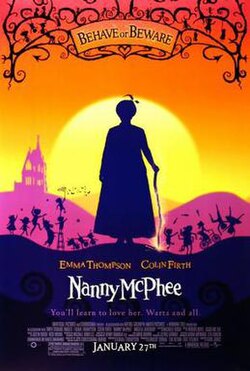
Patterned after the classic family film Mary Poppins (1964), but with a slightly harder edge, Nanny McPhee (2005) attempts to recreate the iconic character with a similar storyline setup.

But a couple of other family films make their presence known.

The Sound of Music (1965) is quickly added to the mix with a well-meaning but absent daddy and a slew of siblings who terrorize former and present nannies.

A scullery maid with big dreams ala Cinderella (1950) solidifies the harkening back to 1960s cinematic family fun.

Great British actors like Emma Thompson and Colin Firth add much to the film which would be mediocre without their benefits. And the iconic Angela Lansbury hops aboard in a small yet important role. They make what would be a disposable kid’s movie into something respectable, romantic, and fairly cute.

The film tries a bit too hard with the comical moments, losing the magical moments that would have made it feel more alive. Instead, most scenarios come across as campy or family-oriented.

Of course, the conclusion can be seen from the very beginning.

The effort is admirable but the story experience never feels very compelling. Thinking demographically, Nanny McPhee has much to offer the younger set. The kids will love the candy-box sets and costumes like confectionery-shop windows, the whimsy and farcical grotesqueness of it all.

The adults might be won over by the creativity and the cast.

Thompson (who also wrote the screenplay) has fun playing ugly and getting her feet dirty, her snaggletooth almost a character itself, so prominent is it featured. She is even the anti-Mary Poppins, lacking an umbrella or the high-class pose that she had.

Each time the children learn a lesson, one of Nanny McPhee’s facial defects magically disappears.

But why not just dust off the original Mary Poppins? Nanny McPhee will inevitably be forgotten since an actual remake of the Mary Poppins film was released in 2015 all but confirming the Nanny McPhee franchise as the second tier.

And Nanny McPhee made me want to revisit Mary Poppins instead of watching Nanny McPhee again.

Set in Victorian-era England, lonely widower Cedric Brown (Firth) hires Nanny McPhee (Thompson) to care for his seven rambunctious children, who have terrified and chased away all previous nannies. But McPhee is different and will have no such nonsense. She slowly wins over the children with magic and a bit of discipline.

And when the children’s great-aunt and benefactor, Lady Adelaide Stitch (Lansbury), threatens to separate the kids, the family pulls together under the guidance of their new leader.

Lansbury nearly steals the show. Short-sighted and domineering, the family is financially supported by her and Cedric cowers to her every request until she demands custody over one of the children. She also viciously threatens to reduce the family to poverty unless Cedric remarries within the month, meaning the family would lose the house, and be forced to separate.

She is deliciously wicked in the role and plays it to the hilt.

The sweet romance between Cedric and scullery maid Evangeline, played by Kelly Macdonald, works well. They resist at first, but then realize their feelings for each other and agree to marry, satisfying Aunt Adelaide’s conditions for maintaining her financial support.

Nanny McPhee (who is now fully beautiful), magically makes it snow in August, transforming the wedding scene and changing Evangeline’s clothes into a beautiful wedding dress.

This is the fairy tale ending that ultimately makes the film work and wins me over.

Nanny McPhee (2005) is solid if not remarkable.

Maleficent: Mistress of Evil-2019

Maleficent: Mistress of Evil- 2019

Director Joachim Ronning

Starring Elle Fanning, Angelina Jolie

Scott’s Review #1,039

Reviewed July 14, 2020

Grade: B+

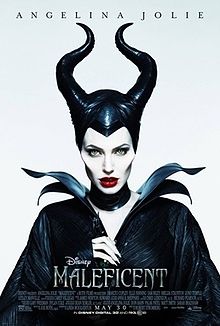
Maleficent: Mistress of Evil (2019) is the follow-up to the 2014 film, titled Maleficent, and while not a necessary sequel, it surpasses the original.

The intent was to create a significant studio effort that would generate substantial revenue, and the experiment appears to have been successful.

The production is not as frightening as the title might lead one to believe, and children over the age of ten would be a suitable target audience.

While the screenplay features traditional plot elements and a predictable ending, the real winner is the visual and cinematic treatment, which will leave viewers gasping.

The lush landscapes, odd little worlds, castles, and forests blossom with vibrant colors and exquisite shapes and objects.

It may primarily be CGI, but marvelous all the same.

To recap, the character of Maleficent debuted in the 1959 classic animated Disney film Sleeping Beauty. Maleficent is an evil fairy and the self-proclaimed “Mistress of All Evil” who, after not being invited to a christening, curses the infant Princess Aurora to “prick her finger on the spindle of a spinning wheel and die” before the sun sets on Aurora’s sixteenth birthday.

The character has since “evolved”, now portrayed as a sympathetic character, who is misunderstood in trying to protect herself and her domain from humans.

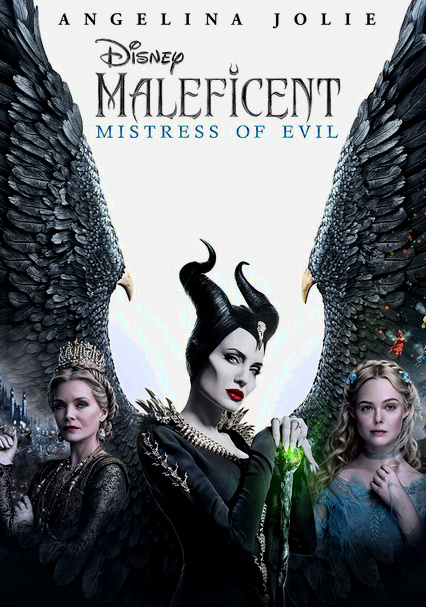
For five years, Aurora (Elle Fanning) has reigned peacefully as Queen of the Moors with Maleficent (Angelina Jolie) serving as teacher and protector. They have a rapturous relationship and flock and carry on with fairies and animals alike.

Handsome Prince Phillip (Harris Dickinson) proposes to Aurora, thereby uniting her kingdom with his, which is met with caution by his parents, specifically his mother, Queen Ingrid (Michelle Pfeiffer).

When the players gather for a celebratory dinner, Maleficent is mocked, causing her to fly into a rage, setting off a war between humans and fairies.

A key positive, and a notable shift in the story, is that Maleficent, a legendary film villain, is written sympathetically, and the plot device is effective. Rather than have her sparring with daughter Aurora, the duo team up to thwart the devious efforts of the evil Queen Ingrid, who is the real villain.

Jolie and Pfeiffer must have had fun playing the roles, and both perform their respective parts adequately. Favorable to me is Jolie, adding just enough vulnerability to balance her fierce nature and blood-red lips. Pfeiffer plays the role straight, as a caricature, with no redeeming value.

Both roles are fun.

Keeping in mind the target audience, the characters of Maleficent and Aurora are inspiring, especially to young females everywhere. The film adds more than a hint of progressive feminism as both characters are strong and no-nonsense.

This does not detract from their sensitivity or sense of fairness. Both could equally be role models of tough yet compassionate female characters.

In most Disney films, there are heroes and villains, and we all know and expect that. The standard storyline of good revolting against evil is on display, and an epic climactic battle scene gives a customary ending to the film.

Likewise, the fairy tale romance between Prince and Princess is prominently featured, and for my money, Dickinson and Fanning are tremendous in the roles.

The chemistry between the actors is apparent, and there is a nice balance between a believable romance and strong, independent characters.

Queen Ingrid, barely a mention in the original animated film, is turned into an evil shrew, all completely plot-driven. The story is what I expected it to be, but not the film’s high point.

More impressive is how the viewer can easily escape into a world of make-believe and long to stay there forever. Especially for the younger viewers, the Moors are a bevy of magical creatures and fluttering fairies rich with goodness.

The comical Knotgrass, Thistlewit, and Flittle, the red fairy, green fairy, and blue fairy, respectively, make a return appearance, though in a limited capacity. It would have been nice to give them a stronger presence, providing more wisdom, more advice, and more humor, but they serve their comic relief purpose well.

Will there be a third incarnation of Maleficent?

The filmmakers provide a strong likelihood. After Aurora and Philip wed, Maleficent returns to the Moors with the other Dark Fey, teaching the young fairies to fly. She promises to return for Aurora and Philip’s future child’s christening.

This vow seems like an easy setup to build on the original storyline, unlocking the next chapter in this engaging saga.

Oscar Nominations: Best Makeup and Hairstyling

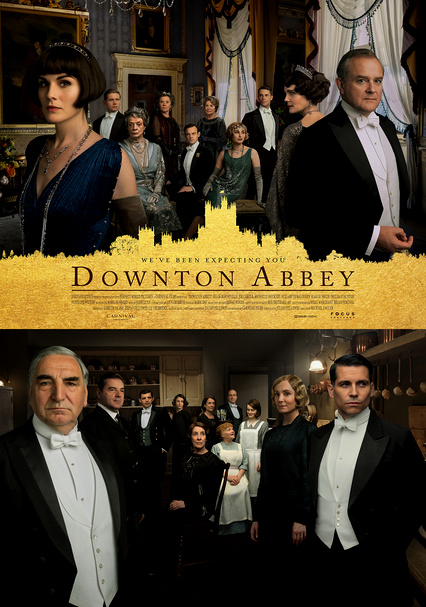
Downton Abbey-2019

Downton Abbey-2019

Director Michael Engler

Starring Hugh Bonneville, Michelle Dockery, Maggie Smith

Scott’s Review #947

Reviewed October 16, 2019

Grade: B+

Capitalizing on the tremendous success of the television series, which ended in 2015, Downton Abbey (2019) is a British historical period drama film written by Julian Fellowes, creator and writer of the series.

Beloved fans will devour the film, as the familiar formula and characters are brought to the big screen, giving it an even grander feel.

The film plays more like a two-hour episode arc over reinventing the wheel, but the result is a resounding crowd-pleasing affair with drama, scandals, and a good dose of nostalgia.

The Crawleys and their servants reside in the lavish fictional estate of Downton Abbey during the year 1927, a year and a half after the series ended.

Little has changed, and most of the characters are in similar situations, enjoying their daily lives.

Robert (Hugh Bonneville) and Cora Crawley (Elizabeth McGovern), the Earl and Countess of Grantham, are notified that King George V and Queen Mary will visit their home as part of a royal tour throughout the country.

The family and staff are excited yet skittish as they prepare to ensure the lavish event goes off without a hitch.

Situations arise such as the Downton Abbey servants feuding with the Buckingham Palace staff, Violet Crawley’s (Maggie Smith) dismay at Robert’s cousin Maud (Imelda Staunton) being in attendance, and attempted plot to kill the King which is thwarted by Tom (Allen Leach).

A new job offer for Edith’s (Laura Carmichael) husband, Mary’s (Michelle Dockery) frustration with maintaining the vast estate, and potential romances for several characters, including a scandalous same-sex relationship.

A few contemporary issues are created – among them, women’s rights and the plight of gay men. And though welcome, neither changes the overall blueprint of what the series is about, which is just what the series fans ordered.

Smith is the main attraction as she chews up the scenery with her insults, sarcasm, and blunt honesty. But the best scene, coming late in the film, gives Smith a chance to burst with sentimentality and limit the hamminess for at least one treasured scene.

The costumes and art direction are lovely, with luscious gowns, tuxedos, suits, jackets, hats, and shoes found in every scene.

The sprawling grounds of Downton Abbey and the ravishing interiors are front and center.

The film ventures to the neighboring city of York to offer a more progressive and metropolitan vibe, but each scene looks perfect, which is what fans have come to expect.

Not every character is front and center, but with an unwieldy cast of close to thirty principals, some are destined to accept back-burner status.

Surprisingly, yet agreeably, is the toned-down story for “super-couple” Bates (Brendan Coyle) and Anna (Joanne Froggatt), having enjoyed their share of trials and tribulations during the original run.

Wonderful moments feature supporting characters like Carson (Jim Carter), Thomas (Robert James-Collier), and Molesley (Kevin Doyle), who nearly steals the show with his hysterical fascination with royalty.

The balance and pace of the film are nearly perfect, and every character has at least something to do.

This characteristic has always helped huge ensemble casts succeed, and Fellowes wisely balances humor with drama but avoids tragedy or dark situations, hoping for mainstream success with his move to the big screen, opting to play it safe.

The attempt succeeds as the film adopts the “if it ain’t broke, don’t fix it” approach.

Downton Abbey (2019) is a splendid winner, primarily due to its impressive production values and costumes.

For fans of the television series, the film is a must-see and offers no more or no less than expected, providing more than enough to please those who want what the popular stories initially offered.

Despite the drama, the film does not feel “soapy” or contrived, and the tender moments may evoke a need for a hankie.

If the writing can remain fresh, I see no reason for another offering not to be green-lit, primarily due to the significant box-office returns.

Maleficent-2014

Maleficent-2014

Director Robert Stromberg

Starring Angelina Jolie

Scott’s Review #251

Maleficent_poster

Reviewed June 27, 2015

Grade: C+

Maleficent (2014) is an updated re-telling of the classic fairy tale “Sleeping Beauty” told from the perspective of Maleficent, the evil godmother, who in this version, it is revealed, was not always.

She is rather sympathetic towards the beginning of the film.

Later in life, becoming the antagonist, she begins life in a world of goodness, wonder, and hope until she is duped by a young man she loves and turns wicked with hatred and revenge.

The casting of Angelina Jolie as Maleficent is excellent and the main reason to watch the film.

Also worth noting is the wonderful, creative art direction and costumes that look gothic and interesting.

Otherwise, the film meanders a bit, is slightly watered down, and contains a sappy Disney-style love story. The story itself is the weakest part of Maleficent.

Maleficent, protector of the fairies in the magical land of the Moors, as a young girl is betrayed and is NOT a villain. Her male suitor (Stefan) is someone she trusts, loves, and respects, is then duped and has her wings stolen by him.

He becomes the King of the neighboring land of humans, vastly different from the peaceful world that Maleficent lives in.

These events lead her to devastation followed by revenge as she places a vicious sleeping curse on Stefan’s firstborn, Aurora.

Jolie is wickedly delicious in this role- the sultry, pouty looks, and those eyes! She plays scorned, revenge-driven to the hilt without being too over the top as lesser actresses would have.

As the actress ages, she is beginning to take on more character, villainous parts rather than sexy bad girls or heroines and I am all for that. It gives the actress something meaty to sink her teeth into. Her dark costumes perfectly give the character an edge.

The art direction is magical and the difference between the two lands is distinctive. The beauty of the Moors with gushing streams, mountains, and flowers contrasts with the stark nature of the human world.

The fairies symbolize peace and freedom with a life filled with treasures, whereas the human kingdom symbolizes ambition, greed, and coldness. The tiny fairies flittering around add zest and life to the film.

The silly love story, though is not believable nor compelling to me, especially the latter film romance between Stefan’s daughter- Aurora, and her wealthy suitor Phillip. They seem manufactured to be together without having a chance to get to know each other.

This seems contrived and produced to add something young to the story.

On a storytelling note, Maleficent’s sleeping curse is set to transpire on Aurora’s sixteenth birthday when she pricks her finger on a spindle and falls into a deep sleep that can only be remedied by love’s true kiss.

Why does he send Aurora away to live in hiding when she is a newborn? Doesn’t he have sixteen years to enjoy her?

The film then dwindles to the inevitable battle finale with lots of movement and fire and a stand-off between Maleficent and Stefan that is dull and predictable.

Overall, the first half of Maleficent (2014) is the better part and the performance of Angelina Jolie is wonderful.

Oscar Nominations: Best Costume Design

Pride-2014

Pride-2014

Director Matthew Warchus

Starring Bill Nighy, Imelda Staunton

Scott’s Review #215

80013480

Reviewed January 17, 2015

Grade: B-

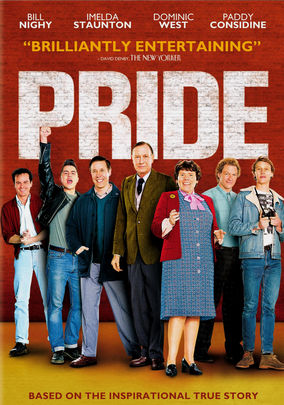
Pride (2014), based on a true story, deserves props for delivering a nice message about inclusion and groups of vastly different people coming together as human beings.

While it’s a nice film, the filmmakers play it a bit too safe and it has a definite formulaic feel to it.

Surely, the real story of Pride was not as simplistic as this film felt at times.

The setting is 1984 England. A group of British miners goes on strike over wages. A group named Lesbians and Gays Support the Miners made up of gay men and women developed an interest in the strike and decided to help the miners and families.

Why they decided to take on this cause is not fully explained. The National Union of Mineworkers is hesitant to accept funds as they worry about the publicity caused by a group thought to be perverts.

The film is riddled with clichés- the macho miners resist the help from the gays, many of whom are portrayed as effeminate. The characters who are lesbians look as though the filmmakers wanted to “butch them up”, thereby overdoing the stereotype.

There is a subplot of one gay young man who has not come out to his parents, a well-to-do, pretentious couple. When inevitably the truth is revealed, the parents are angry and turn their backs on the teen.

He leaves home to join the gays and lesbians who accept him into their lives with open arms.

The female head of the committee is homophobic and vows to do everything in her power to make sure the gay and lesbian group does not succeed in aligning with the miners.

These clichés seemed way too overdone to make the film more dramatic. Some of the characters, therefore, come across as one-dimensional.

Even the story revolving around a character with AIDS seems watered down and soft.

On the plus side, casting the brilliant Imelda Staunton as the sympathetic, maternal, Hefina is a plus.

A huge supporter of gays and lesbians she comically befriends all of them and is curious about their lifestyles. Bill Nighy is also excellent as Cliff, the older miner who turns out to be gay.

Margaret Thatcher, Prime Minister at the time, is presented as greedy and selfish with little regard or use for the miners or labor unions.

Pride (2014) is an earnest, sentimental, feel-good film that deserves adoration for the coming together of different communities.

I would have liked to see more risks taken by the film.