Tag Archives: Penelope Wilton

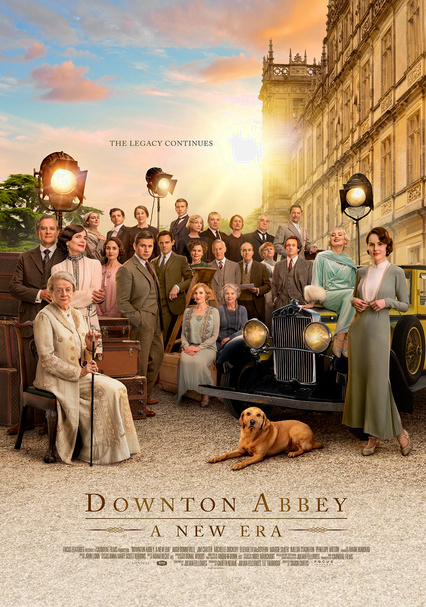
Downton Abbey: A New Era-2022

Downton Abbey: A New Era-2022

Director Simon Curtis

Starring Hugh Bonneville, Michelle Dockery, Maggie Smith

Scott’s Review #1,261

Reviewed May 30, 2022

Grade: B+

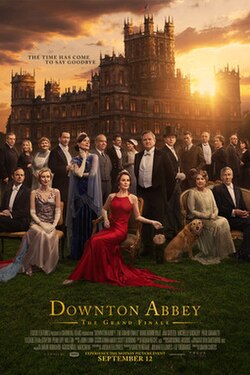
Following the success of the 2019 film adaptation of the television series Downton Abbey, which aired on PBS from 2010 to 2015, a sequel was produced. This was unsurprising, given that the fan-favorite was both critically and commercially well-received.

Downton Abbey: A New Era (2022) will undoubtedly please fans of the series and may even attract new audiences who have not yet been exposed to it.

The trials and tribulations of the Crawleys, their friends, and staff are a treat as new situations and drama arise for the group to navigate, discussed over tea and crumpets.

The film is like visiting a cherished friend after a long absence.

Award-winning creator Julian Fellowes is thankfully still involved and was given screenwriting credit. This means that the formula is still the same, and nobody has tried to reinvent the wheel or veer the characters off course.

The year is 1928.

The main action centers around the sudden news that grand dame Violet Crawley, Dowager Countess of Grantham (Maggie Smith), has inherited a villa in the south of France from a former suitor who has just died. Some of the family must travel to France and figure out the mystery.

Secondly, A film production company requests to use Downton for a silent film. Robert (Hugh Bonneville) and retired butler Mr. Carson (Jim Carter) disapprove. Still, Robert’s eldest daughter and estate manager, Lady Mary Talbot (Michelle Dockery), says the income would cover the cost of replacing Downton’s leaking roof.

The household staff is eager to see the film stars and scrambles to make things as lovely as possible for the incoming actors.

The terrific thing about Downton Abbey: A New Era is that nearly all of the almost thirty principal characters are given some storyline.

Plus, there are a handful of new characters to give screen time to.

Surprisingly, as in Downton Abbey (2019), the main ‘super couple’, servants Anna (Joanne Froggatt) and Bates (Brendan Coyle) are given almost nothing to do. They are seen, but their child is not, and some drama would have been nice. Perhaps a mysterious illness or a malady for the couple to endure?

Maybe next time.

Still, everyone else is represented, and the feeling for viewers is warm and fuzzy.

Below are some highlights.

Robert frets at the possibility that he may be half French and his birth a result of a tryst between Violet and the villa owner. Mary’s absent husband allows for a flirtation to develop between her and a member of the film.

Gay butler Thomas (Robert James-Collier) finds himself pursued by the film’s big star.

Cora (Elizabeth McGovern) keeps a health secret, while a bedridden Violet’s health declines in bed. Newlywed servants Daisy (Sophie McShera) and Andy (Michael Fox) scheme to unite his lonely father with the cook, Mrs. Patmore (Lesley Nicol).

Finally, Miss Baxter (Raquel Cassidy) eagerly awaits a marriage proposal from nervous Mr. Molesley (Kevin Doyle).

In addition, new characters, such as actors Guy Dexter (Dominic West), Myrna Dalgleish (Laura Haddock), and director Jack Barber (Hugh Dancy), are instant fan favorites, immediately connecting with the mainstay characters.

This is ingenious writing that can serve as a valuable lesson for any soap opera writer. Always write new characters by sharing stories with existing ones rather than writing in silos. It works wonders.

The historical relevance of approaching the 1930s is not missed, as ‘talkies’ taking over the film industry meant the kiss of death for most silent film stars.

The popular LGBTQ+ storyline is wonderfully written. A gay man in 1928 was doomed to either a life of hiding or one of loneliness, and one character wisely references a ‘cruel world’ regarding the viewpoint of the lifestyle.

Times were not changing just yet.

I am crossing my fingers that a third Downton Abbey film will be made. The characters and storylines remain vibrant, especially as the timeline progresses into the 1930s and the dire 1940s, when World War II breaks out.

Downton Abbey: A New Era (2022) proves that in the COVID-19 era, a trusted old friend is needed tremendously, even on the silver screen.

Calendar Girls-2003

Calendar Girls-2003

Director Nigel Cole

Starring Helen Mirren, Julie Walters, Penelope Wilton

Scott’s Review #1,090

Reviewed December 11, 2020

Grade: B+

A clever female version of The Full Monty (1997), the middle-aged bordering on senior citizen characters, nudity comparisons notwithstanding, Calendar Girls (2003) has standard similarities.

The film is a light-hearted affair, charming and fun with positive and inspiring messages about friendship and helping with cancer research.

How can a film like this not bring a smile to the viewer’s face? It did to mine.

That said, it’s hardly high drama or material that requires much thought or dissection. I’d wager to say you only need to see it once. There lies a situational or clichéd theme as the women face the standard and guessable awkward moments, but the film entertains in style.

Calendar Girls is based on a true story adding merit, appreciation, and an endearing quality. It’s a feel-good film if there ever was one which is just fine in this case.

The film was a box-office smash, and why not? It’s a comically robust experience.

A likable group of “women of a certain age” conspire to launch a calendar, bearing their best assets for all to see. Before this sounds too scandalous or corny, the ladies do it for a good cause and not for any titillating pleasure.

The women are British and, while attractive, are average-looking gals with womanly figures. These tidbits lead to humorous and embarrassing situations as some of the women are more modest than others, especially parallel to the conservative and crusty town they live in.

This leads to shocks among the prudish townspeople.

Chris (Helen Mirren) and Annie (Julie Walters) are best friends. When Annie’s husband dies of leukemia, they conjure up the idea of creating a nude calendar, where women pose while doing traditional duties like baking and knitting. The proceeds will go to research for the deadly disease.

Unexpectedly, Chris and Annie, along with others from the Women’s Institute in which they are members, achieved worldwide success even invited to Los Angeles to appear on television’s The Tonight Show with Jay Leno.

The women clash due to their success and differing lifestyle directions, before reconciling and deciding that their ordinary lives aren’t so bad. They happily resume their nice lives away from the spotlight.

The comparisons to The Full Monty (1997) must be mentioned because they are obvious. Whereas the men in The Full Monty strip on stage, the women prefer more modesty, nestled behind calendars for safety, but both groups hail from the English countryside and are regular folk.

Since nudity is the word of the day, both groups possess average bodies and champion worthy causes. Like it or not, this setup produces giggles.

The “calendar girls” are a relatable group that is a marketing genius and allows the film to achieve much merit. Who would care if a bunch of supermodels posed nude while baking cookies?

No, the everywoman factor is sky-high, allowing the film to be appreciated and savored.

Because Mirren and Walters, two respected British actresses appear in Calendar Girls, there is an added respectability.

After all, would either choose a project less than credible? The obvious answer is they make the film better than it might have been. Penelope Wilton does too.

There is a classiness the ladies bring so that we can sink into our theater seats and revel in the good-natured comedy, assuring ourselves we are seeing something of quality too.

Calendar Girls (2003) is so like The Full Monty that they ought to be watched back to back. Perhaps a naughty night in, with a bottle of wine and some cheese, ready to embark on delights and jolly laughs.

Downton Abbey-2019

Downton Abbey-2019

Director Michael Engler

Starring Hugh Bonneville, Michelle Dockery, Maggie Smith

Scott’s Review #947

Reviewed October 16, 2019

Grade: B+

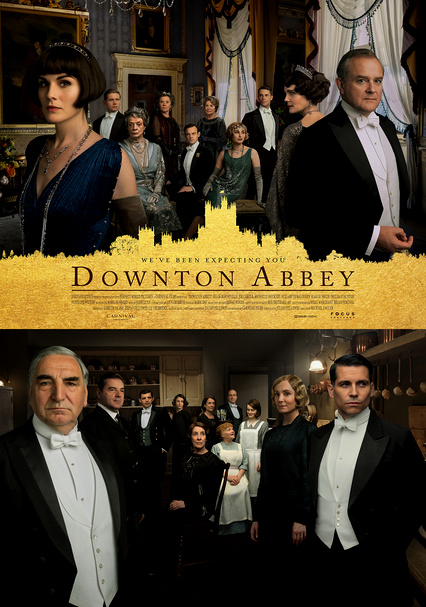
Capitalizing on the tremendous success of the television series, which ended in 2015, Downton Abbey (2019) is a British historical period drama film written by Julian Fellowes, creator and writer of the series.

Beloved fans will devour the film, as the familiar formula and characters are brought to the big screen, giving it an even grander feel.

The film plays more like a two-hour episode arc over reinventing the wheel, but the result is a resounding crowd-pleasing affair with drama, scandals, and a good dose of nostalgia.

The Crawleys and their servants reside in the lavish fictional estate of Downton Abbey during the year 1927, a year and a half after the series ended.

Little has changed, and most of the characters are in similar situations, enjoying their daily lives.

Robert (Hugh Bonneville) and Cora Crawley (Elizabeth McGovern), the Earl and Countess of Grantham, are notified that King George V and Queen Mary will visit their home as part of a royal tour throughout the country.

The family and staff are excited yet skittish as they prepare to ensure the lavish event goes off without a hitch.

Situations arise such as the Downton Abbey servants feuding with the Buckingham Palace staff, Violet Crawley’s (Maggie Smith) dismay at Robert’s cousin Maud (Imelda Staunton) being in attendance, and attempted plot to kill the King which is thwarted by Tom (Allen Leach).

A new job offer for Edith’s (Laura Carmichael) husband, Mary’s (Michelle Dockery) frustration with maintaining the vast estate, and potential romances for several characters, including a scandalous same-sex relationship.

A few contemporary issues are created – among them, women’s rights and the plight of gay men. And though welcome, neither changes the overall blueprint of what the series is about, which is just what the series fans ordered.

Smith is the main attraction as she chews up the scenery with her insults, sarcasm, and blunt honesty. But the best scene, coming late in the film, gives Smith a chance to burst with sentimentality and limit the hamminess for at least one treasured scene.

The costumes and art direction are lovely, with luscious gowns, tuxedos, suits, jackets, hats, and shoes found in every scene.

The sprawling grounds of Downton Abbey and the ravishing interiors are front and center.

The film ventures to the neighboring city of York to offer a more progressive and metropolitan vibe, but each scene looks perfect, which is what fans have come to expect.

Not every character is front and center, but with an unwieldy cast of close to thirty principals, some are destined to accept back-burner status.

Surprisingly, yet agreeably, is the toned-down story for “super-couple” Bates (Brendan Coyle) and Anna (Joanne Froggatt), having enjoyed their share of trials and tribulations during the original run.

Wonderful moments feature supporting characters like Carson (Jim Carter), Thomas (Robert James-Collier), and Molesley (Kevin Doyle), who nearly steals the show with his hysterical fascination with royalty.

The balance and pace of the film are nearly perfect, and every character has at least something to do.

This characteristic has always helped huge ensemble casts succeed, and Fellowes wisely balances humor with drama but avoids tragedy or dark situations, hoping for mainstream success with his move to the big screen, opting to play it safe.

The attempt succeeds as the film adopts the “if it ain’t broke, don’t fix it” approach.

Downton Abbey (2019) is a splendid winner, primarily due to its impressive production values and costumes.

For fans of the television series, the film is a must-see and offers no more or no less than expected, providing more than enough to please those who want what the popular stories initially offered.

Despite the drama, the film does not feel “soapy” or contrived, and the tender moments may evoke a need for a hankie.

If the writing can remain fresh, I see no reason for another offering not to be green-lit, primarily due to the significant box-office returns.