Tag Archives: Jessica Cauffiel

Valentine-2001

Valentine-2001

Director Jamie Blanks

Starring David Boreanaz, Denise Richards

Scott’s Review #1,146

Reviewed May 26, 2021

Grade: C

Valentine (2001) is a horror film made in the wrong decade.

The film could have been more meaningful or relevant if only it had been made in the early 1980s.

Sadly, it feels like a weak retread and an ode to a former time. Its flight took off twenty years ago.

1981 or 1982 was the heyday of the slasher flick. It’s kind of like a band attempting to play 1980s pop hits passed off as original music- it doesn’t work.

Or, a cover band belting out Bon Jovi hits as their own.

What’s worse is that it’s set in 2001. It might have been a better film with feathered hair, parachute pants, and a direct tribute to the 1980s.

It’s painfully mediocre.

If I sound harsh, that is not my intention. Valentine is not a disastrous film, and the pacing is fine at a short one hour and thirty-six minutes. It’s just that it’s dreadfully unoriginal and therefore uninspiring.

It’s like the filmmakers thought, ‘let’s put some hot chicks in a slasher film and off them one by one and make some money.

But the joke’s on them. Valentine didn’t make much money and was universally panned.

Borrowing from several popular flicks like Prom Night (1980), Terror Train (1980), and My Bloody Valentine (1981), director Jamie Banks even steals the familiar holiday theme so essential to this genre.

Even the final twist is unfulfilling because, like in almost all slasher films, a twist is almost mandatory and therefore unsurprising.

Before I forget, the acting is painfully bad. So there’s that bonus.

The action begins at a junior high school Valentine’s Day dance in 1988. An outcast named Jeremy Melton asks four popular girls to dance and is disdainfully rebuffed by each.

They are mean girls. Their overweight friend Dorothy accepts Jeremy’s invitation, and they make out underneath the bleachers.

When bullies discover them, they are ridiculed. Dorothy lies and claims that Jeremy sexually assaulted her, resulting in his being beaten, expelled, and eventually institutionalized after the group testifies against him, lying on the witness stand.

Years later, on Valentine’s Day, Kate (Marley Shelton), Paige (Denise Richards), Dorothy (Jessica Capshaw), Lily (Jessica Cauffiel), and Shelly (Katherine Heigl) begin receiving scary messages from an unknown sender, signed “JM”.

The women are then killed off one by one by a psycho in a Cupid mask.

They reside in San Francisco.

They suspect the murderer is Jeremy, having returned to exact revenge. Ya think?

There is entertainment in the mean girls being hacked to bits unceremoniously, and it is satisfying.

I sided with the Cupid killer, but was I supposed to? Well, I did anyway. Jeremy is handsome and sympathetic. After all, they ruined his life. Why would we root for the girls to be spared?

And it’s enjoyable. The deaths include a slit throat, a brutal beating with a hot iron, and death by electrocution. A special Valentine’s Day edition is a box of chocolates filled with maggots!

I won’t ruin the final twist by revealing any specifics, but suffice it to say that, yes, Jeremy is indeed the killer. But it’s not quite in the way you’d think.

There is nothing original about Valentine (2001), which is about as formulaic a film as there ever was. Instead of ever watching or thinking about the film again, I’ll happily break out my copies of Halloween (1978) or Friday the 13th (1980).

But still, it’s not the terrible film most people think it is.
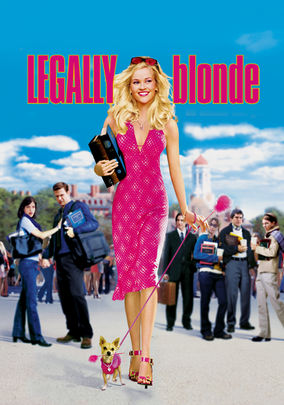
Legally Blonde-2001

Legally Blonde-2001

Director Robert Luketic

Starring Reese Witherspoon, Luke Wilson

Scott’s Review #807

Reviewed August 30, 2018

Grade: B+

Legally Blonde (2001) is a film that by all accounts should have been a hot mess, but for some reason is a great ball of fun. High art it ain’t by any means, and the plot is implausible beyond belief, and suspension of disbelief must be securely tucked away.

Despite portraying more serious roles both before and after this film, Reese Witherspoon is largely responsible for the success and is closely associated with this role.

Quite simply, all the elements manage to align with perfection in this film.

Elle Woods (Witherspoon) is president of her sorority at a Los Angeles college. Clad in fluffy pink attire and carrying her cute dog everywhere she goes, she epitomizes the stereotypical “dumb blonde”.

However, she does carry a 4.0 grade point average in fashion.

Expecting a marriage proposal from her upper-class, snooty boyfriend, Warner, Elle instead finds herself dumped due to not being serious enough.

Determined to prove herself worthy, she manages acceptance into Harvard Law School, along with Warner, and embarks on hi-jinks and adventures.

Warner’s fiancee and a potential new love interest cause turmoil for the boisterous Elle.

Legally Blonde never takes itself too seriously and is simply a fun, silly-minded, comic adventure. Audiences will likely chuckle and smile along with Elle’s adventures as she gets into one pickle after another, always determined to prove her intelligence.

To be clear, the film itself is very formulaic and could easily have been trivial and uninspired resulting in a bomb. But Witherspoon shines in the lead role adding a likable, charming quality to the character.

The actress possesses great wit and comic timing so that her character becomes more of a champion and we root for her to overcome obstacles and succeed.

By miles, she is the standout in the film.

Suspension of disbelief is at an all-time high. In “real life” there is no way Elle would ever make her way into the elitist Ivy League school brandishing a pink resume or other silly tricks to be cute and appealing.

Nor would she ever likely be so instrumental in winning a murder case so quickly. To nobody’s surprise, Elle eventually graduates with flying colors and is honored with giving a graduation speech inspiring those around her.

But as implausible as these situations are, they are also Legally Blondes’ appeal.

The supporting characters are pure caricatures, especially the main foils (Warner and Vivian- who take Elle’s place as fiancee). Both are the villains, Vivian going so far as to embarrass Elle by inviting her to a stuffy party under the guise of it being a costume party.

In the end, one of the characters “turns good”, another common element of predictable films of this nature. But again, the film is just pure and simple fun, so these stereotypes are okay.

In more modern times (not that 2001 was so long ago), the film would have not been directed by a man, but rather by a woman.

Screenwriters Kirsten Smith and Karen McCullah Lutz prepared a female-driven film that was based on a novel by Amanda Brown.

Why a man was chosen to direct is beyond me, but, alas, this is the way things were at the time.

Interestingly, another recent film that I reviewed, My Big Fat Greek Wedding (2002) would work perfectly as a now retro romantic comedy double feature along with Legally Blonde (2001).

Both are fun and light but also celebrate strong female characters.

Legally Blonde borrows much from the 1995 brilliant similar genre Clueless but is not as great as that film. Still, the film is an inspired effort due largely to the charms of its lead star.

White Chicks-2004

White Chicks-2004

Director Keenen Ivory Wayans

Starring Shawn Wayans, Marlon Wayans

Scott’s Review #647

Reviewed May 29, 2017

Grade: D

Anything but high art, though at the time of release (2004), seeming like a clever, yet silly, slapstick farce, White Chicks was a film that I found rather enjoyable.

Watching the film in 2017, some thirteen years later, however, the film feels dated beyond belief and as dumb as can be.

The film also contains Paris Hilton’s gimmick characters and racial overtones that were lost on me when I first saw the film.

Influenced by the drag comedy (and classic) from 1959, Some Like It Hot, the premise sounds interesting and comical.

Kevin and Marcus Copeland (played by the comical Wayans brothers) are a pair of black,  masculine, F.B.I. agents who bungle an undercover investigation and are given one last chance to redeem themselves before being booted from the bureau for good.

They are assigned the task of protecting the mega-rich cruise-line heiresses Brittany and Tiffany Wilson, who are in town (at the Hamptons) from a planned kidnapping plot over Labor Day weekend.

Kevin and Marcus don blonde wigs, and freakish makeup, and awkwardly pose as the Wilson sisters to save their jobs.

As the story goes on, Kevin and Marcus (as Brittany and Tiffany) develop relationships with various characters including millionaire Latrell Spencer (Terry Crews), who takes an interest in Marcus (thinking he is Tiffany, and white).

Other antics occur as the “girls” try their best to form friendships with the heiress’s snotty friends as they attempt to foil the kidnapping plot.

Similarities to the classic Wilder hit, Some Like It Hot, are tough not to notice, and director, Keenen Ivory Wayans, is smart to borrow from a film considered one of the greatest comedies of all time.

Just as Joe and Jerry (Tony Curtis and Jack Lemmon) go on the lam to escape mafia figures out of desperation, Kevin and Marcus are desperate to keep their jobs, causing both sets of “impersonators”, to suffer from dire circumstances.

Also worth mentioning are similar conclusions in both films as love interest Osgood Fielding III, also a millionaire, as is Spencer in White Chicks, each is not phased by the “big reveal” as the men are de-masked as actually being males.

Clever in 2004, the incorporation of celebrity Paris Hilton, in 2017 now all but faded, seems dated and of the past. In real life being a hotel heiress, characters Brittany and Tiffany (cruise line heiresses) mirror Hilton as spoiled, self-centered, and oblivious to everyone around her.

The aspect was a good idea at the time of the release of the film, but now is irrelevant, not even as a nostalgia gag- perhaps in the year 2037 White Chicks might be appreciated more, but I would not hold my breath.

The overall tone of White Chicks is also fraught with silliness and with one gag after another. Rather than being believable as females, the Wayans brothers look downright frightening and robotic as Brittany and Tiffany.

In comedies, suspension of disbelief is required, but the producers should have done a bit more to feminize the characters instead of playing them as goofs.

The ending of the film is no-frills and formulaic with no real twist or surprise ending to speak of. The ridiculous misunderstandings with Kevin and Marcus’s real significant others, foolishly believing the men are having affairs with other women seem forced and amateurish.

Predictably, when the men profess their love for the girls earnestly, they fall for it hook, line, and sinker and the film wraps in disappointing, standard fashion.

Cute and fresh feeling at the time, White Chicks (2004) now feels stale and tired with racial overtones, deemed amusing back in the day, but now seems mean-spirited and unnecessary.

The film is an attempt at recreating a classic comedy for a younger audience, but I would recommend seeing the original Some Like It Hot (1959) instead- it is much more enjoyable.