Tag Archives: Valerie Mahaffey

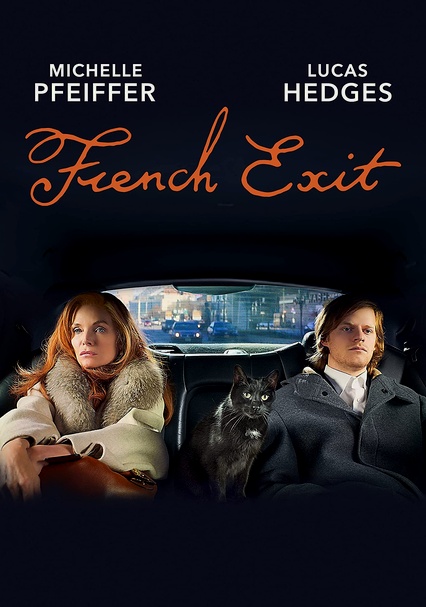
French Exit-2020

French Exit-2020

Director Azazel Jacobs

Starring Michelle Pfeiffer, Lucas Hedges

Scott’s Review #1,188
Reviewed October 29, 2021

Grade: C+

French Exit (2020) is a mediocre effort that left me disappointed. I expected to be dazzled by the eccentric French culture and sequences that I had anticipated.

While there are some location shots in historic Paris, they are not enough to compensate for the lackluster writing and unlikable characters the film offers.

Plot-wise, the intriguing premise teeters into the far-fetched, to the point where the result becomes banal and silly.

The film is a miss and should be skipped in favor of other films, such as Midnight in Paris (2011) and Last Tango in Paris (1972), which both offer a better French flair and superior storytelling.

A widowed New York socialite named Frances (Pfeiffer) and her meandering son Malcolm (Hedges) move to Paris after she spends the last of her husband’s inheritance.

Sixty years old and now penniless, she borrows a friend’s apartment where she plans to live out the rest of her days anonymously. Her husband, Franklin, has been dead for twelve years, and all that’s left of him is a cat named Small Frank, who may or may not embody his spirit.

Based on the previews, I anticipated an adventure involving cobblestone Parisian streets, delicious bakeries, and cultural French music. A glimpse of the famous Louve or Eifel Tower would have been a cherry on top.

While there are a few sequences of Frances and Malcolm walking along Parisian streets and an apartment that provides good French flavor, there is not enough to be considered an achievement.

Michelle Pfeiffer plays the main character.

As a fan of some of her more recent projects, like Mother! (2017), a brilliant film directed by Darren Aronofsky, the character didn’t catch fire for me. She’s pretty snobbish throughout and never really gets her comeuppance or learns any lesson.

As the protagonist, I was baffled as to why I was expected to root for a woman who is a bitch.

Hedges, a fantastic actor, plays his part according to the script. Still, the morose, one-dimensional Malcolm is uninteresting, and a so-so romantic plot involving his girlfriend Susan (Imogen Poots) is even less so.

On the plus side, Valerie Mahaffey steals the show with her quirky, comedic performance as Reynard.

A fan of Frances’s, she befriends the woman who initially shows no interest in her and dismisses her coldly. An eccentric, her odd demeanor and style are infectious, and she won me over immediately, especially when placed side by side with the other, less flavorful characters.

She was deservedly rewarded with recognition and received a Spirit Award nomination. Hopefully, this leads to more juice roles from Mahaffey.

Azazel Jacobs, who has had modest success on the independent film circuit, offers moderately impressive direction but loses me with the addition of not one but two tired seance sequences. A cat inhabiting a dead body and coming to life with the deceased person’s voice is drab and better suited for low-brow light comedy.

To make matters worse, the inclusion of a plump medium Madeleine (Danielle Macdonald) is about as clichéd as you can get.

There is not enough substance to give French Exit (2020) higher than average marks. Pfeiffer, taking center stage and doing her best, deserves better roles as she enters her senior years. She’s got gusto, so let’s give her better material.

Independent Spirit Award Nominations: Best Supporting Female-Valerie Mahaffey
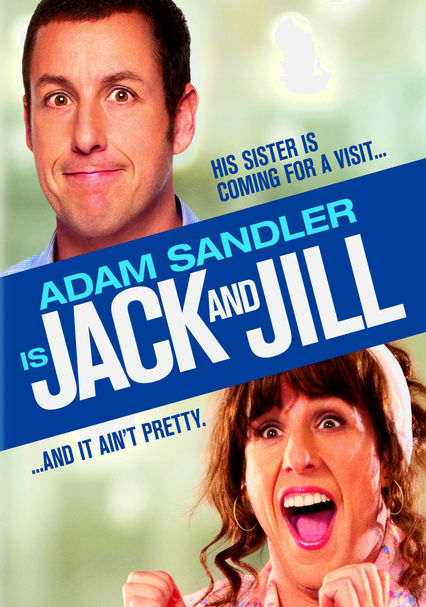
Jack and Jill-2011

Jack and Jill-2011

Director Dennis Dugan

Starring Adam Sandler, Al Pacino, Katie Holmes

Scott’s Review #1,171

Reviewed August 16, 2021

Grade: F

Typically, an actor playing a dual role is a challenging and rewarding experience for the actor and leads to accolades for a challenge well met. While Adam Sandler may have been challenged, it’s the audience who suffers tremendously.

I can think of no redeeming qualities to mention during this review.

Anyone who watches Jack and Jill (2011) will be made to ache for the duration of the running time or either scramble for the theater exit or pound the stop button on the remote control.

Jack and Jill (2011) is the worst film Sandler has ever made with a screeching over-the-top performance and terrible writing.

The additions of New York and Jewish stereotypes and every other stereotype in the book meant for laughs instead exude annoyance and disrespect.

To make matters worse, Al Pacino appears in a supporting role well beneath him and plays himself. And reaching an assured low, the actor is forced to rap. How embarrassing for him.

Poor Katie Holmes has little to do since she is trapped in the one-dimensional ‘wife role’.

Bad decision-making by writers, producers, and actors. Perhaps the makeup people enjoyed themselves.

The premise offers the possibility that the film could be hysterical or at least partially amusing. Well-known actors dressing in drag and put in uncompromisingly awkward situations is nothing new and has been met with success.

Some Like it Hot (1959) and Tootsie (1982) are classics resulting in kudos for Jack Lemmon, Tony Curtis, and Dustin Hoffman respectively.

The main issue with Jack and Jill is that the writing stinks.

Never a fan of the Sandler and director Dennis Dugan slapstick collaborations, let’s hope this drivel led to better acting choices for the actor.

He would later star in the superb Uncut Gems (2019) and miss out on an Oscar nomination by a whisker. I hope nobody saw Jack and Jill and revoked a vote for Sandler though I couldn’t blame them if they did.

Let’s hope Sandler learned his lesson with this film. He must have since his films vastly improved after this one.

Los Angeles advertising executive Jack (Adam Sandler) dreads the Thanksgiving holiday because his overbearing twin sister, Jill (also played by Sandler), makes her annual visit from New York City.

When Jack and his sister immediately butt heads, Jack feels guilty, and the only way to make it right is to invite her to stay through Hanukkah.

When actor Al Pacino (Al Pacino), whom Jack desperately needs to star in a commercial, becomes obsessed with Jill, Jack may be forced to extend his sister’s visit even longer to get what he wants. Jack’s gardener, Felipe (Eugenio Derbez) also takes a shine to Jill.

Everything about the film is pretty bad but let’s point out the highlights…..or lowlights.

Sandler plays Jill as obnoxiously as possible and in predictable form, Jack must disguise himself as Jill. Gee, I never saw that coming. Why any man, let alone two (Al and Felipe), would become enamored with her is beyond me.

Jack’s wife Erin (Holmes) and kids are as cookie-cutter as imaginable and possess every ‘neat and clean’ characteristic in the books. They are as white bread as wonder bread.

To match the stereotypes why does Felipe have to be Mexican? It’s as if Dugan and Sandler (who co-wrote the screenplay) wanted every cliche imaginable.

Jill conquers Los Angeles with appearances on The Price is Right, attendance at a Lakers game, and a cruise.

The film’s conclusion, after a myriad of expected misunderstandings between Jack and Jill, and Jill and Al, results in a silly New Year’s Eve high school reunion back in New York with classmates and bullies.

To confirm how bad Jack and Jill (2011) is at the 32nd Golden Raspberry Awards, it won all categories, a first in the thirty-two-year history of the annual parody event.

This is a film to be buried six feet under.

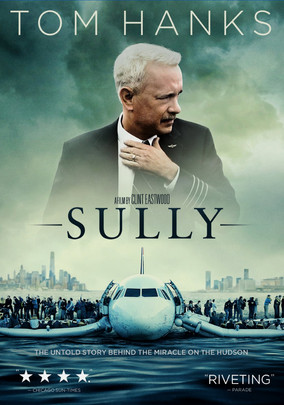
Sully-2016

Sully-2016

Director Clint Eastwood

Starring Tom Hanks, Aaron Eckhart

Scott’s Review #623

Reviewed March 10, 2017

Grade: B

I think most film critics would agree that each modern film directed by Clint Eastwood would accurately be described as a compelling film yet safe film, and the 2016 Eastwood offering, Sully, fits into both of these categories snugly- just as Sully feels like a snug film.

Everything seems to fit into a nice package when the credits roll.

While the film is sympathetic and has leanings of a character study, it is also shrouded in a wholesomeness that is incredibly safe and “Hollywood.”

This is not a knock or a detriment to the film, as it is very good, well-made, and has a high budget. However, edginess is not its forte, and it might have been better off with a bit more grit.

The actual film recounts the lively, perilous recent United Airways flight 1549, on which the now-famous Captain Sully successfully landed in New York’s frigid Hudson River one January morning.

Tom Hanks is the subdued and unassuming hero to perfection as his calm demeanor and grounded persona make him a likable chap, to say nothing of saving 155 lives aboard the would-be doomed flight that day.

Instead of going in a purely linear direction, building up the events (gravitating passengers, takeoff) in sequential order until the inevitable crash, Eastwood wisely decides to begin directly after the crash.

Captain Sully, clearly jarred by the events, is startled awake by nightmares. He dreams of crashing into midtown Manhattan instead of safely landing the jet.

The hero is beginning to suffer from symptoms of PTSD.

He is kept in New York City for days on both a press tour, interview after interview, as well as being questioned by The National Transportation Safety Board, who wonder why Captain Sully did not return to a nearby airport for an emergency landing as simulated computer recreations show that he could have.

This leads to both Sully and First Officer Jeff Skiles (Aaron Eckhart) being put under a microscope and questioned.

I was a bit caught off guard and got slightly bored, as the film takes about thirty minutes to focus on the actual crash or show an airplane scene rather than building up the events by concentrating on Sully and Skiles’s mental health. However, in retrospect, Eastwood made a wise decision.

The entire film is barely over ninety minutes total, so the action comes fast and furious mid-stream.

Still, the film is not quite all that it could have been. Despite the potentially horrific consequences faced by an airplane blowing both engines due to the flocks of birds, I never got many extremely perilous moments during the film.

While technically well done, the danger scenes as Sully navigates the plane into the river lack much in the way of the punch.

Sure, there are a few quick shots of passengers praying or appearing frightened, but we never get to know any of the passengers very well.

A “don’t blink or you might miss it” scene of an elderly mother and her daughter shopping for a snow globe at the airport or three men rushing to catch the plane to catch a golf game in Charlotte is not enough for the audience to become too enveloped in their characters.

They almost seem thrown at the last minute as a way of personalizing the passengers.

As I mentioned above, the film’s point surrounds Sully (and arguably it should; there is nothing wrong with that) and, to a lesser degree, Skiles. The supporting characters contain no character development, and even Skiles’s personal life is not explored well.

Scully’s wife is only seen through phone conversations (played by Laura Linney), and he is happily married with two daughters. There is a brief talk about money trouble, but the wife is underdeveloped.

Additionally, the NTSB agents are portrayed as quite antagonistic towards Sully and Skiles (rumors abound that this was embellished for movie making), which makes sense.

I enjoyed the ending of the film- in tandem with the credits rolling- of seeing not only the real-life Sully but his wife and the passengers and crew of the actual United Airlines Flight 1549 through interviews and photographs.

This offering in true-life biography films is now a standard feature to look forward to as it brings a humanistic conclusion to the story just watched.

The film’s focus centers on Captain Sully, which is fine by me- the man is a hero- but as a film, and more than a biography, it might have added depth to have richer supporting characters and a more substantial background of the man that is Sully.

A few rushed childhood aviator and battle plane scenes seemed somewhat out of place.

Still, the film is pleasant and immensely watchable. It will not set the world on fire or be remembered as much more than a decent film based on a true story.

Oscar Nominations: Best Sound Editing