Tag Archives: Frank McRae

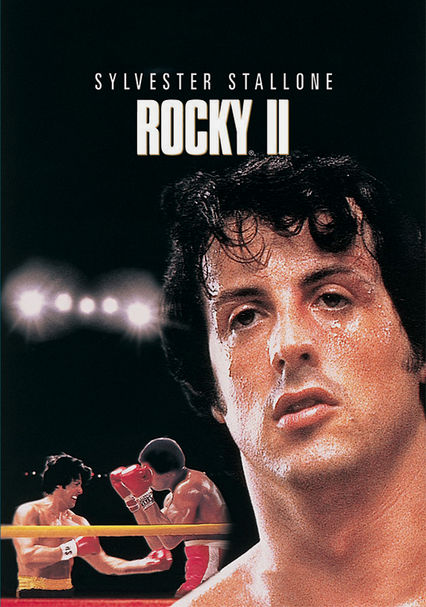
Rocky II-1979

Rocky II-1979

Director Sylvester Stallone

Starring Sylvester Stallone, Talia Shire, Carl Weathers

Scott’s Review #1,317
Reviewed November 24, 2022

Grade: B+

Rocky II (1979) is a terrific sequel and entertaining sports film. It doesn’t recreate the wheel or challenge cinematic artistic freedom or expression or anything like that. But it knows what it wants to achieve and gets there in fine fashion.

It’s a straight-ahead vehicle that capitalizes on the enormous critical and commercial success of Rocky (1976) and enthralls with a winning climax in the squared-off boxing ring, naturally.

The film is a crowd-pleaser through and through, and the powers that be even let boorish, notoriously difficult actor Stallone take the director’s reins (yikes!).

The actor even writes the screenplay for the film.

Events begin immediately following the first Rocky film, which is a wise decision. Cocky world champion Apollo Creed (Carl Weathers) has defeated working-class Philadelphia boxer Rocky Balboa (Stallone) in the closest of battles, with both men requiring medical attention.

Despite vowing not to engage in a rematch, Rocky’s Cinderella story has caught the national sports media’s attention, allowing him to capitalize on his sudden fame. Creed arrogantly prods his newfound nemesis into getting back into the ring.

Plagued with financial problems and a pregnant wife, Rocky is goaded out of retirement and back into the ring for the fight of his life.

Supporting players Talia Shire (Adrian), Burgess Meredith (Mickey), and Burt Young (Paulie) return to the fold, which provides excellent continuity and familiarity, another key to Rocky II’s success.

Additionally, Shire, Meredith, and Young are such top-quality actors that they enhance Stallone’s performance.

Rocky is unquestionably the best role of Stallone’s long career. Never known for great acting chops, he won the lottery with this iconic role and did quite well with it on his second outing.

The character is impossible not to root for, and the Italian Stallion’s charisma shines across the big screen. Who doesn’t like an underdog, especially when all he cares about is the timid Adrian (another underdog)?

His ‘Yo, Adrian, I did it!’ is legendary.

I’ll never cease to be enamored with Shire’s portrayal of Adrian compared to her other iconic role as Connie Corleone in The Godfather films. Adrian and Connie are like night and day, which is a big part of the fun of viewing them both.

Of course, the setup of Rocky II is contrived, and the storyline dictated. We know the final thirty minutes or so will showcase the bloody rematch between Rocky and Creed, and we, the audience, salivate thirstily as the fight approaches.

There’s a trivial plot about Adrian giving birth to their son (Rocky Jr., obviously) and slipping into a coma, only to be resurrected by determination and to give her blessing for Rocky to fight, but we all know what’s coming.

Like clockwork, the final fight arrives! As the men slug it out through fifteen brutal, sweaty rounds, the editing is fantastic. The sequence feels like a retread, but it still delivers an enthralling, bombastic finale.

Fans will not be disappointed.

Sure, Rocky II suffers from a saccharine romance and a predictable ending, but it’s also a feast for the eyes and the ultimate sports match-up.

Compared to Rocky (1976), the film is a letdown despite carefully keeping the Philadelphia underdog, blue-collar elements that made the original such a hit.

Subsequent sequels would parlay into nationalistic, patriotic nonsense using the Cold War as a prop, but Rocky II (1979) remains all-American and robust in spirit and climax.
National Lampoon’s Vacation-1983

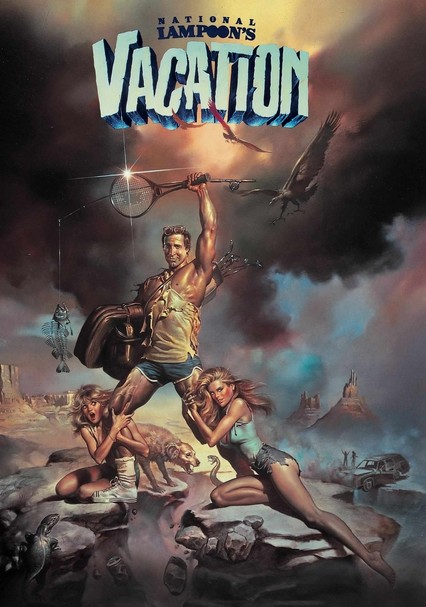
National Lampoon’s Vacation-1983

Director Harold Ramis

Starring Chevy Chase, Beverly D’Angelo

Scott’s Review #1,300

Reviewed September 19, 2022

Grade: A-

The film that spawned a slew of sequels, remakes, spoofs, and other things, National Lampoon’s Vacation (1983), had more influence on 1980s movies than it probably should have.

The slapstick road trip became overused, familiar territory, a situation comedy rife with silly scenarios and possibilities.

Despite having started it all, my favorite National Lampoon film will always be the 1989 Christmas Vacation installment, but for some snickers, hoots, and belly laughs, Vacation is fresh and authentic. holding up well in the nostalgia category.

So what if Chevy Chase was a douchebag in real life? His portrayal of Clark Griswold is his finest achievement and is firmly placed in the annals of slapstick comedy’s greatest characters. Endless quotes and impersonations of the bumbling dad have emerged over the years.

Great fun is looking for other comedy actors like Eugene Levy and John Candy, who would later forge their paths into comedy legend.

Accompanied by their children, Audrey and Rusty, played by Dana Barron and Anthony Michael Hall, Clark Griswold (Chase) and his wife, Ellen (Beverly D’Angelo), decide to drive instead of flying from Illinois to a California amusement park named Wally World to enjoy a much-needed summer break.

Clark is convinced that some togetherness is just what the family needs.

As Clark increasingly fixates on a mysterious, sexy woman (the acting debut of Christie Brinkley) driving a red sports car, the Griswolds deal with car problems and the death of a family member, Aunt Edna (Imogene Coca), as they face hi-jinks on the way to their vacation.

Exhausted, they finally reach Los Angeles, but when Clark worries that the trip is being derailed again, he acts impulsively to get his family to the park.

National Lampoon’s Vacation is a rarity in screwball comedy, where almost all of the setups and gimmicks work. Typically, the situations feel stale and tried-and-true, but there is an authenticity brimming over the top, and that’s largely thanks to Chase.

Don’t get me wrong. The film is hardly worthy of study in film school, and the script is polished and patterned out, but like other screwball comedies I love, like Caddyshack (1980) and Clue (1985), it’s got something solid.

I think it’s because the characters are very relatable. Who doesn’t have a wacky Aunt Edna or a Cousin Eddie (Randy Quaid) somewhere in their family tree?

Long-suffering, suburban housewife Mom Ellen has a heart of gold and represents the classic 1970s or 1980s homemaker with a glimmer of progressiveness.

She dutifully scrambles eggs for breakfast and shops for cereal and dog food, but also keeps Clark at bay before he does something ridiculous.

Chase and D’Angelo have tremendous chemistry, bouncing one-liners off each other as naturally as a real-life conversation, so that we buy them as husband and wife.

What kid who grew up in this period can’t relate to the horrid paneled oversized station wagon that ran rampant in suburbia? I sure remember those gas guzzlers being eventually replaced by minivans.

It’s perfection to see that style of car represented in this film, as it adds to the hilarity and is a character in itself.

The fun continues because the Griswolds embark on a trip across the United States. So, the film provides a slice of Americana and harkens back to a time when, if you were an American, you were united and bonded even if you had differences.

What National Lampoon’s Vacation (1983) does so well, watching in modern times, is remind us what that felt like. An adventure across the good ‘ole USA was not such a bad thing, and the folks you met along the way were friendly and warm without suspicion.

The film is like a dear old friend who has emerged from the woodwork, dusty, but still full of life.

Licence to Kill-1989

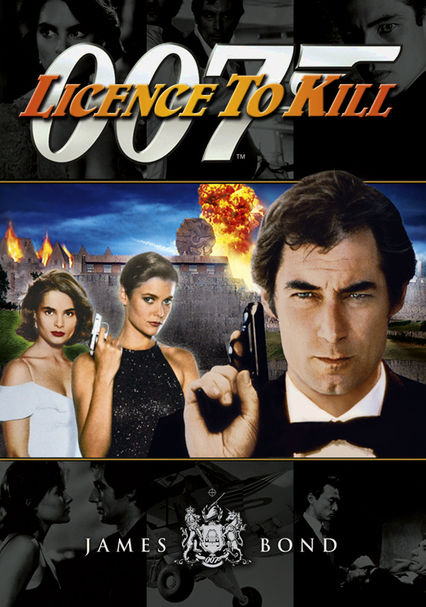
Licence to Kill-1989

Director John Glen

Starring Timothy Dalton, Carey Lowell

Scott’s Review #1,196

Reviewed November 14, 2021

Grade: B

Of the two turns 007 that Timothy Dalton gave us License to Kill (1989) ranks as the weakest with The Living Daylights (1987) being superior. But that doesn’t mean the film has no good qualities.

It’s an okay film and director John Glen, now returning for his fifth James Bond film seems a little out of gas. Many of the stunts and sequences are very familiar territory and the dialogue is far from crackling or exciting.

The James Bond film franchise would go on a six-year hiatus after Licence to Kill and return refreshed in 1995. Perhaps it needed to.

Dalton does his best but his heart doesn’t quite seem in it and the serious tone of the film gets even darker than The Living Daylights. I don’t think this is a bad thing and I love how the franchise regular Felix Leiter (David Hedison) gets more of a storyline. But the wit and charm are lacking.

Events begin in sunny Key West at the impending nuptials of former CIA agent and Bond friend, Leiter. Pursuing one of the international drug cartel’s most brutal and powerful leaders, Franz Sanchez (Robert Davi), events quickly escalate.

After a double-crossing poor Felix is fed to the sharks. While he survives the attack his now wife is murdered. Bond goes rogue and seeks personal vengeance.

What separates Licence to Kill from other Bond entries is the limited locales. Though exquisite, they only take place in North America. The Florida Keys, the Bahamas, and Mexico are used in fine form, especially the latter.

The gorgeous coastline feels European and I surmised that it was shot and set in Spain when in fact it was Mexico.

Also enjoyable is the Latin flair with lots of cultures throughout. Davi is powerful and dangerous as the Latin drug lord and he exudes violence and treachery. He is gleeful when a nemesis falls victim to his pet shark and loses a limb or two before succumbing to death.

A great kill is when dastardly Milton Krest (Anthony Zerbe) topples into a giant microwave oven and explodes into bloody bits. His death is deserved and satisfying.

To build on this, the inevitable death of Sanchez himself is a crowd-cheering moment. Before he explodes into a giant ball of flames Bond is certain to let the villain know that his death is courtesy of Leiter. This is an exciting and fulfilling moment.

The Bond girls are not at their finest in Licence to Kill. Carey Lowell plays Pam Bouvier, an ex-Army pilot, and DEA informant. While sometimes portrayed as a tough-minded and brazen female character she is also written as simpering and pining over Bond.

She can also be silly and foolhardy like when she carelessly plays with dangerous gadgets that Q creates. I would expect more intelligence and wherewithal based on her credentials.

Secondary Bond girl Lupe Lamora (Talisa Soto) girlfriend of Sanchez, lacks much depth. Beautiful, she is quite wooden in the acting department and suddenly falls in love with Bond insisting on her powerful feelings for the man she barely knows.

It’s a bit far-fetched even for Bond standards but she is nice to look at. So there’s that.

License to Kill (1989) usually gets either lost in the shuffle or derided completely and this is unfair. It’s not one of the greats but neither is it garbage.

It feels a bit tired of its time. Truth be told, it’s grown on me since I first saw it and even the title song performed by Gladys Knight has enamored me over the years.