Tag Archives: Tara Buckman

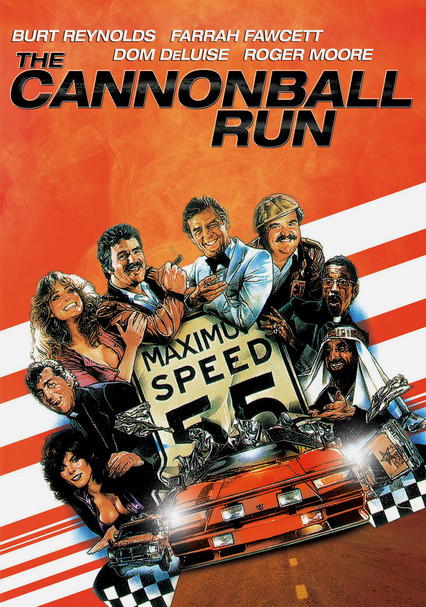
The Cannonball Run-1981

The Cannonball Run-1981

Director Hal Needham

Starring Burt Reynolds, Roger Moore, Farrah Fawcett

Scott’s Review #1,204
Reviewed December 4, 2021

Grade: B-

The Cannonball Run (1981) is someone’s idea of collecting big film and television stars of the time and throwing them into a film with a pointless plot about cross-country road racing.

Truth be told, it’s a pretty bad film.

But it’s a fun way to spend 90 minutes seeing a multitude of celebrities in both cameos and leading roles. Otherwise, The Cannonball Run should be skipped.

Taking a glance at the list of players, we have Burt Reynolds, Farrah Fawcett, Roger Moore, Sammy Davis Jr., Dom DeLuise, Peter Fonda, Dean Martin, Jamie Farr, Jackie Chan, Bert Convy, and Terry Bradshaw.

Hopefully, the actors had a good time making the film.

The acting is not stellar, and one wonders if many of the cast phoned it in or even read much of the script. The out-takes look like everyone was having one grand old time.  And whether some were even sober during the shooting is debatable.

The film is loosely based on the 1979 running of an actual cross-country outlaw road race in the United States, beginning in Connecticut and ending in California.

It was one of 1981’s most successful films at the box office, which is a scary realization. It was followed by two forgettable sequels- Cannonball Run II (1984) and Speed Zone (1989).

Feeling very thrown together, director Hal Needham is most known for collaborations with Burt Reynolds involving cars and car chases, so the plot, if one wants to call it that, is right up his alley.

Race teams gather in Connecticut to start a cross-country car race. One at a time, teams drive up to the starters’ stand, punch a time card to record their departure time, and then take off.

The reward for the winner is one million dollars. A representative of the “Safety Enforcement Unit” tries to stop the race due to its environmental impact and safety concerns.

Various teams are shown either evading law enforcement, most of which deal with talking their way out of a possible ticket, or concocting crazy schemes to outmaneuver their opponents.

The winner of the race is rather unimportant.

It’s all silly and not to be taken seriously. There are plenty of stereotypes, like Jamie Farr’s Middle-Eastern wealthy sheik driving a Rolls-Royce and the inevitable scantily clad females in tight wear.

Despite The Cannonball Run being riddled with enough negative aspects to make me hate the film, it’s kind of fun.

The bevy of different vehicles, like an ambulance, an Aston Martin DB5 (driven by Moore’s James Bond, imitating the character, of course), a Ferrari, and a Chevrolet Malibu, are all entertaining.

There is no character development, nor are there any characters with any depth, so the only reason to see the film is for the speedy cars and the competition.

And to see which celebrity will appear next.

A slapstick film that makes even the similarly penned Smokey and the Bandit (1977) seem like high art, The Cannonball Run (1981) is a must-see only for genre fans or those who are willing to watch and perhaps even be entertained by any movie.

I haven’t seen the film in eons, but I can imagine it’s a film only meant for its time and now would feel incredibly dated.
Silent Night, Deadly Night-1984

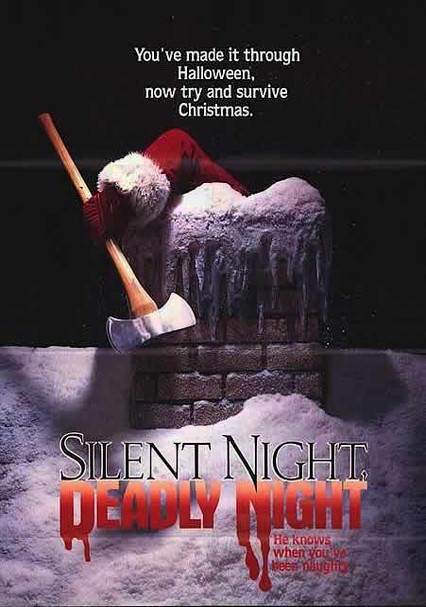
Silent Night, Deadly Night-1984

Director Charles E. Sellier Jr.

Starring Robert Brian Wilson

Scott’s Review #974

Reviewed December 30, 2019

Grade: B

Silent Night, Deadly Night (1984) is a fun, holiday-themed horror/slasher flick that is cheery mayhem in the spirit of the season, and a worthy addition to any horror fan’s collection.

The film is best watched late at night for the intended effect, and it is obvious to see around the holiday it celebrates.

It would make a great companion piece to Black Christmas (1974), a superior film, but both contain eerily similar musical scores, the former updated with electronic beats for the 1980s.

The horror film was met with ridicule and protest upon release for promoting a killer Santa Claus, despite the story being slightly overreacted to and misinterpreted.

The ‘real’ Santa Claus does not perform the slayings, but rather a mentally unstable young man dressed in the red suit does the dirty deeds.

Nonetheless, the film was unceremoniously yanked from theaters after parents expressed fear that their kids might be traumatized by the film. Silent Night, Deadly Night has graduated to cult-classic status and is entertaining, perhaps embracing its derision instead of running from it.

The action begins in rural Utah in 1971, as the Chapman family drives to a retirement home to see their catatonic grandfather. When left alone, the elder warns five-year-old Billy to fear Santa Claus, but his parents disbelieve him.

On their way home, they stop along the roadside to help a man dressed as Santa Claus, whose car appears to have broken down. The man robs and kills the parents, sparing Billy and his brother from death.

Three years later, Billy and Ricky reside in an orphanage led by the sadistic Mother Superior and a kindly nun, Sister Margaret (Gilmer McCormick).

Ten years later (present times), the now-grown Billy (Robert Brian Wilson) is benevolent and friendly, obtaining a job as a stock boy at a toy store with the help of Sister Margaret.

As Christmas Eve approaches, Billy has flashbacks of his parents’ murders and later is forced to play Santa Claus for the Christmas party when a co-worker falls ill.

As the staff becomes inebriated, a female co-worker is nearly raped, causing Billy to go berserk and kill both the assailant and the victim, who blames Billy. He then spends the night prowling the area for victims he can stab or behead.

Fun is the name of the game with Silent Night, Deadly Night.

The film is a macabre treat for slasher fans. The kills are respectable with the traditional methods used- an ax to the head and a bow and arrow death, along with more elaborate deaths like strangling with a chain of Christmas lights, and a bare-chested female victim being impaled on a moose head.

The highlight is the beheading of a mean teenage bully as he gleefully sleighs down a hill on a stolen sled.

Plenty of gratuitous bare chests (female) common in these types of films are in store for the lusty male viewer, but a nude male is glimpsed as well to make for some R-rated diversity.

Par for the course with slasher films made decades ago is the omission of cultural diversity. Not one Black, Latin, or Asian character is ever seen. The pure-as-snow Utah setting might be one justification.

If one were to attempt to analyze Silent Night, Deadly Night (not recommended), one could deduce a specific religious message, or at least a questioning of Catholicism, specifically the harshness of Mother Superior and her interpretation of punishment as good, implemented in the name of god.

Or maybe she is just a sadistic character? In perfect contrast, Sister Margaret is loving, protective, and nurturing to the orphans.

Whatever the filmmakers’ intention, humor is the recipe, as their strictness and rigidity are played for laughs.

Proper for any horror film, the final scene leaves room for a sequel. Indeed, four follow-up films were made, with the younger Ricky taking over as the serial killer.

In satisfying form, Ricky glares at Mother Superior and exclaims “Naughty!” before the credits roll. The unrated version of Silent Night, Deadly Night is the preferred version to watch.

Pull up the covers, light the fire, and kick back with a six-pack of Bud Light, roast some marshmallows, and enjoy Silent Night, Deadly Night (1984) for what it is.

Bad acting, sins of the flesh, and a delightful holiday slaughter, with unintentional (or intentional) humor and clichéd characters, make for robust enjoyment on a lightweight scale.