Tag Archives: Ward Bond

Gone With The Wind-1939

Gone With The Wind-1939

Director Victor Fleming/George Cukor

Starring Clark Gable, Vivien Leigh, Olivia de Havilland

Top 250 Films #22

Scott’s Review #201

70020694

Reviewed December 4, 2014

Grade: A

Gone with the Wind (1939) is the grand masterpiece of sweeping epic drama.

The film is based on Margaret Mitchell’s best-selling novel. Set in the American South (specifically, Georgia) during the Civil War era, it centers on the life of Scarlett O’Hara, a Southern belle who works on the cotton plantation Tara. After the South loses the war, she struggles to keep her plantation alive.

Initially, Scarlett cares little about the war but enjoys her spoiled, narcissistic lifestyle and romances with many men in the town, all vying for her attention. With all eyes on her, she revels in one sunny picnic and ball after another.

As war decimates the South, Scarlett must take over the plantation and survive the ravages of war.

Mixed in with the war theme is a romance between Scarlett and Rhett, one of cinema’s most recognized and enduring couples. Having gone through three directors (Victor Fleming, George Cukor, and Sam Wood), the film is as extravagant and precise in its style, attention to detail, and set design as films come.

At close to four hours, Gone with the Wind is a lavish production that can take an entire afternoon or evening to watch. It is divided into two halves—interestingly, Cukor directs the first half, and Fleming primarily directs the second.

It is a film that can be viewed and analyzed repeatedly, and the set pieces and flawless perfection alone are worthy of marvel. The first half is superior to the second, but that is like comparing prime rib to filet mignon—it’s a matter of personal preference.

The first half is brighter, cheery, and fantastic. The excellent Tara and neighboring plantation Twin Oaks host southern balls and parties filled with romance, gossip, and beautiful costumes. War is coming, but it is a delightful time of merriment.

The Southerners eagerly embrace the prospect of war, assuming it will last only two weeks and that they will emerge victorious. They party and celebrate.

The second half has a much darker tone.

By the beginning of the second half, Atlanta has burned, thousands of men have died, Tara is decimated, Scarlett’s mother has died, and her father has gone batty.

The rebuilding of the South is explored, the troubled Rhett and Scarlett marriage commences, their daughter dies, and the world-famous line uttered by Rhett to Scarlett, “Frankly my dear…. I don’t give a damn”.

Having been now directed by a different person (Fleming), the first and second halves almost seem like two separate films.

Vivien Leigh plays a beautiful role. In 1939, women were rarely portrayed as strong characters in films, so Gone with the Wind is groundbreaking for its portrayal of female characters.

Scarlett is selfish but rises above, is strong, saves her plantation, and succeeds as a successful businesswoman—almost unheard of in cinema in 1939. Her undying love for Ashley Wilkes but her inability to obtain him (he is married to his cousin Melanie) gives her a sympathetic vulnerability.

Clark Gable, already a massive star and the people’s choice to play Rhett, is charismatic and handsome. The fact that he and Leigh did not get along makes their fights and sexual tension electric. They love but hate each other, which is transmitted on screen.

Rhett is his own man—he defines himself as not a Northerner but not a Southerner. He is a vagabond and spends many nights at the local brothel in the company of Belle Watling. Rhett’s character is independent and strong.

The supporting characters are colorful, lively, and humorous. Aunt Pittypat’s dramatic worrying and smelling salts and Prissy’s insistence on expert childbirth when, in reality, she knows nothing is moments meant to lighten the mood.

Mammie, Scarlett’s mother figure, is a moral, kind, yet tough character. Melanie (Olivia de Havilland) is an even sweeter character, characterized by her caring and selflessness.

Lesser characters, such as Dr. Meade, Suellen, Carreen, India, and Frank Kennedy, serve their purpose and are no throwaways.

It is bothersome that, over the years, Gone with the Wind has been unfairly “feminized” once it began airing as an alternative to the annual Super Bowl. The assumption was that only women would enjoy it, which is silly.

I do not find this film to be a female film, and frankly, some of the battle scenes are pretty masculine, with epic fires and guns galore. Is Gone with the Wind now considered a racist film?

Perhaps so, and time has made the political incorrectness much more glaring- this point can be debated endlessly. Ashley participates in a hooded Klan organization and is portrayed as a hero in the film.

Indeed, throughout the film, the enslaved people are portrayed as happy, kindly, and comfortable with their place in life, vastly different from what transpired. However, Hattie McDaniel (Mammie) won the first-ever Oscar for a black actress, which was monumental progress and influence.

Using seemingly thousands of extras, the war-torn Atlanta scene where the camera rises up and up and up, panning down on hundreds of wounded and dead Union soldiers as Scarlett defeatedly walks among them, is still heartbreaking to watch and is a reminder of the power and destruction that war is.

Gone with the Wind is an epic masterpiece from the past that still holds up remarkably well. The sets, the rich characters, and the costumes can be admired and still inspire today.

Oscar Nominations: 8 wins-Outstanding Production (won), Best Director-Victor Fleming (won), Best Actor-Clark Cable, Best Actress-Vivien Leigh (won), Best Supporting Actress-Hattie McDaniel (won), Olivia de Havilland, Best Screenplay (won), Best Original Score, Best Sound Recording, Best Art Direction (won), Best Cinematography, Color (won), Best Film Editing (won), Best Special Effects
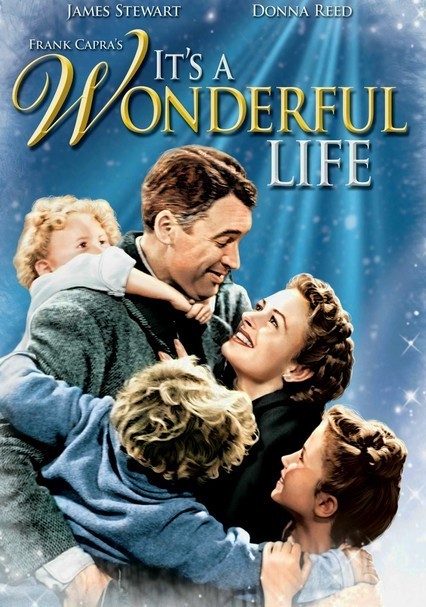
It’s a Wonderful Life-1946

It’s a Wonderful Life-1946

Director Frank Capra

Starring James Stewart

Top 250 Films #219

Scott’s Review #863

Reviewed February 5, 2019

Grade: A-

A popular holiday tradition in many households eager to cozy up in front of the fire with an enduring and entertaining classic, It’s a Wonderful Life (1946) serves an essential purpose. It is the ultimate annual festivity passed down through generations.

While not one of my standards, I recognize the influence and endearment the film offers and cannot fault its power to bring people together through its humanistic, sweet message.

James Stewart is perfectly cast as the wholesome and likable George Bailey. He strives to help everyone in his small community who needs it, often at the expense of his own well-being.

Depressed by the failure of his bank on Christmas Eve in 1945, in the snowy locale of Bedford Falls, New York, George is visited by a guardian angel named Clarence (Henry Travers), who teaches him what life will be like if he chooses the dire path of ending his own life.

Along with Stewart, Donna Reed as the wife, Mary Hatch Bailey, is cast exceptionally well and is the perfect counterpart to George.

Together, the actors immerse themselves in their roles, holding their heads high as the leaders of the sleepy little town they reside in, and set an example for the other townspeople with their kindness and thoughtfulness.

A sound “king and queen of the prom,” the duo radiates and elicits tears from audience members living vicariously through the couple.

A perfect companion piece to A Christmas Carol, perhaps the version from 1951, for similar periods, both spirited and teaching life lessons, is recommended.

Both are thematically similar in their depiction of a heavenly spirit’s visitation and in offering glimpses into the past, present, and future; the comparisons are endless, to say nothing of the Christmastime elements both possess.

Arguably, It’s a Wonderful Life is the most uplifting, both in good and bad ways. The lesson repeatedly voiced is that if one is good to others, one will be rewarded, or at least find peace of mind.

This is not a bad lesson, which is the main reason for the film’s lasting appeal. Bad luck and financial hardship will inevitably affect everyone, but kindness is forever enduring.

It’s also worth mentioning the timing of the creation and release of It’s a Wonderful Life.

As the United States, to say nothing of many European nations, struggled to pick up the pieces after the devastation of World War II, the picture was opportune to immerse itself in the lives of many people who needed a strong and uplifting message.

No wonder the film was popular when it was first released as the feel-good film of 1946.

The black-and-white cinematography does wonders to portray the film’s magical atmosphere. The high points are the cold and snowy bridge scenes.

Controversial years later was the colorization, and some would say the ruination, a decision that was met with anger by star Stewart, who went so far as to testify in court to voice his displeasure.

At the risk of being raked across the coals and deemed a “Scrooge”, portions of It’s a Wonderful Life are saccharin and manufactured in the utmost goodness, sometimes too good.

Admittedly, the characters of George, Mary, and their children come across as somewhat trite at times, as they seem to radiate only benevolent characteristics, never engaging in improper or impure actions.

In a fantasy film, the overly humanistic approach can sometimes be a tad silly.

The same can be said for the angel, Clarence.

Nonetheless, films such as It’s a Wonderful Life (1946) serve their purpose in cinema history.

With a robust and heart-warming message, the positive vibes are undeniable, and the warmth and emotion the film possesses radiate even to the coldest hearts and the harshest of critics, who are willing to accept and be enraptured by the film’s staying power.

Oscar Nominations: Best Motion Picture, Best Director-Frank Capra, Best Actor-James Stewart, Best Sound Recording, Best Film Editing

Golden Globe Nominations: 1 win-Best Director-Motion Picture-Frank Capra (won)

The Grapes of Wrath-1940

The Grapes of Wrath-1940

Director John Ford

Starring Henry Fonda

Scott’s Review #828

Reviewed November 8, 2018

Grade: A

Based on the famous novel written by John Steinbeck and released only one year before the film, The Grapes of Wrath (1940) is a superlative offering by director John Ford, known chiefly for Westerns.

The work accurately depicts life for the struggling American family during the Great Depression of the 1930s.

With gorgeous cinematography and a sad yet poignant story, the film is a must-see and a timeless depiction of the perils of life for working-class people in the United States.

Set on the vast plains of Oklahoma, the Joad family has run a successful farm and lived as a thriving family unit for decades- an extended group enjoying their lives.

When the United States suffers from Depression, the Joads’ lives are turned upside down, and they are forced to sell their farm. They decide to traverse the countryside in hopes of the promise of profitable jobs and wealth in faraway California. The Grapes of Wrath depicts the family’s journey as hardship and deaths occur.

When the film was released in 1940, many studios were not interested in bringing the story to the big screen, as some aspects were deemed too left-leaning for conservatives.

The social issues the film delves into are still incredibly relevant today, and Ford wisely dissects not only the poverty that the Joad family suffers but also the psychological trauma and ruination they must endure. What a devastating effect this must have had on families.

The casting is spot-on. A young Henry Fonda was merely an upstart actor in 1940 and successfully exuded a rich, passionate performance as Tom.

Plenty of close-up shots reveal the young man’s quiet pain and desperation and the humiliation of having lost his livelihood. Fonda shares poignant chemistry with the preacher character, Jim Casy (John Carradine), who once was filled with glory but has now lost his spirit and belief in goodness.

Jane Darwell, a famous character-actress, gives a treasured performance as the family matriarch, Ma Joad. The actress won the Academy Award for Best Supporting Actress, deservedly so, as she relays a haggard woman wanting only the best for her family and attempting to hold them together.

Her determined final speech at the film’s conclusion is teary and meaningful. She says, “We’re the people… We’ll go on forever.” Speaking of Oscars, Ford also won Best Director.

The film sees no age but endures as a timeless journey alongside the Joad family. Although it stays very close to Steinbeck’s novel, the story is modified significantly. Perhaps to please studio financiers or provide a more hopeful message, the Joads are left with a positive future thanks to a government-run camp where they finally live.

In the novel, they reside at the camp first but are later reduced to starvation wages.

A monumental scene is when the family drives their battered vehicle to a squatter’s camp for needed shelter. The scene is shot documentary style, with the camera focusing both on the Joads and on the faces of the occupants of the run-down and filthy shacks that they are forced to live in.

We wonder with sadness what the lives of these unfortunate people were like before the Depression.

The Grapes of Wrath (1940) was a humanistic cinematic masterpiece. As a terrible war and otherworldly problems plagued the new decade, the film reminisced about a previous decade fraught with different issues.

The film is one for the ages and should be appreciated by all.

Oscar Nominations: 2 wins-Outstanding Production, Best Director-John Ford (won), Best Actor-Henry Ford, Best Supporting Actress-Jane Darwell (won), Best Screenplay, Best Sound Recording, Best Film Editing

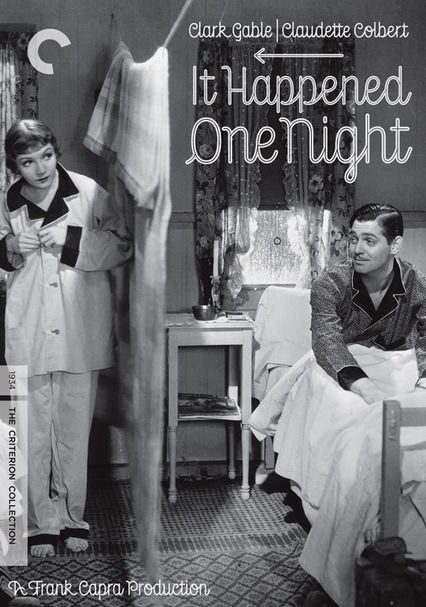
It Happened One Night-1934

It Happened One Night-1934

Director Frank Capra

Starring Clark Gable, Claudette Colbert

Scott’s Review #824

Reviewed October 25, 2018

Grade: A-

Perhaps the film that best defines the early cinematic romantic comedy and certainly the one most modern genre films can learn from, It Happened One Night (1934) is a lively, fun romp.

The film carted away the Best Picture, Best Director, Best Actor, and Best Actress Academy Awards, a rare feat, and defined what romantic tension and thoughtful dialogue should be in a quality picture. All the elements sparkle into an excellent classic film watch.

Ellie Andrews (Colbert) is a pampered socialite who recently disobeyed her overbearing and wealthy father by eloping with a blue-collar pilot who is feared to be after her money.

Determined, Ellie escapes her father’s clutches and hops on a Greyhound bus headed from Florida to New York, where her husband is. When she crosses paths with an out-of-work journalist, Peter Warne (Gable), they each find an opportunity to use the other to their advantage.

The pair’s adventures along the East Coast lead to antics and schemes as they fall madly in love with one another.

It Happened One Night successfully mixes a good romance with some screwball comedy without ever becoming silly or trite.

The film also serves as a good old-fashioned adventure story as Peter and Ellie face one hurdle after another on their trek north.

Pleasing is how the duo slowly finds romance but first begins as irritants towards each other. The chemistry between the actors is superb and never seems forced or contrived.

Frank Capra, a famous director with successes throughout the 1930s, culminating with the holiday favorite It’s a Wonderful Life (1946), had several Oscar-winning films during the decade.

It Happened One Night seems to have inspired most of them, and the acting, absurd situations, dialogue, and direction all successfully come together.

Shot in black and white and the Motion Picture Production Code, which heavily restricted details deemed too violent or sexual, It Happened One Night pushed the envelope quite a bit.

This is to the film’s credit- who can forget the adorable yet provocative scene in which Ellie shows her shapely legs to enable the duo to catch a ride? The lovable scene, non-risque in today’s modern world, was anything but in 1934.

An interesting, at that time unique, point is that supporting characters are more layered than is typical in romantic comedies. Danker, whom Peter and Ellie hitch a ride with, is seemingly a decent man but ultimately attempts to steal their luggage.

Later, Ellie’s preposterous father turns out to be a decent man, so the film also contains a few character surprises.

While not quite a pure masterpiece, It Happened One Night (1934) is nonetheless an inspired legendary film that can be viewed and enjoyed for the period in which it was made.

The film stands out among the similarly themed romantic comedies of the 1930s and 1940s and is a teachable moment for all filmmakers who explore the same genre territory.

Oscar Nominations: 5 wins– Outstanding Production (won), Best Director (won), Best Actor-Clark Gable (won), Best Actress-Claudette Colbert (won), Best Adaptation (won)

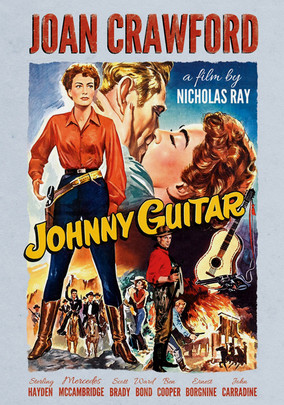
Johnny Guitar-1954

Johnny Guitar-1954

Director Nicholas Ray

Starring Joan Crawford, Sterling Hayden

Scott’s Review #655

Reviewed June 15, 2017

Grade: B-

Johnny Guitar (1954) is an interesting film to review for several reasons, but its challenge to the traditional Western mold is the most distinct. Front and center is an aggressive and strong-willed woman, a saloon owner no less, engaged in an antagonistic feud with another woman of a similar disposition.

Of course, since the film stars legendary screen actress Joan Crawford, she is a strong character.

The writing is not brilliant, and other Western stereotypes abound, but Johnny Guitar is a decent watch for Crawford.

In the middle of an Arizona cattle town circa the Wild West, Vienna (Crawford) is a gorgeous woman who owns the local watering hole, which less-than-savory men frequent.

Vienna welcomes the men mostly because one of them is a former boyfriend. The rest of the town, led by Emma Small (Mercedes McCambridge), despises Vienna and her support of the incoming railroad, which makes Vienna rich.

After a bank robbery, Vienna is pursued by Emma and the town into a standoff, in which lynchings, shootings, and fires encompass the rest of the film.

Mixed in with the drama is a romance between Vienna and handsome guitarist Johnny Guitar (Sterling Hayden), and some musical numbers, but mostly, the film is a shoot ’em up led by women.

Let’s take the good with the bad surrounding the film—in my book, any picture starring Joan Crawford gets some credit, and the role of Vienna is undoubtedly uncharted territory for the glamorous star.

Tough-talking, gun-slinging, and with a short hairdo, rumors abounded that the character of Vienna was gay and in love with her arch-enemy Emma.

This might have happened decades later, but this was 1950s Hollywood, after all. Crawford still dazzles with heavy makeup and bright red lips and is feminine despite the masculine outfit.

Clever, especially for 1954 westerns, is a tough female character in the central role, bolsters Johnny Guitar above middling. Typically, in a genre that sticks to the tried-and-true, the main female rivalry between Vienna and Emma is the best part, but sadly, the back story is never fully explored.

Why do they hate each other? Were they in love with the same man? Is their hatred simply because they are the only women in the town?

The chase scene and the climax of the film are also quite good. How delightful to see Crawford prancing around in peril, riding a horse, and swimming in a creek.

The film turns into a good, old-fashioned adventure, and the cinematography and exterior sets are not bad.

Two aspects of Johnny Guitar stood out to me as negatives. First, the romance between Vienna and Johnny Guitar does not work. Crawford seems too old for Hayden as Johnny, and I never felt any chemistry between the characters. Second, the backstory scene revealing that they were once an “item” is weak.

There are no other female characters besides Emma (a coincidence?), which is a strange aspect of the film. Does one wonder if this was Crawford’s demand? (But I digress.)

The romance between the duo is lackluster, though admittedly, I did feel a rooting factor for them as the final chapter commenced and the pair was in danger.

The storytelling is mediocre, as I never felt invested in the writing, and the entire script feels silly and cheap. The story is laid out in an introductory way- Vienna is told by (arguably) the leader of the town, Ward Bond, to close up shop and leave town within twenty-four hours or else there will be hell to pay.

When some of the men rob a bank and plan to depart for California, Vienna is blamed for a sloppy, contrived plot device and is set to be hanged.

The script is not the high point of the film.

Johnny Guitar (1954)is worth watching for a gender-bending experience and the fabulous addition of Ms. Crawford. However, do not expect a masterpiece in storytelling or to be dazzled by character development.

Fans of the classic Western may be disappointed.

The Searchers-1956

The Searchers-1956

Director John Ford

Starring John Wayne

Scott’s Review #148

Reviewed August 5, 2014

Grade: B+

The Searchers (1956) is a classic film considered one of the greatest ever made. It took me a few viewings to appreciate, but I now admire it more and more with each subsequent viewing.

I understand why it is on many Best Films of All Time lists.

I do not think it’s great, but I understand its outstanding qualities. And while admittedly, I am neither a fan of the Western genre nor of John Wayne, both are top-notch in The Searchers.

It tells the story of a Civil War veteran (Wayne) named Ethan Edwards, whose brother and his sister-in-law, whom Ethan is in love with, are brutally murdered by a Comanche Indian tribe.

Ethan’s two nieces are kidnapped, and for the remainder of the film, Ethan, along with his best friend, searches for the missing girls.

Two aspects that initially bothered me about the film were the overt racism involved in this film towards any Indians- the treatment of one Indian woman is cruel, and my disdain for the character of Ethan.

The fact that I am not a fan of John Wayne- way overrated in the acting department, in my opinion, may have something to do with this. But the character of Ethan is racist, and it is tough to root for a character like that.

One could make the argument that he is also self-loathing due to lusting after his sister-in-law.

Over time, though, I have come to appreciate this Western drama more and more, mainly due to John Ford’s direction, the sweeping Old West cinematography, and the now-understood complexity of Ethan’s character.

He is confident, masculine, and even mean, but wounded and, in some way, sympathetic to viewers.

The Searchers (1956) also captures what the real West was probably once like.

An epic western that I have grown to admire.

Golden Globe Nominations: 1 win-New Star of the Year-Actor-Patrick Wayne (won)