Tag Archives: Casey Wilson

The Disaster Artist-2017

The Disaster Artist-2017

Director James Franco

Starring James Franco

Scott’s Review #781
Reviewed July 2, 2018

Grade: B

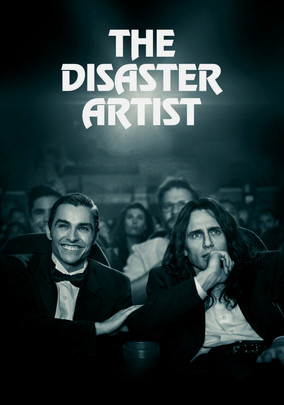
The Disaster Artist (2017) is a biography-comedy that I found to be middle of the road to primarily good if I’m judging in overall terms- most I liked with a bit of criticism.

Due to the many accolades, I confess to having anticipated a bit more from the finished product and hardly finding it a masterpiece.

Still, I was both impressed and unimpressed by James Franco’s performance in the lead role. I was awed at the actor’s emergence as a director, and the Los Angeles setting is great.

At times the film teeters almost into bad slapstick or shtick, and a bit silly, and as much as I respect his performance, this criticism is directed at Franco. Nobody can deny his acting talent if he chooses the right films.

His attempt to make his character peculiar is noticeable within seconds, so it seems Franco also makes him a bit of a goof, and I was not able to take the character seriously all of the time.

And the weird accent threw me.

This film is based on the nonfiction book The Disaster Artist. The book chronicles the making of 2003’s The Room, not to be confused with the 2015 film Room. The Room was considered amateurish and one of the worst movies ever made.

Told repeatedly that his acting stinks, oddball Tommie Wiseau (James Franco), a European-American aspiring actor, decided to screw Hollywood and produce, direct, and star in his film.

Wiseau has an endless amount of bank funds, which he uses towards the film. Roommate and friend Greg Sestero (Dave Franco) stars in the movie and thus gets his big break. The duo and various others pitch in to create the project, which suffers from ineptness on the part of Wiseau.

The Los Angeles setting resonates with me, as does the recurring theme of struggle in the Hollywood scene. These are significant pluses of the film as a whole.

Los Angeles can appear to be a sunny and glamorous town, but beneath its shiny exterior, it always has a gloomy, dark underbelly.

The film realistically depicts struggle and success, from the central characters to the supporting players, making it resemble an ensemble.

Thousands struggle daily for a break, and no respect or appreciation is given. The Disaster Artist scores a win by focusing on this.

When Tommie brazenly approaches an influential producer in a restaurant, he is unceremoniously dismissed for having no talent and told he will never get anywhere. In addition to Tommie, several actors associated with the film struggle.

In a fantastic scene, an older actress states that being on a bad movie set beats any other job by miles. The message here is that people in Hollywood are there because they genuinely love it.

The sweet, empowering theme of friendship and empowerment is also to be celebrated, especially given the cutthroat backdrop. Tommie and Greg are best friends and have each other’s backs through thick and thin.

Neither gives up on the other, even during the initial audience reaction to The Room premiere.

Could the film have been slightly darker? Yes, indeed, as very few scenes of drug destruction or the porn that many hopeful talents turn to are mentioned. But the film is not about that. It’s an enchanting tale of hope and fun.

It is interesting to note, and not evident to me while watching the film, that brothers James and Dave Franco play opposite one another. While there is somewhat of a physical resemblance, the chemistry works between the two actors as best friends.

James delivers a worthy portrayal of an unusual character with a strange dialect, long, stringy brown hair, and seemingly cross-eyed. The role is comedic and ideally suited for an unusual actor like Franco- he must have had a ball with the part.

Movies about movie-making always fascinate me. What goes on behind the scenes?

The Disaster Artist (2017) provides enough good film meat to make it an overall good experience. It stays true to some fine Hollywood history—the famous James Dean is referenced, and the spot where he died is even visited—nice touch! Franco is both good and disappointing in the main role.

All in all, this one is worth watching for those who enjoy filmmaking, Hollywood, or L.A.-set films.

Oscar Nominations: Best Adapted Screenplay

Independent Spirit Award Nominations: Best Male Lead-James Franco

Why Him?-2016

Why Him? -2016

Director John Hamburg

Starring James Franco

Scott’s Review #704

Reviewed December 6, 2017

Grade: D

Why Him? (2016) is epic film drivel starring quite capable actors in a mish-mash of dull, predictable stories, obnoxious characters, and a need to attempt to go raunchier and raunchier for a cheap laugh.

Why there is a market for films like this is beyond me, as no thinking is required (maybe the film will please those fans!).

The film scores slightly higher than a solid “F” based solely on a few chuckles uttered thanks to the only dim bright spots in this mess, Bryan Cranston and Megan Mullally.

A story told dozens of times before in “slapstick comedy” fare, the premise is tired beyond belief.

A good girl meets a bad boy; they fall head over heels in love and must deal with the aftermath of her parents meeting and hating him.

The main gimmick is the rivalry between the boyfriend and girlfriend’s fathers, like an unfunny Meet the Parents (2000).

A silly, uninteresting plot point about each character’s business success, or lack thereof, is mixed in as if anyone cares.

As with all films of this ilk, the story is wrapped up in a neat, tidy little bow by the time the credits roll, and all characters live happily ever after in perfect harmony.

In one of his most disappointing roles, James Franco plays Laird Mayhew, the wealthy, eccentric, thirty-something CEO of an upstart video game company.

He is foul-mouthed and comically speaks his mind or absentmindedly shows his ass on a Skype chat with his girlfriend Stephanie (Zoey Deutch) while her parents are linked to the chat at a birthday party.

Stephanie, a college student and Laird’s girlfriend, invites her parents, Ned and Barb (Cranston and Mullally), along with their fifteen-year-old Scotty, for the Christmas holidays.

Predictably, Stephanie’s parents are appalled by Laird and want her to have nothing to do with him. When Stephanie arranges for Ned, Barb, and Scotty to stay at Laird’s spacious home, the antics take off as feuds and misunderstandings erupt.

The main problem with Why Him? is that director John Hamburg (famous for mainstream comedies such as Along Came Polly (2004) and I Love You, Man (2009) seems determined to push the raunchy comedy elements even further in this idiotic film.

He makes Laird as obnoxious and crass as possible, yet tries to make him more “likable” by giving him a clueless quality; therefore, he isn’t mean-spirited and should be beloved by the audience.

The character does not work. Franco has played terrific roles- specifically in 127 Hours (2010) and  Howl (2010).

As a fan of the talented actor, I expected more from him, but alas, some performances are only as good as the written material.

If there is a bright spot worth mentioning, it’s the casting of Cranston and Mullally.

Two actors are undeniably good at physical comedy. They do as much as they can with poorly written, stock-type roles.

Cranston’s Ned, a middle-class small-business owner from Grand Rapids, Michigan, is both envious and resentful of Laird, perhaps admiring the young man’s business savvy while regretting not being as successful.

Barb is a one-note, ditzy yet lovable wife, a role Mullally’s goofy portrayal makes slightly better. In one of the best scenes, Barb smokes pot and becomes a mess in her bedroom.

The following day, Ned is trapped on the toilet and has an embarrassing experience with Laird’s best friend, Gustav. While these scenes are juvenile, the funny actors make them work.

Suffering from a tired, overused storyline and unlikable, dull characters, the film offers nothing of substance.

Why Him? (2016) is entirely plot-driven with no character development or well-written characters.

The film is a complete waste of time.

It results from a studio hoping to achieve box office success by churning out a poor comedy that wastes talent and will please only audiences not expecting much from their films.

Julie & Julia-2009

Julie & Julia-2009

Director Nora Ephron

Starring Meryl Streep, Amy Adams

Scott’s Review #588

Reviewed January 7, 2017

Grade: A-

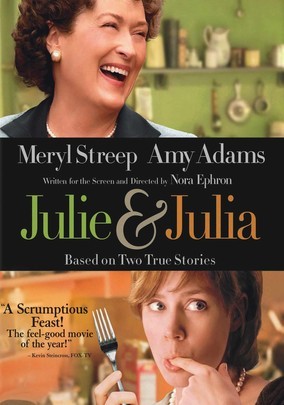
Julie & Julia (2009) is a darling film about cooking that centers on the legendary chef Julia Child. It is for the foodie or culinary geek in all of us.

The film is lighthearted and will ruffle no feathers, but it is a delicious, well-told treat.

The film tells of the life of Julia Child (Meryl Streep), at one time an aspiring chef, contrasted with the life of a young New Yorker, blogger Julie Powell (Amy Adams).

Julie is determined to cook all five hundred twenty-four recipes in Child’s famous cookbook, Mastering the Art of French Cooking, within one year.

The film, of course, would not be half as good without the amazing talents of Streep, who portrays Julia Child herself. All of Julia Child’s personality characteristics are portrayed exceptionally well by Streep.

Her laugh, voice, and zest for life are all perfect. Of course, since Streep is not nearly as tall a woman as Child was, liberties had to be taken by way of camera trickery.

Regardless of Streep’s performance, props for a nice performance by Adams, too.

Julie & Julia (2009) is a cute, charming, light, fun movie. I thoroughly recommend it.

Oscar Nominations: Best Actress-Meryl Streep

Gone Girl-2014

Gone Girl-2014

Director David Fincher

Starring Ben Affleck, Rosamund Pike

Scott’s Review #181

70305893

Reviewed October 6, 2014

Grade: A-

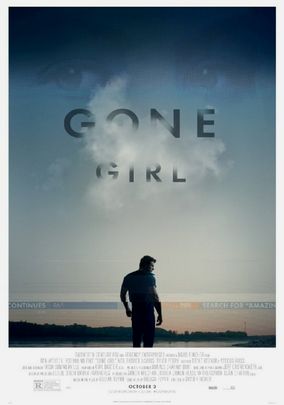
Gone Girl (2014), directed by dark-yet-mainstream filmmaker David Fincher, offers a simple premise.

An affluent woman disappears without warning and a loved one is suspected of the crime.

This type of story has been done many times before in film; think Prisoners (2013) as a recent example, but Gone Girl stands out for its storytelling, pacing, and plenty of twists and turns.

The film is based on the best-selling novel, written by popular novelist Gillian Flynn, who also wrote the screenplay.

Ben Affleck plays Nick Dunne, a man in his 30s whose wife, Amy, magnificently played by Rosamund Pike, mysteriously disappears, sparking a media frenzy.

After clues are revealed, Nick is thought to be a sociopath and responsible for Amy’s disappearance.

Nick and Amy have the perfect marriage… or so it appears. Until fairly recently, Nick and Amy have lived an idyllic, well-to-do lifestyle in New York City.

Amy’s family is wealthy and writes as successful children’s authors.

After the 2010 recession, which causes Nick and Amy to lose their jobs and all their money, and with Nick’s parents’ health problems, they find themselves in a state of peril, and their marriage is severely tested.

They are forced to move to a small town in Missouri where Nick grew up, and their lifestyle completely changes.

The film reveals these facts as it progresses through flashbacks, mostly from Amy’s perspective, as she chronicles events in her diary.

The story is so smart and layered that the audience continually asks questions throughout the film.

Is Amy dead? Did she fake her death? Is Nick involved or innocent? Could Amy’s parents be involved in her disappearance? Can we trust Nick’s sister Margo? What involvement does Amy’s wealthy college sweetheart Desi Collings (Neil Patrick Harris) have?

As more of the plot unfolds, new questions arise.

Intelligently written, with twists and turns galore, after a slow start, the film is a thrill ride. The slow start is necessary to lay the film’s groundwork, and it wisely keeps the audience guessing throughout.

The film feels like a puzzle (literally and figuratively), as each layer unravels and raises new questions and theories.

Trent Reznor (Nine Inch Nails) composes the film’s score, adding a dark, techno-gloomy feel that heightens the mood.

The acting in Gone Girl is exceptional.

Affleck is capable in the lead male role, though I didn’t find the part as meaty as one might expect. Affleck is handsome and charismatic, though unlikeable too, and I think that is all the part requires.

The standout and breakout performance belongs to Rosamund Pike. After years of struggling in support roles as someone’s wife or friend, Pike finally has a complex role that lets her sink her teeth in.

Pike displays almost every emotion- kindness, anger, rage, deception, humor.

Amy is nuanced and resourceful, and more than one moviegoer’s mouth dropped open at her actions in a couple of scenes, think wine bottle and hammer.

Neil Patrick Harris is dynamic as Desi and brings a healthy dose of creepiness mixed with childlike sweetness.

Gone Girl features one of the most shocking scenes involving a bedroom, a box cutter, and lots of blood.

Fincher’s setting of North Carthage, Missouri, is interesting. Hardly the Manhattan intelligentsia Nick and Amy are accustomed to, the film effectively portrays the perfect mix of homespun kindness that turns into a lynch mob of townspeople.

The sweet neighbors, who happily offer Nick casseroles and hugs one minute, suddenly turn into sharks when the details are revealed.

The media is, almost ironically, portrayed as menacing and ready to pounce. Sela Ward and Missy Pyle play female reporters who are, deliciously and comically, menacing and ready to pounce.

More than a handful of female characters are written as borderline man-hating and eager to either castrate, figuratively speaking, or bed (or both!), Nick Dunne.

Gone Girl contains a few plot holes. How could there be no recorded tapes of the goings-on at Desi’s lake house? The entire plot is so far-fetched when one decides to ponder it.

Gone Girl (2014) is a mainstream yet dark Hollywood thrill ride with a theme of dishonesty, and a film exceptionally well-written and layered.

Oscar Nominations: Best Actress-Rosamund Pike

The Guilt Trip-2012

The Guilt Trip-2012

Director Anne Fletcher

Starring Seth Rogen, Barbra Streisand

Scott’s Review #89

70243456

Reviewed July 3, 2014

Grade: C+

The Guilt Trip (2012) is a lightweight, fun piece of fluff.

It stars Seth Rogen as a thirty-something single guy from New Jersey with a Jewish (in every clichéd way) overbearing mother played by Barbra Streisand.

Through circumstances at his job, they are forced to take a road trip cross-country to California, where they are to meet a long-lost beau of hers.

If not for the talents and humor of Barbra Streisand, this movie would have been a dud. It’s a dumb movie, but Streisand plays her overbearing, annoying character to the hilt and makes her lovable.

There is nice chemistry between Streisand and Rogen, though frankly, I wonder why Streisand has turned to mindless comedy instead of more highbrow work.

Rogen plays a character he has played time and time again in these types of films.

The film screams predictable throughout; like similar road-trip comedies, it hits all the United States’ geographical stereotypes (cowboys, steakhouses, bull-riding, etc.).

A dumb film made somewhat enjoyable by the two leads.