Tag Archives: Frankie Faison

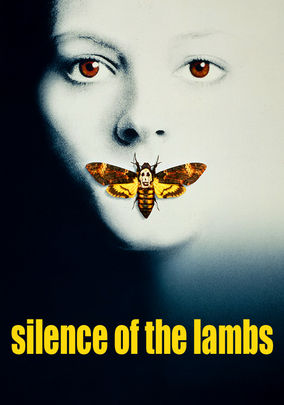
The Silence of the Lambs-1991

The Silence of the Lambs-1991

Director Jonathan Demme

Starring Anthony Hopkins, Jodie Foster

Top 250 Films #64

Top 40 Horror Films #15

Scott’s Review #320
14546747

Reviewed January 3, 2016

Grade: A

The Silence of the Lambs (1991) has the honorary achievement of being one of only three films to win the top five Oscar statuettes, having been awarded Best Picture, Best Director (Jonathan Demme), Best Adapted Screenplay, Best Actor (Anthony Hopkins), and Best Actress (Jodie Foster) at the 1991 Oscar ceremonies.

This is no small feat, especially considering the film was released in March (not an Oscar-happy month) and is a horror film.

These elements speak volumes about the level of mastery in The Silence of the Lambs, and the film holds up incredibly well as the years go by.

The film was a sleeper hit at the time of its release and gradually built momentum throughout the year, becoming a phenomenon and a classic forever.

The film is adapted from the novel of the same name by Thomas Harris and, despite being a horror film, contains little gore.

The film stars Foster as Clarice Starling, an FBI trainee, sent by her superiors to interview the infamous Hannibal Lecter.

Hannibal, “The Cannibal”, is a highly intelligent former psychiatrist who has been banished to a maximum security insane asylum after having been found guilty of killing and eating his victims.

The FBI hopes that Hannibal will aid them in a current case involving “Buffalo Bill”, a serial killer who skins his female victims.

Hannibal and Clarice embark on an intense and strange relationship in which he gets under her skin and questions her unhappy childhood in exchange for information about “Buffalo Bill”.

This relationship leaves Clarice vulnerable, though the pair develops a strong connection. As Hannibal makes increasingly demanding demands in exchange for information, he eventually escapes from custody in a chilling, bizarre escape.

The psychological elements and the intense relationship between Hannibal and Clarice are of monumental importance, and Hopkins and Foster share an amazing chemistry.

Hopkins gives a top-notch and downright creepy performance as the cannibalistic killer. His mannerisms are stiff and calculating, his tone of voice monotone, and he embodies his character, making him a legendary and recognizable presence in film history.

Two memorable lines he utters are: “I do wish we could chat longer, but I am having an old friend for dinner,” and “I ate his liver with some fava beans and a nice Chianti.”

The character of “Buffalo Bill” is as terrifying as Hannibal Lecter.

Portrayed by Ted Levine, the character is maniacal, sexually confused, and otherwise downtrodden. A tailor, he aspires to make a full “woman suit” from his victim’s skin. His current hostage, a Senator’s daughter, is kept confined in an old well and terrorized by Bill’s antics.

His famous line, “It puts the lotion on, or it gets the hose again,” still terrifies me.

Highly influential, imitated for years to come, and featuring multiple lines and characters permanently etched into film history, The Silence of the Lambs (1991) is a classic not soon forgotten.

The film was followed by multiple sequels, none of which come close to the power and psychological complexities of the original.

Oscar Nominations: 5 wins-Best Picture (won), Best Director-Jonathan Demme (won), Best Actor-Anthony Hopkins (won), Best Actress-Jodie Foster (won), Best Screenplay Based on Material Previously Produced or Published (won), Best Sound, Best Film Editing

Cat People-1982

Cat People-1982

Director Paul Schrader

Starring Nastassja Kinski, Malcolm McDowell

Scott’s Review #1,275

Reviewed July 10, 2022

Grade: B+

Cat People (1982) is a mysterious, psychological journey into the strange universe of humans possessing cat-like qualities, sometimes with a tendency towards vicious limb extraction and other mauling techniques.

It’s an absurd premise, though admittedly clever, with an identity all its own.

Feeling slightly dated, mostly due to the early-1980s synthesizer-like musical score, film style, and the casting of some actors at the top of their game, Cat People is nonetheless enjoyable and sexual.

Especially recommended is a late Friday or Saturday night viewing with as little light as possible for the best ambiance.

Since our rented DVD copy was ravaged by poor visual quality and hard-to-hear sound, a thought is to buy the film.

The 1982 version of Cat People is directed by Paul Schrader, who is best known for writing or co-writing Scorsese’s greats Taxi Driver (1976) and Raging Bull (1980).

The director also has his own share of films, including ones as recent as 2021.

His production is a remake of one made some forty years earlier, which I have not seen.

The mood of Cat People is overwhelmingly sensual and violent, a horror-thriller tale. The action immediately gets off to a sexually perverse start when, during presumably prehistoric days, a wild black panther impregnates a young girl offered to him via sacrifice.

The message is clear that this results in a weird human/cat hybrid coming into existence.

In the present, Irena Gallier (Nastassia Kinski) harbors a dark family secret she despises. She reconnects with her estranged brother, Paul (Malcolm McDowell), who shape-shifts into a savage beast. He lives in the southern city of New Orleans and has spent time in a mental hospital.

Irena visits the local zoo and finds herself attracted to handsome zoologist Oliver Yates (John Heard), even as her brother makes his incestuous advances toward her. Inevitably, the family curse rears its ugly head when Paul rips the arm off one of the zoo workers played by a young Ed Begley Jr.

I like tremendously how Schrader incorporates New Orleans as the central setting. Having nothing really to do with the story, the French-influenced city is nice to look at, as restaurant scenes feature Creole-style and other southern/European sophisticated little gems.

Ruby Dee is cast as a wacky housekeeper named Female, rippling with New Orleans flair, and who is aware of the terrible family secret.

Nastassja Kinski is perfectly cast as the provocative and sultry main character, and she effortlessly leads the charge. Others like Heard and Annette O’Toole, who were A-list stars in the early 1980s, provide a time capsule of Hollywood relevancy.

Unfortunately, this also makes Cat People feel like it’s from another time, and the 1980s film style is painfully obvious.

The growling and vicious cats feel both scary and fake during close-ups, but imagine the trickery of using real-life leopards? The filmmakers did the best they could, and this is also obvious.

Some sequences are quite grisly, and when they aren’t, there are best-remembered scenes of peril and intrigue. O’Toole’s character of Alice (another zoologist) takes a late-night dip in a swimming pool and is harassed by a menacing Irena.

Earlier, a great scene occurs when a prostitute named Ruthie visits her client in a dingy motel room, only to realize that her john is a mean leopard. We assume she will be ripped to shreds, but this dubious honor is saved for another slutty character whom Paul picks up at a funeral.

An attempted triangle among Irena, Oliver, and Alice goes nowhere, and it’s bewildering that the decision was even made to try. The power couple is Irena and Oliver, whose smoldering love scenes are sensual and skin-heavy, professing almost-immediate love for each other.

With enough explicit sex and gratuitous violence to keep many viewers titillated, Cat People (1982) has positives and negatives. When it was released, I bet it was a potboiler of juicy, relevant intrigue, but the film hasn’t held up quite as well as some others.

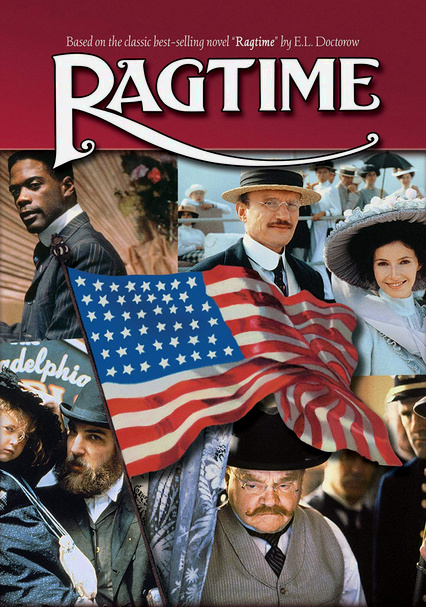
Ragtime-1981

Ragtime-1981

Director Miloš Forman

Starring Howard Rollins, Brad Dourif, Mary Steenburgen

Scott’s Review #1,183

Reviewed October 1, 2021

Grade: A-

Miloš Forman, best known for directing 1975’s One Flew Over the Cuckoo’s Nest and 1984’s Amadeus, crafts a relevant period drama with a moving racial storyline.

Set in turn-of-the-twentieth-century New York, Ragtime (1981) mixes an important message with gorgeous costumes and a sprinkling of romantic intrigue.

The film was honored with an astounding eight Academy Award nominations but came away empty-handed.

The cast is enormous, and I love that aspect of the film. At two hours and thirty-five minutes, the experience nearly felt too short, since there were plenty of stories left to tell, especially in the subplots.

Some resolutions are not clearly explained, but of course, the central story ends tragically.

A fun fact is that Robert Altman was initially signed on to direct the film, but was replaced by Forman. My mind conjures up endless juicy moments that Altman likely would have added. As good as Forman is, Altman would have been even better.

There are also a few real-life people sprinkled in among the fictitious characters, which may cause some confusion, especially with the large cast. Newsreels of Theodore Roosevelt, Houdini, and architect Stanford White are featured.

A flurry of juicy tales based on E.L. Doctorow’s eponymous novel dissects life in pre-World War I New York City. The haves and have-nots see their lives intersect in many different ways.

A lavish party in Atlantic City is a fabulous highlight of Ragtime.

One day, a rich white family living in New Rochelle, New York, finds a black baby in their yard and takes in the mother (Debbie Allen) as a maid. A black pianist, Coalhouse Walker Jr. (Howard Rollins), returns for his woman and child after finding success in a Harlem jazz band.

A group of small-minded firefighters, irritated to see a successful black man own a Model-T Ford, deface it, and Walker demands retribution. This sets the main chain of events in the film as a war rages between Walker and his friends and the white firefighters.

There are more stories presented in a lesser form than I would have loved, like the interesting friendship between the black Walker and the white younger brother, played by Brad Dourif.

In a strange scene, millionaire industrialist Harry Kendall Thaw (Robert Joy) makes a scene when White unveils a nude statue atop Madison Square Garden, modeled after former chorus girl Evelyn Nesbit (Elizabeth McGovern), Thaw’s wife.

Convinced that White has corrupted Evelyn, Thaw publicly shoots him dead.

From an acting perspective, the film belongs to Howard E. Rollins. I immediately treasured the character he plays and rooted for him to win. Intelligent yet put upon, he goes through several incarnations of the character and twice as many emotions. He was by far the richest character of all as far as substance.

Other characters intrigued, but dissecting them would be impossible since there were so many. McGovern, Mandy Patinkin, and Mary Steenburgen are my favorite characters.

The only slight drawback is that the film has a glossy look, and the gritty scenes are not powerful enough. As intense a moment as the finale is, for example, I wanted something dirtier. When Walker’s fate was sealed, I wanted to be more frightened, not feel like I was being fed high drama.

Ragtime (1981) successfully and nearly flawlessly combines artistic style with an enormous social message. It looks polished and representative of the early 1900s, and it challenges audiences to take a look at how different cultures co-existed in another time.

Oscar Nominations: Best Actor in a Supporting Role-Howard Rollins, Best Actress in a Supporting Role-Elizabeth McGovern, Best Writing, Screenplay Based on Material From Another Medium, Best Art Direction-Set Direction, Best Cinematography, Best Costume Design, Best Music-Original Score, Best Music-Original Song-“One More Hour”

Do the Right Thing-1989

Do the Right Thing-1989

Director Spike Lee

Starring Spike Lee

Scott’s Review #746

Reviewed April 21, 2018

Grade: A

Do the Right Thing is one of the few great films to come out of 1989, not remembered as a fantastic year in cinema when most mainstream films were as glossy as tin foil- and barren of quality substance.

Here we have a small, independent gem that sparked discussions about current race relations in the United States and became a monumental, influential film.

Filmmaker (and star) Spike Lee carves a controversial story of racial tensions in a Brooklyn neighborhood on a hot summer day.

Beginning rather light and comedic, then turning violent and dark, the action is set in a largely black neighborhood, Bedford-Stuyvesant, Brooklyn, where twenty-five-year-old Mookie (Spike Lee) works delivering pizzas at an Italian pizzeria owned by Sal (Danny Aiello).

With a toddler at home and a nagging girlfriend, Tina (Rosie Perez) always in his face, Mookie is unmotivated yet still a decent guy and loyal friend.

Sal has two sons who work at the pizza place- Pino (John Turturro), who is angry and racist, and nice guy Vito, who is a friend of Mookie’s.

When conflicts erupt over whether Sal’s restaurant should celebrate black celebrities and white celebrities on a wall in the dining room, tensions reach their breaking point as the intense heatwave makes matters much worse.

What makes Do the Right Thing a marvel is both the film’s overall tone and the atmosphere Spike Lee conveys, who does an incredible job of writing, producing, and starring in it.

The elements having little to do with the actual story immediately impress with big, bright colors in comic-book style, screaming at the big screen, eliciting both a warm, inviting feeling and an angry, contemptuous vibe.

The loud rap and hip-hop beats are instrumental in conveying a specific feeling and emotion in the film.

Made independently and on a small budget, the film feels raw and intense from the get-go.

Brooklyn and New York City, in particular, are the perfect settings, as Sal and his family are white folks living in a predominantly black neighborhood, so, in turn, the minorities in the story are the ones in the minority.

Additionally, the viewer sees the friendly neighborhood and feels a sense of belonging regardless of race- the humorous drunk, the kindly, grandmotherly type people-watching from her stoop, and the boombox music kid all form a sense of community and togetherness.

This point is tremendously important to the film’s overall plot.

The relationship between Mookie and Sal and his sons is very important and the centerpiece of the entire film, which I found quite interesting as a character study.

Open-minded, Sal is a decent man and fine with the diversity in his neighborhood- yet still true to his Italian roots. Aiello does a fantastic job of portraying this complex, conflicted character.

His two sons could not be more different from each other- Vito, who is a close friend of Mookie’s, is sympathetic and sweet, with nary a racist bone in his body.

Pino, on the other hand, is angry and resentful of the black community taking over what he feels is his territory.

Finally, while lazy, Mookie is also a sympathetic character, as he is conflicted when the tension reaches its boiling point.

These diverse characters make the film so dynamic.

Revered director Spike Lee carves out a story and brings it to the big screen, telling an important topic that is as vital in modern times as it was when Do the Right Thing was released in 1989.

The film is intelligent and timely without being condescending to either black or white races, nor preachy- instead of telling a poignant story that is angry and sometimes painful to watch, but more importantly, is empathetic and real.

Oscar Nominations: Best Supporting Actor-Danny Aiello, Best Screenplay Written Directly for the Screen

White Chicks-2004

White Chicks-2004

Director Keenen Ivory Wayans

Starring Shawn Wayans, Marlon Wayans

Scott’s Review #647

Reviewed May 29, 2017

Grade: D

Anything but high art, though at the time of release (2004), it seemed like a clever yet silly slapstick farce, White Chicks was a film I found rather enjoyable.

Watching the film in 2017, however, some thirteen years later, it feels dated beyond belief and as dumb as can be.

The film also contains Paris Hilton’s gimmick characters and racial overtones that were lost on me when I first saw the film.

Influenced by the drag comedy (and classic) from 1959, Some Like It Hot, the premise sounds interesting and comical.

Kevin and Marcus Copeland (played by the comical Wayans brothers) are a pair of black,  masculine, F.B.I. agents who bungle an undercover investigation and are given one last chance to redeem themselves before being booted from the bureau for good.

They are assigned the task of protecting the mega-rich cruise-line heiresses, Brittany and Tiffany Wilson, who are in town (at the Hamptons) from a planned kidnapping plot over Labor Day weekend.

Kevin and Marcus don blonde wigs, and freakish makeup, and awkwardly pose as the Wilson sisters to save their jobs.

As the story goes on, Kevin and Marcus (as Brittany and Tiffany) develop relationships with various characters, including millionaire Latrell Spencer (Terry Crews), who takes an interest in Marcus (thinking he is Tiffany, and white).

Other antics unfold as the “girls” try their best to form friendships with the heiress’s snotty friends while attempting to foil the kidnapping plot.

Similarities to the classic Wilder hit, Some Like It Hot, are tough not to notice, and director Keenen Ivory Wayans is smart to borrow from a film considered one of the greatest comedies of all time.

Just as Joe and Jerry (Tony Curtis and Jack Lemmon) go on the lam to escape mafia figures out of desperation, Kevin and Marcus are desperate to keep their jobs, causing both sets of “impersonators” to suffer from dire circumstances.

Also worth mentioning are similar conclusions in both films: love interest Osgood Fielding III, also a millionaire, as is Spencer in White Chicks; each is not fazed by the “big reveal” as the men are de-masked as actually being men.

Clever in 2004, the incorporation of celebrity Paris Hilton in 2017 now seems dated and of the past.

In real life, being a hotel heiress, characters Brittany and Tiffany (cruise line heiresses) mirror Hilton as spoiled, self-centered, and oblivious to everyone around them.

The aspect was a good idea at the time of the release of the film, but now it is irrelevant, not even as a nostalgia gag- perhaps in the year 2037, White Chicks might be appreciated more, but I would not hold my breath.

The overall tone of White Chicks is also fraught with silliness and with one gag after another. Rather than being believable as females, the Wayans brothers look downright frightening and robotic as Brittany and Tiffany.

In comedies, suspension of disbelief is required, but the producers should have done a bit more to feminize the characters instead of playing them as goofs.

The ending of the film is no-frills and formulaic, with no real twist or surprise ending to speak of.

The ridiculous misunderstandings involving Kevin and Marcus’s real significant others, who foolishly believe the men are having affairs with other women, seem forced and amateurish.

Predictably, when the men profess their love for the girls earnestly, they fall for it hook, line, and sinker, and the film wraps in disappointing, standard fashion.

Cute and fresh at the time, White Chicks (2004) now feels stale and tired, with racial overtones that were deemed amusing back in the day but now seem mean-spirited and unnecessary.

The film is an attempt at recreating a classic comedy for a younger audience. Still, I would recommend seeing the original Some Like It Hot (1959) instead- it is much more enjoyable.