Tag Archives: Olympia Dukakis

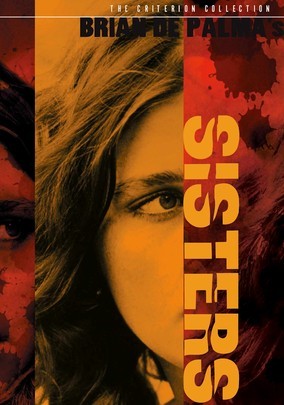
Sisters-1973

Sisters-1973

Director Brian De Palma

Starring Margot Kidder, Jennifer Salt

Top 250 Films #119

Top 40 Horror Films #22

Scott’s Review #178

60002455

Reviewed September 29, 2014

Grade: A-

Directed by stylistic film genius Brian De Palma, Sisters (1973) is an early entry in the famed director’s repertoire and a direct homage to the classic films of Alfred Hitchcock.

The film stars Margot Kidder as a French-Canadian model named Danielle Breton, who shares an apartment a Staten Island, NY, with her demented twin sister, Dominique. For many years, Danielle and Dominique were conjoined twins and only recently surgically separated.

After a romantic date with a new acquaintance, Danielle begins to feel ill and Dominique murders the new boyfriend after he surprises, who he thinks is Danielle, with a birthday cake.

But is it Dominique or is it Danielle?

Meanwhile, a neighbor, Grace Collier, played by Jennifer Salt, witnesses the murder from across the alley. In a theatrical scene where the victim attempts to scrawl “help” on the window, Grace gets the police involved.

The authorities are skeptical and unsympathetic to Grace’s claims, as she works as a newspaper reporter and frequently challenges the police department in her articles.

Finally, when the police search Danielle’s apartment, no dead body is found. This sets off the plot for the remainder of the film as Grace looks for the missing body on her own (in Nancy Drew’s style) with the help of a detective she hires, Joseph Larch, comically played by Charles Durning.

One point to mention about Sisters is that the film serves as a blueprint for De Palma’s future movies, but that does not mean it is not engaging on its own merits; it pales in comparison to other De Palma gems that followed, such as Carrie (1976) and Dressed to Kill (1980), my two faves.

It feels raw and slightly underdeveloped compared to those films mentioned above.

Danielle’s ex-husband and doctor, Eli, while creepy and sinister, is not fully explored, and his relation to the events taking place is a bit vague throughout much of the film.

Techniques such as the split-screen, which often show simultaneous action relating to each other, are introduced in this film and are a marvel to watch, as much of the plot is revealed in these sequences.

The activity in Grace’s apartment contrasts with and interchanges perfectly with the action in Danielle’s apartment, making for highly effective and suspenseful scenes.

DePalma uses many Hitchcock influences, but in no way steals them- the idea of a set of conjoined twins with mental illness was taken from a real-life story of Soviet twins.

Viewers familiar with Psycho will smile during the murder scene as influences are apparent- Rear Window is certainly referenced as countless scenes of the camera looking into Danielle’s or Grace’s apartment, or the camera looking out onto a street scene, or someone with binoculars spying out of their apartment and into someone else’s apartment across the street- very visually oriented.

The Hitchcock similarities continue with the musical score, which is composed by Bernard Hermann, a frequent collaborator of Hitchcock’s films —think Vertigo.

After all of the psychological build-up throughout the first hour of the film, the final thirty minutes or so, taking place within the confines of a mental asylum, is confusing and unrealistic, as various flashbacks and dream sequences are used, even using one character taking the place of another in a dream- edgy and unique, but tough to follow and organize properly.

Grace is assumed to be a newly admitted mental patient, which seems far-fetched. What exactly transpired between Danielle and Dominique present and/or in the past?

Even though events are explained, I found myself scratching my head a bit after the film.

For fans of Brian De Palma films, Sisters (1973) is a perfect movie experience that showcases the influence to come, and it’s not a bad film on its own, either.

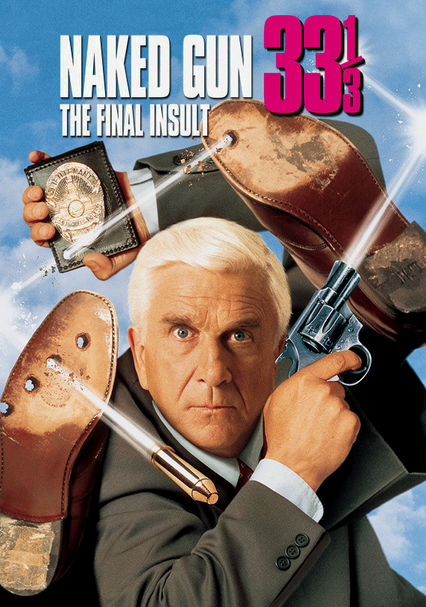
Naked Gun 33 1/3: The Final Insult-1994

Naked Gun 33 1/3: The Final Insult-1994

Director Peter Segal

Starring Leslie Nielsen, George Kennedy

Scott’s Review #1,104

Reviewed January 26, 2021

Grade: B-

Despite being the third and final installment in the popular Naked Gun (1988-1994) franchise, Naked Gun 33 1/3 The Final Insult (1994) is my favorite of the trio despite having a silly title.

The title of “33 1/3” is a reference to the resolutions per minute of an LP playing on a phonograph, a point that has nothing to do with the actual film.

It was also inexplicably decided to leave off the “The” in the title, leaving Naked Gun instead of The Naked Gun.

Why is anyone’s guess? Nor does it matter.

Don’t get me wrong. It’s not a great film but it’s better than the other two, which is shocking in a spoof/screwball comedy going for the standard gags. But, as dumb as the film is, it’s also kind of fun and lightweight.

It’s like a needed chuckle requiring little thought following a rough day at the office.

A familiar formula is followed and this time the events culminate at the glorious Hollywood Oscar celebration, the apple in the eye of all Los Angeles, undoubtedly the main reason this effort is marginally enjoyable.

For unfamiliar viewers, the Naked Gun films are a combination of the Airplane! (1980-1982) and the over-exhausted Police Academy (1984-1994) franchises. The films were out of gas by 1994.

The franchise is based on the short-lived television series Police Squad! (1982), a procedural comedy about bumbling police personnel and the situations they get themselves into to showcase their ineptness.

The Naked Gun 33 1/3: The Final Insult was O.J. Simpson’s final role before he was damned for all eternity for his presumed role in the murder of his wife and her friend in a ritzy area of California.

Leslie Nielsen returns as Frank Drebin, retired and living with his wife Jane (Priscilla Presley). Bored with life, they experience marital problems and seek counseling. Six months after Frank’s retirement, he is visited by Captain Ed Hocken (George Kennedy) and Officer Nordberg (Simpson), who ask for Frank’s help with an investigation.

Police Squad has caught wind that mischievous bomber Rocco Dillon (Fred Ward), who is currently incarcerated, has been hired by terrorists to conduct a major bombing against the United States.

As Frank tries to keep Jane from finding out that he is dabbling in detective work again, he jokes that he is having an affair to throw her off the track. When she begins to suspect he is having an affair this leads to a silly series of misunderstandings and gags which naturally are wrapped up as is always the case in films like this.

Nielsen is the main draw and he does what he does best and what makes him the king of spoof films. A serious actor before Airplane! he became a typecast but had lots of successes ahead of him.

He embraces his role which adds freshness. He doesn’t take himself so seriously so audiences can sit back and relax, enjoying the entertainment.

The lavish awards ceremony and the ingenious idea to plant the bomb within the coveted Best Picture Oscar sealed envelope is delicious, especially when the bomb is set to detonate when the card is pulled from the envelope and the winner is crowned.

This creates a good measure of suspense as the award show carries on toward the big finale.

George Kennedy has little to do but it’s the inclusion of stars like Vanna White, Weird Al Yankovic, and Pia Zadora that add zest to the production.

Director, Peter Segal, famous for lightweight comedies with heart, is wise to keep the running time at a quick one hour and twenty-two minutes. If longer, any momentum the film musters would have disintegrated.

This was his feature-length directorial debut.

The Naked Gun 33 1/3: The Final Insult (1994) may be the best in the trio but that says quite little considering it’s based on funnier and fresher endeavors.

I champion the early Police Academy films for a needed dose of police incompetence and hilarity done up in a fun way. If one must watch a Naked Gun film and is partial to the Academy Awards, this one is begrudgingly suggested.

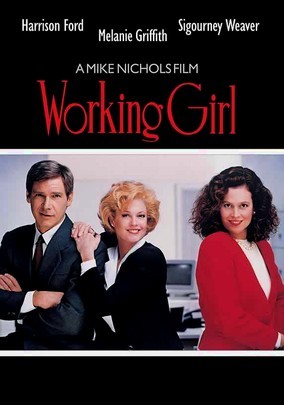
Working Girl-1988

Working Girl-1988

Director Mike Nichols

Starring Melanie Griffith, Harrison Ford, Sigourney Weaver

Scott’s Review #748

Reviewed April 26, 2018

Grade: B+

Released during a decade known for excess, fun, and light comedy films, especially during the latter half, 1988’s Working Girl was a blockbuster hit at the time, and in modern times is perfectly nestled as an identifier of the decade itself.

This can be both good and bad with both a dated feel and also a whimsical, basic good girl versus a bad approach that is appealing.

The film is romantic comedy fluff but is entertaining and features lovely views of New York City- one of my very favorite locales.

The film is directed by Mike Nichols, known more for the heavier subject matter (1966’s Who’s Afraid of Virginia Woolf and 1967’s The Graduate). His leading of the picture, as well as all-star casting, surely made this film better than it ought to have been.

Tess McGill (Melanie Griffith) commutes via the Staten Island Ferry each morning into vast Manhattan where she holds a secretarial job at a Wall Street investment bank.  When she has a bad experience with one of the brokers, she is reassigned to a female boss, the assertive Katharine Parker (Sigourney Weaver).

After Katharine steals Tess’s business idea and passes it off as her own to get in good with handsome Jack Trainer (Harrison Ford), Tess is determined to reveal the truth as a triangle develops between the three individuals.

In tow are Tess’s best friend Cynthia (Joan Cusack) and her cheating boyfriend, Mick (Alec Baldwin) in supporting roles.

Working Girl feels overwhelmingly like a “1980s film” and while relevant at the time and kindly nostalgic, the film does not hold up well in modern times, rather seeming to be suited for a time capsule, unlocked from time to time for kicks.

The most garish example is the hideous hairdos that Nichols has Tess and Cynthia don- frizzed out and caked with aqua net hairspray is over-the-top even for the 1980s.

Then there are the inevitable tacky outfits complete with bright colors and shoulder pads as the girls hustle to their dull jobs. With these costume tidbits in addition to the filming style the tone just screams the 1980’s.

The casting of the three leads is very good- Griffith, Ford, and Weaver all share nice chemistry and the clear rooting value is for Tess and Jack to live happily ever after- with Katharine as the obvious foil.

The conclusion of the film is of little surprise, but as a romantic comedy, this is standard fare. The point is that the relationships are dynamic and the ride is fun. Griffith is quite breathy and seductive in her role- a clear homage to the talents of Marilyn Monroe in her 1950s-era films.

Never known for great acting, Tess is the role of a lifetime for Griffith. Weaver sinks her teeth into an against-type villainous role and Ford is dashing and charismatic as the leading man.

My favorite parts of Working Girl, and the strongest aspects of the film, leaving an indelible impression even after all of these years, are the sweeping camera sequences of New York City featured throughout the film.

Lots of scenes were shot in neighboring Staten Island, but the best shots of all are the luminous skylines of Manhattan that encompass the opening sequence and later, viewpoints from the corporate offices.

There we see Tess on the Ferry heading across the Hudson River all with the wonderful soundtrack song by Carly Simon, Let the River Run, playing in the background. The soothing tune and the approaching mammoth city set a nice tone.

The story itself is a sort of rags to riches, Cinderella-style experience from the point of view of Tess. Taking night classes to better herself and clearly, a blue-collar type battling the giants of the corporate world and the more sophisticated Katherine (she speaks fluent French!) is an enormous draw of the film to sustain mainstream audiences.

Corporate greed versus the little guy is an adept comparison here. Almost borderline fairy tale, the fact that Tess gets the dashing Jack (in real life he would undoubtedly be with Katharine) makes the film good, escapist fare.

The working-class Staten Island versus the sophisticated Manhattan is another theme worth mentioning.

Thirty years beyond its original release. 1988’s Working Girl now seems dated, dusty, and of its time like many similar style films, but does still contain some of the enjoyment undoubtedly beholden to it at the time of release.

A film that is fine to take out of the vault, dust off, and enjoy for some good escapist cinema and a predictable story of good overcoming bad.

Oscar Nominations: 1 win-Best Picture, Best Director-Mike Nichols, Best Actress-Melanie Griffith, Best Supporting Actress-Joan Cusack, Sigourney Weaver, Best Original Song-“Let the River Run” (won)