The Bicycle Thief-1948

The Bicycle Thief-1948

Director Vittorio De Sica

Starring Lamberto Maggiorani, Enzo Staiola

Scott’s Review #867
Reviewed February 16, 2019

Grade: A

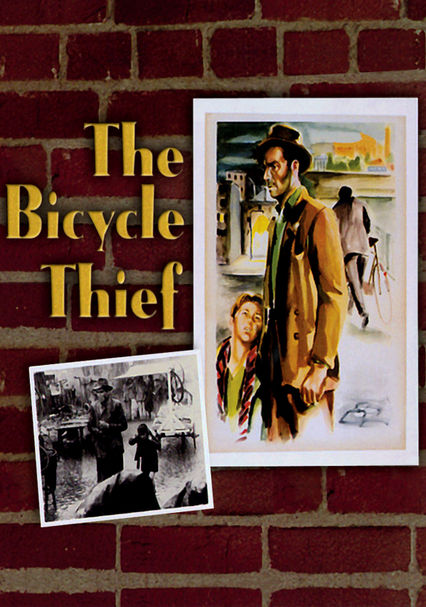
The Bicycle Thief (1948), whose English title is a translation of the original Italian Bicycle Thieves (Ladri di biciclette), is an essential and cherished film that delivers a powerful message through a compelling story.

The emotional film focuses on a robust relationship between a father and his son and their determination to retrieve what is rightfully theirs.

Made after World War II, it has a socialist theme and a hallmark neorealist style centered around working-class people.

The film is an example of cinema as art, not merely entertainment.

The film deservedly was awarded a special Academy Award for “Most Outstanding Foreign Language Film” before the historic Best Foreign Language Film award existed.

This is a testament to the power and humanism that the film envelops as the sad and occasionally incredible story unfolds. Professional actors and non-actors make the film a strong and authentic watch in a quick one-hour and twenty-nine-minute running time.

In the late 1940s, Rome Antonio Ricci (Lamberto Maggiorani) struggles to find decent work to support himself and his family.

When an opportunity presents itself but requires a bicycle, Antonio’s wife, Maria (Lianella Carell), selflessly sells family heirlooms to acquire his pawned bicycle.

Things look great for the family as Antonio begins his new job. On his first day, a thief steals his bicycle. Antonio sits atop a ladder, helplessly witnessing the theft.

Determined to track the thief down and retrieve his stolen bike, he and his son Bruno (Enzo Staiola) traverse the city in desperation.

The Bicycle Thief is a simple story that enraptures readers with a range of emotions: anger at the thief, empathy for Antonio and Bruno, inspiration from the humanity of some characters, and rage at the actions of others.

Antonio strives to be a good role model for his son and a provider for Maria. By the end, he has become a more complex character, resorting to drastic measures to solve his problems.

Antonio is desperate, guilt-ridden, and ashamed, yet also a highly inspirational character.

Fans of the gorgeous and historic European city of Rome are in for a treat. The Bicycle Thief is peppered with enchanting shots of the famous town and focuses on the events of everyday people as they go to work and spend their days on a mission.

Director Vittorio de Sica’s bright, sunny lighting portrays Rome as a hot, bustling epicenter. The atmosphere is foreboding, as we know something dire will soon occur amid the warm and cheery metropolis.

The acting is central to The Bicycle Thief’s success, with inspired performances by Maggiorani and Staiola as father and son.

Staiola is masterful as a young boy who needs a father figure and hangs on his father’s every move.

In many scenes, his soulful, expressive eyes hold both sadness and hope as he yearns and prays for his father to be happy again and for himself to feel safe.

In comparison, Maggiorani possesses an ability to portray strength and angst interchangeably. His finest scene is pivotal as he realizes he has become no better than the thief he despises early in the film and is buried in shame.

The Bicycle Thief (1948) is a powerful and memorable film because of its simplicity and humanistic sensibilities. The plot is basic and explores one man’s quest for justice and the right to live his life and care for his family.

His journey is complex and fraught with tense moments, making the film palpable and heart-racing as his adventure unfolds before us.

Thanks to gorgeous cinematography and a dose of pathos, those who watch this film will be in store for a treasure of powerful cinematic storytelling.

Oscar Nominations: Best Screenplay

Golden Globe Nominations: 1 win-Best Motion Picture-Non-English Language (won)

The Little Foxes-1941

The Little Foxes-1941

Director William Wyler

Starring Bette Davis, Herbert Marshall, Teresa Wright

Scott’s Review #866

Reviewed February 14, 2019

Grade: A-

Any film starring the ravishing and dynamic Bette Davis is worth watching. Still, The Little Foxes (1941) was released during the Hollywood legend’s heyday, and the actress elicits an intense character portrayal.

The film is a complex story of Southern scheming and contains enough intrigue to keep the viewer compelled after a slow start.

Filmed in black and white and due to its age, the film quality is not the best, the story nonetheless builds in suspense, especially during the final thirty minutes. This culminates in a frantic conclusion, with Davis deservedly taking center stage.

Southern matriarch Regina Hubbard Giddens (Davis) is sophisticated and angry. The female member of an affluent family is in a time when men rule the roost and her brothers control the family money, leaving her with little power.

Living nearby, Benjamin (Charles Dingle) and Oscar (Carl Benton Reid) flaunt their wealth while Regina struggles for every crumb she can get. After the family embarks on a deal to profit from a cotton mill merger, Regina schemes to score riches by any means necessary.

The southern setting with luxurious estates and more than its share of cultural and cuisine flavors serves The Little Foxes well with a palpable atmospheric style. With an antebellum, white dress, grits, and brandy featured, the goodness and girth of a proper way of living are featured.

Prominent black characters exist, primarily serving as the household help or various service roles to white folks, for 1941 this was considered progressive for studios to feature minorities so heavily and must be praised for the inclusiveness.

Throughout the run of the film, I felt a push/pull whether I sympathized with Regina or despised the character.

Comparisons to Gone With the Wind (1939) entered my mind, many having to do with Regina herself. Flirtatious when she wants to be coquettish to fit her needs, she is a cross between Scarlett and Melanie.

I even began to champion the character at one point and the plight of a female in the early 1900s who could not be taken seriously as a businesswoman.

The Little Foxes is brazen in that it champions a strong and determined female character. Regina will not merely stand behind any man but chooses to stand on her own two feet.

Cinema in the 1940s was known for portraying female characters as independent and self-sufficient, and this film is a prime example of this movement.

In the film’s final act, there can be no denying the true colors of Regina, and any sympathy or comparisons to the characters are ultimately dismissed diabolically. The character is faced with the choice to either do the right thing and save a life or cross the line and let a beloved character die.

The scene is pivotal and emotional when she chooses the latter. She has made an important decision that she can never reverse.

Director William Wyler shoots the astounding Davis in myriad ways central to the character’s motivations. Appearing determined and driven in some scenes and downright devious in others, Davis excels at doing so much with her enormous and expressionistic eyes.

The Little Foxes portrays her as a complex and unrelenting character tailor-made for Davis’s talents.

To say that Regina gets away with murder is an unfair statement. Wyler makes it clear that despite benefiting financially, the character is forever shrouded in suspicion by her brother and her daughter (Teresa Wright), who decidedly embarks on a new life in Chicago, never to see her mother again.

This leaves Regina fearful and lonely in her grand house.

The Little Foxes (1941) succeeds as a showcase for the emerging talents of stalwart Bette Davis, and it is a good, solid drama. Schemes, conspiracy, and backstabbing are prevalent themes, but the film also contains a melancholy subtext of loneliness and fear.

Appropriately, Ms. Davis is awarded the final shot, a close-up that reveals the star power she had begun to muster as her career was in full swing.

Oscar Nominations: Outstanding Motion Picture, Best Director-William Wyler, Best Actress-Bette Davis, Best Supporting Actress-Patricia Collinge, Teresa Wright, Best Screenplay, Best Scoring of a Dramatic Picture, Best Art Direction-Interior Decoration, Black-and-White, Best Film Editing

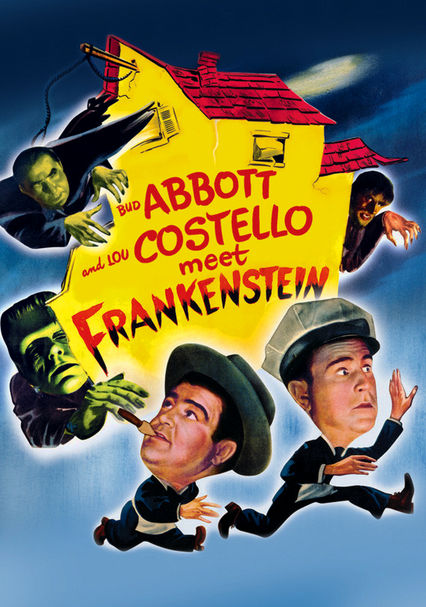
Abbott & Costello Meet Frankenstein-1948

Abbott & Costello Meet Frankenstein-1948

Director Charles Barton

Starring Bud Abbott, Lou Costello

Scott’s Review #865

Reviewed February 9, 2019

Grade: B+

Abbott & Costello Meet Frankenstein (1948) was the first film of several to capitalize on the comedy duo’s popularity and merge them with several horror characters in a hybrid of the horror and comedy genres.

The zany film was enormously popular with fans, leading to other subsequent pairings, but this is the best of the bunch. The ingenious idea works well, and the bumbling pair presents an entertaining film fresh with good ideas and a harmless comedy romp.

The villainous Dracula, the Wolf Man, and the title horror character make the riches even loftier.

Working as baggage clerks at a Florida train station, Chick Young (Bud Abbott) and Wilbur Grey (Lou Costello) border on incompetence. After damaging two crates at the station, they deliver them to a local wax museum. Little do the pair realize that the crates house Count Dracula (Bela Lugosi) and the Frankenstein monster (Glenn Strange).

Once Chick and Wilbur arrive at the wax museum, a comedy of errors occurs as the monsters reanimate and escape while the pair are arrested for supposed theft.

Ultimately, the film culminates with an exciting finale at a nearby island castle, where a devious doctor (Lenore Aubert) intends to remove Wilbur’s brain.

The film is wonderfully campy and over-the-top, which is a substantial part of its appeal. The setup is delicious, as the audience knows Chick and Wilbur will ultimately face the various creatures but does not know how this will happen.

The quick-witted comedy duo hardly needs coaching, but their banter and timing seem particularly palpable in this screen offering. This is impressive given the historical account of neither actor wanting to make the film and both being convinced the result would be a bomb teetering on career suicide.

Any accusations that their hearts were not in it can be dismissed.

A large part of the appeal is the three individual monsters with different motivations and offerings.

Dracula is the villain in cahoots with the mad scientist.

Frankenstein’s monster is the victim, while the Wolf Man is the suffering hero.

Returning to roles that made them famous was crucial to the success of the film, and Lon Chaney Jr. and Bela Lugosi (Wolf Man and Count Dracula, respectively) deliver their lines with gusto, careful not to make themselves too menacing nor too foolish, and both blur the horror and comedy lines with perfection.

The filmmakers must be credited for the progressive slant of casting the mad scientist as a female rather than the traditional male.

Actress Aubert as Dr. Sandra Mornay is delicious as she lustfully seduces Wilbur in comic form. She needs not his body but the brain of a simpleton to insert into the head of the monster.

The young man and the gorgeous woman make an odd comedic pairing because of their physical differences. However, their combination is just right for a physical, lightweight comedy.

The final scene is clever and leads to a potential follow-up for the film. As Chick and Wilbur sail away from the looming castle in relief of their adventure, coming to a satisfying conclusion, Chick ensures Wilbur that all the monsters are gone.

An uncredited voice appearance by Vincent Price and a dangling cigarette coming from no mouth introduce the next chapter of The Invisible Man.

Hardly a masterpiece or cinematic genius, Abbott & Costello Meet Frankenstein (1948) does entertain.

Each player is well-cast, resulting in a culmination of good comedy infused with atmospheric horror elements done with the perfect light touch. The comic timing of all members ensures that all the pieces come together in just the right mix of fun and frights with a tongue-in-cheek approach.

What better choice for the escapist fare on a lazy Saturday afternoon?

Suspiria-2018

Suspiria-2018

Director Luca Guadagnino

Starring Dakota Johnson, Tilda Swinton

Scott’s Review #864

Reviewed February 7, 2019

Grade: B-

Dario Argento’s 1977 creative masterpiece is the original Suspiria, an orgy of style and visual spectacles carefully immersed within a standard slasher film appropriate for the times.

Some might deem it foolish to attempt a remake.

Argento’s film contains comprehensive and defined story elements, while the new Suspiria (2018) changes course with a brazen attempt to achieve the same mystique as the original. Instead, it offers a plodding and mundane story that is almost nonsensical and does not work.

Thankfully, a bloody and macabre finale brings the film above mediocrity.

Director Luca Guadagnino, fresh off the Italian and LGBT-themed Call Me by Your Name (2017), a bright film peppered with melancholy romance and lifestyle conflict, could not be more different from Suspiria.

The respected director parlays into the horror genre with two of Hollywood’s top talents, Tilda Swinton and Dakota Johnson, and a nice nod to the original film with a small appearance by leading lady Jessica Harper.

The premise of Suspiria remains intact, as the period is once again 1977, and the location remains Berlin, Germany. Susie Bannion (Johnson) is a gifted American dancer who joins the prestigious Tanz dance academy run by a coven of witches, where she unearths demonic tendencies.

Coinciding with her arrival is the disappearance of another student, Patricia Hingle, and the revelation that her psychotherapist Josef Klemperer (Swinton) has Patricia’s journals chronicling details of the dastardly coven.

From an acting perspective, Swinton impresses the most as she tackles three distinctive roles: an elderly and troubled psychotherapist, artistic director Madame Blanc, and Mother Marko, an aging witch.

Each character is vastly different, allowing the talented actress to immerse herself in the various characters. She is so convincing that I did not realize while watching the film that she played the psychotherapist or that a female played the character.

I admit to not being a fan of Dakota Johnson for perceptively using her Hollywood royalty to rise the ranks to film stardom or her lackluster film roles thus far—think Fifty Shades of Grey or the innumerable sequels—but she does not do much for me in the central role of Susie.

The miscast is more palpable compared to Harper’s rendition of the role decades earlier.

Johnson is predictably wooden and quite painful to watch, especially matched against a stalwart like Swinton in many scenes. Lithe and statuesque, the young actress does contain the physical qualities of a dancer, so there is that.

As a stand-alone film, my evaluation of Suspiria might be less harsh, but the original Suspiria is held at such lofty heights that this is impossible.

The problem is with the screenplay, as compelling writing is sparse. Much of the plot makes little sense and does nothing to engage the viewer at the moment. Slow-moving and meandering, lacking a spark or an abrupt plot breakthrough, I quickly lost interest in what was going on.

The interminable running time of over two and a half hours is unnecessary and unsuccessful.

Before I rake entirely Suspiria across the coals, my cumulative rating increases with the astounding and garish final sequence, which features a plethora of blood and dismemberment in a sickening witches’ sabbath.

As Klemperer lies incapacitated after being ambushed by the witches, one girl is disemboweled, followed by decapitation, as the bold use of red is blended into the lengthy sequence. As the withered and bloated Mother Markos relinquishes her title, an incarnation of Death is summoned, and heads explode.

The finale plays out like a horrible dance sequence.

To add to the above point, the visuals and cinematography are its highlights. By using mirrors and possessing a dream-like quality, the film looks great and harbors an eerie, stylistic, and deathly crimson hue. The resulting project is one of spectacle and intrigue rather than a sum of its parts.

Rather than approaching the film with an introspective or cerebral motif, it is recommended that you simply go with the flow and let it fester.

Guadagnino deserves credit for bravely attempting to undertake the creation of such a masterpiece and bringing it to audiences in 2018.

Suspiria (2018) lacks plot or pacing and is the second runner-up to the original. The story is not worth making heads or tails of since it is not interesting enough to warrant the effort.

Ultimately, skip this version and stick to the brilliance of the Argento effort, or better yet, do not compare the two films at all.

Independent Spirit Award Nominations: 2 wins- Best Cinematography (won), Robert Altman Award (won)

Roma-2018

Roma-2018

Director Alfonso Cuarón

Starring Yalitza Aparicio, Marina de Tavira

Scott’s Review #862

Reviewed February 2, 2019

Grade: A

Roma (2018) is a film to be experienced rather than merely viewed.

A cinematic, black and white feast for the eyes, and direction to be amazed by is utterly impressive and a triumph in masterful filmmaking.

On par with geographically picturesque epics such as Lawrence of Arabia (1962), the piece is not easy to watch at first. Still, the audience will become enraptured and rewarded with each passing moment as the characters emerge to flawless perfection, reaching a crescendo of magnificent art.

Set during a politically tumultuous time in Mexico City during 1970 and 1971, the film follows a young maid working for a middle-class Mexican family and her perspective on her surroundings.

She serves as housekeeper, going about her numerous duties of mopping, cooking, and even cleaning up the family dog excrement that runs rampant, and she provides emotional support for the family members.

Cleo (Yalitza Aparicio) and her best friend, fellow maid Adela (Nancy Garcia), tend to four children of varying ages and their troubled parents. He is a doctor, and she is the family matriarch.

Antonio and Sofia (Marina de Tavira) have a troubled marriage as he supposedly goes to Quebec for business, and tensions mount among the family.

Through it all, Teresa, Antonio’s mother, resides with the family as Cleo learns she is pregnant, and her boyfriend Fermin flees after hearing the news.

Director Alfonso Cuarón, responsible for the writing, direction, cinematography, editing, and nearly every picture aspect, draws from his personal experience growing up in Mexico City.

Cuarón reportedly created the film as an artful love letter to his beloved family housekeeper, whom he adored. This approach creates a rich personality, intimacy, and a definite family angle.

The film centers mainly around Cleo’s trials and tribulations, but the entire family appears in numerous scenes, making it feel like an ensemble feature.

Cleo is a quiet and modest girl, happily going about her chores and serving the needs of everyone around her. She is treated well by the family and adored by the children, only occasionally enduring the wrath of Sofia’s temper and troubles, but she is loved and appreciated.

In love with Fermin and her only sexual experience, she winds up pregnant, which scares the aggressive and battle-minded young man.

The storyline takes place over a year, so we see Cleo’s entire pregnancy progress and experience her devastation as she gives birth to a stillborn girl.

My favorite aspects of Roma are the simplicity and the monumental touches that Cuarón includes.

The film begins with a lengthy shot of water being thrown on a cement garage and the puddles and circulation of the water. Seen from above is a slow-moving airplane, and numerous background shots of a slowly landing airplane subsequently appear throughout the film.

Is this to represent the slowness of life? Life, death, and near-death experiences are featured in Roma. Cleo’s pregnancy, the death of a baby, and the near-drowning of one of the children rescued by Cleo, despite the girl not being able to swim.

Gorgeous scenes of Cleo traversing through the streets of downtown Mexico City exude beauty. The scenes undoubtedly represent her journey through life and the pain and rewards that she experiences, but they also feature dozens of interesting characters if one pays close attention.

A man lighting a cigarette, a woman gazing, and other ordinary people doing things that look illuminating and like glimpses of the past are featured. The automobiles are representative of the 1970s, as a Ford Galaxy, the family car, is extensively featured.

The film’s cover art (pictured above) perfectly captures the theme of Roma and is highly symbolic. Huddled on the sand at the beach, the family encircles Cleo with expressions of panic, fear, and gratitude.

The black-and-white adds depth, as it could easily be a piece immersed in an art museum. The group of people appears unified and clings to Cleo for dear life, also in a show of support and appreciation.

The photo is endearing and beautiful to look at.

Roma (2018) received an impressive ten Academy Award nominations and numerous year-end accolades, an impressive achievement for a foreign language film.

Those who are patient enough to let the film and its components marinate will be rewarded with a fine appreciation for cinematic artistry.

The dreamlike quality with meticulous attention to detail makes this personal work a fascinating masterpiece.

Oscar Nominations: 3 wins- Best Picture, Best Director- Alfonso Cuarón (won), Best Actress- Yalitza Aparicio, Best Supporting Actress- Marina de Tavira, Best Original Screenplay, Best Foreign Language Film (won), Best Sound Editing, Best Sound Mixing, Best Production Design, Best Cinematography (won)

Independent Spirit Award Nominations: 1 win- Best International Film (won)

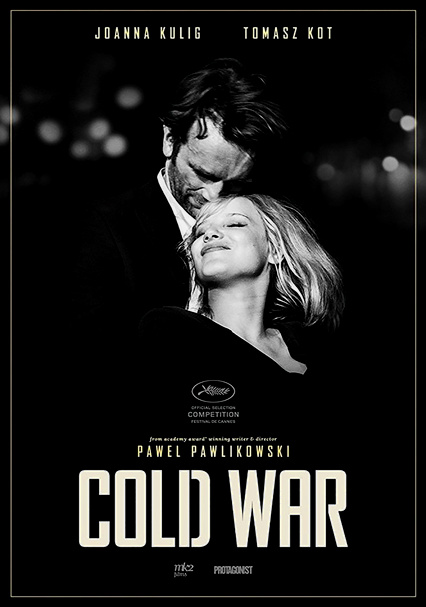
Cold War-2018

Cold War-2018

Director Pawel Pawlikowski

Starring Joanna Kulig, Tomasz Kot

Scott’s Review #861

Reviewed January 29, 2019

Grade: A

Every once in a long while, a modern film set in a different time embodies that era with such authenticity and grace that we forget that it was not shot when the story is told.

Cold War (2018) is one such film that dares to whisk the viewer to another world with genuine timelessness emboldened by the torturous romantic entanglements of its main characters.

Reminiscent of an Ingmar Bergman film shot in black and white, the film is lovely, tragic, and fraught with historical references. One can dissect the character nuances and atmospheric qualities encompassing the entire experience.

The film is a sum of its parts, with a painful layer of veneer immersed in all the various tidbits. Cold War contains almost no humor but rather doom and gloom.

Amid the ruins of post-World War II Poland, repressed and self-destructive musicians Wiktor (Tomasz Kot) and Zula (Joanna Kulig) forge an obsessive love affair and cannot stay away from each other despite the European cities and countries that stand in their way.

Spanning over a decade, they battle alcohol abuse, rage, and imprisonment as they traverse Poland, France, Berlin, and Yugoslavia.

Zula does obtain some success with her musicianship, but at a steep cost. She is forced to marry a hated man she does not love, many miles away from Wiktor. Still, their romance perseveres over time until the duo makes a fateful decision that leads to a profound climax.

The conclusion of the film is powerful, macabre, and emotional.

To state that Cold War is a tragedy is almost an understatement, though viewers will probably not realize this before watching the film.

When Zula auditions at a Polish house for the musically gifted and Wiktor accompanies her on the piano, sparks fly between them as they meet for the first time.

Zula appears to be a simple farm girl and sings a mountain song in duet with another girl. Spirited, Zula flirts with men but is forever drawn to Wiktor, and their chemistry runs rampant.

The direction, art direction, and cinematography are superb, offering a magnificent look to the film. The use of black-and-white filming gives the piece an immeasurably timeless quality, especially as streets and avenues in Paris emerge from time to time.

They could easily be 1950s France. The lovely halls where the pair performs add ambiance and effect, and musical treasures such as the melancholy main song, performed in multiple languages and tones, sparkle with culture.

With a runtime of only eighty-nine brief minutes, Cold War never feels rushed and compartmentalizes all that it needs to tell in this time period.

The story runs from 1949 until the early 1960s, and the film’s title is no mere accident. The historical reference is plain and obvious. The film also has a bleak and frigid quality in both its surroundings and its characters.

One worth mentioning is a rigid government man who complains that one girl in the chorus is “too dark”; the connotation is one of nationalism.

Multiple comparisons can be drawn to Pawlikowski’s masterpiece Ida (2014), one of which is that Kulig stars in both films.

In addition to the black and white shooting, both films feature a central female character that is tortured, a Nazi occupation of Poland or the after-effects of such an occupation, and the effects of repression or otherwise obsessive behavior featured in both films.

Pawlikowski is superb at crafting these damaged and conflicted characters in his films.

Director Pawlikowski successfully achieves a second Polish film offering that challenges his audiences with remarkable storytelling, a dark mood, and a reminder of the terrible effects of the aftermath of World War II and those left in its wake.

Psychological scars can wound as much as physical scars, as Pawlikowski proves in the characters he draws from and their doomed lives.

Cold War (2018) is an achievement in many ways and makes for a thoughtful conversation after the credits roll.

Oscar Nominations: Best Director- Pawel Pawlikowski, Best Foreign Language Film, Best Cinematography

Crazy Rich Asians-2018

Crazy Rich Asians-2018

Director Jon M. Hu

Starring Constance Wu, Henry Golding

Scott’s Review #860

Reviewed January 26, 2019

Grade: B+

Crazy Rich Asians (2018), the romantic comedy smash of 2018, is a fun romp that is memorable because it centers on the Asian population, which is shamefully underrepresented in mainstream American cinema.

For this point alone, the film is recommended and worthy of praise, but otherwise, it is a standard genre film with gimmicks, stock characters galore, and a predictable conclusion.

The numerous cultural tidbits included must be mentioned, which raise the film above mediocrity.

Rachel Chu (Constance Wu) and Nick Young (Henry Golding) are a happily dating New York City couple; she is a New York University college professor, and he is an entrepreneur.

They fly to Singapore to attend Nick’s best friend’s wedding, which results in antics and anguish. Rachel realizes that Nick comes from an extremely wealthy family and is Chinese royalty, owning a multitude of lavish hotels and real estate.

Most of Nick’s family, especially his traditional mother Eleanor (Michelle Yeoh), disapproves of the pairing, viewing Rachel as a typical American who prioritizes passion over family.

Nick is a sought-after commodity among the single women of Singapore, and Rachel is forced to endure harassment and mockery at every turn. Her allies are Nick’s kind sister Astrid (Gemma Chan), Rachel’s outrageous college pal Peik Lin (Awkwafina), and her equally garish family.

The plot thickens when Nick’s scheming mother does a background check on Rachel and discovers a family secret.

Crazy Rich Asians is a formulaic romantic comedy with the standard situations and characters expected of a genre film. The rivalry between the good girl and her boyfriend’s domineering mother, the comic relief of the gay sidekicks as Peik Lin and another friend of Rachel’s, provides.

The caricatures of Peik Lin’s wild family, her unattractive brother fond of taking secret photos of Rachel, and Eleanor’s snooty, judgmental circle of female friends are all well cast yet one-dimensional.

It is perplexing why the filmmakers decided to make Nick only half Chinese rather than authentically Asian. Sadly, this may have been a reassurance that the film would be more marketable to mass audiences.

The film is presented as an Asian film, but it is an American film.

The storyline justification is that Nick’s father (surprisingly never seen) is British and that he and Eleanor met in college, only she being Chinese. Nick and Astrid’s English accents gnawed at me throughout the film.

Despite the myriad of cliches and manipulations, Crazy Rich Asians has a nice flow and offers a fun two hours. The film is flavorful with bright colors and visual spectacles of stylish and sophisticated Singapore and its modern and sleek nuances.

I adored the locales featuring the skyline and a rich overview of the robust and relevant city/country.

Fantastic is how the filmmakers add spices of traditional Chinese culture throughout the film’s telling, quickly becoming more of an ode to the good history. Nick’s grandmother, Su-Yi (Lisa Lu), takes pride in her excellent and artistic flowers, and Rachel is introduced to the art of dumpling making.

Crazy Rich Asians introduces a history lesson for those unfamiliar with ancient Chinese customs.

Flavorful inclusions of Mandarin Chinese language versions of American pop hits are also lovely additions, so the film has some tidbits to revel in other than the story.

Most songs reference money, such as “Money Honey” by Lady Gaga and “Rich Girl” by Hall & Oates.

The pacing of the film is nice. There is never a dull or dragging moment, and a nice balance of comedy and drama. Humorous is when Peik Lin provides Rachel with a costume makeover, ensuring she looks dynamic for the grand wedding, as she convinces her to fight Eleanor with fire.

Drama ensues when someone casts a dead fish on Rachel’s bed, and Eleanor spits that Rachel will never be enough for her son.

The film’s conclusion is predictable, resulting in a marriage proposal aboard a jet heading from Singapore to New York City. With a movie like Crazy Rich Asians, it is guaranteed that the couple lives happily ever after, riding off into the sunset in great defiance of Nick’s roots.

Due to the film’s success, a sequel is a solid bet, though I am also not betting the follow-up will be any good. Are romantic comedy sequels ever decent?

Filled with cliches, but satisfying most mainstream film-goers, Crazy Rich Asians (2018) creates a film with enough shards of Asian culture to at least get the Asian population on the map with a Hollywood production.

Although the film has a polished look and some stereotypes, it breaks no new ground other than good inclusion, and that is a start.

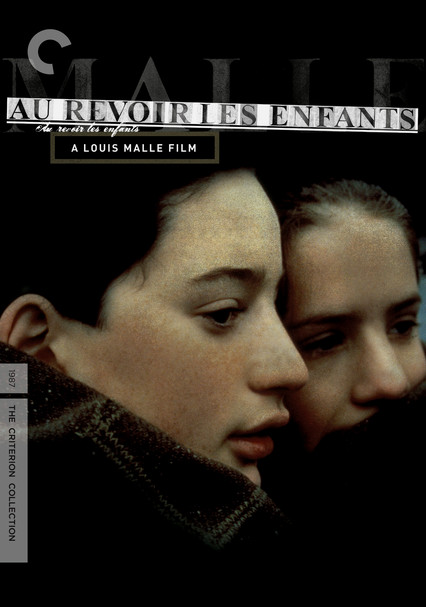
Au Revoir Les Enfants-1987

Au Revoir Les Enfants-1987

Director Louis Malle

Starring Gaspard Manesse, Raphaël Fejtö

Scott’s Review #859

Reviewed January 21, 2019

Grade: A

Au Revoir Les Enfants (1987), the English translation Goodbye, Children, is a powerful story of youth and friendship amid a French boarding school during the Nazi occupation of France.

As World War II rages on, Director Louis Malle crafts a tragic and poignant film that resonates on many levels, featuring both good and evil and the forever loss of childhood innocence.

The film is based on events Malle experienced as a child while attending a Roman Catholic boarding school.

At age eleven, he witnessed a Gestapo raid in which three Jewish children and a Jewish teacher were savagely rounded up and taken to the Auschwitz concentration camps and presumably to their deaths.

What a powerful and tragic event he faced, and he brilliantly transplants this into his film.

We meet young Julien Quentin (Gaspard Manesse) as he bids his mother farewell and takes a train to his boarding school after a lengthy vacation.

The headmaster introduces three new students, one of whom is of Julien’s age. Jean Bonnet (Raphaël Fejtö) is socially awkward but excels at mathematics and piano.

The boys initially dislike one another but slowly forge a powerful bond as they immerse themselves in a treasure hunt together. Julien soon discovers that Bonnet is Jewish, and the school is protecting him from capture.

The film is divided into two main stories: the troubled relationship and subsequent friendship between Julien and Bonnet, and the revelation that Bonnet is Jewish and the benevolence of the school officials toward the plight of Jews.

The latter gives Au Revoir Les Enfantes a socially relevant angle, as the audience begins to care deeply about Bonnet and the other Jewish boys who yearn for education and freedom.

Their innocence and confusion over being hated are effective and painful to watch.

The tyranny of the Gestapo is matched by the kindness and courage of the teachers who defy the anti-Semitic policies and admit Jewish students into the school under assumed names.

The teachers are the heroes of the story and largely unsung, as they yearn to give children of any religion a good education and a chance at happiness and fulfillment.

I would love to see schools feature Au Revoir Les Enfantes to their students as a lesson in bravery.

Any viewer who has visited France will readily assimilate into the country’s good culture and sophistication. Most scenes occur at the boarding school, where lessons are learned, and many students grow, but a favorite scene takes place at a gourmet restaurant.

As Julien and his mother lunch with Bonnet and others, the meals, staff, and ambiance exude French style and goodness, but among these luxuries also lies the constant threat of the Nazis as they bombard the restaurant and attempt to kick a Jewish man out of the establishment.

Malle wisely keeps the camera close to the faces of Manesse and Fejto, with a glowing quality that is both beautiful and haunting.

This results in many scenes that feature the boys’ expressions, including wonder, shock, intensity, and fear.

The young actors rise to the occasion and perform their roles flawlessly with a natural quality. The boys learn a myriad of valuable lessons, most notably that the world is unjust and full of unfairness.

Malle gives the finale more than enough power and angst to leave the viewer pondering the fates of the Jewish characters.

The Nazis undoubtedly sealed their fates; the hows and the whys are left ambiguous, eliciting powerful emotions.

Au Revoir Les Enfantes (1987) is a superb and relevant offering that depicts the pain and fear experienced by Jewish people during a tragic period of history. Told through the eyes of children, the film hits home as innocence is discovered and then lost.

The film was nominated for the Best Foreign Language Film Oscar but lost to Babette’s Feast (1987).

Oscar Nominations: Best Screenplay Written Directly for the Screen, Best Foreign Language Film

Independent Spirit Award Nominations: Best International Film

Atomic Blonde-2017

Atomic Blonde-2017

Director David Leitch

Starring Charlize Theron, James McAvoy

Scott’s Review #857

Reviewed January 19, 2019

Grade: B+

Atomic Blonde (2017) is a female-empowering action/spy film directed by David Leitch, a former stuntman. The film plays similarly to James Bond, but with the genders reversed.

The film is visually stylish, featuring dynamic music and cold, crisp location sequences in Europe.

The story isn’t the main appeal and can be hard to follow, but thanks to a great performance by Charlize Theron in the title role, the film is pleasant and recommended for fans of either the spy or action genres.

Based on the 2012 graphic novel The Coldest City, the film is set in Berlin in 1989, and its central theme is the collapse of the Berlin Wall amid a spy story and the Cold War backdrop.

A grizzled female MI6 agent, Lorraine Broughton (Charlize Theron), is quizzed about events that occurred during her recent time spent in the German city investigating the death of a fellow spy.

She recounts her mission via flashbacks and the whereabouts of a mysterious list that reveals the names of MI6 and KGB Russian agents.

Lorraine frequently deals with David Percival (James McAvoy), an odd colleague who may or may not be trustworthy.

The plot and subsequent story are hardly the finer points of Atomic Blonde, and the title—a play on the words “atomic bomb”—is too cute to be taken seriously.

The novice director is a former stuntman, so don’t expect high art or exceptional writing. The biggest issue, besides the plot holes and implausibility, is that it isn’t engaging.

After thirty minutes of trying to ascertain who had “the list,” I gave up and tried not to follow too closely, instead enjoying the film’s other qualities.

Theron is well cast as bleached blonde vixen Lorraine—harsh as nails and badass. With icy eyes and a sneer that makes the most formidable opponents cringe, the actress has the charisma to make the role her own.

The tall and fit woman endures too many fight scenes to count, but her pizzazz and wherewithal make the character believable. Her toned physique is not dissimilar to that of her character in Mad Max: Fury Road (2015).

Bisexual, Lorraine has a brief romantic escapade with Delphine Lasalle (Sofia Boutella), a young French agent, until the woman is murdered.

Any European adventurer can be enamored, logistically speaking, by the exciting locales featured heartily in Atomic Blonde.

Sleek and modern, the photography and cinematography departments do a fantastic job giving the film authenticity and audacity as they reveal the terrific nooks and crannies the best cities offer.

With so many high-speed car chases and a fantastic underwater sequence, London, Paris, and Berlin all get their due.

Atomic Blonde’s feminist overview is worthy of praise. Able to tangle with the best of them, Lorraine takes no prisoners and is determined to battle until the end or until she is too bloody to fight back. She is tough yet sensitive and puts up with no nonsense.

Still, she has a heart, as evidenced by not only the violent death of her girlfriend and her subsequent reaction but also her calm despair at being unable to save a drowning man’s life.

Lorraine’s calm resilience, instead of over-dramatic emotional outrage, makes her a character who has developed well and is a role model for young women everywhere.

McAvoy is cute as a button as David adds comic relief and sly witticisms to many scenes. He often appears shirtless, showing off his lean, muscular physique. As a fan of sexual dalliances, he is both combative and flirtatious with Lorraine, though he never beds her.

A yin to her yang and sparring partners throughout, David is a nice addition to a cast containing mostly serious characters.

The 1980s-themed musical score features nostalgic songs peppered throughout the film, seemingly every few moments.

Atomic Blonde plays like a bold music video with intelligently penned songs, not disposable crap. The inclusion adds a genuine celebration of the decade of decadence crafted thoughtfully.

Tracks such as the masterful “Voices Carry” by ‘Til Tuesday, “London Calling” by The Clash, and “Der Kommissar” by After the Fire are placed perfectly during relevant scenes.

With a ballsy lead character and enough action to fill a nearly two-hour action thriller, Atomic Blonde (2017) is a gift for atmosphere and ambiance. Forget bothering to deep-dive into the complex story too much- it isn’t worth it.

Admittedly, the style-over-substance approach is forgivable because the strengths outweigh the weaknesses.

Atomic Blonde (2017) best serves as a kickback and enjoy-the-ride experience.

The Lost Weekend-1945

The Lost Weekend-1945

Director Billy Wilder

Starring Ray Milland

Scott’s Review #856

Reviewed January 10, 2019

Grade: A

Billy Wilder, considered one of the most influential directors of the Hollywood Golden Age of cinema (the 1940s), created a masterpiece that tackles a social issue that had never been explored.

The Lost Weekend (1945) tells a tale of alcoholism and the desperation and degradation of a person with an addiction. Wilder bravely goes where no film had dared to go with astounding results.

The film was awarded several Academy Awards, including Best Picture, Best Director, and Best Actor.

Don Birnam (Ray Milland) plays a New York writer left alone for one hot summer weekend. His brother Wick (Philip Terry) and girlfriend Helen (Jane Wyman) are aware of Don’s drinking problem, but leave for the weekend anyway when Don goes on a bender.

He spends each subsequent day desperate for liquor and in need of cash to purchase it. He resorts to theft and selling personal items out of desperation and the need for booze.

The story features flashbacks to events such as his first meeting with Helen and an embarrassing attempt to meet her parents for lunch.

The film is adapted from Charles R. Jackson’s 1944 novel of the same name.

Although it is a dark story that can be categorized as a downer, the film does not paint a glamorous picture of the pains an alcoholic experiences or the lengths he will go to out of desperation.

Before The Lost Weekend was made, drunkard characters in the film were primarily portrayed as either bumbling or as comic relief, so this character study is a welcome departure from tradition.

Milland is perfectly cast and effectively relays the troubled and desperate Don. Handsome, well-dressed, and professional, he is not the stereotypical image of a drunk.

Dressed in a suit and tie by all accounts, he does not fit the bill for a desperate man, but slowly begins his descent, spiraling out of control.

This makes Wilder’s message more potent as he shows that alcoholism can afflict anyone, even professional, intelligent men.

Milland, who resembles actor Jimmy Stewart, is supposed to be liked by the audience, eliciting a rooting factor even when he mistreats Helen. We want him to face his problems and recover.

Many glimpses of Manhattan are shown, and exterior shots are used plentifully. Wilder shoots the scenes as largely bleak and lonely, which aligns with the film’s overall feel.

Third Avenue looks desolate and isolated as we watch a desperate Don wander around, trying to sell his typewriter for booze money. He is grief-stricken when he realizes that it is Yom Kippur weekend and the pawnshops are closed.

The camera remains firmly fixed on Milland, showcasing a range of powerful emotions throughout the film.

The Lost Weekend (1945) was a groundbreaking film at its release. It is a serious and detailed tale of the life and times of an alcoholic.

With a superb acting performance by Milland, Wilder can darkly and frighteningly portray the world of a person with an addiction.

Decades later, the film is still cited as an inspiration by other filmmakers creating works about alcohol abuse.

Oscar Nominations: 3 wins– Best Motion Picture, Best Director-Billy Wilder (won), Best Actor-Ray Milland (won), Best Screenplay (won), Best Scoring of a Dramatic or Comedy Picture, Best Cinematography, Black-and-White, Best Film Editing

Golden Globe Nominations: 3 wins-Best Picture (won), Best Director-Motion Picture-Billy Wilder (won), Best Actor in a Leading Role-Ray Milland (won)

Night Train to Munich-1940

Night Train to Munich-1940

Director Carol Reed

Starring Margaret Lockwood, Rex Harrison

Scott’s Review #855

Reviewed January 9, 2019

Grade: B

Night Train to Munich (1940) is a taut war thriller unique in the subject matter of World War II made before the war became full-blown and all the horrors not known.

The film is related to The Lady Vanishes (1938) and Alfred Hitchcock’s projects, which feature familiar crossover characters. The film’s final thirty minutes are spectacular in excitement and chase scenes. Still, the overly complex plot takes too long to develop, leaving me underwhelmed and bored for most of the experience.

In March 1939 a Czechoslovakian scientist, Axel (James Harcourt) is wanted for questioning by the Germa  Gestapo. Residing in Britain, they accost his daughter Anna (Margaret Lockwood) and throw her in a concentration camp.

She meets fellow prisoners and assumed ally Karl Marsen (Paul Henreid), who escapes with her to the safety of London. He is revealed to be a Gestapo agent assigned to gain her trust and question her father.

Finally, Anna meets undercover British intelligence officer Dickie Randall (Rex Harrison), who poses as a Nazi officer to take Anna and her father to safety.

The first forty-five minutes to an hour of Night Train to Munich are slow-moving, with a complicated and rather uninteresting plot. However, I am all for slow-moving films, provided the setup is there and the elements align correctly.

I felt shame because the cover art and title of the film suggested a more robust experience. I continued to ask, “Where is the train?” and “Where is the mountainous terrain and ski lift?” as pictured. These elements finally do arrive, but the wait is longer than necessary.

The fact that Karl and Dickie are similar in physical appearance and are both undercovers makes the average viewer a bit confused. Plus, it takes a while to realize who is playing for whose team, and since the film is related to The Lady Vanishes, I expected a bit more of the suspense and intrigue commonplace with a Hitchcock telling.

The core of the film is mediocre.

Yet the above criticisms can be almost forgiven when events kick into high gear and Night Train to Munich becomes an entirely different film.

A riveting train ride brings enormous treats and intrigue as Dickie, Anna, and Axel attempt to outwit Karl and escape before their train arrives n Munich. The fun becomes the cat-and-mouse game between the group when a secret note is hidden under a doughnut as they sip tea together and feign pleasantries in one of the film’s best scenes.

The ravishing mountaintop finale is breathtaking when Dickie attempts to transport everyone via a ski lift from Germany to the safety of Switzerland over perilously high mountains. The suspense reaches a boiling point when Karl and the Gestapo are hot on his heels.

As a wild shootout commences, we do not know whether those on the lift will be saved. A potboiler reaches a shocking crescendo as the seconds tick by.

For 1940, the sets and effects were awe-inspiring and believable rather than silly or staged.

The final segment introduces humorous characters from another film, The Lady Vanishes. A late entry into the story, nonetheless they breathe life into the script making it as suspenseful as much s a yarn. British gentlemen Caldicott (Naunton Wayne) and Charters (Basil Radford) add humor and sophisticated wit to aid the group’s successful escape.

I wondered if the pair were gay since the men appeared in The Lady Vanishes, and the esteemed director is known for slyly adding discreet LGBTQ+ characters into his pictures.

Slightly above a middling affair, Night Train to Munich (1940) has impressive moments and a startlingly good ending worth the price of admission.

The central portion of the film feels tired and overlong, with insufficient gravy to keep viewers caring for very long.

An interesting double feature would be watching this film alongside The Lady Vanishes for similar concepts and themes.

Oscar Nominations: Best Original Story

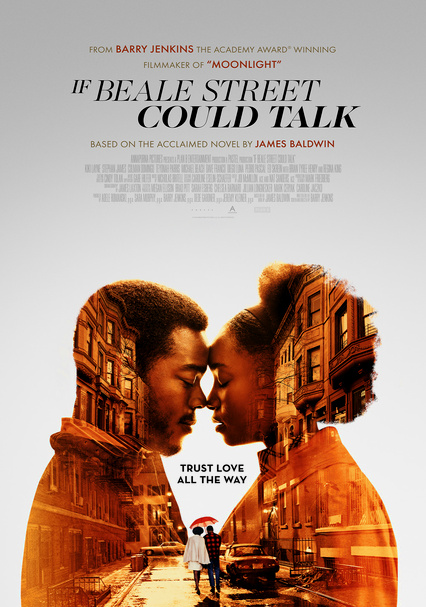
If Beale Street Could Talk-2018

If Beale Street Could Talk- 2018

Director Barry Jenkins 

Starring Kiki Layne, Stephan James

Scott’s Review #854

Reviewed January 8, 2019

Grade: A

2018 proved to be a year where filmmakers of color prided themselves in telling stories of diversity, inclusion, social injustice, and the never-ending challenges of minorities.

One of the year’s best films is If Beale Street Could Talk (2018), a lovely piece of storytelling by director Barry Jenkins. His other major work, Moonlight (2016), is a similarly poignant and melancholy experience.

The film is based on a novel by James Baldwin.

The title is explained in the first dialogue of the film. Beale Street exists in New Orleans, but thousands of streets exist in other cities. It is a metaphor for discrimination and unnecessary struggles that black folks continue to endure.

Right away, the audience knows that an important story is to be told.

The wonderful part of If Beale Street Could Talk is the combined elements that lead to brilliance.

Tish Rivers (Kiki Layne) and Fonny Hunt (Stephan James) have known each other since childhood. Growing up in a Harlem neighborhood, their families are interconnected and community-centered.

Events begin in 1973 when Tish realizes she is pregnant. Ordinarily, a happy occasion, this situation presents a major challenge because Fonny is imprisoned for a crime he did not commit.

A woman has accused him of rape and a corrupt policeman has positively identified Fonny as the rapist despite this being a logistical impossibility. Tish is determined to prove his innocence before the baby arrives with the assistance of her family.

The story is non-linear. Jenkins begins the film in the present day with Tish breaking the news of her pregnancy to him and then notifying her family.

As the film progresses, more of Fonny and Tish’s love story is explored. The couple falls in love, has romantic dinners, and nervously makes love for the first time. In this way, the film becomes a tender story of young love.

The social injustice and family drama are carefully mixed amid the central romance.

The film impresses with warm touches, ingenious cinematography, and a musical score that left me resounding with pleasure at the intricate and intimate details. The frequent use of jazz music over dinner or as the Rivers family sips celebratory wine adds sophistication to many scenes.

The film’s texture is muted and warm, giving it a subdued look that is genuine to the quiet and timeless nature of the production.

A plume of cigarette smoke can be seen in nearly every scene, as most of the characters smoke. Since the period is the 1970s, the authenticity is there, and a glamorous image is portrayed.

Smoking enhances the sophistication of the characters and adds to the tremendous cinematography.

Several scenes of simple dialogue crackle with authenticity and passion. In one of the best scenes, Fonny’s friend Daniel, a recent parolee, stays for dinner, and the friends talk while consuming beer and cigarettes.

The lengthy scene is poignant and tremendous with meaning. Daniel recounts his experience in prison and how black men are victims of the whims of white men and the terror involved in that. The scene is powerful in its thoughtfulness and a foreshadowing of Fonny’s impending trauma.

The supporting characters are stellar and add to the bravura acting troupe.

Regina King as Sharon Rivers gives an excellent performance when she bravely travels to Puerto Rico and confronts Fonny’s accuser, hoping to get her to modify her story. The scene is laden with emotion and honest dialogue.

The other notable actors are Colman Domingo and Teyonah Parris, who play Tish’s father and sister, respectively. Both do wonders in fleshing out the Rivers family as strong and kind people.

Jenkins is careful to add benevolent white characters to offset the other dastardly white characters. An example is the kindly old woman who comes to the rescue of Fonny and Tish and berates the cop.

The Jewish landlord who agrees to rent a flat to the pair is portrayed as decent and helpful, and finally, the young lawyer who takes Fonny’s case is earnest and understanding.

If Beale Street Could Talk (2018) continues talented director Barry Jenkins’s plunge into the depths of being one of the modern greats. With a beautifully visual and narrative film, he creates an experience sure to win more fans.

The ending is moving yet unsatisfying, as there are so many more miles to go in the race for prison justice. Adapting an important story of race and repression based on skin color is a powerful and detailed affair.

I cannot wait to see what Jenkins comes up with next.

Oscar Nominations: 1 win- Best Supporting Actress- Regina King (won), Best Adapted Screenplay, Best Original Score

Independent Spirit Award Nominations: 3 wins- Best Feature (won), Best Director- Barry Jenkins (won), Best Supporting Female- Regina King (won)

The Transfiguration-2017

The Transfiguration-2017

Director Michael O’Shea

Starring Eric Ruffin, Chloë Levine

Scott’s Review #853

Reviewed January 7, 2019

Grade: B+

The Transfiguration (2017) is a quiet horror film and resoundingly peculiar vampire tale that borrows elements from similar genre pieces but adds fresh nuances to its story.

Some may feel the film is too slow-paced, but a terrific payoff and tremendous conclusion come with patience. In the independent horror field, and with a limited budget, the underlying message of teen loneliness and alienation comes through loud and clear.

The film wisely adds tidbits of classic film history, a special treat for horror buffs.

Fourteen-year-old Milo (Eric Ruffin) has been through much trauma in his young life. His father has died, and his mother has recently committed suicide. Milo resides in a crummy Brooklyn high-rise with his older brother Lewis (Aaron Moten), a depressed military veteran.

Milo has a horrific secret- he is convinced he is a vampire and habitually kills strangers by drinking their blood. When he meets troubled teen Sophie (Chloë Levine), the pair are inseparable, but Milo’s secret is threatened to be uncovered.

The bevy of neighborhood Brooklyn exterior shots are pleasing for those familiar with New York City locales. Like Beach Rats (2017), another recent coming-of-age story shot in Brooklyn springs to mind.

Many scenes of Milo and Chloe wandering around their neighborhood or riding the subway are featured, making the overall package feel authentic and not overly produced.

The Brooklyn beaches and skylines make frequent appearances.

The most compelling and frightening aspect of The Transfiguration is how convinced Milo is of his being a vampire. This leads me to think the writer is providing mental health education. The audience immediately knows he is delusional, but he truly believes.

Terrifying is this reality as, via flashback, we see Milo discovering his mother’s body, her wrists slit. As he gruesomely tastes her blood a sense of wonderment we wonder if this is his vampire discovery moment. Indeed, it is a defense mechanism, but it is nonetheless extreme behavior.

The character of Sophie is also worthy of discussion. With both of her parents deceased, she is sent to live with her abusive grandfather, who lives in the same building as Milo. We never see the character but know that he is vile.

In one scene, Sophie appears to be raped by a group of boys, and she yearns for a friend in Milo. As she slowly realizes his secret but incorrectly assumes he is writing a book, not killing people, she can look past this to belong.

Milo and Sophie desperately need each other.

Despite the macabre characterizations mentioned above, the film is not quite a downer. In the middle of the vampire story, there is a sweet and likable young romance between the two leads.

They have a genuine and heartfelt charisma and charm, and even the most straightforward conversations sparkle with appeal. The final sacrifice that one makes for the other is riddled with kindness.

Fans of classic horror will be delighted to see clips of the 1922 film Nosferatu and other gory cult classic films that Milo is obsessed with.

Innocently, he attempts to broaden Sophie’s exposure to vampire films- she thinks the Twilight films are masterpieces, much to Milo’s chagrin. This fun banter balances the dreadful main story plot.

Does Milo have rooting power? Despite a history of animal torture and human killings, he is a charming kid. He is tempted to kill both Sophie and a young boy in the park but resists this urge.

Ultimately, he also saves Sophie, ensuring she will have a better fate than him. The character is complex and a large part of The Transfiguration’s success.

Writer and director Michael O’Shea cleverly uses a side story of a gang of bullies to incorporate a dramatic and shocking conclusion with a fantastic twist.

Though tragic and flawed, Milo proves himself a hero by using an opportunity to punish and exact revenge on enemies while saving another character’s life.

In this way, he will undoubtedly gain sympathy from the audience.

The Transfiguration (2017) is a unique film that infuses character development and romance with a blend of horrific, blood-curdling moments, especially during “kill” scenes.

I hope this small film with no advertising budget receives enough word of mouth to gather a following or, at the very least, garner recognition for the up-and-coming director (O’Shea).

Independent Spirit Award Nominations: John Cassavetes Award

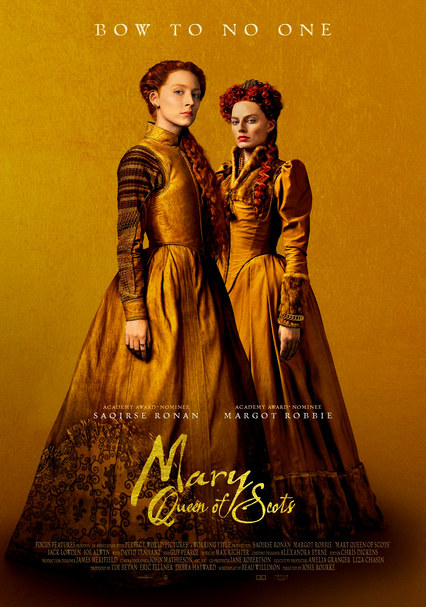
Mary Queen of Scots-2018

Mary Queen of Scots- 2018

Director Josie Rourke

Starring Saoirse Ronan, Margot Robbie

Scott’s Review #851

Reviewed January 2, 2019

Grade: B+

A period piece with all the trimmings for brilliance (on paper anyway), Mary Queen of Scots (2018) is a very good film, but its pacing misses the mark, preventing it from being a truly great film.

Fantastic acting and wonderful photography are the high points of an otherwise uneven experience, even if most of the components are intact.

This is not so much a total knock as a light critique, as the film is ultimately quite good and just missing the big oomph to take it over the top.

Saoirse Ronan stars as Mary Stuart, the likable Queen of France, who has returned to her native Scotland to reclaim the throne after her husband dies. Only eighteen years of age, she initially refuses pressure to remarry, but conflict ultimately ensues with Queen Elizabeth I (Margot Robbie), who rules neighboring England and Ireland.

The women admire each other from afar but develop a rivalry in power and love. To complicate matters, religious conflict, scandals, and deceit are also present in the story.

The feminist theme is inspiring and makes the film better than merely a soap opera of two rival females sparring over men.

In the mid-sixteenth century, women in control were hardly commonplace and relatively resented by the men forced to serve the “whims of women,” as one male character puts it.

Constantly showcased are males’ attempts at wooing the women in hopes of gaining power and ultimately the throne.

Still, director Josie Rourke (a woman) keeps the power firmly among the women, showing they can be as tough as they are sympathetic.

Furthermore, Mary Queen of Scots continues its progressive agenda with a startling LGBT subplot, which largely enriches Mary’s image.

One young androgynous male friend, presumably a bodyguard, frolics with Mary and other maids and confesses that he feels more like a sister than a brother to her. She accepts him wholeheartedly with an added message of “being your true nature.”

Later, the character suffers a terrible fate that devastates Mary. Regardless of the accuracy, this is a nice addition with an inspiring message.

The acting, particularly among leads Ronan and Robbie, is fantastic. Both young “it” women in Hollywood, the roles of Mary and Elizabeth, showcase their acting talents and chops for handling period piece roles.

Ronan, with flawless pale skin and authentic red locks, is beyond believable as Mary, who exudes strength yet kindness in the role she tackles. She can be stubborn but also fun and light, and Ronan has no trouble making the role her own.

Hot on the heels of playing the trailer trash character of Tonya Harding in I, Tonya (2017), Robbie hits it out of the park and does a one-eighty with the role of Elizabeth. Insecure and barren, afflicted with a skin disorder and a balding head of hair, the actress infuses the character with sensitivity and composure.

Robbie portrays her insecurity and yearning for unconditional love as she wears bawdy wigs and pancake makeup to hide her affliction.

Rourke’s mistake is not including more scenes of Ronan and Robbie together, save for one treasured scene at the end of the film. This is a wasted opportunity, as the treasured actresses could have played off each other’s talents in innumerable ways.

A knock-down, drag-out fight scene would have been a treasure to view.

The male characters do not leave much impact other than perhaps Lord Darnley (Jack Lowden), Mary’s bisexual second husband. As he betrays her on her wedding night with another man, Mary sees little use for him besides producing a child.

The handsome blonde actor adds some pizzazz, but is ultimately unlikable, as are the other similarly written men. Mary’s half-brother and Elizabeth’s advisor (Guy Pearce) are fine but ultimately underdeveloped.

Mary Queen of Scots (2018) is an effort to be commended for its female-driven and pro-LGBT stances. Perhaps unrealistic given the period and questions of historical accuracy looming over the entire film, problems with the production do exist.

The film ebbs and flows with some high moments and some looming blandness, but overall, it is to be respected and thereby recommended.

Oscar Nominations: Best Makeup and Hairstyling, Best Costume Design

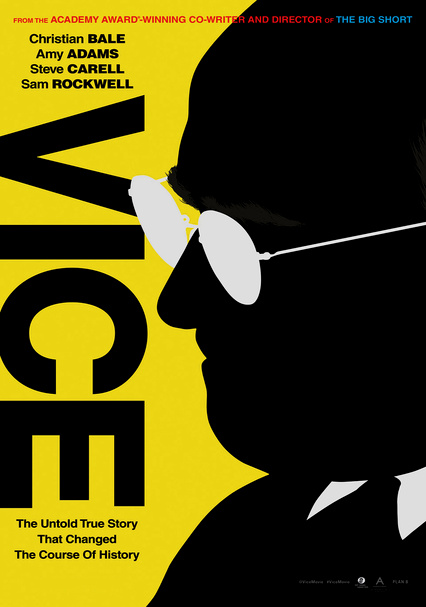
Vice-2018

Vice-2018

Director Adam McKay

Starring Christian Bale, Amy Adams, Steve Carell

Scott’s Review #849

Reviewed December 31, 2018

Grade: A

Following 2015’s The Big Short, Adam McKay once again creates an intelligently written, thought-provoking political film based on facts and historical accounts.

With Vice (2018) he focuses on former Vice President Dick Cheney and his rise through the political ranks to second in command.

Brilliant and wise in every way, the film is fair-minded in its approach. Predictably, in this era of “fake news,” it will be embraced by liberals but shunned by conservatives.

In the first seconds of Vice, a disclaimer appears stating that Cheney was a private man with secrets, but the filmmakers did their best to relay accurate information. The salty language in this clip will likely elicit chuckles, but McKay stays the course with his statement.

Immediately, the film flashes to the September 11 attacks with Cheney sitting in crisis mode, about to make an important decision.

Vice then retreats to 1963 Wyoming as a drunken college-aged Dick Cheney (Christian Bale) is pulled over for erratic driving after a barroom brawl. He is nearly dumped by his girlfriend and future wife Lynne Cheney (Amy Adams), who threatens to find another man if Dick does not straighten out.

He manages an internship and an admiration for Donald Rumsfeld (Steve Carell), a staunch Republican and White House Chief of Staff, and begins his political climb.

In clever form, the film is narrated by a character named Kurt (Jesse Plemons), who we do not know is connected to Cheney until the end of the film. This adds an added measure of intrigue to the overall film, as we know a secret will be revealed.

Vice is also unique in direction, with constant back-and-forth timeline scenes and quirky humor throughout. Are the Cheneys portrayed as ridiculous? No, but sardonic humor is directed at them as their ambitions and power-hungry motivations are completely exposed.

The film does a great job of taking the viewer through the political state of Cheney’s administration, roughly the early 1970s until 2008, when Obama took office. The Clinton years are completely skipped, but that is more to do with Cheney being in the private sector rather than an intentional slight.

The Nixon years and the George W. Bush years are given hefty screen time and the latter is portrayed as nearly a buffoon as Rockwell portrays him as a boozy, dumb frat boy.

Bale is startlingly good as Cheney and deservedly steals the show. In addition to the forty-pound weight gain, the actor endured the facial and hair treatments (props to the makeup department!) and became the man.

His body movements, smile, and speech patterns are daringly good. With a sneer and a calculating grin, we see the wheels spinning in Cheney’s head numerous times, and Bale is incredible at portraying these thoughts to the audience.

The film contains many well-known actors in vital supporting roles worth noting. The depictions of the following are examples of excellent casting with spot-on representations: Tyler Perry as Colin Powell, LisaGay Hamilton as Condoleezza Rice, Sam Rockwell as George W. Bush, Alison Pill as Mary Cheney, and Lily Rabe as Liz Cheney.

All portrayals are excellent to watch, especially for viewers who remember the real-life people involved.

Some will undoubtedly complain that the film has a “liberal slant” and portrays Cheney as power-hungry and self-serving. While this is a valid point, and McKay makes left-leaning choices, the director bravely carves the film into an experience that goes both ways.

More than a few scenes (including the final scene) justify Cheney’s actions, in his mind anyway. Claiming to do what is suitable for the people and be a true American, his actions and yearning for power can be understood to some degree, or perhaps by some people.

Vice (2018) is controversial and undoubtedly divisive, which is unsurprising given the current state of American politics. It tells an inspiring and rich story of an elusive politician’s life and policies, daring to be forgotten, that still resonate across the United States.

The more I ponder this film’s importance, the greater it becomes, but stay past the credits for arguably the best moment in the movie and of monumental importance in 2018.

Oscar Nominations: 1 win-Best Picture, Best Director- Adam McKay, Best Actor- Christian Bale, Best Supporting Actor- Sam Rockwell, Best Supporting Actress- Amy Adams, Best Original Screenplay, Best Makeup and Hairstyling (won), Best Film Editing

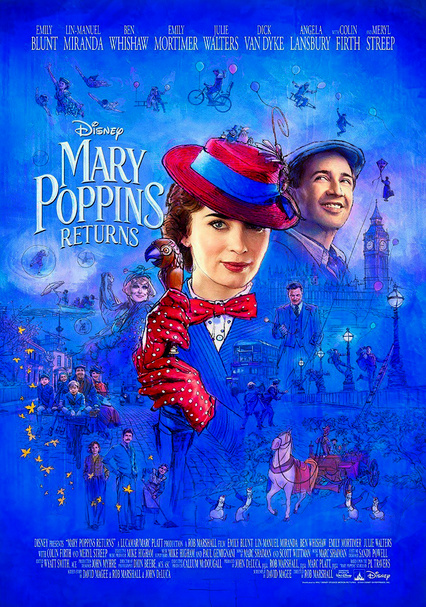
Mary Poppins Returns-2018

Mary Poppins Returns-2018

Director Rob Marshall

Starring Emily Blunt, Lin-Manuel Miranda

Scott’s Review #848

Reviewed December 29, 2018

Grade: A-

Mary Poppins Returns is a charming mixture of reboots and sequels to the immeasurably glorious original, Mary Poppins (1964).

Although it is impossible to live up to the magic of that film, the 2018 version comes quite close with a delightful turn by Emily Blunt, numerous Hollywood stalwarts in small roles, and gleeful musical numbers sure to leave audiences humming upon their exit from theaters.

Events begin to percolate twenty-five years after the original story, and the setting is 1935 London amid the Great Depression. His recently deceased wife, Michael Banks (Ben Wishaw), lives in the house he grew up in with his three children and housekeeper (Julie Walters) in tow.

His sister Jane lives and works nearby as a labor organizer.

Faced with the dreary reality that the historic Banks house may be foreclosed, Mary Poppins (Blunt) arrives elegantly on her umbrella to restore order and save the day.

Though her character does not overtake the film, Emily Blunt is dynamic in the title role. Her prim and proper good British charm and sensibilities crackle with wit and poise. It is tough to imagine anyone but Blunt in the role, as she puts her stamp on it so well.

With a smirk and a quick, matter-of-fact tone, the character is no-nonsense and utterly kind. The casting of Blunt is spot-on as she becomes Mary Poppins.

The London setting is adorable and fraught with good culture and sophisticated manners. Including the storied Big Ben is meaningful to the tale in a significant way and a teachable moment for children unfamiliar with London.

Furthermore, including a negative period in history—the Great Depression—is immeasurably positive.

The supporting characters are rapturous and a treat for elders familiar with the original Mary Poppins film. Meryl Streep plays Topsy, Mary Poppins’s eccentric eastern European cousin to the hilt, but never teeters over the top.

Colin Firth adds snarky charm as the villainous bank president, and Angela Lansbury gives grandmotherly zest as The Balloon Lady, an ode to the original novel.

Finally, Dick Van Dyke is a delight as the heroic Mr. Dawes Jr. who comes to the rescue at the last hour.

The real winners, though, are the enchanting musical numbers. With the lovely London landscape in full view, Mary Poppins Returns gets off to a spectacular groove with “(Underneath The) Lovely London Sky”.

Performed by the charming Lin-Manuel Miranda in the role of Jack the Lamplighter, Mary Poppins’ sidekick, the star has what it takes to keep up with Blunt. This is evident as the duo mesmerizes and entertains with a colorful number, “A Cover is Not the Book”, alongside an animated music hall.

Finally, fans will revel in the naughty and clever “Turning Turtle”, performed by Streep.

The costumes and lighting are both big hits. As Jack lights and defuses the street lights, we see the luminous dawn and sunsets, which give the film a nice touch.

During the film’s conclusion and subsequent race against the stroke of midnight, moonlight is featured, giving the film a warm glow.

The period piece costumes are lush, but not garish, adding flavor and capturing the period perfectly.

Although it lacks the oomph of the original Mary Poppins (but really, who expected that?), Mary Poppins Returns (2018) is nonetheless enchanting and inspiring in every way that a remake or sequel should be.

Given the mixing of humans and animations, the film is polite, polished, and filled with authentic zest: a fine creation and splendid entertainment.

Oscar Nominations: Best Original Score, Best Original Song-“The Place Where Lost Things Go”, Best Production Design, Best Costume Design

Double Indemnity-1944

Double Indemnity-1944

Director Billy Wilder

Starring Fred MacMurray, Barbara Stanwyck

Scott’s Review #847

Reviewed December 26, 2018

Grade: A

Double Indemnity (1944) perfectly epitomizes the classic film noir genre. It contains all the necessary elements, from intrigue, suspense, and unpredictable thrills to schemes and dastardly deeds by the major players.

The on-screen chemistry between leads MacMurray and Stanwyck provides enough romantic flair and provocative moments to entertain all as developments progress when a smitten man meets a femme fatale and a devious plot is hatched.

Director Billy Wilder was one of the most influential directors of his day. This picture was his first effort, and it received fabulous critical acclaim.

The accolades put him firmly on the map for years to come, culminating in an Oscar win in 1960 for The Apartment. Wilder uses a clever insurance “double indemnity” clause as its title, making it one of the best and most influential crime dramas of the 1940s, staking ground for other similarly themed films.

The story is told via flashbacks as a wounded Walter Neff (Fred MacMurray) scrambles to record a confession to his colleague and best friend, Barton Keyes (Edward G. Robinson).

The action rewinds to an ordinary day when Neff makes a routine stop to sell insurance and meets flirtatious Phyllis Dietrichson (Barbara Stanwyck). She brazenly inquires how she ought to take out an insurance policy on her husband’s life without his knowledge.

When Neff deduces Phyllis’s intention to kill her husband, he declines any further help but cannot forget the ravishing beauty and her charms. He ultimately succumbs to her whims and aids her in a wicked crime.

The adventure the audience is taking on is the most fun aspect of the film. We already deduce that Neff is involved in shenanigans, but most of the fun occurs after the murder has been committed and Phyllis and Neff’s scheme begins to unravel.

The added component of Neff’s colleague and close friend, Keyes, being involved as he starts to suspect foul play is equally compelling.

Will he finally realize that Neff is involved in the plot? If discovered, will Keyes cover for Neff? Will Phyllis’s history catch up with her and twist events?

These questions make the film a great picture.

A debate among viewers can ensue whether Neff is sympathetic as this point continues to cross my mind with each viewing. One can safely say that he is seduced by the charms of an eager and aggressive woman, but if he is to blame for the crimes, is she not even more to blame?

As events unfold, sides can be drawn, and characters can be more focused, particularly after Double Indemnity’s startling conclusion.

Neff is not a strong, heroic character. She is relatively weak and easily manipulated by the cagey Phyllis. It is interesting how little time it takes for Neff to succumb to her plot and willingly commit the crime.

In the final act, Neff does show some muscle needed, but this is only because his “goose is cooked,” and he finally realizes the dire nature of Phyllis’s character. However, shouldn’t he have discovered this sooner?

MacMurray and Stanwyck have smoldering chemistry and are a significant film success, keeping the audience invested in the plot. The added measure of the murder victim being relatively unknown to the audience adds a macabre rooting value to the pair.

Wilder never presents the plot as a romantic triangle, and Neff and Phyllis have no other romantic entanglements. The only roadblock is the insurance company and its suspicions about Phyllis.

Wilder adapted the screenplay from James M. Cain’s novella of the same name and spins a potent film noir from these pages. Double Indemnity (1944) is intelligent, sexy, and mysterious, mixing in as much sultry poise as witty dialogue.

The film is a measured success and a highly influential cinematic story thanks to the allure of fine actors and a stunning train adventure.

Oscar Nominations: Best Motion Picture, Best Director-Billy Wilder, Best Actress-Barbara Stanwyck, Best Screenplay, Best Scoring of a Dramatic or Comedy Picture, Best Sound Recording, Best Cinematography, Black-and-White

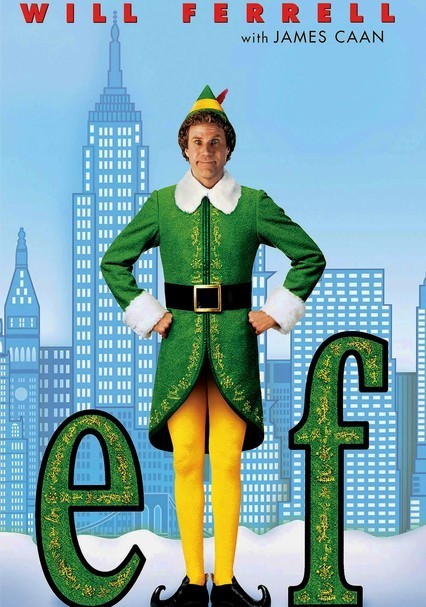
Elf-2003

Elf-2003

Director Jon Favreau

Starring Will Ferrell

Scott’s Review #846

Reviewed December 20, 2018

Grade: B-

Elf (2003) is one of the few lasting Christmas hits of recent memory, or at least one that many fans make a regular part of their holiday viewing each season.

The film is light and unarguably a safe, feel-good experience, mixing a hopeful Christmas message with comic gags and romance.

The key to its success is Will Ferrell, who possesses wonderful comic timing.

More wholesome than my tastes and lacking plausibility, the film does succeed as a family-friendly, ready-made, fun experience.

The story revolves around one of Santa’s elves (Ferrell) named Buddy, who learns he is human and was orphaned as an infant.

Revealed that his biological father Walter (James Caan) resides in New York City, Buddy embarks on a trip to find the man and spread Christmas cheer in a world filled with grizzled and cynical human beings.

In predictable comic form, Buddy has trouble adjusting to the human world and its fast-paced lifestyle, with misunderstandings recurring.

Buddy eventually wins over his father and family, finding love with downtrodden Jovie (Zooey Deschanel).

Hot on the heels of his Saturday Night Live stint ending in 2002, Ferrell was primed to embark on a successful film career. Elf is a great role for him as it capitalizes on his comic timing and energy, and the setup works.

At 6’3″, who better to play an elf for laughs than a hulking middle-aged man?

Due to his talents, Ferrell makes the role of Buddy fun, appealing, and the highlight of the film. With a lesser talent, the character would have been too annoying (as it is, there are too many hug jokes), and the overall film would have suffered.

Aside from Ferrell, the supporting roles are nothing memorable, except for Caan’s part.

The once-dashing star of films such as The Godfather (1972), Caan still has the charm and charisma to appeal, though his balding and dyed hair do nothing for him.

A small role by television star Bob Newhart as Papa Elf is fine, but Deschanel’s role and Mary Steenburgen’s role as Emily, Walter’s wife, could have been played by many actresses, and nothing is distinguishable about either part.

Lesser roles like Walter’s secretary, Walter’s boss, and Gimble’s store manager are stock parts with no character development.

A major highlight is the New York City setting, and the exterior scenes are plentiful.

Filmed in 2002 and released in 2003, the location shots were completed not long after 9/11, and showcasing a city with such recent decimation adds to the film’s appeal.

Scenes in Rockefeller Center, Central Park, and the Empire State Building are prominently featured, making the film festive and merry.

What greater city is there at Christmastime than New York?

Elf remains an entertaining experience with enough shiny ornaments and fun moments in the department store and Walter’s office to hold interest. The luster wears thin at the conclusion as all the traditional elements come together.

Jovie leads a chorus of strangers in “Santa Claus Is Coming to Town”, Walter quits his job without concern for paying bills, and everyone happily rides off into a sparkling winter wonderland.

This may satisfy some, but I wanted more conflict than a troupe of Central Park Rangers chasing Santa through the park.

A film that might be paired nicely with holiday favorites of similar ilk, such as National Lampoon’s Christmas Vacation (1989) or Christmas with the Kranks (2004), Elf is an energetic affair with a charismatic lead actor.

Containing silly moments but a spirited and worthwhile message nestled nicely within, the film is worth a watch if you’re in the mood for slapstick.

More thought-provoking holiday films with deeper merriment and stronger flair exist, but for a chuckle or two, Elf (2003) works well.

Beatriz at Dinner-2017

Beatriz at Dinner-2017

Director Miguel Arteta

Starring Salma Hayek, John Lithgow, Connie Britton

Scott’s Review #844

Reviewed December 18, 2018

Grade: B+

Thanks to a well-written screenplay and a thought-provoking idea, Beatriz at Dinner (2017) spins an interesting concept about politics and class systems discussed over dinner.

Salma Hayek and John Lithgow give tremendous performances as characters with opposing viewpoints, helping the film succeed, though a flawed ending and cookie-cutter supporting characters detract from the overall enjoyment.

Set in southern California, presumably around Los Angeles, Beatriz (Hayek) is a holistic health practitioner. Moonlighting as a massage therapist, she becomes stranded at the wealthy home of one of her clients, Kathy (Connie Britton), whom she views as a friend.

Kathy invites Beatriz to stay for dinner, where she encounters real-estate mogul Doug Strutt (Lithgow). The two gradually develop a feud based on their differing politics and viewpoints.

The setup and flow of Beatriz at Dinner are commendable and pace the film nicely. The film is sort of a day in Beatriz’s life. It begins as the character awakens to her pet dogs and goat noisily beginning their day and culminates late at night when the dinner party concludes, and the last glass of wine is consumed.

This way, the film has a nice packaged feel that keeps the story confined and structured.

Being an independent film, the budget is small, and most scenes are shot in a spacious modern house overlooking the Pacific Ocean, which works well. Gorgeous and vast, many rooms are used as conversations among the characters occur, many overlapping each other.

Beatriz at Dinner could have been a play, which helps with the good flow.

Hayek and Lithgow are the main draws as their initial guarded pleasantries progress to venom and violence, albeit primarily imagined.

Initially thinking that Beatriz is the household help, Doug is inquisitive about her entry into the United States and makes numerous insulting gestures, mispronouncing her Mexican hometown and mocking her profession.

Beatriz calmly endures his racism and begins discussions about how his business harms animals and people as emotions escalate. The actors play off each other wonderfully and share chemistry.

With each glass of wine, Beatriz becomes brazen and shares how people in her village lost their land to real estate development. She shares a humanistic viewpoint, while Doug sees life as to be lived while you can.

Despite their dislike for each other’s lifestyles, the film shows Beatriz and Doug at least listening to each other and attempting to understand the other’s opinions, which is more than can be said for the supporting players’ motivations or lack thereof.

Besides Kathy, while sympathetic to Beatriz’s calm demeanor and life-rich philosophies, she also realizes that Doug is her family’s meal ticket.

The other party attendees are written as polite yet uninteresting twits with nothing to talk about except a reality star’s nude photos, dinner, or a handful of other nothing topics.

Chloë Sevigny, Jay Duplass, Amy Landecker, and David Warshofsky have little to do other than stand around and react to the meatier written material that Hayek and Lithgow get to play.

Beatriz at Dinner had me in its corner until the film took a jarring turn during the final act. As Beatriz leaves the party and sets about on her way home, she hastily decides to grab a letter opener and bludgeon Doug to death as the dinner guests hysterically realize what is happening.

Instead of leaving things be, the film chooses to make this only Beatriz’s fantasy and then have her go to the ocean and walk into the waves. Does this mean she commits suicide, or is this another fantasy? This final sequence is unclear and unsatisfying.

I am not sure why Beatriz at Dinner is considered a comedy. Perhaps a mild dark comedy, I argue that the film is a straight-ahead drama and lacks the witty humor that made dinner party-themed films such as Who’s Afraid of Virginia Woolf? (1966) and The Boys in the Band (1970) masterpieces.

Beatriz at Dinner (2017) is a valiant attempt at offering social commentary at a time when discussions like these are needed in films, and the project largely succeeds.

Hayek’s impassioned yet subdued performance deservedly earned her a Female Lead Independent Film nomination. The film’s rich writing garnered a Best Screenplay nomination, too, but a big whiff at the end lowers the overall experience a notch.

Independent Spirit Award Nominations: Best Female Lead-Salma Hayek, Best Screenplay

The Favourite-2018

The Favourite-2018

Director Yorgos Lanthimos

Starring Olivia Colman, Emma Stone, Rachel Weisz

Scott’s Review #843 

Reviewed December 17, 2018

Grade: A

The Favourite (2018) is a deliciously wicked comedy about greed, jealousy, and rage during early eighteenth-century England.

The primary rivalry consists of two feuding cousins, each jockeying for position and “favor” with the Queen, both resorting to dire methods to achieve these goals.

With splendid acting and grand designs, director Yorgos Lanthimos adds to his growing collection of odd and compelling works with the dark comedy offering.

The film takes place during the British and French War of 1708, as a physically and mentally ill Queen Anne (Olivia Colman) rules the country through her confidante and secret lover, Sarah, Duchess of Marlborough (Rachel Weisz).

Though deals and modifications must be made with the ruling Parliament, Anne has the final say in all decisions, including doubling the state tax to pay for the war.

When Abigail (Emma Stone), a distant cousin of the Duchess, and former royalty herself, arrives seeking work as a servant, she quickly plots her way to the bedside of the Queen at all costs.

Lanthimos, known for such bizarre treats like Dogtooth (2009), The Lobster (2015), and The Killing of a Sacred Deer (2017), is not afraid to get down and dirty and wrestle with the macabre subject matter.

The Favourite is the director’s most mainstream affair yet and is quickly becoming one of my favorite modern-day films. As he now charts into royal territory, the possibilities are endless in a world of politics and scheming.

Some morose highlights include an abused bunny, naked tomato throwing, and pheasant shooting.

The film is not kind to animals.

Despite being mainstream for Lanthimos, The Favourite is a bizarre and brazen experience. The film’s numerous award nominations are remarkable, given that not all audiences will enjoy it.

Despite being categorized as a comedy (see more below), the film is not an easy watch, and none of the characters are likable. Abigail is initially sympathetic and quite humorous, but her true colors and motivations are exposed as the plot develops.

Conversely, Anne and Sarah are initially despicable, but garner support as the story evolves.

The comic elements are the best, and clever lines come at a deliciously rapid pace. The best dialogue is the sparring between Sarah and Abigail, as the women realize they are bitter enemies and each attempts to one-up the other in a chess game for Anne’s attention.

Anne, known for fits of emotion, stuffing her face with cake and vomiting, and berating the servants, offers her comic wit. The language is salty, bordering on vulgar, but that makes the experience so stellar and morosely enjoyable.

The musical score adds muscle, and the diabolical string arrangements give The Favourite a gruesome, morbid atmosphere.

The feeling of dread is prevalent and downright haunting at times, as the audience knows that some shenanigans will soon occur, but they do not know when or how.

This quality enhances the overall product and gives ambiance to a superior piece.

Finally, the acting in The Favourite is brilliant and worth the price of admission. This is unsurprising with heavyweights like Colman, Stone, and Weisz, but the gravy is in the individual moments.

The chemistry the women share is what works best, as every scene sparkles with exceptional delivery and a sly sense of humor. When the three women appear together, these are the best scenes.

Deserving of all the accolades lauded upon it, The Favourite is an experience that contains all elements of a fine film, though one that is quite an unconventional work.

With glistening art direction, authentic set pieces, and costumes that would make Scarlett O’Hara drool with envy, The Favourite (2018) takes all of its parts and spins a crafty tale that encompasses the entire film.

Oscar Nominations: 1 win-Best Picture, Best Director- Yorgos Lanthimos, Best Actress- Olivia Colman (won), Best Supporting Actress- Emma Stone, Rachel Weisz, Best Original Screenplay, Best Production Design, Best Cinematography, Best Costume Design, Best Film Editing

Independent Spirit Award Nominations: Best International Film

Downsizing-2017

Downsizing-2017

Director Alexander Payne

Starring Matt Damon, Hong Chau

Scott’s Review #842

Reviewed December 14, 2018

Grade: B

Downsizing (2017) appeared on many critics’ top ten lists for the year, but it did not resonate well with the average viewer. Part of this discrepancy could have been the way the film was marketed.

Despite having Kristen Wiig among its cast, the film is NOT a comedy but a social commentary with some science-fiction and dramatic elements.

Downsizing has a wonderful and thought-provoking premise, but it ultimately fails to piece together all its parts in a completely satisfying way, leaving an erratic and disjointed result.

The elements are all there—a charismatic lead actor (Damon), an inventive, socially relevant premise, and a humanistic and beautiful message.

The film also contains some gorgeous cinematic treats of picturesque Norway that will make one melt if watched on the big screen.

The film has enough positives to recommend without it being truly great.

The story begins as a Norwegian scientist discovers a way to solve the world’s overpopulation state and global warming problems with a discovery that shrinks people, causing them to use few resources.

Paul and Audrey Safranek (Damon and Wiig) decide to undergo the procedure and begin a new life in a gorgeous community designed for small people. When Audrey bails at the last minute, leaving Paul alone, he must forge ahead with a lonely life, unable to be transformed from small to large.

He meets Ngoc Lan (Chau), a Vietnamese activist who, through her selflessness, changes his life forever. Paul realizes he does have a purpose after all.

The film’s positives are mostly in its individual components. It is true that the modern world suffers from overpopulation, and director Alexander Payne paints a dire picture of the eventual result. This gives the film a left-leaning environmental opinion that I relish.

I was immediately engaged in Payne’s humanistic approach and the possibilities of a new world with no suffering and riches for all. Of course, this is not sustainable or realistic, as the film shows.

The romantic dynamic is also a significant win.  The first half features Paul and Audrey as the romantic couple, a likable pair who struggle with bills and care for planet Earth.

Suddenly, this changes and Audrey is discounted from the equation in favor of Paul and Ngoc Lan. An unexpected item, their romance is a slow buildup, seemingly opposite types of people. He is laid-back and thoughtful, and she is brash and outspoken, yet they work wonderfully as a couple.

As a viewer, I became wholly invested in them by the closing credits.

Newcomer Huang Chau (Ngoc Lan) stands out and nearly upstages Damon. The young actress garnered a Golden Globe nomination for this role and deservedly so. There are far too few good roles for Asian actors, so Chau hits the jackpot with this part.

Her character is sympathetic yet tough. Once an outspoken advocate, she endured prison only to lose a leg and be reduced to a house cleaner in her new world.

Payne makes the point that a new society does not equate to joy, which is the film’s crux. At first, the community is lavish with luxurious homes and idyllic surroundings, but when Paul meets Ngoc Lan and sees her world of pain, starvation, and neglect, he is dumbfounded.

This sad reality leads him to make rash decisions about himself and his future.

Where Downsizing misses the boat is with the execution. As strong as the premise is, the story meanders. From Paul and Audrey’s mundane life in Nebraska to the new society to the slums to the introduction of the world ceasing to exist and finally, another world is created, there is too much going on.

The dots never connect, leaving the overall experience of Downsizing erratic.

Christoph Walz deserves a better role than Dusan, an aging Serbian party boy. His character is annoying and a weak attempt at portraying spoiled white men with all the advantages. He is unnecessary and does not work.

Downsizing (2017) is quite a brave effort, with an ingenious premise and a worthwhile message. I recommend the film for these reasons as Payne attempts to tell a story never told before, which is to be championed.

The elements do not add up, and the film lacks a solid structure, but as a whole, it is to be admired for what it intends to do.

Mrs. Miniver-1942

Mrs. Miniver-1942

Director William Wyler

Starring Greer Garson, Walter Pidgeon

Scott’s Review #841

Reviewed December 13, 2018

Grade: A-

Released in 1942 amid the horrific World War II, Mrs. Miniver (1942) was a smash hit, winning over audiences concerned with the troubled and uncertain times.

Decades later, the film does not age as well as other similarly themed films, but still entertains and tells a good story with an important theme.

The film is nestled in the war drama genre with romance. The film won numerous Oscars the year of its release, including Best Picture and star Greer Garson won for Best Actress.

The story is told from the perspective of an affluent British family and the struggles they face to keep things together during growing peril. The focus primarily remains on an unassuming housewife, Kay Miniver (Garson).

The supporting players do much to flesh out the film with fantastic performances by Walter Pidgeon, Teresa Wright, and Henry Travers as Clem Miniver, Carol Beldon, and Mr. Ballard, respectively.

The direction by William Wyler is astounding and adds to the perfectly crafted ambiance and homey details.

The family lives a comfortable life in a whimsical village outside of London. Quite idealized, they own a large garden and a motorboat on the River Thames.

Along with Kay and Clem, their three children of varying ages and their housekeeper and cook reside with them. Besides the parents, the central couple is son Vin (Richard Ney) and the prominent Carol (Wright); the pair initially disagree on politics but finally fall madly in love.

As the soap opera-style family situations continue, the war grows closer and closer to their house.

As Mrs. Miniver progresses, Vin enlists in the army to assist with war efforts, a German Nazi breaks into the Miniver house, a central character dies, and bombs and planes crash.

Through it all, Kay remains stoic and takes the family through challenging situations, adding melodrama to the film. The woman’s journey and resolve to keep everything and everyone intact is at the core.

The film is mainly a family drama with the Minivers and the townspeople experiencing trials and tribulations. In this way, Mrs. Miniver risks being a one-trick pony, albeit an emotional and teary-eyed one.

The film’s rich characteristics and polished nature make it more than it ought to be, and the superlative cast, production values, and timely release undoubtedly made it what it was in 1942.

In present times, however, Mrs. Miniver seems diminished in importance and relevance with a sappy and overly sentimental feel, World War II in the distant past, and several other wars come and gone.

Wyler carefully packaged the film to hit every emotion, from the bombastic musical score to the proper English characters to the comic relief housekeeper.

The film is a giant Hollywood production, but perhaps a bit too perfect to age with any zest or reason to watch more than once.

The film might be better remembered for its strong female lead. Told from Kay’s perspective, it was unusual in 1942 for a movie (especially with a war theme) not to have the story from the male point of view. Still refreshing in 2018, this quality was downright groundbreaking at the time.

Kay stays strong and proud through the ravages of war that are closing in on her family with unbridled boldness and nary a simpering quality. Wright’s Carol is an early champion for strong, female-driven characters, and, in a more minor way, she is also a muscled female role model.

Mrs. Miniver (1942) is a well-crafted film of its time that displays lavish production values and strong characters worthy of admiration.

The film is a significant win for a glimpse of the 1940s, especially for fans of good, solid drama. There are no significant flaws to harp on, but the overall piece has not aged exceptionally well, and other similar films (Casablanca, 1942) are more memorable.

Oscar Nominations: 6 wins-Outstanding Motion Picture (won), Best Director-William Wyler (won), Best Actor-Walter Pidgeon, Best Actress-Greer Garson (won), Best Supporting Actor-Henry Travers, Best Supporting Actress-Teresa Wright (won), Dame May Whitty, Best Screenplay (won), Best Sound Recording, Best Cinematography, Black-and-White (won), Best Film Editing, Best Special Effects

Film Stars Don’t Die in Liverpool-2017

Film Stars Don’t Die in Liverpool-2017

Director Paul McGuigan

Starring Annette Bening, Jamie Bell

Scott’s Review #840

Reviewed December 11, 2018

Grade: B+

Film Stars Don’t Die in Liverpool (2017) showcases a compelling performance by stalwart actress Annette Bening as she plays faded, insecure Hollywood glamour girl Gloria Grahame.

The film focuses only on Grahame’s final two years of life as she battles breast cancer and begins a relationship with a much younger man, Peter Turner (Jamie Bell).

The film is a sad yet poignant dedication to the star, featuring enough performance gusto from its actors to compensate for a limited period. However, there is too much back-and-forth within the timeline, which complicates the film too much.

As a result, Film Stars Don’t Die in Liverpool is endearing but does not hit it out of the park.

The entire film takes place between 1979 and 1981. In 1979, actress Gloria Grahame, with her best days behind her, resides in a rented Liverpool room. She finds some success in local theater and befriends her much younger male neighbor.

The pair become romantic partners and experience trials and tribulations as the film teeters back and forth between Grahame’s ailing final days in 1981 to happier times in Los Angeles and New York. Gloria also befriends and finally lives with Peter’s parents, who care for her unflinchingly.

The story is enveloped in sadness but is not a downer either.

The film begins towards the end of Gloria’s illness, though the audience is not yet aware of her disease’s seriousness. Insisting she has painful gas, the tender relationship between the actress and Peter is explored.

The story begins in 1979 when Peter and Gloria first met. He is an aspiring actor who is unaware of who she is until a bartender makes the connection.

In this way, the film makes it clear that this is not a story about a young man seeking the fortunes of a presumably wealthy woman. I like this point, as the story is about romance, not money-grubbing.

Film Stars Don’t Die in Liverpool belongs to Bening.

The supporting roles are well cast, and they do not diminish Bell’s performance or Julie Walters’s nice turn as Peter’s mum.

However, Bening does wonders emulating Grahame’s mannerisms with an innocent, damsel-in-distress nature (mirroring the roles she made famously).

Bening was amazing at revealing the actress’s insecurities, fear of aging, and older appearance. During a fight, Peter cruelly refers to her as an “old lady,” and we see the comment strike a deadly blow as if she had been physically slapped.

Bening is so good at portraying a myriad of emotions throughout the film.

Another high point comes towards the end of the film. I love how the film connects Gloria and Peter’s earlier argument (and breakup) with a later sequence.

Peter assumes she is carrying on with another man when he learns she has lied about her whereabouts. The haunting reality is later revealed, changing the audience’s perception of the events.

This is good writing by the screenwriters.

To counter the above point, the constant back and forth from 1981 to 1979 and everywhere in between detracts from my enjoyment of the overall film.

Although the film spans only two years, it spends way too much time in multiple locations without enough explanation. Suddenly, G, Loria, and Peter are in Los Angeles having dinner at Gloria’s modest house, and they are in New York City in her lavish Park Avenue apartment.

The film would have been better suited with a straightforward approach chronicling events from 1979 to 1981 in sequence.

Another negative is the omission of any scenes before 1979.

The actress’s career thrived during the 1940s and 1950s, so capturing those earlier days would have been interesting. If the fear was that Bening was too old to pass for a younger Grahame, another actress could have been used for those scenes.

While a clip of the real Grahame winning the Oscar and a few clips of her starring in films are nice, way more time could have been spent on more stories.

Thanks to a brilliant performance by Bening and an emotional story that in large part succeeds, Film Stars Don’t Die in Liverpool (2017) is a win.

The film was not recognized during awards season as initially anticipated. This could have been due to the overly complex timeline, which produced a limiting feeling. The production and writing are excellent but lack greatness.

Green Book-2018

Green Book-2018

Director Peter Farrelly

Starring Viggo Mortensen, Mahershala Ali

Scott’s Review #839

Reviewed December 10, 2018

Grade: A

To be candid, it was not originally on my radar to see Green Book (2018) despite the high regard and the bevy of award nominations reaped upon the film.

From the trailers, and admittedly my assumptions, the production looked somewhat like a Driving Miss Daisy (1989) role reversal with the standard over-saturation and glossy view of racism.

I confess to being wrong in my initial assessment. Green Book is a wonderful film with a multitude of worthy efforts. It successfully crosses the drama and comedy barriers and delivers an astounding message of compassion and benevolence.

Viggo Mortensen and Mahershala Ali exhibit tremendous flair and fine chemistry as an Italian blue-collar driver and an astute African-American classical pianist.

The men travel together in the Deep South circa 1962 on a concert tour requested by the renowned musician despite the dangers of southern racism and prejudice.

Mortensen’s Tony Lip is a struggling New York City bouncer who needs any gig for two months while the club he works for is closed for renovations. Ali plays a sophisticated musician who needs a driver with a measure of toughness, and Tony comes highly recommended.

The two men initially are strangers but form a close-knit bond and a deep understanding of each other as they become better acquainted during their journey.

The first half of the film focuses on Tony.

As viewers, we experience his Italian lifestyle. He possesses a strong family unit and a dedicated wife, Dolores (Linda Cardellini). He loves to eat and won a hot dog eating contest for $50 to pay the rent. He thinks nothing of beating an unsavory character to a bloody pulp if they are out of line and have more than one link to the mafia.

Still, he is a decent man, with a salt-of-the-earth mentality, and loves his family.

“Doc” Don Shirley (Ali) is the opposite of Tony. Raised as a highly gifted musical prodigy, he surrounds himself with high culture, is well-versed in many languages, and is of affluent means. Nonetheless, he is a wounded soul and drinks himself into oblivion each night, frequently deep in thought, pondering life and its problems.

Despite being black, he knows nothing about black culture.

Don is highly uncomfortable in his skin, while Tony is happy with who he is, a significant point that the film hits home on as the men have conflict. Don feels Tony can do much better to educate himself, while Tony sees nothing wrong with being who he is. The men forge a middle ground as they come to respect each other.

Ferrelli does a fantastic job in showing Tony as Don’s protector as he is accosted by rednecks or is caught with another man at the YMCA.

In turn, Don helps Tony write warm love letters to Dolores.

Green Book is a film about friendship and how different backgrounds can result in closeness and respect.

The film is humanistic in its approach to an overall message and is the feel-good film of 2018 without the slightest thread of sappiness or contrived situations. It is best about two real-life men who remained friends until their deaths.

Director Peter Farrelly, known chiefly for silly films such as Dumb and Dumber (1994), finds breakthrough success with Green Book.

The film is mainstream material, but of a sort that can be appreciated for the good it exudes. Don exhibits racism on more than one occasion- Birmingham and Mississippi specifically- but also experiences kindness from other folks.

Worth noting is that Don experiences discrimination and abuse not only from whites but also from blacks. Farrelly avoids the usual stereotypes or elicits humor from them as in the scene where Tony teaches Don to enjoy fried chicken, a foreign food to Don.

A key point of the film occurs early on when Dolores graciously invites two black workers to repair, thinking nothing of treating the men to a refreshing lemonade.

Seeing the empty glasses in the sink, Tony throws them in the trash, not wanting to drink from the same glasses. Is Tony, along with his family, racist or uncomfortable with blacks? Regardless of the answer, they think very differently after the film, which is monumental.

The final sequence of Green Book is teary, heartfelt, and provides a feeling of incredible warmth.

In the tumultuous times of current American history, Green Book (2018) is sentimental and inspirational in a day when racism once again reared its ugly head, thanks to the chaotic political environment.

The film is a lesson in how far we have come as a society, but also in how things have not changed so much and how much further we need to go to create equality for all.

Farrelly creates a timely and wonderful film that everyone can appreciate.

Oscar Nominations: 3 wins- Best Picture (won), Best Actor- Viggo Mortensen, Best Supporting Actor- Mahershala Ali (won), Best Original Screenplay (won), Best Film Editing

Casablanca-1943

Casablanca-1943

Director Michael Curtiz

Starring Humphrey Bogart, Ingrid Bergman

Scott’s Review #838

Reviewed December 7, 2018

Grade: A

Casablanca (1943) is a classic style Hollywood film made during a decade when big studio productions were all the rage. The film may very well be in the top ten creations of its day and a movie that nearly everyone has either seen or is aware of.

A grand romantic World War II drama released at the perfect time, the film contains legendary stars Humphrey Bogart and Ingrid Bergman. It is flawless in nearly every way, as a lavish production should be.

Bogart stars as Rick Blaine, an expatriate who owns a lavish nightclub in Casablanca, Morocco. The film takes place in December 1941, before the United States entered the vicious World War II.

His clientele ranges from French and German officials to refugees attempting to flee the country, fearful of being stuck in a foreign land. Mixed in with the melee of varied characters is Ilsa (Bergman), a former flame of Rick’s, who appears with a new husband, Victor, a Czech leader.

Ilsa begs Rick for help escaping the country, and their romance begins to blossom again.

Through scenes, we see Rick and Ilsa living perfectly in pre-war Paris. They happily co-exist, sharing a happy life, unaware of the conflict and secrets that will emerge in Casablanca two years later.

Victor is initially presumed dead, which leads to Ilsa’s initial freedom and romance with Rick.

Back in Casablanca, Rick has essential letters that will allow the holder to escape the city and be bound for safety in another country. While Ilsa is desperate for these letters, she is also madly in love with Rick, and vice versa, adding a strong romantic element to the film.

Supporting characters are mixed into the plot as desperation and impending doom interplay.

Casablanca is a film with things happening simultaneously, which is a significant part of its draw. From the apparent romance of Rick and Ilsa- the focal point of the story part of the draw are the sub-plots weaved within.

The nasty Nazi Major Heinrich Strasser encompasses the future Third Reich and the devastation this group would ultimately cause. A multitude of supporting characters and extras perfectly flesh out both the cast and the look and feel of the film.

The most interesting character is Rick.

Once idealistic and moral, he has changed, becoming cynical and broken. In this way, the film nearly becomes a character study. The audience sees the change in Rick and slowly realizes he has given the war the culprit.

The final sequence reveals Rick and Ilsa’s fate. Their doomed romance is assuredly no surprise, true to the message. An “unhappily ever after” result was rare in a big studio production and is a testament to the well-written story.

The featured piano number and Casablanca’s “theme song” is the lovely yet melancholy “As Time Goes By.” Beautifully played by Sam (Dooley Wilson), the house pianist and close friend of Rick, the number is instrumental to the plot and specifically to Rick and Ilsa’s romance.

The song is a painful memory of the once-idyllic life the pair shared.

The film’s timing, made in 1941 and released in 1943, is the key to its unrelenting success. American audiences undoubtedly found it identifiable, and the uncertainties of the impending war threatened their current freedoms.

Casablanca was wonderfully marketed in this way, and its compelling nature resonated. Audiences shared Rick’s conflict and “for the greater good” perspective.

Casablanca (1943) is a film that educates, entertains, and romances without exhibiting a shred of pretension. The crisp black-and-white filming and the unique use of light and shadows to reflect the characters’ thoughts make the film lovely and has a lofty budget.

Immersed in the richness are sadness and a timely message about a changed man, a failed romance, and the ravages of war that still resonate decades later.

Oscar Nominations: 3 wins-Outstanding Motion Picture (won), Best Director-Michael Curtiz (won), Best Actor-Humphrey Bogart, Best Supporting Actor-Claude Rains, Best Screenplay (won), Best Scoring of a Dramatic or Comedy Picture, Best Cinematography, Black-and-White, Best Film Editing

Welcome to my blog!1,552 reviews posted so far! I'm Scott Segrell and I reside in Stamford, CT. My site features hundreds of film reviews I have written since I launched the site in 2014. I hope you enjoy reading my latest reviews or searching for your own favorites to see if we agree. Please see my Recent Posts section, and don't forget to utilize the tags and category links.