Suspiria-2018
Director Luca Guadagnino
Starring Dakota Johnson, Tilda Swinton
Scott’s Review #864
Reviewed February 7, 2019
Grade: B-
Dario Argento’s 1977 creative masterpiece is the original Suspiria, an orgy of style and visual spectacles carefully immersed within a standard slasher film appropriate for the times.
Some might deem it foolish to attempt a remake.
Argento’s film contains comprehensive and defined story elements, while the new Suspiria (2018) changes course with a brazen attempt to achieve the same mystique as the original. Instead, it offers a plodding and mundane story that is almost nonsensical and does not work.
Thankfully, a bloody and macabre finale brings the film above mediocrity.
Director Luca Guadagnino, fresh off the Italian and LGBT-themed Call Me by Your Name (2017), a bright film peppered with melancholy romance and lifestyle conflict, could not be more different from Suspiria.
The respected director parlays into the horror genre with two of Hollywood’s top talents, Tilda Swinton and Dakota Johnson, and a nice nod to the original film with a small appearance by leading lady Jessica Harper.
The premise of Suspiria remains intact, as the period is once again 1977, and the location remains Berlin, Germany. Susie Bannion (Johnson) is a gifted American dancer who joins the prestigious Tanz dance academy run by a coven of witches, where she unearths demonic tendencies.
Coinciding with her arrival is the disappearance of another student, Patricia Hingle, and the revelation that her psychotherapist Josef Klemperer (Swinton) has Patricia’s journals chronicling details of the dastardly coven.
From an acting perspective, Swinton impresses the most as she tackles three distinctive roles: an elderly and troubled psychotherapist, artistic director Madame Blanc, and Mother Marko, an aging witch.
Each character is vastly different, allowing the talented actress to immerse herself in the various characters. She is so convincing that I did not realize while watching the film that she played the psychotherapist or that a female played the character.
I admit to not being a fan of Dakota Johnson for perceptively using her Hollywood royalty to rise the ranks to film stardom or her lackluster film roles thus far—think Fifty Shades of Grey or the innumerable sequels—but she does not do much for me in the central role of Susie.
The miscast is more palpable compared to Harper’s rendition of the role decades earlier.
Johnson is predictably wooden and quite painful to watch, especially matched against a stalwart like Swinton in many scenes. Lithe and statuesque, the young actress does contain the physical qualities of a dancer, so there is that.
As a stand-alone film, my evaluation of Suspiria might be less harsh, but the original Suspiria is held at such lofty heights that this is impossible.
The problem is with the screenplay, as compelling writing is sparse. Much of the plot makes little sense and does nothing to engage the viewer at the moment. Slow-moving and meandering, lacking a spark or an abrupt plot breakthrough, I quickly lost interest in what was going on.
The interminable running time of over two and a half hours is unnecessary and unsuccessful.
Before I rake entirely Suspiria across the coals, my cumulative rating increases with the astounding and garish final sequence, which features a plethora of blood and dismemberment in a sickening witches’ sabbath.
As Klemperer lies incapacitated after being ambushed by the witches, one girl is disemboweled, followed by decapitation, as the bold use of red is blended into the lengthy sequence. As the withered and bloated Mother Markos relinquishes her title, an incarnation of Death is summoned, and heads explode.
The finale plays out like a horrible dance sequence.
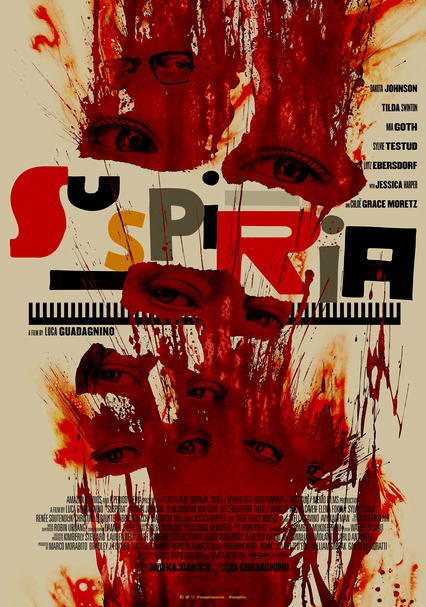
To add to the above point, the visuals and cinematography are its highlights. By using mirrors and possessing a dream-like quality, the film looks great and harbors an eerie, stylistic, and deathly crimson hue. The resulting project is one of spectacle and intrigue rather than a sum of its parts.
Rather than approaching the film with an introspective or cerebral motif, it is recommended that you simply go with the flow and let it fester.
Guadagnino deserves credit for bravely attempting to undertake the creation of such a masterpiece and bringing it to audiences in 2018.
Suspiria (2018) lacks plot or pacing and is the second runner-up to the original. The story is not worth making heads or tails of since it is not interesting enough to warrant the effort.
Ultimately, skip this version and stick to the brilliance of the Argento effort, or better yet, do not compare the two films at all.
Independent Spirit Award Nominations: 2 wins- Best Cinematography (won), Robert Altman Award (won)