Tag Archives: Walter Pidgeon

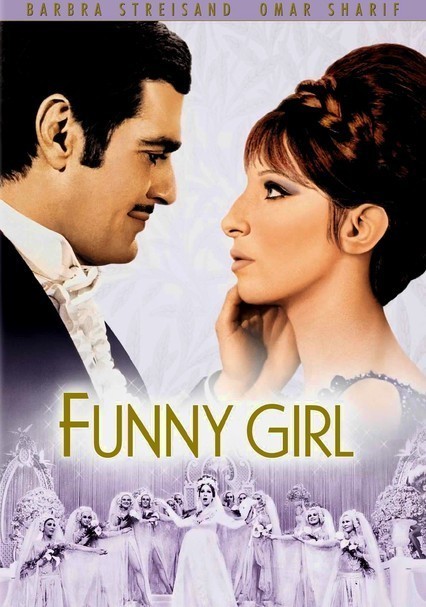
Funny Girl-1968

Funny Girl-1968

Director William Wyler

Starring Barbra Streisand, Omar Sharif

Scott’s Review #1,022
Reviewed May 11, 2020

Grade: B+

Barbra Streisand won the Academy Award for Best Actress for her outstanding portrayal of Fanny Brice in Funny Girl (1968). She reprises a role that she made famous on the Broadway stage, bringing her to the big screen.

The role is vitally important and sends a powerful message, teaching viewers that an unconventional woman with extraordinary talent can succeed in showbiz, leaving prim and proper starlets salivating with jealousy.

Features the classic tunes “People” and “Don’t Rain on My Parade” as well as the title track.

Fanny (Streisand) is an unhappy Jewish New Yorker, living in semi-poverty and dreaming of the big time. Her mother (Kay Medford) and others in the community try to persuade Fanny to live an everyday life far from the hot, judgmental glare of the stage, but she will have none of it.

Finding success on her terms in Ziegfeld Follies throughout World War I, she also finds love and passion with the suave Nick Arnstein (Sharif) following her debut performance.

The story is loosely based on the life and career of the honest Fanny and her stormy relationship with the entrepreneur and gambler, Nick.

Taking nothing away from Sharif, who is more than adequate, the film belongs to Streisand. Despite being a novice, producers wanted no one but Streisand in the role, since she had hit a home run in the stage version.

A brief consideration to have Shirley MacLaine star in hindsight seems laughable and unimaginable.

Sharif’s suave, dangerous, swarthy characterization balances perfectly with Streisand’s naivety and innocence. The Jewish woman and the Muslim man must also have raised an eyebrow or two at the time.

Streisand is a breath of fresh air in a role that could be said to mimic real life and reflects film in 1968 and beyond. Glamour girls were the height of fashion throughout the 1950s and 1960s, where looks sometimes usurped talent.

With the lifting of the Hollywood Code, grittier and dirtier roles were to be found for women. Streisand, as Fanny, proves that a self-proclaimed ugly duckling can rise to the top of the cream.

Refusing to get a nose job or otherwise alter her appearance or name, she mirrors Fanny in many ways, inspiring both women and men to be themselves to achieve truth.

Director William Wyler, no stranger to Hollywood success with pictures such as Mrs. Miniver (1942) and The Best Years of Our Lives (1946), knows how to pace and balance a film, and to present a cheery, splendid offering, careful not to make the movie too lightweight.

Comic scenes, such as when Fanny upstages everyone and prances around the stage as a pregnant newlywed, becoming the talk of the town, are the best ones.

The film succeeds when it is fun.

Sharif does his best with a small role, surprising given the character’s importance, but the dramatic moments are not the best scenes. They are okay and certainly not overacted by the stars, but do not work as well as when Streisand belts out “People” on a lonely sidewalk.

The issue is that Streisand isĀ Funny Girl, and even prominent actors like Sharif never had a chance. The one exception is Medford, who goes toe to toe with Streisand in every scene with gusto and humor.

Funny Girl (1968) may suffer from a few overly melodramatic moments that slow it down, especially in the central romance, but its central message is to stay true to one’s colors.

Refusing to be influenced by elders or even her beau, Fanny is an inspiration to all viewers. With delightful musical numbers and zesty wardrobe pieces, the film has a cheery and fun veneer, but more lies beneath the surface.

Whether the intention is a sing-along experience or a deeper meaning, the film has something for everyone.

Oscar Nominations: 1 win-Best Picture, Best Actress-Barbra Streisand (won), Best Supporting Actress-Kay Medford, Best Score of a Musical Picture-Original or Adaptation, Best Song Original for the Picture-“Funny Girl”, Best Sound, Best Cinematography, Best Film Editing

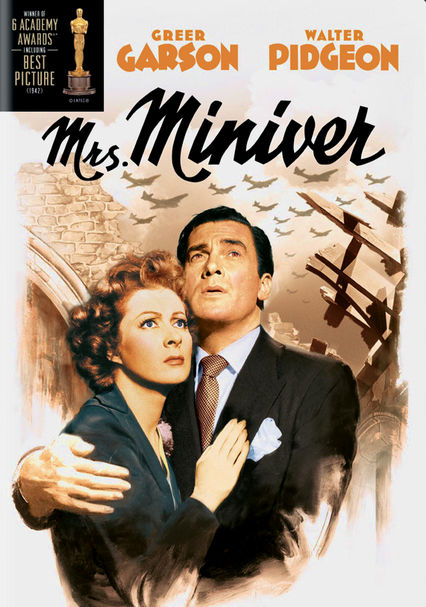
Mrs. Miniver-1942

Mrs. Miniver-1942

Director William Wyler

Starring Greer Garson, Walter Pidgeon

Scott’s Review #841

Reviewed December 13, 2018

Grade: A-

Released in 1942 amid the horrific World War II, Mrs. Miniver (1942) was a smash hit, winning over audiences concerned with the troubled and uncertain times.

Decades later, the film does not age as well as other similarly themed films, but still entertains and tells a good story with an important theme.

The film is nestled in the war drama genre with romance. The film won numerous Oscars the year of its release, including Best Picture and star Greer Garson won for Best Actress.

The story is told from the perspective of an affluent British family and the struggles they face to keep things together during growing peril. The focus primarily remains on an unassuming housewife, Kay Miniver (Garson).

The supporting players do much to flesh out the film with fantastic performances by Walter Pidgeon, Teresa Wright, and Henry Travers as Clem Miniver, Carol Beldon, and Mr. Ballard, respectively.

The direction by William Wyler is astounding and adds to the perfectly crafted ambiance and homey details.

The family lives a comfortable life in a whimsical village outside of London. Quite idealized, they own a large garden and a motorboat on the River Thames.

Along with Kay and Clem, their three children of varying ages and their housekeeper and cook reside with them. Besides the parents, the central couple is son Vin (Richard Ney) and the prominent Carol (Wright); the pair initially disagree on politics but finally fall madly in love.

As the soap opera-style family situations continue, the war grows closer and closer to their house.

As Mrs. Miniver progresses, Vin enlists in the army to assist with war efforts, a German Nazi breaks into the Miniver house, a central character dies, and bombs and planes crash.

Through it all, Kay remains stoic and takes the family through challenging situations, adding melodrama to the film. The woman’s journey and resolve to keep everything and everyone intact is at the core.

The film is mainly a family drama with the Minivers and the townspeople experiencing trials and tribulations. In this way, Mrs. Miniver risks being a one-trick pony, albeit an emotional and teary-eyed one.

The film’s rich characteristics and polished nature make it more than it ought to be, and the superlative cast, production values, and timely release undoubtedly made it what it was in 1942.

In present times, however, Mrs. Miniver seems diminished in importance and relevance with a sappy and overly sentimental feel, World War II in the distant past, and several other wars come and gone.

Wyler carefully packaged the film to hit every emotion, from the bombastic musical score to the proper English characters to the comic relief housekeeper.

The film is a giant Hollywood production, but perhaps a bit too perfect to age with any zest or reason to watch more than once.

The film might be better remembered for its strong female lead. Told from Kay’s perspective, it was unusual in 1942 for a movie (especially with a war theme) not to have the story from the male point of view. Still refreshing in 2018, this quality was downright groundbreaking at the time.

Kay stays strong and proud through the ravages of war that are closing in on her family with unbridled boldness and nary a simpering quality. Wright’s Carol is an early champion for strong, female-driven characters, and, in a more minor way, she is also a muscled female role model.

Mrs. Miniver (1942) is a well-crafted film of its time that displays lavish production values and strong characters worthy of admiration.

The film is a significant win for a glimpse of the 1940s, especially for fans of good, solid drama. There are no significant flaws to harp on, but the overall piece has not aged exceptionally well, and other similar films (Casablanca, 1942) are more memorable.

Oscar Nominations: 6 wins-Outstanding Motion Picture (won), Best Director-William Wyler (won), Best Actor-Walter Pidgeon, Best Actress-Greer Garson (won), Best Supporting Actor-Henry Travers, Best Supporting Actress-Teresa Wright (won), Dame May Whitty, Best Screenplay (won), Best Sound Recording, Best Cinematography, Black-and-White (won), Best Film Editing, Best Special Effects