Scream and Scream Again-1969

Scream and Scream Again-1969

Director Gordon Hessler

Starring Vincent Price, Christopher Lee, Peter Cushing

Scott’s Review #899

Reviewed May 16, 2019

Grade: B+

Any film featuring horror heavyweights and great actors like Vincent Price, Christopher Lee, and Peter Cushing is well worth the price of admission for the name value alone. Each is a mainstay attraction in its own right and, combined, results in an orgy of riches.

Scream and Scream Again (1969) sputters by limiting the on-screen interaction between the actors. Still, after a reflective pause, I realize the picture is to be revered for its creativity and for its use of intersecting plotlines to build a thrilling crescendo into a surprise ending.

The audience is offered three segments of the story, each revisited periodically as a stand-alone segment that culminates in overlapping components.

An athletic runner trots along the streets of London, suddenly suffering from an attack, only to awaken in the hospital with no legs.

Elsewhere, a deadly intelligence operative reports back to his repressed Eastern European country, only to murder his commanding officer with a fatal paralyzing hold.

Finally, a London detective investigates the brutal deaths of several young women in metropolitan nightclubs.

Cushing, reduced to merely a cameo-sized role as the ill-fated officer, is barely worth mentioning and adds little to the film besides appearing in it.

Lee, like Fremont, the head of Britain’s intelligence agency, plays a straight role with not much zest.

Price, with the meatiest role as a mysterious doctor specializing in limb replacement, can give anyone the creeps with his scowl and eerie mannerisms. Still, the film misses the mark by wasting the talents of the other legendary actors.

The film is not at all what a fan of Hammer horror would expect, given the familiar horror cast and the gory-sounding title.

Heaping buckets of blood or ghoulish vampires were on the anticipated menu, but that does not mean the film fails to deliver. It may not please a fan of traditional horror films, as the genres of political espionage and science fiction come into play heavily.

However, the fantastic, peculiar nightclub-serial-killer storyline will satisfy fans eager for a good kill or two.

My initial reaction to Scream and Scream Again was that it was over-complicated and had too much going on at once, especially for a horror film.

After the film concludes and the surprise ending is revealed, I realized that the numerous tidbits are necessary to achieve the desired effect, and that the events will make the viewer ponder when the film ends.

Not to ruin the big reveal, but the filmmakers borrow a healthy dose of Invasion of the Body Snatchers (1956) in a more macabre way, naturally.

Fans of the 1960s British television series The Avengers will be pleased with Scream and Scream Again, as a similar tone exists in both.

The distinctive musical soundtrack, popular in the 1960s, works well, and the nightclub sequences and some of the detectives feel reminiscent of the show.

The feel of the film is not limited to an episodic television story but contains a similar style.

High British 1960s fashion is also prevalent and pleasing to the eye.

A couple of supporting characters strike a fascination in small and almost entirely non-verbal performances.

A sexy red-headed hospital nurse with superhuman powers and a penchant for amputating limbs, combined with a brooding, mysterious serial killer, provides dubious intrigue about who the actual characters are.

What is their motivation? Do they work for someone or something sinister? Questions like these will keep the viewer occupied and thirsty for an explanation.

Bizarrely, British film and television director Gordon Hessler crafts an implausible yet fascinating story that keeps the viewer guessing.

Featuring horror superstars Price, Cushing, and Lee would seem like an assured horror masterpiece, but the stars’ limited time on-screen brings the overall project down a notch.

Scream and Scream Again (1969) still achieves a good measure of worthy entertainment.
The Sandpiper-1965

The Sandpiper-1965

Director Vincente Minnelli

Starring Richard Burton, Elizabeth Taylor

Scott’s Review #897

Reviewed May 12, 2019

Grade: B+

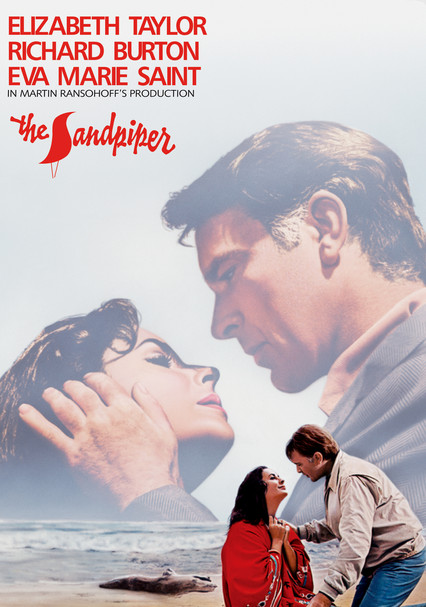
The Sandpiper (1965) is a film that stars Elizabeth Taylor and Richard Burton and was released at the height of their fame.

It capitalized on their notoriety as one of the world’s most famous couples and their well-known romantic tribulations. Although they portrayed adulterous lovers, they were married shortly before filming began.

The film’s theme of adultery closely mirrored their own lives at the time, as each very publicly conducted an affair with the other while married to spouses.

The film is a lavish and sweeping production. It is one of the few major studio pictures ever filmed in Big Sur, and the story is expressly set there.

Big Sur is a rugged, mountainous section of California’s Central Coast where the Santa Lucia Mountains rise abruptly from the Pacific Ocean.

It is often praised for its dramatic scenery and is the perfect location for a romantic film.

The Sandpiper (1965) is a romantic drama featuring the two stars’ chemistry. It is a pure case of art mimicking real life, at least in some way.

Watching the actors work off one another is fascinating and wonderful. It makes me wonder what life would have been like on set, amid the dreamlike, steamy locale and the fresh romance.

The story isn’t dynamic but quite theatrical, with the actors as the main reason to watch.

Taylor plays Laura Reynolds, a bohemian, free-spirited single mother who lives in Big Sur, California, with her young son, Danny. Laura makes a living as an artist while homeschooling her son, who has gotten into trouble with the law.

When Danny is sent to an Episcopal boarding school, Laura meets the headmaster, Dr. Edward Hewitt (Burton). The duo falls madly in love, even as Edward marries teacher Claire (Eva Marie Saint).

The melodrama only escalates as those close to the pair catch on to their infidelity.

The gorgeous locale of Big Sur is second to none and exudes romance and sexual tension, with crashing waves against the mountainous terrain symbolizing a passionate love affair.

As the characters give in to each other, the lavish weather only heightens the titillating experience.

Taylor is lovely to look at throughout the film, and the erotic nude chest of the character plays a significant role. I wondered if the inclusion had the desired effect or resulted in unintended humor, as the endowed sculpture is quite busty.

The film belongs to Taylor and Burton, but the supporting cast deserves mention for creating robust characters that add flavor.

Eva Marie Saint plays the amiable wife, distraught by her husband’s infidelity but later coming to an understanding. Charles Bronson plays Cos Erickson, Laura’s protective friend, who despises Edward’s hypocrisy.

Finally, Robert Webber is effective as Ward Hendricks, a former beau of Laura’s, eager for another chance with the violet-eyed bombshell.

The film’s title represents a sandpiper with a broken wing that Laura nurses as Edward looks on. The bird lives in her home until it heals and flies free, though it returns occasionally.

This sandpiper is a central symbol in the movie, illustrating the themes of growth and freedom. Its sweetness suits the love story between Laura and Edward.

The Sandpiper is an entertaining film but not a great one. It suffers from mediocre writing and clichéd storytelling, but it serves as a vehicle for Taylor and Burton.

The fascination is watching the actors, not for a great cinematic experience; the film is not very well remembered except by fans of the supercouple.

The film was made one year before the dreary yet brilliant Who’s Afraid of Virginia Woolf? (1966) starring the same husband-and-wife duo as does The Sandpiper (1965).

Laura and Edward are worlds apart from George and Martha, and when watched in close sequence, one can marvel at the acting chops of each star.

The film won the Academy Award for Best Original Song for the sentimental “The Shadow of Your Smile.”

Oscar Nominations: 1 win-Best Song-“The Shadow of Your Smile” (won)

Golden Globe Nominations: Best Original Score-Motion Picture, Best Original Song-Motion Picture-“The Shadow of Your Smile”

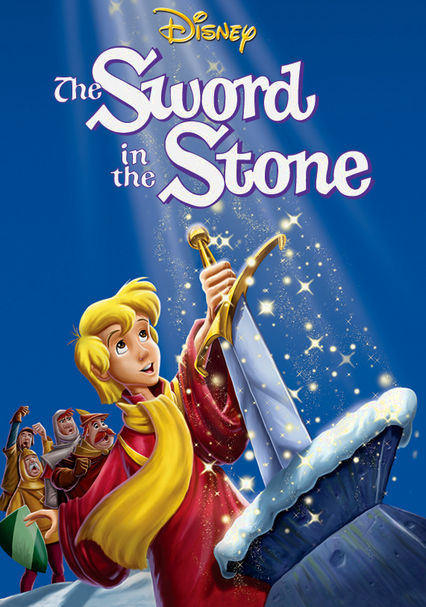
The Sword in the Stone-1963

The Sword in the Stone-1963

Director Wolfgang Reitherman

Voices Sebastian Cabot, Rickie Sorensen, Karl Swenson

Scott’s Review #896

Reviewed May 10, 2019

Grade: B

The 1960s, while not known as the best of decades for Walt Disney productions, offers a small gem of a film in The Sword in the Stone (1963).

Flying marginally under the radar, the film is not typically well-remembered but is a solid offering. It mixes elements of magic and royalty within a cute story.

The production has the dubious honor of being the final Disney animated film released before Walt Disney’s death.

While the film is not great, neither is it bad.

Engaging and innocent, it does not offer the ravaging tragedy of Bambi (1942), the emotion of Dumbo (1941), or the beauty of Snow White and the Seven Dwarfs (1937).

The Sword in the Stone offers an adventure with an appealing lead character, mildly entertaining supporting characters, and a host of fun antics surrounding education.

Set in ancient times, the King of England has died, leaving no heir to the throne. This situation elicits peril and worries, as the country is doomed to war with no successor.

One day, a miracle occurs, and an odd “Sword in the Stone” appears inside a sturdy anvil in London. The anvil’s inscription proclaims that whoever removes it will be the new king.

Despite many attempts, no strong citizens succeeded, and England was reduced to the Dark Ages, leaving the sword and the stone forgotten.

One day, a twelve-year-old boy named Arthur appears. He teams up with his tutor, Merlin the wizard, and the adventures commence.

Inevitably, Arthur can remove the sword from the stone and lead the Knights of the Round Table, accomplishing many amazing feats and becoming one of the most famous figures in history- King Arthur.

The Sword in the Stone entertains and pleases the eyes in many regards, with vibrant colors and an array of bells and whistles creatively interspersed throughout many scenes.

The main villain, Madam Mim, is Merlin’s main nemesis. Haggard and dripping with black magic powers, she can turn from a pink elephant into a queen with the flick of her wrist as she giggles and prances about.

Despite being dastardly, she is also fun and zany and delights in her brief screen time.

The whimsical antics of Merlin are the best aspects of The Sword in the Stone as the senior gentleman bursts and bumbles from one oddity to another in earnest attempts to aid Arthur.

Thanks to clever writing, an educational angle is robustly incorporated into the story. Merlin can see into the future, such as knowing that the world is round, not flat.

What a great learning tool the film provides for young kids to discover.

The story risks playing juvenile in some parts where I can see children under age twelve enthralled but adults finding the film too childish to take seriously.

Despite my efforts to stay tuned, I noticed tidbits of the film that seemed too cute.

When Merlin and Arthur are turned into squirrels and strike the fancy of adorable but clueless female squirrels, the scene seems best catered to very young audiences.

What would give the film some excitement would be a good, solid theme song or a powerful love story. Both aspects, which can solidify a hit for Disney, are glaringly missing.

Snow White and the Seven Dwarfs contain the lovely “Someday My Prince Will Come,” while Snow White and the Prince offer a rich love story.

While sound, The Sword in the Stone can only reach the second tier of Disney classics, missing the upper echelon with its only so-so musical offerings.

A slight miss is how Arthur’s voice changes back and forth between a child and a teenager going through puberty. This is drastically noticeable.

When analyzed, the reason is somewhat perplexing because three different actors were used to play Arthur, resulting in some consistency issues.

Why not just use one actor or age the character slowly and gradually deepen his voice? The back and forth feels sloppy.

The criticisms targeted at The Sword in the Stone (1963) are minor and forgivable as the film plays above average graded on its terms.

The film has a lovely message for children about the importance of education and is a delight best enjoyed by the whole family.

Oscar Nominations: Best Scoring of Music-Adaptation or Treatment

Invasion of the Body Snatchers-1956

Invasion of the Body Snatchers-1956

Director Don Siegel

Starring Kevin McCarthy, Dana Wynter

Scott’s Review #895

Reviewed May 8, 2019

Grade: B+

Invasion of the Body Snatchers (1956), released during the mid-1950s, a time of post-War World II unity and prosperity in America where neighborhoods snuggled cheerily by the fireplaces with nary a care in the world, sought to make the public paranoid, and it worked.

Thanks to a foreboding premise, audiences got to ponder the possibilities of pod people cloning human beings and invading the planet, scaring the daylights out of the masses, and resonating with critics.

Playing like an extended episode of The Twilight Zone, and to the film’s credit, it preceded the television series.

The film successfully achieves thought-provoking post-film dialogue at a brief one-hour and twenty-minute running time.

It has been crowned with cult-classic status and similar creepy-themed genre films that blossomed during the 1950s.

Set in the fictional sunny California town of Santa Mira, the film gets off to an exciting start as we witness a screaming man in an emergency room attempting to be calmed by staff. The harried man claims to be a doctor and recounts, via flashbacks, the events leading up to the present day.

Our main character, Dr. Miles Bennell (Kevin McCarthy), and his ex-girlfriend Becky (Dana Wynter) team up after several patients report relatives acting robotic and strange.

When half-created bodies in pods are soon discovered, Miles and Becky know something is amiss in their town and race to figure out the mystery of the “pod people” while others turn into emotionless human-like beings.

The epidemic is caused by extraterrestrial life. The intention is for humanity to lose all emotions and a sense of individuality, creating a simplistic, stress-free world.

An interesting facet of Invasion of the Body Snatchers is how time has changed the reaction to the film. In 1956, the thought of aliens taking over the world seemed plausible and frightening since the man had not yet walked on the moon, and astronomy was a new venture.

The peaceful tranquility of the United States of America was in danger of being overtaken, the film exclaimed, and viewers fell for the scare tactics.

The film was created to be a political allegory, and boy did this sure work.

Decades later, the United States’ vibe is more integrated and flourishes with more diversity and acceptance of other cultures and beings. The country is also more chaotic, so the invasion of the “pod people” is less scary and perhaps even more embraced by those living in Malcontent.

Invasion of the Body Snatchers suffers from poor aging and a message rethink and teeters on feeling dated.

The acting is marginally good, if not spectacular, but it does not need to be Oscar-worthy to have the desired effect. The actors deliver their lines with dramatic gusto, successfully conveying suburban Americans’ troubled paranoia to audiences who will surely be on the edge of their seats as the drama unfolds.

The characters never think outside the box, only in straightforward terms, so the motivations are earnest.

The black and white cinematography is palpable yet subdued, and the lack of colors provides substance. While the 1950s was a wonderful time for film, it was also a less edgy time for cinema.

The 1960s brought fewer restrictions and more shocking elements, but Invasion of the Body Snatchers is compartmentalized, feeling more like a long episodic television thriller.

Double-billed with the equally frightening The Day the Earth Stood Still (1951) would make for delicious 1950s science-fiction viewing.

I remain partial to the stunning, vibrantly colored 1978 remake, which features superior filmmaking and more layered production values. The original Invasion of the Body Snatchers (1956) holds its own and is a recommended watch.

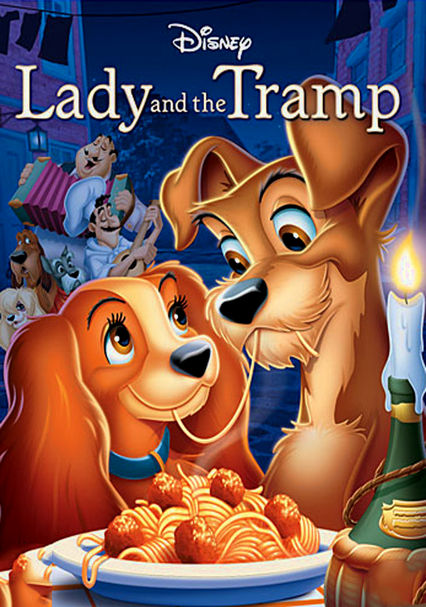
Lady and the Tramp-1955

Lady and the Tramp-1955

Director Clyde Geronimi

Voices Peggy Lee, Barbara Luddy, Larry Roberts

Scott’s Review #894

Reviewed May 5, 2019

Grade: A-

Released midway through a decade of prosperity, Lady and the Tramp (1955) is a lovely production that represents an innocent time and still holds up well decades later.

The Walt Disney film’s story, animations, and characters are charming, with a wholesome yet sophisticated vibrancy. A year in the life of its main character (Lady) has never been more richly created, providing adventure, romance, and fun for the entire family.

At the turn of the twentieth century, John Dear, presumed to be somewhere in the midwestern part of the United States, gives his wife Darling a Cocker Spaniel puppy that she names Lady.

The couple is immediately smitten with Lady, who provides her with all the comforts of warm and lavish country living.

After months, the Dears become pregnant, causing Lady to feel left out. When the baby arrives and the Dear’s go on a trip, their dog-hating and incompetent Aunt Sarah arrives, leaving poor Lady at risk for her life.

Meanwhile, a stray mixed-breed named Tramp prowls the streets, protecting his friends and avoiding the dog catcher. He dines on Italian leftovers at Tony’s and lives his idyllic life, proud not to be owned and able to live on his terms.

He befriends Lady through mutual acquaintances Jock and Trusty, who reside nearby.

When Lady faces peril, the duo embarks on an exciting escapade that leads them to a dog shelter and a farm. They fall in love, resulting in a candlelit dinner for two at Tony’s, which is the highlight.

All the animals are treasures and voiced appropriately, giving Lady and the Tramp life and zest. Tramp is gruff yet lovable, with a “footloose and collar-free” outlook. He is charming and bold in his determination.

Lady’s voice is the polar opposite—demure, feminine, and proper. It is cultured without being too snobbish.

In supporting roles, Tramp’s fellow strays Peg (a Pekingese) and Bull (a bulldog) possess a New York street-savvy, perfect for their characters.

Besides Aunt Sarah, the dog catcher, and a hungry rat, Lady and the Tramp contain no villains, and each character is somewhat justified in their motivations. The rat wants to eat, the dog catcher is doing his job, and Aunt Sarah, a cat lover with two Siamese pets, is foolhardier and more clueless.

She can be forgiven for wanting Lady to have a muzzle because she misunderstands Lady’s intentions toward the newborn baby. These characters are more comical than deadly, and Si and Am add mischievous shenanigans to further the plot.

The heart belongs to the sweet romance between Lady and Tramp. The two dogs immediately appeal to the audience with instant chemistry.

The “Footloose and Collar-Free / A Night at the Restaurant / Bella Notte” medley is the best arrangement of the songs, as the duo shares a delicious plate of spaghetti and meatballs.

In the film’s most iconic and recognizable scene, the pair lovingly munches on the same spaghetti noodle—if that is not love, what is?

Lady and the Tramp (1955) is a charmer containing innocence, vivid colors, and a rich, welcoming story.

Beginning on Christmas and ending precisely a year later, Lady and Tramp’s incredible journey is topsy-turvy but culminates in the birth of a litter of puppies cheerily celebrating life.

The happy ending is a perfect bow on a Disney film that is enchanting, harmless, and inspiring.

The quintessential American love story between the pampered heiress and the spontaneous, fun-loving pup from the wrong side of the tracks — has rarely been more elegantly and entertainingly told.

Song of the South-1946

Song of the South-1946

Director Harve Foster, Wilfred Jackson

Starring James Baskett, Billy Driscoll

Scott’s Review #893

Reviewed May 4, 2019

Grade: B+

Song of the South (1946) is a Walt Disney film buried in the chambers of cinema history, reportedly an embarrassment never too soon forgotten by the legendary producer and his company.

The reason for the ruckus is the numerous overtones of racism that emerge throughout an otherwise darling film.

Admittedly, the film contains a racial cheeriness that cannot be interpreted as anything other than condescension to black folk, and numerous stereotypes abound.

The mysterious appeal of the film during modern times is undoubted because of the surrounding controversies that hopefully can be put aside in favor of a resoundingly positive message and glimmering childlike innocence that resonates throughout the film.

The hybrid choice of live-action and animation is superlative, eliciting a new progressive experience. Given the surrounding controversies, it would be shameful to spoil it.

The film takes place during the Reformation Era in Georgia, the United States of America, a period of American history shortly after the end of the Civil War and the abolition of slavery. It has a pretty Southern flavor and feel.

Seven-year-old Johnny (Bobby Driscoll) is excited to visit his grandmother’s (Lucile Watson) lavish plantation outside of Atlanta along with his mother, Sally (Ruth Warrick), and father (Erik Rolf). He is soon devastated to learn that his father will return to Atlanta for business, leaving Johnny behind.

Johnny plots to run away from the plantation and return to Atlanta but develops a special friendship with kindly Uncle Remus (James Baskett). Uncle Remus enchants the young boy with sentimental lesson stories about Br’er Rabbit and his foils, Br’er Fox and Br’er Bear.

Drama ensues when Johnny feuds with two poor neighbor boys and develops friendships with their sister, Ginny. He also bonds with Toby, a young black boy who lives on the plantation.

Thunderous applause must go to the creative minds who thought of mixing the animations with the live-action drama, resulting in positive and compelling effects.

As Uncle Remus repeatedly embarks on a new story for Johnny to listen to, the audience knows they will be transported into a magical land of make-believe as a precise lesson results from these stories.

Uncle Remus is an inspiring character- it is rare to find a black character written this way in 1946. Often, black characters were reduced to maids, butlers, farmhands, or other servant roles.

While the film does not stray from the course by casting many of these roles, including Uncle Remus himself, his character is different because he is beloved by little Johnny, respected by the grandmother, and treated as part of the family. His opinion counts for something and is not merely dismissed as rubbish.

The musical soundtrack to Song of the South is particularly cheery and easy to hum along to. The most recognizable song is “Zip-a-Dee-Doo-Dah,” which recurs several times throughout the feature. The best rendition is at the end, when the mix of live-action and animation culminates with the sing-along.

My favorite appearance is when the “bluebird” referenced in the lyric comes into play, resting on one character’s shoulder, true to the lyrical content.

The accusations of racism are justified as keen viewers will understand the condescension towards blacks in several scenes.

More than once, a parade of black people is seen traipsing through the plantation, singing songs, not precisely cheerfully but not despondent.

The scenes have eerie slavery overtones- despite the black character’s all presumably being free to come and go, the reality is they all work for white folk. The black plight and struggle are completely sugar-coated and dismissed.

The animated characters are voiced by strong ethnic voices and are presumed to be ridiculous. The usage of a Tar-Baby character, ultimately enshrined in black tar, seems offensive, almost teetering on the implication of promoting a blackface minstrel show moment as the character, once white, is then turned black because of the tar.

Song of the South is not the only film of its time to face racist accusations- the enormous Gone with the Wind (1939) and Jezebel (1938) faced similar heat.

Song of the South (1946) is recommended for those who recognize the existing racism and appreciate the film’s artistic merits. Wise and resounding friendships between white and black characters are evident, and it is a lovely story about determination, fairness, and respect.

The film should be treasured for its lovely moments and scolded for racist overtones.

Oscar Nominations: 1 win-Best Original Song-“Zip-a-Dee-Doo-Dah” (won)

Welcome to Marwen-2018

Welcome to Marwen-2018

Director Robert Zemeckis

Starring Steve Carell, Leslie Mann

Scott’s Review #892

Reviewed May 1, 2019

Grade: B

Welcome to Marwen (2018) is a feature film that flew under the radar at the time of release, suffering from mostly poor, if not scathing, reviews.

Having debuted in the last quarter of the year, the anticipation was assuredly for Oscar love, but this was not to be, as the film was a box office and critical disappointment.

Despite a marvelous and sympathetic portrayal by Steve Carell and bold creativity in the animation, the film lags and misfires in the storytelling, never completely coming together despite a heartfelt effort.

Based on a powerful true story chronicled much better in documentary form, the film follows Mark Hogancamp (Carell), a man struggling with post-traumatic stress syndrome after being physically assaulted.

He creates a fictional village to deal with his violent trauma as a form of escapism. Mark teeters between fantasy and reality as his various action figures mirror both himself and other people in his life, from the benevolent – his pretty new next-door neighbor, Nicol (Leslie Mann) – to the malicious – his attackers.

Director Zemeckis is no stranger to cool and innovative visual effects. Having created films like Back to the Future (1985), Death Becomes Her (1992), and Forrest Gump (1994), his track record is proven.

Though far from a masterpiece, Welcome to Marwen’s most outstanding achievement is its look, with stunning and realistic figurines coming to life with splendid effect.

The modified fashion dolls are morphed into action heroes, livening up the film and making it a spectacle compared to the morose everyday life that Mark lives in.

As Mark frequently escapes into his soothing, self-created fantasy world, named Marwen, the mostly female characters are strong, resilient, and protective of him. He even embarks on a fantasy romance with Nicol and faces both sweet moments with her as well as a peril from Nazis.

The negative to the fantasy sequences is in the climax, as Zemeckis teeters too broadly towards a full-fledged action film with over-the-top segments and an overly lengthy battle scene.

The real-life scenes don’t work as well, as Mark’s small-town residence is gloomy and depressing, offering little interest. Presumed to be two hours outside of New York City, the reason Nicol moves to the town is never explained, and her true intentions remain mysterious.

The presence of her aggressive ex-boyfriend seems forced, and Mark’s romantic interest in her becomes awkward. The main drawback is a lack of romantic chemistry between Carell and Mann, which results in little reason to root for the pair to be together.

The film contains an admirable progressive slant as Mark, while straight in his sexuality, is enamored with women’s shoes and collects hundreds of sensible and erotic pairs.

The key to his attack as briefly shown via flashback is his boasting to redneck types while inebriated, his love of the shoes. This plot point is essential to the film, yet not fleshed out well. What do we know about his attackers? Did they assume Mark was gay, prompting the attack?

Since the attack is deemed a hate crime, we can only assume the answer is yes, but I had hoped for a bit more depth and more about Mark’s backstory.

Based on the 2010 documentary Marwencol, Welcome to Marwen (2018) is a production that asks the viewer to revel in a wonderful fantasy world and marvel at the resulting creativity, escaping into a life-like adventure zone.

The story remains uneven with a bandied-about romance that never comes together, uneven storytelling, and a mediocre conclusion. While I admire Welcome to Marwen’s intentions, the film ultimately falls short of delivering.

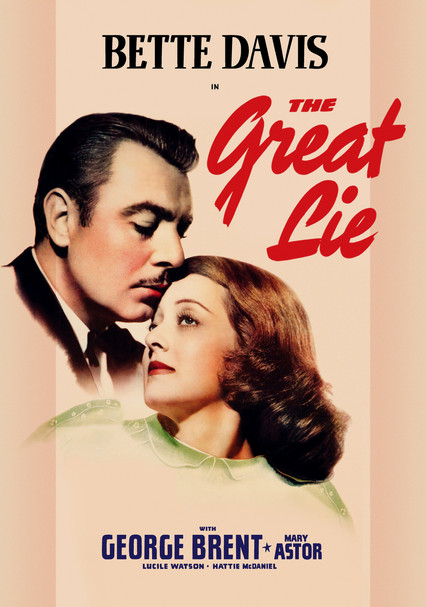
The Great Lie-1941

The Great Lie-1941

Director Edmund Goulding

Starring Bette Davis, Mary Astor

Scott’s Review #891

Reviewed April 28, 2019

Grade: B+

Breezing into her heyday of films at this point, Hollywood starlet Bette Davis had become an expert at portraying tarts and bitches in most of her movies. Desiring to turn left of center and play a more sympathetic character, the actress jumped at the chance to play an ingenue.

The Great Lie (1941) is the perfect showcase for her talents in a gripping, dramatic film that is purely predictable soap opera, but lovely escapism did well.

Maggie Patterson (Davis) is a demure and sensitive southern socialite vying for the affections of former beau, aviator Peter Van Allen (George Brent). Peter impulsively married sophisticated concert pianist Sandra Kovak (Mary Astor), and both were startled to learn that their marriage was invalid.

Confused, Peter decides to marry Maggie and is quickly sent off to Brazil on business when his airplane crashes into the jungle, leaving him presumed dead.

When Sandra realizes she is pregnant, Maggie proposes that she be allowed to raise the child independently in exchange for financially caring for Sandra. The two women go to Arizona to await the birth, and Sandra delivers a boy named after his father.

When Peter shows up alive and well, the women face a quandary. Sandra bitterly announces to Maggie that she intends to ride off into the sunset with Peter and her son. For the remainder of the picture, the women metaphorically scratch and claw at each other.

Despite being melodramatic and stellar for an afternoon daytime drama, the storyline is engaging and never suffers from too much contrivance.

Both Maggie and Sandra have appeal, and both women are likable—or at least the film does its best not to make one woman the clear villain. Sandra, dripping with gorgeous fashion and sturdy poise, is confident, pairing well with Maggie’s southern charm and sensibilities—to say nothing of her wealth. Peter would do well with either woman, and I found my allegiances shifting throughout the film.

Mary Astor’s terrific performance as Sandra nearly upstages Davis. The women are the reason for The Great Lie’s grit and gusto. They play the hell out of their roles, and according to legend, both hated the script and vowed to turn the project into gold together.

They nearly succeed as the best sequence is when the women travel to deserted Arizona to spend the remainder of Sandra’s pregnancy. They cooped up together. Seeing Davis’ Maggie play caretaker to a whiny and spoiled Sandra was delicious. Typically, Davis would play Sandra’s character, so the scenes are a treat.

Suspension of disbelief must be achieved as the film’s primary plot is jarring in incomprehension. Maggie offers to provide Sandra with a large sum of money to ensure her security. I did not buy this point as Sandra appears well-off, touring the world with incredible success and living a lavish lifestyle, including a staff of servants and a gorgeous apartment in New York City.

The character hardly appears to need a handout despite the incorporated dialogue of Sandra’s success predicted to wane as she ages.

Another oddity is the location of Maggie’s estate. Although Maryland is hardly a southern mecca, the area has all the trimmings of the deep South, perhaps Mississippi. With an all-black staff, magnolia trees, and southern-style cuisine, the Maryland backdrop is quite perplexing and a misfire.

More relevant would have been if the location were Mississippi, Louisiana, or Alabama. Finally, remiss would it be not to mention appearances by Hattie McDaniel and brother Sam as Violet and Jefferson, employed by Maggie, always a treat.

With high drama and terrific acting, The Great Lie (1941) offers tremendous chemistry between the female leads, resulting in a deserved Best Supporting Actress Oscar for Astor.

The dialogue may be silly and superfluous with plot gimmicks and obvious setups, but the film does work. Viewers can let loose and enjoy a sudsy drama with enjoyable trimmings.

Oscar Nominations: 1 win-Best Supporting Actress-Mary Astor (won)

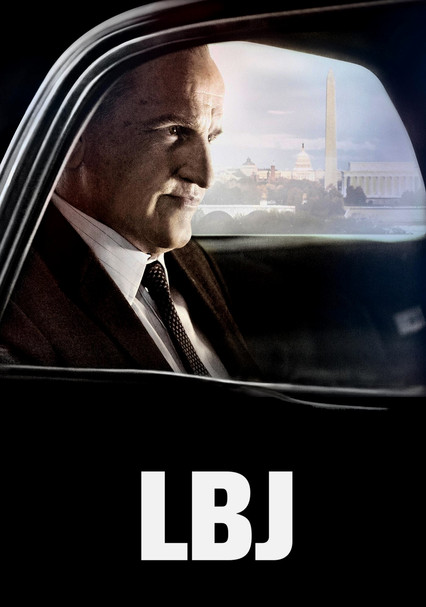
LBJ-2017

LBJ-2017

Director Rob Reiner

Starring Woody Harrelson, Jennifer Jason Leigh

Scott’s Review #890

Reviewed April 27, 2019

Grade: B-

LBJ (2017) provides small glimpses of historical interest with a biography about a United States president who is perhaps underrepresented in cinema history compared to other presidents.

The production never catches fire and falls flat with an overproduced film lacking a bombast.

The film can easily be viewed once, never to be thought of again, nor providing the need for analysis or discussion.

Director Rob Reiner creates a glossy, mainstream Hollywood production with questionable casting choices and a muddled feel.

To its credit, the film introduces the fateful day of November 22, 1963, into the story.

As then-Vice President Johnson (LBJ), played by Woody Harrelson, and their wife, Lady Bird (Jennifer Jason Leigh), deplane and embark on a motorcade procession through downtown Dallas, Texas, dire events will follow.

As the violent assassination of President John F. Kennedy (Jeffrey Donovan) soon arrives, the film portrays the initial foreshadowing well, then backtracks to 1960 when the Democratic nominee was up for grabs with both JFK and Johnson in contention.

The film traverses back and forth from pre to post-JFK assassination as LBJ took over the presidency amid the controversial Civil Rights Bill and a still shocked United States public.

A character study develops as the gruff and grizzled man takes center stage to lead the country into the future. The attempt is to show LBJ, the man, at his best and worst, personally and professionally, facing pressure from his cabinet.

Reiner portrays LBJ as complex, brooding, and vulgar but also as a person whose heart is ultimately in the right place. A man we love to hate? Or hate to love?

The film fails from a historical drama perspective and a genre with many in the cinematic chambers.

A powerful political drama is supposed to be compelling, but LBJ feels dull, run-of-the-mill, and highly forgettable.

Some examples of exceptional political film projects are Lincoln (2012), JFK (1991), and Vice (2018). Each has flare, flavor, and a twist or otherwise unusual story construction that LBJ glaringly lacks.

Simply put, the experience feels plain and unimpressive.

Having regrettably not seen the HBO film version entitled All the Way starring Bryan Cranston as LBJ, I cannot compare the two other than from word of mouth that Cranston gives the superior portrayal.

Based on the trailers, I agree with the overall assessment. Harrelson’s version of LBJ is adequate, if not sensational. His mannerisms as President may be effective, but he does not resemble the man too well.

With a waxy, heavily made-up face, Harrelson the actor is unrecognizable and feels staged rather than authentic.

Jennifer Jason Leigh suffers the same fate as Harrelson in the critical role of First Lady Lady Bird Johnson. The actress successfully emulates the appropriate characteristics, specifically facially, but she also appears to be made up, like a wax figure in a museum springing to life.

As Harrelson and Jason Leigh daftly teeter from scene to scene, the result is marginally comical, but LBJ, the film is not a comedy nor a satire, played instead for the heavy drama.

LBJ (2017) is of mild interest but limited as a successful film adaptation of an important figure in United States history. Glimpses of political education for those not alive to experience the tumultuous 1960s are good, but much more was expected from this film than was provided.

Better studies will hopefully be created in the future than what adds up to little more than a snore-fest.

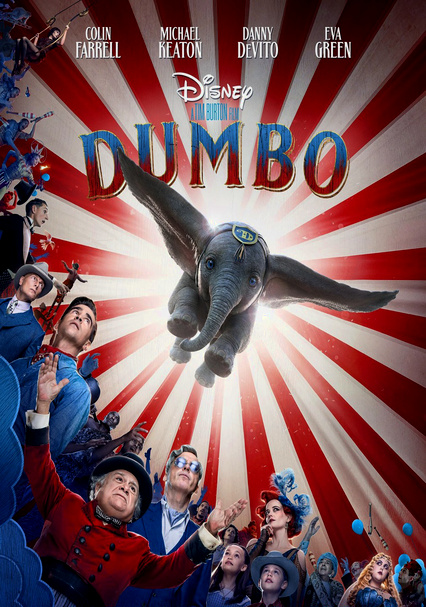
Dumbo-2019

Dumbo-2019

Director Tim Burton

Starring Colin Farrell, Danny DeVito, Eva Green

Scott’s Review #889

Reviewed April 24, 2019

Grade: C+

Dumbo (2019), the live-action remake of the charming and emotionally charged animated original from 1941, contains some positives but ultimately underwhelms, coming up with less than a stacked deck.

The problematic and gnawing element that persisted throughout the Disney film was its overly cute or child-leaning quality, which was not to my taste.

Nevertheless, for an afternoon at the theater with young children under the age of twelve, the film is a recommended and utterly appropriate activity for fun.

My expectation, knowing that Tim Burton was at the director’s helm, was for a darker, perhaps murkier interpretation, given some of his films in the catalog.

After all, Beetlejuice (1988) and Dark Shadows (2012), though flawed, contain some wicked charm and naughty humor. Dumbo is considerably softer as the director chooses a safe, more accessible path.

Creating magic from nearly eighty years ago is a challenging task for anyone to achieve.

World War I veteran and amputee, Holt Farrier (Colin Farrell) returns from the war to rejoin the financially problematic traveling circus owned by Max  Medici (Danny DeVito).

A widower, reunited with his two children, Holt is assigned to oversee the pregnant elephant, Mrs. Jumbo, as she gives birth to an unusual-looking elephant with giant ears who comes to be known as Dumbo.

The children discover that Dumbo can fly when aided by a feather, as the evil V.A. Vandevere (Michael Keaton) attempts to profit from Dumbo’s talents at any cost, adding to his fabulous creation, Dreamland.

The art direction and the look of the film are where Burton succeeds.

With dark, visually striking creations and intricate, spider-like sets, especially in Dreamland, the film bears the director’s unmistakable signature.  The costumes and styles are well-suited to the year 1919, and the wardrobe and hairstyles are in line with the times.

The circus stars and characters, from the fat lady to the exotic jugglers, are well-cast, adding good texture and multicultural flavor to the production.

The standout musical number is the poignant and sentimental “Baby Mine,” wisely featured twice during the film. Since the song is so lovely, this proves a bold move and my favorite part of what is otherwise a mediocre experience.

Sharon Rooney sings the version featured during a touching and painful scene between separated elephants Dumbo and Mrs. Jumbo, and the rock band Arcade Fire performs a different rendition over the end credits.

Anyone needing a good cry would be advised to check out the emotionally charged song.

While the acting among Farrell, DeVito, and Eva Green as Colette, the French trapeze artist who falls for the sexy Holt, is all admirable, two performances left me with critical fire. Keaton, typically a standout performer, goes full-throttle with an over-the-top and one-note performance as the villainous Vandevere.

Cartoon-like with herky-jerky head snaps and tic-like movements, the actor appears silly and ineffectual at creating any sort of robust character. Young actress, Nico Parker as Milly, Holt’s daughter, gives a dreadfully wooden performance in what could have been the film’s most likable character.

Besides one or two tender scenes the film largely goes for a cutesy vibe, not feeling fresh nor especially genuine. A Disney production, the film feels quite mainstream, lacking edginess, like the producers had dollar signs and major success on their minds over artistic merit or staying true to the original.

Other than a quick shot of the number “41” on the front of a train, a clear tribute to the animated original’s year of release, the remake strays very far from the first Dumbo with a few new characters and sadly no gossipy female elephants anywhere.

A disappointing offering, the live-action Dumbo (2019), the year’s first in a series of five expected Disney releases (Aladdin, The Lion King, Maleficent: Mistress of Evil, and Lady and the Tramp being the others) lacks much more than a couple of sweet scenes, an adorable elephant, and admirable sets, feeling utterly ordinary in flavor.

This is a misfire compared to the legendary, teary 1941 version of Dumbo.

Colette-2018

Colette-2018

Director Wash Westmoreland

Starring Keira Knightley, Dominic West

Scott’s Review #888

Reviewed April 20, 2019

Grade: B+

Colette (2018) is a French period drama and biopic based on the life and times of the novelist Sidonie-Gabrielle Colette.

The film is directed by Wash Westmoreland, who also directed Still Alice (2014), so the man is successful at creating a film from a strong female point of view.

With a prominent and cultured French style and sophistication, the film pairs well with and ultimately belongs to star Keira Knightley.

The glaring British accents, rather than French, and the formulaic approach bring the experience down a notch from grandeur in a film likely to be forgotten.

Knightley plays the title character, whose upbringing in a rural area of France is pleasant but hardly sophisticated and utterly country.

When Colette meets a handsome literary genius named Willy (Dominic West), successful but employing ghostwriters to fill his creative void, the pair marry and combine forces to create popular novels based on Colette’s naughty schoolgirl experiences.

The duo embarks on frequent dalliances with feminine and masculine women (Colette is bisexual) and faces the trials and tribulations of seesawing finances and competitiveness until their ultimate divorce.

Along the way, Willy and Colette enjoy the excesses of late nineteenth-century Paris.

Besides a few quick exterior shots of the Seine River and fabulous Parisian landmarks such as Notre Dame, the filming likely did not take place in France at all, though you’d never know it.

Both cozy and flamboyant scenes of Parisian eateries and lavish nightclubs, like the Moulin Rouge, and one wealthy socialite’s love nest, are featured, giving the film an authentic French flair.

The costumes are decadent, and stage shows with Colette and her partner crackle with daring artistic merit.

Knightley, a household name but still teetering on the brink of one definitive significant role, comes close with her portrayal of Colette.

Westmoreland is wise to climax the film with photos and a summary of the real-life writer and her husband.

If only the film had received marginally good reviews and achieved great reviews, then perhaps the actress might have secured an Oscar nomination, but alas, the opportunity was missed. Nonetheless, Knightley plays the role with delicious and naughty delight, sinking her teeth into a character who wants to live and have fun.

Despite the rich French flavor, Colette is marred by a jarring flaw: the actors all have English accents rather than French. All in favor of occasional suspensions of disbelief to elicit the desired effect or manipulation, it is assumed that Westmoreland decided, since most of the actors are British, to let the detail slide in favor of comfort with the language.

Perhaps this misfire is why the sets and locations are overcompensated and decorated in such lovely French style.

The story is formulaic and silly, to be honest, while Knightley and West share great chemistry. As Willy and Colette paint the town, they also have repeated misunderstandings or outbursts of rage and jealousy (mostly on her part) before deciding to accept and enjoy each other as they are.

Unfortunate is how, through the affairs and celebratory nights, Colette accepts her role as a ghostwriter to his name recognition, only to divorce and never see Willy again, based on his sale of the treasured Claudine series.

Hopeful was I for a happily ever after result.

A crisp and polished offering of the life and times of a complex and peculiar French figure Colette (2018) has its share of ups and downs.

Unknown how true to real life the story is, the acting is compelling and reaches a high point, while the cultural flavor is zestful and spicy.

The film may not be well remembered, but it is ultimately a success due to a few above-par qualities that outweigh the negatives.

Guys and Dolls-1955

Guys and Dolls-1955

Director Joseph L. Mankiewicz

Starring Marlon Brando, Frank Sinatra, Jean Simmons 

Scott’s Review #887

Reviewed April 19, 2019

Grade: B+

The interesting pairing of Marlon Brando and Frank Sinatra in the playful musical Guys and Dolls (1955) provides enough bombast and playboy inclinations to make the music lively and entertaining.

Though not one of my all-time favorites in the genre, the film keeps pace with a nice flow and hearty musical numbers, successfully transferring the Broadway show to the big screen with an endearing production.

Nathan Detroit (Sinatra) is a full-fledged gambler who lives and breathes the sport.

Although he is commonly criticized for his deeds, the police are clamping down on the shenanigans around town. He is desperate to obtain a deposit for the use of a secret venue that allows gambling.

Spotting acquaintance and fellow gambler Sky Masterson (Brando) the duo embark on a ridiculous and hilarious bet involving Sky’s invitation to dinner in Havana, Cuba with Sarah Brown (Jean Simmons) a devout religious figure and non-gambler.

Predictably, events spiral out of control with romance, misunderstandings, and charming musical numbers.

The setup is plot-driven but forgivable, given the fun involved. We are sure Masterson will fall head over heels for the missionary and seemingly unattainable Sarah.

Will he get the girl? Will she forgive him when she realizes what Masterson and Nathan have hatched at her expense? Of course, the fun is in the revelations as the film goes along.

Naturally, Nathan has his antics. He must marry his years-long intended, Adelaide (Vivian Blaine), because he lost a different bet.

The premise, plot, and conclusion all feel rather frivolous and chauvinistic in the modern world, as do many 1950s productions.

The film clearly shows a naughty guy meeting a good girl. The guy pursues the girl, gets her, and then rides into the sunset. The overall production is not cutting-edge or particularly progressive, but it is okay because of the fun and good chemistry among the characters.

Brando and Sinatra possess as much chemistry together as Brando and Simmons do.

The conclusion is satisfying and wrapped neatly like a tidy Christmas bow. To no one’s surprise, both couples tie the knot in beautiful style as all the misfires and misunderstandings end with a double wedding in Times Square, with Sky marrying Sarah and Nathan marrying Adelaide.

A perfect climax and a way to show the bright and bustling New York City amid a romantic backdrop can forgive any other weaknesses the film may contain.

What makes the film rise above standard fare and mediocrity as an overall piece is the wonderfully adorable tunes and the pairing of Sinatra a Brando.

The actor-turned-singer Brando and the singer-turned-actor Sinatra crackle with harmony as they play off each other in style.

The clap-along “Sit Down You’re Rockin’ the Boat” never fails to get any audience on its feet, and the clever “Luck Be a Lady,” a classic Sinatra standard, still resonates today.

The art direction, cinematography, costumes, and music all wrap the film together nicely, giving it a tight, well-muscled, extravagant feel with maturity and richness that is perfect for the decade in which it was released.

Guys and Dolls sits beside other musicals with a style all its own. A handful of Oscar nominations followed, though none were for the top honors of Picture or any acting nominations.

The 1960s brought a decidedly darker texture to cinema, leaving many 1950s films feeling dated or superfluous compared to more essential story directions.

While this is the case with Guys and Dolls (1955), there also exists an innocence in watching the pure and charming character relationships and the resulting fun and frolicking.

A lively musical score, the bright lights of New York City, and the unusual locale of Cuba make the film lovely entertainment.

Oscar Nominations: Best Scoring of a Musical Picture, Best Art Direction, Color, Best Cinematography, Color, Best Costume Design, Color

Golden Globe Nominations: 2 wins-Best Motion Picture-Musical or Comedy (won), Best Performance by an Actress in a Leading Role-Jean Simmons (won)

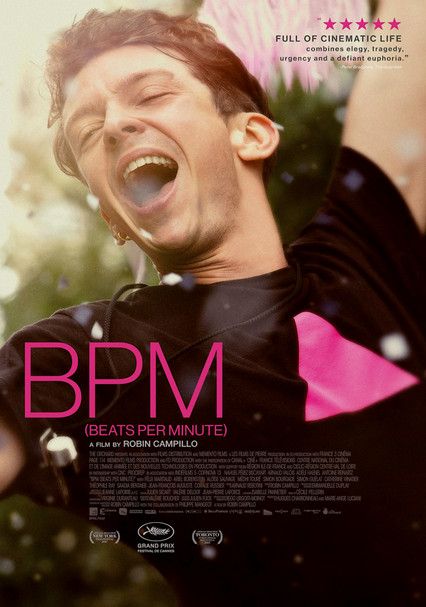
BPM (Beats Per Minute)- 2017

BPM (Beats Per Minute)- 2017

Director Robin Campillo

Starring Nahuel Perez Biscayart, Arnaud Valois

Scott’s Review #884

Reviewed April 11, 2019

Grade: A-

BPM (Beats Per Minute) (2017) is an exhilarating and heartbreaking film. It elicits emotional reactions such as empathy and empowerment and channels a potential life-saving cause.

Of French language and shot documentary style, the film is not an easy watch as the viewer is transplanted back to the early 1990s when the AIDS epidemic was ravaging the world in general and the gay community specifically.

A mixture of a community-oriented movement and a love story makes this project worthwhile viewing.

The immediate focal point of the story is an impassioned and aggressive Paris-based chapter of ACT UP (AIDS Coalition to Unleash Power), a unified gay and lesbian organization intent on speeding up the French government’s response to the unwieldy AIDS epidemic.

The group resorts to extreme public protests consisting of fake bloodthrowing and invading prominent pharmaceutical company meetings. They intend to get them to release trial results immediately instead of waiting until the following year.

The various debates and infighting in the chapter are heavily featured.

As the film progresses, BPM (Beats Per Minute) slowly shifts its focus from the protests to the personal lives of the ACT UP members as a romance brews between nineteen-year-old HIV-positive Sean (Perez Biscayart), who already exhibits visible infections from the disease, and HIV negative Nathan (Valois), a newcomer to the group.

The pair quickly become inseparable as Sean’s body becomes ravaged by the disease, resulting in a poignant and dire conclusion sure to elicit tears.

Director Campillo and co-screenwriter Philippe Mangeot drew on their personal experiences with ACT UP in developing the story, enriching the authenticity of the experience.

Despite being shot in the present day, the film feels genuine, with a 1990s feel and flavor. Though gorgeous and picturesque, the gray Parisian locales also portray a hint of sadness and bleakness.

As Sean gazes outside, we sense his fear and anguish. Through this character, Campillo and Mangeot provide personal stories that represent the plight of many at that time.

A particularly racy scene erupts approximately halfway through the film as Sean and Nathan’s love story takes center stage.

Foreign-language films are not known for shying away from nudity or sexuality as many American films do. As the impassioned pair make love for the first time, little is left to the imagination.

Despite the gratuitous nudity and the overt sexual tones, the duo’s relationship is not solely physical, and the audience will undoubtedly come to care for both men the way that I did.

The two-fold story is a wise choice, and the overall message that BPM (Beats Per Minute) presents is inspiring and a good telling of the LGBT community’s struggles at notice and inclusion during the 1980s and 1990s.

This point is both positive and negative. The story beckons back to a day in the community’s history, dripping with pain and loneliness, which is evident in the film.

The film is hardly a happy experience and quite somewhat a downer.

The film’s main drawback is its length. The story and principle points become redundant at nearly two and a half hours, causing the overall message to lose some of its thunder.

The constant bickering and debate among the ACT UP group become tedious to watch as fight and clash after fight and clash resurface repeatedly.

Though painful to experience and not very uplifting, BPM (Beats Per Minute) (2017) is an important film to view, given how far the treatments of HIV have progressed over several decades.

Not taking things for granted, a trip down memory lane for those alive during the epidemic is recommended.

For those fortunate enough to have missed the 1980s and the 1990s, the film is a necessary reminder of how life once was for the unfortunate victim of a devastating epidemic.

Independent Spirit Award Nominations: Best International Film

The Old Maid-1939

The Old Maid-1939

Director Edmund Goulding

Starring Bette Davis, Miriam Hopkins

Scott’s Review #883

Reviewed April 3, 2019

Grade: B-

Not one to dare criticize the legendary Bette Davis (would there be much to criticize anyway?), her starring turn in The Old Maid (1939) is not one of her best-remembered films through no fault of her own.

With compelling characters and a nice flow to a short one-hour and thirty-five-minute experience, the films suffer from too much melodrama and soap opera style overacting to warrant a sturdy recommendation.

The overwrought drama may have been riveting at the time of release, but now feels dated and dusty.

Davis portrays Charlotte, a modestly attractive young woman living in Philadelphia during the Civil War era. When her cousin Delia (Miriam Hopkins) discards her beau Clem Spender (George Brent) in favor of marrying another well-to-do man, Charlotte and Clem begin an affair that results in the birth of baby Tina.

When Clem is killed in battle, Charlotte opens a home for orphans as a way of hiding Tina’s illegitimacy.

As the years go by, Delia’s scheming results in Tina not knowing her birth mother, and Charlotte suffers away like an old maid yearning to confess the truth to Tina before the young woman marries.

The film’s highlight naturally is Ms. Davis, as she makes her character’s plight emotional and sympathetic.

Especially in 1939, the character is written as a strong and intelligent female with a will of her own. Davis portrays all qualities with passion and gusto, only adding to the perplexing, wishy-washy indecisiveness of the character.

Why does Charlotte go year after year, living under the same roof with her daughter but under the constant guise of only being her aunt and allowing Delia the title of the mother?

Charlotte is supposed to ensure that Tina receives a proper, upper-middle-class, respectable upbringing while being a part of her life.

The film does wonders to portray the roles of aunt and mother as opposites. As a teenager, Tina praises Delia while considering Charlotte matronly and dull as dishwater due to her overbearing and militant respect for rigidity.

Regardless, many facets of the story seem like plot setups to create drama and story points leading to vendettas and reoccurring conflict between Delia and Charlotte.

The fact that Charlotte is so strong and stoic on the surface is also a detraction as the audience is left frustrated over and over at the cousin’s decision not to tell the truth to Tina until the final scene when she is marrying a rich boy and even then, the scene is a disappointment.

The decision for Delia to adopt Tina at the age of twenty to finally allow her respectability and her fiancee’s parents’ approval is weak and story-dictated. The filmmaker attempts never to enable Charlotte any happiness or satisfaction, which is depressing, especially given Davis’s brash personality.

Despite the story issues, The Old Maid has some positives, including a well-dressed set and gorgeous costumes, as wedding after wedding occurs over the film’s twenty-year run.

The aging of the characters is also successfully done, specifically with Davis, as she goes from an impressionable youngster to graying and haggard over the years with good lighting and camera angles.

The Old Maid (1939) is a film of moderate interest as it includes some well-developed characters and a subject matter that might have been daring for the time.

The film, decades later, has a conventional slant and too many story plot setups better served for daytime television. The overall result is a too soapy style for much enjoyment but is saved by the graceful and powerful acting of Bette Davis, easily the best thing about the film.

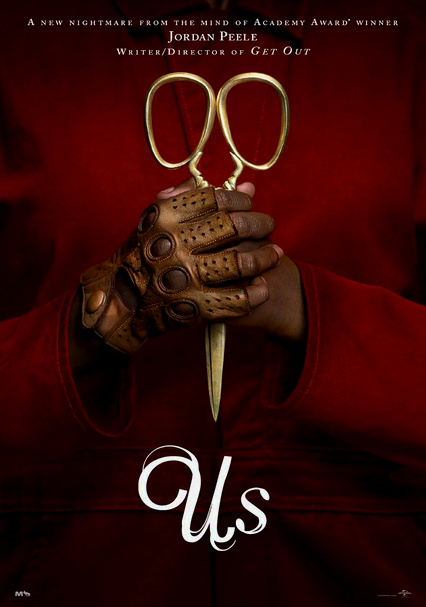
Us-2019

Us-2019

Director Jordan Peele

Starring Lupita Nyong’o, Winston Duke

Scott’s Review #882

Reviewed April 1, 2019

Grade: A

Hot on the heels of his critically acclaimed and shockingly Oscar-nominated horror film Get Out (2017), Jordan Peele does it again with an even more thought-provoking creation.

Us (2019) combines classic horror elements with macabre and insightful qualities, crafting an ambitious project that can be dissected and discussed at length following the climactic and psychologically perplexing ending.

One thing is for sure: Peele has earned his spot among the most influential and elite directors circling Hollywood.

The film begins in 1986 as an event entitled “Hands Across America,” a publicity campaign encouraging people to hold hands to create a human chain to fight hunger and poverty, gripped the United States.

Nine-year-old Adelaide Thomas goes on vacation to Santa Cruz, California, with her parents, only to wander off into a deserted house of mirrors.

When she meets her doppelganger, she is terrified beyond comprehension and requires therapy to resume an everyday life.

Events return to the present day as Adelaide (now played by Lupita Nyong’o) is married to Gabe Wilson (Winston Duke) with two young children, Zora and Jason. Coaxed into a weekend getaway to none other than Santa Cruz to visit their wealthy friends Josh and Kitty Tyler (Tim Heidecker and Elisabeth Moss), Adelaide is apprehensive about the trip with a dreading sensation that her doppelganger is returning to get her.

When a strange family dressed in red jumpsuits appears on Wilson’s driveway, the plot transforms in a bizarre direction, especially since the family looks precisely like the Wilsons.

Us is exceptionally layered and reminiscent of the expression “peeling back the onion” in analysis and discussion possibilities. For starters, a character thought to be one person is revealed to be another, causing the audience to spin into confusion and not know who they were rooting for or against all along.

The astounding questions are endless and, in Peele’s brilliant fashion, can be asked at different times during the film. Why do the doppelgangers exist? What do they want? What does Hands Across America have to do with anything? What do the rabbits symbolize?

One gruesome scene and a favorite is the barbaric scene when the Tylers are suddenly attacked by their doppelgangers, home invasion style.

Reminiscent of the infamous Charles Manson murders, the family is slain quickly and mercilessly as the audience is left agape at the brutal slaughter. So much happens in this scene, first and foremost is the realization that there are more doppelgangers than we initially thought.

To lighten the mood a bit, Peele adds morbid comic relief as the family’s voice-controlled Siri system misunderstands the dying victim’s plea to call for police and mistakenly plays “F#@$ the Police” by N.W.A. instead.

Nyong’o has the most opportunities to showcase her acting ability by tackling two very different types of roles. As Adelaide, she is kind, capable, and your typical suburban Mom, but as her doppelganger Red, she is grizzled and desperate with a dry, throaty voice filled with pain and defeat.

At first thought a villain, the audience eventually learns the complexities of Red’s story more clearly, and the Oscar winner delivers both parts with exceptional grace.

The supporting actors bring their characters to life with gusto, with special mention going to Duke and Moss. Duke’s character of Gabe contains inept humor, coming across as slightly incompetent and the typical goofball dad-type character.

Moss takes her one-note character of Kitty, a spoiled, never-made-it-as-an-actress whiner with a wealthy husband, and infuses naughty passion into her doppelganger.

As she playfully applies lipstick while coquettishly watching herself in the mirror, she soon gives the term “plastic surgery” a new definition as she curiously carves her face.

Peele delivers a treasure with Us (2019), and I salivate at the thought that the film is only the novice director’s second attempt. Not suffering from the dreaded sophomore slump, he is becoming a modern director whose works are more like events than mere film releases.

Quentin Tarantino is a director who has also achieved this status because his directorial style is vastly different from that of other directors. I cannot wait to feast on Peele’s next attempt.

Spider-Man: Into the Spider-Verse-2018

Spider-Man: Into the Spider-Verse-2018

Director Peter Ramsey, Rodney Rothman, Bob Persichetti

Voices Shameik Moore, Hailee Steinfeld, Lily Tomlin

Scott’s Review #881

Reviewed March 30, 2019

Grade: B+

There have been many film versions of Spider-Man.

To my recollection, the first series consisted of three installments, directed by Sam Raimi: Spider-Man (2002), Spider-Man 2 (2004), and Spider-Man 3 (2007), all starring Tobey Maguire in the title role.

These were the good old days.

Andrew Garfield took over in 2012 and 2014 to mixed reviews before the superhero was merged into Captain America and The Avengers films, as well as one or two additional solo outings. This is where I lose track.

Finally, through all the incarnations comes the very first computer-animated film based on the Marvel Comics character.

Spider-Man: Into the Spider-Verse (2018) was an enormous box-office success as well as a critical success, winning the coveted Best Animated Feature Oscar.

My choice would have been for the dark and sarcastic Isle of Dogs, but the former has impressive merits and grand animation that are astounding to the eyes.

Towards the climax, the film teeters into familiar and predictable territory from a story perspective, though admittedly, the superhero and animated genres are not my favorites.

Miles Morales is a Brooklyn teenager, bright, energetic, and likened to an average city kid. His father, Jefferson Davis, is a muscled policeman who is no fan of Spider-Man, the heroic masked man who prevents city crime, outshining the cops daily.

While close to his father, Miles is much more connected to his uncle, Aaron Davis, despite his father and uncle having a distant relationship.

When a hungry spider bites Miles, he immediately begins exhibiting Spider-Man-like abilities and stumbles upon others with similar stories.

The teen meets super-villain Wilson Frisk (a not-so-subtle Donald Trump parody if ever I saw one), who is intent on accessing a parallel universe to retrieve his deceased wife and son. Events involving a USB drive and the “real” Spider-Man, Peter Parker, also living in a parallel universe, come into play.

The overly complex story is not the best part of the experience, and I began to lose interest in the hows and whys, especially when compared to the escapist and marvelous, super-cool animations.

Spider-Man: Into the Spider-Verse deserves great praise for making the film’s central character ethnically mixed (Hispanic and Black), a first in the franchise’s history.

This diversity, evident in Black Panther (2018), is all the rage now in the superhero genre, along with gender equality, a slogan once deemed a “guy’s movie.”

This is a delight to witness, with hopefully even more of a slant towards richer diversity. Are Asian, gay, or physically impaired characters coming next?

The film looks fantastic, with creative and slick modern animation and graphics that never waver throughout the nearly two-hour running time, which is lengthy for an animated feature.

Styled and bright, the film’s most striking appeal lies in its colors, shapes, and sizes. The metropolitan New York City is a treat to witness, as the creators not only focus on Manhattan, but also on Queens and Brooklyn, boroughs that are often forgotten in favor of Manhattan’s glitz and bustle.

The clever re-titling of FedEx trucks to Red Ex is worthy of mention.

With its glitzy look, fast-paced action, and interesting villains, Spider-Man: Into the Spider-Verse (2018) is an impressive feat and a deep dive into the possibilities of combining the superhero and animated genres.

This is around the corner due to the critical, audience, and award notices that surround this film. If only the story contained more twists and turns and fewer standard genre-pleasing qualities, the possibilities would be endless.

Oscar Nominations: 1 win- Best Animated Feature Film (won)

Thoroughbreds-2018

Thoroughbreds-2018

Director Cory Finley

Starring Olivia Cooke, Anya Taylor-Joy

Scott’s Review #880

Reviewed March 26, 2019

Grade: B

Thoroughbreds (2018) is an independent dark comedy with snippets of creative filmmaking and an intriguing premise that loses steam towards the conclusion, closely mirroring too many other similarly themed indies.

An enjoyable geographical setting, but the lackluster, monotone dialogue never allows the film to stand out on its own and is therefore deemed unmemorable.

The lead actors are fine, but the experience falls short of raising the bar, suffering from an odd title that has little to do with the story.

Lily (Anya Taylor-Joy) and Amanda (Olivia Cooke) are former childhood friends whose differing levels of popularity have strained their relationship over the years. When Amanda’s mother pays Lily to socialize with Amanda under the guise of tutoring, Amanda catches on to the plot and confronts Lily.

This event brings the girls closer and, in a macabre fashion, they begin to hatch a scheme to plan the death of Lily’s stepfather, wealthy Mark (Paul Sparks), whom she perceives as abusive.

It is revealed via flashback that Amanda euthanized her crippled horse to spare his suffering which resulted in animal cruelty charges.

The setting of affluent Fairfield County, Connecticut, and presumably wealthy Greenwich is a high point of the film and an immediate comparison to the 1997 masterpiece, The Ice Storm.

Bored rich kids who perceive themselves to shoulder all the world’s problems, while subsequently attending the best boarding school imaginable, is delicious and a perfect starting point for drama and intrigue.

Lily’s domineering stepfather and her passive and enabling mother are clever additions without making them seem like caricatures.

The dynamic between the girl characters is intelligently written and believable, especially as they crack witty dialogue with each other. Lily is academic and stoic, humorously said to suffer from an unnamed condition that prevents her from feeling or showing any emotion.

Amanda is the perfect counterbalance as she is sarcastic, witty, and serves up one analytical observation after another.

From a physical perspective, the statuesque Lily is believable as the more popular of the two and the perceived leader.

As the girls elicit the participation of local drug dealer Tim (Anton Yelchin) into their plans, at first voluntary and ultimately by blackmail, the plot takes a turn for the formulaic and the redundant.

The setup seems too much like a standard dramatic story arc and becomes clichéd as the once-willing participant is subsequently thrust into the scheme. There are no romantic entanglements between the three main characters, and subsequently, there are no characters to root for, one strike against the film.

Otherwise, the “been there, done that” monotone dialogue has become standard in dark comedies so that in 2018, the element seems dated and a ploy to develop offbeat characters.

Director Cory Finley borrows heavily from fellow director Wes Anderson (The Royal Tenenbaums, 2001, and The Moonrise Kingdom) in this regard, so that the freshness of the characters and story wears thin mid-stream.

The title of the film could be better, as a quick scene featuring Amanda and a horse at the beginning, and a brief mention of horses in a dream by one character, is all there is about the animals.

I expected more incorporation between animal and human, or at least a more poignant connection.  The privileged lives of Lily and Amanda seem a perfect correlation to bring horses into the central story in a robust way.

Finley is on the cinematic map, crafting an effort that proves he possesses some talent and an eye for a wicked and solid offering.

Thoroughbreds (2018) represents a film like many others in the same genre that rises to the top of the pack, but it is not without merits and sound vision. It will be interesting to see what this up-and-coming director chooses for his next project.

Independent Spirit Award Nominations: Best First Screenplay

An American Dream-1966

An American Dream-1966

Director Robert Gist

Starring Stuart Whitman, Janet Leigh, Eleanor Parker

Scott’s Review #879

Reviewed March 19, 2019

Grade: C-

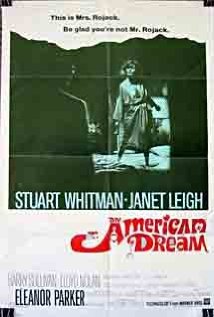
An American Dream (1966) is a film version of the Norman Mailer novel of the same name. Directed by Robert Gist, the cast includes Stuart Whitman, Janet Leigh, and Eleanor Parker, who do what they can with mediocre writing, uneven pacing, and an unsatisfying ending.

The roles suffer from miscasts and misfires. The film plays more like an episodic television detective show or a darker version of a television movie than a compelling feature.

Except for one terrific high-rise scene, the film is essentially a waste of time.

Stephen Rojack (Whitman) is a decorated war hero who returns to Los Angeles to become a journalist. He publicly criticizes the police for failing to accost a known crime lord named Ganucci (Joe De Santis), which angers the mobster.

Simultaneously, Rojack’s alcoholic wife, Deborah (Parker), flies into a drunken rage when he asks her for a divorce, resulting in her toppling from a swanky high-rise to her death. Riddled with guilt, Rojack resumes a relationship with his former girlfriend and Ganucci’s ex, Cherry (Leigh).

The best scene is the intense confrontation between Rojack and Deborah. The sweeping, expansive balcony and the open-air locale overlooking dazzling Los Angeles should be a significant clue that something dire will transpire, especially as Deborah is drunk beyond belief and filled with fury.

Her lavish apartment is adequately decorated in the latest 1960s style, giving the scene a plush sophistication. The vicious death scene is wonderfully done as the woman not only falls to her death but is subsequently run over by a car, adding insult to injury.

The scene is also the crux of the entire film.

Harboring the thrill of the climactic scene, however, is Parker’s jarring, overacting performance, making Deborah appear crazed and animal-like. The display is understood as making the character unlikable and unbalanced- the hunky gigolo in her bed also makes her unsympathetic-but the cartoon acting seems amateurish and beneath the fabulous actress.

Remember, this is the same woman who created the sophisticated and memorable character of the Baroness in The Sound of Music (1965).

The premise of the film is illogical and unbalanced as, to my eyes, it appears Deborah falls to her death accidentally, but the reasoning of the film portrays Rojack as riddled with guilt for causing her death.

He even admits his guilt to her father in one scene. His claim to the police that Deborah committed suicide is, of course, untrue, but the unnecessary guilt seems implausible and too much of a stretch at creating the main plot point.

The most significant negative aspect of An American Dream is Janet Leigh’s casting as Cherry. Wearing an unappealing and silly wig, the Hollywood star seems unbelievable and just wrong as a mob girlfriend.

Her soft features and petite frame do not fit the part, and her lip-syncing of the Oscar-nominated theme song “A Time For Love” does nothing to elicit credibility from either the character or the actress.

When An American Dream bombed at the box office, desperate distributors retitled the film See You in Hell, Darling, but to little avail. Reducing it to weekday airings on television did nothing to change the image of a low-budget, made-for-television style look or the episodic detective tint.

The intended perception of a horror film is a strikeout, as the experience is more like a tepid thriller.

For fans of Janet Leigh, An American Dream is not recommended.

The preferred suggestion is to skip this one and delve into other gems, such as the legendary Psycho (1960) or Touch of Evil (1958).

An American Dream (1966) doesn’t utilize the legendary actresses’ talents. It is a forgettable film that is best left in the bargain bin.

Oscar Nominations: Best Original Song-“A Time For Love”

Bunny Lake Is Missing-1965

Bunny Lake Is Missing-1965

Director Otto Preminger

Starring Keir Dullea, Carol Lynley

Scott’s Review #877

Reviewed March 13, 2019

Grade: B+

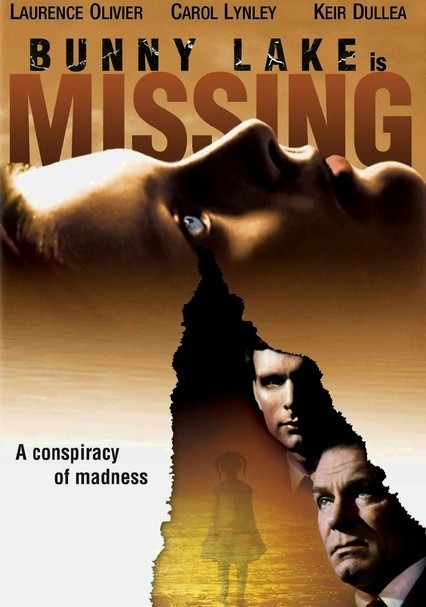
Bunny Lake Is Missing (1965) is a taut psychological thriller that feels fresh and unpredictable, containing a mysterious, almost haunting quality throughout its running time.

The film focuses on one big question: Is the main character’s interpretation of events real or imagined? The uncertainty makes the film intriguing to watch. Glimpses of London locales also make for fun viewing, as the chaotic and creepy children’s school is the film’s primary location.

Though not remembered well, the film is still worthy of a watch.

Ann (Carol Lynley) is a single mother recently transplanted to London with her well-kept brother Stephen (Keir Dullea). When she hurriedly drops off her unseen daughter, Bunny, at her new preschool and instructs the school cook to watch her, the girl soon disappears.

When the police were called to investigate, they discovered nobody on staff had any eyes on the young girl. The plot thickens when it is revealed that all of Bunny’s belongings have been removed from Ann’s residence and that Ann had an imaginary childhood friend named Bunny.

Has Ann concocted the entire scheme herself for attention, or could she be harmful or psychotic?

The film offers several subtle nuances that either work or do not work. The opening credits are a lesson in cinematic creativity as the words present as slivers of paper torn down the middle.

Though the musical score during this sequence is not necessarily eerie, the complexity and ferocity present an ominous and certainly intriguing element.

This point is a wise move because it sets the tone for such a thriller as the film presents itself.

Otto Preminger’s black-and-white style is upbeat, enhancing the overall look of the picture. The muted tones evoke an effective ghost story style with an ambivalent chilling technique.

As the mystery is ultimately resolved, the introduction of new and peculiar characters offset the tangled plot as the look of the film remains constant.

As Horatio Wilson, Ann’s landlord, and Martita Hunt, the retired school headmistress, Noel Coward lives in the attic, which does wonders for adding creepy ch. Butters, but are they meant to be red herrings or keys to the big reveal?

A few gripes are that incorporating the English rock band The Zombies serves little purpose, and the addition is perplexing.  I’m not opposed to the band’s music, but the songs have nothing to do with the plot.

Seen on the television during a pub scene and later heard on a janitor’s radio during an escape scene, the odd placement seems little more than a marketing tool product placement.

Another miss is with the casting of Sir Laurence Olivier as Superintendent Newhouse. His talents are wasted mainly with little more than a throwaway role despite arguably being considered the lead.

As the straight man handling the investigation, his performance is adequate but limited, especially given his Shakespearean stage actor talents. His performance is both phoned in and beneath the historic actor.

The other roles are well-cast, especially Lindley and Dullea in key parts. For the film’s first portion, I assumed the pair were husband and wife until it was revealed otherwise, which is a lovely, unexpected nuance. Their chemistry is sweet and easy, and both perform their respective roles with poise and charisma.

1965, both were relatively novice young actors on the brink of stardom, though sadly short-lived. Their acting chops are firmly in place with this film, which is fun to witness.

For fans of psychological thrillers with an implied ghost story enveloped within its clutches, Bunny Lake Is Missing (1965) is worthy and mysterious entertainment with a surprise ending.

The film is not stellar, with some weaknesses, and is less than a pure classic, reminiscent of a good, solid Twilight Zone television episode.

On the Waterfront-1954

On the Waterfront-1954

Director Elia Kazan

Starring Marlon Brando

Scott’s Review #876

Reviewed March 9, 2019

Grade: A

Led by one of the best acting performances of all time, On the Waterfront (1954) was an essential and relevant film when it was made and remains influential today.

Director Elia Kazan and newly minted Hollywood star Marlon Brando collaborate on a film spectacle as much a character study as a tale of morality and social injustice.

The musical soundtrack score composed by Leonard Bernstein only enhances an already astounding picture that is deservedly referenced as a masterpiece.

Terry Malloy (Brando) is a washed-up former local boxer who now spends his days slaving away as a dockworker on the dingy waterfronts of Hoboken, New Jersey.

Terry’s brother Charley (Rod Steiger) works for a vicious mob boss, Johnny Friendly (Lee J. Cobb), who controls the area.

The police are aware of the ongoing corruption, but are limited by the lack of evidence and witnesses in routine crimes. When a fellow dockworker is killed, Terry falls for the victim’s sister, Edie (Eva Marie Saint), leading him to rethink his priorities.

The positive aspects of On the Waterfront are numerous. Meritful cinematography and location sequences, anchored by a rich story and flawless acting, lend the film authenticity.

The film was shot almost entirely on location in New York and New Jersey, using actual docks and outdoor sequences.

The dingy, water-soaked locales are riddled with secrets and dark violence, heightened by realism and grittiness.

Never looking more masculine or more handsome, though his portrayal of Stanley in A Streetcar Named Desire (1951) is a close second, Marlon Brando achieves riches in the world of stellar acting.

He is rugged yet compassionate, macho yet tender, and pours his heart into the role of Terry. One cannot help wondering if the self-professed method actor became Terry during filming.

With both vulnerability and strength, Brando embodies the character so well that he has become my favorite of all the film roles he has undertaken.

The supporting players dutifully flesh out the resounding cast with gusto.

Special mentions go to Karl Malden as Father Barry and Steiger as Charley. Like Barry, Malden brings warmth, patience, and benevolence in a world of crime and deceit. He attempts to console and mentor the folks in his world and is eventually beaten for his honesty and earnestness.

Charley is a different story, selling his soul to the devil and accepting the cards he has been handed, choosing to join with Friendly. At a crucial moment, he makes another devastating choice that changes his life forever.

Few films can proudly boast a scene or dialogue that remains timeless and imprinted on cinematic history, but On the Waterfront contains a scene of this caliber.

During a tremendously important moment in the film, Terry has a conversation with Charley and makes an impassioned statement-“I coulda’ been somebody. I coulda been a contender”, laments Terry to his brother, “Instead of a bum, which is what I am – let’s face it.”

This line is a historic piece of writing and is true to the character.

The film is more powerful and truthful because it represents Elia Kazan’s real-life plight. In the early 1950s, the director famously informed a government committee about suspected Communists, while many of his colleagues chose to go to prison rather than name names.

Many Hollywood actors, directors, and screenwriters were blacklisted for decades. On the Waterfront is frequently deemed an allegory to the director’s plight and is a personal story.

On the Waterfront (1954) is sometimes violent and always realistic, painting a portrait of one man’s struggle to overcome the lousy life he’s been given and do the right thing.

Thanks to gorgeous direction, an explosive lead performance by Brando, and all the pieces fitting perfectly in unison, the film is one of the greats and will remain one that generations will discover.

Oscar Nominations: 8 wins-Best Motion Picture (won), Best Director-Elia Kazan (won), Best Actor-Marlon Brando (won), Best Supporting Actor-Lee J. Cobb, Karl Malden, Rod Steiger, Best Supporting Actress-Eva Marie Saint (won), Best Story and Screenplay (won), Best Music Score of a Dramatic or Comedy Picture, Best Art Direction, Black-and-White (won), Best Cinematography, Black-and-White (won), Best Film Editing (won)

Golden Globe Nominations: 4 wins-Best Motion Picture-Drama (won), Best Director-Motion Picture-Elia Kazan (won), Best Performance by an Actor in a Motion Picture-Drama-Marlon Brando (won), Cinematography-Black and White (won)

Singin’ in the Rain-1952

Singin’ in the Rain-1952

Director Stanley Donen, Gene Kelly

Starring Gene Kelly, Donald O’Connor, Debbie Reynolds

Scott’s Review #874

Reviewed March 4, 2019

Grade: A-

Singin’ in the Rain (1952) is most closely associated with the entertainment industry in the oversaturated field of musicals released during the mid-twentieth century.

The transition from silent pictures to “talkies” is the basis of the story, giving the film important, as well as fun, subject matter.

Likable stars and sing-along tunes make the film memorable and decidedly All-American, though it may not be the greatest in the crowded musical field.

During the late 1920s, Don Lockwood (Gene Kelly) was a famous and well-regarded silent film star. His co-star and studio-created romantic attachment is Lina Lamont (Jean Hagen), an annoying and shallow leading lady with a harsh singing voice.

As more successful “talkies” (films with sound) are produced, Don finds himself smitten with musical chorus girl Kathy Selden (Debbie Reynolds). The plot to dub Lina’s voice with Kathy’s leads to comical chaos and the idea of creating a new musical amid a blossoming romance between Don and Kathy.

The fun and frolicking Singin’ in the Rain is lightweight but never silly or superfluous, thanks to its overriding message about the shift in Hollywood priorities.

Critically acclaimed from the get-go, this is unsurprising, as Hollywood loves stories about Hollywood, especially since the film was made just over two decades after sound-laden films overtook the world.

Furthermore, in 1952, television was making its debut to legions of fans, and its accessibility posed a serious threat to cinema, making the subject matter even more relevant.

Kelly and Reynolds make a nice enough pair, but I never thought they completely knocked it out of the park in terms a chemistry.

One slight flaw is the lack of hurdles that would prevent the couple from an inevitable union. Lina is the transparent foil and ultimately played for laughs, so she is not a serious threat.

The plot-driven conflict involving Kathy’s initial dislike of Don because she values stage over film is cute, but it ultimately proves a sham, as she has been a fan of his all along.

The musical is a comedy, but better hurdles might have made for a more interesting story.

Nonetheless, Singin’ in the Rain is a pleasure and a largely non-threatening experience. The hijinks as the characters struggle to put on their production are comical, and Lina’s New York accent and shrill singing voice threaten to steal the show from the more grounded central characters.

The musical numbers are a dream, and I especially like favorites like “Make ‘Em Laugh,” “Good Morning,” and the epic title song.

Through no fault of the film’s title, “Singin’ in the Rain” will forever be associated with the dark and cerebral A Clockwork Orange (1971) for me, not with the film. As the villain beats and rapes his victim by cheerily singing this tune, the song will forever hold a much darker association for me.

The dramatic final act is the highlight as a lavish premiere of The Dancing Cavalier is unveiled to a live theater audience hungry for something good.

When the crowd chomps at the bit for Lina to perform live, the big reveal of Kathy being the truly talented singer is displayed as the wizard in The Wizard of Oz style, as Don and Kathy kiss and ride off into the sunset together in a grand showbiz fashion.

In the crowded genre of the 1950s and 1960s musical productions that ravaged American cinema at the time, I mainly chose to watch West Side Story (1961), Gypsy (1962), The Sound of Music (1965), and Oklahoma! (1955) for pleasure, but Singin’ in the Rain (1952), an earlier gem, is worthy of value, especially for the memorable musical soundtrack it offers.

The story is light but also relevant and, most importantly, highly entertaining.

Oscar Nominations: Best Supporting Actress-Jean Hagen, Best Scoring of a Musical Picture

Golden Globe Nominations: 1 win-Best Motion Picture-Musical or Comedy, Best Performance by an Actor in a Motion Picture-Musical or Comedy-Donald O’Connor (won)

Sudden Fear-1952

Sudden Fear-1952

Director David Miller

Starring Joan Crawford

Scott’s Review #873

Reviewed March 3, 2019

Grade: B+

Sudden Fear (1952) is a gripping film noir thriller. The genre became commonplace in the early 1950s.

The film rose to lofty acclaim due to the casting of legendary Hollywood star Joan Crawford in the lead role. Her performance led to an Oscar nomination and is the main draw.

Sudden Fear suffers from cliches but is otherwise a solid watch, although largely forgotten.

Crawford stars as Myra Hudson, a successful Broadway playwright who rejects the suave and handsome Lester Blaine (Jack Palance) after he auditions for the lead role in her play.

Later, they coincidentally meet on a train bound for San Francisco, where Lester manages to sweep the mature woman off her feet.

When Myra impulsively marries Lester, his true intentions to manipulate and then kill her to inherit her money are revealed.

The suave Myra uncovers the plot and instead plans to kill Lester and place the blame on his scheming former girlfriend, Irene (Gloria Grahame).

As a rabid fan of Ms. Crawford and her talents, I lean towards the film being exclusively hers. With her expressive eyes and mannerisms, the role is tailor-made for her and not too far from the role she would later play in What Ever Happened to Baby Jane? (1966).

As a strong yet beleaguered character, Myra has been unsuccessful in the romance department. After a glimmer of hope, she is devastated to realize she is being played for a fool.

Thanks to Crawford, her pain and humiliation are palpable, and her subsequent paranoia is believable without overacting too much for effect.

Palance and Grahame are okay in their respective supporting roles, but Crawford outshines them, or the script becomes banal.

Regardless, the roles are one-note and not the best of either actor’s career.

The characters have little rooting value; we know their motivations and shenanigans from the start.

The conclusion delivers a satisfying demise for each one, with their comeuppance in perfect form.

From a plot and pacing perspective, the film is never dull and features many twists and surprises that will undoubtedly keep audiences engaged. The action moves in stellar form and never tires as the viewer anticipates an incredible ending.

The final chapter is fraught with chase scenes throughout the streets of San Francisco. A terrified Myra runs through the streets, clad in a black coat and a white head shawl, wearing high heels, while being chased by a crazed Lester.

Sudden Fear adds clever camera angles and cinematography, making it slightly left-of-center and creative-looking, with cool shadows throughout.

Elements of Hitchcock emerge as a shaky hallway scene featuring a lumbering Lester who approaches the camera. Close-ups of the actors and the illuminating black-and-white lighting give the film a glowing look.

Shots of a gun, a pendulum swinging representing a clock, or a bottle labeled “poison” add elements of tension.

For fans of the illustrious Joan Crawford, Sudden Fear (1952) is a recommended watch and will please those seeking a good helping of the star. She does not disappoint and is the main draw in an otherwise by-the-numbers genre film.

The film’s conclusion is the high point, and while I wish Palance and Grahame had provided more layers and character development, Crawford shines in an otherwise forgotten offering.

Oscar Nominations: Best Actress-Joan Crawford, Best Supporting Actor-Jack Palance, Best Cinematography, Black-and-White, Best Costume Design, Black-and-White

Golden Globe Nominations: Best Performance by an Actress in a Motion Picture-Drama-Joan Crawford

A Christmas Carol-1951

A Christmas Carol-1951

Director Brian Desmond Hurst

Starring Alastair Sim

Scott’s Review #871

Reviewed February 26, 2019

Grade: A

A Christmas Carol (1951), released under the American title Scrooge in Great Britain, is another film adaptation of Charles Dickens’s world-famous 1843 novel.

This version seems the popular favorite, historically shown on television around the holidays.

Alastair Sim is perfectly cast as the curmudgeonly Scrooge with the eventual endearing qualities in this earnest and incredible seasonal effort.

Set in bustling London, a fabulous setting for any Christmas film, the story gets off to a resounding start with Dickens’ words being narrated, subsequently presenting a faithful tribute to the book.

The brooding Ebenezer Scrooge (Sim) angrily leaves the London Exchange on Christmas Eve, eager for a quiet night at home. He begrudgingly gives his clerk, Bob Cratchit (Mervyn Johns), the day off to spend with his low-income family. He bemoans the holidays as humbug to fellow wealthy businesspeople he encounters.

Scrooge embarks on a strange journey at night when he is visited by his deceased business partner, Jacob Marley (Michael Hordern). Shackled in chains, he is doomed to walk the earth clad, representing his greed during his living years.

He warns Scrooge to repent or suffer the same fate as he is visited by three ghosts representing chapters of his life: The Spirit of Christmas Past, the Spirit of Christmas Present, and the Spirit of Christmas Yet to come.

The first two ghosts are more benevolent, and the third is mysterious and frightening. They take Scrooge on a dim journey through what will happen after he dies.

The centerpiece that makes A Christmas Carol work so well is its star, Alastair Sims. Hardly handsome, the actor is perfect in the role, offering relish with his irritated facial expressions and untamed white locks. As he dismisses a server at the realization that he will be charged extra for more bread, the penny-pinching Scrooge is in fine form, as only Sims can be.

Later, his cleaning lady assumes Scrooge has lost his marbles as he frolics about gleefully in his bedclothes, raising her salary beyond comprehension. He is a changed and jolly man.

Sims plays this range of emotions with relish and truthfulness.

The cinematographers work wonders, creating a magical London set drizzling with celebratory facets. With eons of pure white falling snow and streets filled with young Christmas carolers and city people, the film offers a great feel.

With the Cratchit household modest yet filled with holiday cheer, the film gives the audience the right blend of sentimentality and spirit, never turning into schmaltz.

The result is a richly produced film with a small budget, proving that a robust budget does not equal greatness.

Rated G, the film has a few dark moments but is tailor-made mainly for an all-ages audience. This undoubtedly is a testament to its success and staying power.

Neither a musical nor too heavy in the drama field, the pacing is perfect, and the story builds throughout the running time. After many decades, most viewers will be familiar with the conclusion, an enchanting character turn that is always wonderful to witness with joyful glee.

A Christmas Carol (1951) is a legendary film with crackle, spark, and a compelling atmosphere, leaving adoring fans looking forward to more each season.

For an interesting contrast, a suggested companion piece is the aptly titled Scrooge (1970) starring Albert Finney, a musical version of the same story.

Watched in tandem or even traded off, these two similar yet different creations offer interesting perspectives, both enchanting and celebrating the human spirit.

First Reformed-2018

First Reformed-2018

Director Paul Schrader

Starring Ethan Hawke, Amanda Seyfried

Scott’s Review #870

Reviewed February 22, 2019

Grade: B+

First Reformed (2018) is a dark, independent film that has received a great deal of buzz for the raw and daring risks it takes and the brave performance by its star, Ethan Hawke.

Directed by the same man who wrote the screenplay for Taxi Driver (1976), Paul Schrader, the film is a character study of one man’s efforts for benevolence and normalcy after experiencing insurmountable tragedy. He wrestles with his demons and questions his faith in the church.

The film is a heavy, raw drama, and not for those looking for a feel-good experience.

Reverend Ernst Toller (Hawke) is an alcoholic, residing in bleak and barren upstate New York, presumably near Buffalo. He serves as a Protestant minister at a historically significant yet sparsely populated church.

Another, more modern congregation takes over the establishment with a large following. Ernst has recently been dealt a significant blow with the death of his son in the Iraq War after encouraging him to enlist.

When Mary (Amanda Seyfried), a young pregnant woman, asks Ernst to guide her radical and troubled husband, Ernst’s life spirals out of control.

Ernst is determined to keep a journal for precisely one year and then subsequently burn it. He chronicles his feelings, thoughts, and doubts as narrated by Hawke. Schrader, who directed and wrote First Reformed, succeeds at making the film feel personal and conflicted.

He creates a quiet experience, masked by underlying turmoil and even a suffocating existence. Ernst’s angry protege is an environmentalist determined to change the minister’s views and succeeds in pointing out life’s hypocrisy.

The season is winter, and the elements are cold and depressing in First Reformed. From the crisp air and the clutching small-town grasp, Schrader makes the audience feel stifled, so we relate to Ernst, even though we may not share his views or beliefs.

He is a kind man, helpful, and even-keeled, but wrestles with constant demons.  Despite his role as a minister, what the film does well is resist carving a traditional tale of religious conflict or even questioning Ernst’s sexuality.

The film is set in a much darker context and doesn’t focus on a single theme.

Where Schrader loses me is with Ernst’s questionable actions, which sometimes come out of left field. The conclusion is both perplexing and unsatisfying.

As the character prepares for a desperate act of brutality, indeed a shock for the audience who has him figured out, he suddenly changes course due to the appearance of Mary. They embrace, and the film ends, but what are his intentions towards Mary? He is fond of her, but are his feelings pure friendship or something more emotional?

Sadly, we never find out, nor do we know, where he channels all of his feelings from.

Hawke’s dynamic portrayal of Ernst is never better. The supporting characters lack much appeal or interest. Mary is nice enough but is a tad clingy, and her numerous requests to talk or have Ernst come by to visit get tedious.

Seyfried does what she can with the role, but is the second banana.

Cedric the Entertainer as Pastor Joel Jeffers lacks appeal, and the dowdy character of Esther, meant to be a potential love interest for Ernst, is instead bothersome and portrayed as a pest.

First Reformed (2018) has shades of appeal, and the main character is well-substantiated and deep, but ultimately, the film does not come together as well as it might have.

The finale underwhelms, and after the significant buildup to the character’s changing thoughts and motivations, too much was left unclear. Schrader deserves props for attempting to create an edgy experience with a unique and daring character, but could have wrapped the film up in a tidier way.

This would have served the film better.

Oscar Nominations: Best Original Screenplay

Independent Spirit Award Nominations: Best Feature, Best Director-Paul Schrader, Best Male Lead-Ethan Hawke (won), Best Screenplay

Oscar Nominated Animated Short Films-2018

Oscar-Nominated Animated Short Films- 2018

Directors Alison Snowden, David Fine, Domee Shi, Becky Neiman, Louise Bagnall, Nuria Gonzalez Blanco, Andrew Chesworth, Bobby Pontillas, Trevor Jimenez

Scott’s Review #869

Animal BehaviourBaoLate AfternoonOne Small StepWeekends

Reviewed February 18, 2019

Grade: A

It was amazing to have the honor of viewing the five short films nominated for the 2018 Academy Award for Best Animated Short Film at my local art theater.

Far too often dismissed as irrelevant or completely flying under the radar of animated offerings, it is time to champion these fine little pieces of artistic achievement.

Each of the five offers a vastly different experience, on par with or even superseding the full-length animated features. Still, each offers inspired or hopeful messages or dark, devious, and edgy stories.

The commonality this year is that four of them feature parent-child relationships.

Below is a review of each of the shorts.

Animal Behaviour-2018 (Canada)

The weirdest in the group, Animal Behaviour, is also the most humorous and the best, but only by a narrow margin.

We witness a therapy session led by a prim and proper dog with his issues. In attendance are a blood-sucking leech, a praying mantis, a cat, a pig, and the newest attendee, a gorilla. All are happy to participate except the gorilla, who sees the session as a waste of time.

As eating jokes, butt jokes, and other adult humor encases the camaraderie each character develops a clear identity and the gorilla learns, in comedic fashion, that he does require therapy.

This short plays out like an intelligent television sitcom. Grade: A

Bao-2018 (USA) (Won)

The most mainstream of the contenders, Pixar’s creation Bao, is cute and heartwarming and an ode to motherhood.

A perfect Mother’s Day offering, the story tells the tale of a Chinese mother who imagines one of her delicious dumplings as her son. She takes him to soccer practice and rides the bus together, but they are inseparable.

As the dumpling matures, he wants to be alone, see friends, and eventually meets a young woman and proposes marriage. The mother is aghast and, in a state of panic, swallows the dumpling!

Depressed, she is awakened by her real son, and the two form a sweet bond made from respect and love. The story is blooming with colors and nuanced with kindness, so it is easily the crowd favorite. Grade: A-

Late Afternoon-2018 (Ireland)

Some will undoubtedly find Late Afternoon a bit of a downer, but I found its honesty uplifting and fraught with creativity. Each afternoon, a caring nurse visits an older woman suffering from Alzheimer’s disease. The nurse is kind, and her actions—serving a hot cup of tea or giving the woman a book to read—trigger memories of her youth with so much promise lying ahead of her.

Eventually, she can recognize that the nurse is her daughter.

The short is filled with compassion, and while melancholy, it is also inspiring, not to mention the creativity immersed in the colors and design. Grade: A

One Small Step-2018 (USA/China)

The most conventional in the lot, One Small Step, will be perceived as empowering to women and a story of both loss and courage.

A Chinese-American girl is raised by her patient and caring single father in California. She is taught to reach for the stars, and he kindly repairs a shoe of hers and secretly stores it away.

Over the years, she has been determined to become an astronaut. While she loves her father, she often takes him for granted. She is denied admission into a prestigious school and, depressed, gives up her dream.

When her father dies suddenly, the girl redoubles her efforts and finally becomes a successful astronaut in dedication to her father.

The short champions energy and a never-give-up attitude. Grade: A-

Weekends-2018 (USA)

Weekends is my second favorite of all the shorts, a bare runner-up to Animal Behaviour.

The most complex and confusing, the short also features the most interesting hand drawings and artwork with a surreal and beautiful touch.

A child of divorce spends his weekdays with his mother and weekends with his father. His mother is depressed and lets the house languish while his father lives a metropolitan bachelor-style life.

When the mother begins dating an abusive man, the boy is terrified, imagining birthday candles that turn into the frightful man. The mother wears a neck brace, which implies physical abuse.

The short is moving and hits home on a personal level. Grade: A

Welcome to my blog!1,552 reviews posted so far! I'm Scott Segrell and I reside in Stamford, CT. My site features hundreds of film reviews I have written since I launched the site in 2014. I hope you enjoy reading my latest reviews or searching for your own favorites to see if we agree. Please see my Recent Posts section, and don't forget to utilize the tags and category links.