Tag Archives: Norma Varden

The Sound of Music-1965

The Sound of Music-1965

Director Robert Wise

Starring Julie Andrews, Christopher Plummer

Top 250 Films #18

Scott’s Review #49

60001917

Reviewed June 20, 2014

Grade: A

The Sound of Music (1965) is a film that almost everyone has seen multiple times. It is undoubtedly ingrained in most people’s childhood memories, especially around the holiday season, and is a treasure to watch.

It is tough to be objective, as I’ve probably seen the film dozens of times and continue to appreciate and love it with each repeated viewing.

Maria (Julie Andrews) is a pretty, young, free-spirited woman living in the gorgeous hills of Austria. We first meet her on a lush hilltop where she sings with the birds and enjoys life.

While very popular with other nuns, she does not quite fit in at the Nonnberg Abbey, where she studies to become a nun. She is sent to discover herself as the governess of seven nearby children. They are the children of well-known and now-retired Georg von Trapp (played by Christopher Plummer).

Since his wife died, no life or music exists inside the house. Maria brings life and music to all, transforming everyone’s existence into a happier one. The threat of the powerful Nazis wishing to recruit a disapproving von Trapp adds tension.

Maria and the von Trapp family fall madly in love.

As a musical, it is top-notch and is the hallmark of all musicals. The songs are challenging to get out of one’s head (“The Sound of Music,” “Climb Ev’ry Mountain,” and “My Favorite Things” are personal favorites), but the list of gems goes on and on.

The political/Nazi story was lost on me as a child, but now I see the film does have a darker tone in the second half and becomes quite severe. Indeed, since it is a family film, the details are glossed over a bit, but so what? It is the wonderful music that makes The Sound of Music great and memorable.

The first half is wholesomely sugary, sweet, and safe, and, from what I’ve read, exceptionally loosely based on the real von Trapp family. However, this hardly matters, as escapism is sometimes needed.

I hate to dissect and overanalyze a film like this, a fantasy/musical extravaganza meant to be enjoyed—lighthearted and fun for everyone.

Oscar Nominations: 5 wins-Best Picture (won), Best Director-Robert Wise (won), Best Actress-Julie Andrews, Best Supporting Actress-Peggy Wood, Best Scoring of Music-Adaptation or Treatment (won), Best Sound (won), Best Art Direction, Color, Best Cinematography, Color, Best Costume Design, Color, Best Film Editing (won)

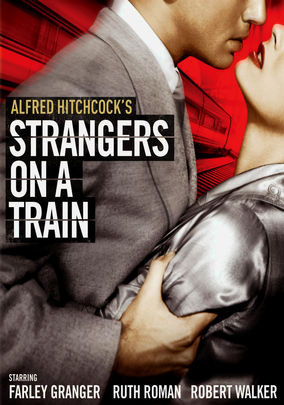
Strangers on a Train-1951

Strangers on a Train-1951

Director Alfred Hitchcock

Starring Farley Granger, Robert Walker

Top 250 Films #43

Scott’s Review #318

70002912

Reviewed January 2, 2016

Grade: A

A thrill-ride-per-minute film, Strangers on a Train is a classic suspense story filled with tension galore, a great Alfred Hitchcock film from 1951 that marked the onset of the “golden age of Hitchcock,” which lasted throughout the 1950s and 1960s.

A British version of the film exists somewhere, but I have yet to see it.

The American version is a brilliant, fast-paced experience featuring complex and interesting characters, including one of the greatest villains in screen history, and a riveting, heart-pounding plot.

Who can forget the essential ominous phrase “criss-cross”?

The film begins with a clever shot of two pairs of expensive shoes emerging from individual taxi cabs. Both are men, well-to-do and stylish.  They board a train and sit across from each other, accidentally bumping their feet.

We are then introduced to the two main characters: tennis star Guy Haines (Farley Granger) and wealthy Bruno Anthony (Robert Walker). They engage in conversation, and immediately, we become aware that Bruno is assertive and Guy is more passive.

Ultimately, Bruno manipulates Guy into thinking they will exchange murders- Bruno will kill Guy’s unfaithful wife, Miriam, while Guy will murder Bruno’s hated father.  While Bruno takes this dire “deal” seriously, Guy thinks Bruno is joking.

A psychological complexity of the film is the implied relationship between Guy and Bruno. Indeed, there are sexual overtones as flirtation and bonding immediately develop while they converse on the train.

They are complete opposites, which makes their relationship compelling—the devil and the angel, if you will. The mysterious, profound connection between these two men fascinates throughout the film.

Robert Walker makes Bruno a deliciously villainous character. He is devious, clever, manipulative, and even comical at times. His wickedness is mesmerizing, to the point that the audience roots for him.

Hitchcock wisely makes the victim, Miriam (wonderfully played by Laura Elliot), devious, adding to Bruno’s rooting value during her death scene. His character is troubled and almost rivals Norman Bates and Hannibal Lecter as a lovable, evil villain.

Later in the film, when Guy is playing tennis, he gazes into the stands to see the spectators turning left and right in tandem with the moving tennis ball, and the audience sees a staring straight ahead, immersed in the sea of swaying heads.

It is a highly effective, creepy scene.

The pairing of Guy and his girlfriend, Anne (a seemingly much older Ruth Roman, and interestingly, despised by Hitchcock), does not work. Could this be a result of the implied attraction between Bruno and Guy? Or is it a coincidence?

Roman’s casting was forced upon Hitchcock by the Warner Bros. studio.

Hitchcock reveals his “mommy complex,” a common theme in his films, as we learn that there is something off with Bruno’s mother, played by Marion Lorde, but the exact oddity is tricky to pin down.

She and Bruno comically joke about bombing the White House, which gives the scene a jarring, confusing edge. Is she he reason that Bruno is diabolical?

The theme of women’s glasses is used heavily in Strangers On A Train. Miriam, an eyeglass wearer, is strangled while we, the audience, witness the murder through her dropped glasses. The scene is gorgeous and cinematic in black and white and continues to be studied in film schools everywhere.

Later, Anne’s younger sister, Barbara (comically played by Hitchcock’s daughter, Pat Hitchcock), who also wears glasses, becomes an essential character as Bruno is mesmerized by her likeness to the deceased Miriam, and a mock strangulation game at a dinner party goes awry.

The concluding carnival scene is high-intensity and contains impressive special effects for 1951.

The spinning-out-of-control carousel, panicked riders, and cat-and-mouse chase scene leading to a deadly climax make for a fantastic end to the film.

Strangers On A Train (1951) is one of Hitchcock’s best classic thrill films.

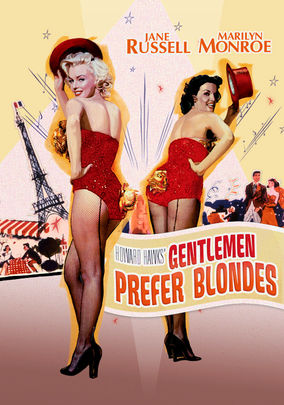
Gentlemen Prefer Blondes-1953

Gentlemen Prefer Blondes-1953

Director Howard Hawks

Starring Jane Russell, Marilyn Monroe

Top 250 Films #164

Scott’s Review #384

60004540

Reviewed March 13, 2016

Grade: B+

One of the iconic and legendary stars, Marilyn Monroe’s better-known offerings from her brief career are Gentlemen Prefer Blondes (1953), a fun musical romantic comedy.

To create this wonderful gem, she stars alongside Jane Russell, another popular Hollywood star from a golden era.

Together, they have great chemistry and an easy yin-yang relationship, which makes the film light and cheerful but not meaningless or too fluffy.

It is just a genre that it is.

As mentioned, Roma has evolved in modern cinema, and Gentlemen embodies the innocence that has since been lost. The 1950s were a perfect time for this genre of film.

Lorelei Lee (Monroe) and Dorothy Shaw (Russell) are American showgirls and best friends who perform a stage show together. Lorelei loves diamonds and rich men- she is dating Gus Esmond, an awkward yet lovable young man who is wealthy but controlled by his father.

Dorothy is less interested in being showered with wealth but prefers handsome, adventure-filled adventures. These begin when the girls board a cruise ship to Paris. A private investigator (Malone) hired by Gus’s father observes and follows Lorelei while the Olympic swim team pursues Dorothy.

The film is entertaining and a must-see for all Monroe fans, as it was at the time when she was at her best- Gentlemen Prefer Blondes and Some Like it Hot are my personal favorites, and she was in the prime of her tragically short film career- sure, she plays the “dumb blonde” character with gusto. Still, there is something innocent and fun about her portrayal of Lorelei, and we immediately fall in love with her.

Dorothy is the leader—the smart one—and complements Lorelei’s naivety. More worldly and sophisticated, she watches out for her counterpart.

The chemistry between Monroe and Russell makes the film work so well. The audience buys them as best friends, and the two actresses (who reportedly got along famously).

Monroe shines during the legendary number, Girls’ Nights Are the Best Friend,” a performance that famously inspired the 1984 Madonna video, ” Girls Night Out,” which will forever live on in music history.

My favorite scene is on the ship when Lorelei gets into trouble. She sneaks into the private investigator’s cabin to obtain incriminating evidence and gets stuck in the tight cabin window.

The shot of Monroe sticking halfway out the window is funny. She then hilariously enlists a young child to help her avoid recognition and a subpar man with subpar vision.

Vision also comes into play when Dorothy disguises herself as Lorelei in a silly fashion (looking more like a drag queen) in a courtroom scene over hi-jinks involving a stolen tiara.

Interesting is the scene in wsurroundedrothy is surrounded by dancing, which is as provocative for 1953 as it is today.

Undoubtedly unable to show any form of nudity whatsoever, the dancers are clad in nude-colored shorts, which indeed suggests elements of sexuality, an illusion of nudity, and fits the scene perfectly as Dorothy is in testosterone heaven.  It is like a big, giant fantasy for her.

Gentlemen Prefer Blondes (1953) is a triumphant offering from another cinematic era—a sorely missed time. Cute but not trivial, the film is a witty portrayal of the iconic Marilyn Monroe.

Double Indemnity-1944

Double Indemnity-1944

Director Billy Wilder

Starring Fred MacMurray, Barbara Stanwyck

Scott’s Review #847

Reviewed December 26, 2018

Grade: A

Double Indemnity (1944) perfectly epitomizes the classic film noir genre. It contains all the necessary elements, from intrigue, suspense, and unpredictable thrills to schemes and dastardly deeds by the major players.

The on-screen chemistry between leads MacMurray and Stanwyck provides enough romantic flair and provocative moments to entertain all as developments progress when a smitten man meets a femme fatale and a devious plot is hatched.

Director Billy Wilder was one of the most influential directors of his day. This picture was his first effort, and it received fabulous critical acclaim.

The accolades put him firmly on the map for years to come, culminating in an Oscar win in 1960 for The Apartment. Wilder uses a clever insurance “double indemnity” clause as its title, making it one of the best and most influential crime dramas of the 1940s, staking ground for other similarly themed films.

The story is told via flashbacks as a wounded Walter Neff (Fred MacMurray) scrambles to record a confession to his colleague and best friend, Barton Keyes (Edward G. Robinson).

The action rewinds to an ordinary day when Neff makes a routine stop to sell insurance and meets flirtatious Phyllis Dietrichson (Barbara Stanwyck). She brazenly inquires how she ought to take out an insurance policy on her husband’s life without his knowledge.

When Neff deduces Phyllis’s intention to kill her husband, he declines any further help but cannot forget the ravishing beauty and her charms. He ultimately succumbs to her whims and aids her in a wicked crime.

The adventure the audience is taking on is the most fun aspect of the film. We already deduce that Neff is involved in shenanigans, but most of the fun occurs after the murder has been committed and Phyllis and Neff’s scheme begins to unravel.

The added component of Neff’s colleague and close friend, Keyes, being involved as he starts to suspect foul play is equally compelling.

Will he finally realize that Neff is involved in the plot? If discovered, will Keyes cover for Neff? Will Phyllis’s history catch up with her and twist events?

These questions make the film a great picture.

A debate among viewers can ensue whether Neff is sympathetic as this point continues to cross my mind with each viewing. One can safely say that he is seduced by the charms of an eager and aggressive woman, but if he is to blame for the crimes, is she not even more to blame?

As events unfold, sides can be drawn, and characters can be more focused, particularly after Double Indemnity’s startling conclusion.

Neff is not a strong, heroic character. She is relatively weak and easily manipulated by the cagey Phyllis. It is interesting how little time it takes for Neff to succumb to her plot and willingly commit the crime.

In the final act, Neff does show some muscle needed, but this is only because his “goose is cooked,” and he finally realizes the dire nature of Phyllis’s character. However, shouldn’t he have discovered this sooner?

MacMurray and Stanwyck have smoldering chemistry and are a significant film success, keeping the audience invested in the plot. The added measure of the murder victim being relatively unknown to the audience adds a macabre rooting value to the pair.

Wilder never presents the plot as a romantic triangle, and Neff and Phyllis have no other romantic entanglements. The only roadblock is the insurance company and its suspicions about Phyllis.

Wilder adapted the screenplay from James M. Cain’s novella of the same name and spins a potent film noir from these pages. Double Indemnity (1944) is intelligent, sexy, and mysterious, mixing in as much sultry poise as witty dialogue.

The film is a measured success and a highly influential cinematic story thanks to the allure of fine actors and a stunning train adventure.

Oscar Nominations: Best Motion Picture, Best Director-Billy Wilder, Best Actress-Barbara Stanwyck, Best Screenplay, Best Scoring of a Dramatic or Comedy Picture, Best Sound Recording, Best Cinematography, Black-and-White

Casablanca-1943

Casablanca-1943

Director Michael Curtiz

Starring Humphrey Bogart, Ingrid Bergman

Scott’s Review #838

Reviewed December 7, 2018

Grade: A

Casablanca (1943) is a classic style Hollywood film made during a decade when big studio productions were all the rage. The film may very well be in the top ten creations of its day and a movie that nearly everyone has either seen or is aware of.

A grand romantic World War II drama released at the perfect time, the film contains legendary stars Humphrey Bogart and Ingrid Bergman. It is flawless in nearly every way, as a lavish production should be.

Bogart stars as Rick Blaine, an expatriate who owns a lavish nightclub in Casablanca, Morocco. The film takes place in December 1941, before the United States entered the vicious World War II.

His clientele ranges from French and German officials to refugees attempting to flee the country, fearful of being stuck in a foreign land. Mixed in with the melee of varied characters is Ilsa (Bergman), a former flame of Rick’s, who appears with a new husband, Victor, a Czech leader.

Ilsa begs Rick for help escaping the country, and their romance begins to blossom again.

Through scenes, we see Rick and Ilsa living perfectly in pre-war Paris. They happily co-exist, sharing a happy life, unaware of the conflict and secrets that will emerge in Casablanca two years later.

Victor is initially presumed dead, which leads to Ilsa’s initial freedom and romance with Rick.

Back in Casablanca, Rick has essential letters that will allow the holder to escape the city and be bound for safety in another country. While Ilsa is desperate for these letters, she is also madly in love with Rick, and vice versa, adding a strong romantic element to the film.

Supporting characters are mixed into the plot as desperation and impending doom interplay.

Casablanca is a film with things happening simultaneously, which is a significant part of its draw. From the apparent romance of Rick and Ilsa- the focal point of the story part of the draw are the sub-plots weaved within.

The nasty Nazi Major Heinrich Strasser encompasses the future Third Reich and the devastation this group would ultimately cause. A multitude of supporting characters and extras perfectly flesh out both the cast and the look and feel of the film.

The most interesting character is Rick.

Once idealistic and moral, he has changed, becoming cynical and broken. In this way, the film nearly becomes a character study. The audience sees the change in Rick and slowly realizes he has given the war the culprit.

The final sequence reveals Rick and Ilsa’s fate. Their doomed romance is assuredly no surprise, true to the message. An “unhappily ever after” result was rare in a big studio production and is a testament to the well-written story.

The featured piano number and Casablanca’s “theme song” is the lovely yet melancholy “As Time Goes By.” Beautifully played by Sam (Dooley Wilson), the house pianist and close friend of Rick, the number is instrumental to the plot and specifically to Rick and Ilsa’s romance.

The song is a painful memory of the once-idyllic life the pair shared.

The film’s timing, made in 1941 and released in 1943, is the key to its unrelenting success. American audiences undoubtedly found it identifiable, and the uncertainties of the impending war threatened their current freedoms.

Casablanca was wonderfully marketed in this way, and its compelling nature resonated. Audiences shared Rick’s conflict and “for the greater good” perspective.

Casablanca (1943) is a film that educates, entertains, and romances without exhibiting a shred of pretension. The crisp black-and-white filming and the unique use of light and shadows to reflect the characters’ thoughts make the film lovely and has a lofty budget.

Immersed in the richness are sadness and a timely message about a changed man, a failed romance, and the ravages of war that still resonate decades later.

Oscar Nominations: 3 wins-Outstanding Motion Picture (won), Best Director-Michael Curtiz (won), Best Actor-Humphrey Bogart, Best Supporting Actor-Claude Rains, Best Screenplay (won), Best Scoring of a Dramatic or Comedy Picture, Best Cinematography, Black-and-White, Best Film Editing