Tag Archives: Shea Whigham

F1 The Movie-2025

F1 The Movie-2025

Director Joseph Kosinski

Starring Brad Pitt

Scott’s Review #1,536

Reviewed June 12, 2026

Grade: C

Mysteriously nominated for Best Picture and three technical awards despite being a ‘formulaic’ Hollywood big-budget production, the recognition is the sole reason I decided to see F1 The Movie (2025).

Having heard the film was terrible, I hesitantly settled in to watch a with eleven hours to spare on a flight across the world.

Not a fan of auto racing, nor giving a hoot about FORMULA 1, the film is very similar to recent efforts like Ford v Ferrari (2019) and Rush (2013), both of which are forgettable.

Do we really need at least three major auto racing films in modern times? Apparently, a market still exists for this type of film.

While not downright horrible, and Brad Pitt holds appeal as a laid-back, aging race car driver, the film is too similar to other genre productions to garner much interest or to be remembered for long.

Sonny Hayes (Brad Pitt) is “the greatest that never was,” a derogatory term for a promising 1990s star whose career nearly ended in a track accident.

He never reached his full potential.

Thirty years later, he makes a living as a nomadic racer-for-hire when he’s approached by his former teammate, Ruben Cervantes (Javier Bardem), the owner of a struggling FORMULA 1 team on the verge of collapse.

Ruben convinces Sonny to return to FORMULA 1 for one last shot at saving the team and becoming the best in the world. He’ll drive alongside Joshua Pearce (Damson Idris), the team’s hotshot rookie, intent on making a name for himself.

This has a Rocky (1976) sports setup in which we root for the underdog to win the day.

As likable as Pitt is as the ‘star,’ even he can’t save this film from a myriad of cliches and easy setups.

There is little doubt that Sonny will finally become the  ‘greatest of all time’ (GOAT) before the credits roll, but not before facing animosity, accidents, setbacks, and all the other situations that always occur in a sports film before the hero enjoys the spoils.

Naturally, Sonny and cocky Joshua will become rivals and eventually friends. Laughably, after a fiery accident that nearly kills Joshua, his mother, Bernadette (Sarah Niles), blames Sonny for changing the strategy and causing her son harm.

The beautiful Kate McKenna (Kerry Condon), technical director for the team, predictably serves as a love interest of Sonny, despite in one scene insisting she never mixes work with romance, cut to Kate and Sonny passionately falling into bed for sex.

Finally, there are standard subplots of a rival of Ruben’s attempting to steal Sonny away for profit, and Kate scolding Sonny for being a lone wolf and encouraging him to be a team player.

The cliches and predictability are off the charts, which is exactly what I expected from F1 The Movie.

So, I don’t get the Best Picture nomination at all. My hunch is that, with the required 10 Best Picture nominees, F1 The Movie squeaked in because of its technical achievements, earning a solid 10th out of 10.

It didn’t make it in for a great screenplay.

On the other hand, the editing is solid, and the numerous racing scenes are shot with high-quality sound and quick cuts, which pair well.

Director Joseph Kosinski impresses with a single scene that offers a sliver of emotion. During a fiery crash scene, the sound is completely muted as Sonny runs over to the fireball encircling the racecar.

And with a black and Hispanic character in major roles and female characters in a ‘man’s world’ film, there is some diversity to celebrate.

As for the overall assessment for F1 The Movie (2025), I watched it in its entirety for two hours and thirty minutes during my long flight, and it passed the time.

Oscar Nominations: 1 win-Best Picture, Best Film Editing, Best Sound (won), Best Visual Effects
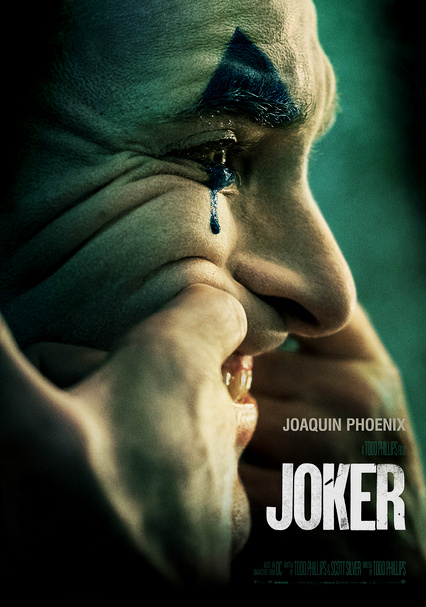
Joker-2019

Joker-2019

Director Todd Phillips

Starring Joaquin Phoenix

Top 250 Films #166

Scott’s Review #953

Reviewed November 1, 2019

Grade: A

Joker (2019) is a film that has divided audiences. Some love it, others loathe it. The experience is not your standard fun, superhero fare, with a hero’s rescue and the good triumphing over evil.

Despite the parlay into Batman territory, the film smacks the viewer across the face with its brutality, violence, and social and psychological injustices.

Joaquin Phoenix pummels the audience with an angry and bitter portrayal of the title character, easily one of the best performances of the year.

In one of the first scenes, before we even know the character, we experience a long, close-up of Phoenix laughing hysterically. We wonder what is so funny, before the revelation that he, Arthur Fleck, suffers from a nervous condition that causes inappropriate outbursts.

The year is 1981, and the fictional Gotham City, clearly a mirror image of New York City, serves as the setting. Times are tough, and crime is rampant.

Arthur lives in a dumpy apartment with his sickly mother, Penny (Frances Conroy), and visits a social worker regularly to receive his prescription medicine.

Arthur finds meager work as a party clown and aspires to be a stand-up comedian. After a gang attacks him in an alley, Arthur’s co-worker, Randall, encourages him to take a gun. Arthur invites his neighbor, single mother Sophie, to his stand-up comedy show, and they happily begin dating.

Finally, another person understands him. Segments of the population are disenfranchised and impoverished as Thomas Wayne, a billionaire philanthropist, runs for mayor of Gotham. A strange connection develops between Arthur, Penny, and Thomas, becoming central to the plot.

Can we discuss Phoenix’s bravura performance for a moment?

Suppose anyone thinks that Heath Ledger was phenomenal when he portrayed the same character in 2008’s The Dark Knight. In that case, they will be elated by Phoenix, who elevates the character to an entirely new level.

What Phoenix adds is strong sympathy for Arthur/the Joker and a care for the character. We feel sorry for him, but should we? He is a villain after all. One could easily debate whether his character can be considered the bad guy or the hero.

Regardless of the assessment, the performance is unforgettable.

A turn-off to some, which I found tremendously powerful, is the role reversal in the portrayal of the Wayne family, Bruce, and Batman characters.

Always deemed the “good guys”, in Joker, Thomas Wayne is self-centered, pompous, and embodies a sense of entitlement and snobbery.

Bruce is a young boy, but the implication is that the family is unkind, and what might the child grow up to believe?  Why is Batman/Bruce Wayne heralded as good and the Joker evil? It turns the tradition upside down into a twisted mind warp, and this is wonderfully creative and thought-provoking.

The best scene in the film, which triggers much of the subsequent violence and chaos, occurs when Arthur is invited to appear on a late-night talk show hosted by Murray Franklin (Robert De Niro). A week earlier, Franklin had played a humiliating clip of Arthur poorly performing stand-up.

Arthur decides to appear in full “Joker” attire, and the eventual discussion and words lead to tragic events. The scene is tense, intelligently written, and combative as the men spar over politics and class distinction.

Lastly, the musical score is dark, haunting, and mesmerizing without overtaking the film. Many key scenes of Arthur dancing and posturing are masterful, with the inclusion of the bombastic music.

He is a celebratory character, in his mind at least, and the music fuses into the scene with gusto and power. The combination of clowns and an incredible score adds significantly to the production.

Joker (2019) showcases a marvelous acting performance on the part of Phoenix, which combines a haunting musical score in its depth.

Providing a social commentary for people experiencing poverty and disenfranchisement, this film will divide viewers, probably based on preconceived expectations of a traditional Marvel-type superhero event.

The film offers much more than safer films like Wonder Woman (2017) or Black Panther (2018) ever could- a dark and violent character study.

Oscar Nominations: 2 wins-Best Picture, Best Director-Todd Phillips, Best Actor-Joaquin Phoenix (won), Best Adapted Screenplay, Best Original Score (won), Best Sound Editing, Best Sound Mixing, Best Cinematography, Best Makeup and Hairstyling, Best Costume Design, Best Film Editing

Take Shelter-2011

Take Shelter-2011

Director Jeff Nichols

Starring Michael Shannon, Jessica Chastain

Scott’s Review #1,150

Reviewed June 9, 2021

Grade: B+

Michael Shannon is a great actor. Appearing mostly in supporting roles and breaking out big time in 2008’s Revolutionary Road, he gets the lead in Take Shelter (2011) and is more than up to the task of creating a great character.

The ambivalence and uncertainty his character feels are central to the film’s enjoyment.

It’s a slow burn with an unsatisfying payoff, but I mean that as a compliment.

The plot is set in a small rural town in Ohio.

Curtis LaForche (Shannon) is a working-class husband, father, and provider for his wife, Samantha (Jessica Chastain), and young daughter, Hannah.

Curtis begins to have scary apocalyptic dreams, which he keeps from his family.

He decides to build a storm shelter in his backyard, which raises Samantha’s concerns. His strange behavior creates a strain on his family. As he builds the shelter, Curtis is afraid of his dreams, or rather, afraid that they are a premonition and will come true.

Is he going crazy, or will his dreams become a devastating reality?

Curtis, Samantha, and the entire audience will ponder this note throughout the film.

An interesting add-on is that Hannah is deaf, so the way her parents embrace and accept her disability is a nice nod to the inclusiveness of people with disabilities.

Take Shelter is delightful to revisit and discuss ten years following its release.

In 2011, both Shannon and Chastain were up-and-coming stars and only barely on the cusp of A-list status, so it’s fun to see them in an independent film that showcases their acting chops.

They would go on to become big stars and showcase their talents in many other roles, so it’s fun to see them in early-career performances.

Shannon is careful not to outshine Chastain, but Curtis focuses on what is going on inside. His conflict is palpable and written all over his face in quiet scene after quiet scene after quiet scene as he gazes at the luminous skies.

He wonders what is coming next.

His dreams, hallucinations, and auditory experiences involving swarms of blackbirds are creepy and well-made on a small budget. A clue is when it is revealed that Curtis’s mother had paranoid schizophrenia at roughly the same age that Curtis is.

A drained Curtis seeks counseling but still cannot shake his feelings of impending doom. I felt completely empathetic to his plight and never saw Curtis as crazy or out of control.

He possesses controlled restraint.

Director Jeff Nichols does an exceptional job of making the film largely quiet and peaceful, with a gnawing, foreboding dread, as if the expected apocalypse might come upon the lonely town.

Take Shelter is the debut by Nichols, who followed up this gem with two other low-key but critically acclaimed films, Mud (2012) and Loving (2016).

He knows how to get to the core of his characters’ deepest thoughts and feelings.

He wrote each of these works and received praise for fine writing.

The film is about the relationship between the characters and the possibility that Curtis is going insane. I’m not sure Take Shelter provides a neatly wrapped conclusion, but boy is it an edge-of-your-seat thrill.

And why does it need to?

Shannon’s best scene occurs at a Lions Club community event. With most of the town gathered in the hall for a delicious dinner of potluck dishes, things go bad when Curtis loses his temper and verbally berates the townspeople. He warns them that they are unprepared for the doom.

They look at him as if he belongs in a padded cell, and Shannon’s explosion is frightening and frighteningly good.

As good as Shannon is, Chastain must not be dismissed. She barely holds it together as a woman with a special needs child and an unbalanced husband. When they lose their health insurance, she nearly comes apart at the seams.

I love the ending because Nichols leaves the truth of reality a mystery to the audience. This may dissatisfy some, but I thought it’s how Take Shelter should be.

Unclear, just like the thoughts of its main character.

Take Shelter (2011) succeeds with a powerhouse performance by its star Michael Shannon, wonderful direction, and a refined imbalance.

The quiet and thoughtful cinema fan will be most endeared to this film.

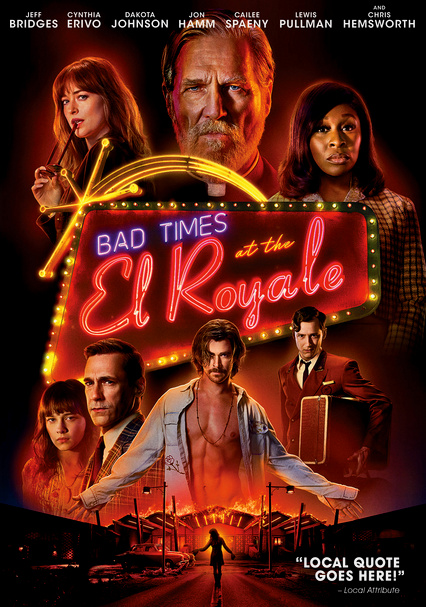
Bad Times at the El Royale-2018

Bad Times at the El Royale-2018

Director Drew Goddard

Starring Jeff Bridges, Cynthia Erivo, Dakota Johnson

Scott’s Review #919

Reviewed July 10, 2019

Grade: A-

Bad Times at the El Royale (2018), directed by Drew Goddard, known for crafting the horror film The Cabin in the Woods (2012), is a gem that crosses multiple genres with sound results.

With Bad Times, he assumes writing and production duties for the thriller and steals a page from the Quentin Tarantino playbook, most notably from The Hateful Eight (2015).

The resulting feature is clever, perverse, and mysterious. It is a fantastic, edge-of-your-seat experience and a must-see for Tarantino fans.

Set in 1969, the film focuses on seven strangers of different backgrounds who go to a seedy and remote hotel on the California/Nevada border. Each harbors its share of dark secrets, culminating during a deadly macabre showdown one dark and stormy night.

In many ways, each character seeks redemption or forgiveness for a past indiscretion or is otherwise protecting someone or something else. A large sum of money is also in play for the greedier characters to tussle over.

The seven players are as follows: Jeff Bridges plays catholic priest Donald “Dock” O’Kelly, Cynthia Erivo plays struggling soul singer Darlene Sweet, and Dakota Johnson portrays Emily Summerspring, a hippie trying to save her younger sister, Rose, who is devoted to and mesmerized by sadistic cult leader Billy Lee (Chris Hemsworth).

Finally, Jon Hamm plays Dwight Broadbeck, a vacuum salesman who may have a secret identity, and hotel clerk Miles Miller (Lewis Pullman), who runs the hotel alone.

As events roll along, the complexities of the characters grow, which is my favorite aspect of the film. There are so many twists and turns involving the characters’ backstories and motivations that surprises are in store.

Some characters have strange connections to each other, while others meet for the first time and their lives intersect in interesting ways.

The dynamic between all the actors works tremendously well, with the standouts being Bridges and Erivo, who share tremendous chemistry and are the most interesting characters, to mention get the most screen time.

Their characters forge a bond during their lengthy scenes while never wholly trusting each other. Erivo, as Darlene, gets to showcase her wonderful singing voice. The highlight is the grand hotel room sequence as she belts out “This Old Heart of Mine (Is Weak for You).”

Old and burdened with memory loss, Bridges successfully grants more sympathy to his character than he deserves.

The film loses momentum towards the end when introducing the miscast Hemsworth, who is pretty but not the most remarkable acting talent. The actor overacts, playing Billy Lee as sinister and one-dimensional rather than infusing complexities into the character, which doesn’t work.

A better casting choice (and Tarantino mainstays) would have been Leonardo DiCaprio or Brad Pitt, and either actor would have assuredly brought more depth to the role.

Comparisons must be made to The Hateful Eight and the comedy Clue (1985). Godard divides the film into chapters like the former, mostly entitled as the hotel room numbers. With each subsequent room, the events going on in that room and its inhabitants are explored.

As in both films, he brings several mysterious characters with connections together. In Clue, secret passageways that lead to various parts of a building are featured, offering layers of possibilities.

The hotel itself is styled and dressed brilliantly, nearly a character with glossy decals and shiny trimmings but with a solemn and melancholy gloominess. The establishment has seen its share of heartbreak, schemes, and even death. Clever is the division of the hotel into either the sunny and cheerful “California” section or the less posh “Nevada” section, purple and costing one dollar less.

The viewer is sucked into its web within the first sequence when a man is shown hiding money under the floorboards and then subsequently shot to death.

Despite being labeled a Tarantino rip-off, this does not bother me as I was enthralled with the characters, the details, and the vast nuances offered.

Unfortunately, the film was a box-office disappointment, suffering from a lack of awards buzz and a lofty running time. Bad Times at El Royale (2018) will entertain, intrigue, and keep one guessing until the credits roll.

Be prepared for a bloody good time!

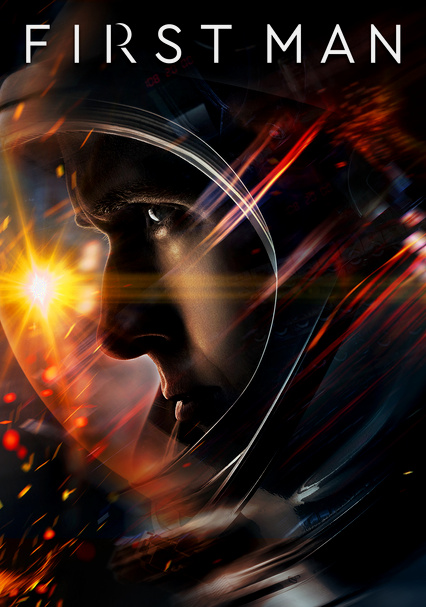
First Man-2018

First Man-2018

Director Damien Chazelle

Starring Ryan Gosling, Claire Foy

Scott’s Review #915

Reviewed July 4, 2019

Grade: B+

First Man (2018) is a reteaming of efforts by director Damien Chazelle and actor Ryan Gosling, following the 2016 critical and commercial smash hit La La Land.

The former could not be more different from the latter, and the direction is unrecognizable for those expecting a comparison. First Man is a mainstream Hollywood production with good camerawork and edgy quality.

The necessary full-throttle action approach is interspersed nicely with a personal family story and humanistic spin that is never too sappy nor forced.

The focus of the story is on Neil Armstrong (Gosling) and the events leading up to the historic Apollo 11 mission, which made him the first United States astronaut to walk on the moon.

Buzzy Aldrin (Corey Stoll), the second man to walk on the moon, is featured to a lesser degree, and his character is portrayed as self-centered and complex, though screen time is limited.

The overall message is of the triumphs and the costs to families, the astronauts, and the country during an already tumultuous decade in history.

The events of the film begin in 1961, as we see Armstrong as a young NASA test pilot struggling with mishaps due to his problems, and culminate in 1969 after the successful mission concludes.

Chazelle wisely balances human and personal scenes with the inevitable rocket take-offs and outer space problems that the astronauts face.

Both segments turn out well and keep the action moving, allowing for tender moments between the characters, mainly showcasing the relationship between Neil and his wife, Janet (Claire Foy).

Lacking (thankfully) are the scenes of machismo or “guy talk” that sometimes accompany films in this genre.

During one of the first scenes, the audience quickly witnesses the couple’s two-and-a-half-year-old daughter Karen retching and suffering from learning disabilities, only to promptly die from a brain tumor, forever destroying the couple.

This critical aspect reoccurs as Neil imagines his daughter playing with neighborhood kids and enjoying life.

In a wonderful moment, he tearfully drops Karen’s tiny bracelet into a giant crater, hoping to keep her memory alive forever.

These additions give the film a character-driven quality.

Worthy of analysis before and after viewing the film is the young director’s decision to tackle such a project, heartily appealing to the mainstream audience undoubtedly in mind.

Legendary director Clint Eastwood was initially slated to direct, and the historically rich story seems right up his alley.

It’s interesting to wonder if, during the 1990s, Tom Hanks might have been cast as Armstrong in his younger days, playing a similar part in Ron Howard’s 1995 film Apollo 13.

Well-known character actors appear in supporting roles, fleshing out the production and further adding name and face recognition. Kyle Chandler, Jason Clarke, and Ciaran Hinds appear as astronauts or various NASA Chiefs. Viewers who may not be able to name the actors will certainly recognize them as actors seen in other films.

This only brings First Man to the big leagues with a hearty and talented central cast.

Gosling and Foy are the main draws, and both actors were mentioned as possibilities for Oscar nominations throughout awards season, but a slot in the big race did not come to fruition.

While the film drew a couple of nominations for Best Editing and Best Score, a Best Picture nomination was not to be, probably due to the film not being as big a blockbuster success as expected.

The film is also more brooding and less patriotic than a Howard or Eastwood production would have been.

To expand on this, First Man came under attack by Senator Marco Rubio from Florida and President Donald Trump for Chazelle’s decision to omit any mention of the famous planting of the American Flag on the moon by Armstrong and Aldrin.

Chazelle refused to admit that this was a political statement, instead insisting that he chose to focus more on the lesser-known aspects of the moon landing rather than facts that everybody already knew.

Young director Damien Chazelle proves to be a multi-faceted filmmaker by changing course and creating a historic biopic that is quite different from a story of singing and dancing in Los Angeles.

He proves to be no one-trick pony and gets the job done, creating a brave and robust effort that does not limit action at the hands of humanity, successfully weaving a good dose of both.

First Man (2018) may not be a classic in the making, but it deserves to be seen.

Oscar Nominations: 1 win- Best Sound Editing, Best Sound Mixing, Best Production Design, Best Visual Effects (won)

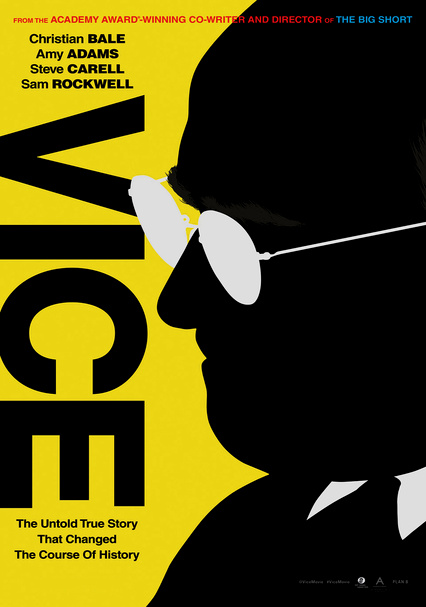
Vice-2018

Vice-2018

Director Adam McKay

Starring Christian Bale, Amy Adams, Steve Carell

Scott’s Review #849

Reviewed December 31, 2018

Grade: A

Following 2015’s The Big Short, Adam McKay once again creates an intelligently written, thought-provoking political film based on facts and historical accounts.

With Vice (2018) he focuses on former Vice President Dick Cheney and his rise through the political ranks to second in command.

Brilliant and wise in every way, the film is fair-minded in its approach. Predictably, in this era of “fake news,” it will be embraced by liberals but shunned by conservatives.

In the first seconds of Vice, a disclaimer appears stating that Cheney was a private man with secrets, but the filmmakers did their best to relay accurate information. The salty language in this clip will likely elicit chuckles, but McKay stays the course with his statement.

Immediately, the film flashes to the September 11 attacks with Cheney sitting in crisis mode, about to make an important decision.

Vice then retreats to 1963 Wyoming as a drunken college-aged Dick Cheney (Christian Bale) is pulled over for erratic driving after a barroom brawl. He is nearly dumped by his girlfriend and future wife Lynne Cheney (Amy Adams), who threatens to find another man if Dick does not straighten out.

He manages an internship and an admiration for Donald Rumsfeld (Steve Carell), a staunch Republican and White House Chief of Staff, and begins his political climb.

In clever form, the film is narrated by a character named Kurt (Jesse Plemons), who we do not know is connected to Cheney until the end of the film. This adds an added measure of intrigue to the overall film, as we know a secret will be revealed.

Vice is also unique in direction, with constant back-and-forth timeline scenes and quirky humor throughout. Are the Cheneys portrayed as ridiculous? No, but sardonic humor is directed at them as their ambitions and power-hungry motivations are completely exposed.

The film does a great job of taking the viewer through the political state of Cheney’s administration, roughly the early 1970s until 2008, when Obama took office. The Clinton years are completely skipped, but that is more to do with Cheney being in the private sector rather than an intentional slight.

The Nixon years and the George W. Bush years are given hefty screen time and the latter is portrayed as nearly a buffoon as Rockwell portrays him as a boozy, dumb frat boy.

Bale is startlingly good as Cheney and deservedly steals the show. In addition to the forty-pound weight gain, the actor endured the facial and hair treatments (props to the makeup department!) and became the man.

His body movements, smile, and speech patterns are daringly good. With a sneer and a calculating grin, we see the wheels spinning in Cheney’s head numerous times, and Bale is incredible at portraying these thoughts to the audience.

The film contains many well-known actors in vital supporting roles worth noting. The depictions of the following are examples of excellent casting with spot-on representations: Tyler Perry as Colin Powell, LisaGay Hamilton as Condoleezza Rice, Sam Rockwell as George W. Bush, Alison Pill as Mary Cheney, and Lily Rabe as Liz Cheney.

All portrayals are excellent to watch, especially for viewers who remember the real-life people involved.

Some will undoubtedly complain that the film has a “liberal slant” and portrays Cheney as power-hungry and self-serving. While this is a valid point, and McKay makes left-leaning choices, the director bravely carves the film into an experience that goes both ways.

More than a few scenes (including the final scene) justify Cheney’s actions, in his mind anyway. Claiming to do what is suitable for the people and be a true American, his actions and yearning for power can be understood to some degree, or perhaps by some people.

Vice (2018) is controversial and undoubtedly divisive, which is unsurprising given the current state of American politics. It tells an inspiring and rich story of an elusive politician’s life and policies, daring to be forgotten, that still resonate across the United States.

The more I ponder this film’s importance, the greater it becomes, but stay past the credits for arguably the best moment in the movie and of monumental importance in 2018.

Oscar Nominations: 1 win-Best Picture, Best Director- Adam McKay, Best Actor- Christian Bale, Best Supporting Actor- Sam Rockwell, Best Supporting Actress- Amy Adams, Best Original Screenplay, Best Makeup and Hairstyling (won), Best Film Editing

Machete-2010

Machete-2010

Director Ethan Maniquis, Robert Rodriguez

Starring Danny Trejo

Scott’s Review #501

70125125

Reviewed October 28, 2016

Grade: B

Machete (2010) is a clear, fun homage to 1970s exploitation films, directed by Robert Rodriguez (a protege of Quentin Tarantino) and heavily influenced by his mentor.

It strongly resembles a Tarantino film with its comic, over-the-top elements and violence, but it’s less compelling in the story department and lacks crisp, rich storytelling.

It tells the story of a Mexican ex-Federal agent (named Machete), played by Danny Trejo, who is involved in a plot to kill a corrupt United States Senator (played by Robert De Niro).

He attempts to flee Mexico for Texas, is shot, and spends the remainder of the film vowing revenge on his assailants.

Machete contains many celebrity cameos and is fun to watch- in a light way. The film isn’t meant to be taken seriously.

For the interested, you also get to see Lindsay Lohan topless.

The film is a fun, violent popcorn flick with a nice political message, but if you’re into these types of movies, rent Grindhouse: Planet Terror (2007), which is a better experience.

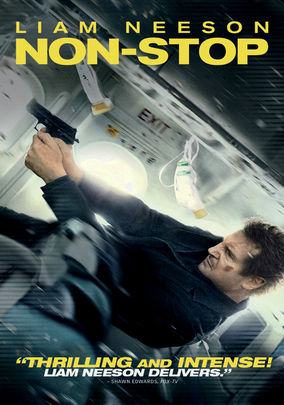
Non-Stop-2014

Non-Stop-2014

Director Jaume Collet-Serra

Starring Liam Neeson, Julianne Moore

Scott’s Review #55

70292864

Reviewed June 22, 2014

Grade: B-

I am a sucker for a good airline disaster action film.

I found Non-Stop (2014) to have two parts- the first one hour and fifteen minutes and the final thirty minutes.

A film like this (action, popcorn flick) requires suspension of disbelief.

The events in this film will NEVER happen.

In recent years, Liam Neeson, at sixty years old plus, has settled nicely into action hero star in mediocre to above-average film roles.

He has found his niche.

The first part of the film is highly entertaining. One hundred and fifty passengers on board an international flight from New York to London are in peril when a terrorist begins texting troubled U.S. Air Marshall (Neeson) that someone on the flight will die every twenty minutes unless One hundred and fifty million dollars is transferred to their account.

From this point begins a compelling whodunit.

Which passenger is sending the text messages? Could it be a flight attendant or the captain of the plane? Several characters are introduced and some red herrings commence. Who begins framing the Marshall? Why?

This is compelling fun stuff.

Most of the action takes place on the plane giving the film a claustrophobic atmosphere.

Then, however, the second part of the film takes over. Not to give spoilers away, but it reaches a ridiculous, silly conclusion, and I found myself saying out loud, “this is stupid”.

A needless and contrived plot of a little girl on the flight is trivial.

I expected more from Michelle Dockery of Downton Abbey fame.  Lupita N’Yongo is given a throwaway role (let’s assume she was cast before her Oscar-winning turn in 12 Years a Slave in 2013).

Popcorn fun, but disappointing ending summarizes Non-Stop (2014).

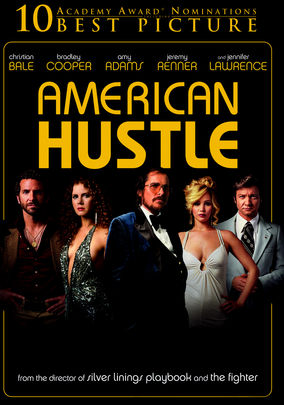
American Hustle-2013

American Hustle-2013

Director David O. Russell

Starring Christian Bale, Bradley Cooper, Jennifer Lawrence

Scott’s Review #39

70281530

Reviewed June 18, 2014

Grade: A

Having seen American Hustle (2013) a month ago and finally getting around to reviewing it, it’s a perfect time as a slew of Oscar nominations has been reaped upon it, thus, undoubtedly more people will be seeing it in the weeks ahead.

I loved this film.

Some were underwhelmed, but I found it quite authentic and stylish.

I loved the 1970’s period and felt the hairstyles, clothes, and props were spot on.

I also felt the film had great acting and, though I’m not a fan, Jennifer Lawrence enraptured me. The same with Cooper, Bale, and Adams, who all deserve their Oscar nods.

I found it similar in style to Boogie Nights, a 1997 masterpiece directed by Paul Thomas Anderson.

The 1970s musical rock score was perfect. The subject matter of political corruption and cat-and-mouse intrigue was effective and resounding.

Oscar Nominations: Best Picture, Best Director-David O. Russell, Best Actor-Christian Bale, Best Actress-Amy Adams, Best Supporting Actor-Bradley Cooper, Best Supporting Actress-Jennifer Lawrence, Best Original Screenplay, Best Production Design, Best Costume Design, Best Film Editing

The Wolf of Wall Street-2013

The Wolf of Wall Street-2013

Director Martin Scorsese

Starring Leonardo DiCaprio, Jonah Hill

Scott’s Review #33

70266676

Reviewed June 17, 2014 

Grade: A

Martin Scorsese’s latest offering, The Wolf of Wall Street (2013) is a tale of overindulgence, chaos, and debauchery in the world of stockbroking during the 1980s.

The film is superb.

It is a drug-filled, sex-filled, over-the-top, loud, testosterone-fueled, frenetic extravaganza that works on so many levels.

Humorous and mouth-dropping scenes occur throughout the film.

The casting is flawless- Leonardo Dicaprio and Jonah Hill deserve the praise and Oscar nominations heaped on them.

The supporting actors are perfect- Rob Reiner, Matthew McConaughey, Jean Dujardin, and Kyle Chandler.

With Scorsese, you will receive an intelligent film, though very R-rated.

Similar in style to another of his masterpieces, Goodfellas-1990, as it is narrated by the main character (Dicaprio).

Comparisons to the 1987 film Wall Street are silly. This film is much deeper, grittier, and frankly, much better.

Do not let the unfathomable running time of three hours discourage you- the time goes by very fast.

Oscar Nominations: Best Picture, Best Director-Martin Scorsese, Best Actor-Leonardo DiCaprio, Best Supporting Actor-Jonah Hill, Best Adapted Screenplay