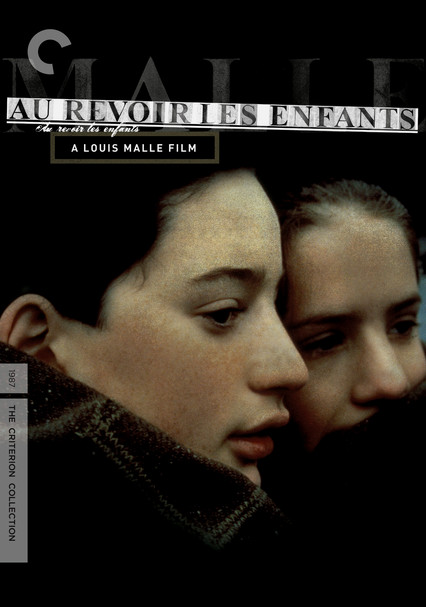
Au Revoir Les Enfants – 1987
Director Louis Malle
Starring Gaspard Manesse, Raphaël Fejtö
Scott’s Review #859
Reviewed January 21, 2019
Grade: A
Au Revoir Les Enfants (1987), translated into English as Goodbye, Children, is a powerful story of youth and friendship at a French boarding school during the Nazi occupation of France.
As World War II rages on, Director Louis Malle crafts a tragic, poignant film that resonates on many levels, featuring both good and evil and the permanent loss of childhood innocence.
The film is based on events Malle experienced as a child while attending a Roman Catholic boarding school.
At age eleven, he witnessed a Gestapo raid in which three Jewish children and a Jewish teacher were savagely rounded up and taken to the Auschwitz concentration camps and presumably to their deaths.
What a powerful, tragic event he faced, and he brilliantly transplants it into his film.
We meet young Julien Quentin (Gaspard Manesse) as he bids his mother farewell and takes a train to his boarding school after a lengthy vacation.
The headmaster introduces three new students, one of whom is of Julien’s age. Jean Bonnet (Raphaël Fejtö) is socially awkward but excels at mathematics and piano.
The boys initially dislike one another but slowly forge a powerful bond as they immerse themselves in a treasure hunt together. Julien soon discovers that Bonnet is Jewish, and the school is protecting him from capture.
The film is divided into two main stories: the troubled relationship and eventual friendship between Julien and Bonnet, and the revelation that Bonnet is Jewish and the school officials’ benevolence toward the plight of Jews.
The latter gives Au Revoir Les Enfants a socially relevant angle, as the audience begins to care deeply about Bonnet and the other Jewish boys who yearn for education and freedom.
Their innocence and confusion about being hated are painful to watch.
The tyranny of the Gestapo is matched by the kindness and courage of the teachers who defy the anti-Semitic policies and admit Jewish students into the school under assumed names.
The teachers are the story’s heroes and largely unsung, as they yearn to give children of any religion a good education and a chance at happiness and fulfillment.
I would love to see schools feature Au Revoir Les Enfants as a lesson in bravery for their students.
Any viewer who has visited France will readily recognize the country’s culture and sophistication.
Most scenes take place at the boarding school, where students learn and grow, but a favorite scene unfolds at a gourmet restaurant.
As Julien and his mother lunch with Bonnet and others, the meals, staff, and ambiance exude French style and goodness, but among these luxuries also lies the constant threat of the Nazis as they bombard the restaurant and attempt to kick a Jewish man out of the establishment.
Malle keeps the camera close to Manesse and Fejtö’s faces, with a glowing quality that is both beautiful and haunting.
This creates many scenes that focus on the boys’ expressions, including wonder, shock, intensity, and fear.
The young actors rise to the occasion and perform their roles flawlessly with a natural quality. The boys learn a myriad of valuable lessons, most notably that the world is unjust and full of unfairness.
Malle gives the finale enough power and angst to leave the viewer pondering the Jewish characters’ fates.
The Nazis undoubtedly sealed their fates; the hows and the whys are left ambiguous, eliciting powerful emotions.
Au Revoir Les Enfants (1987) is a superb, relevant film that depicts the pain and fear Jewish people experienced during a tragic period of history. Told through the eyes of children, the film hits home as they discover innocence and then lose it.
The film was nominated for the Best Foreign Language Film Oscar but lost to Babette’s Feast (1987).
Oscar Nominations: Best Screenplay Written Directly for the Screen, Best Foreign Language Film
Golden Globe Nominations: Best Foreign Language Film
Independent Spirit Award Nominations: Best International Film