Tag Archives: Olivia Colman

Wonka-2023

Wonka-2023

Director Paul King

Starring Timothée Chalamet, Calah Lane, Olivia Colman

Scott’s Review #1,414 

Reviewed January 3, 2024

Grade: B+

Wonka (2023) is only the third live-action film based on Roald Dahl’s iconic 1964 novel Charlie and the Chocolate Factory, following Willy Wonka & the Chocolate Factory (1971) and Charlie and the Chocolate Factory (2005).

The latter was an inadequate and unnecessarily dark film starring Johnny Depp that threatened to ruin the trademark fantasy of the original.

Fortunately, director Paul King mostly known for directing the Paddington films opts for a warm and even gooey experience that does perfect justice to the original starring Gene Wilder with many connections to that film, especially costumes, characters, and locale.

It’s saccharine sweet but not sickeningly sweet instead feeling both fresh and genuine.

The wonderful and familiar featured song ‘Pure Imagination’ appears instantly as the film begins which does wonders to capture and captivate the nostalgic audience—mixed with other new gems like ‘A World of Your Own’ hooks newer and younger viewers.

The effort works well as a kindly old friend dusted off the shelf for a new waltz across the dance floor and a dizzying chocolate delight crowd-pleaser is the result of Wonka.

Wonka is released in December amid the sugary Christmas holiday season. A marketing win what parents could refuse a delicious trip to the cinema?

The wondrous story of how the world’s greatest inventor, magician, and chocolate maker became the beloved Willy Wonka (Timothée Chalamet) we know today begins with the young actor brazenly wearing a similar garb as Wilder did in the 1971 effort.

I adore this feat and pointed display because it makes crystal clear the attempt to leverage history instead of upheaval.

Chalamet is perfectly cast as Willy in large part because he resembles Wilder with his wiry build and waifish face. There exists a kindness and trustworthiness that transfers well from the big screen to the audience member.

Throughout the film, there is light peril that Wonka faces like a crooked debt owed to the even more crooked Mrs. Scrubitt’s (Olivia Colman) boardinghouse or the vengeful competitor Arthur Slugworth (Paterson Joseph) but it’s nothing he can’t handle with a grin and shrug of the shoulders.

His feathers are not ruffled easily because he believes in the magic of chocolate. In a dear flashback scene featuring his mother, played by Sally Hawkins, she inspires him to always believe in himself and be a good person.

This is at the heart of the film.

Along for the ride are new friends orphan Noodle (Calah Lane), Abacus Crunch (Jim Carter), and others trapped within Scrubbit’s and henchman Bleacher, played by Tom Davis.

There’s even a connection with the fan favorite Oompa-Loompa’s led by Lofty (Hugh Grant) who becomes a close ally in the end. As historical viewers will know the pair reunites in business.

Despite all these terrific additions the main attraction is the chocolate naturally. Highlights are a lavish chocolate attempted drowning, a chocolate store, and more than enough chocolate colorful flowers to whet one’s appetite.

The film is weird and zany without being too far out there and retains its touchy-feely approach.

Wonka (2023) successfully builds a multi-generational bridge between audiences with a powerful human connection. Grandparents, parents, and children alike can all see the film together with a common love of chocolate and magic.

The dangers are light-hearted and the filmmakers keep age-appropriate sensibilities and the result is family-friendly material with a kindhearted approach.

We all need this sometimes.
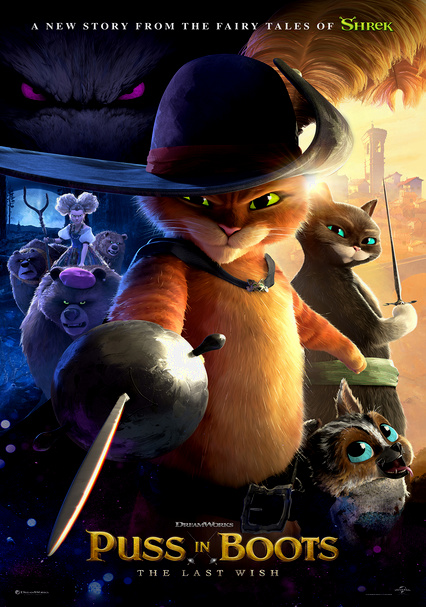
Puss in Boots: The Last Wish-2022

Puss in Boots: The Last Wish-2022

Director Joel Crawford

Voices: Antonio Banderas, Salma Hayek Pinault

Scott’s Review #1,357

Reviewed April 14, 2023

Grade: B

There is a connection between the Shrek film series and Puss in Boots, which I didn’t realize until researching this review.

The title character appears in Shrek 2 (2004) and a film called Puss in Boots (2011), which I think I’ve seen but don’t remember well, precedes the 2022 film Puss in Boots: The Last Wish.

I’m not a big enough fan.

The film is an entertaining adventure, laden with bright, colorful animations and Skittles- or rainbow-type colors, marred by blacks and greys. This works well and provides energy.

There is also a cool incorporation of familiar fairy tale characters. The names are reintroduced mostly as scheming people intent on capturing Puss in Boots, which accelerates the fun and my interest.

The result is a good but not a great film. I’m not sure what would have made Puss in Boots: The Last Wish a masterpiece, but the target audience is firmly set on young viewers.

My two cats glanced at the screen once or twice before deciding on a cozy nap instead. They were not engaged.

Even the darker subject matters of death and dog abuse somehow fall by the wayside in favor of the other cute, adventurous, and fight sequences.

Surprisingly, they do not pack a deeper punch.

Puss in Boots (Antonio Banderas) returns as the daring outlaw who discovers that his passion for danger and disregard for his safety have taken their toll, and he is forced to consider retirement.

As a cat, he is on his ninth and last life!

He tries to get those lives back by returning to the Black Forest to find the mythical Wishing Star on his grandest quest yet. At the risk of death, Puss will have to ask for help from his former partner and nemesis, Kitty Softpaws (Salma Hayek Pinault).

They are joined in their journey by a chatty and cheerful mutt named Perro (Harvey Guillén). Together, they try to stay one step ahead of the fairy tale villains, including Goldilocks and the Three Bears, ‘Big’ Jack Horner, and the Big Bad Wolf.

I didn’t know the character histories of Shrek or Puss in Boots, despite having seen them, but I’m not sure that’s imperative to one’s enjoyment of the film. I quickly caught on that Puss in Boots and Kitty Softpaws were meant to be an ‘item’.

The story is a compelling enough adventure, but it becomes meandering a some point. I knew the troupe would ultimately emerge on the Wishing Star and all would end well. It did, and the characters rode swiftly off into the sunset.

That’s how a film like Puss in Boots: The Last Wish is supposed to end, and I respect that. Best not to tarnish youngsters too early, especially when reality can sometimes be quite dark.

The fun for me was the visuals and specific moments. Puss in Boots’s stunning, gleaming green eyes are astounding and balance nicely with Kitty’s blue ones.

‘Big’ Jack Horner is patterned after Donald Trump. Bullying, fat, and loud, he is a feared pastry chef and a crime lord who plans to use the Wishing Star to gain control of all magic. Snubbed as ‘Little’ Jack Horner as a kid, he vows revenge and exhibits a pouty, snotty vibe.

The writers must have fun with that character.

Finally, a darling sequence featuring Mama Luna, an elderly cat lady who initially takes Puss in, is excellent. Puss in Boots, more like a human being eating human food and using the toilet, is reduced to cat chow and a litter box, like all the other cats.

Director Joel Crawford and screenwriters Paul Fisher and Tommy Swerdlow carefully tone down the violence and darker themes in favor of a robust adventure and largely succeed.

Perfect for kids, it’s not bad for adults either.

Oscar Nominations: Best Animated Feature

The Lost Daughter-2021

The Lost Daughter-2021

Director Maggie Gyllenhaal

Starring Olivia Colman, Dakota Johnson

Scott’s Review #1,232

Reviewed February 21, 2022

Grade: A

Throughout The Lost Daughter (2021), there is a constant feeling of dread that may result in viewer anxiety. We know that bad things are coming, but we do not know how or when. This makes for good drama done exceptionally well by director Maggie Gyllenhaal in her astounding debut.

She has acted for years and has made the transition to writer/director.

Gyllenhaal adapts her film from a novel written by Italian author Elena Ferrante. The experience is extremely female-centered, and having a female pen both book and film makes it a rich and authentic project.

The result is a brilliant depiction of motherhood and choices, making it essential for everyone to see and appreciate this film.

However, the film is not for everyone, nor will it please those seeking a conventional work about mother and daughter love and moments of happily skipping through the field of daisies. It has feel-good moments, but it’s much darker than some might expect.

For me, those aspects are what make The Lost Daughter so damned amazing.

We meet middle-aged Leda (Olivia Colman) when the woman embarks on a seaside vacation in Greece. She begins to observe a young mother, Nina, played by Dakota Johnson, and her daughter, Elena, on the beach and becomes obsessed with them.

Leda unwisely butts heads with the mother’s menacing extended family, who may be mafia-related.

Leda begins to have memories of her early motherhood when she struggled to raise two young girls while balancing her career as a professor. When she spontaneously steals Elena’s doll, she becomes increasingly obsessive, battling moments of rage and emotion.

Colman is a perfect choice for the central character. From the first moment she appears on the screen, we know there is conflict surrounding her. She is consumed by anger and either guilt or tension.

The actress is outstanding at portraying Leda’s complexities through her eyes and facial expressions. Many shots of Leda quietly observing events or sitting on the beach, deep in thought, are powerful.

Though a quiet film, The Lost Daughter never drags or lags, thanks to Gyllenhaal’s perfect portrayal of a doleful atmosphere. I was dying to know Leda’s secrets, and the interspersing flashbacks to a young Leda, wonderfully played by Jessie Buckley, finally provide resolution.

But that’s just the beginning of the fun. Once Leda’s backstory is revealed, and Gyllenhaal makes us wait quite a while for the reveal, there are more places for the film to go, like what about the stolen doll?

The viewer will not only wonder why Leda stole the doll but also why she won’t return it, especially when it’s known how desperately the family wants it back. Will they kill her when they find out she has it?

Beneath all the drama, a lingering question is posed to the viewers. Do I want to be a parent? The film is not only for women, but men can certainly ask themselves the same question.

The inclusion of a male character played by Ed Harris is evidence of this. In his youth, he struggled with being a father.

The film has a sense of purpose and meaning that many films lack. A film that poses questions and makes the viewer squirm a bit is top-notch for me. The basic story of a lone woman on vacation evolves into a tale of intensity and psychological warfare within oneself and one’s feelings.

The Lost Daughter (2021) is a complicated watch, but it offers a lesson in outstanding acting, directing, writing, and how atmosphere and mood can enhance a story layered with intrigue.

As shocking and unsettling as moments are, I was left feeling satisfied that I had seen something of worth and merit.

I can’t wait to see what Gyllenhaal does next.

Oscar Nominations: Best Actress-Olivia Colman, Best Supporting Actress-Jessie Buckley, Best Adapted Screenplay

Independent Spirit Award Nominations: 3 wins-Best Feature (won), Best Director-Maggie Gyllenhaal (won), Best Screenplay (won), Best Supporting Female-Jessie Buckley

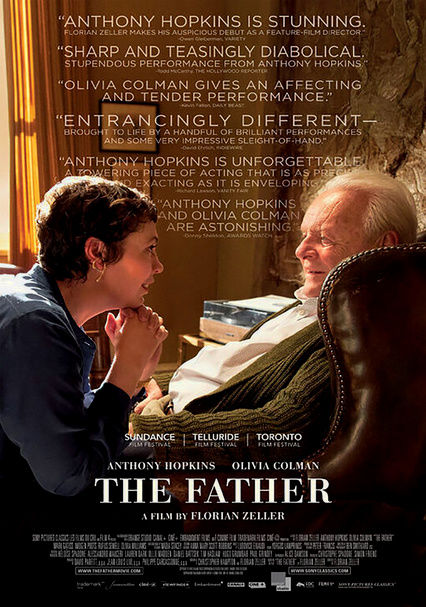
The Father-2020

The Father-2020

Director Florian Zeller

Starring Anthony Hopkins, Olivia Colman 

Scott’s Review #1,123

Reviewed March 17, 2021

Grade: A

The Father is a heartbreaking 2020 drama film co-written and directed by Florian Zeller, based on his own 2012 play entitled Le Père. The piece is wonderfully written and superbly acted with incredible empathy for the characters involved.

Everyone should see this important film.

Anne (Olivia Colman) has always adored her intelligent and independent father, Anthony (Anthony Hopkins), who’s approaching the treacherous age of eighty. His mind is not what it used to be by any means, and is starting to fail. Stubborn, he rejects every caregiver she brings in to assist with his daily living.

Anne finds herself in anguish about how to solve this crisis while striving to live her own life.

Zeller spins a brilliant story from the very first scene because it’s told from Anthony’s perspective rather than solely from Anne’s.

Traditionally, in films centering around Alzheimer’s disease or dementia, the perspective is from the family member and how they cope and handle a life-altering and painful situation.

2014’s Still Alice, starring Julianne Moore, is an exception.

Immediately, the viewer is forced into the same world as Anthony and suffers as much confusion as he does. This is tremendously effective. When Anthony rummages in his kitchen in his London flat and hears a door close, he is startled.

Who can it be?

He wanders to the living room to discover a man sitting reading the newspaper, who claims to be Anne’s husband. Anthony has never laid eyes on the man before. Neither has the viewer.

Immediately, Anthony and the viewer are confused. Who is the man? Is he a burglar playing tricks on an older man, or is Anthony forgetting?

From this point in the film, it remains unclear what events are happening and what Anthony is forgetting or misunderstanding. Sometimes the characters are ambiguous.

Does Anthony think one person (Olivia Williams) is Anne, but is she his nurse? Is his caretaker his other daughter, Lucy? Is the man his daughter or Anne’s husband?

Confusion. Disorientation. Just like anyone with Alzheimer’s disease or dementia feels regularly.

Towards the finale, the most heartwrenching part of the film, Anthony weeps at his memory loss, yearning to be a child again and safe in his mother’s arms.

We feel his despair and desperation, and it’s gutwrenching to witness. Anyone who has had to care for an elder will understand. Anyone else should be empathetic.

We suffer alongside Anne, too. Help is becoming a necessity for her; she can’t make daily visits anymore, and Anthony’s grip on reality is unraveling. She wants to move to Paris, where her new boyfriend lives.

In a chilling scene, we watch Anthony sleeping peacefully while Anne gazes lovingly at him. She tucks him in and then begins to strangle him. We hope this is only a fleeting fantasy, toying with the idea of saving him from further suffering and giving her freedom back.

As we experience the changing tides of his memory, how much of his own identity and past can Anthony cling to? How does Anne cope as she grieves the loss of her father, while he still lives and breathes before her?

Hopkins and Colman are dynamic.

It’s hard to imagine Hopkins usurping his unforgettable role as Hannibal Lecter in The Silence of the Lambs (1991); he nearly does. His character is humorous, dignified, and lovable. He is also angry, feisty, and frustrated. Hopkins channels almost every emotion.

Colman is teary but strong. A woman sacrificing her own life and happiness for the burden of caring for her father. She is loyal and wouldn’t think twice about having it any other way.

The story is a downer, but one that must be witnessed.

The Father (2020) warmly embraces real life through loving reflection upon the simple human condition; heartbreaking and uncompromisingly poignant, the film tells a simple yet complex tale about life, death, and loss.

Oscar Nominations: 2 wins-Best Picture, Best Actor-Anthony Hopkins (won), Best Supporting Actress-Olivia Colman, Best Adapted Screenplay (won), Best Production Design, Best Film Editing

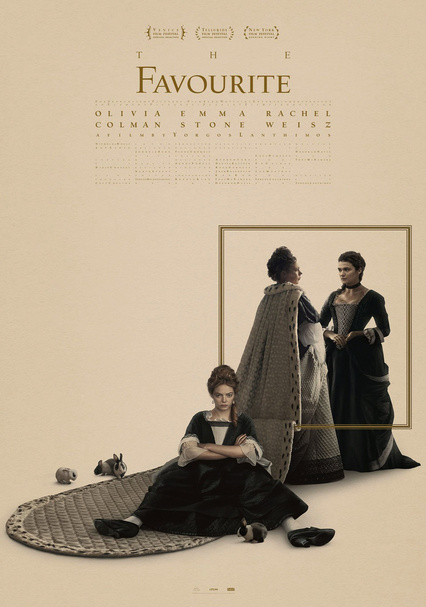
The Favourite-2018

The Favourite-2018

Director Yorgos Lanthimos

Starring Olivia Colman, Emma Stone, Rachel Weisz

Scott’s Review #843 

Reviewed December 17, 2018

Grade: A

The Favourite (2018) is a deliciously wicked comedy about greed, jealousy, and rage during early eighteenth-century England.

The primary rivalry consists of two feuding cousins, each jockeying for position and “favor” with the Queen, both resorting to dire methods to achieve these goals.

With splendid acting and grand designs, director Yorgos Lanthimos adds to his growing collection of odd and compelling works with the dark comedy offering.

The film takes place during the British and French War of 1708, as a physically and mentally ill Queen Anne (Olivia Colman) rules the country through her confidante and secret lover, Sarah, Duchess of Marlborough (Rachel Weisz).

Though deals and modifications must be made with the ruling Parliament, Anne has the final say in all decisions, including doubling the state tax to pay for the war.

When Abigail (Emma Stone), a distant cousin of the Duchess, and former royalty herself, arrives seeking work as a servant, she quickly plots her way to the bedside of the Queen at all costs.

Lanthimos, known for such bizarre treats like Dogtooth (2009), The Lobster (2015), and The Killing of a Sacred Deer (2017), is not afraid to get down and dirty and wrestle with the macabre subject matter.

The Favourite is the director’s most mainstream affair yet and is quickly becoming one of my favorite modern-day films. As he now charts into royal territory, the possibilities are endless in a world of politics and scheming.

Some morose highlights include an abused bunny, naked tomato throwing, and pheasant shooting.

The film is not kind to animals.

Despite being mainstream for Lanthimos, The Favourite is a bizarre and brazen experience. The film’s numerous award nominations are remarkable, given that not all audiences will enjoy it.

Despite being categorized as a comedy (see more below), the film is not an easy watch, and none of the characters are likable. Abigail is initially sympathetic and quite humorous, but her true colors and motivations are exposed as the plot develops.

Conversely, Anne and Sarah are initially despicable, but garner support as the story evolves.

The comic elements are the best, and clever lines come at a deliciously rapid pace. The best dialogue is the sparring between Sarah and Abigail, as the women realize they are bitter enemies and each attempts to one-up the other in a chess game for Anne’s attention.

Anne, known for fits of emotion, stuffing her face with cake and vomiting, and berating the servants, offers her comic wit. The language is salty, bordering on vulgar, but that makes the experience so stellar and morosely enjoyable.

The musical score adds muscle, and the diabolical string arrangements give The Favourite a gruesome, morbid atmosphere.

The feeling of dread is prevalent and downright haunting at times, as the audience knows that some shenanigans will soon occur, but they do not know when or how.

This quality enhances the overall product and gives ambiance to a superior piece.

Finally, the acting in The Favourite is brilliant and worth the price of admission. This is unsurprising with heavyweights like Colman, Stone, and Weisz, but the gravy is in the individual moments.

The chemistry the women share is what works best, as every scene sparkles with exceptional delivery and a sly sense of humor. When the three women appear together, these are the best scenes.

Deserving of all the accolades lauded upon it, The Favourite is an experience that contains all elements of a fine film, though one that is quite an unconventional work.

With glistening art direction, authentic set pieces, and costumes that would make Scarlett O’Hara drool with envy, The Favourite (2018) takes all of its parts and spins a crafty tale that encompasses the entire film.

Oscar Nominations: 1 win-Best Picture, Best Director- Yorgos Lanthimos, Best Actress- Olivia Colman (won), Best Supporting Actress- Emma Stone, Rachel Weisz, Best Original Screenplay, Best Production Design, Best Cinematography, Best Costume Design, Best Film Editing

Independent Spirit Award Nominations: Best International Film

Murder on the Orient Express-2017

Murder On The Orient Express-2017

Director Kenneth Branagh

Starring Kenneth Branagh, Johnny Depp, Michelle Pfeiffer

Scott’s Review #698

Reviewed November 25, 2017

Grade: B+

Kenneth Branagh leads and directs an all-star cast in a 2017 remake of the 1974 thriller Murder On The Orient Express.

The film is based on the famous 1934 Agatha Christie novel of the same name. With a ritzy cast that includes Judi Dench, Johnny Depp, Michelle Pfeiffer, Penelope Cruz, and Willem Defoe, top-notch acting is assured.

The cinematography is tremendous, and the film looks gorgeous from start to finish. The story is an effective, good, old-fashioned whodunit that will satisfy audiences.

We meet our hero, Hercule Poirot (Branagh), in Jerusalem. He has recently solved a murder mystery and is anticipating a good rest. A friend invites Poirot to travel back to his homeland of London via the lavish Orient Express.

Amid a group of thirteen strangers, all inhabiting the luxurious first-class accommodations, one of them is savagely murdered in the middle of the night as a blustery blizzard and subsequent avalanche derails the train atop mountainous terrain.

The strangers are trapped together with a murderer on the loose. Poirot must deduce who has committed the crime and why.

Murder On The Orient Express has all the trimmings for a good, solid murder mystery, and director Branagh sets all of these elements in motion with a good flow.

Paced quite nicely, each principal character is introduced intriguingly, so much so that each contains a measure of juicy intrigue. The film briefly describes each character as they board the grandiose train.

Judi Dench broods as rich and powerful Princess Dragomiroff oozing with jewels and a chip on her shoulder. Corrupt American businessman, Samuel Ratchett (Johnny Depp), is suave and shady as he seems destined to cause trouble.

Finally, Penelope Cruz gives her character, repressed Pilar Estravados, enough shame and guilt that we cannot think something may be off with her motivations.

The details of the characters are rich and compelling.

The playing field is set very high with actors such as Dench and Depp, and all actors play their parts with gusto.

An excellent experience with Murder On The Orient Express demonstrates the true nature of an ensemble cast—each character is relevant in his or her own way, regardless of screen time, and the casting works well.

The cast must have enjoyed working together on this lovely project. Each character is written so that the individual actor can sink his or her teeth into the role, and the wonderful reveal at the end of the film allows each a chance to shine, giving each part equal weight.

After the actual murder is committed, the story takes off as each character is interviewed by Poirot and given a glance of suspicion.

The first half of the film is just the buildup, and, at times, the story slightly lags, but this is fixed when the movie kicks into high gear midway through.

Sometimes, a climactic conclusion makes up for any slight lag in the film’s first portion, and Murder On The Orient Express is an excellent example of this.

My standouts are Branagh himself as Poirot and Pfeiffer as the sexy Caroline Hubbard, an American man-crazed older woman.  How wonderful to see Pfeiffer back in the game in 2017- with fantastic roles in Murder On The Orient Express and Mother!

She has the acting chops to pull off sex appeal, vulnerability, and toughness. Branagh’s acting never disappoints in any film he appears in, but seeing him in a leading role is fantastic, and he can carry a film with such a dynamic cast.

Branagh’s Poirot is classy, intelligent, and charismatic.

I adored the film’s conclusion and found the explanation and reasoning of the murderer or murderers quite effective and believable. The use of black-and-white flashback scenes perfectly balances the action aboard the grandiose yet slightly claustrophobic train scenes.

Furthermore, the explanation and motivations of the killer or killers make perfect sense, and much sympathy is evoked. The story is moralistic and not a black-and-white subject matter.

Murder On The Orient Express succeeds as a wonderfully shot and star-studded affair. The filming is grandiose, and the production values are high. It is a caper film with a mystique and class.

The film may not be a true masterpiece or necessarily remembered ten years from now, but what it does, it does well.

The original film from 1974 is a tad bit better, but as remakes go, the 2017 offering is quite good.

A rumored sequel, Death on the Nile, is planned.

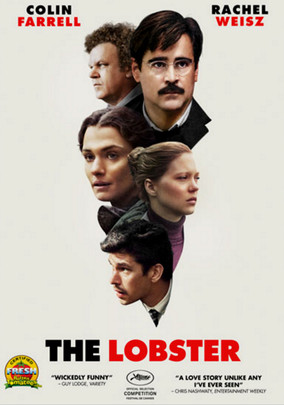
The Lobster-2016

The Lobster-2016

Director Yorgos Lanthimos

Starring Colin Farrell, Rachel Weisz

Scott’s Review #635

Reviewed April 20, 2017

Grade: A-

One thing is sure about the puzzling 2016 film The Lobster: It is a film worthy of discussion long after the end credits roll and will leave the viewer pondering its many facets—a great movie to dissect.

This in itself is worth recognition and praise for the power of the film- so many questions abound.

I was immediately struck by how heavily The Lobster contains primary subject matter influences from “message novels” (and films) such as Brave New World, 1984, and A Clockwork Orange, as well as creative, stylistic recent film influences from The Grand Budapest Hotel (2014) and the Moonrise Kingdom (2012).

The story begins outside of Dublin, where David (Colin Farrell) has recently been dumped by his wife in favor of another man.

Now single, he is whisked away by authorities to a luxurious hotel in the woods, where he (and the other guests) are given forty-five days to find a suitable romantic partner, or else they will be turned into an animal of their choice.

David is accompanied by his brother, now a dog, and has decided that he should be turned and that he will become a lobster because he loves the sea, and they tend to live to be over one hundred years old.

The hotel management adheres to strict rules- no masturbation, mandatory temptations by hotel employees, and a strange outdoor hunting game where the guests hunt other guests to win extra days extended to their stays.

As David befriends fellow hotel guests, he is conflicted and desperate to find a mate. Events take a surprising turn when circumstances allow the rules to change for him, and he becomes involved with a short-sighted woman (Weisz).

The film’s plot is strange beyond belief yet incredibly creative and thought-provoking. The subject matter is pure dystopian- a facility, presumably controlled by the government, with a rebel group intent on ruining the “status quo.”

Suddenly, an odd little secret romance between David and Shortsighted Woman appears, beginning only during the film’s final act.

One aspect of the film that I found interesting was the odd monotone dialogue the characters used. They were almost matter-of-fact in whatever they said, even while expressing anger.

This peculiarity perplexed me, but the more I think about it, the more this decision makes the film dark-humored and dry with wry wit.

Another interesting nuance to the film is the multitude of quirky characters, many of whom are mainly referred to by their nicknames. Lisping Man, Limping Man, and Nosebleed Woman, to name a few.

And what viewer would not spend the film’s duration imagining which animal he or she would desire to be turned into and why?

My favorite aspect of the film is the offbeat performance by Colin Farrell- typically a rugged sex symbol, he goes against the grain and plays a pudgy, socially awkward, insecure man, but all the while instilling the character with enough warmth and likability to make the character work- and his chemistry with Rachel Weisz is fantastic.

This turns the strange dark comedy into a peculiar romantic drama.

A beautiful forest becomes the backdrop for a large part of the film, as does the city of Dublin itself, contrasting the film in nuanced ways. Combined with the lavish hotel, the film achieves several different settings for the action, each meaningful in its own right.

Without giving anything away, the conclusion of the film- the final scene in particular- is gruesome in what goes through the viewer’s mind, and the resolution is unclear.

Does David do it, or doesn’t he? Much of the film is open to one’s interpretation and imagination.

Black humor and cynicism are significant components of The Lobster, a thinking man’s movie. I continue to think of this film as I write this review.

The film is filled with originality and thought, which is a tremendous positive. Confusing and mind-blowing? For sure. A run-of-the-mill film? Not.

The Lobster (2016) is a film that gives no answers and is not an easy watch but an achievement in film creativity- something sorely needed.

Oscar Nominations: Best Original Screenplay