Tag Archives: Dame May Whitty

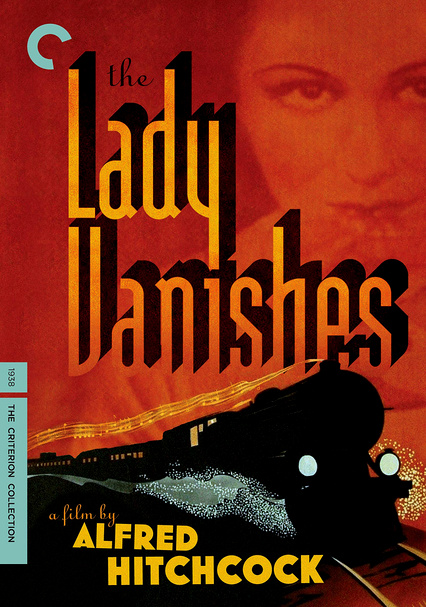
The Lady Vanishes-1938

The Lady Vanishes-1938

Director Alfred Hitchcock

Starring Margaret Lockwood, Michael Redgrave, Dame May Whitty

Scott’s Review #1,303
Reviewed September 30, 2022

Grade: A-

The Lady Vanishes (1938) is a film directed by Alfred Hitchcock that I’m embarrassed to admit I’ve only seen once. Nonetheless, it resonated well with me after that sole viewing, and its influence is palpable.

It’s a film made when Hitchcock was still making films in his native Britain before he took over Hollywood during the 1950s and 1960s. You may wonder why a dusty old film made in the 1930s and not a household name is essential, but The Lady Vanishes is.

If the film had not been made and, more importantly, not been a box-office success, films like Vertigo (1958), Psycho (1960), and The Birds (1963) might never have been made.

The Lady Vanishes followed three relatively unsuccessful efforts by Hitchcock, whose success assured his new film career in America was a go.

The film is not as brilliant as the others, but pretty close. It serves as a blueprint for future Hitchcock films.

The train sequences alone conjure thoughts of Strangers on a Train (1951) and North by Northwest (1959), while the romance between the lead actors would become a staple of Hitchcock films.

Finally, the subdued but noticeable inclusion of gay characters is forever a good debate among cinema lovers, especially Hitchcock fans, as to whether it is or isn’t showcased.

So, The Lady Vanishes is to be celebrated for its influence, but it also stands up well on its own.

A dangerous avalanche delays a group of travelers on a train to England. Forced into a hotel in the lush European country, beautiful young Iris Henderson (Margaret Lockwood) befriends an older woman named Miss Froy (Dame May Whitty).

When the train resumes travel, Iris is unconscious after being hit by a potted plant and wakes to find the older woman has mysteriously disappeared. The other passengers vehemently deny that Miss Froy ever existed, causing Iris to wonder if she has lost her marbles.

Iris determinedly begins investigating the matter with the help of another traveler, Gilbert (Michael Redgrave). The pair searches the train for clues and naturally falls in love.

They uncover a mystery, political intrigue, and peculiar characters with secrets to keep hidden.

Lockwood and Redgrave have fantastic chemistry. It’s no secret that Hitchcock intends to bring them together even though Iris is to marry when she returns home. Lockwood and Redgrave are easy on the eyes, which helps make them believable.

The pacing of The Lady Vanishes is perfect, but nowhere as astounding as the sequence of events in North by Northwest, which is the film it most resembles. That’s why the rough-cut analogy springs to mind—the film is a perfect warm-up act for the 1959 masterpiece.

From an LGBTQ+ perspective, my money is on the characters of Charters and Caldicott. Ferocious cricket enthusiasts whose only initial concern is returning to England to see the last days of a Test match. The ‘friends’ proved so popular with audiences that they returned to the film Night Train to Munich 1940, also starring Lockwood.

The revelations at the end of The Lady Vanishes surprise and satisfy, with political and espionage overtones. Frequently, in Hitchcock films, there is a McGuffin or someone who cares about the plot element.

The plot shouldn’t be overthought in the film, as the real fun is the trimmings that make the suspense so strong. The wit and snappy dialogue make the characters a pleasure to watch.

The Lady Vanishes (1938) is a terrific effort that provides strong character and stiff-upper-lip British humor. It is also the most fun to watch, highlighting the many elements that makeup Hitchcock’s masterpieces.
Suspicion-1941

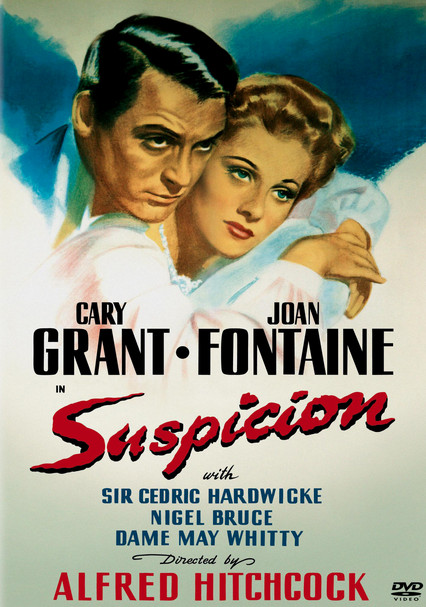
Suspicion-1941

Director Alfred Hitchcock

Starring Cary Grant, Joan Fontaine

Scott’s Review #1,029

Reviewed June 3, 2020

Grade: B+

An early American effort by the master of suspense Alfred Hitchcock (1941) follows the Oscar-winning Rebecca (1940) with a similarly themed film.

A dazzling beauty (Joan Fontaine) is manipulated by her charming husband (Cary Grant), but is he gaslighting her and plotting her death, or is it all in her mind? The puzzle unfolds with a sizzling final thirty minutes that eclipses the remainder of the film, which drags and plods along slowly.

Wealthy but insecure Lina McLaidlaw (Fontaine) meets handsome and irresponsible playboy Johnnie Aysgarth (Grant) on a train in England. He charms her into eloping despite the strong disapproval of her father, General McLaidlaw (Sir Cedric Hardwicke), who thinks Johnnie is after the family’s money.

After a lavish honeymoon and return to an extravagant new home, Lina discovers that Johnnie has no job and no income, habitually lives on borrowed money, and intends to try to sponge off her father.

She talks him into getting a job, which he embezzles from.

Lina begins to think that not only is Johnnie after her money, but he intends to kill her. She becomes aware of his financial schemes and motivations, feeling conflicted over her love for him and her survival.

Events kick into high gear after a friend’s death, an insurance policy, and discussions with an author’s friend, Isobel Sedbusk (Auriol Lee), a writer of mystery novels about untraceable poisons. A bizarre dinner conversation surrounding ways to get away with murder causes Lina to start unraveling.

Many suspensions of disbelief must be contained in frustrating measures throughout most of the film, and a bothersome level of female mistreatment is to be endured.

From the very first scene, Lina’s insecurity gnaws at me. She is gorgeous, rich, and intelligent, so why does she feel, and is perceived even by her parents, as a lonely spinster sure to become an old maid?

Despite Hitchcock’s love of glasses on female characters, brandishing Lina with gawky bifocals hardly makes her an ugly duckling. Johnnie’s nickname, “Monkeyface,” is jarring and insulting.

The determination not to make Hollywood royalty Carey Grant too bad of a guy does not work. It feels like a weak effort to suddenly change the story to thwart the perception of a character as not a villain but someone to feel sympathetic toward.

Unclear is if this was Hitchcock’s decision or the mighty studio’s (my best guess would be the latter since Hitchcock was not afraid to take risks). The audience hardly has a chance to let their emotions marinate as the big reveal quickly culminates in the end credits rolling, and the film concludes.

A significant positive to Spellbound is the hidden tidbits brewing beneath the main saga of the Hollywood glamour boy and girl (Grant and Fontaine).

A clever LGBTQ+ revelation among two supporting characters can be unearthed decades before the terminology was invented. Hitchcock loved his gay characters, who could not be openly gay, though the director did his best to offer the now-obvious idiosyncrasies.

Sophisticated Isobel seems to live alone in her quaint and lovely cottage, but during a dinner party, a blonde woman wearing a suit and tie, clearly butch, joins the conversation. As Isobel asks her to pour more wine, we realize she is hardly a servant but Isobel’s lesbian lover!

The stunning yet highly subtle revelation is prominent to eagle-eyed viewers and cagey enough to catch on. In addition to these lovely ladies, an odd-looking male dinner guest wearing glasses and discussing murder novels is an interesting character, though we see little of him.

The same can be said for Lina’s sophisticated mother, Mrs. Martha McLaidlaw (Dame May Whitty), and Lina and Johnnie’s maid, Ethel (Heather Angel). Both, playing minor roles, add subtle delights to the film.

Suspicion (1941) is an early Hitchcock film that is rarely mentioned among his best works. The film is a tough sell because of its tedious pace, the lead character’s inexplicable insecurity, and the unfulfilling story conclusion.

The suspense and activity in the final act (mostly the stunning edge of the cliff car drive) promote the film to an above-average rating, but grander works were soon to follow in the decades ahead.

The most fun is noticing the delicious peculiarities of interesting supporting characters.

Oscar Nominations: 1 win-Outstanding Motion Picture, Best Actress-Joan Fontaine (won), Best Scoring of a Dramatic Picture

Mrs. Miniver-1942

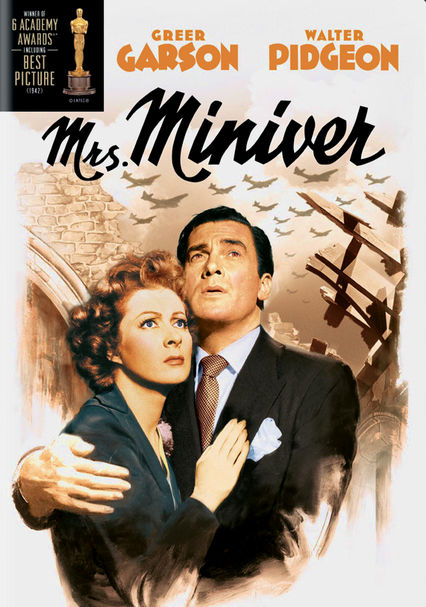
Mrs. Miniver-1942

Director William Wyler

Starring Greer Garson, Walter Pidgeon

Scott’s Review #841

Reviewed December 13, 2018

Grade: A-

Released in 1942 amid the horrific World War II, Mrs. Miniver (1942) was a smash hit, winning over audiences concerned with the troubled and uncertain times.

Decades later, the film does not age as well as other similarly themed films, but still entertains and tells a good story with an important theme.

The film is nestled in the war drama genre with romance. The film won numerous Oscars the year of its release, including Best Picture and star Greer Garson won for Best Actress.

The story is told from the perspective of an affluent British family and the struggles they face to keep things together during growing peril. The focus primarily remains on an unassuming housewife, Kay Miniver (Garson).

The supporting players do much to flesh out the film with fantastic performances by Walter Pidgeon, Teresa Wright, and Henry Travers as Clem Miniver, Carol Beldon, and Mr. Ballard, respectively.

The direction by William Wyler is astounding and adds to the perfectly crafted ambiance and homey details.

The family lives a comfortable life in a whimsical village outside of London. Quite idealized, they own a large garden and a motorboat on the River Thames.

Along with Kay and Clem, their three children of varying ages and their housekeeper and cook reside with them. Besides the parents, the central couple is son Vin (Richard Ney) and the prominent Carol (Wright); the pair initially disagree on politics but finally fall madly in love.

As the soap opera-style family situations continue, the war grows closer and closer to their house.

As Mrs. Miniver progresses, Vin enlists in the army to assist with war efforts, a German Nazi breaks into the Miniver house, a central character dies, and bombs and planes crash.

Through it all, Kay remains stoic and takes the family through challenging situations, adding melodrama to the film. The woman’s journey and resolve to keep everything and everyone intact is at the core.

The film is mainly a family drama with the Minivers and the townspeople experiencing trials and tribulations. In this way, Mrs. Miniver risks being a one-trick pony, albeit an emotional and teary-eyed one.

The film’s rich characteristics and polished nature make it more than it ought to be, and the superlative cast, production values, and timely release undoubtedly made it what it was in 1942.

In present times, however, Mrs. Miniver seems diminished in importance and relevance with a sappy and overly sentimental feel, World War II in the distant past, and several other wars come and gone.

Wyler carefully packaged the film to hit every emotion, from the bombastic musical score to the proper English characters to the comic relief housekeeper.

The film is a giant Hollywood production, but perhaps a bit too perfect to age with any zest or reason to watch more than once.

The film might be better remembered for its strong female lead. Told from Kay’s perspective, it was unusual in 1942 for a movie (especially with a war theme) not to have the story from the male point of view. Still refreshing in 2018, this quality was downright groundbreaking at the time.

Kay stays strong and proud through the ravages of war that are closing in on her family with unbridled boldness and nary a simpering quality. Wright’s Carol is an early champion for strong, female-driven characters, and, in a more minor way, she is also a muscled female role model.

Mrs. Miniver (1942) is a well-crafted film of its time that displays lavish production values and strong characters worthy of admiration.

The film is a significant win for a glimpse of the 1940s, especially for fans of good, solid drama. There are no significant flaws to harp on, but the overall piece has not aged exceptionally well, and other similar films (Casablanca, 1942) are more memorable.

Oscar Nominations: 6 wins-Outstanding Motion Picture (won), Best Director-William Wyler (won), Best Actor-Walter Pidgeon, Best Actress-Greer Garson (won), Best Supporting Actor-Henry Travers, Best Supporting Actress-Teresa Wright (won), Dame May Whitty, Best Screenplay (won), Best Sound Recording, Best Cinematography, Black-and-White (won), Best Film Editing, Best Special Effects