Tag Archives: Sebastian Maniscalco

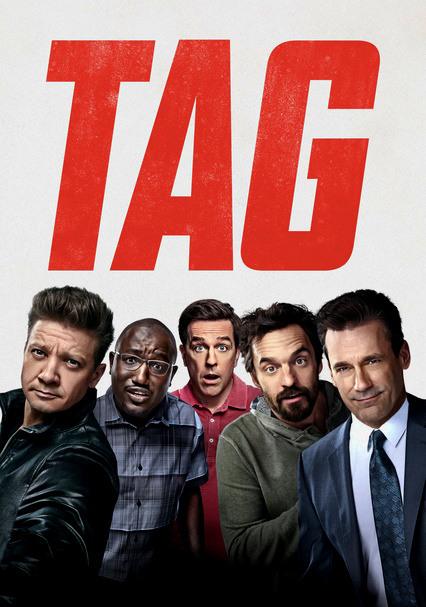
Tag-2018

Tag-2018

Director Jeff Tomsic

Starring Ed Helms, Jeremy Renner, Jon Hamm

Scott’s Review #1,010
Reviewed April 10, 2020

Grade: D

Tag (2018), starring Ed Helms, weakly attempts to re-create some semblance of magic that The Hangover trilogy (2009-2013) initially had, in which the actor starred.

The result is an over-the-top and self-indulgent mess that incorporates the standard gags that raunchy comedies always do and a little more.

The characters are caricatures, and the film provides no character development or anything fresh to stay with the viewer after the credits roll at the end.

The most interesting part is post-credits, where the real-life figures the film is based upon appear.

The film gets off to a dumb start as Hogan Malloy (Helms), an established physician, inexplicably gets a job as a janitor at an esteemed corporation to go undercover and “tag” Bob Callahan (Hamm).

The childhood friends, along with “Chilli” Cilliano (Jake Johnson), and Kevin Sable (Hannibal Buress) attempt to pursue and “tag” their other buddy Jerry Pierce (Jeremy Renner), who has alluded to the “loser award” for the past thirty years, given to the member last tagged during May, when their annual contest is held.

The rest of the film piggybacks on this premise as the group pursues Jerry in tired form as adventures ensue. The specifics are running through other people’s apartments, tumbling down fire escapes, impersonating older women, and continued use of backflips, stop-motion editing, and nutty situations.

You get the idea.

The least appealing quality of Tag is that it feels forced and too derivative of similar films. The filmmakers try to create a “buddy film” and a camaraderie between the characters that never amounts to much. The reason for this is that they embed each character with specific qualities that define them instead of making them fresh or creative in any way.

We meet Chilli as he smokes pot with his father, revealing that he is divorced, unemployed, and a pothead. Bob is uptight, business-like, and the ladies’ man. A token black character (Kevin) is the comic relief.

The characters are one-note and uninspired.

Other weak points from a character standpoint are prevalent. Hogan is written as the “straight man,” meaning the most sensible of the group. He is the main character and has a competitive streak that his wife, Anna (Isla Fisher), shares.

Her character is most irritating as she has fits of rage and then turns sweet. Fisher has been cast in raunchy comedies for most of her career, so it would be nice to see her branch out to better roles.

Finally, Hogan’s mother, the local bartender, and a fitness worker are written poorly.

As a bonus, the film adds a homophobic sequence to offend audiences. Meant for laughs, as are most offensives, the male fitness worker is lightly interrogated as the men attempt to locate Jerry.

A back-and-forth involving presumptive oral sex is written as a joke, and in addition to being unnecessary, the sequence goes on and on.

Wishful thinking is for genre comedies to finally create something fresh and stereotype-free or make mockeries of groups of people.

Predictably, the conclusion is silly and trite. The film culminates in a hokey wedding scene when the friends are tricked by Jerry’s fiance, who fakes a pregnancy and miscarriage in a gag-worthy effort. A moment of feigned sincerity is followed by a juvenile rapid-fire torrent of “You’re It!” that would make a ten-year-old boy roll his eyes in disbelief.

Tag is not a complete disaster. If one sticks to the entire watch, a couple of tidbits of pleasure emerge. Familiar classic rock songs like Danzig’s “Mother,” Ozzy Osbourne’s “Crazy Train,” and “Mmm Mmm Mmm Mmm” by Crash Test Dummies are interspersed throughout the running time.

An added romantic triangle between Bob, Cheryl (Rashida Jones), and Chilli has potential if it were not relegated to a subplot with no resolution. Both men have chemistry with Cheryl and possess some likeability.

A film that will certainly wind up in the $1.99 (or less) bargain bin, Tag (2018) might have been a relaxed effort by the cast of actors to shoot, but they must have had more fun than anyone watching it will have.

With big-name stars and an interesting premise on paper anyway, the film fails to deliver the goods, embellishes based on a true story to the max, and results in a complete waste of time.
The Irishman-2019

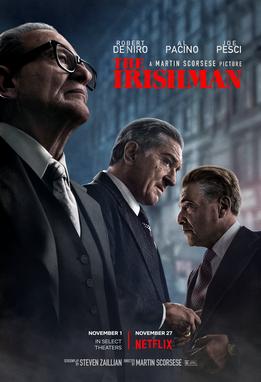
The Irishman-2019

Director Martin Scorsese

Starring Robert De Niro, Al Pacino, Joe Pesci

Scott’s Review #960

Reviewed November 20, 2019

Grade: A

Any film created by legendary director Martin Scorsese is sure to impress legions of adoring followers and most critics.

Every project he touches results in something fantastic, and it’s easy to revel in, with good analysis and discussion about the movie moments after the closing credits have rolled.

The Irishman (2019) is a film that demands repeated viewings and thoughtful consideration to appreciate the rich and diverse cast of characters fully.

The picture may not be on the same level as Goodfellas (1990) or The Godfather (1972), which it seems patterned after, but the work is awe-inspiring and should stand the test of time, resulting in a fine wine analogy.

The years will likely be kind to the film and enrich the experience- it’s that kind of film.

With stars like Robert De Niro, Al Pacino, Joe Pesci, and Harvey Keitel on board, the viewer expects a plethora of riches, and that is precisely what is delivered.

The film spans the period from the 1950s to the 1970s.

It follows the life of Frank Sheeran (De Niro), a truck driver who becomes a hitman and becomes involved with mobster Russell Bufalino (Pesci) and his crime family, including his time working for the powerful Teamster Jimmy Hoffa (Pacino). Sheeran is dubbed “the Irishman”.

He narrates much of the story, now quite elderly and residing in a nursing home, of his time in the mafia and the mystery surrounding the death of Hoffa.

The only negatives to the film are the suspension of disbelief that De Niro is Irish – was there ever a more quintessential Italian New Yorker? However, this film is directed by Scorsese and produced by De Niro, so they could tell me the sky is green, and I would readily nod in agreement.

At three hours and twenty-nine minutes, the film is a long haul, and towards the middle, the film meanders a bit. Perhaps twenty or thirty minutes could have been sliced to the cutting room floor.

The rest of the experience The Irishman serves up is brilliance, with rich characters and a fantastic atmosphere. Have I mentioned that Scorsese directed this film? The cast of characters is endless and drips with zest, speaking volumes for what The Godfather did with casting.

Many recognizable actors appear in minor roles, like Ray Romano as attorney Bill Bufalino, Bobby Cannavale as “Skinny Razor”, and Anna Paquin as Frank’s estranged daughter, Peggy.

An endless supply of character actors fleshes out the remaining cast.

Excellent is the plethora of food references that would impress notable food director Alfred Hitchcock, known for incorporating meals into many of his scenes. The delectable early scenes, when Frank delivers meat to grocers and gets into a discussion with a gangster over a good steak, will leave viewers mouth-watering for a tender sirloin.

The conversations between characters are interesting, slowly building and adding robust grit to a packed film. They engage in good, thoughtful dialogue exchanges and discuss life and experiences matter-of-factly.

Characters are given a chance to develop and grow, and even minor characters, such as a nurse or a wife, add a comforting aura. It is evident what treasured films look like when a director can create and develop without outside interference.

The standouts in the acting department are Pacino and De Niro, the former of whom I’m crossing my fingers will receive an Oscar nomination.

The pairing is flawless, and eagle-eyed fans will recall that both actors appeared together in The Godfather Part II (1974) yet never shared a scene.

In The Irishman, they appear together in pivotal scenes. Pacino infuses Hoffa with humor and poise, as only Pacino can, in a character. He is my favorite character and is tough to look away from.

Both actors, along with Pesci, are treated to a recent marvel in cinema —the de-aging process. Each actor, well into his seventies, is transformed to appear in his mid-forties in many scenes and then aged to appear elderly later in life.

While each has a strange, unnatural look as a younger man, the process is impressive and an innovative technique that will surely become more common in film, subsequently offering limitless possibilities.

The Irishman (2019) is a cinematic gem by a storied director advancing in years, but still offering grandiose films. With stalwarts like De Niro, Pesci, and Pacino, the players are well cast, and nuanced touches add dimensions to the finished product.

Offering a gangster film with grace and style, the story is poignant and crisp, and a thoughtful approach to one of the legendary mysteries- what happened to Jimmy Hoffa?

Oscar Nominations: Best Picture, Best Director-Martin Scorsese, Best Supporting Actor-Al Pacino, Joe Pesci, Best Adapted Screenplay, Best Production Design, Best Cinematography, Best Costume Design, Best Film Editing, Best Visual Effects

Green Book-2018

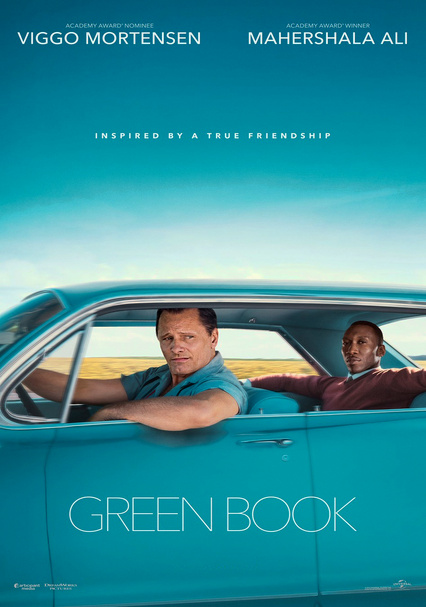
Green Book-2018

Director Peter Farrelly

Starring Viggo Mortensen, Mahershala Ali

Scott’s Review #839

Reviewed December 10, 2018

Grade: A

To be candid, it was not originally on my radar to see Green Book (2018) despite the high regard and the bevy of award nominations reaped upon the film.

From the trailers, and admittedly my assumptions, the production looked somewhat like a Driving Miss Daisy (1989) role reversal with the standard over-saturation and glossy view of racism.

I confess to being wrong in my initial assessment. Green Book is a wonderful film with a multitude of worthy efforts. It successfully crosses the drama and comedy barriers and delivers an astounding message of compassion and benevolence.

Viggo Mortensen and Mahershala Ali exhibit tremendous flair and fine chemistry as an Italian blue-collar driver and an astute African-American classical pianist.

The men travel together in the Deep South circa 1962 on a concert tour requested by the renowned musician despite the dangers of southern racism and prejudice.

Mortensen’s Tony Lip is a struggling New York City bouncer who needs any gig for two months while the club he works for is closed for renovations. Ali plays a sophisticated musician who needs a driver with a measure of toughness, and Tony comes highly recommended.

The two men initially are strangers but form a close-knit bond and a deep understanding of each other as they become better acquainted during their journey.

The first half of the film focuses on Tony.

As viewers, we experience his Italian lifestyle. He possesses a strong family unit and a dedicated wife, Dolores (Linda Cardellini). He loves to eat and won a hot dog eating contest for $50 to pay the rent. He thinks nothing of beating an unsavory character to a bloody pulp if they are out of line and have more than one link to the mafia.

Still, he is a decent man, with a salt-of-the-earth mentality, and loves his family.

“Doc” Don Shirley (Ali) is the opposite of Tony. Raised as a highly gifted musical prodigy, he surrounds himself with high culture, is well-versed in many languages, and is of affluent means. Nonetheless, he is a wounded soul and drinks himself into oblivion each night, frequently deep in thought, pondering life and its problems.

Despite being black, he knows nothing about black culture.

Don is highly uncomfortable in his skin, while Tony is happy with who he is, a significant point that the film hits home on as the men have conflict. Don feels Tony can do much better to educate himself, while Tony sees nothing wrong with being who he is. The men forge a middle ground as they come to respect each other.

Ferrelli does a fantastic job in showing Tony as Don’s protector as he is accosted by rednecks or is caught with another man at the YMCA.

In turn, Don helps Tony write warm love letters to Dolores.

Green Book is a film about friendship and how different backgrounds can result in closeness and respect.

The film is humanistic in its approach to an overall message and is the feel-good film of 2018 without the slightest thread of sappiness or contrived situations. It is best about two real-life men who remained friends until their deaths.

Director Peter Farrelly, known chiefly for silly films such as Dumb and Dumber (1994), finds breakthrough success with Green Book.

The film is mainstream material, but of a sort that can be appreciated for the good it exudes. Don exhibits racism on more than one occasion- Birmingham and Mississippi specifically- but also experiences kindness from other folks.

Worth noting is that Don experiences discrimination and abuse not only from whites but also from blacks. Farrelly avoids the usual stereotypes or elicits humor from them as in the scene where Tony teaches Don to enjoy fried chicken, a foreign food to Don.

A key point of the film occurs early on when Dolores graciously invites two black workers to repair, thinking nothing of treating the men to a refreshing lemonade.

Seeing the empty glasses in the sink, Tony throws them in the trash, not wanting to drink from the same glasses. Is Tony, along with his family, racist or uncomfortable with blacks? Regardless of the answer, they think very differently after the film, which is monumental.

The final sequence of Green Book is teary, heartfelt, and provides a feeling of incredible warmth.

In the tumultuous times of current American history, Green Book (2018) is sentimental and inspirational in a day when racism once again reared its ugly head, thanks to the chaotic political environment.

The film is a lesson in how far we have come as a society, but also in how things have not changed so much and how much further we need to go to create equality for all.

Farrelly creates a timely and wonderful film that everyone can appreciate.

Oscar Nominations: 3 wins- Best Picture (won), Best Actor- Viggo Mortensen, Best Supporting Actor- Mahershala Ali (won), Best Original Screenplay (won), Best Film Editing