Tag Archives: Teyonah Parris

Candyman-2021

Candyman-2021

Director Nia DaCosta

Starring Yahya Abdul-Mateen II, Teyonah Parris

Scott’s Review #1,217

Reviewed January 8, 2022

Grade: B

Not being such a fan of the original Candyman horror film from 1992 though admittedly not remembering it too well either I had mixed feelings when I heard that a reboot was in the works.

I’ve learned that while most remakes, especially in the horror genre, are not masterpieces, there is some joy in seeing them resurface.

I was delighted when I realized that Jordan Peele, the magnificent modern director of gems like Get Out (2017) and Us (2019), had co-written the screenplay.

Peele tends to create intelligent and well-written black characters, a representation that is still underrepresented in film today.

I admire the creativity and visual aspects that the new Candyman (2021) offers, and the characters, primarily black, are to be respected and emulated because they are the heroes of the film.

The social message is another win, and Peele is not the only player deserving of credit: newcomer director Nia DaCosta treats the viewer to more than the story. An artsy and sophisticated downtown Chicago art gallery, along with a swanky apartment, are the main settings.

With all these credos, Candyman is not a complete win and is sometimes overcomplicated. The supernatural elements, paired with a socially relevant angle, are implausible, and I yearned for a more direct and accountable approach rather than fantastical storytelling.

The film has a specific left-wing message, which I champion but that others may not.

For as long as residents can remember, the urban housing projects of Chicago’s Cabrini-Green neighborhood have been terrorized by a word-of-mouth ghost story about a supernatural killer with a hook for a hand. He can easily be summoned by simply repeating his name five times into a mirror.

As a child, Anthony McCoy (Yahya Abdul-Mateen II), who was a resident of the towers, met a man assumed to be the killer, who was then unnecessarily killed by police.

Decades later, the Cabrini towers are long gone, and Anthony is a struggling visual artist. He and his girlfriend, gallery director Brianna Cartwright (Teyonah Parris), move into a luxury loft condo in Cabrini, now gentrified and inhabited by affluent millennials.

Anthony has a chance encounter with a former Cabrini-Green resident named Billy Burke (Colman Domingo). Anthony begins to explore these macabre details in his paintings, unknowingly unleashing a supernatural beast and risking his own sanity.

The sophisticated visual style, especially the wonderful drawings featured at the start and end of Candyman, is impressive. They provide a heavy and realistic portrayal of African American culture and the generations of unfairness and mistreatment they have suffered.

This relates to the film’s point and is nuanced in explaining why the supernatural force with the hook rises in the first place and exacts vengeance on those who conjure it.

The final sequence cements this detail as a slaughter erupts between Anthony, Brianna, and the police. The police are portrayed as unkind and corrupt, but I get the point of the film. Oftentimes, the police are no friends of poor black people.

Despite the social element, Candyman doesn’t feel preachy.

The lead actors are attractive and appealing, and even the original Candyman, actor Tony Todd, makes a brief appearance. Other characters from the original also make appearances.

The kill scenes, a must for a horror film, are delightful, especially a sequence in which a troupe of gossipy schoolgirls meets their maker in a bloody girl’s bathroom scene. Besides being fun, the scene features a camera visual through a makeup compactor that is highly effective.

It’s just that when the credits rolled, I didn’t feel enough satisfaction from what I had just seen. I was more perplexed by how the legend intersected (or did he become?) relevant to present times and to Anthony specifically.

Candyman (2021) delivers an entertaining and relevant themed resurfacing of a thirty-year-old film that I’m glad I watched. It sometimes delivers, but an otherworldly spirit sometimes overshadows the realistic and important racial message.
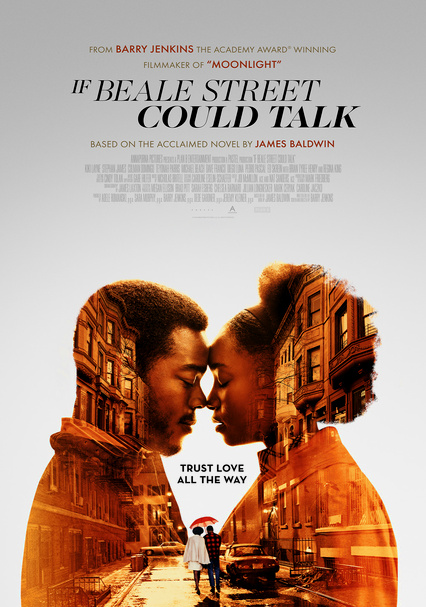

If Beale Street Could Talk-2018

If Beale Street Could Talk- 2018

Director Barry Jenkins 

Starring Kiki Layne, Stephan James

Scott’s Review #854

Reviewed January 8, 2019

Grade: A

2018 proved to be a year where filmmakers of color prided themselves in telling stories of diversity, inclusion, social injustice, and the never-ending challenges of minorities.

One of the year’s best films is If Beale Street Could Talk (2018), a lovely piece of storytelling by director Barry Jenkins. His other major work, Moonlight (2016), is a similarly poignant and melancholy experience.

The film is based on a novel by James Baldwin.

The title is explained in the first dialogue of the film. Beale Street exists in New Orleans, but thousands of streets exist in other cities. It is a metaphor for discrimination and unnecessary struggles that black folks continue to endure.

Right away, the audience knows that an important story is to be told.

The wonderful part of If Beale Street Could Talk is the combined elements that lead to brilliance.

Tish Rivers (Kiki Layne) and Fonny Hunt (Stephan James) have known each other since childhood. Growing up in a Harlem neighborhood, their families are interconnected and community-centered.

Events begin in 1973 when Tish realizes she is pregnant. Ordinarily, a happy occasion, this situation presents a major challenge because Fonny is imprisoned for a crime he did not commit.

A woman has accused him of rape and a corrupt policeman has positively identified Fonny as the rapist despite this being a logistical impossibility. Tish is determined to prove his innocence before the baby arrives with the assistance of her family.

The story is non-linear. Jenkins begins the film in the present day with Tish breaking the news of her pregnancy to him and then notifying her family.

As the film progresses, more of Fonny and Tish’s love story is explored. The couple falls in love, has romantic dinners, and nervously makes love for the first time. In this way, the film becomes a tender story of young love.

The social injustice and family drama are carefully mixed amid the central romance.

The film impresses with warm touches, ingenious cinematography, and a musical score that left me resounding with pleasure at the intricate and intimate details. The frequent use of jazz music over dinner or as the Rivers family sips celebratory wine adds sophistication to many scenes.

The film’s texture is muted and warm, giving it a subdued look that is genuine to the quiet and timeless nature of the production.

A plume of cigarette smoke can be seen in nearly every scene, as most of the characters smoke. Since the period is the 1970s, the authenticity is there, and a glamorous image is portrayed.

Smoking enhances the sophistication of the characters and adds to the tremendous cinematography.

Several scenes of simple dialogue crackle with authenticity and passion. In one of the best scenes, Fonny’s friend Daniel, a recent parolee, stays for dinner, and the friends talk while consuming beer and cigarettes.

The lengthy scene is poignant and tremendous with meaning. Daniel recounts his experience in prison and how black men are victims of the whims of white men and the terror involved in that. The scene is powerful in its thoughtfulness and a foreshadowing of Fonny’s impending trauma.

The supporting characters are stellar and add to the bravura acting troupe.

Regina King as Sharon Rivers gives an excellent performance when she bravely travels to Puerto Rico and confronts Fonny’s accuser, hoping to get her to modify her story. The scene is laden with emotion and honest dialogue.

The other notable actors are Colman Domingo and Teyonah Parris, who play Tish’s father and sister, respectively. Both do wonders in fleshing out the Rivers family as strong and kind people.

Jenkins is careful to add benevolent white characters to offset the other dastardly white characters. An example is the kindly old woman who comes to the rescue of Fonny and Tish and berates the cop.

The Jewish landlord who agrees to rent a flat to the pair is portrayed as decent and helpful, and finally, the young lawyer who takes Fonny’s case is earnest and understanding.

If Beale Street Could Talk (2018) continues talented director Barry Jenkins’s plunge into the depths of being one of the modern greats. With a beautifully visual and narrative film, he creates an experience sure to win more fans.

The ending is moving yet unsatisfying, as there are so many more miles to go in the race for prison justice. Adapting an important story of race and repression based on skin color is a powerful and detailed affair.

I cannot wait to see what Jenkins comes up with next.

Oscar Nominations: 1 win- Best Supporting Actress- Regina King (won), Best Adapted Screenplay, Best Original Score

Independent Spirit Award Nominations: 3 wins- Best Feature (won), Best Director- Barry Jenkins (won), Best Supporting Female- Regina King (won)

Dear White People-2014

Dear White People-2014

Director Justin Simien

Starring Tyler James Williams, Tessa Thompson

Scott’s Review #274

70298948

Reviewed September 18, 2015

Grade: B+

Dear White People (2014) is a highly creative, independent satire that begs to be watched for no reason other than for its message of existing racism in present times, homophobia, and class distinction.

Set at an Ivy League college and written tongue and cheek, but also with a direct message from newly discovered director Justin Simien, it is a meaningful gem that challenges audiences to think and be entertained and emit an occasional chuckle at the wit and comical lines presented.

Set in the present day- assuming 2013 or 2014, and well beyond the Civil Rights era, the film features a hip, sharp look and a myriad of characters, all with differing perspectives, all Caucasian or black in racial identities.

All the characters attend the affluent and sophisticated Winchester University, a mostly white, conservative school with a small community of black students, who curiously all seem to reside in the same dorm house.

In addition, the Dean is a black man (played by Dennis Haysbert).

Sam White is a rebellious female student, of mixed race, who runs a radio show entitled “Dear White People”, which challenges the current state of racism in America, specifically at Winchester University.

Supporting characters include Lionel Higgins, a gay, bookish student with an enormous afro, excluded from almost all the sub-groups. Lionel is intrigued by Sam’s radio show.

Other characters include Coco- an attractive black girl with typically “white” mannerisms and friends, who try to fit in with the white culture. Troy, a very handsome black student (who tries to act “white”), dates a white girl (who tries to act “black”).

Finally, the film features Kirk, a white student whose father is the school president, who values an old-style way of thinking. Kirk, shockingly, hosts a blackface party, which leads to major controversy at the school and is the focus of much of the film’s drama.

The main theme is race, but different characters have different viewpoints on the subject matter, and all are explored, which makes the film unique and interesting.

Sam, for example, is a true advocate for racial equality and constantly challenges white people’s motivations and actions, blatantly so.

Coco, on the other hand, is resistant to being stereotyped as a woman of color and, in one scene is incorrectly assumed to be from the hood by a reality television producer she is auditioning for.

She is envious of white people and the advantages they have, even going so far as having straight hair and blue contact lenses. Then we have Lionel, who is both gay and black, and considered an outcast. He fits in with no group and curiously seems okay with being his own person.

What is unique and compelling about Dear White People is that it brings up a controversial issue, mixes it in satire, humorously, but presents compelling arguments against stereotypes, also bringing those stereotypes center stage, which most films avoid like the plague.

One black character is frustrated that, in their mind, most black people are content watching dumb black comedies, thereby supporting a negative racial stereotype.

One interesting aspect regarding the score is the use of lily-white classic film music- such as Barry Lyndon (1975)- the most lily-white of lily-white films (British and Irish).

Famous film director, Quentin Tarantino, is called out as being a racist director. What wonderful irony!

Dear White People (2014) is a witty, intelligent slice of inventive filmmaking that is worth seeing if only for its controversial subject of inequality and racism, which is too often forgotten.

An indie treat for those inclined to think a little.

Independent Spirit Award Nominations: 1 win-Best First Screenplay (won), Best First Feature