Tag Archives: Angela Lansbury

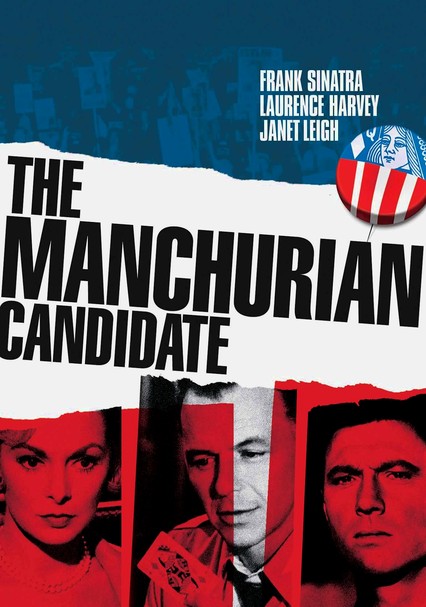
The Manchurian Candidate-1962

The Manchurian Candidate-1962

Director John Frankenheimer

Starring Frank Sinatra, Laurence Harvey

Top 250 Films #195

Scott’s Review #852

Reviewed January 3, 2019

Grade: A

The Manchurian Candidate (1962) is an enthralling film that perfectly captures the political landscape of the time and continues to be relevant in present-day politics. Taut mysterious and filled with great twists and turns, the film flows nicely and climaxes with a shocking crescendo.

With compelling performances by all and a brilliant musical score, the film fires on all cylinders and can be watched and enjoyed repeatedly.

Events began in 1952 during the bloody Korean War. A United States platoon consisting of several men is accosted by the Soviets and sent to communist China for experimentation.

Three days later, the men return as if nothing happened, and Sergeant Raymond Shaw (Laurence Harvey) is proclaimed a hero and awarded the Medal of Honor for saving the men’s lives. When the war ended, the men returned to the United States to resume their everyday lives.

Years later, Captain Bennett Marco (Frank Sinatra) suffers from recurring nightmares in which Shaw murders two missing soldiers in front of a panel in a bizarre brainwashing demonstration. When another soldier in the platoon has the same nightmares, Army Intelligence begins an investigation.

Further complicating the plot is Raymond’s ambitious mother, Eleanor Iselin (Angela Lansbury), and her attempt to use any means necessary to guide her husband, Senator Iselin (James Gregory), to further power.

The Manchurian Candidate is a film that requires attention to appreciate and understand.

The plot is highly complex, but that is a testament to the film’s composition and hardly a complaint. The viewer must stay on course to appreciate the intricate details.

Director John Frankenheimer is fantastic at adding unique dramatic effects and imaginative film-making. A prime example is the brainwashing sequence, as dialogue is interspersed between what the soldiers think is happening (a peaceful grandmotherly horticulture demonstration) and reality (a dastardly experiment involving murder and programming).

Despite Sinatra being billed as the lead in the film, the most treasured props go to Lansbury as Eleanor and Harvey as Shaw. Raymond is the most developed character, and he has several sides. He is primarily a loner who appears cold and harsh due to his being programmed to assassinate.

A sequence involving the love of his life, Jocelyn (Leslie Parrish), and a romantic summer they share is beautiful and innocent, contrasting with the dismal and manufactured “new Raymond.”

Lansbury has never been cast in a more challenging role. Eleanor is determined to stop at nothing to ensure her husband will reach the presidency and connives and cheats her way to the top. Still, the part is written as such to avoid making her a complete one-note character despite her ways.

In an eerie scene close to the finale, she vows payback for what has been done to Raymond and then plants an incestuous kiss on his lips. An odd and disturbing moment, the scene also justifies in her mind the lengths she has gone to get what she wants.

The musical score is lovely and contradicts the dour backstabbing and espionage throughout. Romantic and sweet melodies abound, and classic hymns like The Twelve Days of Christmas and The Star-Spangled Banner are included in the film.

As a result, The Manchurian Candidate’s score feels multi-faceted, patriotic, and artistic with enchanting results.

The Manchurian Candidate (1962) is a stellar film with a perfect blend of thrills, deceit, politics, and creative filmmaking to make it a bold classic. The final sequence is jaw-dropping in its finality and brutality.

Remade in 2004 with a great cast yet a poor script, avoid that one at all costs and enjoy the power and lasting effects of the original.

Oscar Nominations: Best Supporting Actress-Angela Lansbury, Best Film Editing

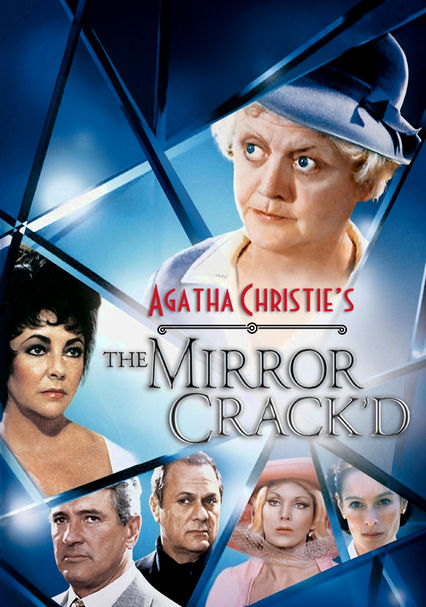
The Mirror Crack’d-1980

The Mirror Crack’d-1980

Director Guy Hamilton

Starring Angela Lansbury, Elizabeth Taylor, Rock Hudson

Scott’s Review #1,371

Reviewed June 22, 2023

Grade: B+

I’m a sucker for any sort of whodunit especially based on an Agatha Christie novel. Some of her treasures like Murder on the Orient Express and Death on the Nile have made for quality filmmaking in the crime thriller genre.

With The Mirror Crack’d (1980) director Guy Hamilton (he directed four James Bond films) collects some of Hollywood’s finest stars and creates an adaption with British authenticity and a knock-it-out-of-the-park finale twist that I didn’t see coming.

Any fans of the long-running CBS sleuth series Murder, She Wrote from the 1980s are treated to gleeful clues that the film influenced the series. Both star the iconic Angela Lansbury.

The main character and murder solver in The Mirror Crack’d is a kindly old woman named Miss Marple played by Lansbury. The actress is aged via makeup to look much older than she was at the time. Lansbury does a good job with the speech and mannerisms of one of her character’s age.

Jane Marple (Lansbury) is tickled pink when two glamorous Hollywood actresses, Marina Rudd (Elizabeth Taylor), and Lola Brewster (Kim Novak), arrive in her quaint English village to shoot a movie.

Drama is sprinkled in when it’s revealed that the two actresses despise each other.

At a welcome reception related to the film, Marina engages in conversation with a longtime fan named Heather Babcock and is momentarily distracted. Soon afterward, the fan collapses and dies, poisoned by a drink intended for Marina.

Pleasure is had by the incorporation of so many stars some way past their prime. My favorite is the dynamic duo of Taylor and Hudson as a married couple. Fans will recall that Hudson’s sad death due to A.I.D.S. in 1985 led to Taylor championing a crusade for research with which the government then refused to be associated.

Her efforts and star power led to tremendous progress to be made as the disease ravaged the world’s LGBTQ+ community.

So, any scene centered on Taylor and Hudson is heartfelt and a pure treat.

Otherwise, the cast of characters is positioned in a familiar pattern to reveal almost everyone would have a reason to kill the glamorous star. Could it be her sexy blonde rival? Or the cranky producer of the film played by Tony Curtis? Or even her hubby Jason?

Geraldine Chapman appears as Ella Zielensky who is secretly in love with Jason and has a good reason to want Marina out of the way. Especially suspicious are her trips to a phone booth to call an unknown person accusing them of murder.

The setting adds value as the small English village is cute and picturesque. Marple’s cottage is perfectly dressed with colors and patterns well suited for her character.

The Mirror Crack’d has a couple of misfires and sometimes has a television movie feel. The comparisons to Murder, She Wrote while nice are also detractors since it makes the film seem like a small screen effort.

The time is supposed to be 1953 and the characters are dressed appropriately but it doesn’t feel authentic. The real year 1980 feels more believable despite the costumes.

While it doesn’t drag a bit it also isn’t quite as good as the aforementioned Murder on the Orient Express (1974) or Death on the Nile (1978).

For a good old-fashioned detective story based on a storied author, one could do worse than watching The Mirror Crack’d (1980). Sure there are other better-produced efforts but the film is a solid, entertaining watch with glamorous stars incorporated.

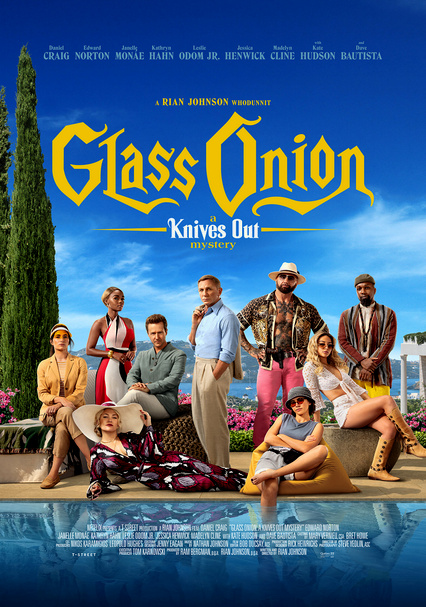
Glass Onion: A Knives Out Mystery-2022

Glass Onion: A Knives Out Mystery-2022

Director Rian Johnson

Starring Daniel Craig, Edward Norton, Janelle Monáe

Scott’s Review #1,331

Reviewed January 5, 2023

Grade: B

I teetered over grading Glass Onion: A Knives Out Mystery (2022), referred to as Glass Onion, a B+ or a B, but the hardline critic in me won out on this day.

If I hadn’t compared it so much to the deliciously witty and inventive Knives Out from 2019, I might have given it a generous B+ rating. Still, it’s also impossible not to compare the two, since the setups and similarities are too apparent.

Rian Johnson, who returns to the fold as director, writer, and co-producer, pays tribute to the fabulous Agatha Christie murder mystery whodunits and the Hercule Poirot detective inclusion with the delightful Daniel Craig as the lead, reprising his role as master detective Benoit Blanc, as he takes on an exciting new case.

A Greek island owned by ultra-billionaire Miles Bron (Edward Norton) serves as the setting for the Southern detective’s latest adventure, which unfolds as a group of the tech giant’s friends gather for a murder mystery party that quickly turns deadly.

I couldn’t watch Miles without thinking of Elon Musk, the current controversial social media Twitter chief executive officer, in all his juvenile buffoonery.

Appearances by top stars Janelle Monáe, Kate Hudson, Kathryn Hahn, and Leslie Odom Jr., and a surprise cameo by Hugh Grant round out the cast. Along with Craig and Norton, this brings enough star power to create buzz.

It’s also appealing that Benoit, a clear ode to Poirot, is the only character who is the same from the first Knives Out story. His character is immediately developed when we see him soaking in a bathtub in his Manhattan apartment, conversing with a male voice offscreen.

He refuses to leave the tub during the very topical COVID pandemic, making the entire film feel incredibly timely and relevant.

Let’s see what happens when the film ages ten years.

We later learn that his husband, Phillip (Hugh Grant), lives with him, and Blanc is gay. How wonderful to incorporate an LGBTQ+ presence into a main character, and icing on the cake is that the studly James Bond actor is all in.

With Blanc’s vague sexuality revealed, the exciting mystery commences with many twists and turns among the characters, led by a fantastic dual performance by Monáe. She plays sophisticated New Yorker Andi and her southern sister Helen Brand.

The other characters are a mixed bag with Hudson and Hahn playing ridiculous, over-the-top roles as a washed-up fashion designer and an aspiring governor, respectively.

But the cartoon character award goes to former WWE professional wrestler David Bautista as the weird, buff guy, Duke Cody, who barely keeps his clothes on.

Still, the characters are a hoot, and the anticipation of how they all connect, who has screwed over whom, and why, is slowly revealed in fun form.

Not to be outdone, there are even revelations of who is screwing whom in the bedroom.

The story isn’t as interesting as the one in Knives Out. The ingenious script is lost, and by the end, it’s a case of who cares? All we want to know is who’s dead and who’s alive, and what does the Mona Lisa have to do with anything?

The cast undoubtedly had a ball making Glass Onion, and the sunny Greek Island locale is a great choice. As the players bask in the sun and saunter around in bikinis, sipping a cocktail or three amid peril, it is great fun for the cast and viewers alike.

It’s unclear if Johnson will create another installment of the Knives Out collection, but I’m on board if he does. I’ve been fascinated by the whodunit genre for as long as I can remember.

Glass Onion: A Knives Out Mystery (2022) isn’t quite as riveting or satisfying as Knives Out (2019), but the film is still enjoyable, thanks to its superior, glossy production values and a great cast.

Oscar Nominations: Best Adapted Screenplay

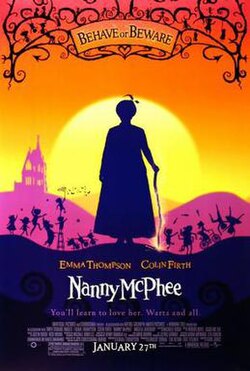
Nanny McPhee-2005

Nanny McPhee-2005

Director Kirk Jones

Starring Emma Thompson, Colin Firth

Scott’s Review #1,161

Reviewed July 15, 2021

Grade: B

Patterned after the classic family film Mary Poppins (1964), but with a slightly harder edge, Nanny McPhee (2005) attempts to recreate the iconic character with a similar storyline setup.

But a couple of other family films make their presence known.

The Sound of Music (1965) is quickly added to the mix with a well-meaning but absent daddy and a slew of siblings who terrorize former and present nannies.

A scullery maid with big dreams ala Cinderella (1950) solidifies the harkening back to 1960s cinematic family fun.

Great British actors like Emma Thompson and Colin Firth add much to the film which would be mediocre without their benefits. And the iconic Angela Lansbury hops aboard in a small yet important role. They make what would be a disposable kid’s movie into something respectable, romantic, and fairly cute.

The film tries a bit too hard with the comical moments, losing the magical moments that would have made it feel more alive. Instead, most scenarios come across as campy or family-oriented.

Of course, the conclusion can be seen from the very beginning.

The effort is admirable but the story experience never feels very compelling. Thinking demographically, Nanny McPhee has much to offer the younger set. The kids will love the candy-box sets and costumes like confectionery-shop windows, the whimsy and farcical grotesqueness of it all.

The adults might be won over by the creativity and the cast.

Thompson (who also wrote the screenplay) has fun playing ugly and getting her feet dirty, her snaggletooth almost a character itself, so prominent is it featured. She is even the anti-Mary Poppins, lacking an umbrella or the high-class pose that she had.

Each time the children learn a lesson, one of Nanny McPhee’s facial defects magically disappears.

But why not just dust off the original Mary Poppins? Nanny McPhee will inevitably be forgotten since an actual remake of the Mary Poppins film was released in 2015 all but confirming the Nanny McPhee franchise as the second tier.

And Nanny McPhee made me want to revisit Mary Poppins instead of watching Nanny McPhee again.

Set in Victorian-era England, lonely widower Cedric Brown (Firth) hires Nanny McPhee (Thompson) to care for his seven rambunctious children, who have terrified and chased away all previous nannies. But McPhee is different and will have no such nonsense. She slowly wins over the children with magic and a bit of discipline.

And when the children’s great-aunt and benefactor, Lady Adelaide Stitch (Lansbury), threatens to separate the kids, the family pulls together under the guidance of their new leader.

Lansbury nearly steals the show. Short-sighted and domineering, the family is financially supported by her and Cedric cowers to her every request until she demands custody over one of the children. She also viciously threatens to reduce the family to poverty unless Cedric remarries within the month, meaning the family would lose the house, and be forced to separate.

She is deliciously wicked in the role and plays it to the hilt.

The sweet romance between Cedric and scullery maid Evangeline, played by Kelly Macdonald, works well. They resist at first, but then realize their feelings for each other and agree to marry, satisfying Aunt Adelaide’s conditions for maintaining her financial support.

Nanny McPhee (who is now fully beautiful), magically makes it snow in August, transforming the wedding scene and changing Evangeline’s clothes into a beautiful wedding dress.

This is the fairy tale ending that ultimately makes the film work and wins me over.

Nanny McPhee (2005) is solid if not remarkable.

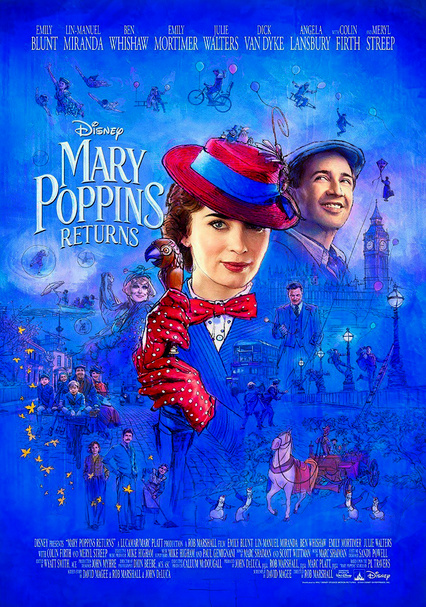
Mary Poppins Returns-2018

Mary Poppins Returns-2018

Director Rob Marshall

Starring Emily Blunt, Lin-Manuel Miranda

Scott’s Review #848

Reviewed December 29, 2018

Grade: A-

Mary Poppins Returns is a charming mixture of reboots and sequels to the immeasurably glorious original, Mary Poppins (1964).

Although it is impossible to live up to the magic of that film, the 2018 version comes quite close with a delightful turn by Emily Blunt, numerous Hollywood stalwarts in small roles, and gleeful musical numbers sure to leave audiences humming upon their exit from theaters.

Events begin to percolate twenty-five years after the original story, and the setting is 1935 London amid the Great Depression. His recently deceased wife, Michael Banks (Ben Wishaw), lives in the house he grew up in with his three children and housekeeper (Julie Walters) in tow.

His sister Jane lives and works nearby as a labor organizer.

Faced with the dreary reality that the historic Banks house may be foreclosed, Mary Poppins (Blunt) arrives elegantly on her umbrella to restore order and save the day.

Though her character does not overtake the film, Emily Blunt is dynamic in the title role. Her prim and proper good British charm and sensibilities crackle with wit and poise. It is tough to imagine anyone but Blunt in the role, as she puts her stamp on it so well.

With a smirk and a quick, matter-of-fact tone, the character is no-nonsense and utterly kind. The casting of Blunt is spot-on as she becomes Mary Poppins.

The London setting is adorable and fraught with good culture and sophisticated manners. Including the storied Big Ben is meaningful to the tale in a significant way and a teachable moment for children unfamiliar with London.

Furthermore, including a negative period in history—the Great Depression—is immeasurably positive.

The supporting characters are rapturous and a treat for elders familiar with the original Mary Poppins film. Meryl Streep plays Topsy, Mary Poppins’s eccentric eastern European cousin to the hilt, but never teeters over the top.

Colin Firth adds snarky charm as the villainous bank president, and Angela Lansbury gives grandmotherly zest as The Balloon Lady, an ode to the original novel.

Finally, Dick Van Dyke is a delight as the heroic Mr. Dawes Jr. who comes to the rescue at the last hour.

The real winners, though, are the enchanting musical numbers. With the lovely London landscape in full view, Mary Poppins Returns gets off to a spectacular groove with “(Underneath The) Lovely London Sky”.

Performed by the charming Lin-Manuel Miranda in the role of Jack the Lamplighter, Mary Poppins’ sidekick, the star has what it takes to keep up with Blunt. This is evident as the duo mesmerizes and entertains with a colorful number, “A Cover is Not the Book”, alongside an animated music hall.

Finally, fans will revel in the naughty and clever “Turning Turtle”, performed by Streep.

The costumes and lighting are both big hits. As Jack lights and defuses the street lights, we see the luminous dawn and sunsets, which give the film a nice touch.

During the film’s conclusion and subsequent race against the stroke of midnight, moonlight is featured, giving the film a warm glow.

The period piece costumes are lush, but not garish, adding flavor and capturing the period perfectly.

Although it lacks the oomph of the original Mary Poppins (but really, who expected that?), Mary Poppins Returns (2018) is nonetheless enchanting and inspiring in every way that a remake or sequel should be.

Given the mixing of humans and animations, the film is polite, polished, and filled with authentic zest: a fine creation and splendid entertainment.

Oscar Nominations: Best Original Score, Best Original Song-“The Place Where Lost Things Go”, Best Production Design, Best Costume Design

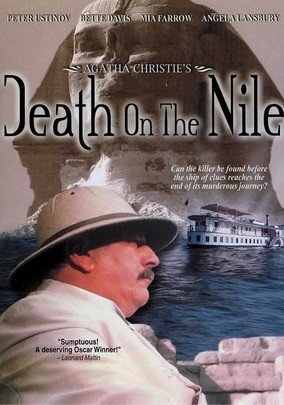
Death On The Nile-1978

Death On The Nile-1978

Director John Guillermen

Starring Peter Ustinov, Mia Farrow, Bette Davis

Scott’s Review #714

Reviewed January 14, 2018

Grade: B+

Death On The Nile is a 1978 British thriller that follows up the successful 1974 offering, Murder On The Orient Express- both films based on the fabulous Agatha Christie novels of the 1930s.

This time around, Belgian detective Hercules Poirot (Peter Ustinov) investigates a string of deaths aboard a luxurious steamer carrying the lavishly wealthy and their servants.

The film is a good, old-fashioned whodunit, perhaps not on the level of storytelling as its predecessor-the murder mystery contains not the oomph expected- but features exquisite Egyptian historical locales- worth its weight in gold.

Featuring a who’s who of famous stars and tremendous actors of the day, Death On The Nile carves a neat story right off the bat in such a way that the murder victim is fairly obvious right away- most of the characters have reason to celebrate her demise.

Rich and reviled heiress, Linnet Ridgeway (Lois Chiles), has stolen best friend Jacqueline’s (Mia Farrow) beau, Simon, sparking a bitter feud between the women. While honeymooning in Egypt, the newlyweds are continually taunted by angry Jacqueline.

Once the cruise ship departs with all on board, Jackie is the prime suspect when Linnet is murdered.

Poirot must find the killer as numerous other suspects all with grudges against Linnet, begin to emerge.

Death On The Nile serves up a stellar cast including legendary Bette Davis in the role of Marie Van Schuyler- an eccentric American socialite with an eye for Linnet’s necklace. The casting of Davis is reason enough to watch the film, though the character is not center stage but rather a supporting role.

The lead female honor is held for Farrow, who has the meatiest and most complex role in the film.

Jackie’s unstable actions make her the most likely to commit the deed, but the fun is to figure out the “whys” and the “hows” of the murder. Is there more than one killer? Are they working in cahoots or independently? As the body count increases these questions begin to resonate more and more.

The costumes and sets are gorgeous and it is no wonder the film won the Oscar for Best Costume Design. At a ball, the women are dripping with jewels and gorgeous gowns.

Along with Davis, boozy author Salome Otterbourne, hilariously played by Angela Lansbury, is granted the prize of wearing the most luxurious and interesting of all the costumes. She drips with jewels and, with a cocktail always in hand, is the film’s comic relief.

Director John Guillermin makes the film an overall light and fun experience and, despite the murderous drama, does not take matters too seriously.

Offering humorous moments, this balances nicely with the inevitable murders.

The fun for the audience is deducing whodunit- most of the characters have the motive and the cast of characters is hefty.

I had memories of the famous board game Clue- Was it Jackie in the ballroom with the revolver? You get the idea. The film makes for a good, solid game of mystery.

Comparisons to 1974’s Murder On The Orient Express cannot help but be drawn, especially in the lead casting of Hercules Poirot.

Truth be told, Albert Finney’s portrayal in “Murder” is superior to Peter Ustinov’s Poirot in “Death” and I am not sure what purpose Colonel Race (David Niven) as Poirot’s friend offers other than to be a loyal sidekick and present a character that Poirot can explain events to- think what Watson was to Sherlock Holmes.

Regardless, Finney is the superior Poirot as he musters more strength and charisma than Ustinov does.

How lovely and historic to witness the wonderful Egyptian locales- the Sphinx and the Great Pyramids are featured amid an attempt on the life of the romantic pair by way of falling rocks- this sets the tone for the perilous cruise about to be embarked upon.

Perhaps a perfect film for a Saturday stay-at-home evening with friends, complete with a serving of quality wine and cheese, Death On The Nile is a sophisticated, yet fun, British mystery film, fantastic to watch in a party setting where the audience can be kept guessing until the nice conclusion and the big reveal of who killed whom and why.

Oscar Nominations: 1 win-Best Costume Design (won)

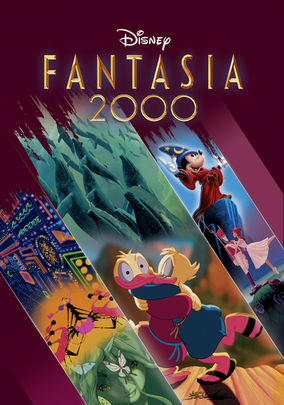
Fantasia 2000-2000

Fantasia 2000-2000

Director James Algar, Various

Starring Steve Martin, Bette Midler

Scott’s Review #535

60000436

Reviewed December 4, 2016

Grade: B+

Fantasia 2000 is a visually stunning remake of the 1940 Disney film. The modern version was produced by Roy Disney, nephew of the famous Walt Disney.

There are nine segments in total, each set to a classical music piece. Masterpieces such as Symphony No. 5 by Beethoven and Rhapsody in Blue by Gershwin are featured.

The Rhapsody piece is a gorgeous story of four individuals who dream of a better life in 1930s New York City. The four do not know each other, but their lives intersect uniquely.

Each segment is introduced by a celebrity: Steve Martin, Angela Lansbury, Bette Midler, and Quincy Jones appear, adding helpful thought and interpretation.

The final piece, in particular, is both moving and breathtaking. Firebird Suite-1919 version- by Stravinsky tells of a sprite (an ethereal entity), awoken by her companion, an elk, as a volcanic spirit has erupted in the peaceful forest, burning it down. The sprite must work to rebuild the peaceful land.

It is an earnest, heartbreaking piece.

Being somewhat of a film traditionalist, I prefer the original slightly, but this version is great.

Fantasia 2000 is wonderful to look at.