Tag Archives: Frank Faylen

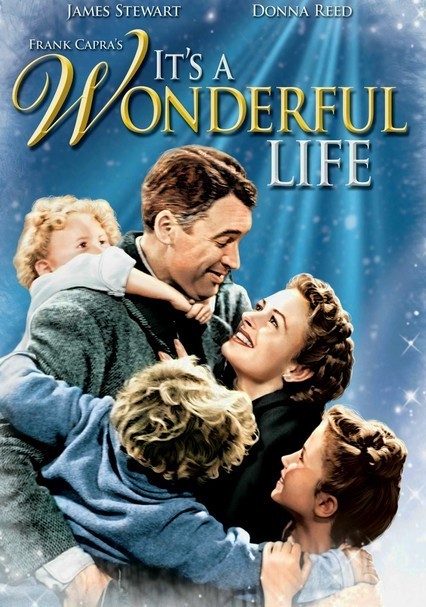
It’s a Wonderful Life-1946

It’s a Wonderful Life-1946

Director Frank Capra

Starring James Stewart

Top 250 Films #219

Scott’s Review #863
Reviewed February 5, 2019

Grade: A-

A popular holiday tradition in many households eager to cozy up in front of the fire with an enduring and entertaining classic, It’s a Wonderful Life (1946) serves an essential purpose. It is the ultimate annual festivity passed down through generations.

While not one of my standards, I recognize the influence and endearment the film offers and cannot fault its power to bring people together through its humanistic, sweet message.

James Stewart is perfectly cast as the wholesome and likable George Bailey. He strives to help everyone in his small community who needs it, often at the expense of his own well-being.

Depressed by the failure of his bank on Christmas Eve in 1945, in the snowy locale of Bedford Falls, New York, George is visited by a guardian angel named Clarence (Henry Travers), who teaches him what life will be like if he chooses the dire path of ending his own life.

Along with Stewart, Donna Reed as the wife, Mary Hatch Bailey, is cast exceptionally well and is the perfect counterpart to George.

Together, the actors immerse themselves in their roles, holding their heads high as the leaders of the sleepy little town they reside in, and set an example for the other townspeople with their kindness and thoughtfulness.

A sound “king and queen of the prom,” the duo radiates and elicits tears from audience members living vicariously through the couple.

A perfect companion piece to A Christmas Carol, perhaps the version from 1951, for similar periods, both spirited and teaching life lessons, is recommended.

Both are thematically similar in their depiction of a heavenly spirit’s visitation and in offering glimpses into the past, present, and future; the comparisons are endless, to say nothing of the Christmastime elements both possess.

Arguably, It’s a Wonderful Life is the most uplifting, both in good and bad ways. The lesson repeatedly voiced is that if one is good to others, one will be rewarded, or at least find peace of mind.

This is not a bad lesson, which is the main reason for the film’s lasting appeal. Bad luck and financial hardship will inevitably affect everyone, but kindness is forever enduring.

It’s also worth mentioning the timing of the creation and release of It’s a Wonderful Life.

As the United States, to say nothing of many European nations, struggled to pick up the pieces after the devastation of World War II, the picture was opportune to immerse itself in the lives of many people who needed a strong and uplifting message.

No wonder the film was popular when it was first released as the feel-good film of 1946.

The black-and-white cinematography does wonders to portray the film’s magical atmosphere. The high points are the cold and snowy bridge scenes.

Controversial years later was the colorization, and some would say the ruination, a decision that was met with anger by star Stewart, who went so far as to testify in court to voice his displeasure.

At the risk of being raked across the coals and deemed a “Scrooge”, portions of It’s a Wonderful Life are saccharin and manufactured in the utmost goodness, sometimes too good.

Admittedly, the characters of George, Mary, and their children come across as somewhat trite at times, as they seem to radiate only benevolent characteristics, never engaging in improper or impure actions.

In a fantasy film, the overly humanistic approach can sometimes be a tad silly.

The same can be said for the angel, Clarence.

Nonetheless, films such as It’s a Wonderful Life (1946) serve their purpose in cinema history.

With a robust and heart-warming message, the positive vibes are undeniable, and the warmth and emotion the film possesses radiate even to the coldest hearts and the harshest of critics, who are willing to accept and be enraptured by the film’s staying power.

Oscar Nominations: Best Motion Picture, Best Director-Frank Capra, Best Actor-James Stewart, Best Sound Recording, Best Film Editing

Golden Globe Nominations: 1 win-Best Director-Motion Picture-Frank Capra (won)
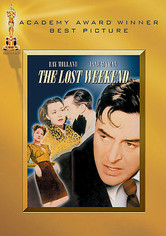
The Lost Weekend-1945

The Lost Weekend-1945

Director Billy Wilder

Starring Ray Milland

Scott’s Review #856

Reviewed January 10, 2019

Grade: A

Billy Wilder, considered one of the most influential directors of the Hollywood Golden Age of cinema (the 1940s), created a masterpiece that tackles a social issue that had never been explored.

The Lost Weekend (1945) tells a tale of alcoholism and the desperation and degradation of a person with an addiction. Wilder bravely goes where no film had dared to go with astounding results.

The film was awarded several Academy Awards, including Best Picture, Best Director, and Best Actor.

Don Birnam (Ray Milland) plays a New York writer left alone for one hot summer weekend. His brother Wick (Philip Terry) and girlfriend Helen (Jane Wyman) are aware of Don’s drinking problem, but leave for the weekend anyway when Don goes on a bender.

He spends each subsequent day desperate for liquor and in need of cash to purchase it. He resorts to theft and selling personal items out of desperation and the need for booze.

The story features flashbacks to events such as his first meeting with Helen and an embarrassing attempt to meet her parents for lunch.

The film is adapted from Charles R. Jackson’s 1944 novel of the same name.

Although it is a dark story that can be categorized as a downer, the film does not paint a glamorous picture of the pains an alcoholic experiences or the lengths he will go to out of desperation.

Before The Lost Weekend was made, drunkard characters in the film were primarily portrayed as either bumbling or as comic relief, so this character study is a welcome departure from tradition.

Milland is perfectly cast and effectively relays the troubled and desperate Don. Handsome, well-dressed, and professional, he is not the stereotypical image of a drunk.

Dressed in a suit and tie by all accounts, he does not fit the bill for a desperate man, but slowly begins his descent, spiraling out of control.

This makes Wilder’s message more potent as he shows that alcoholism can afflict anyone, even professional, intelligent men.

Milland, who resembles actor Jimmy Stewart, is supposed to be liked by the audience, eliciting a rooting factor even when he mistreats Helen. We want him to face his problems and recover.

Many glimpses of Manhattan are shown, and exterior shots are used plentifully. Wilder shoots the scenes as largely bleak and lonely, which aligns with the film’s overall feel.

Third Avenue looks desolate and isolated as we watch a desperate Don wander around, trying to sell his typewriter for booze money. He is grief-stricken when he realizes that it is Yom Kippur weekend and the pawnshops are closed.

The camera remains firmly fixed on Milland, showcasing a range of powerful emotions throughout the film.

The Lost Weekend (1945) was a groundbreaking film at its release. It is a serious and detailed tale of the life and times of an alcoholic.

With a superb acting performance by Milland, Wilder can darkly and frighteningly portray the world of a person with an addiction.

Decades later, the film is still cited as an inspiration by other filmmakers creating works about alcohol abuse.

Oscar Nominations: 3 wins– Best Motion Picture, Best Director-Billy Wilder (won), Best Actor-Ray Milland (won), Best Screenplay (won), Best Scoring of a Dramatic or Comedy Picture, Best Cinematography, Black-and-White, Best Film Editing

Golden Globe Nominations: 3 wins-Best Picture (won), Best Director-Motion Picture-Billy Wilder (won), Best Actor in a Leading Role-Ray Milland (won)

The Grapes of Wrath-1940

The Grapes of Wrath-1940

Director John Ford

Starring Henry Fonda

Scott’s Review #828

Reviewed November 8, 2018

Grade: A

Based on the famous novel written by John Steinbeck and released only one year before the film, The Grapes of Wrath (1940) is a superlative offering by director John Ford, known chiefly for Westerns.

The work accurately depicts life for the struggling American family during the Great Depression of the 1930s.

With gorgeous cinematography and a sad yet poignant story, the film is a must-see and a timeless depiction of the perils of life for working-class people in the United States.

Set on the vast plains of Oklahoma, the Joad family has run a successful farm and lived as a thriving family unit for decades- an extended group enjoying their lives.

When the United States suffers from Depression, the Joads’ lives are turned upside down, and they are forced to sell their farm. They decide to traverse the countryside in hopes of the promise of profitable jobs and wealth in faraway California. The Grapes of Wrath depicts the family’s journey as hardship and deaths occur.

When the film was released in 1940, many studios were not interested in bringing the story to the big screen, as some aspects were deemed too left-leaning for conservatives.

The social issues the film delves into are still incredibly relevant today, and Ford wisely dissects not only the poverty that the Joad family suffers but also the psychological trauma and ruination they must endure. What a devastating effect this must have had on families.

The casting is spot-on. A young Henry Fonda was merely an upstart actor in 1940 and successfully exuded a rich, passionate performance as Tom.

Plenty of close-up shots reveal the young man’s quiet pain and desperation and the humiliation of having lost his livelihood. Fonda shares poignant chemistry with the preacher character, Jim Casy (John Carradine), who once was filled with glory but has now lost his spirit and belief in goodness.

Jane Darwell, a famous character-actress, gives a treasured performance as the family matriarch, Ma Joad. The actress won the Academy Award for Best Supporting Actress, deservedly so, as she relays a haggard woman wanting only the best for her family and attempting to hold them together.

Her determined final speech at the film’s conclusion is teary and meaningful. She says, “We’re the people… We’ll go on forever.” Speaking of Oscars, Ford also won Best Director.

The film sees no age but endures as a timeless journey alongside the Joad family. Although it stays very close to Steinbeck’s novel, the story is modified significantly. Perhaps to please studio financiers or provide a more hopeful message, the Joads are left with a positive future thanks to a government-run camp where they finally live.

In the novel, they reside at the camp first but are later reduced to starvation wages.

A monumental scene is when the family drives their battered vehicle to a squatter’s camp for needed shelter. The scene is shot documentary style, with the camera focusing both on the Joads and on the faces of the occupants of the run-down and filthy shacks that they are forced to live in.

We wonder with sadness what the lives of these unfortunate people were like before the Depression.

The Grapes of Wrath (1940) was a humanistic cinematic masterpiece. As a terrible war and otherworldly problems plagued the new decade, the film reminisced about a previous decade fraught with different issues.

The film is one for the ages and should be appreciated by all.

Oscar Nominations: 2 wins-Outstanding Production, Best Director-John Ford (won), Best Actor-Henry Ford, Best Supporting Actress-Jane Darwell (won), Best Screenplay, Best Sound Recording, Best Film Editing