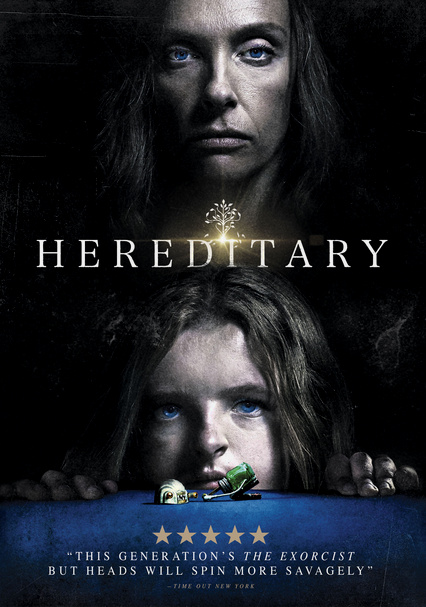
Hereditary-2018

Hereditary-2018

Director Ari Aster

Starring Toni Collette, Alex Wolff

Scott’s Review #837
Reviewed December 6, 2018

Grade: B+

Hereditary (2018) is a horror film that provides quite an unsettling feeling long after the credits have rolled, which is always a positive in my book.

Moreover, the film contains more than a handful of effectively chilling moments and a breathtakingly good performance by its star Toni Collette, who delivers the goods in spades.

The film is the debut project by writer and director Ari Aster, who certainly has a bright future ahead of him.

We meet the Graham family- artist Annie (Collette) and husband Steve, along with sixteen-year-old Peter (Alex Wolff) and thirteen-year-old Charlie, as they mourn the death of Annie’s mother.

As Annie sees an apparition of her mother in her workshop, the mother’s grave is desecrated, prompting her to attend a support group to deal with her problems. When Charlie then tragically dies in a gruesome accident, Annie begins to teeter over the edge, putting her remaining loved ones at risk.

Aster’s story is tremendously hard to follow, leaving many perplexities and unanswered questions about the plot.

Was fellow support group attendee Joan (Ann Dowd) a sinister cultist along with Annie’s mother, or merely a kindly friend trying to help? Did Annie kill her family, or were their deaths fated, a result of an unstoppable force, hence the “hereditary” title?

A post-film synopsis will need to be read by many viewers (myself included) for clarity.

Frightful sequences resonated with me for days following my viewing of Hereditary, so much so that a second viewing may be required.

The decapitation of Charlie is one of the creepiest scenes I have ever witnessed, as well as tidbits such as Annie furiously pounding her head on the attic door, clearly not herself.

Not to be outdone, Steve bursting into flames, and Annie slowly beheading herself with piano wire while coven members look on, may lead to nightmares for days.

Shot in a style that makes the film feel claustrophobic and contained, the camera crew must use props to create a dollhouse aesthetic. Artist Annie’s clay dollhouse, mirroring the families, enhances this point.

The viewer sees a mock version of the real family, and when Annie decides to create a replica of Charlie’s headless body to express herself, the results are dire.

The best part of Hereditary, though, is Colette’s performance.

Flawless as the haggard mother in The Sixth Sense (1999), her role as Annie takes the actress to even greater heights. The woman slowly teeters to the brink of insanity as she awakens one morning to find the headless corpse of her daughter lying in the back seat of her car.

Aster wisely has her discovery and reactions appear off-camera, giving the sequence a high element of anticipatory horror. From this point, we know that Annie will steamroll further into insanity as she realizes her son caused the death of her daughter.

Horror films involving witchcraft or other demonic supernatural elements do not always work for me as I find realistic situations more effective, but Hereditary is atmospheric and compelling.

The film possesses this element throughout its entire run, so we know bad things will happen; we just do not know when.

To further explain, many scenes involve close-ups of characters seemingly deep in thought or shrouded in mystery. Evidence of this is when Peter sits in a classroom hearing Charlie’s habit of clicking teeth. When a trance-like Peter returns to reality, he is confused and slams his head against his desk, breaking his nose.

Aster might have been wise to write a more concrete screenplay instead of leaving the audience unable to add up the parts.

Interpretation is a fine thing, but in the case of Hereditary, the sum may have been greater than the parts. This means that a more satisfying, though not less frightening, ending would be encouraged for his following picture.

Hereditary (2018) is a demonic horror film with a perplexing plot about a family’s hereditary curse and ultimate doom.

Thanks to brilliant acting and some of the most disturbing scenes ever witnessed, the film is a breath of fresh air in the over-saturated horror genre and a welcome debut from an upstart director.

Independent Spirit Award Nominations: Best Female Lead- Toni Collette, Best First Feature
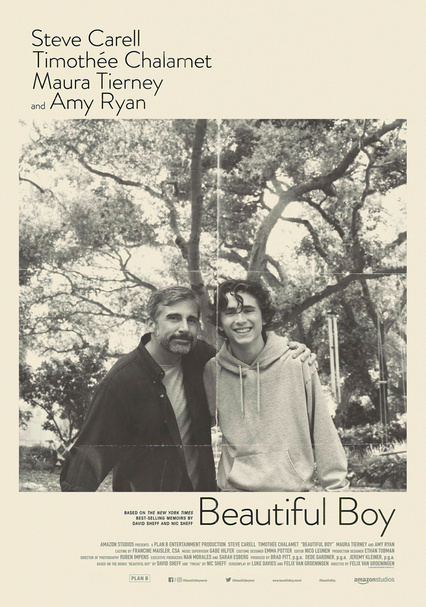
Beautiful Boy-2018

Beautiful Boy-2018

Director Felix Van Groeningen

Starring Steve Carell, Timothée Chalamet

Scott’s Review #835

Reviewed November 23, 2018

Grade: A-

Beautiful Boy (2018) tells a humanistic and vital story about the ravages of drug addiction and how the issue affects not only the person with an addiction but the entire family unit. Nestled within the powerful writing is a lovely father/son relationship and the duo’s trials and tribulations over the years.

The film feels pure and honest, with rich storytelling and many good acting performances.

Beginning in the present, David Sheff (Steve Carell) realizes that his son Nic (Timothée Chalamet) has been missing for two days. When Nic finally arrives at the Sheff household, he is strung out and sick.

David suspects Nic has been abusing drugs, and all parties agree that Nic needs professional help and a stint in a rehab facility. However, nobody realizes the depths of Nic’s addiction.

When Nic checks out early and goes on a bender, the film begins to segue back and forth between periods of Nic’s recovery and his many relapses. It also presents scenes of David and Nic’s relationship during their childhood years.

The best parts are the conversations and moments between father and son, and their enduring love. David’s second wife, Karen (Maura Tierney), and Nic’s mother, Vicki (Amy Ryan), are also in the mix.

The screenplay is based on memoirs written by David and Nic Sheff. The chronicles of their journey include triumph and heartbreak over many years as recovery and relapse become frequent parts of their lives, threatening to tear them apart or result in Nic’s ultimate death.

The road to recovery is not an easy path.

Carell and Chalamet wonderfully portray the primary characters, David and Nic. The fact that the actors do not resemble each other is quickly forgotten as their dynamic is emotional and palpable, and they share easy chemistry.

Carell is a strong actor, capable of infusing his character with strength and calm while slowly falling apart at the seams.

He loves his son and wants him to recover, but he finally accepts that he needs to let him go. This moving realization is Carell’s best scene.

Chalamet, boyish and innocent-looking, is perfectly cast. With kind blue eyes and a mop of raven hair, the actor could easily pass for twelve years old. This only enhances the tragedy of youth ravaged by drug abuse.

These qualities are mirrored by those of his girlfriend Lauren (Kaitlyn Dever). She also possesses a fresh-faced, clean look, which strengthens the message.

Ryan’s and Tierney’s performances in what could easily be throwaway “wife roles” must be mentioned.

For a while, I thought Tierney was in a marginal role until she finally had a wonderful scene in which her frustration reached a boiling point. Fuming with rage, she attempts a car chase with Nic, only to finally crumble into tears, realizing how the mess has changed her as a person.

Ryan also sinks her teeth into a teary role, almost blaming herself for Nic’s problems.

The film wisely presents statistics to hit home further, mainly the low percentage recovery rate of most crystal meth users. A single-digit success rate on this note is frightening; the user requires more and more substance to feel anything close to the first high they experienced.

A pivotal scene occurs at the film’s end as David and Karen attend a support group. As they tearfully listen to a woman’s story of the recent death of her addict sister, we are left to wonder if Nic has also died.

Kudos to a powerful cameo performance by actress Lisa Gay Hamilton.

The sunny California setting benefits the film and starkly contrasts the darkness of New York City, where Nic attends school. With multiple exterior shots of San Francisco and Los Angeles, the metropolitan scope is vast and cruel for drug users.

Easily accessible to anyone with the motivation to obtain drugs, the streets of San Francisco are portrayed as hard and drug-infused, mainly when David drives around desperately looking for Nic.

Featuring a story told before but rarely from the family perspective, Beautiful Boy (2018) does what it sets out to do and does it splendidly.

Careful not to soften the challenges and sufferings of the person with an addiction, the devastation they bring to their loved ones is also showcased. The sound and emotional father/son relationship may be the film’s best part.

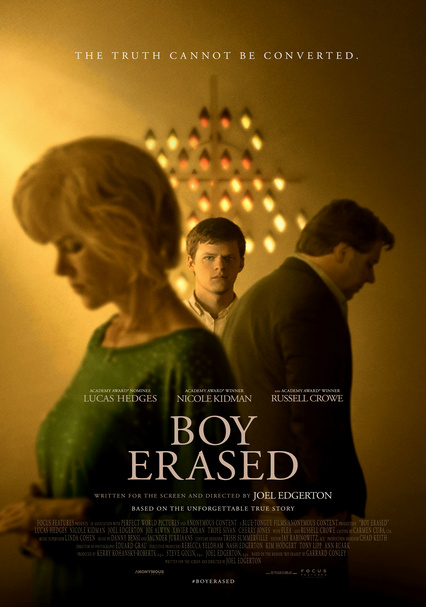
Boy Erased-2018

Boy Erased-2018

Director Joel Edgerton

Starring Lucas Hedges, Nicole Kidman, Russell Crowe

Scott’s Review #834

Reviewed November 22, 2018

Grade: A

Before I ventured to the movie theater to view Boy Erased (2018), I heard from more than a few folks who decided not to see the film due to the complicated subject matter.

While parts of the film are challenging and the true story stifling, the overall message is poignant and hopeful. The central character is one to be championed.

In other words, while the subject is serious, director Joel Edgerton (who also co-stars) is careful not to make the overall experience dour or wholly downtrodden.

The setting is rural Arkansas, based on Garrard Conley’s 2016 memoir of the same name and taking place as frighteningly recently as 2004.

Our main character is a handsome, popular young man, renamed Jared (Lucas Hedges) for the film.  Interspersed with numerous flashbacks, then back to present times, we see Jared as a high school kid and blossoming as a first-year college student, interested in writing.

He is expected to follow the word of god since his father, Marshall (Russell Crowe), is a respected preacher at their local church, and his mother, Nancy (Nicole Kidman), is a housewife.

Jared’s college experiences are both good and bad. He befriends fellow runner Henry, who ultimately rapes him, and embarks on an enlightening friendship with Xavier, who challenges Jared’s belief in god.

These scenes are preceded by the point of the film, in which Jared admits his thoughts about men to his parents and is sent to a Love In Action gay conversion therapy program. His experiences there are chronicled.

Many scenes involve the treatment the school provides the students (or instead makes the students endure), and Jared’s realization that he is gay and cannot change.

He ultimately questions and challenges the school. The chief therapist, Victor Sykes (Edgerton), teaches that God will not love anyone who is homosexual. In a bit of rich irony, the film reveals that Victor finally denounced his teachings and married a man.

Fellow students’ lives are featured, one suffers a terrible fate as he cannot come to terms with his sexuality, nor can he change.

A comparison to the popular film Love, Simon (2018) is fun to draw.

Both were released during the same year, and both feature a young, popular coming-of-age character who struggles with the repercussions of revealing their sexual preference.

Boy Erased is the heavier of the two, as Love, Simon has many comic elements, but it is worth noting that both are mainstream films garnering large audiences- a win for the LGBT community.

The acting in Boy Erased is flawless and perfectly cast all around.

With Hedges, Kidman, and Crowe in the mix, we know the performances will be outstanding, and all three characters possess their share of empathy.

Jared is the most important character to be concerned about, and Marshall and Nancy are support players. However, the film does not portray either as bad people, which is interesting. They are nurturing towards Jared and want him to be happy.

While Nancy is more instrumental in rescuing Jared, Marshall also comes around in the end, as his son’s sexuality is tougher for him to accept.

The main song used in the film is appropriately named “Revelation” by Troye Sivan. The singer also appears in the film as Gary, a student made to be “cleansed” of his sexuality.  The tune is sentimental, smoky, and acoustic, perfect for the southern setting.

Heartfelt and fraught with meaning, it encompasses Jared’s struggles and strong will to question the school’s motivations, powering through the school’s toxic approach.

As with many recent biographical films telling stories of real-life people, Boy Erased features a young Jared in homemade video clips as the movie begins. This immediately triggers a rooting value for the character as we see the child, cute, happy, and full of life, without a care.

Additionally, the conclusion shows the real adult Jared, Marshall, and Nancy.

Boy Erased (2018) is an important film firmly nestled in a crucial time period for the LGBT community. As LGBT awareness is now commonplace in cinema, this film does not necessarily share a gay character’s “coming out” story but rather depicts a brilliant story of how perilous and repressive being gay can still be for some people.

Jared is the main character who will undoubtedly be a hero to many young people wrestling with their identity.

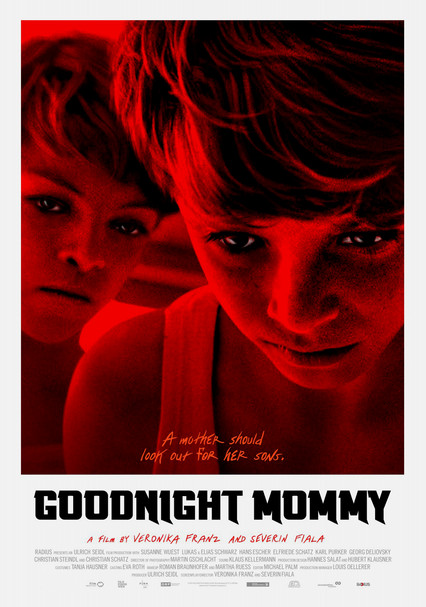
Goodnight Mommy-2015

Goodnight Mommy-2015

Director Severin Fiala, Veronika Franz

Starring Susanne Wuest, Lukas Schwarz, Elias Schwarz

Scott’s Review #833

Reviewed November 21, 2018

Grade: B

Goodnight Mommy (2015) is an Austrian film not for the faint of heart nor the squeamish. Being a seasoned viewer of diverse, bizarre, and otherwise unpleasant cinematic experiences, the film was a tough watch.

Universally lauded and even submitted as Austria’s Foreign Language entry for the Academy Awards, the film is rather pointless and gratuitous in its torture scenes. Still, the film stayed with me days later, always a positive.

In a peculiar and unclear story opening, we witness a mother (Severin Fiala) and nine-year-old twin sons (Lukas and Elias Schwarz), residing in a remote lakeside location surrounded by cornfields and nature.

The mother (character unnamed) is disfigured and wrapped in bandages with only her eyes and mouth revealed, a haunting and grotesque image.

The twins, Elias and Lukas, are disturbed by her appearance and concerned when she begins acting strangely, ignoring Lukas entirely and chastising Elias repeatedly.

Through a game that the mother and twins play, the audience learns that the woman is a television personality- has she had a facelift of her choosing, or has she been in an accident? As she acts cruelly and selfishly towards the twins they begin to question whether the woman is their mother or a fake.

They become determined to find out at all costs, turning the tables on the mother, and resorting to torturous methods to get the truth out of her.

A few positives for me in Goodnight Mommy are as follows. The Austrian setting and language are huge strengths in adding to the mystique of the overall film.

The unfamiliar (to me) speech and the remote modern home that the mother uses as a sanctuary work very well.  Loneliness and isolation are infused into the film giving a measure of dread. The way the plot unfolds and the circumstances are slowly revealed is good.

The hows and the whys of the mother’s surgery come to fruition and allegiances switch from the boys to the mothers throughout the film, which I found interesting.

The major negatives are the motivations of the twins and the big reveal at the end of the film- a reveal easily figured out within the first portion of the running time.

Though not shocking, the revelation only complicates said motivations, and questions abound. Is one of the twins just plain crazy? Who is the woman in the photo with the mother dressed exactly like her?

If this is a red herring, no wonder the twins think this woman is impersonating their mother. The mother not being able to escape the twins’ clutches is a bit hard to swallow- remember they are only nine years old!

The torture scenes are brutal for the audience to endure. As Elias and Lukas tie their mother to her bedpost and demand she reveal she is not their mother the methods they resort to are devious and cringe-worthy.

Prolonged in nature so that the viewer feels they are also being tortured when the twins burn her face with a magnifying glass, the process is slow and excruciating.

Later, they decide to superglue her mouth shut and when they realize she cannot eat, they sever the glue with scissors leading to a bloody mess.

These scenes are tough to take.

The point of Goodnight Mommy (2015) seems rather, well, pointless. Torture for the sake of torture and many plot holes or story-dictated plot devices- who did not think that the Red Cross would fail in rescuing the mother?

Nonetheless, the film does contain a mystique and an unnerving, haunting quality.  The viewer will undoubtedly be kept thinking about the subject matter and the ending, specifically the final still-frame.

Ingrid Goes West-2017

Ingrid Goes West-2017

Director Matt Spicer

Starring Aubrey Plaza, Elizabeth Olsen

Scott’s Review #832

Reviewed November 16, 2018

Grade: A-

Ingrid Goes West (2017) is a deliciously wicked black comedy that boldly addresses the current obsession with social media.

Combined with a dynamite performance by young actress Aubrey Plaza and witty writing, the small independent film is a summertime treasure and has received two Spirit Award nominations.

The film is a breath of fresh air and a fine achievement by new director Matt Spicer.

The film immediately catapults the audience into the action as we are treated to a closeup of a sobbing Ingrid Thorburn (Plaza).

We immediately know that she is not well when she fumes with the realization that she has not been invited to her Instagram friend’s wedding and proceeds to interrupt the reception and attack the bride with pepper spray.

Ingrid is carted off to a mental hospital for analysis and recovery.

Once released, we learn that Ingrid’s mother has recently died, leaving her a tidy sum of money as an inheritance. Ingrid suddenly becomes obsessed with Taylor Sloane (Elizabeth Olsen), a popular and narcissistic young woman whom she follows on Instagram.

Taylor becomes Ingrid’s idol as she decides to move to Los Angeles and insinuates herself into Taylor’s life. She stalks Taylor and steals her dog only to pretend she rescued it, thereby becoming her close friend.

Gradually, Ingrid’s actions become more and more psychotic as Taylor catches wind of Ingrid’s antics.

Aubrey Plaza is perfectly cast as the unstable, manipulative title character. She possesses such strong comic timing, and with her wide eyes, nervous mannerisms, and determination to get what she wants, the audience roots for and falls in love with her.

On paper, we should dislike the character as she takes advantage of nearly everyone in her path, but Plaza embodies her with empathy and smarts. It is delightful to watch how she gets out of scrape after scrape with her quick thinking.

Plaza truly excels in the role.

Bold and calculating are words to describe Olsen’s performance as the selfish Taylor, and this may very well be why it is easy to root for Ingrid.

The character is so plastic and conniving that seeing her as the foil is intensely satisfying. Olsen usually plays good girl roles and possesses a girl-next-door quality, but in this part, she nestles nicely into a bitch role.

Olsen also uses excellent timing with her characters’ dialogue delivery, so much so that Olsen and Plaza had me in stitches during their one-on-one scenes.

I adore the Los Angeles setting. It is beyond appropriate for a film about phoniness, obsession, and plastic personas.

Beneath the sunny veneer lies darkness and tomfoolery in every direction, and besides Ingrid’s landlord/somewhat boyfriend, Dan (O’Shea Jackson Jr.), there are not many likable characters.

Attending party after party and lavish clubs, restaurants, or getaways, being involved in the “scene,” and the City of Angels is the perfect backdrop.

One gripe that knocks Ingrid Goes West down a rung is how the character of Taylor’s artist husband Ezra (Wyatt Russell) is written.

In one of the more authentic scenes, Ingrid realizes as she has a poolside heart-to-heart with the depressed Ezra that his wife is not the girl he knew when she moved to L.A. He and Ingrid seem to connect, but shortly after, it is as if the conversation never happened, and he is ferociously taking his wife’s side again.

A more admirable approach, and one I was hoping for, is that Ingrid and Ezra would ride off into the sunset, but the film misses this opportunity.

The entire film is a clever piece of work. From the performances to the dark humor and the witty dialogue, Ingrid Goes West (2018) succeeds on nearly all levels.

A modern-day Single White Female (1992) with a social media slant, the film goes for the gusto and gets there. I cannot wait to see more from up-and-coming star Aubrey Plaza, as the actress has the comic and dramatic chops to go very far.

Independent Spirit Award Nominations: 1 win-Best First Screenplay, Best First Feature (won)
Isle of Dogs-2018

Isle of Dogs-2018

Director Wes Anderson

Voices: Bryan Cranston, Edward Norton

Scott’s Review #831

Reviewed November 15, 2018

Grade: B+

Anybody familiar with a Wes Anderson production knows what they are in store for, and Isle of Dogs (2018) is par for the course.

With zany narratives and fantastic art direction, the film has a familiar stamp. Most resembling his other notable stop-motion film, Fantastic Mr. Fox (2009), Isle of Dogs offers what is to be expected- an intelligent and odd project by a visionary creative mind.

Anderson provides the film with a timely, corrupt government-type message that strongly resonates in 2018. In this way, Isle of Dogs, while animated, is so much more than a cookie-cutter story or a wholesome film for kids.

The director shows bravery in focusing on the corruption prevalent in today’s world and the fight for justice by ordinary people living under authoritarian control.

Set in dystopian Japan, a recent outbreak of canine flu causes corrupt Mayor Kobayashi to banish all dogs from society to the vast wasteland of Trash Island, where they will live out their days with other ostracized canines.

A brave twelve-year-old boy named Atari, who happens to be the mayor’s nephew, steals a plane and crash-lands on the island to rescue his beloved dog, Spots.

With help from a pack of dogs led by a former stray named Chief, the group sets out to find Spots and ultimately expose the government conspiracy. Obstacles abound as the mayor has sent a robot dog to return Atari and make mincemeat of any dog in its path.

Meanwhile, a professor, Tracy Walker, is on the cusp of discovering a serum as an outspoken American exchange student investigating the conspiracy.

Isle of Dogs is incredibly original and offers bravura visuals. From the lush and bright Japanese culture to the tired and haggard look of many dogs living on the island, the film is a treat for the eyes. The shimmering richness of the city is elegant and feels alive and powerful.

What I admire most about the film is its creativity and the blast of left-of-center storytelling, which blows away most animated offerings of today.

Many contain a robust helping of “cute”, which can turn off a mature viewer. With a target audience of the tween age, what is in it for adults? To sit there with a youngster and pretend to be jovial?

Isle of Dogs is not a crowd-pleaser; it is better than that. Anderson crafts a serious and timely message that begs to be absorbed by the careful viewer.

Assuredly, Anderson cannot escape providing a subtle allegory on an evil leader stirring the pot against the most helpless in our society. This point is timely and well thought out, especially in the tumultuous United States.
Could this be why an American character (Tracy) was added?

As dynamic as Anderson’s creativity is, the story in Isle of Dogs does not always embrace the viewer, and the jarring dialogue is tough to follow.

Standard in his films, the pacing is strange, the conversations between characters are odd, and the film lacks a truly welcoming or warm quality.

Therefore, the film is not an easy watch. And the dogs all speaking English rather than Japanese, with American accents, must be overlooked.

Critics and detractors of Wes Anderson need not see Isle of Dogs (2018) as they will be in store for typical Anderson fare. In addition, those seeking a standard mainstream animated feature will be disappointed.

Those with a more open-minded approach to cinema will revel in the film’s stunning look and the powerful message bubbling under the surface.

Oscar Nominations: Best Animated Feature Film, Best Original Score

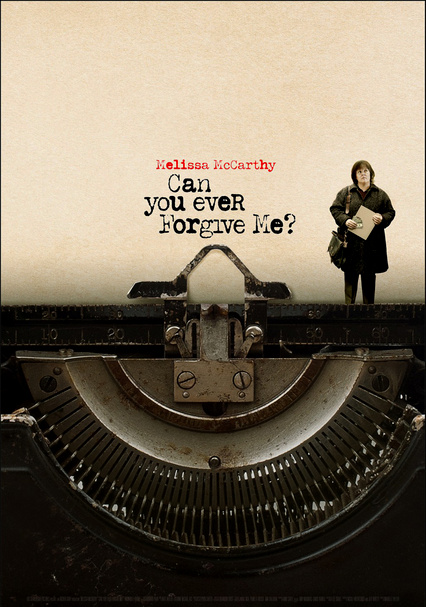
Can You Ever Forgive Me?-2018

Can You Ever Forgive Me? -2018

Director Marielle Heller

Starring Melissa McCarthy, Richard E. Grant

Scott’s Review #829

Reviewed November 13, 2018

Grade: A

Can You Ever Forgive Me? (2018) is a biographical drama that successfully provides its audience with sly writing and fruitful chemistry among the lead actors.

A rare dramatic turn for star Melissa McCarthy, she proves that she has the chops as she immerses herself in a role that showcases her acting talent when she is provided a good script. Grizzled, angry, and sometimes depressed, she infuses a character we should hate with gusts of humor and sarcasm, so much so that we fall in love with her.

That is a testament to an outstanding performance.

The film begins in the 1990s in Manhattan, where we meet a once successful but now down-on-her-luck author, Lee Israel (McCarthy). Famous for works now deemed dated, she is angry, boozy, and brazen, certainly not afraid to tell someone off for not holding the door for her or prank-calling a vicious bookstore owner.

We quickly learn that Lee is three months behind on her rent and cannot afford to take her sick, elderly cat to the vet. She fights with her publisher, Marjorie (Jane Curtin), who refuses to advance her $10,000.

As she sits in a bar contemplating her future, she reconnects with an acquaintance, Jack Hock (Richard E. Grant), a flamboyant gay man who once caused a stir at a party for urinating on rich women’s furs.

Lee and Jack are in stitches over the past incident and immediately form a deep bond, though Jack’s unreliability and dishonesty challenge Lee’s patience.

When Lee concocts a scheme to forge letters supposedly written by famous deceased literary people, Jack quickly becomes her accomplice as the two begin to profit.

The film belongs to McCarthy in a challenging role. By all accounts, we should dislike Lee—she attends Marjorie’s parties for the free booze and steals a new jacket from the coat check on her way out.

She distances herself from relationship commitments and alienates most people. But despite these flaws, we adore her and root for her.

When she embarks on a cautious date with quiet bookstore owner Anna (Dolly Wells), she gets through her meal with trepidation, unsure whether to open herself up to another potential suitor.

In McCarthy’s best and most emotionally raw scene, we see her raw collapse in tears when she finds her beloved cat under the couch, dead.

Viewing the feline as her only true friend, she is devastated beyond belief, and McCarthy will pull at the heartstrings in this poignant scene.

Grant is equally as impressive as McCarthy in the central support role. An aging party-boy in a city that can embrace the young and discard the old, he still dazzles with his dashing smile, but his best years are behind him as he still lives a young man’s life.

He flirts with a handsome waiter and still has the charm and humor that have aided him through the past few decades. However, he is also ravaged by decades of abuse, and his luster has become tarnished.

A health secret revealed at the film’s end adds further layers to the character’s complexity and richness.

Beyond the great acting performances, the screenplay, written by Nicole Holofcener and Jeff Whitty, crackles with rich dialogue and fantastic aplomb.

The writers write with confidence and smarts and provide the goods in spades. The proof is in the proverbial pudding as Lee cackles with glee as she types her latest Dorothy Parker forgery in the words of the deceased satirist, writing what she imagines the famous author would write.

These added intelligence touches and quick-witted dialogue make the film fantastic to view.

Can You Ever Forgive Me? (2018) is a fabulous undertaking made spectacular by two actors with bold chemistry. Combined with intelligent writing, a grand yet gritty New York City setting, and an authenticity unrivaled, the film succeeds on all levels.

Heart, drama, compelling situations, and dark, sardonic humor make this a dynamic film.

Oscar Nominations: Best Actress- Melissa McCarthy, Best Supporting Actor- Richard E. Grant, Best Adapted Screenplay

Independent Spirit Award Nominations: 2 wins- Best Supporting Male- Richard E. Grant (won), Best Screenplay (won)

The Grapes of Wrath-1940

The Grapes of Wrath-1940

Director John Ford

Starring Henry Fonda

Scott’s Review #828

Reviewed November 8, 2018

Grade: A

Based on the famous novel written by John Steinbeck and released only one year before the film, The Grapes of Wrath (1940) is a superlative offering by director John Ford, known chiefly for Westerns.

The work accurately depicts life for the struggling American family during the Great Depression of the 1930s.

With gorgeous cinematography and a sad yet poignant story, the film is a must-see and a timeless depiction of the perils of life for working-class people in the United States.

Set on the vast plains of Oklahoma, the Joad family has run a successful farm and lived as a thriving family unit for decades- an extended group enjoying their lives.

When the United States suffers from Depression, the Joads’ lives are turned upside down, and they are forced to sell their farm. They decide to traverse the countryside in hopes of the promise of profitable jobs and wealth in faraway California. The Grapes of Wrath depicts the family’s journey as hardship and deaths occur.

When the film was released in 1940, many studios were not interested in bringing the story to the big screen, as some aspects were deemed too left-leaning for conservatives.

The social issues the film delves into are still incredibly relevant today, and Ford wisely dissects not only the poverty that the Joad family suffers but also the psychological trauma and ruination they must endure. What a devastating effect this must have had on families.

The casting is spot-on. A young Henry Fonda was merely an upstart actor in 1940 and successfully exuded a rich, passionate performance as Tom.

Plenty of close-up shots reveal the young man’s quiet pain and desperation and the humiliation of having lost his livelihood. Fonda shares poignant chemistry with the preacher character, Jim Casy (John Carradine), who once was filled with glory but has now lost his spirit and belief in goodness.

Jane Darwell, a famous character-actress, gives a treasured performance as the family matriarch, Ma Joad. The actress won the Academy Award for Best Supporting Actress, deservedly so, as she relays a haggard woman wanting only the best for her family and attempting to hold them together.

Her determined final speech at the film’s conclusion is teary and meaningful. She says, “We’re the people… We’ll go on forever.” Speaking of Oscars, Ford also won Best Director.

The film sees no age but endures as a timeless journey alongside the Joad family. Although it stays very close to Steinbeck’s novel, the story is modified significantly. Perhaps to please studio financiers or provide a more hopeful message, the Joads are left with a positive future thanks to a government-run camp where they finally live.

In the novel, they reside at the camp first but are later reduced to starvation wages.

A monumental scene is when the family drives their battered vehicle to a squatter’s camp for needed shelter. The scene is shot documentary style, with the camera focusing both on the Joads and on the faces of the occupants of the run-down and filthy shacks that they are forced to live in.

We wonder with sadness what the lives of these unfortunate people were like before the Depression.

The Grapes of Wrath (1940) was a humanistic cinematic masterpiece. As a terrible war and otherworldly problems plagued the new decade, the film reminisced about a previous decade fraught with different issues.

The film is one for the ages and should be appreciated by all.

Oscar Nominations: 2 wins-Outstanding Production, Best Director-John Ford (won), Best Actor-Henry Ford, Best Supporting Actress-Jane Darwell (won), Best Screenplay, Best Sound Recording, Best Film Editing

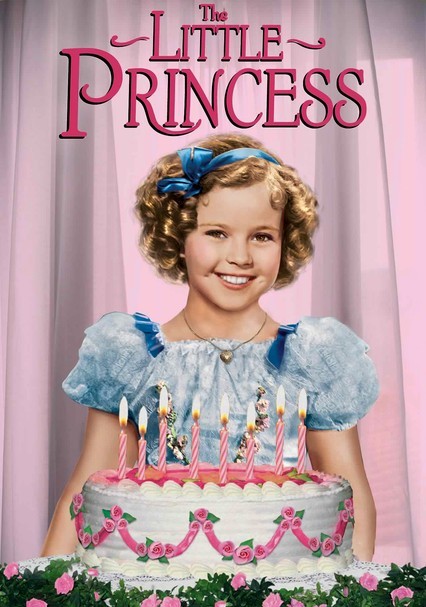
The Little Princess-1939

The Little Princess-1939

Director Walter Lang

Starring Shirley Temple, Ian Hunter

Scott’s Review #827

Reviewed November 6, 2018

Grade: B+

The Little Princess (1939) is a later-day Shirley Temple film released when the child star’s popularity declined.

The film is also Temple’s first production filmed in Technicolor and the last of her major successes. It is perfect, though not the first I would choose as a starting point in her collection.

The film is saccharine, wholesome, and predictable, which are also adjectives audiences adore about the star’s cinematic projects; loosely based on A Little Princess by Frances Hodgson Burnfilm, the film was criticized at the time of release for deviating too far from the original novel.

The time is the turn of the century in England, and the backdrop is the Boer War.

The film’s setting is a highlight for American audiences amidst the First World War and on the cusp of World War II, allowing for a timely and relevant film quality.

In the story, Temple plays Sara, the wealthy daughter of a military Captain (Ian Hunter) who is left to reside in a well-to-do girls’ school when her father is called away to serve in the war.

When he unexpectedly dies in battle, Sara is left penniless and forced to work as a servant in the school she once attended.

At first, the staff treats Sara like royalty, but her treatment gradually harbors resentment among the principals, especially the dastardly headmistress (Mary Nash). Sara keeps her chin up, insisting that her father is not dead, and she becomes determined to find him in a local hospital.

In 2018, Shirley Temple’s films mainly served as a source of nostalgia rather than critical acclaim or cinematic dissection—what was the point?

Her films are a wholesome trip down memory lane to a simpler time for many. Ironic that the film is the first color picture in the collection; this detracts from the enjoyment and adds too much of a modern element foreign to Temple fans.

My preference is for the black-and-white productions of the early and mid-1930s.

The supporting characters spice up The Little Princess quite a bit.

Most notable is Cesar Romero as neighbor Ram Dass, who fills the void Sara needs after losing her father. The chemistry between Romero and Temple is terrific, and in a tender scene, the kindly Dass leaves warm blankets for Sara.

As the main villainous character, common in Temple films, Mary Nash, as Miss Minchin, does her job flawlessly. As the main foil, Nash perfectly blends rigid mannerisms and the brunt of Sara’s tension.

The overall tone of The Little Princess (1939), hence the title, contains a rich-to-rags, Cinderella-in-reverse type of story. The film is above average but not the best in the bunch.

Venturing to say that the film is a forgotten work save for the Shirley Temple series fans, it does what it sets out to do and entertains.

With drama, musical numbers, and a happy ending, the result is a similar experience to her many other films.

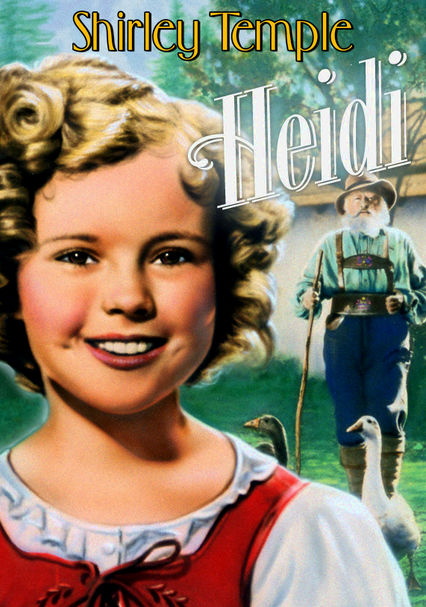
Heidi-1937

Heidi-1937

Director Allan Dwan

Starring Shirley Temple, Jean Hersholt

Scott’s Review #826

Reviewed November 2, 2018

Grade: A-

During the 1930s and 1940s, Shirley Temple was the most prominent and profitable child star around, starring in dozens of films deemed “wholesome” and “cute.”

Heidi (1937) is one of her most popular and best-regarded treasures of earnest and sentimental riches.

The film is forever known in pop culture as the ruination of the 1968 Super Bowl when the Oakland Raiders and New York Jets game was interrupted at a crucial moment due to the film’s scheduled airing.

An interesting side note is that, amazingly, Temple relinquished her Hollywood title with dignity and without scars. She left the scene entirely and became a successful world diplomat.

In an era in American cinema when child stars were treated as property and sometimes like cattle, her relatively healthy exit was a remarkable feat.

The story of Heidi is based on the 1880 Swiss story of the same name. In the title role, Temple plays an orphan living in the cold mountains with her grizzled grandfather, Adolf (Jean Hersholt). At first bitter for being saddled with raising a child, Adolf finally accepts the girl, and he and Heidi become fast friends, exhibiting a warm and tender bond.

Heidi’s self-absorbed aunt ruins the dynamic and whisks the child away to live with a wealthy family. The little girl will be a companion for their disabled daughter, Klara, as Heidi and Adolf are determined to find each other.

Adding drama to the story is Klara’s evil housekeeper and her jealousy of Heidi, leading to attempts to sell Heidi off to gypsies for profit.

By 1937, Temple was beginning to be deemed “too old” for cute roles, but Heidi is one of her best-remembered films, and the actress is in top form.

As one might expect from any Shirley Temple film, musical numbers are included- a dream sequence in Holland culminates with Temple belting out the charming “In My Little Wooden Shoes.”

There are millions of Shirley Temple fans worldwide, but there are also her detractors. Some feel her films are completely dated and that the young star was not as talented as they thought she was.

Admittedly, watching her films approaching the one-hundred-year mark can be peculiar. On the surface, they seem a bit hammy and overly sentimental, but my personal experience elicits a return to childhood days.

Despite being decades before my existence, Shirley Temple films were commonplace in my childhood household.

Heidi is not a groundbreaking cinematic experience or all that deep. What the film does provide, though, is comfort. The audience assuredly must know a film like Heidi has a happy ending, as the child provides warmth and spirit to every person she meets, making their lives better.

Even during peril, the girl has an “awe-shucks” manner of being and makes the best of her lousy situation.

The strongest appeal of Heidi comes from her friendship with Klara, a disabled woman. Klara is kind and naive, unaware of her servant’s jealousy and rage. Helpless, she comes to depend on Heidi, and we root for Heidi to rescue Klara and bring her to a better life.

The film has sappily written all over it but somehow works simultaneously.

Films such as Heidi, the best of all the Temple films, can be watched and enjoyed as an ode to days gone by or a tribute to someone’s grandmother’s favorite film.

Despite being irrelevant and too sappy in today’s modern world, they undoubtedly provide comfort and support to some, which cannot be such a bad thing.

Heidi (1937) can easily be enjoyed because of the film’s popularity and its warm message.

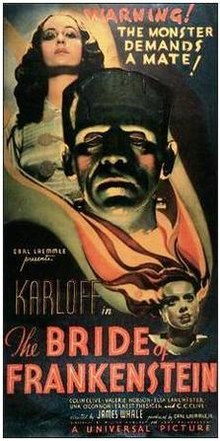
Bride of Frankenstein-1935

Bride of Frankenstein-1935

Director James Whale

Starring Boris Karloff, Elsa Lanchester

Scott’s Review #825

Reviewed October 31, 2018

Grade: A-

After four long years as director, James Whale finally agreed to follow up on and resurrect his character, The Monster. Fortunately, Boris Karloff also returned to the role he made famous. In this installment, he meets a mate played by the gorgeous Elsa Manchester.

Critics argue that the sequel is superior to the original, but I am not so sure of that; I slightly prefer Frankenstein. Still, the aptly titled Bride of Frankenstein (1935) is a fantastic effort and a memorable classic in and of itself.

The plot picks up where the original Frankenstein ended and includes a sub-plot from the 1818 Mary Shelley novel. Having learned his lesson about the drawbacks of creating life, Dr. Frankenstein (Colin Clive) is coerced into making a female mate for the Monster.

Much of the action follows the Monster, who is on the run from hunters as he encounters devious and kindly individuals. In clever form, Manchester plays the “Bride” and Mary Shelley, who is heralded for her masterful writing.

The main difference between Frankenstein and Bride of Frankenstein is that the Monster is more developed from a character perspective. Even more empathetic and now uttering some dialogue, the pained character contains more profound moments and a damaged quality.

Karloff reportedly despised this aspect, preferring that his character be more ambivalent, using grunts and facial expressions more than words, but to me, the development works well.

As the Monster traverses the forest looking for shelter while being pursued in a witch hunt style, a lovely sequence occurs between the Monster and a lonely blind man. Attracted by the gorgeous sounds of a violin playing “Ave Maria”, the blind hermit befriends the Monster and teaches him a few words like “friend”.

Harboring no ill will towards the Creature, the old hermit feels blessed and thanks God for sending him a friend. The tender moment is then shattered when a fire burns down the cottage.

The constant theme of loneliness and despair continues what Frankenstein did and is more in line with Shelley’s novel. The Creature is a tortured soul yearning for love and affection yet suffering from a temper. He is childlike and struggles to know the difference between right and wrong.

Like Frankenstein, the sequel contains high-quality special effects and ambiance. With a storm raging (naturally), the thunder and lightning qualities add so much to a horror film, filling it with suspense and a particular science fiction element.

When the Bride is hoisted to the sky and struck by lightning, the scene is both campy and terrifying.

How delicious a character is Manchester as The Monster’s Bride? The character is forever recognizable in pop culture with her statuesque seven-foot height (the actress used stilts), white-streaked hairdo, macabre white gown, and jerky, animal-like head movements.

Timeless in characterization, the beautiful woman possesses a macabre yet humorous quality. The moment she becomes alert, sees the monster, and shrieks is a memorable moment in film history.

Throughout cinematic history, few sequels ever live up to their predecessors, but Bride comes close.

Easily able to be watched in tandem with Frankenstein and perfect for a bit of Saturday afternoon nostalgia, Bride of Frankenstein (1935) is a wonderful trip down memory lane to a time when horror was as thrilling in simple black and white as it is with all the frills added.

Thanks to Whale’s brilliant direction, both films are legendary in their inspiration and achievements.

Oscar Nominations: Best Sound Recording

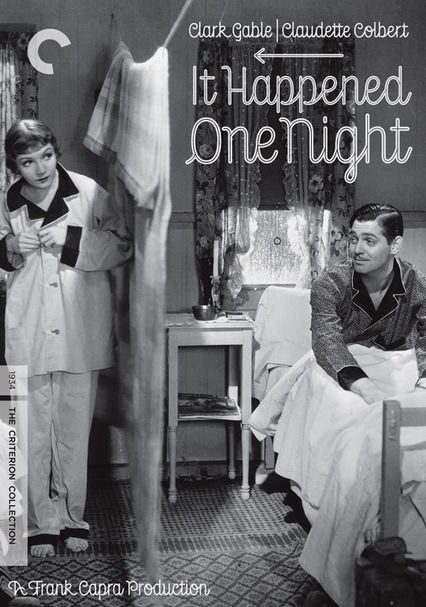
It Happened One Night-1934

It Happened One Night-1934

Director Frank Capra

Starring Clark Gable, Claudette Colbert

Scott’s Review #824

Reviewed October 25, 2018

Grade: A-

Perhaps the film that best defines the early cinematic romantic comedy and certainly the one most modern genre films can learn from, It Happened One Night (1934) is a lively, fun romp.

The film carted away the Best Picture, Best Director, Best Actor, and Best Actress Academy Awards, a rare feat, and defined what romantic tension and thoughtful dialogue should be in a quality picture. All the elements sparkle into an excellent classic film watch.

Ellie Andrews (Colbert) is a pampered socialite who recently disobeyed her overbearing and wealthy father by eloping with a blue-collar pilot who is feared to be after her money.

Determined, Ellie escapes her father’s clutches and hops on a Greyhound bus headed from Florida to New York, where her husband is. When she crosses paths with an out-of-work journalist, Peter Warne (Gable), they each find an opportunity to use the other to their advantage.

The pair’s adventures along the East Coast lead to antics and schemes as they fall madly in love with one another.

It Happened One Night successfully mixes a good romance with some screwball comedy without ever becoming silly or trite.

The film also serves as a good old-fashioned adventure story as Peter and Ellie face one hurdle after another on their trek north.

Pleasing is how the duo slowly finds romance but first begins as irritants towards each other. The chemistry between the actors is superb and never seems forced or contrived.

Frank Capra, a famous director with successes throughout the 1930s, culminating with the holiday favorite It’s a Wonderful Life (1946), had several Oscar-winning films during the decade.

It Happened One Night seems to have inspired most of them, and the acting, absurd situations, dialogue, and direction all successfully come together.

Shot in black and white and the Motion Picture Production Code, which heavily restricted details deemed too violent or sexual, It Happened One Night pushed the envelope quite a bit.

This is to the film’s credit- who can forget the adorable yet provocative scene in which Ellie shows her shapely legs to enable the duo to catch a ride? The lovable scene, non-risque in today’s modern world, was anything but in 1934.

An interesting, at that time unique, point is that supporting characters are more layered than is typical in romantic comedies. Danker, whom Peter and Ellie hitch a ride with, is seemingly a decent man but ultimately attempts to steal their luggage.

Later, Ellie’s preposterous father turns out to be a decent man, so the film also contains a few character surprises.

While not quite a pure masterpiece, It Happened One Night (1934) is nonetheless an inspired legendary film that can be viewed and enjoyed for the period in which it was made.

The film stands out among the similarly themed romantic comedies of the 1930s and 1940s and is a teachable moment for all filmmakers who explore the same genre territory.

Oscar Nominations: 5 wins– Outstanding Production (won), Best Director (won), Best Actor-Clark Gable (won), Best Actress-Claudette Colbert (won), Best Adaptation (won)

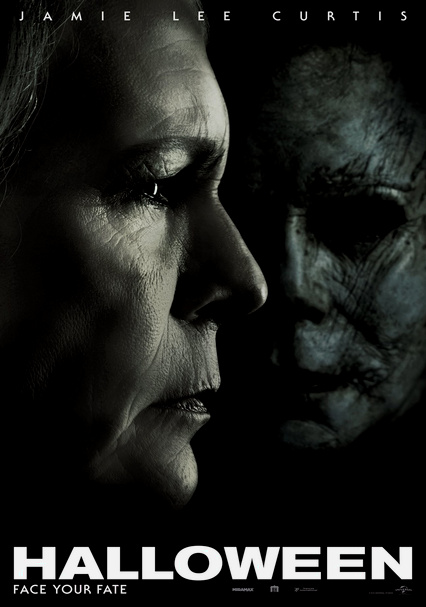
Halloween-2018

Halloween-2018

Director David Gordon Green

Starring Jamie Lee Curtis, Judy Greer

Scott’s Review #823

Reviewed October 23, 2018

Grade: B+

Let’s be honest—nobody will ever be able to top or recreate the iconic 1978 masterpiece Halloween, so any real attempt is a moot point.

Throughout the subsequent decades, many sequels or remakes have emerged, largely disappointing or turning the franchise into a joke.

With the latest incarnation of Halloween (2018), director David Gordon Green gets it right by creating a follow-up to the original, skipping all the other films. Scoring Jamie Lee Curtis as Laurie is a significant win and seemingly dozens of neat references to the original gem.

Set forty years to the day (Halloween Eve and Halloween, naturally!), the audience is first given a summary of killer Michael Myers’ (Nick Castle) time spent in Smith Grove Sanitarium once captured following the 1978 Haddonfield killing spree.

Two journalists visit Myers in captivity and attempt to make him speak after forty years of silence by mentioning Laurie Strode and showing him his notorious Halloween mask.

Conveniently, he will be transferred to a maximum-security prison the following day. We know that Meyers will escape.

Meanwhile, Laurie has been living with post-traumatic stress disorder since her attack and lives in a constant state of paranoia.

With two failed marriages and a daughter, Karen (Judy Greer), who is traumatized by her mother’s anxiety, Laurie’s life has not been easy. As an aside, I love how Laurie dons the same hairstyle she had at age seventeen.

While she awaits Michael’s inevitable return, Laurie’s secluded house is peppered with traps and guns, allowing her to be at the ready at any moment. Despite her problems, Laurie is close to her granddaughter, Allyson (Andi Matichak).

When the inevitable happens, and Michael escapes, presumably by causing a bus accident off-screen, the action truly begins. The coincidence of this happening on Halloween night is to be expected and embraced.

Audiences who see the film are certainly not new to the genre. The target audience is the crowd that either grew up with the original or was introduced to it later.

Therefore, the film is wise not to try to reinvent the wheel, giving fans what they expect. The opening graphics (the eerie orange writing and the glowing jack-o-lantern) are intact, as is the “introducing” credit for its heroine—in this case, Matichak.

There are several certainties about a horror film like Halloween. We know there will be “kills,” and an inevitable showdown between Laurie and Michael Myers will conclude the film.

The fun is in the trip we take to get there. Who will be slashed and how? A butcher knife? Other Halloween delights?

Since there are arguably three female leads and three generations of Strodes, will the film make one of them feel Michael’s deadly wrath?

Halloween works; a significant reason is the countless nods to its past. Many scenes pay homage to attention-paying fans, creating riches and nostalgic memories.

Allyson’s boyfriend’s father’s name is Lonnie—undoubtedly the kid Dr. Loomis scared away from the Myers’ house forty years ago. Then there is a neighbor woman wearing curlers and slicing a sandwich with a butcher knife, from whom Michael steals the knife, an ode to Halloween II (1981).

Finally, as Allyson sits in the back of her class and glances out the window, she sees not Michael, but Laurie standing across the street, staring at her.

These gems are in large part thanks to clever writing and study.

There are a couple of negatives to mention. I am not crazy about Judy Greer’s casting as Jamie Lee Curtis’s daughter. The actresses look nothing alike, and Curtis does not seem old enough to be Greer’s mother.

Furthermore, attempts to add some comic relief moments—two bumbling police officers talking about brownies, Allyson’s goofy father, and the salty tongue of the kid one of the babysitters sits for—do not work.

How great would it have been to include P.J. Soles, Nancy Loomis, or Kyle Richards in cameos? Since Curtis and Castle returned, I wanted more familiar faces.

In wise form, Gordon Green leaves the window open for a potential sequel, so stay for the end credits. My wish would be for this to parlay to the aftereffects of the killings on the same night, which Halloween II (1981) did so successfully.

The possibilities are endless if the box office returns are strong enough and Curtis is on board for another installment.

Frankenstein-1931

Frankenstein-1931

Director James Whale

Starring Colin Clive, Boris Karloff

Scott’s Review #822

Reviewed October 22, 2018

Grade: A

Those of us who treasure cinematic brilliance in films of the past need to look no further than Frankenstein (1931), a masterpiece in the horror genre.

Some consider it the greatest horror film ever made. The still frightening work is based on the legendary 1818 Mary Shelley novel.

Highly influential to later groupings of horror film sub-genres, the importance of this film must never be forgotten.

In a small European village, a scientist named Henry Frankenstein (Colin Clive) is determined to create human life by stealing fresh body parts from cemeteries and using electrical shock as part of his creation.

He convinces his assistant, Fritz (Dwight Frye), to steal a human brain from a former professor’s laboratory. Due to a clumsy mistake, Fritz must steal the brain of a criminal rather than a “normal” human being, the result being dire when Frankenstein’s monster is created.

The creation of the monster (and no, the monster’s name is not Frankenstein, as some might assume) is astounding, especially given the period of the early 1930s.

With a flattop, heavy eyelids, protruding neck terminals, and his hulking physique, he is a frightening figure with a yearning, childlike nature. The monster’s innocence makes him so tragic.

A compelling scene occurs when the audience sees the monster turn around and face the camera.

What separates Frankenstein from many other horror films is the underlying sadness and empathy we feel toward the monster. The “villain” in most horror films is clearly defined, but who is the villain in Frankenstein?

How can it be the monster when he, unaware of his strength, drowns a young child? We root for the beast when he hangs the dastardly dwarf, and we hate the town of peasants who seek revenge on the monster.

The complexities in this film are endless.

The main character is an interesting study. Title billed: the character is a genius while also teetering on the brink of madness- he is not the film’s hero, nor is he entirely sympathetic.

He is the ruin of a monster who has feelings and sadness in him. Frankenstein’s fiancée, Elizabeth (Mae Clark), is concerned for him, which adds a nurturing element to the dynamic. The intent is for the audience not to despise Frankenstein but to be enthralled with his complexities.

The term “monster film” can conjure feelings of silliness or over-the-top acting, but Frankenstein is more artistic than goofy.

The famous line “It’s alive!” was paid tribute to in later years, but an equally spectacular horror film, Rosemary’s Baby (1968), when Rosemary feels her haunted baby kick. To say nothing of the tribute Mel Brook’s classic Young Frankenstein (1974) paid to the original.

Given that the film was made in 1931, the effects and lighting techniques are beyond impressive. The overall tone of the film is stylistic, with a prevalent fairy-tale beauty unlike any films made at the time, save for perhaps Dracula, the 1931 horror-vampire masterpiece.

Frankenstein and Dracula would make a delicious double feature on Saturday evenings. Director James Whale creates a magical environment, holding up thriving generation after generation, never seeming dated.

Frankenstein (1931) was followed by numerous sequels, the best of which is Bride of Frankenstein (1935). Undoubtedly, the film influenced campy yet influential monster films to follow- most notably the “Hammer Horror films” of the same tone.

Despite teetering on the one-hundred-year-old mark, the brilliant film is timeless and must be introduced to young filmmakers everywhere (especially in the horror genre).

Split-2016

Split-2016

Director M. Night Shyamalan

Starring James McAvoy, Anya Taylor Joy

Scott’s Review #821

Reviewed October 18, 2018

Grade: B-

Split (2016) is the second part of a planned trilogy; the first is Unbreakable (2000), and the third is to debut in 2019.

This point confused me because I did not notice any correlation between the films until the final scene, which was unclear.

Split has its ups and downs, mainly because of James McAvoy’s spectacular performance, which is the highlight, but the film is sadly riddled with many plot holes and nonsense.

I do not predict the film will be remembered all too well.

Casey (Joy) is a withdrawn teenage girl with an abusive past at the hands of her uncle, who raised her after her father died. She, along with two other girls, is accosted by a man (McAvoy) who chloroforms them and takes them to a hidden basement.

The girls quickly learn that their abductor is Kevin Wendell Crumb, a man suffering from Dissociative Identity Disorder (DID).

His personality ranges from that of a nine-year-old child to that of an effeminate artist, a well-dressed woman, and Kevin.

The audience (but not the girls) learns that Kevin is in therapy under the care of Doctor Karen Fletcher (Betty Buckley), an established Philadelphia psychiatrist. Fletcher is aware of Kevin’s other personalities, including an additional personality deemed “The Beast.”

She assumes this is a fantasy superhero figure.

Karen slowly pieces together the frightening depth of Kevin’s disorder and must race against time to save the girls.

McAvoy, best known for his outstanding performances in The Last King of Scotland (2006) and Atonement (2007), is also a central figure in the X-Men film franchise (2011-2019). He knocks it out of the park.

What a challenging role (or roles!) for the handsome Scottish actor.  He is as convincing as the stoic and confident Kevin and provides the perfect swagger as “Patricia” and “Dennis.” Finally, he plays nine-year-old “Hedwig” with childhood innocence and insecurities.

The casting of McAvoy is a treat and a success.

How lovely to see film and television stalwart Betty Buckley back in the game with a central film role. The actress is a legend in other genres, not to mention her achievements on stage in play after play.

Eagle-eyed horror fans will undoubtedly remember Buckley’s role as the sympathetic gym teacher in Carrie (1976). In Split, she portrays another benevolent character as she is concerned for her patient’s well-being, not realizing the sinister sides he keeps hidden. The role is perfect for the warm Buckley.

Written, co-produced, and directed by the acclaimed M. Night Shyamalan, Split is no masterpiece like The Sixth Sense (1999) or even on par with The Village (2004).  Instead, the result is a peculiar and uneven effort- the fascination is with McAvoy’s twenty-three different personalities, granted we only see four or five of them.

The film misses the numerous backstory scenes of Casey and her uncle hunting in the woods. These scenes slow down the action and seem overly lengthy. She was abused and can now handle herself- we get it.

This point could have been achieved within one scene.

The relationship between the three girls is okay, but the story point of Casey being an outcast and different from the other two girls seems unnecessary and thrown in.

The final scene of Bruce Willis (as Dennis Dunn from Unbreakable) is a nice nod to the previous film but is lost on anyone who has not seen it since it premiered well over a decade ago.

More of a connection between the two stories should have been featured.

In addition to McAvoy’s impressive performance, a positive is that no male characters are designed to “save the day,” which is still typical of mainstream films.

The film’s heroes are Casey (a teenage girl) and Karen (a woman in her sixties). Despite all the story pieces not aligning, attempts to make Split a more progressive-minded film must be credited.

The film’s result is fair to middling. Split (2016) is not a great effort but a decent watch. The highlights are McAvoy, a worthy role for veteran Buckley, and some good tension and moments of good peril. The story is not the high point, and Shyamalan has made better films.

Oliver & Company-1988

Oliver & Company-1988

Director George Scribner

Voices Joey Lawrence, Natalie Gregory, Billy Joel

Scott’s Review #818

Reviewed October 8, 2018

Grade: B

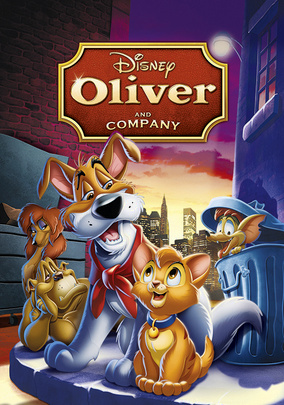
Oliver & Company (1988) is a darling animated film released by Walt Disney Pictures, the 27th Disney feature film produced.

The film is based on Charles Dickens’s novel Oliver Twist, but Oliver is now a homeless kitten who joins a gang of dogs, and the setting shifts from London to the dangerous streets of New York City in the present day.

We meet Oliver (Joey Lawrence) as he huddles with other homeless kittens in a cardboard box, chilly from a driving New York rain.

As all of the other kittens are snatched up by adoring animal lovers, Oliver is inexplicably left on his own.

He eventually meets up with Dodger (Billy Joel), a mongrel with street smarts, and the duo steals hot dogs from an abrasive food vendor.

When Dodger swindles Oliver out of his share, the kitten follows the dog to a barge, which turns out to be the hideout of Fagin (Dom DeLuise), a human pickpocket. Fagin houses a gang of assorted dogs as loan shark Sykes bullies him.

As Oliver bonds with the miscreants, his life suddenly takes a positive turn when he is rescued from the streets by a kindly, wealthy little girl named Jenny and her bumbling butler, Winston.

Jenny’s parents are on holiday in Europe, leaving her and Winston running the house.

Along for the ride is Jenny’s sophisticated and spoiled pet poodle, Georgette (Bette Midler), who takes a dislike to Oliver.

By the 1980s, Disney films were hardly the hot commodity they once were, and the small budget is evidence of that. Oliver & Company is not on par with classic, lovely offerings such as Pinocchio (1940), Fantasia (1940), or Dumbo (1941).

The film has a severe and decidedly “1980s quality”, mostly due to the upbeat soundtrack, which decades later makes the film feel rather dated.

Speaking of the soundtrack, the highlight is a treat entitled “Why Should I Worry?”, a tune sung by the ensemble cast and impossible not to hum along to.

The film features an array of famous voices that are perfectly cast.

The filmmakers wisely cast plenty of native New Yorkers, which results in a huge measure of authenticity. Brazen voices like Midler’s, Joel’s, and Cheech Marin’s, as feisty chihuahua Tito give credibility to their characters.

The odd romantic pairing of Georgette and Tito, on the surface completely mismatched, gives a good dose of comic relief to the story.

The story written for Oliver & Company is the best part of the entire production.  Anyone familiar with the famous Dickens novel or Oliver! (1968), the most famous of the film incarnations, knows how the story will end.

This did not hinder my enjoyment of the animated film, though, which was a compelling and charming experience. Sykes makes a great villain, drawn with a long face and enormous chin, interesting, but not too scary to frighten young children.

One conspicuous omission is the elimination of the important character of Nancy. As fans know, Nancy played a vital role in the original story. Perplexing is the decision not to include her, but perhaps her ultimate death would have made the story too dark, so this can be overlooked.

Surely not the best in the Disney bunch, Oliver & Company (1988) is nonetheless a decent offering, sadly overlooked by fans and critics alike.

The film is nearly forgotten and suffers from a dated quality, if not for the widespread knowledge of the classic novel. The film is not one of the storied Disney treasures, nor should it be dismissed altogether.

The result is a darling, innocent experience meant for pure enjoyment.

Fahrenheit 11/9-2018

Fahrenheit 11/9-2018

Director Michael Moore

Starring Michael Moore

Scott’s Review #817

Reviewed October 5, 2018

Grade: B+

Controversial filmmaker Michael Moore, who has been at the helm of other topical and lively works, does it again with a politically charged documentary, Fahrenheit 11/9 (2018).

Known for other substantial offerings like Roger and Me (1989), Bowling for Columbine (2002), and Fahrenheit 9/11 (2004), the left-wing activist continues his aggressive and thought-provoking ways with an excellent effort.

After the gloomy and divisive 2016 United States Presidential election, it seems inevitable for Moore to create another politically infused documentary.

This critical point in history is the primary focus of his work. Moore asks and analyzes two crucial questions: How did we get here, and how do we get out? In pure Michael Moore controversy, he adds a couple of expletives for good measure.

The documentary itself begins with the surprising, and (to most), now dire buildup to the 2016 election with clips of Hillary Clinton’s assured victory and election night festivities interspersed with the expected loss of Donald Trump.

The Republican Party was not crazy about Trump as a candidate, and the unexpected victory due to the electoral college rule left the United States shocked, appalled, and in a state of peril.

Moore does not simply create a documentary about the election, though. Instead, he crosses into territory including the creation of a dictator (Trump) and how this man’s rise to the presidency mirrors Adolf Hitler’s rise to power in 1930s Germany.

Hitler used a sense of fear and populism among the German people to his advantage and successfully created an “us versus them” mentality.

Trump is doing the same with sour and hateful propaganda.

As many of Moore’s other documentaries do, Fahrenheit 11/9 feels very personal to Moore. It spends a lot of time exploring the poisoned water situation in Flint, Michigan (Moore’s hometown), and the ensuing cover-up by the Governor of Michigan, Rick Snyder.

The largely working-class city (already decimated by numerous GM layoffs) faced a public health emergency due to lead contamination.

So that the subject matter is not completely dour and depressing (though admittedly, I was depressed watching most of the documentary for personal reasons), Moore gleefully adds some humor.

As a camera shot of the director lumbering towards the Snyder headquarters to confront him about the poisoned Flint water and the governor’s reported cover-up, a Snyder employee refuses to drink the water Moore insists is directly from Flint and therefore must be safe.

Moore later waters the lawn of the Governor’s home with a giant fire hose when Snyder refuses to be interviewed.

As liberal-minded as Moore is, he is not afraid to call out members of his party- the Democrats. He shames President Obama for once appearing in Flint, which was viewed as a “saving grace” for the city folks, only to pretend to drink a glass of Flint water while insisting it was safe to drink.

Moore surmises that this stunt turned off the people of Flint, who stayed home on election day, causing Clinton to lose the state of Michigan.

Moore has perhaps never made a more relevant or emotional documentary than he has with Fahrenheit 11/9 (2018). In a tumultuous time in the United States’ history, his documentary is quite opportune to implore people to care about what is happening.

With the 2018 mid-term elections looming, the country is again at the forefront of a pivotal moment in history. Moore’s timing is flawless.

Faces Places-2017

Faces Places-2017

Director Agnes Varda, JR

Scott’s Review #816

Reviewed October 3, 2018

Grade: B+

Fans of French culture, landscape, and sophistication will assuredly enjoy Faces Places (2017), a documentary that explores art and creativity.

With humorous and touching moments, the work explores the friendship between two artists of vastly different ages.

Some scenes of Paris, especially the French countryside, make this a personal treat.

The documentary begins by showing its two main characters, thirty-something JR and eighty-something Agnes Varda, who do not know one another beforehand and miss each other in a coffee shop.

Both share their passion for images expressed in different ways—photography and cinema. They each enjoy expressing ordinary people’s stories by creating lavish portraits and exhibiting them in houses, barns, and the like.

Both Varda and JR co-directed this documentary.

When I decided to view Faces Places, I did so with the anticipation that I would be treated to sightseeing-type glimpses of Paris and the surrounding areas—possibly even the south of France, Niece, or Burgundy!

Paris gets short shrift, but this can be forgiven as rural France (not known as a tourist hotbed) is featured mainly. We experience many local French people living ordinary lives but bringing something treasured to the film.

As Agnes and JR cavort around the rural roads in his pickup truck, they stop in small towns where they have heard of an interesting story.

In one town, a farmer works alone and supports his village—a superhero of sorts. In another town, Varga and JR honor an old woman who has lived in the same house for decades by brandishing her portrait on the exterior of her house. The woman is tearful and emotionally touched.

The dynamic between Agnes and JR is the high point of the documentary.

With more than one generation between them, they begin as acquaintances, but their bond flourishes and grows as the documentary moves along.

Think of the relationship between Ruth Gordon and Bud Cort in the 1971 masterpiece Harold and Maude, save for the romantic element. In a touching moment, JR introduces Agnes to his quite elderly grandmother, and the two women hit it off tremendously.

Varda is particularly interesting because of her contribution to the 1950s French New Wave cinema.

Her usage of location sequences and non-professional actors was unconventional at the time and highly influential. In a tender scene, Varda attempts to visit friend Jean-Luc Godard, but he refuses to see her, evidently now living as a recluse.

Faces Places (2017) is a rich and soulful experience with enough imagination and creativity to inspire viewers.

Although the documentary does not offer as much of the vast French landscape as I had anticipated, it does offer a lesson in the importance of life.

With a startlingly connected duo contributing a whimsical approach to their passion, the result is an inspirational journey everyone can enjoy.

Oscar Nominations: Best Documentary-Feature

Independent Spirit Award Nominations: Best Documentary Feature (won)

The Insult-2017

The Insult-2017

Director Ziad Doueiri

Starring Adel Karam, Kamel El Basha

Scott’s Review #815

Reviewed October 1, 2018

Grade: B

A Lebanese film nominated for the Best Foreign Language Film Academy award, The Insult (2017) offers its audience what I would categorize as a message film.

A battle of cultures and religions leads to chaos and controversy, culminating in an embattled court case as we also get to know supporting characters.

While the film is above average, it is also too glossy and sometimes plays out more like a television series- with dramatic effects and plot developments for miles.

Still, the film is a worthy watch.

The main character, Tony Hanna (Adel Karam), lives with his pregnant wife, Shirine, in a small Lebanese village. Tony works as an automobile mechanic but is a proud member of the Christian community, attending rallies and events.

His village employs Palestinian refugees to perform maintenance repairs, which irritates Tony. When a verbal altercation with middle-aged refugee Yasser (Kamel El Basha) occurs over a broken gutter, a failed apology results in physical violence as the situation rapidly escalates.

The courtroom drama, while compelling, seems a very familiar story.

Other recent foreign-language films, such as A Separation (2011) and Gett: The Trial of Vivian Amsalem (2014), use similar plot devices of family conflict that end up in the courtroom.

Those films are better written and feel more authentic and raw than The Insult. Throughout the film, I kept telling myself I was not watching a Middle Eastern version of Law & Order, but that is what it felt like.

I felt little sympathy for Tony, and I was unsure if we were supposed to feel anything for him. With his brooding nature and populist attitude, he is initially written as downright unlikeable.

I assume the intent was to soften the character over the film’s length when he briefly comes to Yasser’s aid and helps start the man’s car. However, Tony soon reverts to his original stubborn nature.

Yasser is a much more likable fellow, albeit with a temper. Hurling curse words at Tony is why the tension between the two men begins in the first place, and attempted apologies only lead to miscommunication between everyone.

But Yasser gets my vote for the most compassionate character.

In the supporting roles, an interesting (though perhaps not completely necessary) side story exists as the embattled lawyers are revealed to be father and daughter.

The major problem with The Insult is that the entire story seems plot-driven, and each step is created to create a way to build or add tension.

For example, a speeding motorcycle angrily side-swipes Tony and his wife.  The partners are then in peril because their daughter is born prematurely due to stress.

Situations and tensions could have been quickly resolved or smoothed under different circumstances. Therefore, despite some good drama, the tone of the films feels less than authentic and manipulative.

Still, the writing team introduces the audience to the turbulent world of Middle Eastern politics in a way that undoubtedly results in thought-provoking views and exposure to opposing ideas.

The film also provides a distinct hopeful slant at the conclusion to avoid sending a dour message. The direction is that people can come together as one peaceful group, but it will not be easy.

The Insult (2017) is not a bad watch. It compels the viewer to witness a fascinating story of differing cultures and warring religious beliefs churning two men inside out when faced with conflict.

The film also does a fine job of emitting a peaceful message of coming together as human beings.

An overall rating of “B” is a nice score. Still, given the dozens of potential Best Foreign Language finalists, I am not sure the film entirely “cuts the mustard” for me- indeed, there were superior entries.

But then, this Oscar category’s nominating process has always been a mystery.

Oscar Nominations: Best Foreign Language Film

The Square-2017

The Square-2017

Director Ruben Östlund

Starring Claes Bang, Elisabeth Moss

Scott’s Review #814

Reviewed September 28, 2018

Grade: B+

The Square (2017) is an eccentric, highly interpretive Swedish-language film that does not always make perfect sense, as a more mainstream film would.

This is both a positive and a negative, as the film’s ultimate message is admirable, though some parts are perplexing and downright bizarre.

The film was undoubtedly commended for its bravery and cutting-edge approach and received an Oscar nomination for Best Foreign Language Film—subsequently, it lost to A Fantastic Woman (2017).

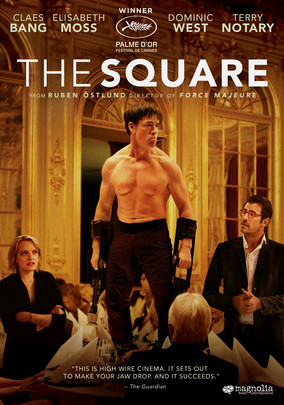
The film’s primary setting is the X-Royal Art Museum in Stockholm, Sweden. The action centers mainly around the museum’s new creative director, Christian (Claes Bang), attempting to introduce a new installation called “The Square.”

A misunderstanding with a youthful public relations firm hired to make the exhibit as accessible as possible leads to controversy.

The film also interjects various subplots that are generally interesting but do not always make logical sense.

Bang is quite compelling in the lead role and the film’s best part for me. He is charismatic and a good father to his two daughters. He helps people experiencing homelessness- even going so far as to help a young woman when nobody else will, only to find his wallet stolen- an unfortunate victim of a scam.

Furthermore, Christian’s desire to create “The Square” is humane and admirable- a safe zone for trust and compassion. The character is a good guy but is also concerned with his status.

Common themes of satire and human beings’ natural hypocritical nature abound. For example, in one scene, Christian, proud to drive his flashy Tesla car and give money to the homeless, is afraid to be seen in a run-down apartment house.

Later, a man with Tourettes syndrome disrupts an interview at the museum and is looked down on by “open-minded people” as a result. The latter scene is quite amusing as the man erupts with various expletives at the most inopportune times.

My favorite sequence occurs approximately midway through the film. As bizarre as the scene, it is riveting in its momentum and bravery.

When a group of well-dressed museum members gathers for a lavish dinner to watch a human art show, a bare-chested man who only grunts emerges and slowly antagonizes guests.

He begins pulling one woman’s hair while chasing an angry man from the hall. This scene is shocking, intense, and thought-provoking.

But what the scene means is perplexing.

A treat for me was viewing the famous Stockholm museum’s frequent interior and exterior scenes- which I was privy to have visited in 2016.

This experience was so fresh that it brought back wonderful memories of not only the museum but also the gorgeous city of Stockholm itself.

The chemistry between Christian (who is Swedish) and an American reporter, Anne (Elisabeth Moss), does nothing for the film. It feels wholly disjointed and unnecessary, and there is little connection between the two characters.

Engaging in a one-night stand, the duo has a dispute about a used condom. Does Christian think that Anne is desperate enough to use his sperm and impregnate herself? The resulting spat between the two seems meaningless.

The Square (2017) is a very tough film to review.

Oftentimes disjointed and impossible to make heads or tails of, one would be wise to simply “experience” the film on its own merits. I am not sure.

I mainly need to view it again and try to figure out the plot because I am uncertain if that was the intent of director Ruben Oslund.

Having directed the wonderful Force Majeure (2014), a more straightforward and superior film, The Square is worth a watch in its own right.

Oscar Nominations: Best Foreign Language Film

American Pie-1999

American Pie-1999

Director Paul Weitz

Starring Jason Biggs, Eddie Kaye Thomas, Chris Klein

Scott’s Review #813

Reviewed September 23, 2018

Grade: B+

With each generation of film, there seems to be a gross-out comedy that speaks to a young, coming-of-age generation, mostly male and jock in persuasion.

American Pie (1999) finishes the 1990s strongly with a raunchy story that feels fresh and genuinely funny, with precarious situations facing the cast, specifically the protagonist and “everyman”, played by Jason Biggs.

The film is a teen sex comedy of the crudest nature yet engulfed with characters audiences like, not mean-spirited, but rather fun-loving and endearing.

An enormous box-office hit at the time, the film was all the rage and brought a tawdry new meaning to the Americana staples of apple pie and band camp.

Spawning several sequels over the next decade, the franchise successfully revived the teen comedy genre with strong, highly recognizable characters.

American Pie also brought back the fun to R-rated films and put a nice cherry on top of a creative decade in cinema. The film is not high art, but it does what it aims to do quite well.

Living a middle to upper-middle-class existence in the suburban USA (presumably Michigan), five high school seniors make a pact to lose their virginity by the time they graduate. Most of the group are nerdy, insecure, and sexually naive, the central character being Jim Levenstein (Biggs).

Most events are taken from his point of view, and he is continually advised by his very nerdy father, Noah (Eugene Levy).

The setup is an age-old premise with lots of room for jokes and precarious situations in hilarious form. As Jim has the hots for a sexy foreign exchange student, Nadia, she is out of his league.

In a hilarious scene, a “warm apple pie” incident leads to an attempt to set up a webcam to watch Nadia change clothes. When events go amiss, everyone gains access to the webcam link, and Nadia is sent back to Czechoslovakia in shame.

This leads to a new pursuit for Jim, a geeky band camp girl, Michelle (Alyson Hannigan). Surprisingly, they fall madly in love and have fantastic chemistry.

Some of the supporting characters add energy and sometimes hilarity. Jennifer Coolidge is great as the mother of Stifler (the jock of the group), who has eyes for younger men, specifically Finch.

As they finally consummate their relationship on a basement pool table, Stifler walks in at the worst time and faints in horror. These antics are genuine and fresh, with great acting by all principals.

Coolidge, Hannigan, and Levy are arguably the best secondary characters. Each, in a different way from the others, provides comic relief by crafting interesting nuances to the characters.

Levy, as Jim’s father, is well-meaning, yet bumbling. Every teen cringes at the thought of having a father like Noah, yet the pair share a close bond and a classic father-son relationship, making the character endearing.

American Pie was successful at coining new pop-culture phrases such as “warm apple pie, “milf” and “this one time in band camp…” that the young generation of the time (myself included) enjoyed giggling over and repeating in glee.

The film set the tone for similar genre films, but none of them matched the chemistry and charm of American Pie, and it was better than it ever should have been!

The turn-of-the-century version of Animal House, American Pie (1999), introduces a new generation of young people into the world of comedic, R-rated, raunchy fun. The numbers have churned out films like this, but rarely are any as authentic as this film feels.

The franchise sustained its popularity with well-written sequels, most notably American Pie 2 (2001), which further developed the storylines. Still, the original remains a fine blueprint for what good comedy can achieve.

The Nun-2018

The Nun-2018

Director Corin Hardy

Starring Taissa Farmiga, Demian Bichir 

Scott’s Review #812

Reviewed September 19, 2018

Grade: B-

A film such as The Nun (2018) is best described as a genre horror film strong on atmosphere, scares, and effects but weak on story, dialogue, or satisfyingly integrating much of the other films.

To stress, the set pieces and foreboding convent where most events occur are tremendously thought out, adding to the stylistic filming; however, the story stinks, making the overall result barely above mediocre.

This story point, which is said to be connected to The Conjuring (2013) and Annabelle (2014), is all but laughable.

Theoretically, The Nun is a prequel, but since the film is set in 1952, the only connection is a super-quick scene in later years. Ed and Lorraine Warren use a character in The Nun as a case study for their audiences.

Admittedly, I have not seen The Conjuring 2 (2016), but from what I can surmise, what remains of The Nun is a stand-alone film. Was the demonic nun in The Conjuring 2? This may make more sense.

The creepy setting in Romania is a superb choice, given its association with Transylvania and Dracula. The film begins with the suicide of a Roman Catholic nun in a gloomy and largely abandoned Monastery.

Having been visited by an unseen force who kills another nun, a vicious demon appearing in the form of a nun looks on menacingly. Father Burke (Demian Bichir) from the Vatican arrives with Sister Irene (Taissa Farmiga) to investigate, where they meet flirtatious local, Frenchie (Jonas Bloquet).

The atmosphere used throughout almost the entirety of the film is spot on and highly effective.

Most of the scenes are set at nighttime (naturally!) and in or around the vicinity of the spooky, gothic monastery. To double, a gorgeous castle in Romania was used. From the dark and narrow hallways to the crucifixes and obvious religious decor, the props and set design shine through.

The best scenes occur within the grounds of the statuesque building, where dozens of graves can be seen. When bells from the graves begin to ring on their own and spirits can be seen lurking, the audience is in for a good scare.

Even the scenes in daylight hours are fraught with creepy tension. When Frenchy comes upon the nun, dead for days, she dangles from the monastery, eyes gouged and covered with feasting crows, as her blood drips onto the front porch.

The camera close-up of the shot is highly effective, as are others involving the typical jolts and creaky floors that have become a cliche in horror films, but somehow feel fresh and invigorating in The Nun.

And the demonic nun, a grimacing Marilyn Manson-type ghoulish figure, is downright scary.

Unfortunately, along with praise must come some criticisms. The story and the logic do not make much sense, and I stopped trying to figure out the plot points halfway through.

Why the Father and Sister are chosen to go alone to investigate is implausible. A silly, brief mention of a Duke in the old days, evoking a curse in the monastery that was “conjured” up during World War II and must be contained again, is hardly a compelling story.

The plot-driven device (and frankly done to death at this point) attempt to forge a romantic connection between Irene and Frenchy never works. How many times in film have we seen a handsome, young man trying to woo a pretty nun away from her calling?

Filmmakers may have added this for humor, and (hopefully) the characters’ intentional or unintentional religious exclamations of “Oh My God!” or “Mother of God!” are laugh-out-loud silly. With a film like The Nun (2018), riveting writing is not on the wish list- great atmosphere and effects are.

The film delivers excellent content and makes for an enjoyable experience with good thrills and scares. Thankfully, for the horror genre, the film is rated a solid “R” and not watered down for PG-13 audiences.

Just be prepared for some hokey writing.

Office Space-1999

Office Space-1999

Director Mike Judge

Starring Ron Livingston, Jennifer Aniston

Scott’s Review #811

Reviewed September 16, 2018

Grade: B+

Having become somewhat of a cult classic since its theatrical release in 1999, Office Space is delightful to watch for anyone who works in a corporate environment- or ever has- they will undoubtedly “get” this movie.

The dark humor and antics may be lost on those who have not, but for the rest of us, the film is quite the treat.

One may never view a stapler or the common office cake party in the same manner. Yes, the story and characters are somewhat over-the-top, but more than a few clever scenes ring with truth.

But over time, will the film become dated?

Writer and Director Mike Judge tells a story about life at a 1990s software firm.

Reportedly, the story is based on Judge’s cartoon series Milton, and his first foray into live-action filmmaking. His first film was Beavis and Butt-Head Do America (1996), which gives any indication of the type of humor that resonates.

Fraternity boy-minded, yes, but the writing is crisp and oftentimes rife with fun.

The film was not a box-office smash at the time of its release, yet it is well-regarded by critics.

Peter Gibbons (Ron Livingston) is a frustrated IT programmer at a company called Initech. Alongside two colleagues, one of whom is comically named Michael Bolton (not that Michael Bolton), they despise their sneaky boss, Lumbergh (Gary Cole).

The situation gets worse when two consultants are brought in to downsize the company, leaving everyone in panic mode.

After a failed hypnotherapy session, Peter becomes relaxed and confident, even winning praise from the consultants and scoring a promotion.

This puts him at odds with Lumbergh, especially after he begins dating a waitress, Joanna (Jennifer Aniston), and assumes she has slept with him as well.

Office Space shines most for its crackling dialogue and clever scenes set within the confines of the office. With stuffy cubicles for miles and the standard corporate jargon to make into witty lines, the subject matter is ripe for the picking.

With Cole’s sly requests that his employees work weekends, Judge creates authenticity and freshness that are incredibly appealing to corporate workers.

He successfully knocks down office politics with intelligent, wisely crafted, memorable satire.

In the supporting role of Milton Waddams, character actor Stephen Root is successful at stealing the show with his mumbling and bumbling character. Nearly invisible to all his colleagues, Milton is eventually moved to a desk in the basement and left out of the cake party.

When somebody borrows his prized red stapler, all hell breaks loose. Increasingly disgruntled, Milton’s fate is instrumental to the film’s hilarious conclusion, and he ultimately gets his revenge, satisfying everyone.

The romantic element between Peter and Joanna is okay, but not at all the highlight of the film. The romance seems unnecessary to me, but it was undoubtedly added, since comedies of this sort usually require something heartfelt to appeal to mainstream audiences.

Aniston, popular at the time for her role on the television show Friends, was on her way to becoming a marquee movie star, but not quite yet, so she must be content with the standard “girlfriend” role.

She’s cute, but hardly anything more.

Office Space is a fun ride, but the film is not a groundbreaking experience in filmmaking techniques, inventive ideas, or other technical or narrative achievements.

What it offers fans, it delivers very well, and it feels like a breath of fresh air in its genre.

The film is a comedy, but not a dumb comedy, as a myriad of similar style offerings have been released since the beginning of cinema. With witty one-liners and comic gold, Office Space (1999) is a film to be remembered.

RBG-2018

RBG-2018

Director Betsy West, Julie Cohen

Starring Ruth Bader Ginsburg

Scott’s Review #810

Reviewed September 10, 2018

Grade: B+

In the aftermath of the tumultuous 2016 United States Presidential election that still resonates in 2018, making a documentary about one of the most senior members of the U.S. Supreme Court is perfect timing.

This production features eighty-four-year-old Ruth Bader Ginsburg. It discusses the inspirational woman’s early life, rise to the top, and views on the current Trump administration, offering a fleshed-out chronicle of the inspirational figurehead.

Directed and produced by feminists Betsy West and Julie Cohen, this was an enormously wise move. In my opinion, much of the focus is on Ginsburg’s trailblazing reputation and her achievements with gender-discrimination law.

More than once, it is pointed out that Ginsburg, with her tiny stature, pulled-back hair, and thick glasses, was not to be taken seriously in a world of men. Despite her serious demeanor, she nevertheless proved herself against many odds.

The documentary wisely emphasizes Ruth Bader Ginsburg’s current state. It discusses her childhood, parents, family, and friends in detail, but the heart of the film is positioned in the present.

This can only be assumed because of the volatile and relevant current political state and the importance of the Supreme Court in its current state of conservative leanings.

Ginsburg is now the furthest left-leaning judge- a point the documentary stresses not without some urgency.

The documentary begins with “RBG,” as she has adoringly come to be known, working out with her trainer. At age eighty-four, this is remarkable and encompasses her hard work ethic, inside and outside the courtroom.

The film stresses her endurance and dedication to the job. One family member comments how Ginsburg will frequently work until four in the morning, stay up all night, and then sleep for sixteen hours to play “catch-up.”

RBG—the film—shares sweet moments alongside the legal courtroom facts so that it is not oversaturated by legal jargon and terms.

A nice touch is the focus on Ginsburg’s husband, a lively, boisterous, and comical man who perfectly balances his wife’s mannerisms and characteristics. According to many sources in the documentary, they are a perfect match—this portrays a more romantic (and needed) element to the overall story.

Ginsburg was granted the highest honor during President Clinton’s term, a pivotal time in United States history when the Supreme Court took a more left-of-center turn.

In 2018, the Court swung harshly in the other direction, making Ginsburg a tremendously instrumental figure. In the documentary, the courageous lady astutely points out that she “will do the job as long as she can do the job.”

RBG (2018) is an incredibly important documentary in a highly tumultuous time. Not only are women’s rights, specifically Roe v. Wade, in serious trouble, but the country is also in danger of taking a stark turn to the right and thereby going backward.

Leave it to a dear eighty-four-year-old woman with courage for miles to lead the charge for freedom and the progressive movement. The years ahead will tell us how this turns out, but the documentary excels at relaying its vital importance.

Oscar Nominations: Best Documentary-Feature, Best Original Song-“I’ll Fight”

The Wife-2018

The Wife-2018

Director Bjorn Runge

Starring Glenn Close, Jonathan Pryce

Scott’s Review #809

Reviewed September 8, 2018

Grade: A

Swedish director Bjorn Runge crafts a nearly flawless film in The Wife (2018), which elicits a perfect performance from its star, Glenn Close.

The film may be a standard drama, but the performances are the star attraction here. Along with Close, Jonathan Pryce, along with many of the supporting players, deserves his share of kudos.

But the film unquestionably belongs to Close as she plays an overlooked wife with subtle intelligence and enough simmering fury and resentment to astound and compel audiences.

Professor Joe Castleman (Pryce) and his wife, Joan (Close), live charmingly in upscale Connecticut. Joe is an acclaimed author and has just been notified that he will soon be awarded the Nobel Prize in Literature.

As Joe and Joan excitedly jump up and down on the bed in celebration, there is something not altogether joyous about Joan.

Parties are thrown, and Joe and Joan, along with their son David (Max Irons), an aspiring author himself, fly to Stockholm, Sweden, for the coveted ceremony. Joe is flocked with attention while Joan is cast on the sidelines—secrets eventually bubbling to the surface through a nosy reporter, Nathaniel Bone (Christian Slater), who digs into Joe and Joan’s past.

The prime setting of Stockholm is a great plus, adding a cultural and cold vibe to the story. The snowy and blustery Scandinavian locale, with some characters of European descent, brings richness to the film.

The scenes of characters sipping brandy or other warming spirits while a bristling fireplace erupts in the background add good texture.

Close is one of the finest actresses of our time and portrays Joan with refined restraint at every turn. Yes, we know that something is bothering Joan, but we do not know what that is. Close is one of those talents whose face tells so much while she can utter so little, and for a good one-third of the film, this is all we have.

What is wrong with her? Why does she act happy for her husband and do her tasks seamlessly, but harbor rage bubbling beneath the surface?

Slowly, with the help of numerous flashback scenes, we learn how Joe and Joan met- he a young professor in the early 1960s, and she a naive student with delusions of grandeur of becoming a female novelist. She quickly learns how difficult this will be to achieve as she babysits Joe’s young kids, slowly falling in love with the married man.

From flashbacks, we learn more about Joe and Joan’s emotions, aspirations, and limitations. We also learn that Joe has always had a wandering eye for other women—after all, wasn’t Joan “the other woman”?

Back in the present day, a restless Joan needs a day to herself in the bustling city before she explodes at Joe. Before she can head out, she is talked into a drink by Nathaniel, who cagily reveals much of what he knows to Joan.

The scenes between Close and Slater crackle with passion. Is he flirting with her or attempting to get her to buckle under from compliments and booze? Close is purely in control of Joan’s emotions here, but so much is written on the actress’s face.

It is mesmerizing to watch her calm demeanor border on cold and calculated in her responses to Nathaniel’s questions.

Joe and Joan’s son David play key roles in all of this. As with Joan, David harbors resentments towards his father, but his rage is more blatant. He yearns for his father’s approval of a newly written story and is angry with every comment his father makes.

Is he simply experiencing jealousy over his father’s talents?

When David learns a secret, events get good, culminating in a fantastic blowup scene between the three characters in a hotel room, at simply the worst possible time.

Pryce must be given props for playing Joe with much complexity. Partially sympathetic and partially unforgivable, he elicited a mixed reaction from me. Not one to mistreat Joan, he sings her praises from one toast to another.

A cad, he is also a narcissist, yet he does adore and think the world of Joan, so they share a complex love.

The Wife (2018) is an excellent film that appreciates the talents of its cast.

Stalwarts such as Pryce, Slater, and newcomer Max Irons flesh out the supporting roles, which only enhances Queen Bee Close’s bravura performance.

I have always thought there would never be any way Close could rival her breathtaking portrayal of dastardly Alex in Fatal Attraction (1987), but she sure comes close in The Wife.

Oscar Nominations: Best Actress-Glenn Close

Independent Spirit Award Nominations: 1 win- Best Female Lead-Glenn Close (won)

Welcome to my blog!1,552 reviews posted so far! I'm Scott Segrell and I reside in Stamford, CT. My site features hundreds of film reviews I have written since I launched the site in 2014. I hope you enjoy reading my latest reviews or searching for your own favorites to see if we agree. Please see my Recent Posts section, and don't forget to utilize the tags and category links.