Tag Archives: Jack Lowden

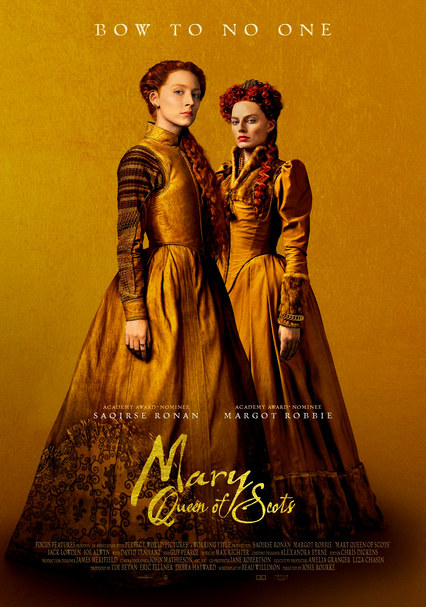
Mary Queen of Scots-2018

Mary Queen of Scots- 2018

Director Josie Rourke

Starring Saoirse Ronan, Margot Robbie

Scott’s Review #851
Reviewed January 2, 2019

Grade: B+

A period piece with all the trimmings for brilliance (on paper anyway), Mary Queen of Scots (2018) is a very good film, but its pacing misses the mark, preventing it from being a truly great film.

Fantastic acting and wonderful photography are the high points of an otherwise uneven experience, even if most of the components are intact.

This is not so much a total knock as a light critique, as the film is ultimately quite good and just missing the big oomph to take it over the top.

Saoirse Ronan stars as Mary Stuart, the likable Queen of France, who has returned to her native Scotland to reclaim the throne after her husband dies. Only eighteen years of age, she initially refuses pressure to remarry, but conflict ultimately ensues with Queen Elizabeth I (Margot Robbie), who rules neighboring England and Ireland.

The women admire each other from afar but develop a rivalry in power and love. To complicate matters, religious conflict, scandals, and deceit are also present in the story.

The feminist theme is inspiring and makes the film better than merely a soap opera of two rival females sparring over men.

In the mid-sixteenth century, women in control were hardly commonplace and relatively resented by the men forced to serve the “whims of women,” as one male character puts it.

Constantly showcased are males’ attempts at wooing the women in hopes of gaining power and ultimately the throne.

Still, director Josie Rourke (a woman) keeps the power firmly among the women, showing they can be as tough as they are sympathetic.

Furthermore, Mary Queen of Scots continues its progressive agenda with a startling LGBT subplot, which largely enriches Mary’s image.

One young androgynous male friend, presumably a bodyguard, frolics with Mary and other maids and confesses that he feels more like a sister than a brother to her. She accepts him wholeheartedly with an added message of “being your true nature.”

Later, the character suffers a terrible fate that devastates Mary. Regardless of the accuracy, this is a nice addition with an inspiring message.

The acting, particularly among leads Ronan and Robbie, is fantastic. Both young “it” women in Hollywood, the roles of Mary and Elizabeth, showcase their acting talents and chops for handling period piece roles.

Ronan, with flawless pale skin and authentic red locks, is beyond believable as Mary, who exudes strength yet kindness in the role she tackles. She can be stubborn but also fun and light, and Ronan has no trouble making the role her own.

Hot on the heels of playing the trailer trash character of Tonya Harding in I, Tonya (2017), Robbie hits it out of the park and does a one-eighty with the role of Elizabeth. Insecure and barren, afflicted with a skin disorder and a balding head of hair, the actress infuses the character with sensitivity and composure.

Robbie portrays her insecurity and yearning for unconditional love as she wears bawdy wigs and pancake makeup to hide her affliction.

Rourke’s mistake is not including more scenes of Ronan and Robbie together, save for one treasured scene at the end of the film. This is a wasted opportunity, as the treasured actresses could have played off each other’s talents in innumerable ways.

A knock-down, drag-out fight scene would have been a treasure to view.

The male characters do not leave much impact other than perhaps Lord Darnley (Jack Lowden), Mary’s bisexual second husband. As he betrays her on her wedding night with another man, Mary sees little use for him besides producing a child.

The handsome blonde actor adds some pizzazz, but is ultimately unlikable, as are the other similarly written men. Mary’s half-brother and Elizabeth’s advisor (Guy Pearce) are fine but ultimately underdeveloped.

Mary Queen of Scots (2018) is an effort to be commended for its female-driven and pro-LGBT stances. Perhaps unrealistic given the period and questions of historical accuracy looming over the entire film, problems with the production do exist.

The film ebbs and flows with some high moments and some looming blandness, but overall, it is to be respected and thereby recommended.

Oscar Nominations: Best Makeup and Hairstyling, Best Costume Design
Dunkirk-2017

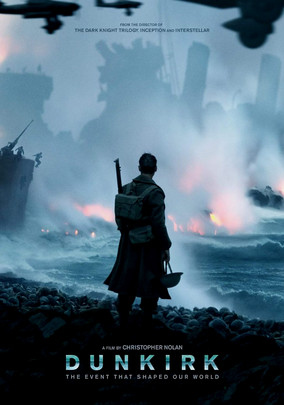
Dunkirk-2017

Director Christopher Nolan

Starring Fionn Whitehead, Tom Hardy

Scott’s Review #666

Reviewed July 24, 2017

Grade: A

Of the hundreds of war films made over the years, most have a similar style, with either a clear patriotic slant or a questioning/message-type nature.

Regardless, most have a certain blueprint—from the story to the visuals to the direction—and rarely stray from it.

The genre is not my favorite, as machismo is usually overdone, and too many films turn into standard “guy films” or “good guys versus the bad guys.”

Finally, along comes a film like Dunkirk (2017)that gives the stale genre a swift kick.

The story is both simple and historical.

In 1940, Nazi Germany, having successfully invaded France, pushed thousands of French and British soldiers to a seaside town named Dunkirk.

With slim hopes of rescue or survival, the soldiers are sitting ducks for the raid of German fighter planes, which drop bombs both on the soldiers and rescue ships.

In parallel stories, a kindly British civilian (Mark Rylance) and his son sail to Dunkirk to help rescue the soldiers, and two British fighter pilots chase the German fighter planes, attempting to thwart their deadly intentions.

One will immediately be struck by the film’s pacing, which is nonstop action from start to finish. The action, combined with very little dialogue and an eerie musical score, is what makes the film feel unique and fresh.

Directed by Christopher Nolan (The Dark Knight, 2008 and Inception, 2010), critics herald this film as his most remarkable work yet- I tend to agree.

Scenes involving such differing musical scores as screechy violins mixed with thunderous, heavy beats shake up the film and keep the audience on their toes as to what is coming next.

An interesting facet of the film, and certainly done on purpose, is that the characters’ backstories are not revealed- we know very little about them.  Do they have families? Are they married? This is a beautiful decision by the screenwriters and by Nolan.

For instance, the first scenes involve a disheveled private named Tommy (Fionn Whitehead).  Panicked, he runs through the streets in pursuit of the beach, where he meets a fellow soldier named Gibson, who is burying another soldier in the sand.

Together, they find a wounded soldier and carry him to a departing ship. The men never speak but communicate through their eyes and gestures—it is a powerful series of scenes.

Another positive to Dunkirk is the anonymity of the enemy. The German soldiers are never shown. We see many scenes of fighter planes overhead, pummeling the soldiers with bombs and pulsating gunfire in various scenes. Still, the mystique of the enemy troops is a constant throughout the film.

The faceless component of the villains adds terror and haunting uncertainty.  In this way, the film adds to the audience’s confusion about where the enemy may be at any given moment.

The visuals and the vastness of the oceanside beach are at the forefront throughout the entire film, which is one hour and forty-six minutes, relatively brief for a war film. It elicits both beauty and a terrible gloominess.

Scenes of the vastness of the beach peppered with thousands of cold and hungry men are both pathetic and powerful.

The best scenes occur on Mr. Dawson’s  (Rylance) mariner boat. Aided by his son Peter and Peter’s frightened schoolmate, the trio heads for dangerous Dunkirk to help rescue, but en route, he picks up a shell-shocked soldier determined to stay as far away from Dunkirk as possible.

This leads to compelling drama and deep characterization of all the central characters.

Many list 1998’s Saving Private Ryan as the best film in the modern war genre, but Dunkirk may very well rival that film in intensity and musical effectiveness. Dunkirk (2017) also contains shockingly little bloodshed or dismembered soldiers—it does not need this to tell a powerful story.

The film is sometimes emotional and intense, but it never lets go of its audience from the very first frame—it is a war film for the history books and a lesson in film creativity and thoughtfulness.

Oscar Nominations: 3 wins-Best Picture, Best Director-Christopher Nolan, Best Original Score, Best Sound Editing (won), Best Sound Mixing (won), Best Production Design, Best Cinematography, Best Film Editing (won)