Tag Archives: Phil Davis

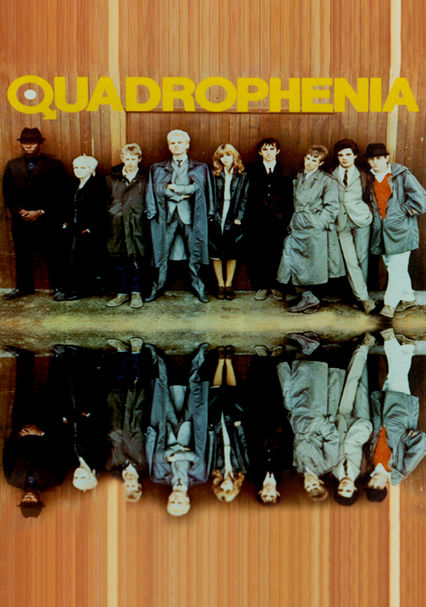
Quadrophenia-1979

Quadrophenia-1979

Director Franc Roddam

Starring Phil Daniels, Leslie Ash

Scott’s Review #1,269
Reviewed June 23, 2022

Grade: A-

Fans of the British rock band, The Who, will perhaps be mystified by the film Quadrophenia (1979). More specifically, The Who and fans of the exceptional, oddity-filled musical film Tommy (1975) will be surprised and somewhat disappointed that Quadrophenia is not patterned after Tommy.

I was uneasy when I realized that very few of the songs from the groundbreaking album of the same name would not be incorporated, and that the band itself would not be appearing.

But that apprehension was short-lived.

Instead, Quadrophenia, the film, quickly grasped me for the storyline alone and makes up for the lack of music with a gripping tale of teenage angst and conflict amid the streets of London.

Reportedly, the story is at least somewhat derived from the life of Who member Pete Townshend, and the concept behind Quadrophenia in the album is the same in the film.

To classify Quadrophenia as a musical or a musical drama (I decided to do both) is most generous, because it only underscores the fact that it almost isn’t either. But since it is based on the album and was co-written by Townsend, I decided to throw caution to the wind.

An insecure and angry London youth, Jimmy Cooper (Phil Daniels), escapes the dullness of his mailroom job and the chilliness of London and joins the Mods, a sharply dressed gang constantly feuding with their rivals, the Rockers.

When the Mods and Rockers clash in the coastal town of Brighton, England, it leads to trouble, and an encounter with the lovely Steph (Leslie Ash), whom Jimmy has become smitten with during grocery store encounters where she works.

Returning to London and his life of drudgery, Jimmy, who aspires to be like handsome and charismatic Mod leader Ace Face (Sting), becomes even more disillusioned and longs to return to Brighton.

Quadrophenia, the film, is exceptional because it captures the lead character’s mood perfectly, and the audience will undoubtedly respond in turn. He feels that his life is going nowhere, and most people can relate to being stuck in first gear or reverse, unable to get out of the mud.

In Jimmy’s mind, his parents are assholes, and the girl he longs for is out of his league and therefore out of reach. It’s typical adolescence 101. All he needs are the pimples and a bad hairstyle, and he encompasses what it feels like to be a teenager.

This may sound comical, but anyone who remembers their youth will undoubtedly find a glimmer of pain and panic.

Filmmaker Franc Roddam gets it right.

The best part of the film occurs in the final fifteen minutes when, finally and blessedly, superior songs by The Who commence, most notably the astounding Love, Reign O’er Me.

In addition to the brilliance of the actual song is the way it’s included. As the camera provides a bird’s-eye view of the stunning cliffs while Jimmy rides recklessly on his scooter, the scene is perilous, with hints of danger.

Will he crash and burn?

Finally, the scooter is seen crashing over the cliff top, where the film begins with Jimmy walking back against a sunset backdrop. It’s unclear what happens to Jimmy, and interpretation is possible.

It raised Quadrophenia from a very good film to an exceptional one.

Another treasured Who song, The Real Me, is included early on amongst the title credits. Other songs appear but are either shortened and/or different versions of what’s expected.

Sometimes fun and comic, other times showing the ugliness of gloomy London and the pains of growing up, Quadrophenia (1979) excels at reminding its audience what it’s like to be restless and unhappy.

Life usually changes for the better, but the film is an important reminder of feelings at that age.
Notes on a Scandal-2006

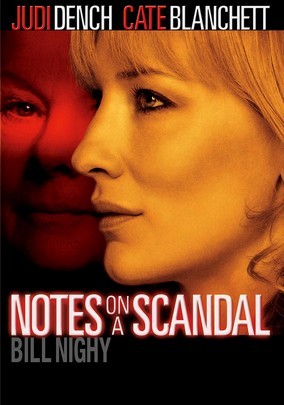
Notes on a Scandal-2006

Director Richard Eyre

Starring Judi Dench, Cate Blanchett

Scott’s Review #793

Reviewed July 23, 2018

Grade: A

A British drama centering on the world of teachers, illicit affairs, and sexuality, Notes on a Scandal (2006) is a superlative effort with thrills and drama galore.

Featuring heavyweights like Judi Dench and Cate Blanchett there is no way this film could be a dud based on the acting alone. The chemistry between the women and the carefully crafted thrills created by director, Richard Eyre, make the film a compelling joy to view- perhaps multiple times for additional entertainment.

The story is told mainly from the perspective of Barbara Covett (Dench), a rigid and bored schoolteacher nearing retirement at a comprehensive school in London, where she teaches.

Barbara is a spinster and a closeted lesbian, constantly writing in her journal for comfort- this is the main narrative of the story and is tremendously effective.

When a young and attractive art teacher, Sheba Hart (Blanchett), arrives on the scene, Barbara fancies her and is determined to get closer. After Sheba begins an illicit affair with a male student, Barbara discovers the shenanigans and uses the situation to her advantage.

The scandal results in both women’s careers being at risk as well as Sheba’s troubled home life coming to fruition.

Notes on a Scandal is a good, solid, psychological thriller/drama with enough twists and turns to compel the viewer. The film is not very long- at one hour and thirty-two minutes, there is hardly time for lagging.

The best achievements, however, are with the superior acting of the two leads. With other lesser talents, this film might have suffered from too much melodrama and not enough meat. With great acting chops, Dench and Blanchett do not let this happen and instead treat the audience to a riveting affair.

As fantastic as Blanchett is, Dench’s Barbara is the standout and takes center stage throughout the film.

Interestingly, despite both actresses being leads, Dench received an Oscar nomination for Best Actress, while Blanchett went supporting. But there is no question that both actresses deserved the praises they reaped- and then some.

Dench turns in such a delicious performance that she makes the film arguably the reason to watch it. Wearing no makeup and dressed as conservatively as imaginable, an icy stare or thoughtful gaze will run shivers up and down the viewer’s spine.

As conflict and drama unfold, Barbara proves she is nobody to be messed with. Still, the character has an underlying vulnerable quality, simply yearning for affection and love from another woman. One wonders if she has ever really had the love she deserves.

Dench is brilliant at revealing all of Barbara’s underlying nuances.

The film poses an interesting moral question that will leave some viewers undoubtedly not a fan of Sheba’s. The fact that she lusts after an underage male, Steven Connolly (Andrew Simpson), and has relations with him, while having a husband and handicapped child at home may be too much for some.

Surely, the character will not be championed by many, but I found Sheba complex and difficult to grasp. This complexity is to the filmmaker’s credit and allows for a more layered character study of both Sheba and Barbara- neither is cut and dry.

An interesting aside of the film is what if the genders of the roles were reversed? Would the film have the same effect if Sheba were a male character and Steven was a teenage girl? What if Barbara were a straight woman? What if Barbara was a gay male character?

These other possibilities left me wondering as I watched the film. Wisely, I think director Eyre got things just right.

Notes on a Scandal (2006) is a film that reminds me of a British version of Fatal Attraction (1987) meets Single White Female (1992).

The story holds elements of each and was adapted from a 2003 novel of the same name. With frightfully good performances by both Dench and Blanchett, this film is a memorable thriller not to be missed.

Oscar Nominations: Best Actress-Judi Dench, Best Supporting Actress-Cate Blanchett, Best Adapted Screenplay, Best Original Score